USC Shoah Foundation: Video Challenge for Grades 6-12

Lynn ZimmermannBy Lynn Zimmerman
Associate Editor
Editor, Teacher Education

In 1994, Steven Spielberg established the Survivors of the Shoah Visual History Foundation, a nonprofit organization whose original mission was to videotape “the testimonies of 50,000 survivors and other witnesses of the Holocaust from around the world for educational purposes before it was too late.” In the years since then the foundation’s mission has changed from just archiving to establishing educational uses for the materials that are archived. The education department has developed “educational programs and products for classroom use by students of all ages.”
iwitness02

This year (2013) is the 20th anniversary of Spielberg’s movie, Schindler’s List, which provided the impetus for the establishment of this foundation. To commemorate this anniversary, an online learning initiative has been set up to engage high school students in a competition that uses IWitness, a website set up for secondary educators and their students. Students participating in IWitness Video Challenge will have access to the 1,300 testimonies available on IWitness and will create their own video-essay.

This project seems to offer opportunities for students and teachers to engage in an assignment that would not be as accessible without modern technology. They can view, copy, and create using multimedia tools to develop a video essay that connects the students with the past and the present. To find out more about IWitness Challenge, I contacted Josh Grossberg of the USC Shoah Foundation – The Institute for Visual History and Education.

LZ: Who do you think will participate?

JG: We certainly hope that all students participate; it is our core belief that one person can make the world a better place and we want to reach as many of them as possible. Although IWitness is still in beta, it has already been accessed by more than 10,000 high-school students and 3,200 educators in 39 countries and all 50 U.S. states.

Continue reading

‘Teaching Digital Natives’: Difference Between ‘Relevant’ and ‘Real’

Lynn ZimmermannBy Lynn Zimmerman
Associate Editor
Editor, Teacher Education

Review of Marc Prensky’s Teaching Digital Natives: Partnering for Real Learning, Corwin Press, 2010. ISBN: 978-1-4129-7541-4.

I picked this book up because, as I have mentioned before, I worry that as a teacher educator I am educating today’s teachers for yesterday’s students. Although Prensky has some interesting insights into today’s and tomorrow’s learners, the concept he is presenting is not new and he admits this. What the book does offer, however, is specific ways in which today’s learner is different and some specific ways in which teachers can address these differences.

TDN

Throughout the book, Prensky encourages the teacher to see their students differently, as partners in learning. This concept is very similar to what is known as student-centered learning, problem-based learning, constructivism and many other progressive models that were developed in the 20th century. Prensky asserts that today’s students are not less able than previous generations but that their tolerance and needs have changed, and what and how they learn is different from students in the past. In the introduction, he makes his view very clear: “They want ways of learning that are meaningful to them, ways that make them see — immediately — that the time they are spending in their formal education is valuable, and ways that make good use of the technology they know is their birthright” (p. 3).

For Prensky, this immediacy is one of the keys to understanding today’s students. Technology allows them to participate in real ways in life across the globe, whether in something as serious as the events during the “Arab Spring” of 20111 or as trivial as voting on “American Idol.” He goes on to assert that teachers do not necessarily have to become experts in technology but that they need to re-imagine their pedagogy so that the student themselves take responsibility for their own learning using the technology they are so familiar with and so fond of.

By “real” he means immediately applicable to their lives. This is where technology can come in and make a difference.

As a teacher educator, I know that the notions he presents are not new. However, one of the points Prensky stresses is the difference between “relevant” and “real” — and that caught my eye. I have always been concerned with ensuring my students’ learning is relevant for them and the students they will be teaching. Prensky says that relevance is not enough. By “real” he means immediately applicable to their lives. This is where technology can come in and make a difference. Rather than only reading about historical events and watching videos about them, they can take virtual tours of many places, participating in or even creating simulations.

If a space launch is coming up, they can compute everything from budgets to payloads. They can use Skype to talk to real scientists about real-world problems. They can participate in urban planning projects for the future to help them think about and plan for the future they are going into. While these ideas are not really new to any progressive/constructivist educator, the reminder that students may have ways and means to accomplish tasks that the teacher may not have imagined is worth keeping in mind.

__________
1 Jean-Marie Guehenno, “The Arab Spring Is 2011, Not 1989,” NY Times, 21 Apr. 2011.

10th Annual Teaching and Learning Conference at Elon University: Cutting Edge Without Being Trendy

Stefanie Panke, Rob Moore, and Jamar Jones

Stefanie Panke, Rob Moore, and Jamar Jones

By Stefanie Panke, Rob Moore, and Jamar Jones

The 10th Annual Teaching and Learning Conference held on August 15 at Elon University (NC) is a regional event that attracts teachers, instructional designers, curriculum specialists, researchers, and students interested in the Scholarship of Teaching and Learning (SoTL). The UNC School of Government instructional support team spent a day of professional development there that proved to be a cornucopia of fresh ideas, concepts and insights.

Morning Plenary Session

R. Michael Paige

R. Michael Paige

The opening keynote featured an inspiringly passionate talk by Michael Paige, Professor Emeritus of International and Intercultural Education at the University of Minnesota. Paige’s keynote raised awareness of the multifaceted and multilayered nature of the concept of intercultural sensitivity. In a nutshell: Every classroom is an intercultural experiment. Learners’ cultural backgrounds, values, and life experiences differ. What does it mean to become intercultural? Diversity and intercultural encounters go beyond different nationalities and include sexual orientations, localities, ethnicities, as well as learning and communication styles. “Who is the role model for us?” asked Paige. “In most societies, this is still really a challenge.” Getting students to transcend ethnocentrism and explore intercultural relations is a demanding pedagogical task. Intercultural sensitivity is not innate but needs to be learned and taught.  It is normal for students to be in denial of cultural patterns and to feel more comfortable in monocultural environments. Paige introduced the Intercultural Development Continuum (IDC) as a useful model to help students navigate intercultural experiences.

fig01

Concurrent Sessions

After the morning plenary, we split up to attend different sessions: Each of us had a few personal highlights.

Stefanie’s Favorites: Authentic Learning , Motivation, and Big Data

Deandra Little and Paul Anderson

Deandra Little and Paul Anderson

Deandra Little and Paul Anderson from Elon University delivered the next talk I attended. The speakers connected their introduction to the keynote and revealed they both recently moved to North Carolina. They asked the audience, “Well, who else is new?” which led to interesting intercultural discoveries. It turned out that Anderson, academic literacy specialist, had worked as a consultant with the University of Bielefeld (Germany) where I completed my PhD.

Anderson and Little defined authentic assignment as asking students to produce intellectual work (at an appropriate level) that mirrors a typical task that practitioners or scholars in the respective discipline perform. Thus, students are placed in a realistic situation where they use the knowledge and skills they are learning in the course to help someone else outside the classroom – not the instructor.  “Think about it from the student’s perspective – you need to write something for someone who already knows more about the subject than you do,” Anderson said, describing the problem of traditional writing assignments. Little explained in more detail their narrative approach towards authentic assignments. The instructors immerse the students in a story in which they use the subject knowledge to help another person or group. This approach comprises seven components: (1) The learning goal of the assignment, (2) the role the student will play, (3) the person (audience) who asks for the student’s assistance, (4) the problem or question, (5) the reason why the audience seeks the student’s help, (6) what the audience will do with the student’s work, and (7) the type of communication (genre) the student will produce to solve the problem.  Continue reading

‘Inspiration Mars’ Inspires

picture of Harry KellerBy Harry Keller
Editor, Science Education

Mars seems to be everywhere these days. Who will go? How will we go? When will we go?

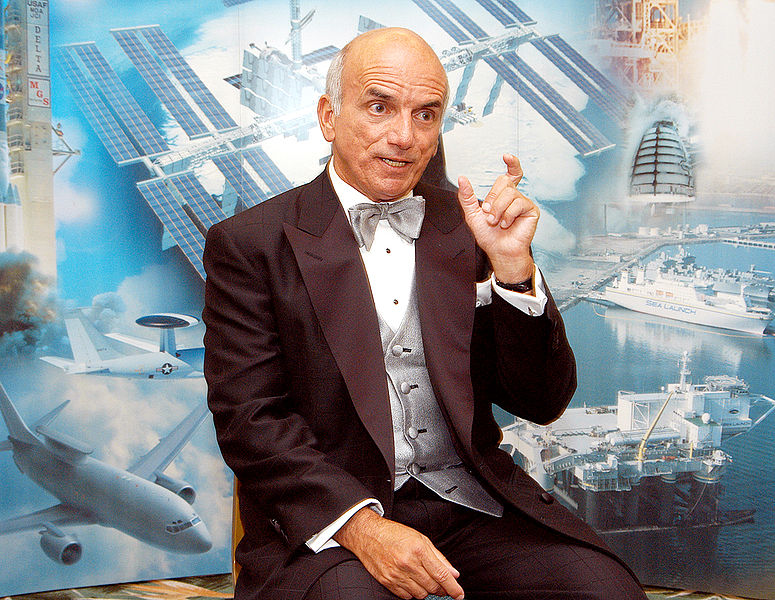
These questions have yet to be answered. Dennis Tito, a millionaire with Mars instead of stars in his eyes is focusing on a project he terms “Inspiration Mars.” This is not a landing but just a flyby. It’s not a four-person flight but rather a two-person flight by a man and a woman, both past child-bearing age for the reasons of radiation during the 501-day trip.

There’s one very conspicuous hitch in this program, readily admitted by all involved: the date. In order to be efficient, space missions to Mars must take place roughly once every two years, when Earth and Mars are aligned in their orbits. In 2018, there will be a special alignment that occurs infrequently and provides what the Inspiration Mars people call a “exceptionally quick, free-return orbit” that’s available just twice in every fifteen years. The next such launch window is in 2031, according to the Inspiration Mars site. This project has a very tight schedule.

 Inspiration Mars

By orbiting Mars at about 100 miles above the surface, the mission will avoid encountering the thin Martian atmosphere and will also use the so-called slingshot effect that takes some momentum from the planet itself to accelerate the spacecraft back to Earth and shorten the return trip considerably. It also reduces the amount of fuel that the craft must carry considerably.  Continue reading

Hyperloop: Is It Better, Faster, and Cheaper?

picture of Harry KellerBy Harry Keller
Editor, Science Education

Now that Elon Musk has revealed details of his Hyperloop concept for traveling between cities faster than double the speed of an airplane, it’s time to put his ideas to the test. Will they work? Should we build it?

Such a complex system has no trivial answer. We can consider two important factors, however. Will it work? Does it satisfy the demands of a new technology?

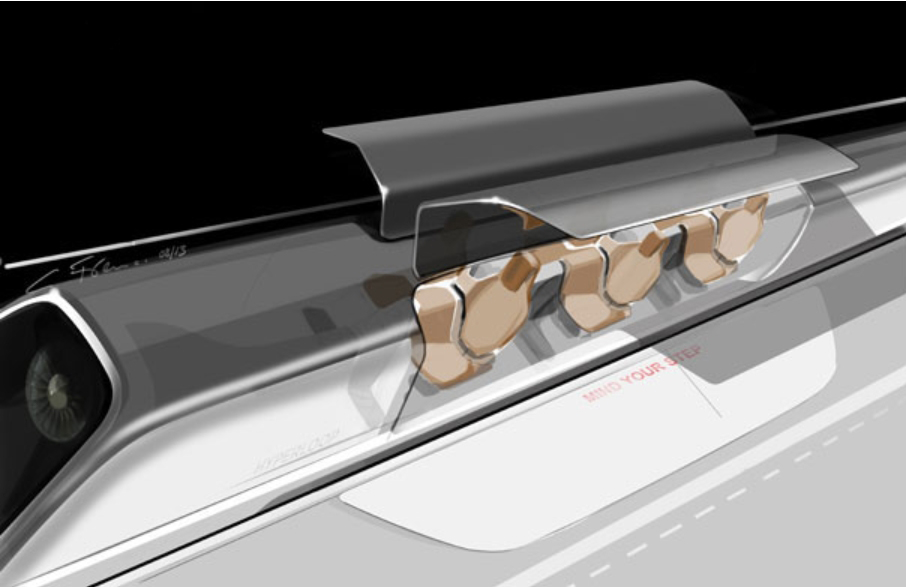
Hyperloop, by Elon Musk, Chairman, Product Architect and CEO, 12 Aug. 2013.

Hyperloop, by Elon Musk, Chairman, Product Architect and CEO, 12 Aug. 2013.

For the second question, the answer comes from considering how technology is supposed to work. When you inject technology into an existing space such as travel (or education for that matter), it should work better, result in faster results, and cost less than what it’s replacing or supplementing. Dan Goldin of NASA put it into really simple terms long ago:  Better, Faster, Cheaper.

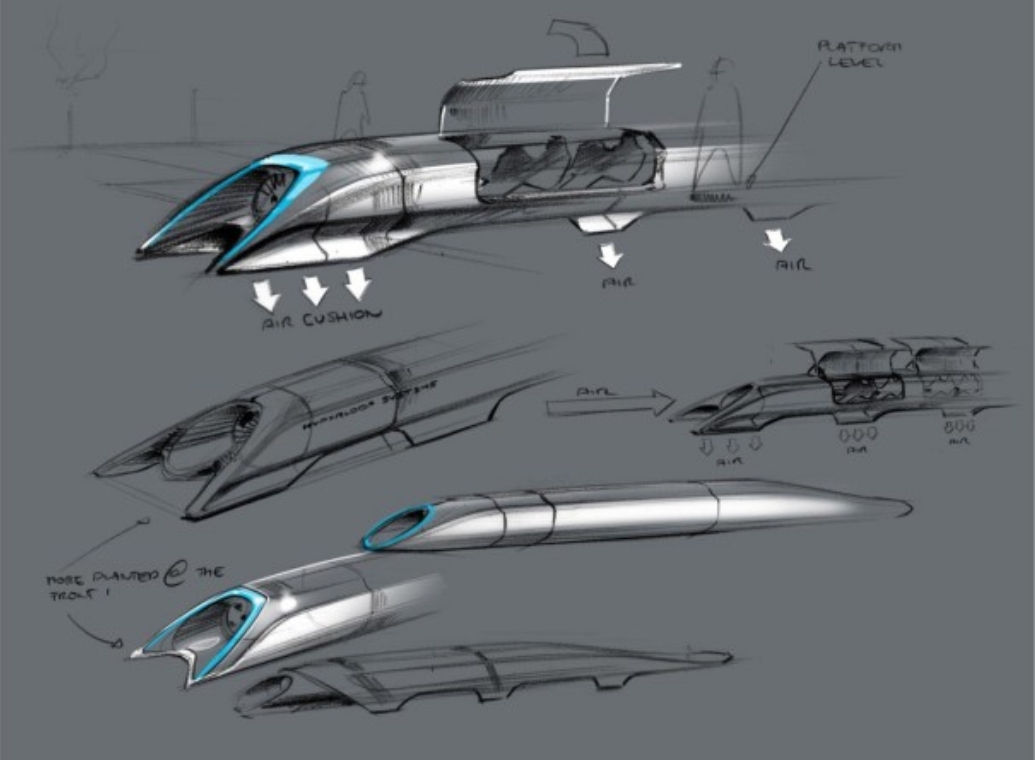
Hyperloop pod.

Hyperloop pod.

How does Elon Musk’s plan stack up? From his own blog, here are his goals for intermediate distance transportation of from a few hundred miles up to around 900 miles when compared to existing system.

  • Safer
  • Faster
  • Lower cost
  • More convenient
  • Immune to weather
  • Sustainably self-powering
  • Resistant to Earthquakes (he’s in California)
  • Not disruptive to those along the route

The second two items match nicely. Musk claims that a ticket on the Hyperloop from Los Angeles to San Francisco should cost about $20 one-way. The speed of 700 to 800 mph certainly counts as faster. Is it better too? That depends much on what you consider to be better. The travel pods will hold about 28 people if his design is chosen. They will not be spacious. His drawings suggest a rather cramped environment that could bother claustrophobic passengers, except that this system will be above ground and could have a view. However, the drawings don’t show windows.

Elon Musk in Mission Control at SpaceX. He is a South African-American inventor and entrepreneur, best known for founding SpaceX and for co-founding Tesla Motors and PayPal.

Elon Musk in Mission Control at SpaceX. He is a South African-American inventor and entrepreneur, best known for founding SpaceX and for co-founding Tesla Motors and PayPal.

A 350-mile trip might take around a half-hour, long enough to become upset with being in a small closed space with others. The potentially longest trip of 900 miles would require over an hour. All current modes of transportation, planes, trains, automobiles, and boats, have windows that passengers tend to like very much despite the view. Looking out of a window at 30,000 feet or traveling at 70 mph can be disconcerting. However, the power of the desire to see overcomes this problem for most.

Continue reading

My Vision for the 21st Century School

Frank B. WithrowBy Frank B. Withrow

A school facility is too expensive to operate only part of the year; therefore the 21st century school is designed to operate year round. The school day or time the school is open is at least twelve hours per day. Staff work on different shifts in order to efficiently use resources. Students attend at times scheduled in conjunction with their parents. Students can also access some instruction from their homes.

Obviously individual students do not attend all the hours the school is available. Students, in fact, attend at different times and different lengths of time in order to have the maximum learning take place.

schoolhouse_day_night7Students, with the help of the school, schedule family vacations when all the members of the family have common vacation windows. Such vacations can happen at any time of the year. In fact, if a family is vacationing at a historical site such as the Grand Canyon, Washington, DC, Europe or Asia, the school can work with the student and family to document the vacation and share such results in the school library of vacation experiences. If the family is attending the Olympics, the student might even report back to the school events from their viewpoint. For example, my ten-year-old granddaughter attended my wife’s burial in Arlington Cemetery. She produced a slide show on the history of Arlington Cemetery and discussed who could be buried there. Her grandmother had been a Navy Corpsman in World War II. The service included a 21-gun salute and a formal Navy internment. She shared this with her class in Pennsylvania when she returned home. Obviously, family vacations can be extended learning experiences.

Dr. Margaret S. Withrow, author of Auditorily Augmented Interactive Three-dimensional Television as an Aid to Language Learning Among Deaf and Hearing Impaired Children: Final Report (1980), is buried at Arlington National Cemetery.

Dr. Margaret S. Withrow, author of Auditorily Augmented Interactive Three-dimensional Television as an Aid to Language Learning Among Deaf and Hearing Impaired Children: Final Report (1980) and a Navy Corpsman in World War II, is buried at Arlington Cemetery.

The 21st century school contains a range of learning environments that includes classrooms, small team rooms, laboratories, technology centers and digital libraries as well as gyms and sports fields. In addition, schools have camping facilities that can be used year round. Schools have shops where students can create various projects they have designed. School auditoriums are used for community meetings so that the school becomes a center of community activities.  Continue reading

Broadband for Schools: Do We Need Gbps Bandwidth?

picture of Harry KellerBy Harry Keller
Editor, Science Education

A great many people are agitating for broadband in schools.1 They insist that our young people will not be prepared for the future without it. If you look at these people carefully, you’ll mostly find technophiles and members of companies making online learning products.

[Disclaimer: I am the president of a company that makes an online learning product.]

They are taking the easy way out. Schools have greater needs than broadband Internet access. Eventually they’ll all have it as the broadband wave sweeps our nation. (I’m writing in the U.S.)  However, has anyone really assessed the necessity for really high bandwidth, 1 Gbps and above? If so, I haven’t seen it.

ScreenHunter_06 Aug. 03 11.44

Consider what’s really important for schools to have. Number one is good teachers. Broadband has nothing to do with that. Number two is good leader/administrators. Again, no broadband here. Somewhere well down the list is new technology. But, what technology?

To know what the requirements will be, we must have a good crystal ball. We don’t have that so think about what’s available today rather than attempt to predict the future. You can find plenty of interesting online learning options. What are their bandwidth requirements? Leave out non-learning options such as students downloading the latest horror flick or porn movie. Consider only the requirements for learning software.

How many students at one time will be using the Internet for learning? Maybe half. What fraction of the time on the Internet actually involves downloading media? Media are the major bandwidth users. Now, average out the bandwidth for everyone. You’ll probably get a smaller number than you thought you would.  Continue reading

Free Textbooks for College?

picture of Harry KellerBy Harry Keller
Editor, Science Education

Another school year is about to start, and students are scrambling to keep their debt load low and their college experience as positive and marketable as possible. With plenty of textbooks costing $200, $300, and more, the extra $1,000 or so for books is a formidable burden to many.

isbn text3

Good news comes in many flavors, and textbooks for less is one example. A very quick search turned up four sources for textbooks that are either free or very inexpensive.

Each has its advantages and disadvantages. The future of each is uncertain, but now is the time to take advantage of great opportunities. Ideally, you should have a free online version of the textbook assigned by your professor. I am a former professor and know that professors often do not spend lots of time making textbook decisions and frequently don’t bother to check the cost to the students. Sometimes, your book was written by your professor and so adds to his or her bank account every time one is sold.

My field is chemistry. So, I naturally checked out the chemistry titles from the above providers. College Open Textbooks has 45 chemistry titles, all for free. The problem you’ll encounter is that none may match your instructor’s choice. Go see your instructor a year before the course if you’d like to influence the choices.  Continue reading