





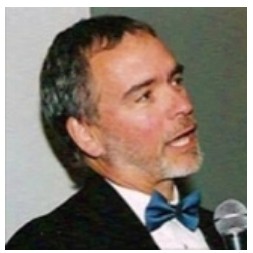
By Harry Keller
Former ETCJ Science Editor
& President of SmartScience
In 1960, two people, 3,000 miles apart, began writing software. One had just graduated as the valedictorian of her 900-student class at Hunter College in New York City. The other was a freshman at Caltech, fooling around with a desk-sized computer off-hours. As fate would have it, they would meet four years later in New York City and bridge a gulf of more than distance.
This is not a love-at-first-sight story, even though both were attractive young adults. The man from California had enrolled in graduate school, working toward a doctorate in chemistry. IBM had hired the young woman for a position at the prestigious Thomas J. Watson Laboratories office in uptown New York City. Then, IBM lent her to Columbia University across Broadway to teach computer programming courses.
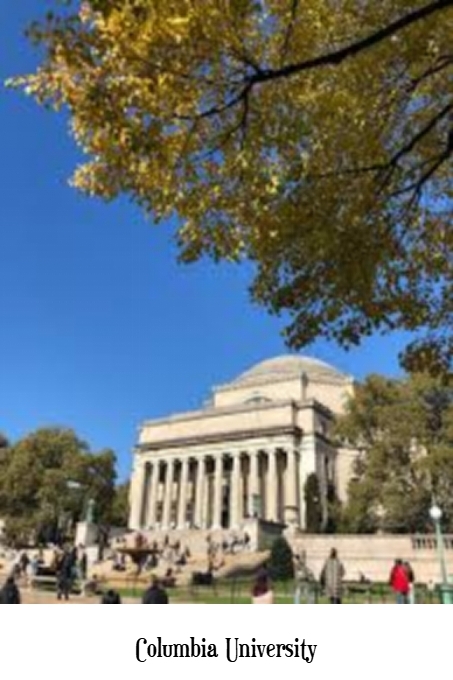
The man, who had a deep interest in computers, enrolled in a series of non-credit courses taught by Mrs. Pisani. One of the lecture halls in the chemistry building featured a demonstration lab bench at the front of the classroom. Mrs. Pisani would sit at the edge of the bench, allowing her shapely legs to dangle while explaining the intricacies of FORTRAN. Her demeanor reflected that of an intelligent, generous, and kind person. She must have made a strong impression on everyone in the class, who paid attention as if expecting a test at the end of each session.
Imagine the man’s surprise when the next semester’s course was assigned to Miss Schmidt as the new instructor. Could this new teacher be an elderly (compared to the man) spinster or a young, attractive woman? Though immersed in a demanding series of required graduate courses at the time, he took the time to visit Mrs. Pisani’s office to inquire about the change but left feeling dissatisfied. The course began, and the instructor turned out to be none other than the recently divorced Mrs. Pisani, née Schmidt. First came shock. Then, dismay at the trick Jayne and her officemate had played on him. Nevertheless, he became interested in learning more about the lovely, fascinating Miss Schmidt.
The man began visiting Miss Schmidt in the office she shared with Richard Francoeur, partly due to loneliness from the 3,000-mile distance from his roots, but more so because he found their conversations engaging. Being around an attractive young woman didn’t hurt. Although he was somewhat shy around her, he was bolder with others in the city. For example, he approached an attractive woman on the subway and got her phone number without fear of rejection. He met several other young women in New York City and didn’t hesitate to approach them. Why hold back from Jayne?
The story is too lengthy for an article that should be more concise. Skip ahead to discover a nervous young man asking this remarkable woman out on a date. Shakespeare in the Park was free, featuring Othello. Would she accept? She did! He promptly ended his relationships with several women he had been dating and focused solely on Jayne Schmidt. In his mind, she represented a significant improvement over all of them. A romance blossomed, leading to an engagement in the winter while she pursued a Master’s degree in Applied Mathematics at Cornell University. His life began a glorious phase that lasted nearly sixty years.
Her parents were amazing—caring and generous. Her father was a retired NYC steamfitter. They welcomed him into their family with open arms. He felt at home with them, having never met anyone like them. Certain he was making the right choice with Jayne, he experienced none of the usual pre-marriage jitters.
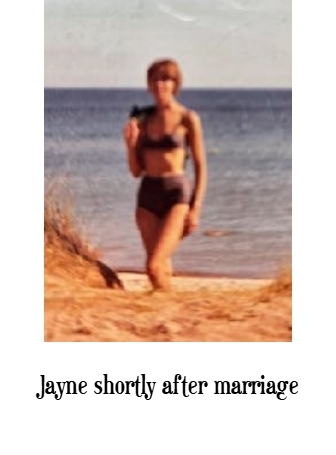
They married on May 7, 1965, in front of a Justice of the Peace. Her parents served as witnesses and were the only guests at the event. The modest wedding was followed by a small party that added only Jayne’s sister, Joan. Her mother, Caroline, baked a beautiful tiered wedding cake. A brief honeymoon ensued, during which they drove a few hours to a beach in Maryland and stayed three nights in a motel.
Two tall, attractive people who had just married sought a safe, adventurous life. Those two adjectives may seem contradictory, but not for them. The safety would come from an adequate income and savings, and the adventures would be of their choosing. The naïveté of youth played a part in this attitude, but these were already accomplished people.
The next ten years flew by as he completed his doctorate in just four years overall, two and a half years after their marriage. They relocated to Massachusetts for a rewarding position for him as a research scientist. She landed a job writing software at the same company. They enjoyed lunch together daily and embraced a simple life with more than enough income to support their modest lifestyle. The husband loved her deeply and believed she felt the same way.

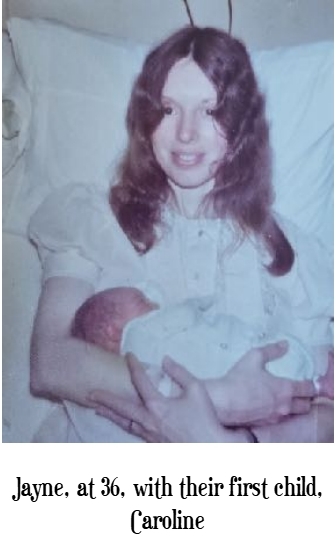
In 1973, they built a home in central Massachusetts on 11 acres of forest, streams, hills, and a swamp because the cost was low, and it was a lovely location. By that time, he was an assistant professor of chemistry at Northeastern University. Soon after, she enrolled at Northeastern’s School of Law. While she was attending law school, the couple had two children: a girl born on June 17, 1975, and a boy who arrived almost immediately after on August 25, 1976. He left academia for a role as a principal programmer at a large computer company while his wife took on a few jobs in contract law with local technology firms. His new position doubled his salary overnight.
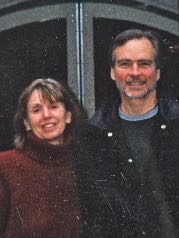
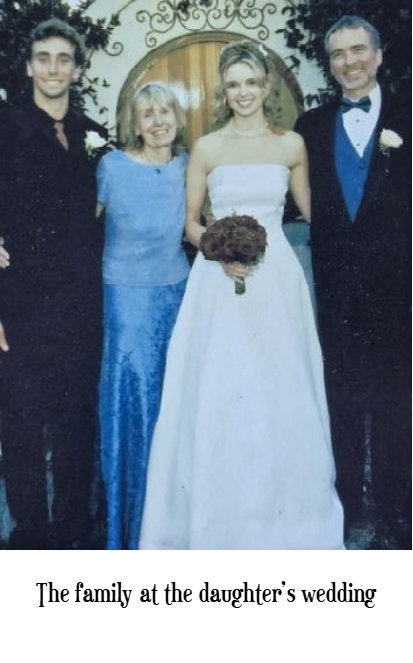
They raised their children in the home they built, a beautiful setting in the woods with a brook passing the front of the house that allowed the family to enjoy a happy life. They lived in that home for 25 years, until their children graduated from college. Along the way, the couple started a software consulting business that generated enough income to cover two expensive college tuitions (MIT and Brown). Living together 24/7 can strain some marriages, but this marriage grew closer and more fulfilling.
Their shared love, trust, and respect allowed them to endure many crises. One year, a hurricane knocked out the electricity for a week, which meant they had no pump to draw water from the well to the house. They had to carry buckets from the stream to provide water for flushing toilets, preparing meals, and maintaining hygiene. One winter, the water line from the well to the house froze and didn’t thaw until spring. They have a picture of the husband showering outdoors with snow next to his bare feet. No one complained or placed blame. Love and happiness continued without interruption.
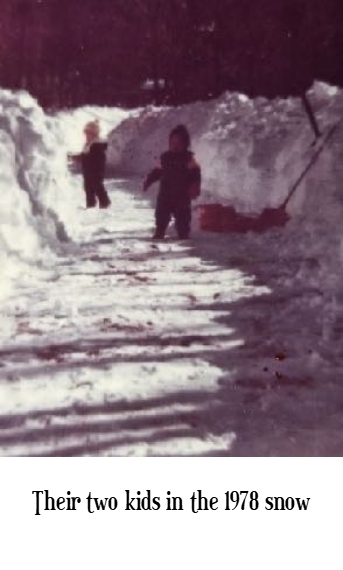
In 1978, when the snow in their 500-foot driveway reached chest-deep levels and the entire state was shut down for a week, the husband shoveled snow from dawn to dusk while Jayne cared for the children and prepared meals. Again, no one complained. They were fortunate to have enough food to last until the driveway was cleared. A loss of income one year made Christmas uncertain, but the two parents shopped at a local discount store and managed to create a wonderful Christmas for the children on a seemingly impossible budget. The Christmas tree from the land rose twelve feet into the air, so high that a hook in the ceiling was necessary to avoid it tipping over. Many more examples exist.
In 1999, they grew tired of creating software for others and decided to develop their own software to sell to educational institutions. This software represented a significant leap into the unknown, featuring numerous innovations. It operated entirely online at a time when dial-up connections were the norm, even in schools. Highly interactive and incorporating real experiments, it eclipsed other virtual science labs at the time, which were only available on disks and relied on simulations.
As they faced the challenges of entrepreneurship, this couple’s mutual trust, respect, support, and love deepened even further. They shifted their focus away from making new friends and concentrated on each other and their vision for the company. Their son, today’s CEO, assisted them in this endeavor. Jayne took the lead in writing a significant portion of the software, while her husband handled the parts that required scientific understanding. This shared act of creation reinforced their bond.
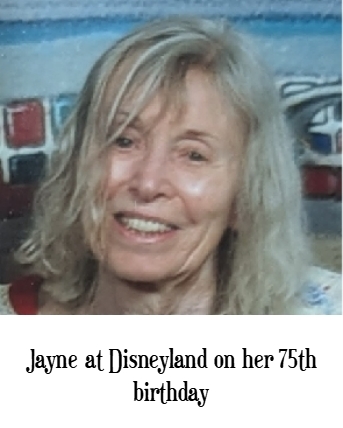
At the time of her 75th birthday, Jayne was a vibrant, energetic, young-looking woman.
Jayne promised their son an update to the software about six years earler, yet she never delivered it, despite repeatedly assuring him. She even claimed it would be easy. This was the first indication of trouble. She had always been quick and confident in her software work. Another warning sign was the death of her sister, who was ten years older, after years of decline due to Alzheimer’s disease. Jayne remained vigorous, even hiking trails at high altitudes.
It was around this time that the couple decided to take another leap into the unknown by building a mountain cabin as their retirement home. She had chosen a small village in the mountains where they could enjoy hiking right from their backyard on the lots they had purchased for their new house. She found a house plan she liked, and they set to work preparing for their new (and final) home.
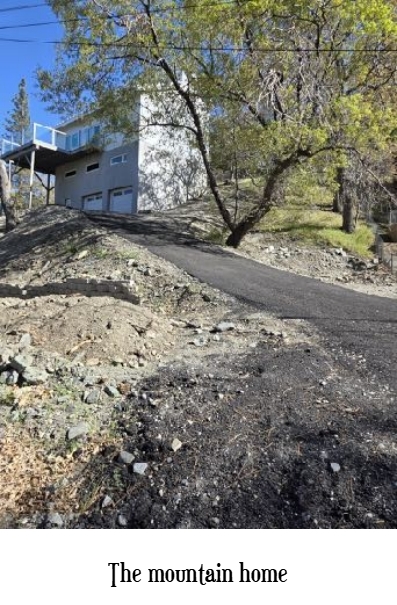
At that time, they and their two children were living in Southern California. The children had married and settled near the beach, one on the block where the husband had grown up. The mountain retirement dream home would be one hundred miles away from the children instead of the ten-minute walk (for one) or ten-minute drive (for the other) it had been for the last eleven years.

The husband handled all the wiring and nearly all of the interior finishing work, allowing his wonderful wife (and him) to enjoy the final days of their lives in a beautiful home with stunning views over treetops.
Ultimately, memory problems led the couple to a neurologist, who diagnosed her with Alzheimer’s disease. She remained the considerate, kind person she had always been. Initially, she appeared normal to most people. According to her neurologist, high-performing individuals can still function above average and seem normal unless they have higher expectations, especially as the disease progresses. Despite the Alzheimer’s, she never displayed the anger you see depicted in Alzheimer’s patients in movies and TV series, staying kind and loving.
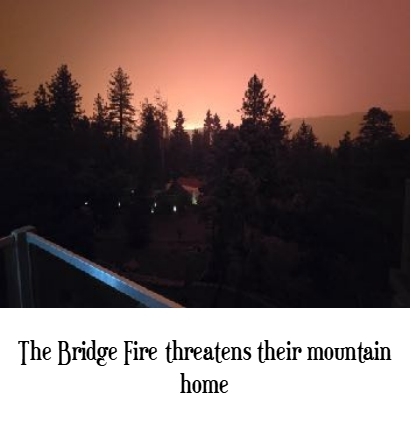
In September 2024, the Bridge Fire forced their evacuation for eight days. During this time, they stayed in different hotels. The rooms had small kitchens, allowing them to buy food from local markets. At the last hotel, the nearest market was three-quarters of a mile away. Jayne was sufficiently strong to make the walk without stopping until the middle of the return walk.
In recent months, physiological complications made things more challenging. Her husband remained her sole caretaker. She felt disoriented in her surroundings, yet she was in the couple’s new home and always exclaimed, “It’s so beautiful!” as she descended the stairs.
No matter how long a couple lives together, it’s never long enough for those who love each other. Even as Jayne continued to decline, they expressed their mutual love daily. “I love you so much” were the words exchanged each day, even as the stairs in their four-story home became more challenging for Jayne to navigate. They owned a pulse oximeter, which clips onto a finger to measure blood oxygen levels. A few months earlier, a visiting nurse (provided by Medicare) had been taking all vital measurements, including blood oxygen levels. After many weeks, the numbers remained strong, and the visits ceased. During this time, a physical therapist provided exercises that the husband struggled to get Jayne to perform. Alzheimer’s patients can be quite stubborn. The therapist stopped coming because Jayne could walk around the house and climb the stairs unassisted. Aside from her mental issues, she was “fine.”
Then, she wasn’t. Suddenly, she needed help climbing the stairs and sometimes standing up. A check of her blood oxygen level revealed it was very low. He called the doctor, who advised contacting 911. They have to say that to protect themselves, but further conversation suggested that the situation could be serious.
The ambulance transported EMTs to the home, where they identified atrial fibrillation. She was swiftly taken to a hospital recognized as a heart center. Tests in the ER revealed severe kidney failure. She was admitted, and dialysis commenced. Her husband, mostly retired, made the daily trek to the hospital to be by her side, offering every possible form of support.
She rallied and cherished the visits from her children. Her fourth dialysis session had to be stopped due to a high heart rate and low blood pressure. She was transferred to the ICU. The next two weeks were filled with fluctuations. The best-case scenario shifted from home nursing to a nursing home. Early on, they discovered she had a blood infection: Staphylococcus aureus. It turned out to be MSSA rather than MRSA, leading to twice-daily injections of a strong antibiotic that would take several weeks to resolve the issue, but the infection left her weakened. The toxins from the kidney failure needed to be cleared through dialysis. The fluid buildup in her lungs made breathing more difficult and also required removal through dialysis. Dialysis is an enervating procedure. All these procedures drained her remarkable strength to nearly nothing.
After a day of progress, the following day brought severe breathing difficulties. A loud snoring sound indicated that her tongue was lodged in her throat, partially blocking her airway. Sitting her upright alleviated the problem, enabling her to breathe almost normally. Despite this, her chest still struggled to take in air.
The call came in around 4 am. “Should we administer palliative medicine or take extreme measures to prolong her life?” The response: “I want to see her before deciding.” Her husband quickly dressed and tidied up the house, uncertain of when he would return. He arrived at the ICU around 5:30 am and saw that she was breathing quietly but slowly. She did not respond to his verbal declarations: “I love you so much.” He felt that, although she was unconscious, she could hear him. He took her hand and kept repeating the phrase loudly enough to ensure that the auditory signals reached her failing brain. Then, her breathing slowed to one breath at a time, with longer intervals between them until, at 5:50 am, she took her last quiet breath. It was as if she had waited to say goodbye and then left quietly to spare her husband further pain.
Until you experience profound grief, you won’t know what to expect. You might lose a friend, a grandparent, or even a parent and still not feel the pain as deeply as when you lose a true partner in life and love.
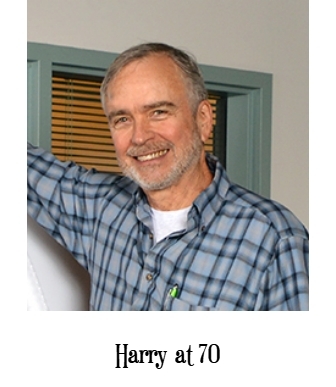
At this point, you’ve come to understand that I, your author, am the husband in this story. I cried, sobbed, and wailed as I had never done before when she left me forever in that hospital room.
I’ve lived a long life and have never encountered anyone like Jayne. She was not only kind but also exceptionally generous and incredibly intelligent, definitely in the genius category; she could handle just about anything intellectually. Her wonderful personality provided the support we needed to raise amazing children. I could easily write a book about all the remarkable things she did to ensure we had a loving family where we all, especially the children, felt we could achieve anything we set our minds to. Despite the pain of losing her, I believe that I am one of the luckiest men on Earth.
Brilliant people are uncommon, yet not rare. Kind and generous individuals are not hard to find, but they are, unfortunately, too few in today’s world. Brave people, willing to embrace uncertainty despite the risks, do exist, though not in large numbers. Someone who possesses all these traits is truly exceptional. I was incredibly fortunate to find one who chose me as her lifelong companion. My heart now has a profound void that will never be filled for as long as I live. Her loss taught me that all my work, plans, and hopes depended on her presence. I am adrift, robotically doing what I must to get through each day, hoping to emerge from the depths of sadness and pain I feel daily, which I have experienced since the fateful day of February 3, 2025, as I write these words. Life often throws you curveballs, but this one came far too fast out of the blue.
When these events occurred, I was writing a novella intended to be the first in a trilogy. Although I have tried, I cannot concentrate enough to continue this endeavor, which was enjoyable when I started. I had many household projects that would complete our home, but I can only manage the smaller ones now. The larger ones are beyond my ability to plan and execute. I hope to finish them in memory of my wonderful wife and her zest for life. About a week before she left us forever, she spoke softly, “Tell Harry to take care of himself.” She always put herself last, just as her mother had before her. I still do not know whether I can successfully navigate this terrible transition.
I am writing this small tribute to her and our life shortly after her death on February 3, 2025, to help me return to everyday life someday. I don’t know when that will be. Sometimes, I wish I could hold on to this feeling forever because she meant so much to me, and I want her always to mean that much. I never want to lose this sense of closeness to her, even though she’s gone.
Extreme love can lead to intense pain, but the latter is worth the former. My life is much more meaningful because of my incredibly wonderful companion.
Filed under: Uncategorized |


 Educational Technology and Change Journal

Harry, I think you handled this celebration of your life with Jayne perfectly. This has to be the toughest assignment a writer faces, a tribute to the love of their life. The result is a love story of two extraordinary people that transcends the natural boundaries of life and touches eternity. You’ve skillfully avoided sentimentality and drama and replaced it with prose that’s readable, relatable, and memorable. Well done. -Jim
Jayne sounds like an exceptional woman. The kind you don’t meet any day. You were fortunate to have had such a long and happy life with her. Blessed actually. Lovely story, I enjoyed it very much.
Thank you for sharing your story. I’m feeling exactly the same since my husband died. Your story helped me to know that I’m not alone.
You are truly blessed