






By Michael Akuchie
English Composition Instructor
Southern Illinois University Carbondale
The United States has a reading problem, and according to findings by the National Endowment for the Arts (NEA), it is not wrong to worry about the future of classroom learning and the culture of reading for pleasure. Per the NEA’s survey of US adults who read books in 2022, only 48.5% said that they had read a book within that period. When asked about literary works, such as novels and short story collections, the percentage of adults who reported having consumed at least one literary piece declined to 37.6%. As adults pay less attention to books, especially literary works, that apathy has unfortunately trickled down to first-year college students, who represent the future of America’s labor force.
Rather than channel our energy towards feeling outraged by the declining number of people willing to read, it is worth tracing the problem to its root causes. A recent study conducted by the University of Florida and University College London made an intriguing discovery. According to the findings, reading for pleasure in the US has dwindled by more than 40% from 2003 to 2023. The study highlighted the ongoing growth of digital media, inequitable access to reading materials, economic insecurity, and a significant decline in leisure time due to factors such as working multiple jobs or living in a rural area without a nearby library.
Indeed, these are genuine concerns that affect us as a people and our ability to read books for leisure or educational purposes. I have students who work one to two jobs just to pay the bills, and this not only places a significant strain on their physical and mental health, but the constant worry over their finances limits them from completing reading exercises ahead of class. Punishing them for not doing the reading is hardly the best option, as doing that would mean focusing on the symptoms of a problem instead of the actual cause. Like other educators, I want students to read and participate in class discussions because it expands their critical thinking possibilities, helps them develop their concentration, builds their vocabulary, and gives them a better chance at success in life upon graduation. When they refuse to participate in reading and discussion activities, we risk failing to prepare them for success in the outside world.
According to a study on the reading ability of first-year college students at a Southern US university, only 32% of the students could read at a 12th-grade level. What’s more, only 69% of the first-year students were likely to excel in the reading section of the GED exam. As the country’s literacy rate continues to slump, it raises two crucial questions about the situation that educators find themselves in.
How can today’s students, especially first-year college students, acquire the necessary critical thinking and rhetorical analysis skills in first-year writing courses when they are unwilling to read and respond to assignments? When a college student feels unmotivated to identify the rhetorical appeals used in an essay, what becomes of the close reading skills we are trying to teach?
I propose incorporating narrative video games into the syllabi of First-Year writing programs to help students develop close reading skills, understand how character analysis works, and identify rhetorical appeals in digital texts. Although narrative video games, like other genres of games, possess the charm of being a means of mental relaxation, instructors can transform them into effective teaching materials for the classroom. This article will expand on the possibilities of learning with story-driven games in English Composition courses.
Play to Learn, What Others Think
In recent years, game studies scholars have considered the learning possibilities of video games for students, given the latter’s increased interest in the world of play. In his book What Video Games Have to Teach Us About Learning and Literacy, James Paul Gee argues that when people “learn to play video games, they are learning a new literacy.” No longer limited to the scope of reading and writing, video game players can acquire visual literacy by interacting with images, symbols, and dialogue texts in games, according to Gee.
Adopting a more practical stance, Rick Van Eck’s article on digital game-based learning proposes that video games, although not traditionally designed for learning, can be effectively introduced in the classroom. Instructors would create syllabi that clearly state the learning outcomes of the class, using games as a primary text. Whether games are deployed for use as a primary or secondary text depends on the instructor. For instance, teachers can ask students to play and then read about the lore of Assassin’s Creed IV: Black Flag to perform a character analysis on the protagonist Edward Kenway, especially the moral choice of siding with the Assassins, a group of people in the shadows who justify their need to kill as a means to preventing another group, the Templars, from achieving world peace through manipulation. They might even evaluate the overall appeal of the game, using criteria such as setting (the game is set during the Caribbean’s golden age of piracy in 1715), gameplay mechanics, and the strength of the story.
There are numerous possibilities for incorporating games into English Composition courses, and students can feel more engaged with learning by simply asking them to apply the same skills they spend hours developing. I agree with Van Eck’s theory that this method not only serves as a quick and effective method of demonstrating the learning possibilities of video games, but it can provide the data that convince developers to make more serious games such as Microsoft Flight Simulator and the Kerbal Space Program where players (students) can role-play as pilots and get to understand more about aviation whether within earth or beyond.
In considering narrative video games as a potential pedagogical tool, we must first understand why they appeal to players. Amy Shirlong Lu’s paper “Story Immersion of Videogames for Youth Health Promotion: A Review of Literature” points to the fact that children and adolescents possess a “highly imaginative” mind, thereby making them a more welcoming audience than older adults. In two of the English 101 sections that I am teaching this semester, 32 out of the combined total of 35 students have played a narrative video game at some point, with the majority of them liking the genre for setting a high standard of realism and story quality.
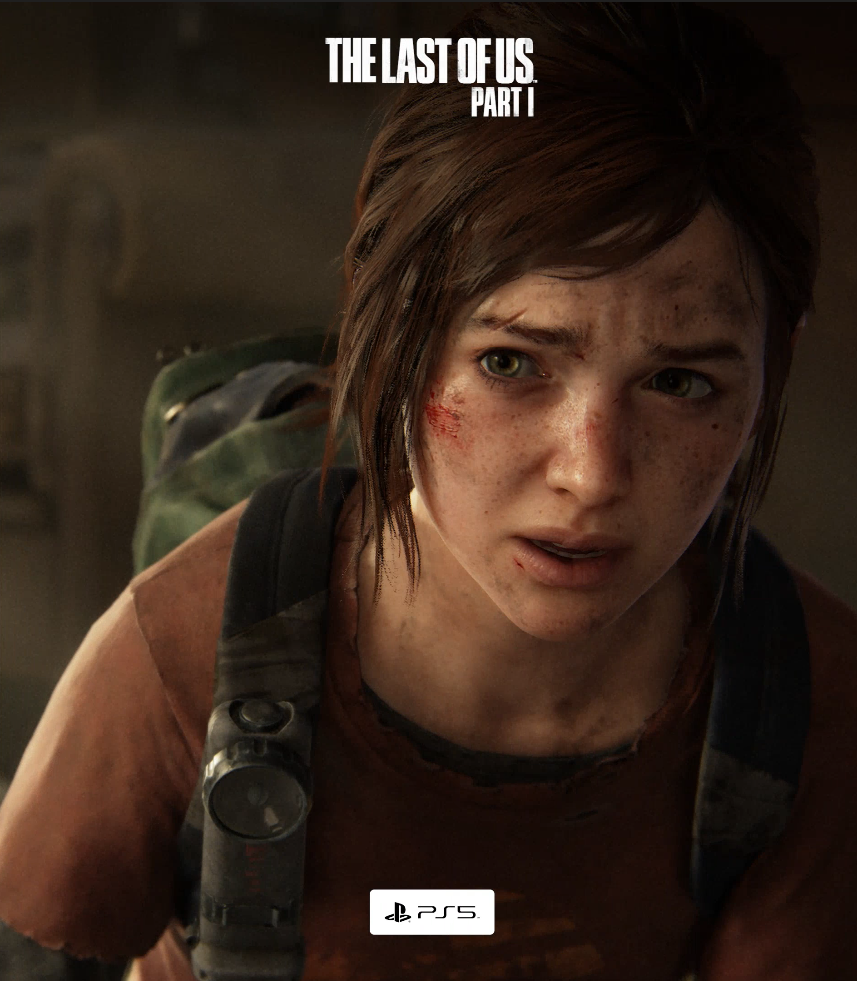
Narrative-based video games, such as Naughty Dog’s The Last of Us, offer players immersive experiences where they get to play as well-woven fictional characters whose lives are repeatedly impacted by a succession of in-game events, thereby shaping their identities and personality traits in unique ways. In The Last of Us, players meet the main protagonists, Joe Miller, a middle-aged man, and Ellie Williams, a fourteen-year-old girl, two characters who eventually form a father-daughter bond in a future version of the United States overwhelmed by a zombie infestation.
The plot revolves around both characters, who travel across the country in search of a cure, with Ellie playing a significant part, as she is immune to the Cordyceps virus, a mutated fungal infection. While players learn survival techniques such as crafting weapons and medicines with scavenged items, the game stands out in the way it presents the transformation of Joel and Ellie’s characters from the start of the game to the end, adding a fresh layer of complexity to their identities at several points. What is most interesting to note is that both in-game characters experience specific shifts in identity as a direct result of personal actions or a sequence of uncontrollable events, a trend similar to what students observe during critical readings of texts such as Charlotte Brontë’s Jane Eyre and Fyodor Dostoevsky’s Crime and Punishment.
A notable instance of Ellie demonstrating a shift in identity is seen in the chapter when Joel suffers a severe injury and is unable to fulfill his role as a guardian. Ellie steps up and takes on the duties of a parent, which, in the context of a post-apocalyptic period, entailed hunting animals for food and defending herself and Joel from opportunistic human factions and mindless zombies. No longer a dependent, Ellie demonstrates a significant shift to the difficult but necessary identity of a provider, one who Joel must rely on for survival.
This event not only mirrors real-life experiences but also connects with players, many of whom are first-year college students, by detailing how agency and circumstances can impact the lives of in-game characters. Through close reading of scenes like this in the game, students can write short reflective notes on the rhetorical appeals of a particular moment. Students can even place the game’s main characters in conversation with characters who share similar attributes, thereby facilitating a comparative analysis that requires hours of close reading and critical thinking.
Another event, perhaps the most emotionally-charged scene that serves as the game’s finale, is when Joel discovers that, to make the antidote that can potentially end the Cordyceps virus, Ellie must die. Although Naughty Dog did not clarify the reason behind Ellie’s immunity to the virus, the fact that she cannot be infected makes her a key ingredient in developing a cure. Unwilling to step aside from his role as a parent, Joel willfully slaughters the scientists who had prepped Ellie for the procedure intended to create the vaccine.
Not only does he commit murder, but he lies to Ellie about the procedure, saying that they failed to create a cure and gave up trying. Joel’s actions indirectly add a layer of complexity to his character, making him look and feel like an evil-doer to players. Students can find plenty to explore regarding Joel’s moral choices, presenting instructors with an opportunity to engage them through writing assignments that draw on their extensive knowledge of video games.
Thinking About Games Differently
Students should not study video games in isolation, neglecting traditional literary texts in the process. However, teaching students to approach close reading exercises using video games with the same level of rigor they would for an Op-Ed piece or novel would significantly stimulate their minds, improving class participation and their acquisition of literacy skills.
In September of 2024, I assigned both of my sections to write an analysis paper on any text (digital or print-based) of their choice. Before that assignment, we had watched a few scenes of The Last of Us and commented on the rhetorical appeals of the scenes. I had also taught close reading using the protagonists’ actions in the game, noting that students can apply this approach to TV shows and movies.
I allowed them to choose what they wanted to write about because I genuinely wanted to gauge their interest in something they cared about, rather than a text that had been hand-picked for them. As I had guessed, nearly half of my 35 students opted to work on video game analysis, while the rest chose movies, TV shows, and a novel. Not only were their arguments grounded in the texts and pleasing to read, but they also confirmed my feelings that, if allowed to study the games they play, my students would likely feel engaged with the assignment and complete it.
The decline of America’s reading culture should not lead us to consider stripping our syllabi of close reading exercises and other activities that demand critical thinking. Instead of trying to make things easier for students, I believe we should strive to make learning an enjoyable experience. Will video games completely change students’ lackluster performances in First-Year writing courses for good? Absolutely not. However, we can strive to return students to the level of meticulous textual analysis that we would like them to achieve.
I see narrative-based video games as a bridge that can allow us to meet students where they are, inviting them to engage in rhetorical analysis, analytical writing, and evaluative composition, using a medium they consider as important as oxygen. We may not be able to prevent the decline in reading, but we can ensure that students do not miss out on learning simply because books no longer appeal to them.
[End]
Filed under: Uncategorized |


 Educational Technology and Change Journal

Leave a comment