Profiles of Inspiration for All of Us

Frank B. WithrowBy Frank B. Withrow

[Note: In this article, Frank shares profiles of some very amazing people who view disabilities as inspiration rather than obstacles: Desdie and Frank, Nanette Fabray, Mabel Hubbard Bell, Henry and Emmanuel, and Dennis. -Editor]

Desdie and Frank

They were both independent and working for an insurance company. Desdie was a PBX operator, and Frank was a rising claims manager. Both came from large farm families. Frank was the oldest of ten children born in what is now Withrow Springs State Park in Arkansas. Desdie was among the younger daughters of a father who had ten children. Her birth mother had died two children after Desdie was born in Oklahoma.
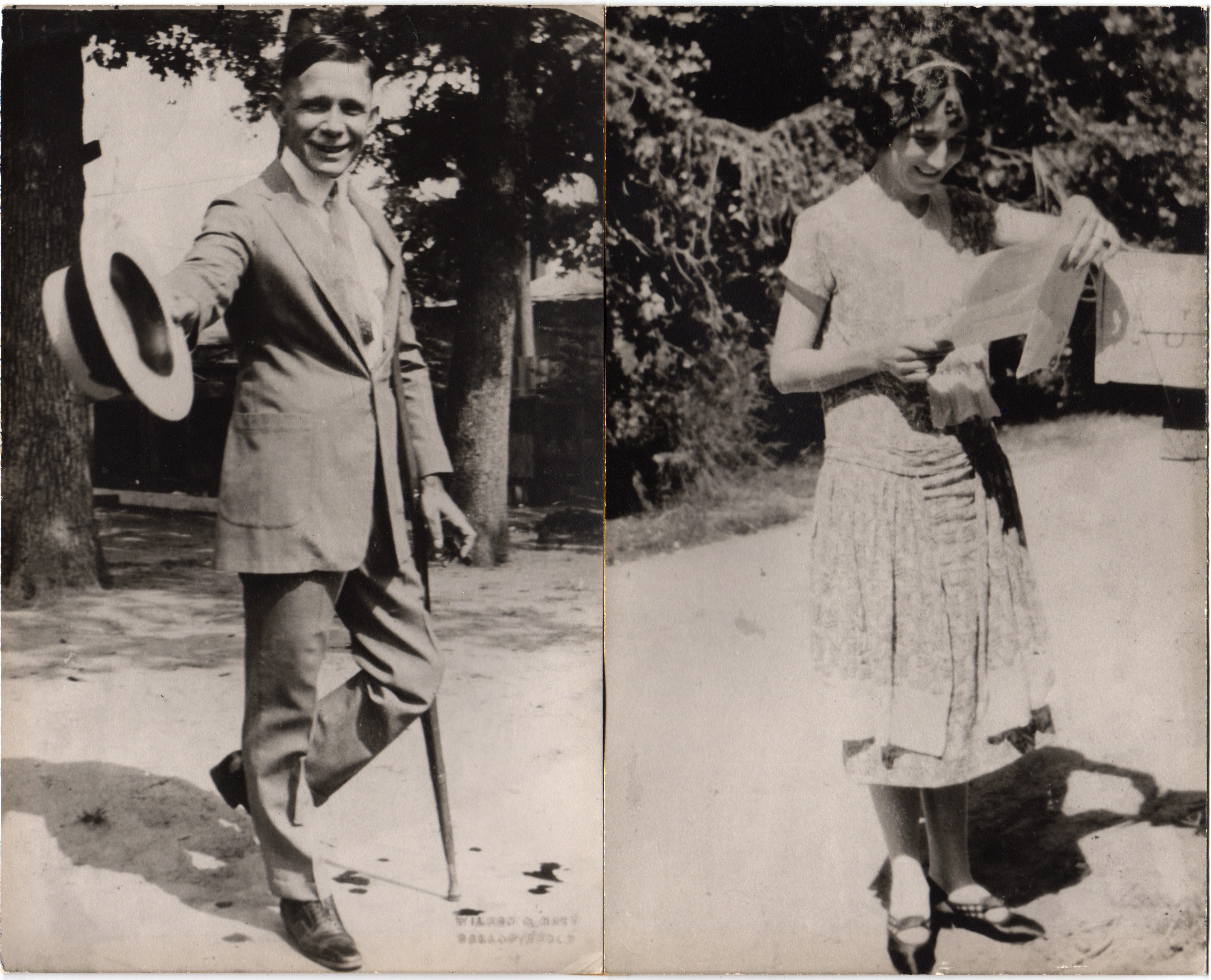
Frank Sr. and Desdie (click to zoom in)

His stepbrother, Fred, had dropped Frank as an infant on a farm implement. At the time the wound had been treated, but his knee healed in a frozen 90-degree bend position. Frank and Desdie had been seeing one another for some time when Desdie took Frank to meet her father, Jack Thomas. Jack seemed to like Frank, but later talked to Desdie. He questioned whether they were developing a serious relationship and warned her about marrying a disabled person. Desdie responded by saying he was one of the most interesting men she had ever met. She thanked her father for his advice and went on to marry Frank in 1923. Frank’s mother died in 1925, and Desdie and Frank brought the three youngest girls and two youngest boys to Dallas to live with them. His father was unhappy since he used the children to pick cotton, but Frank had promised his mother on her deathbed to care for the younger children. Continue reading

iPhone 4 – Redefining Mobility in Education

Jim ShimabukuroBy Jim Shimabukuro
Editor

This journal, Educational Technology and Change, is built in a WordPress web publishing environment. I hesitate to call it a “blog” because people tend to immediately close on it and can’t see that WordPress is no more a blog than the smartphone is a phone.

I’ve had my iPhone 4 for about two months, and it’s already changing my view of what it means to be connected. WordPress and iPhone, together, are redefining the publishing landscape for me. They’re not only placing publishing in the hands of the many, but they’re making it possible for them to do it from anywhere at anytime. It’s no longer a matter of waiting until I can get to a computer with web access. Instead, I have it with me at all times wherever I am, eliminating the waiting altogether.

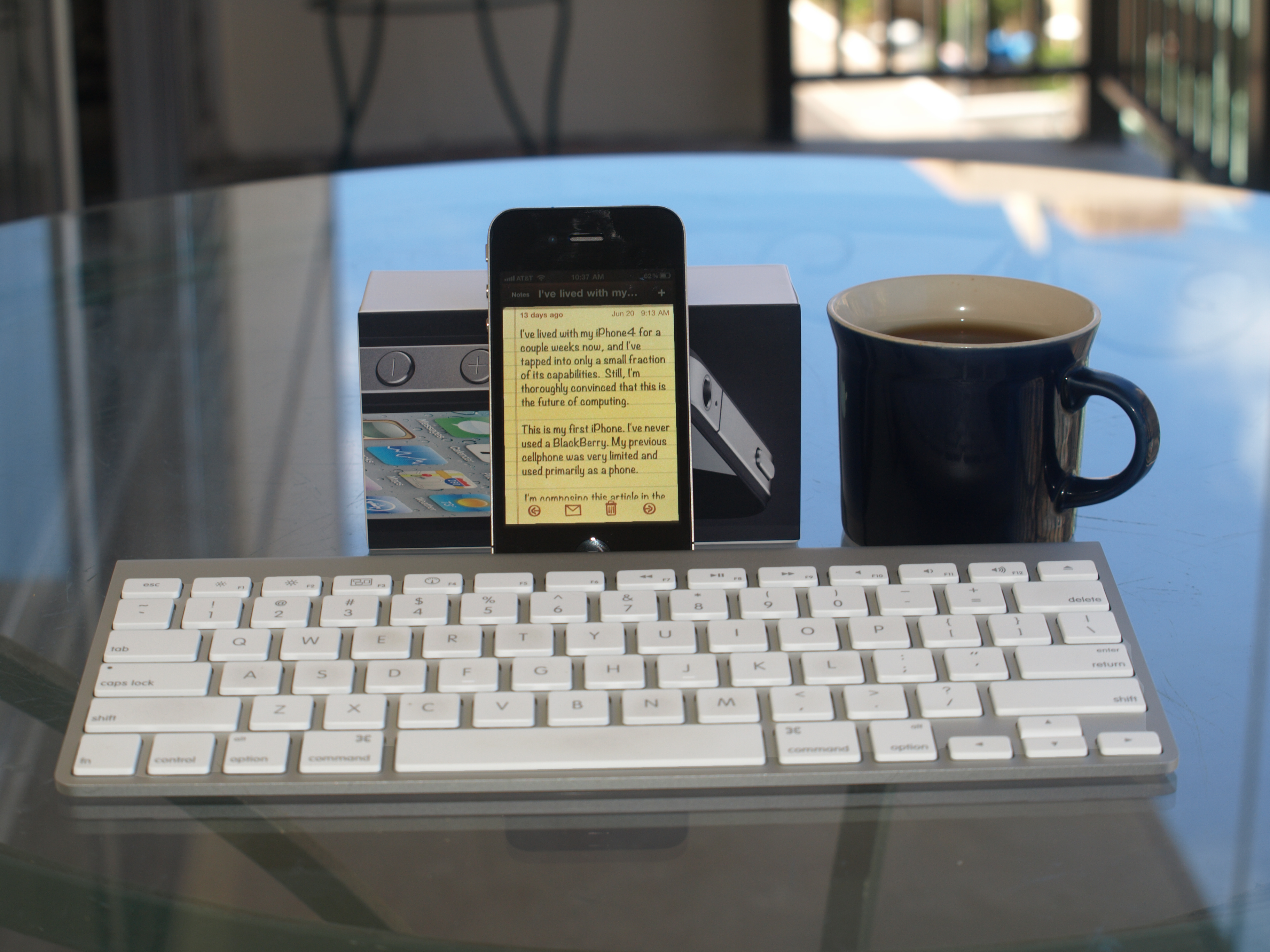
An iPhone showing the text of a note about itself,  with a wireless Bluetooth keyboard and a coffee mug, on a glass table.

I can now write an article using the built-in notes application and a Bluetooth wireless keyboard that I originally purchased for the iPad. In fact, I’m writing the first draft of this article on the iPhone. A couple months ago, I would’ve scoffed at the idea of composing on a screen the size of a credit card. Impossible, I would’ve sworn. But I’m doing it now, and I find it just as comfortable as my laptop or desktop. Continue reading

Tactile Learning: Italian and US Experiences

from left to right: Claude Almansi, Frank B. Withrow and Tiziana Castorinaby Claude Almansi, Frank B. Withrow, and Tiziana Castorina

[Note: I started writing about the project of Liceo Artistico De Fabris, then I asked for feedback from Frank B. Withrow, because he has written about his experience in enabling tactile learning in “Technology Can Help Deaf-Blind Infants” and from Roberta Ranzani, with whom I have collaborated in several subtitling and educational projects. Frank sent the text about tactile books and the American Printing House for the Blind. Roberta mentioned a tactile astronomy workshop for the blind that took place in Venice. A friend of hers, Tiziana Castorina, had attended, and Roberta asked her for a description. Thanks to Tizana and Frank for allowing me to post their texts here, and to Roberta for her suggestion and for the introduction to Tiziana – CA]

Claude Almansi: Tactile books — Liceo Artistico De Fabris

On June 29, 2011,  Roberto Ellero sent me the URL of a video he made about a project by Prof. Adriana Sasso and her students at the Liceo Artistico “De Fabris” (Nove, Vicenza, Italy — liceo means secondary school): creating tactile books for blind and sight-impaired children.

From the video, it seemed that this project could be relevant to previous discussions here about project-based  learning: for example, see “Project Based vs Problem Based Learning” by Jan Schwartz (June 26, 2011), in reply to Jim Shimabukuro’s “A Quick and Dirty Look at Project-Based Learning” (May 20, 2011). So I asked Roberto if it would be alright to subtitle it in English (well, in Italian and French too). He agreed, so here goes:

(LIBRI TATTILI – Liceo Artistico di Nove (Vicenza). Uploaded by rellero, June 29, 2011. More information, in Italian, about the project: LIBRI TATTILI – Creazione di una favola tattile per bambini non vedenti e ipovedenti.)

Continue reading

Technology Makes Home Schooling a Viable Alternative

Frank B. WithrowBy Frank B. Withrow

With a wide range of curriculum available on the Internet, home schooling has become a more viable option for some families. The schoolhouse offers more than just academic resources. It also offers a social environment where friendships are established and where students learn to work together in teams. Learning resources on the Internet offer high levels of content and highly qualified teachers. Such programs, especially if approved by the state, are viable opportunities for learners of all ages.

Consequently, some two million students (Dan Lips and Evan Feinberg, “Homeschooling: A Growing Option in American Education,” Heritage Foundation, 3 April 2008) in the USA are now engaged in home schooling. To partially make up for the social interactions of the regular public school, some areas have an extensive set of options for families with home scholars. These include field trips, debating contests, orchestras, community sports teams and even drama theaters.

Continue reading

Obrigada Lisboa! ED-MEDIA 2011 Conference or ‘This Is Your Tribe’

Stefanie PankeBy Stefanie Panke
Editor, Social Software in Education

The 23rd annual World Conference on Educational Multimedia, Hypermedia & Telecommunications (ED-MEDIA) took place from June 27 to July 1 in Lisbon, Portugal. The event brought together approximately 800 participants from 60 countries. At the backdrop of the beautiful Faculty of Letters Campus at Lisbon University, teachers, researchers, software vendors, instructional designers, administrators and multimedia authors discussed future directions at the crossroad of education and technology – which happened to blend perfectly with experiencing Portuguese hospitality!

Lisbon seen from the sea.

ED-MEDIA attracts participants from various fields such as pedagogy, educational psychology, computational science and information science. Organized by the Association for the Advancement of Computing in Education (AACE), the annual conference takes place at various locations in the US, Canada, and, approximately every third year, Europe. The attendees of this year’s event experienced a packed conference program. In addition to various keynotes, invited lectures and an extensive graduate program track, approximately 600 presentations, posters, workshops and symposiums were competing for their attention. This report mirrors my own eclectic view based on four conference days that allowed participants to choose from up to twelve concurrent sessions. Continue reading

A Vision of Blended Learning in 2013

Frank B. WithrowBy Frank B. Withrow

In 1988, the Star Schools distant learning program was passed by Congress envisioning satellite delivered lessons to students in remote locations by well trained teachers that were not available locally. One rural superintendent estimated that with the Star Schools program he was able to offer twenty percent more advanced science, mathematics and language programs. More importantly these courses usually had more highly qualified teachers. Often teachers were university personnel. They had guests who were highly placed researchers from industry and research institutions, national figures and astronauts.

The design of these early programs followed the traditional classroom model. However, over time they developed styles of their own and moved from satellite distribution to Internet distribution. Satellite distributions meant that lessons were available at specific times even though they could be recorded and used as needed. Early classes were very much like traditional classes only delivered by the available technology.

The Internet offers a wider range of alternative learning options. Learners can work in either teams or individually in a learner centric blended environment. To understand a true blended learning program, we will follow two students. One is from a small rural school on the Texas-Mexican border, and the other is from an inner city school in Chicago. The small rural school has only eleven students in its senior class. Raymond is very good in STEM subjects and wants to go to the Massachusetts Institute of Technology and study computer science. Continue reading

Ranking Online Education Programs

Judith McDanielBy Judith McDaniel
Editor, Web-based Course Design

U.S. News & World Report announced last week that it was expanding its program of college ranking with a new category for online universities and programs. The announcement from editor Brian Kelly sounded upbeat, nonpartisan, and helpful. “Later this year, U.S.News & World Report will be publishing an expanded directory of online education programs with more detailed information including rankings and other searchable data.”  The goal, says Kelly, is to help students make more “informed choices” about an online program. The survey questionnaires will be sent out next week (mid July) and will ask schools to provide information. The questions in the survey, Kelly promised, “are based on academic and industry literature reviews, as well as consultation with numerous heads of online degree programs in multiple disciplines.”

My own experience with the U.S.News rankings is limited and specific. As my first year of law school drew to a close, I realized that I wanted to transfer to another school — for a variety of reasons, both personal and academic. The school I was attending was ranked in the top 25 law schools in the country. The school that attracted me, because of its location and its focus on international law, ranked more than 50 places lower. And yet when I told the dean at the school I was currently attending that I was thinking about transferring and asked her about a reference, she was impressed that I had gotten into that school. Continue reading

How the Non-Disabled View the Disabled

Frank B. WithrowBy Frank B. Withrow

When I was four or five in the 1930s, my 20-year-old cousin came to Dallas and lived with us while he was looking for work. As a young man, he liked to play with me, tossing me in the air etc. I was fascinated since my father had a crippled leg and used a crutch and many of his friends used a wheelchair. When my cousin finally got a job, I cried bitter tears. I knew girls grew up and that I could see women still had two legs, but I got the idea that when men went to work their legs were broken or cut off. My mother assured me that my cousin would not lose his leg or legs because he had a job.

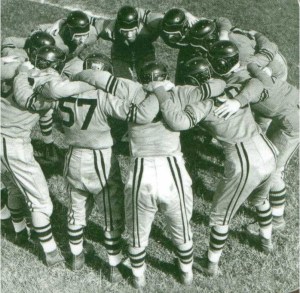
Paul Hubbard, a deaf player at Gallaudet University, invented the huddle in 1894.

When I became a teenager and learned some misconceptions about sex, teenaged bullies began to call me a bastard. My mother was an attractive woman, and they could not conceive of her having sex with my crippled father. They knew even less about sex than I did. I had read about the Monroe Doctrine of carrying a big stick and walking softly. I took a small baseball bat and threatened the biggest bully, which stopped me from being called a bastard and enhanced my reputation. Continue reading

Computers Can Help Language-Disabled Learners

Frank B. WithrowBy Frank B. Withrow

I worked with language-disabled children at one time. Many of them would probably be classified today as children with autism. Some identified more easily with computers than with humans. I developed a series of drills and lessons called PhonicPicks.com. The original work used HyperStudio, and it was hoped that teachers would develop additional lessons on their own.

The program developed vocabulary with nouns, included language activities with questions and answers, developed descriptive sentences, and included stories. I established a website to begin transferring a much larger DVD version of the program. The test website is still active with one story, “Eloise the Little Pink Elephant,” available in both English and Spanish.

Book cover with a nice but homely pink elephant right, some books bottom left and top left: Eloise the Little Pink Elephant - Frank B. Withrow ABLE COMPANY - 232 E Street, NE - Washington, DC 2002 - © 1999. Bottom right a green box with GO

I semiretired in 1992 and began working for the NASA Classroom of the Future. This turned my interest more to science and mathematics rather than language. I have a number of grandchildren and great grandchildren so I have kept the website active.

Continue reading

Law of Unintended Consequences Meets Law of Supply and Demand: New USDE Rules for Online Programs

Judith McDanielBy Judith McDaniel
Editor, Web-based Course Design

[Note: Judith is both a college professor (PhD) and a lawyer (JD). -Editor]

Under federal USDE rules that took effect on July 1, 2011, every online program, school, university is now required to apply for approval in every state in which it has (or recruits) students. Schools have three years to come into compliance with the new regulations, but as of July 1, they must show a “good faith effort” to meet this requirement. A number of educational journals have been following this implementation (“As Costs of New Rule Are Felt, Colleges Rethink Online Course Offerings in Other States“), but I’d like to look at the consequences down the road a bit further.

According to U.S. law, each state regulates its own education. In the past, this has meant that it could set the standards for the brick and mortar institutions that did business there — that have an actual physical presence in the state. Today’s new rules do not require that the institution have a brick and mortar presence in the state, but if a student is physically present in that state, the school in which the student is studying must meet state standards.

Disclosure:  I teach in a fully online M.A. program. My students come from all over the United States. I have had students studying while they lived in Europe or South America. Today, one is attending a seminar in Dublin (physically present in Ireland) and receiving credit. Recently, a student living in Ohio lost her job and moved back to live with her parents in Texas. Another moved with her husband from Vermont to a new job in South Dakota. Life goes on, and adult students frequently choose online education because it allows them the flexibility they need as adults with professional and family lives. Continue reading

Distance Learning Gives Many Students a New Lease on Learning

Frank B. WithrowBy Frank B. Withrow

In our Star Schools distance learning (DL) projects, the teachers had office hours where students could have phone conferences with them about any concern. Many students felt comfortable enough with the distant teachers that they called not only about academic issues but other personal needs. One girl from a rural area did well in physics and advanced placement calculus. She made all A’s in these courses, which was a surprise because in her regular courses she was at best a C student. Her online teacher encouraged her to think of college.

No one in her family had ever gone to college and her parents did not want her to go. However, thanks to her work in the Star School courses, she was offered a scholarship. The local school counselor was very skeptical when we recommended she accept the scholarship but eventually worked with us to have the girl enroll. The good new is she did well in college and graduated with honors. I talked with the girl and actually had her testify before Congress. Basically she said no one before the DL teacher had ever said she was smart or tried to help her when she didn’t understand an issue. It was as if she never understood you could ask a teacher a question. Continue reading