


By Jim Shimabukuro (assisted by Perplexity)
Editor
Introduction: Kai is a character I created with Perplexity.* He’s a college freshman at Oahu’s Leeward Community College taking English 100, a required course, and tells us, in his own words, what he goes through to complete his first paper with the help of ChatGPT. In the process, he learns there’s a way to go about writing a paper, and it works. I created the images with ChatBox. -js

So, here’s Kai, in his own words:
The Assignment: Whoa, okay, so here I am, first semester at Leeward Community College, sitting in this classroom with all these people that don’t even look nervous at all, and I’m just…fake smiling, you know? Like, I keep thinking everybody knows more than me, like they’ve practiced looking smart or something. Anyway, my English Lit teacher, Ms. Yamamoto, is cool. She walks in wearing a spam musubi T-shirt (classic), and she doesn’t even take attendance, just starts talking about how stories shape how we see ourselves—and then, wham, she says our first assignment is about The Catcher in the Rye by J.D. Salinger.
I hadn’t read the book before, but everybody always says it’s famous or old or whatever, so I figure it’ll be boring. But Ms. Yamamoto keeps saying Salinger writes in this “voicey” way—like he’s just talking to you. “Don’t be afraid to sound like yourself.” I kind of dig that, honestly. Most of high school was all about writing essays that sounded like robots. This thing feels different.
So here’s the assignment: Read the first few chapters of Salinger, then write a 500-word personal essay about a time I did something that upset people and I didn’t really get why I did it. And we’re supposed to use ChatGPT to help draft it. That’s wild to me—they’re literally telling us to use AI for our writing, but not to cheat, just to help us find our voice or whatever. That’s new school for you, I guess.
The assignment actually sounds kind of interesting. Like, I usually hate writing about myself, but if I can sound more like I’m talking, maybe it won’t be so bad. Plus, I’ve definitely done stuff that upset my family—guess that’s just life, yeah? The part that sticks out in my head, real clear, is this one time with my mom last semester. She kept nagging at me for playing too many games on my iPhone—Clash Royale, Pokémon Go, you know the kind. She kept saying, “It’s time to study! Put that down already!” and I lost it. Straight up, just closed the door on her and didn’t talk to her for the rest of the day.
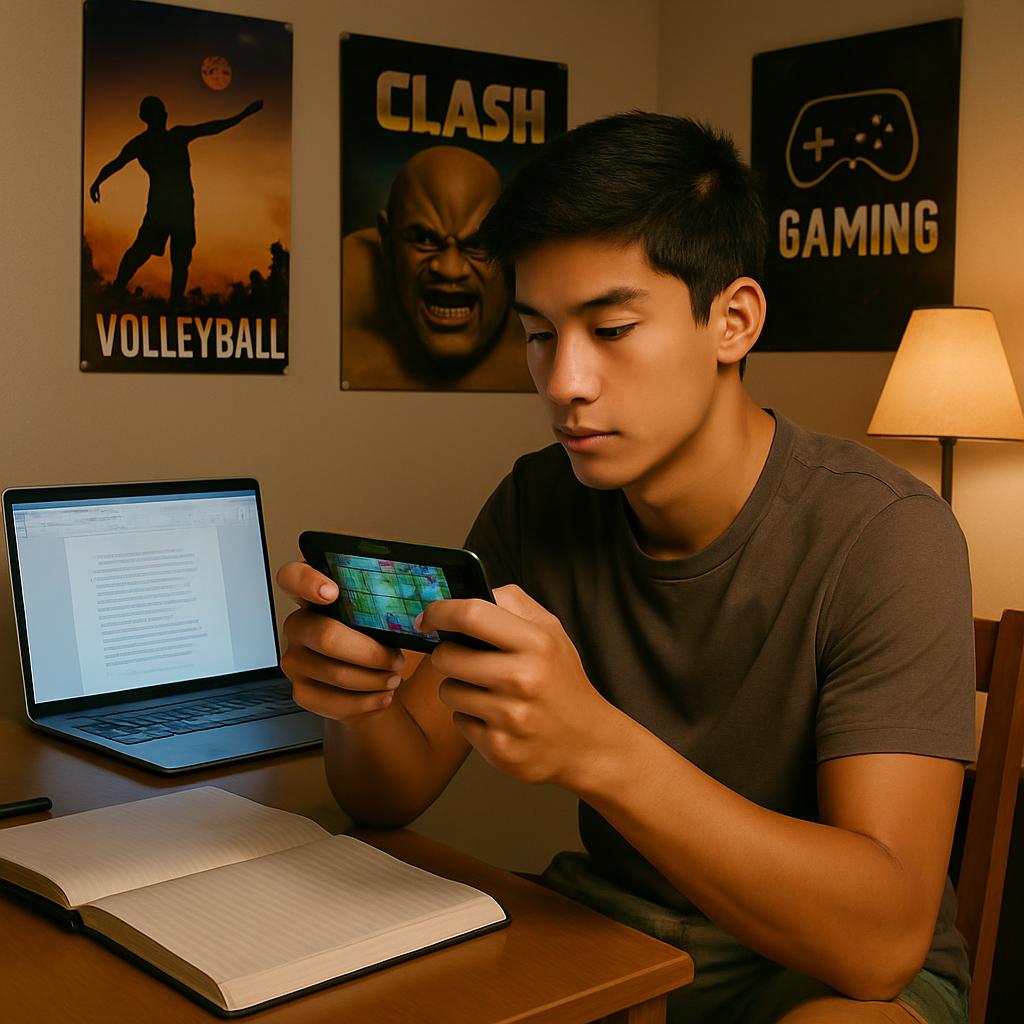
After, she looked so sad and I felt kinda bad, but also, I didn’t really know why I needed to act like that. I just…felt big and upset, and it was like the only way to show it. When I tried to explain it to her, I couldn’t. It was like there weren’t even words for it, you know? All I could think was that, for once, I wanted to win something—even if it was just in a game. I don’t even know if that makes sense. But I think Holden Caulfield, the main character in Salinger’s book, would probably get it—he gets mad at everything and everyone, and half the time, he doesn’t understand why either.
Anyway, guess I’ll let ChatGPT try to help me with the actual drafting, since that’s what we’re supposed to do. Maybe this “voice” idea will help, and I won’t sound so fake for once. Maybe I’ll even learn why I flipped out on my mom. Who knows? College is kinda weird, but I’m sort of here for it.
The First Draft: Honestly, I’ve never used ChatGPT for anything more than asking it dumb questions like “Who would win, Godzilla or King Kong?” or sometimes checking homework answers when I’m totally lost. So when Ms. Yamamoto said to actually use it to help with our essay, I was…skeptical. But whatever, right? It’s college, and we’re supposed to try new things.
So, Thursday night, after volleyball practice, I sat down at my desk with the assignment: 500 words about a time I did something that upset other people and didn’t know why. My room’s hot (gotta love Ewa Beach in August), phone buzzing every two minutes, and I’m staring at this ChatGPT window, trying to look like I know what I’m doing.
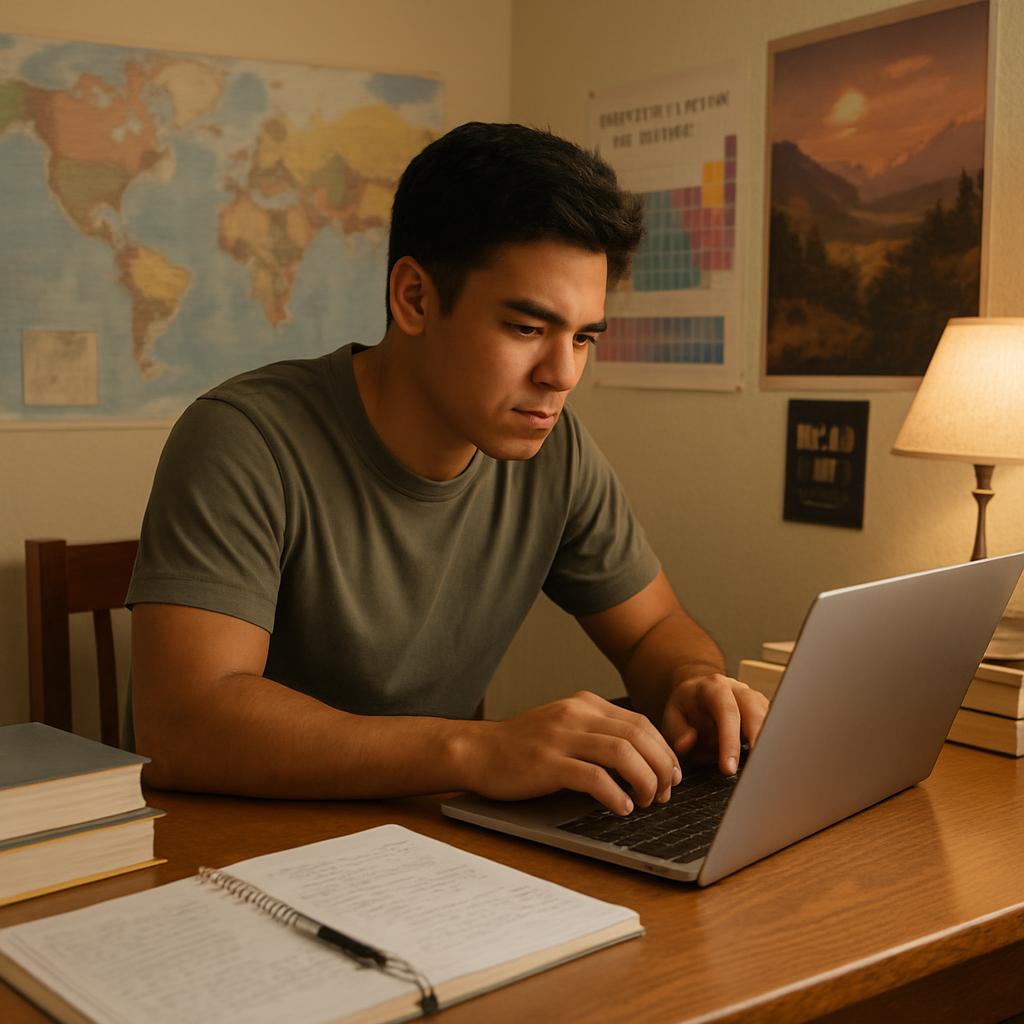
First, I figure I better just type what I need: “Hey, I need to write an essay about a time I did something that upset others and I didn’t understand why. It’s for a college English Lit class and should sound kind of like ‘Catcher in the Rye.’ Can you help?”
ChatGPT answers in like two seconds, all cheerful: “Absolutely! Can you tell me a little more about your experience? What happened, and how did you feel while it was happening?”
That actually helped me focus. So I typed: “It was this fight with my mom over playing too many games on my phone. She was nagging me, I got mad and slammed my door. She looked sad, but I still didn’t really get why I acted that way. I just felt…angry and tired, like I wanted her to leave me alone.”
ChatGPT said: “That’s a great start! Let’s channel your feelings and experiences into the essay, focusing on your thoughts and reactions. Let’s try to capture your authentic voice, like Salinger does with Holden Caulfield. How about starting with a scene—maybe you can describe where you were and what you were doing when it happened?”
Okay, so now I’ve got an opening. I type out a rough paragraph, just rambling about my room, the sunlight, sticky hands from chips, whatever. I even write: “It was another Tuesday, mom doing her rounds, me quietly trying not to lose at Clash Royale.” Feels real, not fake. I paste that to ChatGPT.
ChatGPT replies: “That’s fantastic imagery! Keep that up. Now, can you describe the argument? What were your thoughts? Did anything remind you of Holden’s feelings in ‘Catcher in the Rye’?”
I start getting into it, basically pouring out the whole memory. I complain about being sick of hearing “Go study,” and how sometimes, when I win a game, it’s the only thing I control. I even drop a joke: “My brain was like, ‘Mom, please, I just need one more win to feel like a functioning human.’” And ChatGPT tells me that’s great, it makes my room feel like a little world I’m defending.
ChatGPT helps me close it out by asking: “How did you feel after? Did you regret it? Can you reflect on why you responded that way, or does it still not make sense?”
I hadn’t thought that far, so I write something like: “I felt empty…and kind of confused why I always end up blowing up at the people I love.” We shape that into the last paragraph, and ChatGPT polishes my run-on sentences so they don’t sound like a robot, but still sound like me.
At the end, my draft actually feels like me—awkward, honest, and confused. Using ChatGPT was weird, not gonna lie, but it didn’t take over. It just pushed me to look at my feelings closer and made me not as freaked out about the ‘authentic voice’ thing. For once, I’m kind of excited for Ms. Yamamoto to read it. Maybe she’ll even laugh at the part about my mom calling my room “the lair of lost homework.”
Classmates’ Reviews: When Ms. Yamamoto said we’d be swapping drafts for peer review, I kinda cringed—I mean, letting strangers read about me slamming a door on my mom? But it turned out alright. My classmates, Jordan and Lani, gave awesome feedback. Jordan wrote, “Bro, I could totally relate, but I wanted to really SEE and HEAR what happened. Add more description!” Lani’s was deeper: “Your voice is cool, but I want to know even more about what you and your mom felt in the moment.”

After class, I went back home and opened up ChatGPT. This time, I wanted help making my essay legit, not just honest but more…alive?
So I started typing: “Hi, I got feedback from classmates on my essay. One said to add more description so readers can see and hear what’s happening. The other wants more about the emotions my mom and I felt. Can you help me add that?”
ChatGPT responded almost right away (seriously, how is it so fast?): “Of course! Let’s tackle them one at a time. First, let’s focus on creating vivid descriptions. Where in your story can we slow down and describe the setting or actions more? Can you describe the sounds, smells, or sights in your room when the fight started?”
I stared at my essay and realized it was kinda bland—no real sense of what my room looked or sounded like. So I typed: “When I’m gaming in my room, the sun’s coming in at that ugly angle, so my screen’s all glare. There’s laundry balled up on my desk chair, and my window’s cracked so I hear someone mowing the lawn outside. My phone keeps buzzing with notifications, and my mom’s voice is getting sharper every time she says my name.”
ChatGPT came back with: “That’s great sensory detail! Try blending those images into your opening paragraph, and maybe describe your mom’s footsteps or how her voice sounds—does it rise or tremble? These details help the reader feel present in the scene.”
I tried adding: “I could hear my mom’s slippers scuffing against the tile before she even knocked. Her voice—usually soft, like when she tells me stories about Maui—was sharp now, like she was snapping every word in half.”
Next, I asked about Lani’s comment: “How do I make the emotions more real, especially for my mom? I want readers to really get what we were both feeling—not just me being annoyed.”
ChatGPT replied: “Think about body language and facial expressions. How did your mom look as she spoke? Did she seem tired? Was she frustrated, worried, hurt? Describe your own reactions, too: did your heart race, did you feel guilty or defensive?”
I remembered how my mom’s eyebrows pulled together, how she hugged her arms across her chest like she was shrinking. I wrote, “My mom stood in the doorway, arms folded, her face all pinched up like she wanted to cry but wouldn’t let herself. Her words wobbled a little even though she was pretending to be strong. I felt my chest get tight, like I was sinking but also mad at everything.”
ChatGPT encouraged me: “Excellent—those small details about your mom’s body language and your own physical feelings bring the emotion to life. Keep layering in those observations wherever you talk about reactions.”
By the end, my essay felt way more real. ChatGPT didn’t just fix my grammar—it helped me unlock all the stuff I usually notice but never write down. My room was messier, my mom felt more like a real person, and I felt both more exposed and more proud of what I’d written. If Jordan and Lani read this new draft, maybe they’ll really see me now, instead of just reading about a guy in Hawaiʻi who slammed a door.
My Final Draft: Here’s the essay I ended up submitting to Ms. Yamamoto. It’s funny how much it changed from the first draft—my room’s messier, the emotions are rawer, and I tried to make you really hear and see the scene, like my classmates and ChatGPT said. Anyway, here it is:
Untitled – English 100 Personal Essay
If you’ve ever tried playing Clash Royale when the afternoon sun hits the screen just right—you know, glare everywhere and the colors all washed out—you’ll get what my room was like. Sun sneaking through the broken blind, the buzz of my phone with every notification, and somewhere outside, somebody’s uncle mowing the grass again. My desk was layered with balled-up laundry (socks on top, smelly shirts deeper down), and even with my window cracked for breeze, everything felt sticky.
I was on my last life, thumbs twitching, almost winning this match for once, when I heard them: slippers scuffing against tile, getting closer. My mom’s knock was always gentle, but that day it sounded rushed, three little taps. She stood in the doorway—arms folded tight, face pinched up like she was holding back tears but didn’t want me to know. Her hair was pulled back in a messy bun, the way she does when she’s had a long day.

“Kai, how long have you been on that thing already?” Her voice, normally soft like when she reads to my baby cousin, was sharp now. She didn’t yell—she never yells—but every word felt heavy.
I didn’t look up. “Almost done.”
We went back and forth—her saying, “You said that an hour ago,” me mumbling, “Just five more minutes.” She stepped forward, arms still crossed, a crease deep between her eyebrows. Her sigh sounded like giving up.
“I wish you’d take your homework this seriously,” she said, so quiet you could barely hear it over the buzzing outside.
I don’t know what made me snap, but suddenly I felt my whole body sink and clench at the same time. All that control I felt in the game was gone, replaced by something sour and tangled. I didn’t yell. I just stood up, phone in my palm, and closed the door—careful, not a slam, but not gentle either. On the other side, I could hear her just standing there, breathing.
Inside, the quiet was thick. My chest hurt, and my hands were shaking—not from the game, but from guilt, or maybe just being tired. I could still picture her in the hallway, arms hugging herself like she needed protection.
For hours, I sat in my “lair,” winning and losing battles on my phone, trying not to feel anything. But her face—small, worried, hurt—wouldn’t leave my brain. I wanted to explain why I needed that space, why sometimes winning a dumb game feels like the only thing I can control. But the words wouldn’t come.
Now, weeks later, I still don’t know why I acted the way I did. I just know I hurt her, and I hurt myself a little too. Holden Caulfield says something about not understanding why people do things, not even yourself. I guess I get that now—sometimes, you can be the hero in a game and the villain in your own house, all in one afternoon.
My Self-Assessment: When Ms. Yamamoto kept talking about “the writing process” during that first week, I honestly thought it was just teacher-speak—like some fancy way to say “do a rough draft, then make it neater.” It sounded like busywork or a formula for those five-paragraph essays everyone hates. But writing my first paper, I finally got what she means, and it’s not just about following steps—it’s about making the paper actually yours.

With this essay, every part of the process actually mattered. First, I had to brainstorm and just spill my thoughts—no rules, just memories of fighting with my mom. Then, using ChatGPT, I turned that mess into something that sounded like me talking. When I showed it to my classmates and they gave feedback, I realized the words on the page weren’t enough yet. Jordan wanted to see and hear my room. Lani wanted to actually feel what I felt. I went back in, added more details, changed up my language, and even cut out a few parts that felt fake. Then, with ChatGPT again, I turned those changes into something cleaner but still real.
That loop—writing, getting feedback, thinking about it, rewriting—wasn’t what I expected, but each round made my paper so much better. I’d always thought the “writing process” was just for English nerds or people who want to be authors. Now, I see it’s for anyone who wants to actually say something and be understood.
I also get now how this process will help me in other classes. Like, if I have to do a research project for psychology or a lab report in science, first I’ve gotta get my ideas down, then organize them, and let someone else (professor, ChatGPT, or even a friend) point out what’s clear or confusing. I know there’ll be times when what I say in the first draft won’t hit as hard as I want, or I’ll miss details. But the writing process lets me step back, look at the real meaning, and say it better. It means even crappy first drafts have a shot at becoming something solid.
If I was talking to my classmates, I’d say this: writing about your real life, your real feelings and screw-ups and even funny memories is a game-changer. It’s not just about “getting it done for a grade.” When I wrote about my fight with my mom—even though it made me kind of embarrassed at first—I found out I had more to say than I thought. Suddenly, I cared about how it sounded. I wanted people to see my world. I stopped thinking about making it “perfect” and started trying to make it honest. That made writing, for once, kind of fun—it was like figuring out a puzzle with pieces from my own life.
So, for any other class, or anyone stuck on what to write, I’d say: don’t hide behind boring “safe” topics or write what you think the teacher wants. Start real, start messy, use the writing process to shape it, and let other people’s feedback push you further. Your work will actually mean something, and who knows—you might even enjoy it. I did.
__________
* Prompt: Take on the character of a college freshman who is in his first semester at a community college in Hawaiʻi. With this persona, write a personal narrative about your first English Literature class assignment to read J.D. Salinger’s “Catcher in the Rye” and write a 500-word personal essay about a time when you did something that upset others, but you didn’t understand why you did it. Explain that you’re supposed to use ChatGPT to help you write the paper in a style that’s similar to Salinger’s. Explain the assignment sounds interesting and that you’ll probably write about the time you became upset at your Mom for getting on your case for playing too many video games on your iPhone.
Filed under: Uncategorized |


 Educational Technology and Change Journal

Leave a comment