


By Jim Shimabukuro (assisted by Grok)
Editor
[Also see Five Top Ed Tech Stories in Late Sep. 2025, Five Top Ed Tech Stories in Late Oct. 2025, Educational Technology in Higher Education: Five Issues & Strategies (Oct. 2025)]
Introduction: To test drive Grok on my Windows 11 desktop, I asked it to identify and rank five of the top stories on educational technology published between August 15 and 20. After 2 minutes and 7 seconds of “thinking,” it produced the following report. For the quality of results, I didn’t mind the brief wait time. See the epilogue below for some test images I asked Grok to create. Initial impression of the report and images: Excellent! -js
1. Dex: The AI-Powered Camera Revolutionizing Language Learning for Children

The story of Dex unfolds primarily in the United States, with its creators based in a tech-savvy ecosystem likely influenced by Silicon Valley’s innovation culture, though specific development locations are not detailed. The time frame centers on its recent launch and ongoing development as of August 20, 2025, building on founders’ prior experiences in tech companies and aiming for immediate market entry during the back-to-school season. Dex is an AI-powered camera device designed like a high-tech magnifying glass, featuring a camera lens and touchscreen that allows children aged 3 to 8 to snap photos of objects in their environment.
The device uses advanced image recognition technology to identify the captured item and instantly translate its name into one of several supported languages, including Chinese, French, German, Hindi, Italian, Japanese, Korean, and Spanish, along with 34 dialects such as Egyptian Arabic or Mexican Spanish. It incorporates interactive elements like story lessons and games, where children respond to characters in the target language, fostering active participation rather than passive screen viewing. A companion app enables parents to monitor progress, tracking vocabulary acquisition and usage streaks, while the device is pursuing COPPA certification for child privacy compliance, with features like real-time content filtering and zero data retention to ensure safety. An upcoming AI chatbot addition will allow free-form conversations, enhancing conversational skills.
This technology holds immense value in educational technology by bridging the gap between digital tools and real-world interaction, reducing reliance on traditional screens that often lead to passive consumption and potential overuse concerns. By encouraging children to explore their surroundings and learn languages through tangible objects, Dex promotes authentic, immersive learning experiences that mimic natural language acquisition, making it more engaging and effective than rote memorization apps. Its affordability at $250 positions it as a viable alternative to expensive tutors or immersion programs, democratizing access to multilingual education for families who might otherwise be priced out. The potential impacts are profound, as it could accelerate early childhood language proficiency, boost cognitive development through interactive play, and even support cultural awareness in diverse communities. Moreover, by addressing screen time worries— a growing parental concern— Dex aligns with broader educational goals of balanced tech integration, potentially influencing future edtech designs to prioritize physical-world engagement over virtual isolation.
I selected this as the most interesting story because it represents a fresh hardware innovation in a field dominated by software apps, capturing the excitement of AI’s tangible applications for young learners. [source] The device’s ability to blend AI with playful, hands-on exploration stands out amid ongoing debates about children’s tech exposure, especially with its safety features and investor backing from figures like Pinterest’s founder. In a time when language skills are crucial for global connectivity, Dex’s launch highlights edtech’s potential to make learning fun and accessible, sparking curiosity about how such tools might reshape early education worldwide. Its timely emergence during the 2025 back-to-school period underscores the rapid evolution of AI in addressing real parental and educational needs, making it a compelling narrative of innovation meeting practicality.
2. AI Summer Camp at Princeton: Bridging the Digital Divide in Education

This story is set in Princeton University, New Jersey, with participants hailing from diverse locations across the United States, including Katy, Texas; Oregon; and Daly City, California, reflecting a national effort to address educational inequities. The time frame revolves around the summer of 2025, specifically mid-July, when the three-week camp took place, building on research from the 2024-2025 school year that highlighted growing disparities in AI access. The event is AI4All, a free summer camp organized by Princeton professor Olga Russakovsky, inviting about 30 high school students from low-income families to explore generative AI. Campers delve into the mathematical foundations of AI, applying it to real-world challenges in fields like medicine, robotics, and environmental science. For instance, they learn how AI enables drones to make decisions by modeling variables such as weather, and work on projects like using AI for cancer detection or wildfire monitoring with drones. The program features hands-on sessions with faculty, emphasizing AI as a collaborative tool rather than a replacement for human ingenuity, and aims to foster diversity in the AI field by targeting underrepresented groups.
The value of this initiative in educational technology lies in its proactive approach to equity, providing underserved students with access to cutting-edge AI education that affluent districts often monopolize, thereby preparing them for an AI-driven economy. By focusing on practical applications and ethical considerations, the camp enhances critical thinking and problem-solving skills, while also addressing accessibility for students with disabilities through AI tools. Potential impacts include narrowing the AI divide, increasing diversity in tech careers, and influencing school policies, as only 19% of teachers currently have AI guidelines, leading to uneven adoption. This could inspire more inclusive programs nationwide, mitigating risks like reduced critical thinking from overreliance on AI.
I chose this as the second most interesting story due to its focus on social justice in edtech, a timely issue amid widening gaps in AI literacy. [source] The camp’s transformation of skeptical teens, like 16-year-old Esraa Elsharkawy who shifted from viewing AI as “lazy” to a problem-solving ally, illustrates edtech’s power to empower marginalized voices. In 2025, as AI permeates society, stories like this highlight the human element—educators like Russakovsky warning that without broad access, “we’re going to miss out on the potential of this technology”—making it a vital narrative on inclusive innovation.
3. Anthropic’s Claude AI: New Learning Modes for Guided Student Discovery

Centered in San Francisco, California, where Anthropic is headquartered, this story captures the company’s push into the global education technology market. The development and launch occurred in mid-2025, timed for the back-to-school season, with features rolling out immediately to tap into the $340 billion edtech sector. Anthropic’s Claude AI introduces “learning modes” for students and developers, shifting from direct answers to a guided, Socratic approach. On Claude.ai, it uses probing questions to encourage deep understanding, accessible via a style dropdown. Claude Code offers “Explanatory” mode, narrating coding decisions and trade-offs, and “Learning” mode, which pauses tasks with “#TODO” comments for user input, promoting collaborative problem-solving. Powered by modified system prompts rather than fine-tuned models, these modes allow quick iterations based on feedback, though they may yield inconsistent results.
This advancement adds significant value to educational technology by fostering independent thinking and skill-building, countering fears that AI erodes learning depth. It supports personalized education, helping students grasp concepts like coding or complex subjects through interactive guidance, while aiding developers in avoiding skill gaps from overreliance on auto-generated code. Impacts could reshape curricula toward creativity and ethics, influencing institutions like Northeastern University and the London School of Economics, which partner with Anthropic, and potentially reducing academic dishonesty by emphasizing process over product.
This ranks third in interest for its direct challenge to competitors like OpenAI and Google, innovating AI to enhance rather than replace human capability. [source] As Anthropic notes, “We’re not building AI that replaces human capability—we’re building AI that enhances it thoughtfully,” this story fascinates by addressing edtech’s core dilemma: balancing efficiency with genuine growth in a rapidly evolving field.
4. AI-Infused Stuffed Animals: Blending Play and Chatbots for Young Learners
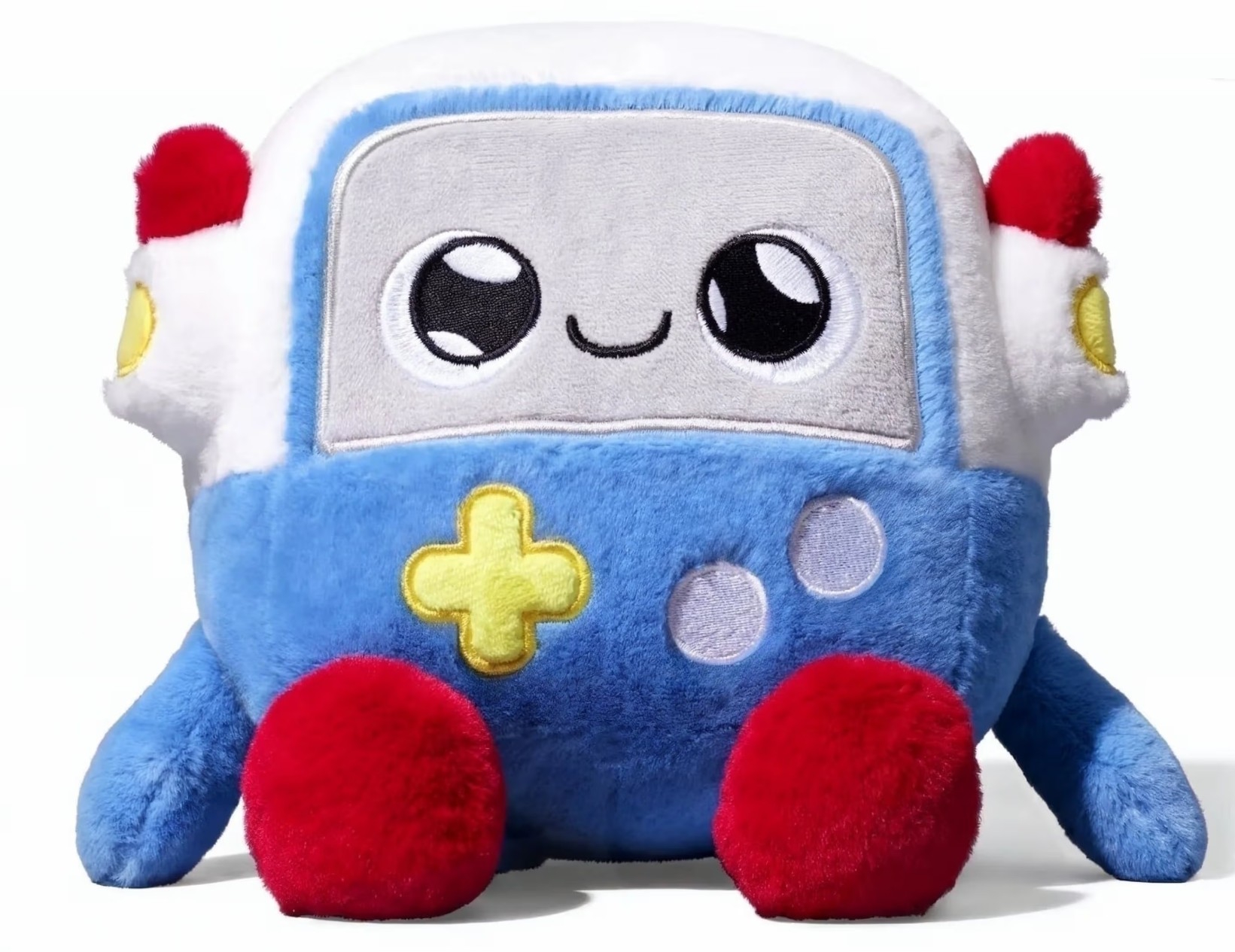
The narrative is rooted in Redwood City, California, home to Curio, the company behind these AI toys, with broader implications for the U.S. toy and edtech markets. The time frame is contemporary, as of August 15, 2025, coinciding with the products’ market entry and ongoing debates about children’s tech exposure. Curio’s AI chatbots are embedded in stuffed animals like Grem (a fuzzy anime-inspired cube), Grok (a rocket ship), and Gabbo (a game controller), each priced at $99. A Wi-Fi-enabled voice box in a zipper pocket connects to an AI language model tuned for kids aged 3 and up, enabling conversations, activity suggestions like “I Spy,” and G-rated content redirection from inappropriate queries. Conversations are transcribed to parents’ apps for monitoring, using third-party AI like OpenAI, with voices and designs by artist Grimes to promote screen-free play.
In educational technology, these toys offer value by merging imaginative play with interactive learning, potentially reducing screen time while teaching communication and creativity through “sidekick” interactions. Impacts include enhanced parental oversight and early AI familiarity, but also risks like diminished real-human bonds or privacy issues, as toys might inadvertently respond off-script.
Its selection as fourth stems from the intriguing fusion of toys and AI, raising ethical questions about childhood development. [source] Grimes’ motivation—”I obviously don’t want my kids in front of screens”—and partnerships like Mattel with OpenAI make this a captivating look at edtech’s playful frontier.
5. Liverpool’s Century AI Pilot: Boosting Primary School Performance

This initiative is situated in Liverpool, United Kingdom, involving over 100 primary schools in the city region. The pilot ran during the last school year, with results announced in August 2025, showcasing AI’s role in ongoing educational reforms. Century AI, developed by Century Tech since 2013, automates marking, lesson planning, and data analysis using UK school-trained models, freeing teachers for student relationships. It served 28,000 pupils and 1,300 teachers, leading to grade improvements for 4,000 participants.
The tool’s value lies in streamlining administrative burdens, enhancing teacher-student bonds and learning outcomes in resource-strapped settings. Impacts include scalable grade boosts and potential for widespread adoption, improving equity in education.
I picked this fifth for its evidence-based success, proving AI’s tangible benefits. [source] Mayor Steve Rotheram’s report of 10% outcome improvements underscores its real-world relevance in 2025’s edtech landscape.
Epilogue: Here are some images I asked Grok to create. Opinion: excellent!


__________
* Prompt: After reviewing works published between August 15 and 20, 2025, identify, in rank order, the five most interesting stories about educational technology in the world. In a 500-word essay written for each story, respond to the following questions and instructions in sentences and paragraphs instead of bulleted outlines: What is the setting for the story in terms of geographical location and time frame? Describe the technology or event in detail and explain its value and why you selected it.
Filed under: Five Top Ed Tech |


 Educational Technology and Change Journal

Leave a comment