





By Jim Shimabukuro (assisted by Grok)
Editor
For a multimedia-focused desktop in August 2025, the AMD Ryzen 9 9950X is the top recommendation due to its superior multi-threaded performance, massive cache, better power efficiency, and future-proof AM5 platform. If your workload heavily involves cache-sensitive tasks or gaming, the Ryzen 9 7950X3D is an excellent alternative for its 3D V-Cache advantage.
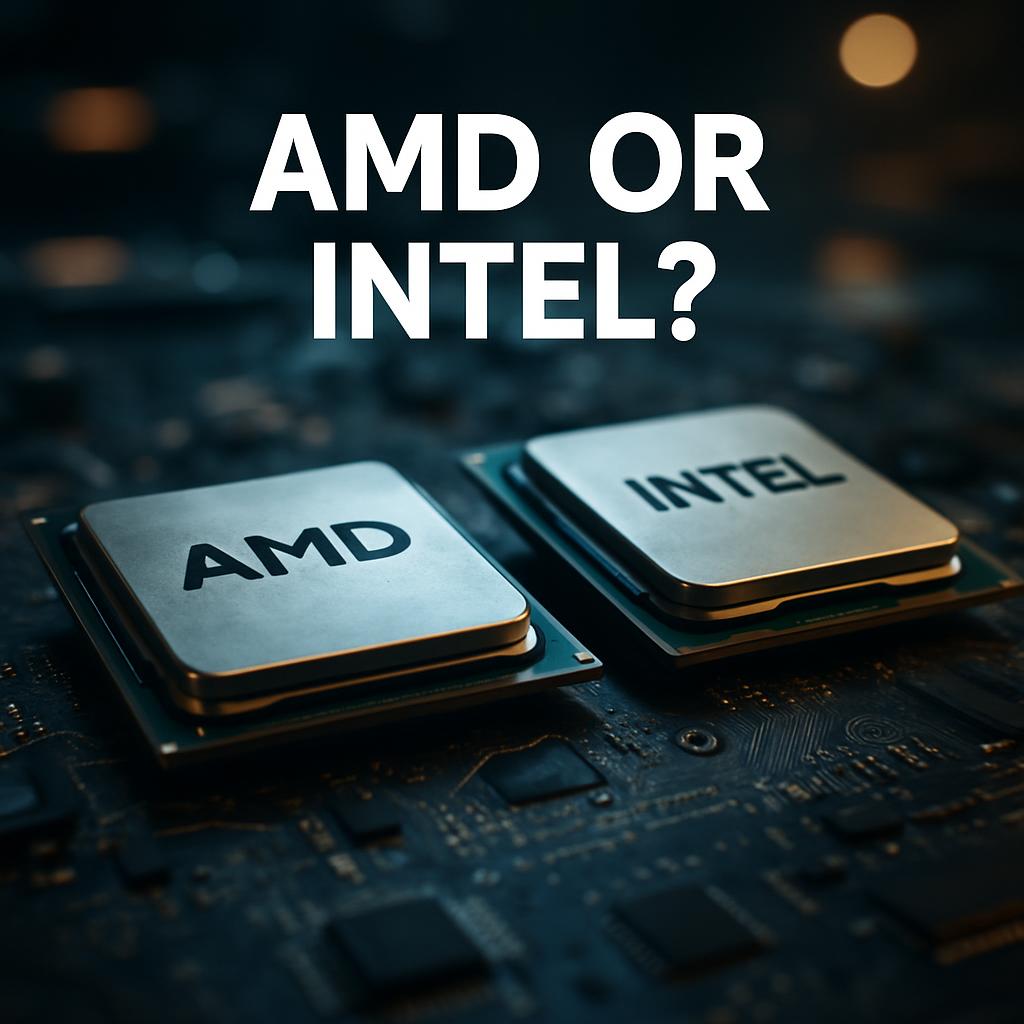
Choose the Intel Core i9-14900K if you’re upgrading an existing LGA 1700 system or need the absolute best single-threaded performance for specific applications, but be prepared for higher power consumption and cooling demands. Always check current pricing, as AMD’s chips may drop in price post-launch, and consider pairing either CPU with a high-end GPU for optimal multimedia performance.
Key Considerations for a Multimedia Computer
A multimedia computer typically handles tasks like video editing, 3D rendering, photo editing, streaming, and sometimes gaming. These workloads benefit from:
- High core and thread counts for multi-threaded tasks like rendering and video encoding.
- Strong single-threaded performance for tasks like gaming or certain editing software that rely on fewer cores.
- Large cache to reduce latency in cache-sensitive applications.
- Power efficiency to manage heat and electricity costs, especially in compact or quiet systems.
- Platform longevity for future upgradeability.
- Price-to-performance ratio and overall system cost (including motherboard and memory).
Intel Core i9 Overview (e.g., Core i9-14900K, Core Ultra 9 285K)
- Architecture: Intel’s Core i9 processors, like the i9-14900K, use a hybrid architecture with Performance (P) cores and Efficient (E) cores. The i9-14900K has 24 cores (8 P-cores + 16 E-cores) and 32 threads, while the newer Core Ultra 9 285K (Arrow Lake, 2025) also features 24 cores but drops Hyper-Threading on E-cores, maintaining 24 threads with a max turbo speed of 5.7 GHz.
- Single-Threaded Performance: Intel excels in single-threaded tasks due to high clock speeds (up to 6.0 GHz on the i9-14900K). This is ideal for multimedia applications like Adobe Premiere Pro or Photoshop, which often rely on single-core performance for certain operations.
- Multi-Threaded Performance: The hybrid architecture provides strong multi-threaded performance for tasks like video rendering, but it’s slightly less efficient than AMD for heavily parallel workloads due to the reliance on E-cores, which are less powerful than P-cores.
- Cache: Intel’s L3 cache is smaller, with the i9-14900K offering 36 MB compared to AMD’s much larger cache. This can lead to performance bottlenecks in cache-sensitive applications like 3D rendering or certain games.
- Power Efficiency: Intel CPUs, particularly the i9-14900K, consume more power (up to 253W under load) compared to AMD, leading to higher heat output and potentially noisier cooling solutions. The Core Ultra 9 285K improves efficiency but still lags behind AMD.
- Memory Support: Supports both DDR4 and DDR5, offering flexibility for budget-conscious builds, though DDR4 can slightly reduce performance.
- Platform Longevity: Intel’s LGA 1700 socket (used by i9-14900K) is at the end of its lifecycle, with the newer Core Ultra 9 285K using the LGA 1851 socket for Arrow Lake. This limits future upgrades on older platforms, but LGA 1851 may offer some longevity.
- Price: The i9-14900K retails around $450–$550, while the Core Ultra 9 285K is slightly more expensive at launch (~$590). Intel motherboards can be more affordable, especially with DDR4 support.
- Integrated Graphics: Both i9 models include integrated GPUs (e.g., Intel UHD 770), which are sufficient for basic multimedia tasks like video playback but not for heavy rendering or gaming without a dedicated GPU.
AMD Ryzen 9 Overview (e.g., Ryzen 9 7950X, 7950X3D, 9950X)
- Architecture: AMD’s Ryzen 9 processors, like the Ryzen 9 7950X and 9950X, use the Zen 4 or Zen 5 architecture with uniform high-performance cores (no hybrid design). The Ryzen 9 9950X and 7950X both offer 16 cores and 32 threads, while the 7950X3D includes 3D V-Cache for enhanced performance.
- Single-Threaded Performance: AMD’s single-threaded performance is strong but slightly trails Intel’s due to lower boost clocks (5.7 GHz on 7950X/9950X vs. 6.0 GHz on i9-14900K). However, the gap is narrow, and Zen 5 improvements make the 9950X competitive in single-core tasks.
- Multi-Threaded Performance: AMD shines in multi-threaded workloads like video editing and 3D rendering. The Ryzen 9 9950X outperforms the i9-14900K by 20–36% in rendering benchmarks (e.g., Cinebench, V-Ray, Blender), making it ideal for multimedia professionals. The 7950X3D’s 128 MB L3 cache further boosts performance in cache-sensitive tasks.
- Cache: AMD’s 3D V-Cache technology (e.g., 128 MB on 7950X3D) significantly enhances performance in applications like video editing and gaming, where large cache reduces latency. Even the standard 9950X offers up to 100 MB L3 cache, far surpassing Intel’s 36 MB.
- Power Efficiency: AMD’s 5nm process (TSMC) makes Ryzen 9 CPUs more power-efficient, with the 9950X consuming 170W and the 7950X3D even less due to optimized cache usage. This results in lower heat output and quieter systems, critical for multimedia setups.
- Memory Support: Ryzen 9 requires DDR5, increasing platform costs but ensuring future-proofing with faster memory standards.
- Platform Longevity: AMD’s AM5 socket is supported until at least 2025, with potential for longer, offering better upgrade paths for future CPUs.
- Price: The Ryzen 9 9950X retails around $550–$650, while the 7950X is ~$520–$600, and the 7950X3D is similarly priced. AM5 motherboards and DDR5 memory increase overall system cost compared to Intel’s DDR4-compatible options.
- Integrated Graphics: Models like the 7950X include integrated Radeon graphics, sufficient for basic multimedia tasks but not a substitute for a dedicated GPU in intensive workloads.
Performance Comparison for Multimedia Workloads
- Video Editing (e.g., Adobe Premiere Pro, DaVinci Resolve): AMD Ryzen 9, especially the 9950X and 7950X3D, takes the lead due to higher core counts, more threads (up to 64 on some models), and larger L3 cache. Benchmarks show the 9950X is 20–30% faster than the i9-14900K in rendering tasks like Cinebench and V-Ray. The 7950X3D’s 3D V-Cache further accelerates cache-sensitive editing tasks.
- 3D Rendering (e.g., Blender, Cinema 4D): AMD dominates here, with the Ryzen 9 9950X scoring 30–36% higher than the i9-14900K in Blender and V-Ray. The large cache and uniform core design make AMD ideal for rendering-heavy workloads.
- Photo Editing (e.g., Adobe Photoshop): Intel’s Core i9-14900K has a slight edge due to superior single-threaded performance, which Photoshop often leverages for tasks like filters and layer processing. However, AMD’s 9950X is close enough that the difference is minimal for most users.
- Streaming and Multitasking: AMD’s higher thread counts and cache make it better for streaming while editing or gaming, as it handles background tasks more efficiently. Intel’s Thread Director helps, but its E-cores are less effective for heavy multitasking compared to AMD’s uniform cores.
- Gaming (Secondary Consideration): For multimedia PCs that double as gaming rigs, Intel’s i9-14900K offers slightly better frame rates in single-threaded games at 1080p (e.g., Counter-Strike, Apex Legends). However, at 1440p or 4K, the GPU becomes the bottleneck, and AMD’s 7950X3D matches or exceeds Intel in games optimized for multi-core performance due to its 3D V-Cache.
Other Factors
- Cooling Requirements: Intel’s higher TDP (up to 253W for i9-14900K) requires robust cooling solutions, potentially increasing system noise and cost. AMD’s lower TDP (170W for 9950X, less for 7950X3D) allows for quieter, more compact builds, which is advantageous for multimedia setups.
- Platform Costs: Intel’s support for DDR4 and cheaper LGA 1700 motherboards makes it more budget-friendly for immediate builds. AMD’s AM5 platform requires DDR5 and pricier motherboards, but it’s more future-proof.
- Upgrade Path: AMD’s AM5 socket promises support through at least 2025, making it easier to upgrade to newer CPUs without changing motherboards. Intel’s LGA 1700 is nearing its end, and while LGA 1851 (Core Ultra 9 285K) offers some future-proofing, it’s less certain.
- Overclocking: Both CPUs support overclocking, but Intel’s i9-14900K has slightly better headroom for pushing clock speeds, which may benefit enthusiasts tweaking for single-threaded performance. AMD’s Precision Boost 2 optimizes performance automatically with good cooling.
Recommendation
For a multimedia computer upgrade in August 2025, the AMD Ryzen 9 9950X or 7950X3D is the better choice for most users, particularly for video editing, 3D rendering, and multitasking-heavy workflows. Here’s why:
- Superior Multi-Threaded Performance: AMD’s Ryzen 9 9950X outperforms Intel’s i9-14900K by 20–36% in rendering benchmarks, making it ideal for CPU-intensive multimedia tasks like video encoding and 3D rendering. The 7950X3D’s 128 MB L3 cache further boosts performance in cache-sensitive applications.
- Better Power Efficiency: AMD’s 5nm process and lower TDP (170W vs. 253W) result in less heat and quieter operation, which is critical for multimedia setups where silence and thermal management matter.
- Larger Cache: AMD’s massive L3 cache (up to 128 MB on 7950X3D, 100 MB on 9950X) significantly reduces latency in multimedia applications, giving it an edge over Intel’s 36 MB.
- Platform Longevity: The AM5 socket’s promised support through at least 2025 ensures better upgrade options compared to Intel’s LGA 1700, which is phasing out, or the newer LGA 1851, which is less proven.
However, the Intel Core i9-14900K (or Core Ultra 9 285K if budget allows) is worth considering if:
- You prioritize single-threaded performance for applications like Adobe Photoshop or specific gaming titles at 1080p, where Intel’s higher clock speeds (up to 6.0 GHz) provide a slight edge.
- You’re on a tighter budget and can leverage DDR4 memory and cheaper LGA 1700 motherboards to reduce overall system cost.
- You already own an LGA 1700 motherboard, making the i9-14900K a drop-in upgrade without needing a new platform.
Filed under: Uncategorized |


 Educational Technology and Change Journal

[…] Para quem é ideal: Profissionais criativos e desenvolvedores que precisam de performance em multi-threading e querem uma plataforma moderna (AM5). ([AMD Ryzen 9 9950X]) […]