


By Jim Shimabukuro (assisted by ChatGPT-5, Gemini, Copilot)
Editor
(Also see Oct. 2025 – AI Developments in the US Job Market, Nov. 2025 – AI Developments in the US Job Market, The AI-Transformed Employment Landscape (2025–2045.)
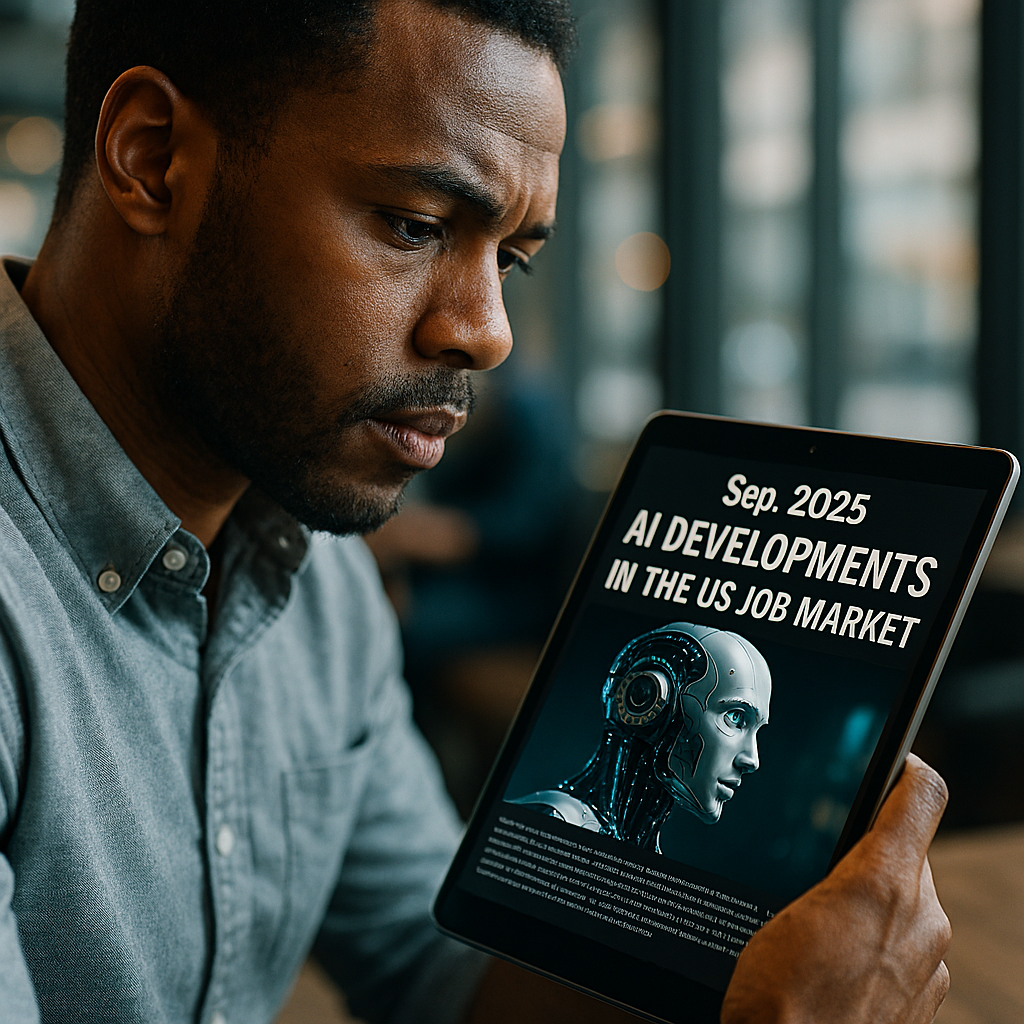
Introduction: Here are three September 2025 developments that are poised to move the U.S. jobs needle—either by changing day-to-day workflows for millions of workers or by reshaping hiring and HR compliance. -ChatGPT
- Apple’s fall iOS release brings “Apple Intelligence” to the masses
- iOS 19/“iOS 26” is widely tipped for a mid-September public release, following Apple’s June WWDC unveiling of expanded on-device Apple Intelligence capabilities (screen-aware Siri, writing tools, app integrations). For knowledge workers and small businesses on iPhone/iPad/Mac, this means faster on-device drafting, summarizing, and task automation—no extra app procurement required. Expect measurable productivity shifts in sales, field ops, creator/marketing roles, and solo entrepreneurs once it lands. (Apple, Macworld, MacRumors)
- Microsoft’s September Windows 11 feature drop expands built-in AI for PCs
- Microsoft is prepping a notable Windows 11 update in September that enhances Copilot+/on-device AI experiences (e.g., new “Actions” in File Explorer, updated Recall UI, Settings AI agent availability for more CPUs). Because Windows remains the enterprise default, these OS-level upgrades should ripple across office, call-center, back-office, and SMB workflows—accelerating everyday task automation without separate rollouts. (Windows Central)
- Final countdown to California’s new AI-in-employment rules (effective Oct 1) triggers September compliance work nationwide
- California’s Civil Rights Department finalized landmark rules for employers using AI/automated decision systems in hiring and HR. They take effect October 1, 2025—so September will be crunch time for audits, vendor attestations, bias testing, notices, and process changes. Because many multi-state employers standardize on California’s requirements, these obligations will influence HR tech, recruiting agencies, and assessment vendors across the U.S. (expect demand for validation/bias-testing specialists). (Littler Mendelson P.C., Labor Employment Law Blog)
Gemini: Based on current trends and expert analysis, here’s a major AI development expected to impact the U.S. employment landscape in September 2025:
Divergence in the Tech Industry’s Hiring Strategies: The technology sector, which is at the forefront of AI development, is experiencing a notable shift in its hiring practices. Some companies are moving away from entirely remote hiring and reintroducing in-person interviews to combat the use of AI-powered cheating tools in technical assessments. This reflects a growing concern about ensuring the integrity of the hiring process and verifying a candidate’s genuine skills. This trend could lead to a more hybrid approach to interviews, combining virtual and in-person rounds, and will influence how tech professionals are evaluated.
Copilot: September 2025 is shaping up to be a pivotal moment in the AI-employment dynamic. Here are some major developments that are actively reshaping the U.S. labor market:
1. Generative AI Driving Job Cuts—Especially in Tech and Admin: Generative AI adoption has already led to over 10,000 job cuts in 2025, with tech firms leading the charge. Key trends include:
- Decline in entry-level corporate roles, especially for recent grads
- Automation of routine tasks in finance, customer service, and creative industries
- A 400% increase in job listings mentioning “AI,” signaling a shift in hiring priorities
While some roles vanish, others—like AI compliance officers and prompt engineers—are emerging, creating a bifurcated job market.
2. Federal Upskilling Initiatives Under the AI Action Plan: The U.S. Department of Labor, in collaboration with Commerce and Education, has launched a sweeping AI Talent Strategy. It prioritizes:
- Foundational AI literacy across all federally funded education and workforce programs
- Creation of an AI Workforce Research Hub to analyze labor market impacts
- Expansion of flexible training grants to rapidly respond to employer demands2
This marks a shift from reactive to proactive workforce planning, aiming to future-proof American workers against displacement while fostering new AI-centric roles.
3. AI-Augmented Roles in Healthcare, Manufacturing, and Education: Rather than replacing workers outright, AI is transforming job functions:
- In healthcare, AI is streamlining diagnostics and admin, creating demand for clinical data analysts and AI ethicists
- In manufacturing, robots handle repetitive tasks, but skilled technicians are needed to manage them
- In education, AI literacy is becoming a core competency, with new roles in curriculum design and edtech integration1
This evolution suggests a future where human-AI collaboration becomes the norm, not the exception.
Filed under: Uncategorized |


 Educational Technology and Change Journal

Leave a comment