


By Jim Shimabukuro (assisted by Grok)
Editor
Introduction: This is Grok‘s choice for the vision that’s most compelling in the development of AI. -js
In the tapestry of technological advancement, few innovations have sparked as much fervor and speculation as artificial intelligence. Advocates of AI often paint pictures of a transformed world, where machines augment human capabilities, eradicate mundane toil, and unlock unprecedented prosperity. Among these visions, one stands out as particularly compelling: AI as the ultimate accelerator of scientific discovery and human exploration, propelling us toward a deeper understanding of the universe and enabling a multi-planetary civilization.
This vision, championed by figures like Elon Musk and aligned with the mission of organizations like xAI, resonates because it addresses not just immediate efficiencies but the profound questions of existence, longevity, and our place in the cosmos. In the short run, it promises breakthroughs in healthcare, education, and environmental stewardship; in the long run, it envisions humanity transcending earthly limits, solving the riddles of physics, and achieving abundance on a cosmic scale. This is not mere optimism—it’s a roadmap grounded in current trajectories, where AI becomes the lens through which we decipher reality itself.
At its core, this vision posits AI as a force multiplier for human curiosity, transforming how we probe the unknown. Elon Musk, whose ventures span electric vehicles, space travel, and neural interfaces, has articulated this idea vividly. In a 2025 fireside chat at AI Startup School, Musk described AI as essential for humanity’s survival and expansion: “We need to become a multi-planetary species to ensure the long-term survival of consciousness… AI will be the tool that gets us there, by optimizing resources, predicting outcomes, and automating the impossible.”
This isn’t hyperbole; Musk’s xAI explicitly aims to “advance our collective understanding of the universe,” a goal that underscores AI’s role in unraveling fundamental mysteries like dark matter, quantum mechanics, and the origins of life. Short-term manifestations are already evident. Consider AlphaFold, an AI system developed by DeepMind, which in 2020 revolutionized protein structure prediction—a task that once took scientists years but now unfolds in minutes.
This has accelerated drug discovery, leading to potential treatments for diseases like Alzheimer’s and Parkinson’s. In one case study, researchers at the University of Washington used AlphaFold to design novel proteins that bind to specific targets, paving the way for custom therapeutics. Such advancements illustrate how AI, in the near term, democratizes scientific inquiry, allowing smaller labs and even individual researchers to tackle problems once reserved for well-funded institutions.
Beyond biology, this vision extends to environmental challenges, where AI’s predictive prowess could avert catastrophes and foster sustainability. Climate modeling, for instance, has been supercharged by machine learning algorithms that process vast datasets from satellites and sensors. Google’s DeepMind applied AI to weather forecasting, achieving predictions 10 times faster than traditional methods while improving accuracy by 20-30% in some regions.
A vivid case study comes from the partnership between IBM and the Brazilian government, where AI analyzed deforestation patterns in the Amazon, enabling proactive interventions that reduced illegal logging by 15% in pilot areas. In the short run, these applications mean fewer lives lost to natural disasters and more efficient resource allocation. Ray Kurzweil, the futurist and author of “The Singularity Is Nearer,” echoes this potential, predicting that by the 2030s, AI will merge with human intelligence to solve global issues like climate change.
“We are going to expand intelligence a millionfold by 2045,” Kurzweil stated in a 2025 interview, emphasizing how nanobots and AI could engineer solutions at the molecular level, from carbon capture to personalized medicine. This expansion isn’t about replacing humans but augmenting our ability to steward the planet, ensuring a habitable Earth as we venture outward.
Education, too, stands to be revolutionized in the short term, making knowledge accessible and tailored to individual needs. Imagine a world where AI tutors adapt in real-time to a student’s learning style, drawing from global repositories to explain concepts through interactive simulations. Duolingo’s AI-powered language lessons already hint at this, with algorithms that personalize exercises and boost retention by 30%.
A compelling case study is Khan Academy’s integration of GPT models, which in 2024 generated customized explanations for millions of users, closing achievement gaps in underserved communities. Sam Altman, CEO of OpenAI, envisions this scaling further: “We’re building a brain for the world… It will be extremely personalized and easy for everyone to use.” In regions like sub-Saharan Africa, where teacher shortages are acute, AI could bridge the divide, fostering a generation equipped to contribute to scientific progress. This personalization extends to lifelong learning, where professionals reskill amid AI-driven job shifts, turning potential displacement into opportunity.
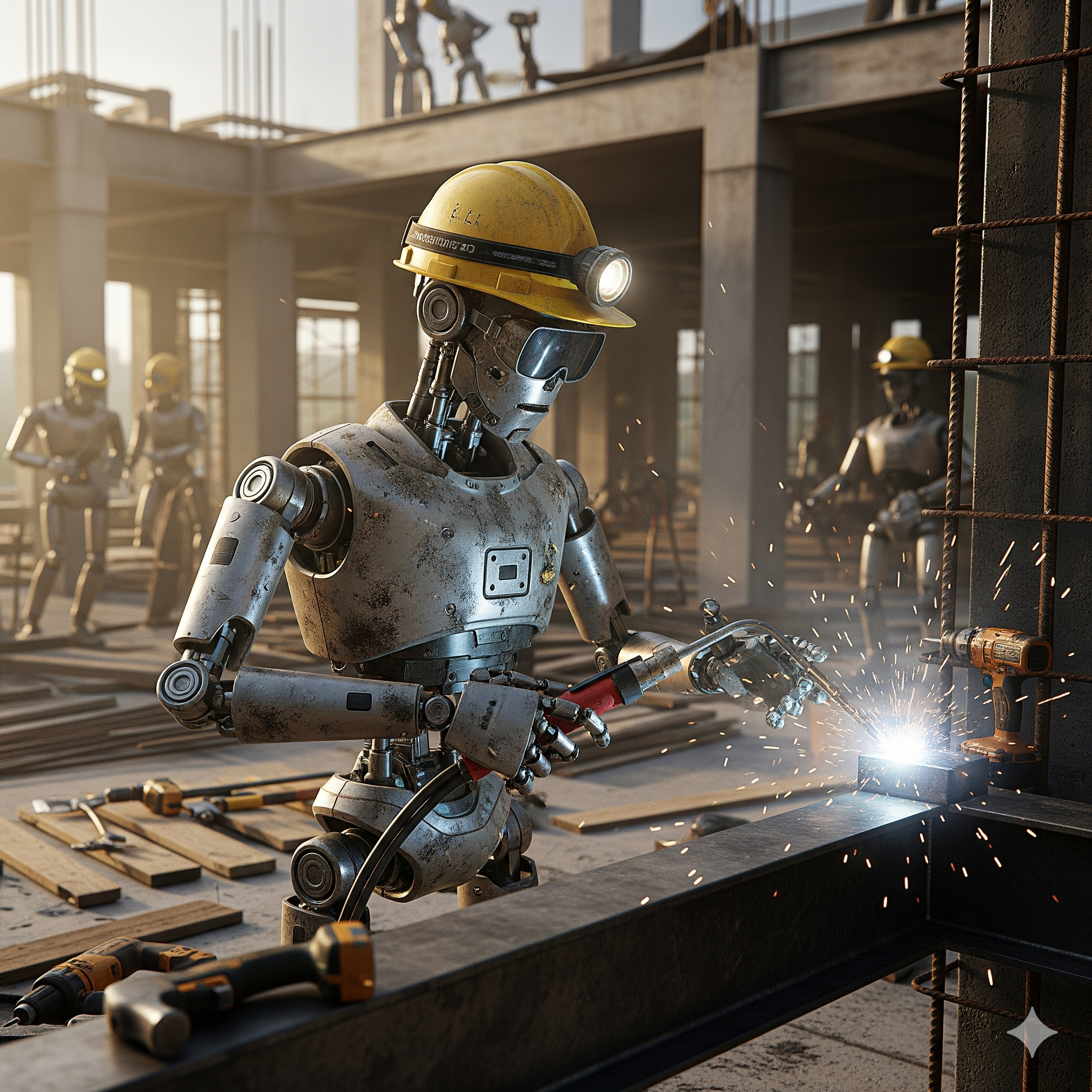
As we peer into the long run, the vision grows even more audacious: AI enabling humanity to become interstellar explorers and conquerors of mortality. Musk’s Tesla Optimus robots exemplify this trajectory. In 2025, Musk projected that humanoid robots like Optimus would handle hazardous tasks on Mars, paving the way for human settlements. “Humanoid robots and AI will make money irrelevant and we’ll have a perfect society,” he remarked at the AI Summit in Dubai.
A case in point is NASA’s use of AI for autonomous spacecraft navigation, as seen in the Perseverance rover, which employs machine vision to traverse Martian terrain without constant human input. Long-term, this could lead to AI-orchestrated colonies, where algorithms optimize life support systems and resource extraction, fulfilling Musk’s dream of a multi-planetary species resilient against existential threats.
On the frontier of human longevity, AI’s role in decoding biology promises to extend lifespans dramatically. Kurzweil’s singularity—a point where human and machine intelligence merge—foresees this by 2045, with AI-driven nanobots repairing cellular damage. “Once the singularity has been reached, machine intelligence will be infinitely more powerful than all human intelligence combined,” he writes in “The Singularity Is Near.”
Real-world progress includes Insilico Medicine’s AI platform, which in 2023 identified a novel drug for idiopathic pulmonary fibrosis in just 18 months, a process that typically takes years. Extrapolating, this could eradicate aging-related diseases, granting humanity the time and vitality to pursue cosmic ambitions.
Nick Bostrom, in “Superintelligence: Paths, Dangers, Strategies,” cautions about risks but acknowledges the upside: “Superintelligence could solve every problem we’ve ever faced, from poverty to pandemics.” His work highlights how carefully aligned superintelligence could amplify human potential, turning philosophical quests into achievable goals.
Yet, this vision’s allure lies in its holistic integration of short- and long-term benefits, creating a feedback loop of progress. In the near future, AI optimizes energy grids—Google’s DeepMind reduced data center cooling costs by 40% through predictive algorithms—freeing resources for space endeavors. Long-term, it simulates entire universes, testing theories of physics that elude current experiments.
A case study from CERN involves AI sifting through particle collision data, accelerating discoveries like the Higgs boson confirmation. Altman reinforces this optimism: “Deep learning and AI can solve the climate crisis and other remaining societal problems.” By addressing inequality through universal access—think AI-powered universal basic services—this vision ensures broad participation, mitigating Bostrom’s warnings of uneven distribution.
Critics might argue that such grandiosity overlooks ethical pitfalls, like job displacement or misalignment. Musk himself warns of AI risks, advocating for proactive safeguards. However, the vision’s strength is its proactive stance: by focusing on understanding the universe, we inherently build an AI that serves humanity’s highest aspirations In education, it fosters critical thinking about AI ethics; in healthcare, it prioritizes equitable access. Ultimately, this isn’t about machines overtaking us but about symbiosis, where AI illuminates paths we couldn’t see alone.
In conclusion, the most compelling vision for AI is one of boundless exploration and enlightenment, where short-term gains in health, learning, and sustainability fuel long-term leaps into the stars and beyond mortality. As Musk puts it, “AI could be the most impactful technology in human history.” Through quotes from visionaries and real-world illustrations, this narrative reveals a future not of dystopian control but of empowered humanity, charting the cosmos with AI as our steadfast companion. It’s a call to action: embrace this path, and we might just unlock the universe’s secrets, one algorithm at a time.
Filed under: Uncategorized |


 Educational Technology and Change Journal

Leave a comment