





By Jim Shimabukuro (assisted by Grok)
Editor
If you’re dipping your toes into the world of AI, you’ve probably heard the buzz about how it’s changing everything from chatting with your phone to generating art or even writing essays. But let’s zoom in on something specific that’s got the tech world talking: Mixture-of-Experts models, or MoE for short, and Microsoft’s shiny new entries into this space—MAI-1 and MAI-Voice-1.
These aren’t just fancy names; they’re part of a bigger shift in how AI is built and used. By the end of this article, you’ll understand why these innovations matter and how they’re fueling the explosive growth of AI overall. We’ll cover what they are, when they dropped, who’s behind them, and the ripple effects they’re having.
First, let’s demystify Mixture-of-Experts. Imagine AI as a massive brain—one that’s gotten really good at handling all sorts of tasks, like answering questions or creating images. But traditional AI models, often called “dense” models, are like a single overworked employee trying to do everything at once. They require tons of computing power, which means they’re expensive and energy-hungry. MoE flips that script. It’s like assembling a dream team of specialists: the model has a bunch of “experts” (smaller sub-models) that each handle a particular type of problem.
When you throw a query at it, a smart “router” decides which experts to call in—maybe just a few out of dozens or hundreds. This way, the whole system can be huge in capacity without cranking up the power bill for every single task. It’s efficient, scalable, and a game-changer for making AI more practical for everyday stuff. Think of it as dividing labor in a factory; not everyone needs to work on every product, so things run smoother and cheaper.
Now, enter Microsoft with their MAI-1 and MAI-Voice-1 models, which are prime examples of MoE in action. These were officially introduced on August 28, 2025, through a blog post from Microsoft AI, marking a big moment for the company. It wasn’t some quiet internal test; this was Microsoft stepping up and saying, “Hey, we’ve got our own homegrown AI tech that’s ready to play.” MAI stands for Microsoft AI, and these models are the first ones fully developed in-house by their AI division. Before this, Microsoft was heavily leaning on partners like OpenAI (you know, the folks behind ChatGPT), pouring billions into that relationship to power tools like Copilot. But with MAI-1 and MAI-Voice-1, they’re building their own foundation, which is a strategic pivot toward more control and customization.
Let’s start with MAI-1-preview—it’s essentially the text-based powerhouse of the duo. This is a large language model (LLM) built using the MoE architecture, meaning it has that team-of-experts setup to handle queries efficiently. Microsoft trained it from scratch, using around 15,000 NVIDIA H100 GPUs, which are these beastly chips designed for AI workloads. That’s a massive investment—think hundreds of millions of dollars in hardware alone—but it pays off in performance. The model is designed for “instruction-following,” which basically means it excels at understanding and executing user commands, like summarizing articles or brainstorming ideas.
It’s not just about raw size; early reports suggest it’s around 500 billion parameters (a measure of how complex the model is), putting it in the league of heavy hitters like GPT-4. Right after the announcement, Microsoft started publicly testing it on platforms like LMArena, where AI models duke it out in benchmarks, and they’re gradually rolling it into Copilot for real-world use. This isn’t Microsoft’s first rodeo with AI, but it’s their first end-to-end foundation model built entirely under the Microsoft AI banner, signaling a push for independence.
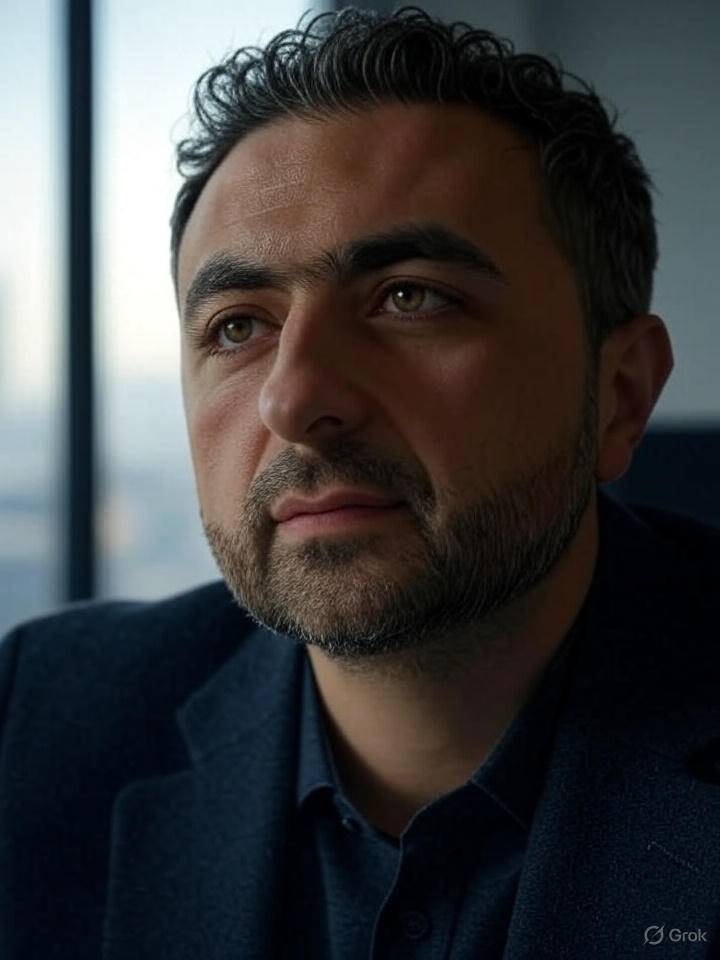
A key figure here is Mustafa Suleyman, the CEO of Microsoft AI. He’s the one who hyped up the launch on social media and in the official announcement. Suleyman is a big name in AI circles—he co-founded DeepMind (which Google snapped up) and later Inflection AI before jumping to Microsoft in 2024. His role? He’s basically the visionary steering Microsoft’s AI ship, focusing on turning raw research into practical products. Under his leadership, the team emphasized “product-oriented orchestration,” which is a fancy way of saying they’re engineering AI to seamlessly integrate into tools like Copilot, making it feel more like a helpful companion than a clunky bot. Suleyman’s background in ethical AI and scaling models from startups to giants makes him perfect for this; he’s bridging the gap between cutting-edge tech and everyday usability.
On the flip side, MAI-Voice-1 is the audio wizard of the pair. This one’s all about speech generation, turning text into natural-sounding voices that feel expressive and human-like. What blows my mind—and probably will yours too—is its speed: it can whip up a full minute of high-fidelity audio in under a second, all on just a single GPU. That’s lightning-fast compared to older systems that might chug along for minutes. It uses a clever setup with a tight decoder and a high-throughput neural vocoder (don’t worry, that’s just tech-speak for efficient audio processing).
Already, it’s powering features in Copilot, like Copilot Daily (an AI host that reads news stories) and Copilot Podcasts, where it handles multi-speaker scenes with flair. Imagine listening to a podcast where the AI voices switch seamlessly between narrators, adding emotion and pauses like a real person— that’s MAI-Voice-1 in action. It’s not just about speed; it’s about making AI interactions more immersive, turning text-based chats into conversational experiences.
Why does all this matter? Well, for starters, it’s a bold statement from Microsoft about not putting all their eggs in the OpenAI basket. They’ve invested over $13 billion in OpenAI, but tensions and the need for diversification have pushed them to develop in-house alternatives. This reduces dependency risks—if something goes sideways with partnerships, Microsoft has backups. But beyond corporate strategy, these models highlight MoE’s potential to democratize AI.
Traditional dense models like early GPT versions require insane resources, limiting them to big tech firms. MoE, by being more efficient, lowers the barrier. You activate only the experts needed per task, so inference (running the model) costs less power and money. This could mean cheaper AI services for everyone, from small businesses building chatbots to developers tinkering in their garages.
Zooming out, these innovations are supercharging AI’s growth in a few key ways. First, efficiency drives adoption. As AI gets cheaper to run, it infiltrates more areas of life—think smarter virtual assistants in your car, personalized education tutors, or even medical diagnostics (Microsoft’s already experimenting with AI in healthcare through related projects like MAI-DxO). MAI-1’s MoE setup, for instance, allows scaling to handle complex, multi-step tasks without ballooning costs, which could accelerate advancements in fields like robotics or climate modeling.
Second, voice tech like MAI-Voice-1 is pushing AI toward multimodal experiences—combining text, speech, and maybe soon images or video. This makes AI feel more natural, bridging the gap between humans and machines. We’re moving from typing prompts to having full conversations, which opens doors for accessibility (helping those with disabilities) and entertainment (AI-narrated audiobooks that adapt to your mood).
Competition is another big driver. Microsoft’s entry ramps up the arms race with Google, Meta, and OpenAI, who are all dabbling in MoE too—think Google’s Switch Transformer or Meta’s work on sparse models. This rivalry spurs faster innovation; when one company drops a model that generates audio in sub-seconds, others scramble to match or beat it. We’ve seen this pattern before: ChatGPT’s launch in 2022 kicked off a frenzy, leading to better models across the board.
Now, with MAI-1 and MAI-Voice-1, Microsoft is positioning itself as a leader in “orchestrated” AI—systems that coordinate multiple models for better results. Suleyman’s influence here is key; his experience at DeepMind helped pioneer things like AlphaGo, which showed how specialized AI can tackle super-hard problems. Applying that to consumer tools could lead to AI that’s not just smart but intuitive, anticipating needs before you ask.
But it’s not all hype—there are challenges. MoE models can sometimes struggle with “routing” decisions, where the system picks the wrong experts, leading to inconsistencies in long conversations. Microsoft will need to refine this as they gather user feedback from Copilot integrations. Ethically, faster voice AI raises questions about deepfakes or misuse in scams, so safeguards are crucial. Still, the positives outweigh: these models are steps toward AI that’s more sustainable (less energy waste) and inclusive.
In the grand scheme, MAI-1 and MAI-Voice-1 are like puzzle pieces in AI’s evolution from novelty to necessity. They’re helping shift AI from backend tech to front-and-center in our lives, powering everything from productivity apps to creative tools. As costs drop and capabilities rise, we could see AI woven into education, healthcare, and entertainment on a massive scale—imagine schools with AI tutors that speak in your native language or doctors using voice AI for quick consultations. Microsoft’s push, led by folks like Suleyman, is accelerating this by fostering a ecosystem where open-source ideas (like early MoE research) meet big-company resources.
Wrapping up, if you’re new to AI, think of these models as Microsoft’s way of saying, “We’re not just riding the wave—we’re shaping it.” Introduced on August 28, 2025, they’re important because they embody efficiency and independence, impacting AI growth by making it more accessible, competitive, and human-like. The future? Probably one where AI feels less like a tool and more like a partner. Exciting times ahead—keep an eye on how this unfolds!
Filed under: Explained |


 Educational Technology and Change Journal

Leave a comment