





By Jim Shimabukuro (assisted by ChatGPT)
Editor
[Also see World Leaders in AI Drone Warfare (Update Oct. 2025)]
By September 2025 Ukraine and Russia rank among the most consequential combat users and battlefield innovators of AI-enabled and autonomous drone tactics (loitering munitions, FPV attack drones, improvised autonomy, and early swarm applications). Their intense, high-volume fighting since 2022 has produced the fastest cycle of field-driven innovation and countermeasures in drone warfare history.
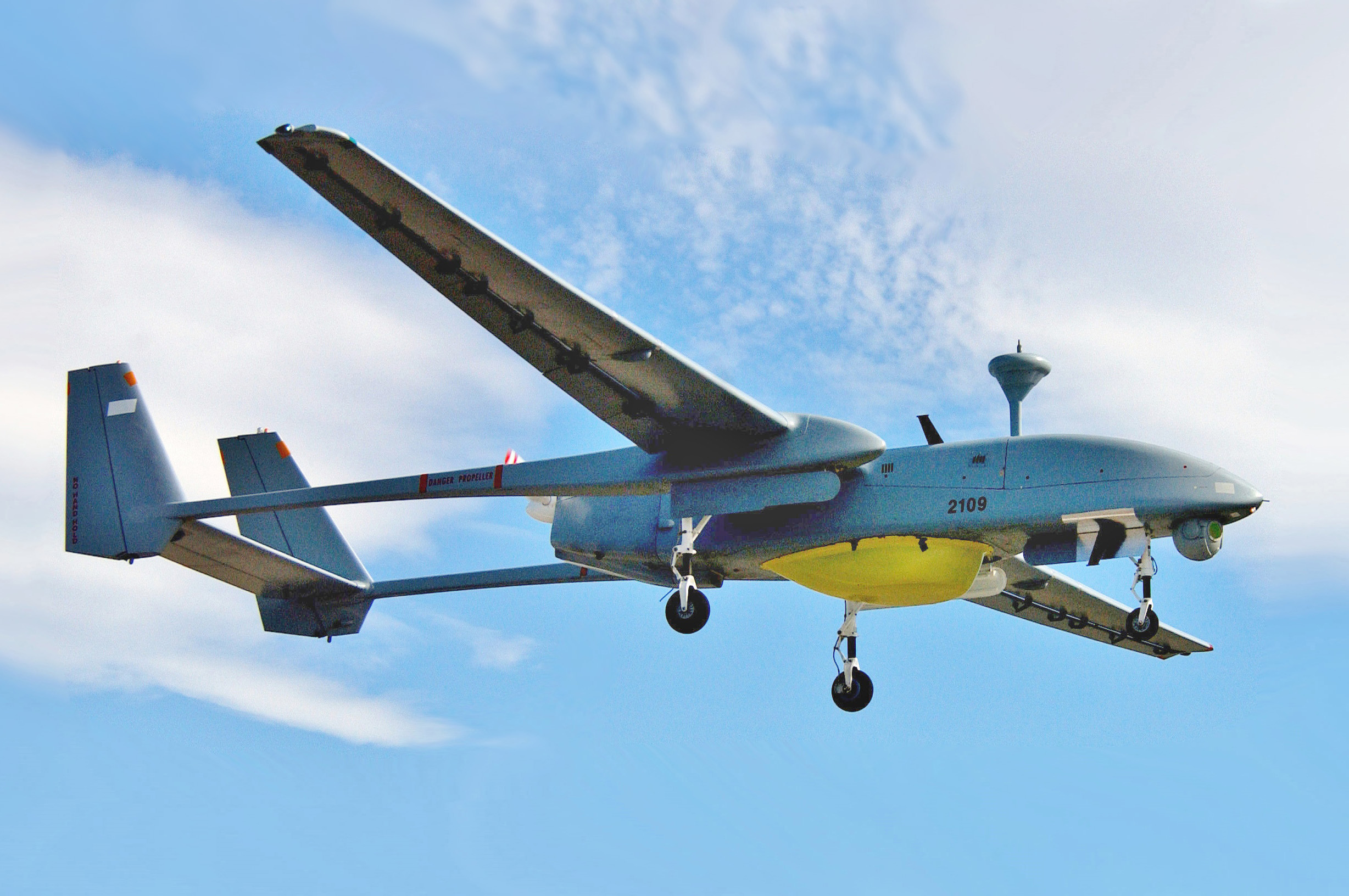
However, when people ask about global leaders in research & development (R&D) of longer-term AI drone capabilities (lab-grade autonomy, manned-unmanned teaming, industrial R&D ecosystems), the balance shifts toward states with deep defence-technology ecosystems — especially the United States, China, Israel, and several advanced industrial democracies. Put simply: Russia and Ukraine lead in combat innovation and operational learning; the U.S., China, Israel, and others lead in institutional R&D and industrial capacity. (Scientific American)
Top 10 (ranked)
- United States. (Kratos Defense)
- China (People’s Republic / PLA). (Air University)
- Israel. (Automated Decision Research)
- Russia. (Wikipedia)
- Ukraine. (Scientific American)
- Turkey. (The Defense Post)
- Iran. (Wikipedia)
- United Kingdom. (Business Insider)
- France. (Thales Group)
- Australia. (AP News)
1 — United States (rank #1)
The United States is the global leader in institutional R&D, procurement scale, and doctrinal development for AI-enabled unmanned air systems (UAS). U.S. investment spans basic and applied research (DARPA and service labs), large defense primes building autonomous strike and “loyal wingman” systems, and test programs that explicitly integrate AI, swarming, and human-machine teaming.
What defines the U.S. lead is breadth and depth. DARPA and other agencies fund foundational autonomy (navigation, adversarial robustness, sensing/ML on the edge) and field experiments such as collaborative swarms and manned-unmanned teaming concepts that pair fighters with autonomous “wingmen.” Industry-defense partnerships (Kratos, Lockheed, Northrop, Anduril, Shield AI and many smaller firms) push prototypes into operational testbeds: examples include Kratos’ XQ-58 Valkyrie “loyal wingman” experiments and repeated USAF trials integrating uncrewed platforms with manned aircraft. The U.S. also runs programs focused on mass autonomous systems (e.g., swarm testbeds) and counter-drone technologies, while investing in doctrine and legal/regulatory frameworks for autonomous weapon employment. These institutional pipelines — from DARPA labs to big-ticket service procurements and the U.S. industrial base — are why the U.S. sits at the top for R&D capacity and future capability. (Kratos Defense)
2 — China (PRC / PLA)
China places heavy emphasis on unmanned systems and swarm concepts as central to future PLA operational doctrine. Academic, military and state industrial labs are pursuing autonomy for massed UAVs, offensive swarm tactics for anti-access/area denial (A2/AD), and techniques to saturate and overwhelm air defenses. Recent open research and PLA concept documents — and analytical work by Western institutions — show the PLA sees large numbers of low-cost autonomous platforms as a way to contest advanced air defenses and support amphibious or blockade operations (e.g., planning for scenarios around Taiwan). China couples its wide industrial base (both large aerospace firms and many smaller private UAS companies) with prioritized state funding for autonomy, sensors, and integrated command-and-control. While the PLA’s battlefield use is not identical to Ukraine/Russia’s combat testing, its long-term R&D industrial heft and doctrine place it second. (Air University)
3 — Israel
Israel has decades of development and export experience in tactical UAS and loitering munitions; its firms pioneered many small-to-medium tactical systems and mature sensor-to-shooter integration. Israeli companies developed combat-tested loitering munitions (Harop/Harpy family and other systems), advanced ISR platforms, and mature autonomy in weapons employment and target recognition. Israel’s defense ecosystem tightly couples combat experience (from repeated regional operations) to iterative product cycles, so Israel ranks high for both R&D depth and battlefield-proven systems that other countries adopt or copy. Israeli firms and doctrines are routinely cited as benchmarks for tactical autonomous strike systems, and Israel exports or transfers capability widely. (Automated Decision Research)
4 — Russia
Russia’s ranking reflects two things: (1) rapid, large-scale operational deployment of loitering munitions and strike drones in Ukraine (e.g., Lancet, Geran/Shahed variants, Orlan reconnaissance UAVs) and (2) an active defence industrial base that has retooled to mass-produce low-cost autonomous strike systems under wartime pressure. The Lancet loitering munition family and the Geran-2/Shahed-type raids demonstrate doctrinal emphasis on attrition via massed unmanned strikes; Russia has iterated hardware and low-cost production lines rapidly and has shown upgrades toward networked and semi-autonomous behaviors. That battlefield innovation and mass production make Russia a leading practical innovator in operational AI-assisted drone warfare — even if supply-chain sanctions and reliance on some imported components complicate sustained R&D in certain advanced subsystems. (Wikipedia)
5 — Ukraine
Ukraine’s rank is driven by extraordinary combat innovation under pressure. Ukrainian forces have rapidly evolved tactics (FPV teams, small-UAS interception, electronic warfare pairing, swarm employment and decentralised targeting), improvised hardware, and collaborative projects with Western industry to produce interceptor and strike drones. Ukraine’s battlefield adaptation — producing low-cost interceptors, modifying commercial drones into loitering munitions, and training specialist FPV teams — has influenced doctrine worldwide and accelerated Western interest in mass small-UAS countermeasures and distributed autonomy. Operational creativity plus partnerships with foreign firms (and now production agreements with allies) keep Ukraine high on the list even though its long-term industrial R&D base is far smaller than the major powers’. (Scientific American)
6 — Turkey
Turkey is a surprisingly large influence: Baykar’s Bayraktar TB2 revolutionized perceptions of tactical strike drones in the 2010s and Turkey continues to advance autonomy and exportable combat UAVs. Turkey also fields and exports small kamikaze systems (STM KARGU), and Turkish firms are investing in AI-enabled flight control and heavier armed UCAV concepts; Baykar has signaled explicit AI and autopilot upgrades in 2024–25 R&D. Turkey’s large export market and willingness to send combat UAVs to theaters around the world make it both an R&D actor and a practical influence on battlefield norms. (The Defense Post)
7 — Iran
Iran has prioritized low-cost massed strike drones (Shahed family and variants) and develops long-range loitering munitions for asymmetric power projection. Iranian drone designs have been fielded in regional conflicts and proliferated to proxy forces and Russia, illustrating Iran’s practical influence in mass kamikaze tactics. Iran’s R&D emphasizes endurance, range, and simple autonomy that runs reliably in contested GNSS environments; this pragmatic engineering approach has made Iran a leading source for cheap massed strike UAS. (Wikipedia)
8 — United Kingdom
The UK combines robust defence R&D (sensors, counter-swarm tech, and autonomy) with operational partnerships supporting Ukraine. UK labs and companies are active in swarm countermeasures and in producing low-cost interceptor concepts (recent Project Octopus collaboration with Ukraine is an example). Thales (UK/France) and British Army trials on counter-swarm systems also show a concerted investment in both offense and defence around autonomous unmanned systems. The UK’s place reflects R&D quality and growing operational support, not large mass domestic production of strike drones on the scale of others. (Business Insider)
9 — France
France has strong aerospace and defence R&D (Thales, Dassault, Safran) and has fielded demonstrations of multi-agent autonomy and swarm tactics. French defence research shows active programs to integrate autonomous mission control, contested-environment swarm operations, and counter-drone systems. France’s industrial and scientific base gives it significant R&D depth even if France’s export footprint for loitering munitions is smaller than some peers. (Thales Group)
10 — Australia
Australia is investing heavily in autonomous maritime and undersea drones and has recent high-profile investments (e.g., “Ghost Sharks” undersea attack drones) and partnerships with U.S. industry (Anduril Australia, AUKUS-linked programs). Australia’s focus on unmanned maritime/autonomous undersea systems and integration with allied tech makes it an important player for niche autonomous-naval drone capabilities and for coalition R&D. While Australia is not yet a top export source for land loitering munitions, its niche investments and alliance links justify a top-10 placement. (AP News)
Final synthesis (short)
- Are Russia and Ukraine “world leaders”?
- Operationally and tactically: yes — they lead in combat experimentation, fast iteration, and practical lessons about FPV, loitering munitions, and counter-drone measures. (Scientific American)
- In institutional R&D and industrial scale for future AI drone systems: No; that crown rests mainly with the U.S., China, and Israel, followed by countries with mature defence-industrial ecosystems (UK, France, Turkey, Iran in regional tactics, Australia’s niche investments). (Kratos Defense)
Filed under: World Leaders in |


 Educational Technology and Change Journal

Leave a comment