





By Jim Shimabukuro (assisted by DeepSeek)
Editor
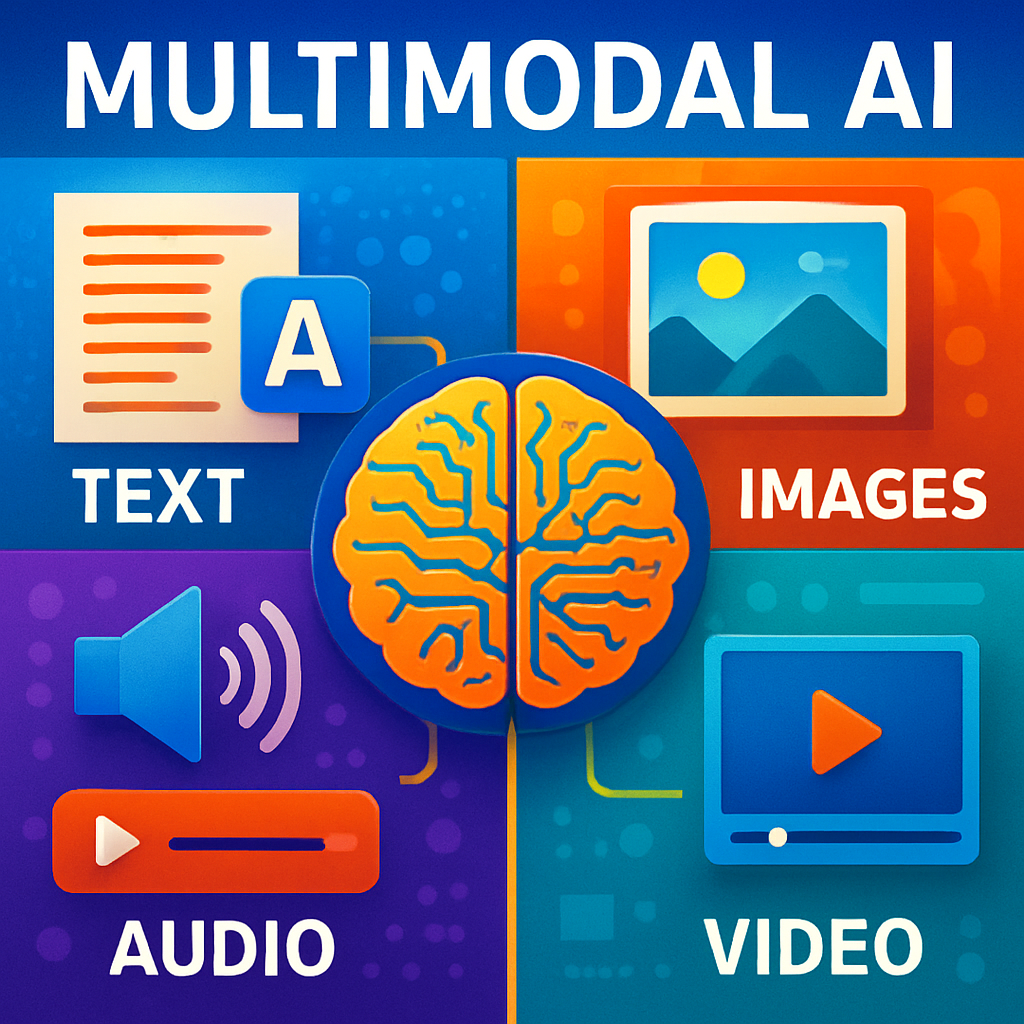
The shift from unimodal (text-only) AI to multimodal AI (processing and generating text, images, audio, and video) isn’t just an incremental upgrade—it’s a fundamental change in how AI perceives and interacts with our world, which is inherently multimodal. Here are 10 compelling reasons why multimodal AI is such a game-changer:
1. It Mirrors Human-Like Perception and Cognition
Humans don’t experience the world through text alone. We simultaneously see, hear, and feel. Multimodal AI is a giant leap towards creating AI that understands context the way we do. For example, it can look at a photo of a crowded street (visual), hear the honking cars (audio), and read a news headline about a parade (text) to understand the complete scenario, rather than just analyzing each piece in isolation.
2. Unlocks Profound Contextual Understanding
A picture might be worth a thousand words, but a picture with its caption is worth far more. Multimodal AI can cross-reference information between modalities to resolve ambiguity. For instance, it can see an image of a “bank” and use surrounding text to determine if it’s a river bank or a financial bank, leading to vastly more accurate interpretations.
3. Revolutionizes Accessibility
This is one of the most immediate and impactful benefits. Multimodal AI can:
- For the visually impaired: Describe images and videos in rich detail in real-time.
- For the hearing impaired: Generate accurate, speaker-identified transcripts and captions for any audio or video.
- For those with learning differences: Explain complex concepts by translating between text, diagrams, and spoken word.
4. Supercharges Creativity and Content Creation
Creators are no longer limited to one medium. You can:
- Generate a video from a text prompt.
- Create a musical jingle based on a product image and description.
- Write a poem inspired by a painting, and vice-versa.
This breaks down creative silos and allows for entirely new forms of art and storytelling.
5. Transforms Scientific Discovery and Research
Researchers can use multimodal AI to find patterns across vastly different types of data that would be impossible for a human to correlate at scale. For example:
- Cross-referencing satellite imagery (visual) with weather sensor data (numeric) and scientific papers (text) to model climate change effects.
- Analyzing medical scans (visual) alongside patient health records (text) and audio of heartbeats to suggest diagnoses.
6. Enables Truly Intelligent Assistants and Robotics
A domestic robot needs to hear you say “hand me that,” see what “that” is you’re pointing to, and feel the appropriate pressure to grip it. A digital assistant can watch a video conference, understand the charts being presented (visual), and summarize the key points (text) while noting who said what (audio).
7. Enhances Search and Discovery Beyond Keywords
Instead of searching with text, you can search with an image (“find me a dress like this”), a sound (“find the song that goes like this”), or a video clip. E-commerce, media libraries, and academic research will become infinitely more intuitive and powerful.
8. Drives Hyper-Personalized Education and Training
Learning complex skills often requires multiple senses. Multimodal AI can create adaptive learning experiences:
- A math tutor AI can generate a graph (visual) to explain a text-based problem, and then provide spoken encouragement.
- A manual repair AI can show a 3D diagram, provide step-by-step text instructions, and warn you with a sound if you’re about to make a mistake.
9. Unprecedented Capabilities in Analysis and Security
Analyzing complex events requires synthesizing information from multiple sources. Security personnel could use an AI that monitors live camera feeds (visual), analyzes radio communications (audio), and cross-references watch lists (text) to identify potential threats in real-time with much higher accuracy.
10. Breaks Down Language and Cultural Barriers in Real-Time
Imagine pointing your phone at a street sign in another country. Multimodal AI can translate the text (text-to-text), read it aloud in your language (text-to-speech), and even explain a cultural reference in the sign’s imagery, providing a seamless and deeply informative translation experience.
In summary, the “big deal” is that multimodal AI stops being a tool that we interface with and starts becoming an agent that perceives and acts within our world. This shift from a narrow, text-based interpreter to a broad, context-aware agent is what makes it a true paradigm shift and a foundational technology for the next era of computing.
Filed under: Uncategorized |


 Educational Technology and Change Journal

Leave a comment