





By Jim Shimabukuro (assisted by ChatGPT)
Editor
Introduction: AI as a university field of study is growing exponentially. However, that very growth implies that earlier studies and skills will quickly succumb to obsolescence. This shifting playing field requires program trajectories that proactively anticipate changes and focus on abilities that are more future-proof. I asked ChatGPT to identify ten universities, in the West and the East, that are developing exemplary programs. After listing ten, ChatGPT suggested adding five more, and I agreed. -js
These are fifteen universities (West and East) that are actively building programs to prepare graduates not just to work with AI, but to adapt as the field rapidly changes. Each selection includes an explanation of how the institution is structuring education, research, and industry links so students can survive — and thrive — in a shifting AI landscape. Sources for the key program facts are cited after each essay.
1. Massachusetts Institute of Technology (MIT)
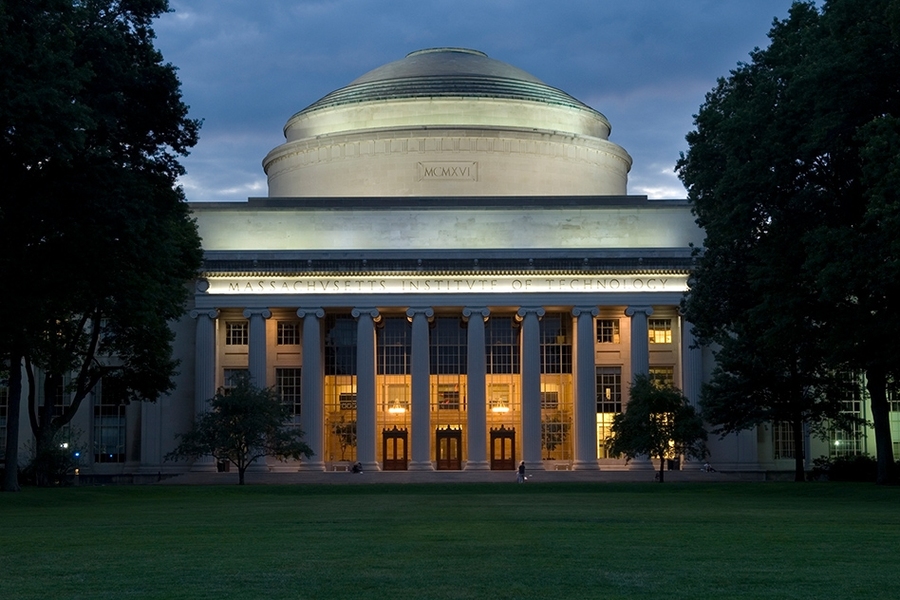
MIT has treated the arrival of AI as less a single departmental problem and more a campus-wide transformation. The Stephen A. Schwarzman College of Computing — MIT’s architectural answer to the computing age — intentionally reorganizes teaching and research to place computing and AI in conversation with the humanities, social sciences, business, and engineering. That institutional design matters: by requiring cross-disciplinary partnerships and dual-degree pathways, MIT trains students to think beyond algorithmic optimization and into human contexts where AI must operate. On the curricular side, programs emphasize strong foundations — probability, linear algebra, systems, and software engineering — while layering courses in policy, ethics, interpretability, and deployment. Pedagogically, MIT pushes project-based learning and industry capstones that simulate the messy socio-technical constraints students will face in real deployments (data governance, safety, regulation, cross-team coordination). At scale, MIT also invests in distributed, modular continuing education: short professional bootcamps and online modules for mid-career learners, recognizing that many alumni will need to retool repeatedly. The combination of an institutional mandate (a college devoted to computing) plus a genuine curricular insistence on human-AI integration helps graduates practice both the technical fluency and the adaptability that keep skills current even as specific models and tools evolve. (MIT Course Catalog)
2. Stanford University
Stanford’s approach to future-proofing students rests on a philosophy: AI education must be human-centered, societally informed, and entrepreneurship-ready. Stanford’s Human-Centered AI Institute (HAI) runs education programs that pair foundational technical training with ethics, policy, and design thinking. Students are encouraged to rotate through research labs, law and policy clinics, and interdisciplinary design studios — an ecosystem that normalizes collaboration across domains and makes ethical tradeoffs a routine part of engineering practice. Stanford also leverages strong industry ties and a dense startup ecosystem to expose students to rapid product cycles and to problem framing under constraints (speed, safety, business models). Crucially, educational offerings include short, intensive experiences (AI4ALL, executive courses) and longer research apprenticeships — a mix that supports both deep technical competence and the ability to pivot into new roles (product, policy, research) as the field shifts. Those institutional structures — human-centered curriculum, tight industry feedback loops, and flexible micro-credentials — produce graduates resilient to tooling churn because they understand core principles, sociotechnical risk, and how to reapply skills in new domains. (Stanford HAI)
3. Carnegie Mellon University (CMU)
Carnegie Mellon has long oriented itself around applied machine intelligence, and recent programs make explicit the need for resilience in graduates’ careers. CMU’s School of Computer Science offers undergraduate and graduate tracks focused on AI that combine rigorous foundations in machine learning, algorithms, and systems with courses in human-robot interaction, ethics, and the economics of automation. Newer degrees — such as the Master of Science in Artificial Intelligence and Innovation — deliberately integrate technical mastery with entrepreneurship, product development, and stakeholder engagement: students don’t just build models; they design viable AI solutions for clients and navigate productization, safety, and business constraints. CMU’s pedagogy frequently uses team projects with external partners, putting students into situations where ambiguous problem statements, shifting requirements, and ethical tensions require adaptation — exactly the skills graduates need when specific platforms or libraries go obsolete. Lastly, CMU invests heavily in lifelong learning: short courses for professionals, strong alumni networks, and industry partnerships that provide continuous upskilling opportunities, acknowledging that surviving in AI means repeated transitions rather than a single credential. (Carnegie Mellon University)
4. University of Oxford
Oxford has taken a deliberately pluralistic route: rather than only offering narrow technical training, it marries state-of-the-art computing with deep inquiry into ethics, governance, and the humanistic questions AI evokes. Its advanced computer science programs work closely with industry to keep syllabi current in machine learning and systems, while the newly prominent Institute for Ethics in AI and related centers ensure students engage with regulation, safety, and societal impact. This pairing produces graduates capable of critical translation — those who can read technical research, anticipate policy challenges, and design governance-aware solutions that are robust to shifting technical paradigms. Oxford also emphasizes transferable intellectual habits: formal methods, probabilistic reasoning, and rigorous evaluation techniques that survive changes in model architectures or tooling. The university’s tutorial system and research apprenticeships further train students in independent learning and critical thinking, equipping them to learn new frameworks or paradigms as AI evolves. Finally, cross-college programs that combine computing with social science, business, or law create alumni who can migrate between sectors (research, regulation, enterprise) rather than being trapped by a single, tool-specific skillset. (University of Oxford)
5. ETH Zurich
ETH Zurich focuses on depth plus domain transferability. Its joint Master in Data Science and related AI offerings bring together departments of computer science, mathematics, and electrical engineering to deliver a curriculum that stresses theory (statistical learning, optimization), large-scale systems, and hands-on engineering. ETH’s distinctive strength is marrying mathematical rigor with practical lab courses and industry projects: students learn to derive and prove guarantees (which protect them against fashionable but brittle tricks) and then implement robust, scalable solutions in real environments. This dual emphasis — foundations that generalize and engineering practice that meets real-world constraints — produces graduates who can move from one class of models to the next, because they understand the underlying assumptions, failure modes, and evaluation metrics. ETH also embeds multidisciplinary options (medicine, robotics, environmental sciences) so that graduates become translators who can apply AI concepts to new domains as markets and tooling shift. The school’s strong ties to European industry and startups also provide continuous re-skilling pathways and exposure to regulation and safety standards that increasingly shape AI deployment. (ETH Zurich)
6. Tsinghua University
Tsinghua approaches future-proof AI education with scale and strategic breadth. The university’s School of Information Science and Technology and affiliated programs in AI and “AI+X” initiatives intentionally cultivate a layer of specialization plus a broad set of applied concentrations (health, manufacturing, language technologies). Rather than training students to master specific frameworks, Tsinghua emphasizes large foundational topics such as deep learning theory, large-scale distributed systems, and multimodal modeling, along with intensive lab rotations and industry internships. These structures allow students to acquire transferable know-how (how to evaluate models, build robust pipelines, and deploy at scale) and to pivot between domains as demand shifts. Tsinghua’s institute model — which funds cross-disciplinary centers and close industry partnerships — also gives students exposure to national and global challenges, encouraging adaptive, impact-oriented problem solving. Finally, their growing offerings in AI ethics and governance help graduates to anticipate regulatory change and design resilient solutions that are less likely to be disrupted by policy shifts. (Tsinghua University Sigs)
7. National University of Singapore (NUS)
NUS has made adaptability a curricular priority through multidisciplinary master’s programs and industry-facing degrees. The Master of Computing in Artificial Intelligence and related MSc programs in AI & Innovation integrate computer science fundamentals with modules in entrepreneurship, policy, and cross-sector applications. NUS emphasizes capstones and industry projects that expose students to the full technology lifecycle: problem discovery, data engineering, model building, deployment, and post-deployment monitoring. Recognizing that skills will decay if taught only at graduation, NUS also builds executive and short upskilling programs (and collaborates with government and industry on workforce retraining), creating a continuous learning pipeline. In addition, programs like NUS’s smart industries and digital transformation offerings teach students to combine technical methods with business process thinking — a combination that helps graduates shift from coding models to translating AI into organizational value, an ability that tends to outlast any particular ML framework. The institutional strategy is to produce adaptable professionals who can bridge roles (engineer→product→policy) as technologies evolve. (Default)
8. The University of Tokyo (UTokyo)
UTokyo is scaling AI across curricula while building mechanisms for cross-disciplinary resilience. The Graduate School of Information Science and Technology runs specialized master’s and doctoral programs alongside a suite of AI initiative projects that pair technical research with applications in robotics, materials, and social systems. UTokyo’s portfolio approach — many small, focused research projects tied to faculty from engineering, medicine, and the social sciences — gives students repeated practice translating methods across domains. That exposure trains adaptability: graduates learn how to adapt models to different data regimes, regulatory settings, and institutional constraints. UTokyo also supports shorter international programs and English taught tracks, helping students gain global perspectives and networks that are useful when migrating between tools or industries. By embedding AI education in a broader research ecosystem and encouraging continual project-based learning, UTokyo produces graduates who can learn new paradigms quickly and apply AI in ways robust to shifting tooling or policy landscapes. (The University of Tokyo)
9. KAIST (Korea Advanced Institute of Science and Technology)
KAIST has made a decisive bet on concentrated AI education with its Kim Jaechul Graduate School of AI and a host of research groups focused on visual AI, multimodal foundation models, and generative systems. The school’s strategy is to build a fast feedback loop between cutting-edge research (frequent publications in top conferences), project-driven graduate training, and industry collaboration. Students are encouraged to pursue integrated MS-PhD pathways, work in multi-lab consortia, and participate in short intensive academies that simulate rapid deployment cycles (model iteration, safety checks, and scaling). KAIST’s emphasis on multimodal models and systems thinking trains graduates to think beyond narrow toolchains and toward capabilities (robust perception, generalization, human-AI teaming) that remain valuable even as individual libraries or model families evolve. The institute also runs executive training and public-private programs to upskill professionals, reflecting a recognition that adaptability requires lifelong learning infrastructure as well as initial credentials. Overall, KAIST’s tightly coupled research-education-industry model builds practitioners who are fluent in the current state of the art and also in how to move to the next one. (KAIST)
10. Indian Institute of Technology Bombay (IIT Bombay)
IIT Bombay confronts the obsolescence problem with breadth, access, and industry partnerships. The Centre for Machine Intelligence and Data Science (C-MInDS) anchors a portfolio that ranges from undergraduate AI modules to executive education and PhD training. IIT Bombay’s programs purposefully combine rigorous fundamentals with domain adaptation: students study theoretical foundations while participating in industry projects, entrepreneurship labs, and multi-disciplinary problem challenges. The institute also publishes modular, online upskilling courses and post-graduate diplomas to reskill mid-career professionals — a pragmatic admission that future-proofing requires continuous education. Moreover, high-visibility collaborations with industry (for example, multi-year partnerships that fund fellowships and applied research) ensure curricula reflect emergent needs and that students learn to work with changing stacks and operational constraints. By democratizing access through blended online/offline offerings and by fostering a culture of applied research and entrepreneurship, IIT Bombay produces graduates who can pivot across roles and remain relevant as specific AI tools churn. (minds.iitb.ac.in)
11. University of California, Berkeley
Berkeley treats AI as a campus-wide mission rather than the property of a single department, and that institutional stance is foundational to future-proofing graduates. The university’s AI ecosystem — anchored by the Berkeley Artificial Intelligence Research (BAIR) lab and an array of interdisciplinary initiatives across engineering, law, public policy, and the humanities — creates repeated opportunities for students to practice translating technical capability into societal value. Students learn rigorous computational foundations (probability, optimization, systems design) while simultaneously being required — through courses, centers, and capstones — to tackle governance, privacy, and ethics questions. This curricular mix matters because it trains graduates to think in principles (e.g., when models fail, when systems scale, what governance tradeoffs look like) rather than in tool-specific syntax. Pedagogically, Berkeley emphasizes project-based, partner-driven education: undergrads and masters students often join lab projects or industry-sponsored capstones that force them into messy deployment contexts (data pipelines, monitoring, cross-functional teams). That experiential pressure tests not only model-building skills but systems thinking, domain adaptation, and communication — the human-centered competencies that let someone switch frameworks or model families without losing productivity. Beyond degree tracks, Berkeley runs executive education, policy fellowships, and public-facing research agendas that continuously refresh faculty and student exposure to new problems. In short, Berkeley’s strategy is to produce thinkers who can learn new tools fast because they understand the transferable concepts behind them, and who know how to stitch technical craft into organizational and societal constraints. (University of California, Berkeley)
12. University of Cambridge
Cambridge has leaned into pluralism as a deliberate future-proofing tactic: instead of teaching only the latest architectures, its AI initiatives actively blur boundaries between computation and humanities, law, and governance. The university’s AI research hubs and programs — including degree-level offerings in AI ethics and society — embed normative inquiry into technical training so that graduates can anticipate regulatory shifts and design systems robust to policy and public scrutiny. Cambridge’s emphasis on rigorous methods and critical analysis (tutorial-style supervision, research-led masters courses) produces a workforce that can reason from first principles when the artifact-level landscape changes: whether new model families emerge or dominant frameworks are decommissioned, Cambridge-trained students can reassess assumptions, derive new evaluation criteria, and retool pipelines. The institution’s research partnerships across industry and government also expose students to real-world constraints, forging the soft skills (negotiation, cross-disciplinary translation, risk assessment) that extend employability across roles — from research scientist to policy advisor to product lead. By training both technical depth and normative fluency, Cambridge builds graduates who don’t just chase the latest API; they shape the context in which those APIs will or won’t be used. (ai@cam)
13. University of Toronto (and the Vector Institute ecosystem)
Toronto’s strength lies in a close feedback loop between world-class academic research and a purpose-built regional innovation ecosystem. The University of Toronto teams with the Vector Institute and health, finance, and public-sector partners to offer training that layers foundational machine learning with large-scale application experience and commercialization pathways. This structure is future-proof in two complementary ways. First, the focus on deep theory — statistics, optimization, representational learning — gives graduates the conceptual tools to move across model classes and adapt when libraries or hardware change. Second, the Vector–UofT industry collaborations place students into long-lived domain problems (healthcare diagnostics, industrial automation, public policy) where the objective is sustainable value, not just benchmark-beating models. Students learn to engineer reliable data pipelines, version models, and measure real-world performance — operational skills that survive model churn. Additionally, Vector’s broad talent programs (scholarships, bootcamps, industry projects) create continuous re-skilling channels for alumni and professionals, acknowledging that future-proofing requires lifelong learning infrastructure as much as a single degree. The region’s dense startup scene and translational research culture also give graduates routes into entrepreneurship and productization, so they aren’t locked into narrow research-specialist roles when the tooling landscape changes. (Vector Institute)
14. Peking University
Peking University has scaled AI education strategically, combining historical strength in fundamental research with a modern institute model that integrates “AI+X” cross-disciplinary centers. The Institute for Artificial Intelligence centralizes computational expertise while funding applied labs across medicine, languages, manufacturing, and more — intentionally giving students repeated practice moving methods between domains. This “specialize-plus-transfer” curriculum means students master core ideas (statistical learning theory, distributed systems, robust evaluation) and then test them in different data regimes and institutional constraints, a training pattern that heightens resilience against tool obsolescence. The university is also expanding enrollment and industry ties to supply a workforce attuned to national strategic needs in AI, which produces graduates with both deep technical chops and experience in large-scale deployments. Finally, PKU’s growth of professional diplomas and short programs signals an institutional commitment to continuous learning: students and working professionals can reskill as architectures and platforms evolve. That combination of rigorous foundations, domain transfer practice, and lifelong learning options equips PKU graduates to pivot successfully as the field changes. (AILab)
15. École Polytechnique Fédérale de Lausanne (EPFL)
EPFL’s approach centers on systems thinking, multidisciplinary integration, and industry interfacing — a pragmatic recipe for future-proof graduates. The EPFL AI Center and related initiatives deliver tight collaboration across faculties (computer science, engineering, life sciences, and management), ensuring students encounter both the mathematical foundations and the concrete constraints of deploying AI in real environments. EPFL emphasizes courses and programs that move beyond algorithmic performance to cover AI for health, product management, and AI in education, plus short executive and continuous-learning offerings. This mix trains students to speak the languages of engineering, regulation, and business — enabling them to take on cross-functional roles when narrow technical tracks become obsolete. EPFL also leans into hands-on project formats and public-private partnerships, which immerse students in scaling, safety verification, and operational monitoring: skills that persist when model families shift. By combining technical depth, multidisciplinary application, and lifelong learning pathways, EPFL builds adaptable practitioners who can re-skill and lead across the evolving AI landscape. (ai.epfl.ch)
[End]
Filed under: Uncategorized |


 Educational Technology and Change Journal

Leave a comment