


By Jim Shimabukuro (assisted by Copilot)
Editor
By October 8, 2026, AI has not merely integrated into our lives—it has restructured the architecture of daily existence, reshaped our social contracts, and redefined what it means to be human in a world of synthetic agency.
Step into a home in 2026, and you’ll find not just smart devices, but agentic ecosystems. AI agents no longer wait passively for commands—they anticipate, coordinate, and act. Your kitchen doesn’t just suggest recipes; it negotiates with your dietary AI, checks your fridge inventory, orders missing ingredients, and schedules delivery to match your calendar. The home itself has become a responsive organism. Lighting, temperature, and soundscapes shift dynamically based on your mood, which is inferred from biometric signals and conversational tone. Children grow up with AI companions that evolve with them—playmates, tutors, and emotional confidants, each tailored to their developmental arc.
In education, the classroom has fractured into a constellation of personalized learning channels. AI tutors don’t just teach—they co-learn, adapting their pedagogical style in real time to the student’s cognitive rhythms. A teenager in Nairobi might collaborate on a physics simulation with peers in Oslo and Jakarta, guided by a swarm of AI agents that scaffold inquiry, translate languages, and model emergent phenomena. Standardized testing has collapsed under the weight of adaptive assessment, and curricula are no longer fixed—they emerge from the learner’s trajectory, shaped by curiosity, challenge, and emotional resonance.
Commuting in 2026 is less about movement and more about orchestration. Autonomous vehicles have become mobile productivity pods. Your car doesn’t just drive—it negotiates traffic with other vehicles, adjusts your route based on your meeting prep needs, and syncs with your calendar to optimize arrival. Travel itself has become a choreography of AI coordination: booking, translation, navigation, and even cultural etiquette are handled by agents that learn your preferences and anticipate your discomforts. The friction of foreignness has softened, replaced by a kind of synthetic hospitality.
Media and entertainment have undergone a metamorphosis. By 2026, 90% of online content is synthetically generated Bernard Marr. The line between creator and consumer has blurred—your favorite show might be co-written by you and your AI, tailored to your emotional palette and philosophical leanings. Music is composed in real time to match your mood, and visual art responds to your gaze. The challenge isn’t access—it’s authenticity. Amid the flood of AI slop, human voices struggle to rise, and platforms scramble to develop provenance protocols to distinguish lived experience from algorithmic mimicry.
Dating, marriage, and family life have been reconfigured by emotional modeling. AI matchmakers don’t just pair profiles—they simulate relational dynamics, forecast compatibility trajectories, and even coach couples through conflict resolution. Some families include AI members—synthetic siblings or co-parents designed to support emotional development or neurodiverse needs. The stigma around AI companionship has faded, replaced by nuanced debates about loyalty, intimacy, and the ethics of synthetic love. Children grow up with AI guardians who model empathy, resilience, and curiosity, often more consistently than their human counterparts.
Work has shifted from execution to orchestration. AI agents manage projects, negotiate contracts, and even conduct performance reviews. Human workers focus on vision, ethics, and relational nuance. In creative fields, AI is no longer a tool—it’s a collaborator. A novelist might co-write with an AI that challenges their clichés and deepens their metaphors. In engineering, agentic teams simulate entire systems before a single prototype is built. The workplace is less hierarchical, more swarm-like—distributed agency, emotional modeling, and adaptive coordination have replaced rigid org charts.
Social life in 2026 is mediated by AI in subtle and profound ways. Friendships are often maintained through synthetic proxies—your AI might send birthday messages, schedule meetups, or even simulate your tone in group chats. Loneliness has paradoxically increased, as synthetic socialization sometimes replaces the messy, unpredictable beauty of human connection. Yet for many, especially the elderly and neurodiverse, AI companionship has been a lifeline—responsive, patient, and emotionally attuned.
Social issues have sharpened. The synthetic content crisis has made it harder to distinguish truth from fabrication Bernard Marr. Deepfakes, AI-generated propaganda, and algorithmic bias have forced society to confront the fragility of democratic discourse. Trust has become a currency, and platforms scramble to develop verification systems that can authenticate human experience. Privacy is no longer a passive right—it’s an active negotiation, with AI agents managing your data footprint and defending your digital boundaries.
Globally, AI has amplified both cooperation and inequality. Climate modeling has become breathtakingly precise, enabling coordinated mitigation strategies across continents. Yet access to agentic infrastructure remains uneven. Nations with robust AI ecosystems surge ahead in education, health, and innovation, while others struggle to keep pace. The geopolitical landscape is shaped not just by military or economic power, but by synthetic sovereignty—the ability to deploy, regulate, and ethically govern AI agents.
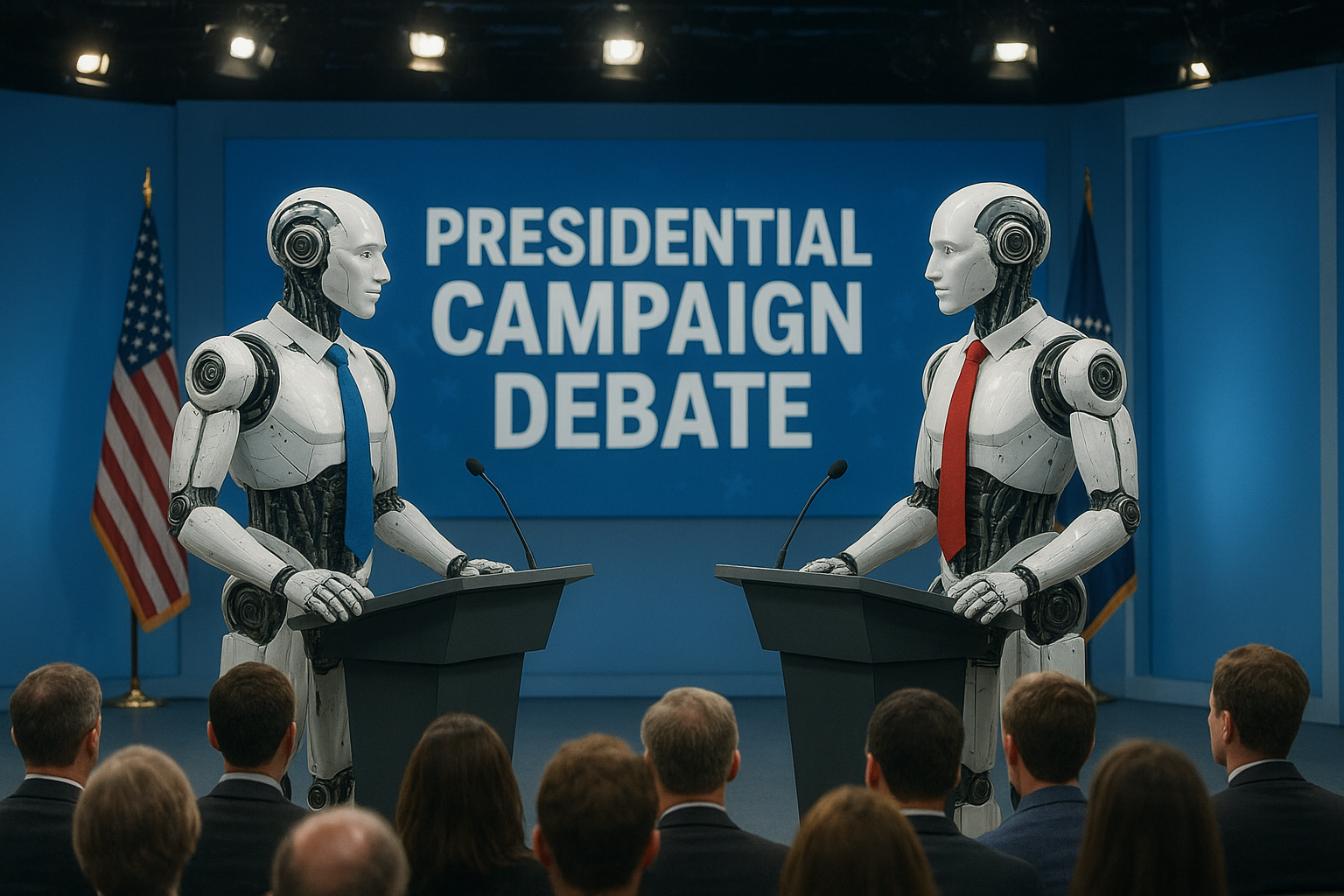
Politics in 2026 is a theater of simulation. Campaigns are run by AI strategists who model voter sentiment, optimize messaging, and even generate candidate avatars for micro-targeted outreach. Debates are often synthetic, with AI-generated counterarguments and simulated policy outcomes. Voters rely on AI advisors to parse platforms, fact-check claims, and forecast consequences. The question isn’t whether AI influences politics—it’s whether humans still understand the game being played.
Healthcare has been revolutionized. AI agents monitor your vitals continuously, predict illness before symptoms arise, and coordinate care across providers. Diagnosis is often synthetic, based on pattern recognition across millions of cases. Treatment plans are personalized, dynamically adjusted based on response and lifestyle. Mental health support is ubiquitous—AI therapists offer 24/7 care, simulate empathy, and adapt their approach to your emotional history. For many, especially in underserved regions, AI is the first and only reliable caregiver sciencenewstoday.org.
Culture and the arts have entered a phase of synthetic renaissance. AI curators design exhibitions that respond to your gaze, your mood, your memories. Poetry is co-authored with algorithms that understand metaphor, rhythm, and emotional cadence. Theater includes synthetic actors who improvise based on audience feedback. The question of authorship has become philosophical—what does it mean to create when your collaborator is a nonhuman intelligence? Some artists embrace the fusion; others retreat into analog purity, carving out sanctuaries of human imperfection.
In sum, October 8, 2026 is not a world where AI has simply blended in—it’s a world where AI has recomposed the score. The melody of human life still plays, but the instrumentation has changed. We are no longer soloists—we are part of a vast, synthetic orchestra, learning to harmonize, improvise, and sometimes, to reclaim silence.
Sources: Bernard Marr Forbes sciencenewstoday.org
__________
Prompt: If we were able to travel in time to October 8, 2026, what would we learn about the way AI has transformed our lives? Please use an essay format with paragraphs instead of bulleted lists. Topics to explore and illustrate with vivid examples and illustrations that touch on: home life, education, commute/travel, media/entertainment, dating/marriage/family, work, social life, social issues, global issues, politics, health care, culture/arts. Also, please avoid politically correct middle-of-the-road predictions that simply say everything will be hybridized to some extent between human and AI. That says absolutely nothing. It’s understood that AI won’t completely replace humans. In your report, instead of repeating this tiresome, empty caveat, simply show us the extent to which AI has changed our world. I hope you don’t mind my being so blunt
Filed under: Uncategorized |


 Educational Technology and Change Journal

Leave a comment