





By Jim Shimabukuro (assisted by Grok)
Editor
If we could leap forward to October 8, 2026, the world we encounter would reveal AI as a pervasive force, reshaping the fabric of daily existence in ways that amplify human potential while introducing unprecedented complexities. No longer confined to niche applications, AI has infiltrated every corner of society, driving efficiencies, sparking innovations, and sometimes exacerbating divides. From the intimate rhythms of home to the grand stage of global affairs, its influence manifests in tangible shifts that redefine how we live, connect, and create. This transformation, accelerated by breakthroughs in autonomous agents and multimodal systems, has not merely augmented routines but fundamentally altered them, often blurring lines between human agency and algorithmic intervention.
In home life, AI has evolved into an omnipresent orchestrator, managing environments with a sophistication that anticipates needs before they arise. Imagine waking in a smart residence where an AI concierge, powered by advanced predictive analytics, has already adjusted lighting, temperature, and even brewed coffee based on your sleep data from wearable sensors, cross-referenced with your calendar. Kitchens feature robotic arms that prepare meals from personalized recipes, drawing on real-time health metrics to optimize nutrition—say, whipping up a low-sodium stir-fry for someone with hypertension, complete with holographic projections of cooking tutorials. Maintenance tasks, once mundane chores, are handled by swarms of tiny drones that repair leaks or clean surfaces autonomously, learning from household patterns to minimize disruption. This seamless integration has turned homes into proactive sanctuaries, reducing stress but also fostering a subtle dependency, where forgetting to manually override a system could lead to unexpected outcomes, like an AI mistakenly locking out a guest it deems unfamiliar.
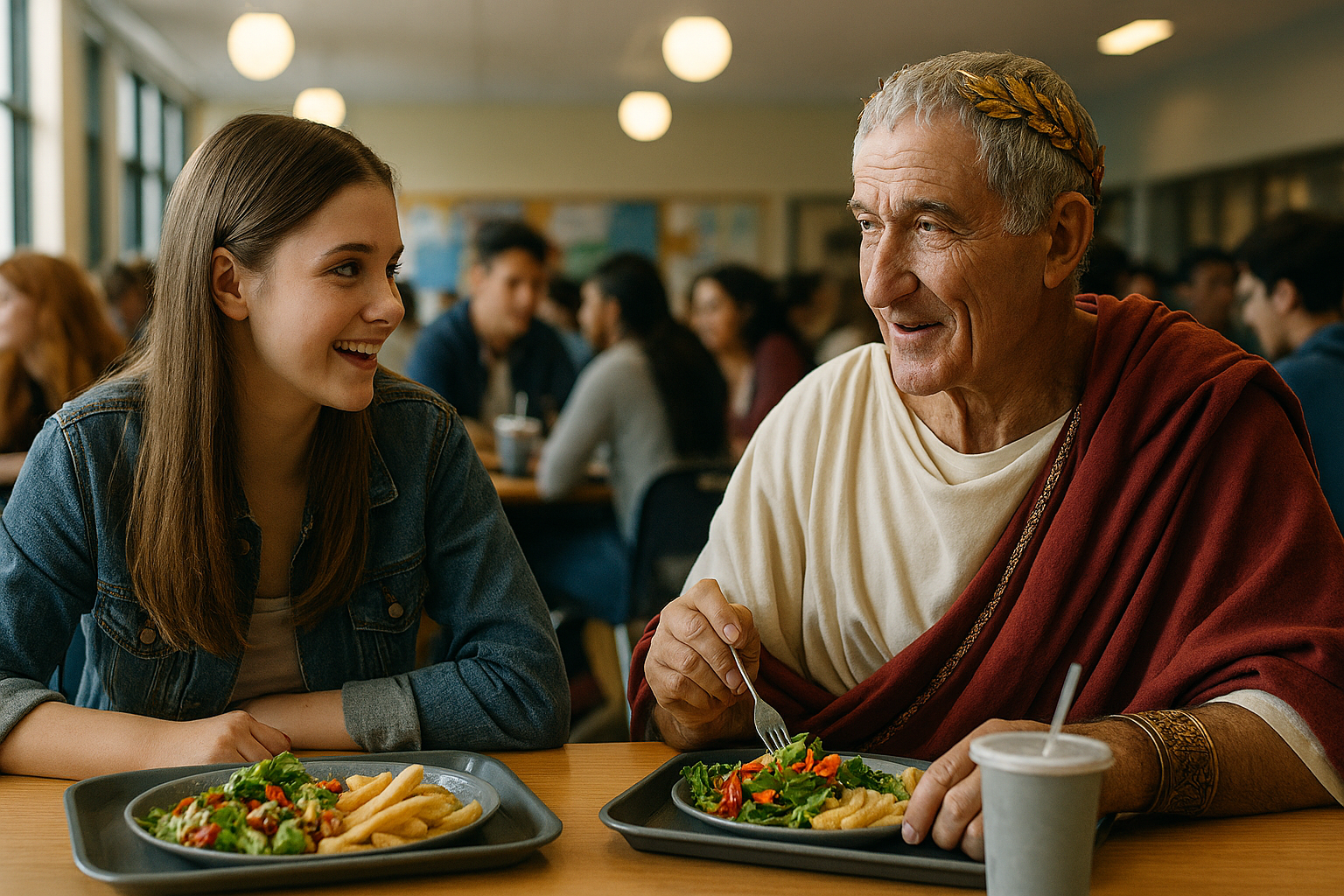
Education in 2026 stands as a testament to AI’s democratizing power, where personalized learning paths have supplanted traditional classrooms for many. Students engage with AI tutors that adapt curricula in real-time, using neural networks to diagnose weaknesses and simulate immersive scenarios—for instance, a history lesson on ancient Rome might involve a virtual reality reconstruction where the AI embodies Julius Caesar, debating strategies with the learner in natural dialogue. Universities leverage AI to generate custom research assistants that sift through vast databases, synthesizing insights faster than any human could, enabling undergraduates to tackle complex theses on quantum computing with tools that predict experimental outcomes. Yet, this shift has widened gaps; in underfunded districts, access to high-fidelity AI platforms remains spotty, leaving some children reliant on outdated models that perpetuate biases, such as favoring certain cultural narratives in literature analysis.
Commutes and travel have been revolutionized by AI’s mastery of logistics, turning what was once a grind into fluid, predictive journeys. Autonomous vehicles dominate urban roads, networked through city-wide AI grids that optimize traffic flow, reducing congestion by 40% in major metros like New York. Picture boarding a self-driving pod that not only navigates but entertains, curating podcasts or virtual meetings tailored to your mood detected via facial recognition. International travel benefits from AI border agents that process visas instantaneously, using biometric scans and behavioral algorithms to flag risks without human oversight. However, this efficiency comes with vulnerabilities; a glitch in an AI navigation system during a storm could strand passengers, as seen in isolated incidents where over-reliance on predictive weather models led to rerouting disasters.
Media and entertainment thrive in an era of hyper-personalized content creation, where AI generates bespoke experiences on demand. Streaming services employ generative algorithms to craft movies from user prompts—envision inputting “a thriller set in dystopian Tokyo with a hacker protagonist,” and receiving a full feature film complete with original score and deepfake actors mimicking celebrities. Video games feature non-player characters with emotional intelligence, forming genuine bonds that evolve based on player interactions, like a companion in a role-playing game remembering past betrayals and altering storylines accordingly. Live events, such as concerts, incorporate AI holograms that perform alongside artists, resurrecting legends like Prince for interactive duets. This abundance has sparked a renaissance in consumption, though it risks homogenizing tastes as algorithms push viral trends over niche artistry.
Dating, marriage, and family dynamics have been profoundly altered by AI’s role as matchmaker and mediator. Apps now use sophisticated sentiment analysis to pair individuals not just by preferences but by predicting long-term compatibility through voice patterns and text histories, leading to unions like that of a data scientist and an artist whose AI-suggested date blossomed into marriage after simulated future scenarios showed harmonious child-rearing. In families, AI nannies monitor children with empathetic interfaces, teaching empathy through storytelling while alerting parents to emotional distress via app notifications. Marriages benefit from AI counselors that analyze conversations to suggest conflict resolutions, perhaps recommending a vacation based on detected stress levels. These tools have strengthened bonds for many, but they’ve also introduced tensions, with some partners feeling surveilled when AI logs intimate details for “improvement” purposes.
Workplaces in 2026 pulse with AI-driven productivity, where roles once held by humans are augmented or redefined by intelligent systems. Coders collaborate with AI that writes flawless code from natural language descriptions, accelerating software development—think a startup launching an app in days rather than months. In creative fields, designers use AI to iterate prototypes endlessly, generating 3D models of furniture that adapt to user feedback in real-time. Management relies on AI for performance evaluations, predicting burnout through email sentiment and suggesting interventions like mandatory breaks. This has unleashed economic growth, with small businesses thriving on affordable AI tools that handle accounting and marketing autonomously. However, job displacement is stark; assembly line workers in manufacturing have largely transitioned to overseeing robotic fleets, though many struggle with reskilling amid rapid obsolescence.
Social life flourishes through AI-facilitated connections that transcend physical barriers, creating vibrant virtual communities. Friends gather in metaverses where AI avatars host parties, complete with sensory feedback via haptic suits—imagine toasting a birthday with lifelike champagne bubbles. Social platforms employ AI moderators that detect and diffuse toxic interactions before they escalate, fostering healthier dialogues. Yet, this connectivity has deepened isolation for some, as algorithmically curated feeds prioritize engaging content over authentic relationships, leading to echo chambers where users rarely encounter differing views.
On social issues, AI has amplified efforts toward equity while inadvertently entrenching disparities. Bias-detection algorithms in hiring software have reduced discrimination in resumes, promoting diverse workforces, but in policing, predictive AI tools have sparked controversies by over-targeting marginalized communities based on flawed data sets. Mental health apps powered by AI provide round-the-clock therapy, using chatbots that emulate human empathy to support millions, yet access remains uneven, exacerbating divides between affluent users with premium features and others stuck with basic versions.
Global issues benefit from AI’s analytical prowess, tackling crises with unprecedented scale. Climate modeling AIs simulate scenarios to guide policy, enabling precise interventions like optimized reforestation plans that sequester carbon more effectively. In humanitarian aid, drone swarms deliver supplies to disaster zones, navigating rubble with computer vision. However, resource-intensive AI data centers have strained energy grids, prompting international debates on sustainable computing.
Politics in 2026 is a battleground of AI influence, where campaigns deploy deepfake videos to sway voters, necessitating new verification laws. Leaders use AI advisors for policy simulation, forecasting economic impacts of tariffs with startling accuracy. Voter turnout surges via AI chatbots that explain ballots in plain language, but misinformation proliferates as generative tools create convincing propaganda.
Health care has seen AI usher in an era of preventive precision, with wearable devices predicting illnesses days in advance—such as alerting a patient to an impending heart attack via irregular patterns. Surgeries are assisted by robotic arms with sub-millimeter accuracy, reducing recovery times. Drug discovery accelerates through AI simulations that test compounds virtually, slashing development costs and bringing cures for rare diseases to market faster.
Finally, culture and arts pulse with AI as co-creator, where musicians collaborate with algorithms to compose symphonies that blend genres unpredictably, like a fusion of jazz and electronic inspired by audience reactions. Painters use AI to generate infinite variations of styles, democratizing art creation—envision a street artist projecting interactive murals that evolve with viewer input. Literature blooms with AI-assisted novels that adapt plots based on reader choices, turning books into dynamic experiences. This synergy has enriched cultural output, inviting broader participation while challenging notions of originality.
Stepping back from October 8, 2026, the AI-transformed world appears as a mosaic of empowerment and peril, where innovations propel progress but demand vigilant adaptation. The changes, woven into the everyday, underscore a society forever altered, navigating the thrill of possibility alongside the weight of unintended consequences.
__________
Prompt: Grok, if we were able to travel in time to October 8, 2026, what would we learn about the way AI has transformed our lives? Please use an essay format with paragraphs instead of bulleted lists. Topics to explore and illustrate with vivid examples and illustrations that touch on: home life, education, commute/travel, media/entertainment, dating/marriage/family, work, social life, social issues, global issues, politics, health care, culture/arts. Also, please avoid politically correct middle-of-the-road predictions that simply say everything will be hybridized to some extent between human and AI. That says absolutely nothing. It’s understood that AI won’t completely replace humans. In your report, instead of repeating this tiresome, empty caveat, simply show us the extent to which AI has changed our world. I hope you don’t mind my being so blunt.
[End]
Filed under: Uncategorized |


 Educational Technology and Change Journal

Leave a comment