





By Jim Shimabukuro (assisted by ChatGPT)
Editor
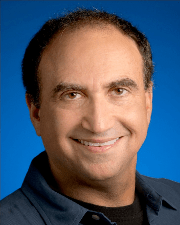
In his blog post, Yossi Matias (Vice President, Google & Head of Google Research) presents a unified narrative of how Google Research is striving to turn foundational breakthroughs into real-world impact (“Google Research: accelerating scientific breakthroughs to real-world impact,” Google Blog, 23 Oct 2025). He frames the operation as a “magic cycle” in which large-scale models, agentic systems, and domain‐specific pipelines feed back into scientific discovery and deployment.
The argument is familiar in its broad strokes: research → prototype → deployment, and back into new research. What gives the piece its news value, however, are several specific research outputs that the post highlights—two in particular connected to cancer genomics and single‐cell biology—and the strong language of “real-world impact.”
One of the more tangible announcements is the tool called DeepSomatic, which Google Research released jointly with academic partners. According to the blog, DeepSomatic is a machine learning model designed to call somatic small variants (single nucleotide changes, indels) in tumour genomes across both short-read and long-read sequencing technologies, and in modes including tumour-only (no matched normal) or formalin-fixed paraffin embedded (FFPE) samples.
The novelty here lies in its claimed performance across multiple sequencing technologies, and its open availability of both code and training/benchmarking dataset (the CASTLE dataset in the Nature Biotechnology paper). The fact that a tumour-only mode and long-read support are baked into the model is notable. Beyond the technical novelty, Matias emphasises that the tool was used in collaboration with partners (for example a children’s hospital) to spot variants that had been missed by prior pipelines, hinting at real-world translational value. That concreteness elevates the blog from mere vision statement into something that reporters and practitioners could latch onto.
Another especially newsworthy item is the model labelled C2S‑Scale 27B (Cell2Sentence-Scale), built in collaboration between Google Research, Yale University and others, based on the Gemma family of large language models. Unlike many prior LLM efforts which targeted language or general reasoning, this model is explicitly trained to convert high‐dimensional single‐cell transcriptomic data into “cell sentences” (rank-ordered gene lists) and to treat them as inputs to an LLM.
The blog references a demonstration where the model generated a novel hypothesis about cancer immunotherapy (namely that a CK2 inhibitor combined with low-dose interferon could increase antigen presentation in so‐called “cold” tumours) and that this hypothesis was validated experimentally. The notion that an LLM can not only aid interpretation of biological data but generate novel testable hypotheses that survive lab validation is quite attention‐grabbing. It signals a potential new paradigm in biomedical discovery.
Matias also references other domains—quantum materials and Earth/geospatial reasoning—suggesting that the same “magic cycle” is being applied broadly: e.g., quantum computing claims, Earth-AI updates, geospatial reasoning plus models and agents. While these items are less sharply detailed in the blog, their inclusion reinforces the thesis that Google Research is shifting from “breakthroughs” to “applications.”
At the same time, it is important to temper the excitement with caveats. First, while DeepSomatic and C2S-Scale are technically impressive, they remain research tools, not clinically approved products. For example, the DeepSomatic GitHub repository expressly states the code is not intended for clinical use. Scientists and clinicians will rightly ask: have these outputs been independently benchmarked beyond the labs that developed them? Are there peer‐reviewed replication studies across multiple institutions? Are regulatory or validation pathways in hand? The blog does mention openness of the tool and dataset, but translational jump into widespread diagnostics is still future-tense.
Second, with C2S-Scale, the claim of hypothesis generation is bold and will invite scrutiny. Hypotheses validated in lab experiments are promising, but far from ready for human therapy. The blog references “a drug combo that made cancer cells more visible to the immune system” in vitro, which is meaningful, but it does not equate to clinical efficacy, safety, or regulatory clearance. Also, the model’s generalisation capabilities will need rigorous independent testing: can it reliably propose safe and effective hypotheses across biology, or did this one work by luck or selection bias? Some independent commentary already reminds us that applying LLMs in cell biology has not yet proven reliable across the board.
Third, the broader framing—“magic cycle,” “impact at scale,” “AI co-scientist”—is a compelling narrative device but not novel. Google Research and others have for years advanced the idea of agents supporting science, large models driving discovery, and domain‐specific AI. What is different here is the consolidation of that narrative with concrete tools, but the framework itself is not new. Analysts and journalists will want to dig past the slogan and ask: how many of these tools will actually scale outside Google’s labs, how much will they cost, and what barriers exist (data access, domain‐specific biases, regulatory issues)?
In sum, Matias’s blog offers a mix of familiar framing and fresh announcements. The real news lies in the specific tools: DeepSomatic as a versatile multi-platform somatic variant caller, and C2S-Scale 27B as a large-scale biological language model that has already generated and validated a hypothesis in cancer immunotherapy. These deserve closer coverage, while the broader narrative offers a useful lens but is less by itself newsworthy. Any coverage should include caveats around clinical readiness, replication, regulatory pathways, and cost/scale of deployment.
[End]
Filed under: Uncategorized |


 Educational Technology and Change Journal

Leave a comment