





By Jim Shimabukuro (assisted by Gemini)
Editor
[Also see The Growing Trend of AI in Sports]
Introduction: On July 26, 2025, Gemini and I reported on The Growing Trend of AI in Sports. In this article, we provide some critical updates and include how they’re being applied in the case of athletes such as Shohei Ohtani and Cooper Flagg as well as coaches like UCF’s Scott Frost and McKenzie Milton. -js
The Strategic Pivot: AI in Sports Three Months Later
The landscape of artificial intelligence in sports, which we reported on extensively in July 2025, has not merely grown in the past three months; it has undergone a significant strategic pivot. Where the mid-year focus was on the broad adoption of AI across nearly all sectors—from performance tracking to sports betting—the autumn of 2025 finds the industry grappling with the maturity of its implementation. The latest trends reveal a dual acceleration: a deeper, more refined integration on the field, and a scramble to define a cohesive business strategy to manage this rapid technological influx.
The New Precision in Athlete Development
In the realm of athletic performance, the primary trend has shifted from basic data collection via wearable technology to real-time, sensor-less biomechanical analysis powered by advanced computer vision. Instead of relying solely on GPS vests, teams are now leveraging sophisticated algorithms to analyze standard video footage, tracking hundreds of micro-movements per second.
This technological leap allows coaches to scrutinize the minutiae of a pitcher’s arm angle or a runner’s stride efficiency with an objectivity and speed previously unimaginable. Crucially, this advanced analytics capability is no longer an exclusive luxury of elite professional clubs; the rise of cloud-based APIs and accessible camera systems has democratized this precision, allowing university and even high school programs to implement hyper-personalized training regimens.
This refinement extends into injury prevention, where AI has matured into a powerful predictive engine. By detecting subtle, long-term trends in fatigue, workload, and physiological markers—such as heart rate variability—the systems issue immediate warning alerts, allowing for dynamic load management and the automatic generation of tailored recovery plans long before an injury manifests.
Hyper-Personalization and the Business of Fandom
The fan experience remains a key battleground for AI innovation, but the goal has evolved from creating engaging content to fostering hyper-personalized digital ecosystems. The generic, human-edited highlight reel is rapidly being supplanted by Generative AI-powered broadcasting.
This technology analyzes a live match to instantly create dynamic data overlays, real-time probability graphics, and fully customizable viewing experiences, including native-language commentary or “altcasts” tailored to a specific fan segment. As recent surveys confirm, fans are actively demanding more dynamic digital content, and smart organizations recognize that AI’s true value lies in using these tools to enhance the story, not replace the human element.
This principle is also driving revenue generation; AI systems are optimizing stadium operations, from crowd flow management to inventory control, and are delivering personalized advertising and merchandise recommendations that resonate emotionally with individual fan profiles, effectively shifting sponsorships from mere visibility to demonstrable value.
The Strategic Imperative and the Democratization of AI
Perhaps the most significant development of the last three months is the emerging gap between AI adoption and strategic maturity. Despite overwhelming optimism among sports business leaders regarding AI’s transformative potential, a substantial majority still lacks a formal implementation strategy. This strategic deficit risks creating fragmented, inefficient systems that only benefit organizations with already deep pockets and technical talent.
Addressing this challenge, the most cutting-edge trend of late October 2025 is the democratization of AI infrastructure through open-source fine-tuning of specialized models. Unlike the costly reliance on massive, general-purpose proprietary models, developers are now rapidly customizing smaller, high-performing open-source frameworks. This breakthrough dramatically lowers the computational barrier and cost, empowering small teams and startups to develop powerful, domain-specific AI solutions tailored for niches like football scouting or tennis biomechanics.
This shift is poised to level the competitive playing field, ensuring that the next wave of innovation is driven not by the size of a team’s budget, but by the strategic application of these accessible, highly specialized intelligence tools.
In conclusion, three months after solidifying its foundational role, AI in sports is no longer a nascent trend but a fully integrated operational baseline. The current phase is defined by a move toward micro-level precision in performance analysis and macro-level personalization in fan engagement. As the industry confronts the necessity of developing robust, cohesive strategies to manage this accelerating technological shift, the democratization offered by specialized, open-source AI is emerging as the critical tool to translate widespread adoption into sustained competitive advantage.
The evolution of AI in sports is best illuminated not by abstract trend lines, but by its tangible application to the careers of elite athletes and the strategic decisions of forward-thinking coaches. While specific proprietary data regarding stars like Shohei Ohtani and Cooper Flagg remains confidential, their publicly observed performance and the strategies employed by coaches like UCF’s McKenzie Milton demonstrate the practical integration of the advanced trends we now see in late 2025.
The Dual-Threat Analysis of Shohei Ohtani
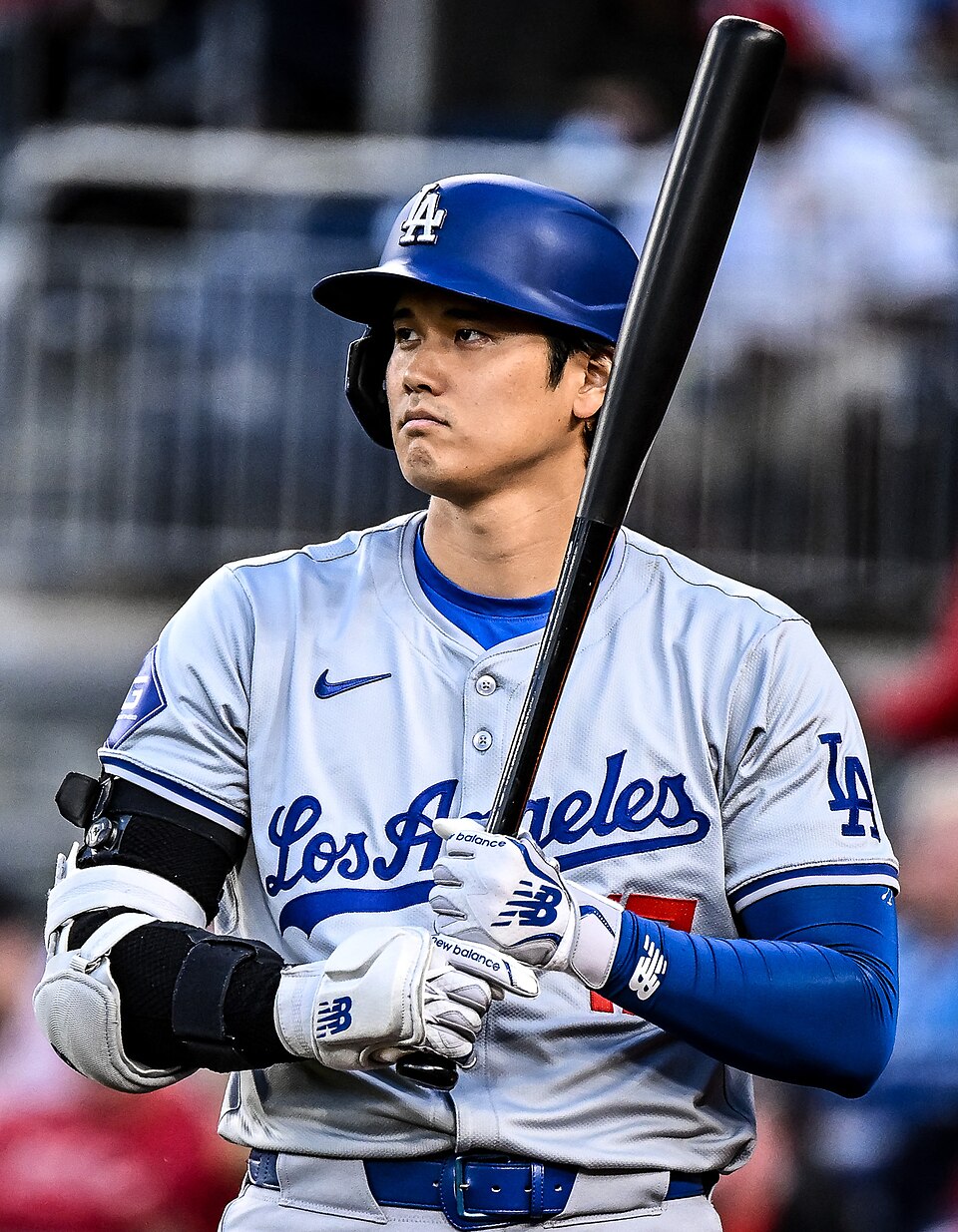
The case of baseball superstar Shohei Ohtani perfectly illustrates the pinnacle of AI’s capability in granular biomechanical analysis and performance comparison. As a two-way player, Ohtani defies traditional baseball metrics, requiring a level of objective, multi-modal analysis that only advanced AI can provide. Teams and broadcasters alike leverage computer vision models that dissect his unique mechanics at an astonishing speed.
For his pitching—even with an injury-limited return in 2025—AI tools analyze pitch-by-pitch data, scrutinizing the velocity, spin rate, and break of every throw while simultaneously monitoring his body posture, joint angles, and kinetic chain efficiency. This level of precision is used not only for immediate performance feedback—such as a subtle change in his release point affecting his sweeper pitch’s break—but critically, for predictive injury modeling. Algorithms constantly compare his current biomechanics against his historical optimal form to detect the micro-deviations that precede muscle fatigue or strain, ensuring his return to pitching is optimized for long-term health.
On the hitting side, AI models break down his swing path, bat speed, and launch angle in real-time, providing insights that allow his coaching staff to fine-tune his approach against specific pitch types or defensive shifts with data-backed precision. The public benefits, too: AI-powered commentary systems automatically generate sophisticated insights and real-time comparisons that contextualize his unprecedented dual-threat value for fans.
The Data-Driven Development of Cooper Flagg
In collegiate basketball, the development of a top prospect like Cooper Flagg showcases AI’s shift from simple statistical tracking to holistic player development. He earned at least two major “Freshman of the Year” accolades in 2025 (USBWA Wayman Tisdale Award and the ACC Rookie of the Year). Flagg also won the the John R. Wooden Award for the most outstanding player in college basketball. Flagg’s success at Duke is supported by systems that go far beyond points and rebounds.
AI platforms utilize court-wide camera systems to perform real-time movement tracking, generating positional and efficiency heat maps that quantify his defensive impact and offensive effectiveness. Coaches aren’t just seeing where he shoots, but which shots—based on defensive pressure, time on the clock, and proximity to a teammate—have the highest probability of success. Furthermore, AI is central to his personalized training.
Computer vision models are used to analyze his shooting form and footwork, comparing it to an optimal template and delivering instant corrective feedback during practice. His training load and recovery protocols are managed by AI systems that ingest data from wearable technology, sleep trackers, and biometrics, providing an early warning system for fatigue that helps prevent overtraining and minimizes the risk of injury during a long season. For Flagg and other athletes in high-stakes amateur sports, AI acts as a digital performance mentor, ensuring every drill and every minute of recovery is optimally tailored to maximize his physical potential.
Coaching Strategy and the UCF Example
The use of AI on the coaching side is exemplified by individuals like Scott Frost and McKenzie Milton at UCF. As they lead a program through a significant cultural and roster rebuild in 2025, AI becomes indispensable for accelerated strategic planning and talent assessment.
Coach Frost’s staff is utilizing AI tools for opponent analysis, processing volumes of historical game footage to identify play-calling tendencies, defensive weak points, and substitution patterns faster and more accurately than human analysts alone. This provides the team with instantaneous, actionable insights that influence real-time play-calling adjustments.
Quarterbacks Coach McKenzie Milton, himself a former star quarterback, leverages AI to diagnose and develop his crowded quarterback room. The technology helps remove subjective bias from player evaluation by quantifying aspects like pocket presence, decision-making under duress, and accuracy on different throwing mechanics.
AI systems can simulate game scenarios in virtual reality environments, allowing quarterbacks to practice reading complex defenses without physical wear and tear. By using AI to objectively assess performance, pinpoint specific mechanical flaws, and create individualized drills, the coaching staff ensures a level of strategic preparation and player development that is essential for competing in a high-stakes environment like the Big 12.
These examples underscore that in late 2025, AI is not merely a novelty, but the fundamental engine powering elite performance, strategy, and talent development across the sporting world.
__________
Prompt: On July 26, 2025, in “The Growing Trend of AI in Sports” (ETC Journal), you (Gemini) reported on the extensive use of AI in nearly all sectors of sports. Now, three months later, please update that report to reflect the latest trends. Use an essay format and avoid bulleted lists as much as possible. To illustrate some of these AI innovations, can you explain how they’re being used with stars like Shohei Ohtani and Cooper Flagg and by coaches like UCF’s Scott Frost and McKenzie Milton? If you can’t find much written about these individuals, use other individuals that have been featured in the media.
[End]
Filed under: Uncategorized |


 Educational Technology and Change Journal
_(cropped).jpg#Licensing)

Leave a comment