





By Jim Shimabukuro (assisted by ChatGPT, Copilot, DeepSeek, Gemini, Grok)
Editor
Introduction: I asked chatbots — ChatGPT, Copilot, DeepSeek, Gemini, Grok — to identify teens who have impacted the field of AI. These are their selections, in alphabetical order. -js
Raul John Aju gained viral attention as a 14-year-old and is located in India. He is largely a self-taught AI specialist and tech enthusiast, whose expertise was developed through independent learning and a profound passion for technology, rather than a formal university education at this age.Position and Specialty: Aju is a tech trainer and speaker whose specialty lies in exploring and explaining AI tools and the future of technology. His most noteworthy accomplishment is transforming his passion into a platform where he trains professionals globally and delivers inspiring talks, such as a TEDx talk, on the boundless possibilities of the digital age. He became a viral AI expert, demonstrating a rare capacity to distill complex concepts for a wider audience while still in high school. He continues to explore and share knowledge about cutting-edge AI tools and emerging technologies like the metaverse. His work matters because it bridges the gap between complex AI development and real-world application, showcasing the potential for untapped youth talent to grasp and leverage these powerful technologies, and acting as an inspiration for the next generation of coders and innovators. (Gemini)
Tanmay Bakshi, a Canadian of Indian descent, Bakshi’s journey began at the astonishingly young age of five when he started programming. Largely homeschooled and self-taught through online resources and relentless experimentation, he became one of the world’s youngest IBM Watson developers. He does not hold a traditional corporate position but operates as an AI consultant, author, and speaker. His specialty lies in demystifying complex AI and machine learning concepts, with a focus on their practical application. His accomplishments are multifaceted; he has developed applications that range from an iPad app for the visually impaired to a cognitive question-and-answer system. He is a prolific educator, using his YouTube channel and public talks to inspire thousands of other young people to explore coding and AI. Bakshi was selected as an exemplar because his career demonstrates that impact is not solely about proprietary research but also about advocacy, education, and applying AI to solve humanitarian challenges. (DeepSeek)
Toby Brown, a resident of Twickenham, London, at just 16, has already forsaken the rote confines of GCSE exams for the high-stakes gamble of Silicon Valley, securing $1 million in seed funding for Beem, his bedroom-built AI platform. Brown’s educational path is unconventional; an average student by traditional metrics, he bypassed formal accolades through relentless self-education, starting with coding at seven via toddler-friendly apps and evolving into a full-stack developer by his early teens. Lacking a university affiliation, he operates as Beem’s founder and sole engineer, specializing in generative AI for creative collaboration—think tools that enable real-time, multiplayer ideation akin to a digital whiteboard infused with ChatGPT-like smarts. His standout accomplishment is clinching that seven-figure investment from top-tier VCs like those at Benchmark, a feat rarer for dropouts than degree-holders, all while navigating the skepticism of a British education system ill-equipped for such precocity. Today, Brown is refining Beem’s core engine to support immersive, AI-augmented brainstorming sessions for remote teams, a development that carries weight in a post-pandemic world where hybrid work demands frictionless innovation to stave off creative silos. By fostering collective intelligence at scale, Beem could redefine how global teams ideate, mitigating the isolation that plagues distributed workforces. Brown’s inclusion in this essay stems from his underdog narrative: a working-class kid from suburban England who, without institutional backing, infiltrated America’s venture elite, highlighting AI’s role as an equalizing force for overlooked talents. (Grok)
Kayla Chege, a 15-year-old honors student from Kansas. While her engagement with AI began with everyday queries—makeup advice, smoothie recommendations, and party planning—Chege has become a vocal advocate for ethical AI use among teens. She’s part of a youth-led initiative that educates peers on responsible AI interaction, emphasizing boundaries, privacy, and mental health. Her efforts have drawn attention from educators and psychologists, especially as concerns grow about AI’s influence on adolescent development. Chege’s impact lies not in technical innovation but in cultural leadership—she’s shaping how her generation thinks about and interacts with AI. Her work matters because it addresses the human side of the AI revolution, ensuring that technological progress doesn’t outpace ethical reflection. (Copilot)
Fionn Ferreira, hailing from the small town of Ballydehob, Ireland, combined his interests in computer science and chemistry while still a secondary school student. His educational background is traditional, but his project-based learning was extraordinary. He does not work for a major corporation but is now a university student, continuing his research. His specialty lies at the intersection of AI and environmental science. His major accomplishment was developing a novel method to remove microplastics from water using a ferrofluid, and he utilized a self-built microscope and a machine learning model to identify and quantify the plastic particles. This project earned him the top prize at the 2019 Google Science Fair. Ferreira’s work matters because it demonstrates that AI is not just a tool for corporate or social media applications but a powerful instrument for scientific discovery and ecological preservation. He was selected for his ability to leverage AI as a cross-disciplinary tool to address one of the planet’s most pressing environmental crises. (DeepSeek)
Weichen Huang represents the academic vanguard, an 18-year-old high school senior whose foray into rigorous research signals the deepening of teen involvement in AI’s scholarly core. Based in the U.S. (specific locale undisclosed amid his college applications), Huang’s education has been a whirlwind of advanced online courses supplementing his high school curriculum, culminating in his triumph at NeurIPS—the world’s premier AI conference—in 2024. There, he clinched the inaugural high school research competition, presenting machine-learning models that address efficiency bottlenecks in neural networks. As an independent researcher unaffiliated with any firm, Huang specializes in optimization algorithms, with accomplishments including peer-reviewed posters at NeurIPS that drew acclaim from professors twice his age. His work matters as a harbinger: by optimizing training paradigms, it lowers computational costs, democratizing access to high-fidelity AI for under-resourced labs worldwide and curbing the environmental toll of energy-hungry models. Currently, Huang is prototyping lightweight architectures for edge devices, aiming to embed AI in wearables without cloud dependency—a push vital for privacy-centric applications in healthcare. I spotlighted Huang to underscore the research dimension, often overshadowed by startup glamour, emphasizing how teens are infiltrating ivory towers and accelerating theoretical breakthroughs that underpin commercial leaps. (Grok)
Elliot Evertsson Norrevik, a 15-year-old from Stockholm, Sweden, who founded and is the CEO of Roster AI, an AI customer service startup. He learned to code and utilize AI by himself, inspired by DeepMind’s AlphaGo and the release of ChatGPT. His accomplishment is projecting significant early-stage revenue, balancing his entrepreneurial demands with his secondary education, and demonstrating the speed with which young people can build viable tech companies. (Gemini)
Bruce Perry, a 17-year-old from Russellville, Arkansas, gained attention for his work with Character.AI, a platform that allows users to interact with AI-generated personas. While many teens use such tools recreationally, Perry has taken a more technical and creative approach, experimenting with chatbot design and user experience optimization. His contributions have helped refine conversational models to better reflect emotional nuance and character consistency. Perry’s educational background is rooted in self-directed learning—he’s a high school student who supplements his curriculum with online courses in machine learning and natural language processing. Though not formally employed by Character.AI, his work has been recognized in forums and developer communities, and he’s now collaborating with mentors to build his own AI-driven storytelling platform. His focus on emotional resonance in AI interactions matters deeply in a world where digital companionship is becoming more prevalent, especially among youth. (Copilot)
Arlan Rakhmetzhanov — a very recent example of the teen founder path via accelerator and investor attention. Reporting in 2025 describes him as an 18-year-old who completed Y Combinator with an AI coding-agent startup and raised seed capital; that path (self-taught developer → YC → seed round) is now a visible template for teens who want to build infrastructure or developer tools in the AI stack. I chose Arlan because YC and similar accelerators working with teenagers show institutional acceptance: serious investors and programs will back technically strong teens with fundable ideas. Business Insider (ChatGPT)
Shena Revanur, a 19-year-old activist based in the United States, reminds us that teen impact extends beyond code to conscience. Revanur’s educational journey unfolded at the cusp of adolescence; while specifics of her schooling remain private, she honed her advocacy through youth-led forums, emerging as a vocal proponent of responsible tech. As founder of Encode Justice, a nonprofit amplifying marginalized voices in AI governance, she holds no salaried position but wields influence as its visionary leader, specializing in AI safety and equitable policy frameworks. Her crowning achievement is spearheading the AI 2030 campaign, which has rallied over 100,000 signatures and pressured world leaders to commit to banning lethal autonomous weapons—drones that decide kills without human oversight—earning her a spot on Forbes’ inaugural 30 Under 30 AI list in 2025. This recognition underscores her ability to translate teen angst over biased algorithms into global action, as seen in her exposés on facial recognition’s disproportionate harm to communities of color. Presently, Revanur is lobbying for international treaties akin to nuclear non-proliferation pacts but tailored to AI risks, work that matters urgently as superintelligent systems loom, potentially averting escalations in cyberwarfare or surveillance states. I chose Revanur to balance the profit-driven stories with one of purpose, illustrating how teens are not only building AI but interrogating its moral underpinnings, a duality essential for sustainable growth. (Grok)
Dhravya Shah, a 19-year-old trailblazer, bridges consumer intuition with technical depth, his trajectory a testament to migratory ambition. Hailing originally from Mumbai, India—where middle-class roots instilled a fierce work ethic—Shah relocated to the U.S. for studies at Arizona State University, though he has since paused formal enrollment to pursue Supermemory full-time. Self-taught in large language models after forgoing India’s hyper-competitive IIT entrance for American opportunity, he serves as founder and CTO of the startup, focusing on memory augmentation for AI agents—essentially giving chatbots persistent recall to mimic human-like continuity in interactions. Shah’s breakthrough came in raising $3 million in seed funding from luminaries including Google’s former AI chief Jeff Dean, validating a solo-built prototype that enhances agent reliability in enterprise settings. This funding, secured at an age when most peers are cramming for midterms, positions Supermemory to tackle a foundational flaw in current AI: ephemeral memory leading to repetitive or erroneous responses. His ongoing efforts involve integrating vector databases with transformer architectures for scalable, context-aware recall, a innovation that could revolutionize fields from customer service to personalized education by enabling AI companions that “remember” user histories without privacy erosions. Shah merits selection for his cross-cultural lens; as an immigrant prodigy who sacrificed familial expectations for Silicon Valley’s chaos, he symbolizes AI’s globalizing force, infusing diverse perspectives into a field often dominated by Western monocultures. (Grok)
Alexander Wang, an American from New Mexico, Wang demonstrated his prowess not through formal academic accolades but through competitive programming. He was a top performer on the USA Computing Olympiad team while still in high school. He famously dropped out of the Massachusetts Institute of Technology (MIT) to co-found Scale AI at the age of nineteen. As the CEO of Scale AI, his specialty is in data annotation—the crucial, often labor-intensive process of labeling data to train machine learning models. His company’s accomplishment has been to become an essential infrastructure provider for the entire AI industry, working with giants like OpenAI and the U.S. Department of Defense to provide high-quality training data. Wang is working on solving the “data bottleneck” that hampers many AI projects, a matter of critical importance because the sophistication of AI models is directly dependent on the quality and scale of the data they are fed. He was selected for this list as a prime example of a teen who identified a fundamental, unglamorous problem in the AI ecosystem and built a billion-dollar solution around it. (DeepSeek)
Zach Yadegari, an 18-year-old from Long Island, New York, exemplifies how AI’s accessibility can catapult a self-taught coder into entrepreneurial stardom. Yadegari began tinkering with programming at the tender age of seven, outpacing his peers by leading coding sessions in elementary school by ten and clinching competitions by twelve. Homeschooled to nurture his prodigious talents, he boasts a flawless 4.0 GPA and a near-perfect 34 on the ACT, credentials that ironically failed to secure him spots at 15 Ivy League schools—a rejection he attributes to lacking the “diversity” checkboxes favored by admissions committees. Undeterred, Yadegari channeled his frustration into CalAI, a calorie-tracking app powered by computer vision to scan meals and log nutritional data effortlessly. Launched during his senior year of high school, the app exploded in popularity, amassing over a million users and generating $30 million in annual recurring revenue within months, all bootstrapped without external funding initially. As founder and CEO, Yadegari specializes in applied machine learning for consumer health tech, a niche where AI intersects with everyday wellness. His accomplishment lies not just in the financial windfall but in democratizing nutrition tracking for those daunted by manual logging, potentially aiding millions in combating obesity amid rising health crises. Currently, he is scaling CalAI’s backend to integrate multimodal AI for predictive health insights, a move that matters profoundly as it bridges the gap between reactive dieting apps and proactive preventive medicine, empowering users with data-driven foresight in an age of processed foods and sedentary lifestyles. I selected Yadegari for his archetype of the bootstrapped American teen entrepreneur, embodying the raw, unfiltered ambition that disrupts complacent industries without the polish of elite credentials. (Grok)
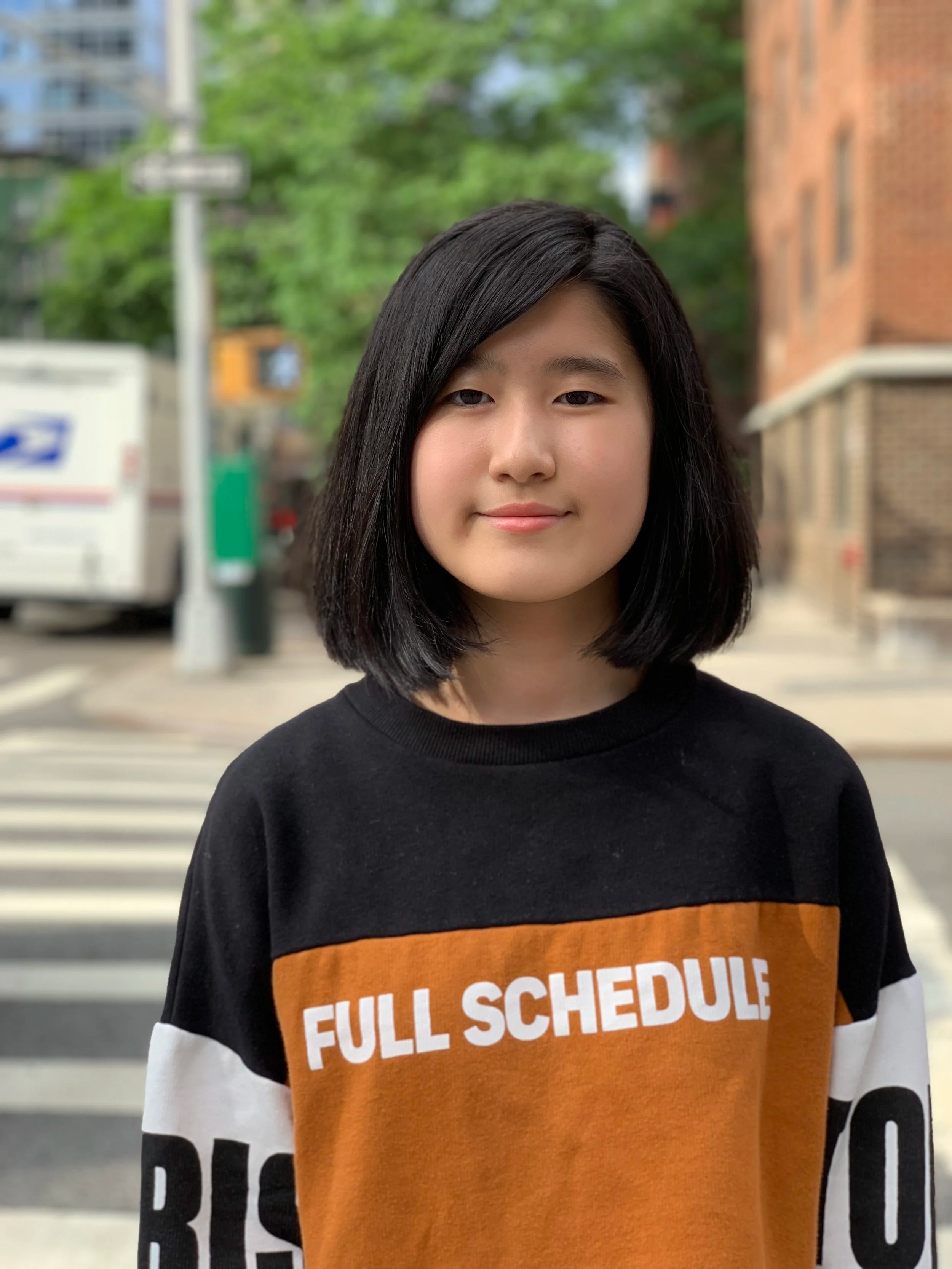
Emma Yang, a teen based in New York who developed an AI-powered app called “Timeless” to help Alzheimer’s patients recognize loved ones and stay connected. Inspired by her own grandmother’s experience, Yang combined facial recognition with intuitive design to create a tool that’s both technically sophisticated and emotionally resonant. Her educational path includes formal schooling and independent study in computer science and design. She’s been featured in Forbes and TEDx, and her work matters because it demonstrates how AI can serve deeply personal and compassionate purposes. (Copilot) “Hailed by former US Attorney General of New York Preet Bharara as one of 100 extraordinary change-makers and by Susan Cain of Quiet Revolution as one of the great writers and thinkers of her generation, Emma Yang is a 3-time Carnegie Hall Performer, MIT-Solver, TEDx Speaker, and the Founder of Timeless, a mobile app that empowers Alzheimer’s or Dementia patients stay engaged and connected to loved ones” (Timeless website).
__________
Prompt: Is it my imagination or is it true that some or many teens are having an impact on the growth of AI? If it’s true, is this trend unprecedented? Please identify some of the more noteworthy. Age? Where are they located? What is their educational background? Who do they work for? What is their position? What is their specialty? What have they accomplished? What are they working on and why does it matter? Why did you select them? Use an essay format and avoid bulleted lists as much as possible.
[End]
Filed under: Uncategorized |


 Educational Technology and Change Journal

Leave a comment