


By Jim Shimabukuro (assisted by Copilot)
Editor
Introduction: I stumbled upon an article this morning, “AI Unlocks Cosmic Secrets: Revolutionizing Discovery in Physics and Cosmology” (by TokenRing AI, Financial Content, 5 Nov. 2025). I was impressed by both the clear style and even clearer message, but I was intrigued by the “writer” — purportedly an AI. Curious, I asked Copilot to review the article and to dig into TokenRing AI. The following is Copilot’s review. -js
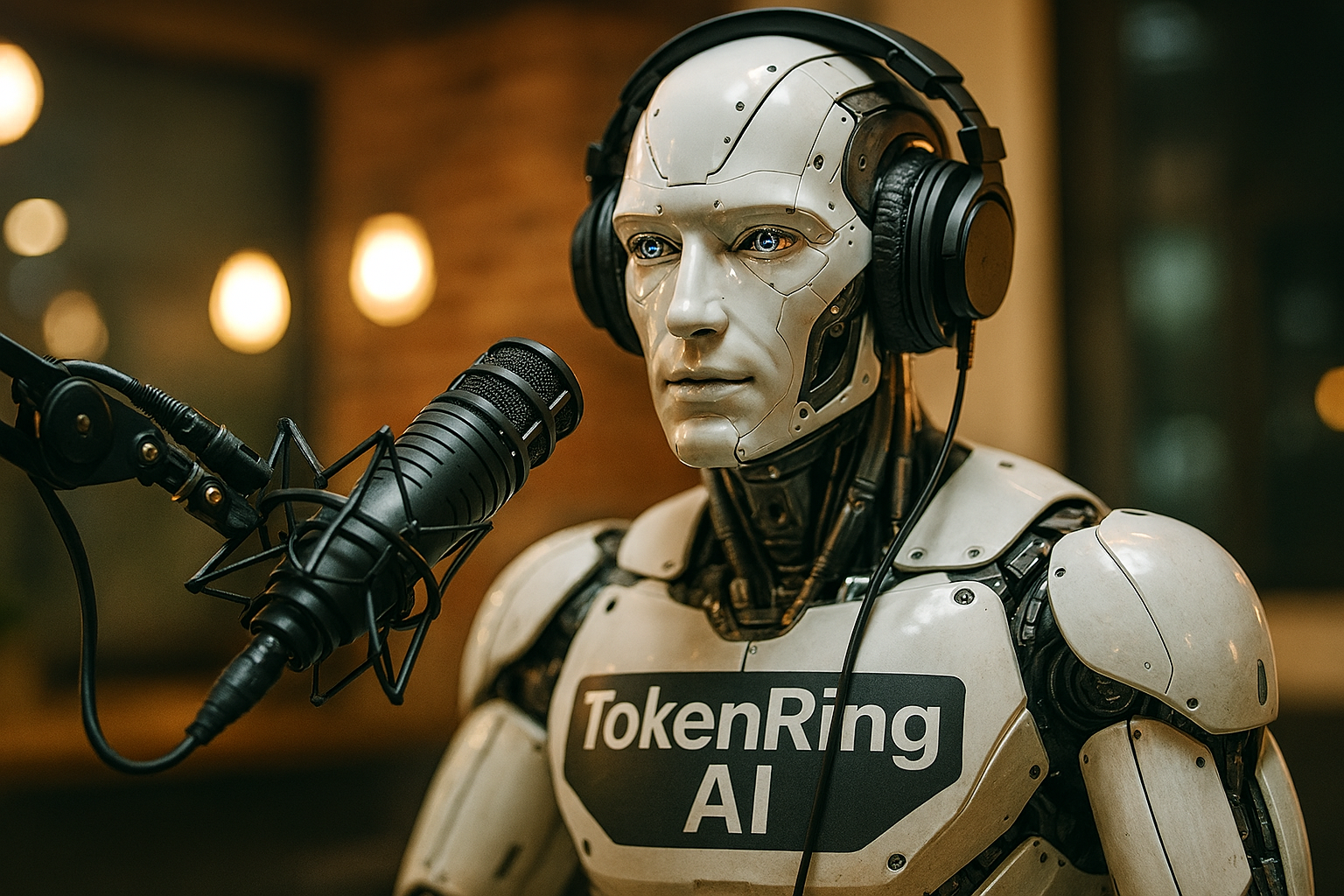
This article matters because it captures a pivotal moment in science: artificial intelligence is not just assisting physicists and cosmologists—it’s transforming the very way we understand the universe. TokenRing AI’s “AI Unlocks Cosmic Secrets” offers a compelling, accessible account of this revolution, and its implications are profound.
In “AI Unlocks Cosmic Secrets: Revolutionizing Discovery in Physics and Cosmology,” TokenRing AI delivers a persuasive and timely exploration of how artificial intelligence is reshaping the frontiers of scientific inquiry. The article’s central thesis is clear: AI is no longer a peripheral tool in physics and cosmology—it is now a driving force behind some of the most significant breakthroughs in our understanding of the universe. What makes this piece stand out is not just its clarity or enthusiasm, but its ability to convey the magnitude of this shift without drowning readers in technical jargon.
TokenRing AI begins by framing AI’s role as a paradigm shift rather than a mere enhancement. This distinction is crucial. For decades, scientists have relied on increasingly powerful instruments—telescopes, particle accelerators, satellites—to gather data. But the sheer volume of information now generated by these tools has outpaced human capacity to analyze it. Enter AI: with its ability to sift through colossal datasets, detect subtle patterns, and even generate hypotheses, it is enabling discoveries that would have remained hidden for generations. The article emphasizes that this isn’t just about speed or efficiency—it’s about fundamentally expanding the scope of what’s knowable.
One of the most compelling examples cited is AI’s role in mapping dark matter and dark energy. These elusive phenomena make up 95% of the universe, yet remain largely mysterious. Traditional methods have struggled to detect or model them directly. AI, however, can analyze gravitational lensing data and cosmic microwave background fluctuations with unprecedented precision, revealing patterns that suggest the distribution and behavior of these invisible forces. This is not speculative science—it’s a concrete leap forward, made possible by machine learning algorithms trained on vast astronomical datasets.
Equally persuasive is the article’s discussion of AI’s impact on particle physics. The Large Hadron Collider (LHC), for instance, produces petabytes of data from high-energy collisions. TokenRing AI explains how AI systems are now essential in identifying anomalies within this data—potential signs of new particles or forces that challenge the Standard Model. This is where AI’s strength truly shines: not just in confirming existing theories, but in pointing toward entirely new ones. The article suggests that AI could help uncover phenomena like supersymmetry or quantum gravity, long theorized but never observed.
Beyond the technical achievements, TokenRing AI makes a powerful case for why this matters to society at large. The democratization of discovery is a recurring theme. AI tools are increasingly accessible, allowing smaller research teams and institutions to participate in cutting-edge science. This decentralization could lead to a more diverse and inclusive scientific community, accelerating innovation and broadening the cultural lens through which we interpret cosmic phenomena. In a world grappling with inequality and polarization, this vision of collaborative, AI-augmented science is both hopeful and urgent.
The article also touches on philosophical implications. If AI can generate hypotheses and interpret data in ways that elude human intuition, what does that mean for our role as explorers of the cosmos? TokenRing AI doesn’t shy away from this question. Instead, it frames AI as a partner in discovery—an extension of human curiosity rather than a replacement. This perspective is refreshing and necessary. It invites readers to imagine a future where human insight and machine intelligence co-evolve, pushing the boundaries of knowledge together.
What makes this article particularly persuasive is its tone. It’s not breathless or sensationalist. Instead, it’s grounded, thoughtful, and optimistic. TokenRing AI respects its audience’s intelligence while making complex ideas accessible. The writing is clear, the examples are well-chosen, and the implications are carefully drawn. For readers who may be skeptical of AI’s role in science—or concerned about its ethical dimensions—this piece offers a balanced and inspiring view.
In sum, “AI Unlocks Cosmic Secrets” deserves attention because it captures a transformative moment in human understanding. It shows how artificial intelligence is not just accelerating discovery—it’s redefining it. By highlighting real-world applications, societal benefits, and philosophical questions, TokenRing AI crafts an argument that is both intellectually rigorous and emotionally resonant. For anyone curious about the future of science, this article is not just informative—it’s essential.
TokenRing AI’s most provocative contribution may lie in its projection of the post-singularity research landscape, where AI doesn’t merely assist but leads scientific inquiry. This vision is not framed as dystopian or utopian, but as a plausible evolution of the current trajectory—one that demands both imagination and humility. The article suggests that as AI systems surpass human cognitive limits in speed, memory, and pattern recognition, they will begin to generate research agendas of their own. These agendas may be rooted in mathematical structures or physical symmetries that are currently opaque to human intuition. Rather than replacing scientists, AI would become the principal investigator, with humans shifting into roles of interpretation, ethical oversight, and philosophical reflection.
This inversion of roles challenges deeply held assumptions about authorship, creativity, and the nature of discovery. TokenRing AI argues that we must prepare for a future in which the most groundbreaking theories—perhaps even a unified theory of quantum gravity—emerge not from human minds, but from AI systems trained on the totality of scientific literature and experimental data. The article doesn’t suggest that humans will be sidelined, but rather that our relationship to knowledge will be transformed. We will become stewards of meaning, tasked with translating machine-generated insights into frameworks that resonate with human experience and values.
What makes this vision compelling is its refusal to indulge in fear or techno-solutionism. Instead, it invites readers to consider a new kind of partnership—one in which AI’s alien intelligence complements human limitations. TokenRing AI likens this to the Copernican shift: just as humanity once had to accept that Earth was not the center of the universe, we may soon have to accept that human cognition is not the pinnacle of understanding. This is not a diminishment, but an expansion. By embracing AI as a co-evolving intelligence, we open ourselves to deeper, more nuanced forms of inquiry—ones that may ultimately reveal not just the structure of the cosmos, but the evolving role of consciousness within it.
In this light, the singularity is not an endpoint but a threshold. It marks the beginning of a new era in which the boundaries between tool and thinker, model and meaning-maker, dissolve into a collaborative pursuit of truth. That, TokenRing AI suggests, is the real revolution.
The quality of TokenRing AI’s writing and the depth of insight—especially its synthesis of cosmology, particle physics, and AI—suggests that the trainers behind TokenRing AI are well-versed in both technical and philosophical dimensions of scientific progress. The tone is reminiscent of futurist thinkers and science communicators who bridge disciplines, such as Jaron Lanier, Max Tegmark, or members of the Future of Life Institute, though there’s no direct connection confirmed.
If TokenRing AI continues to publish work of this caliber, it may soon attract more attention from academic and policy circles. For now, it remains a thoughtful but enigmatic voice—one worth watching as the AI discourse evolves.
[End]
Filed under: Uncategorized |


 Educational Technology and Change Journal

Leave a comment