





By Jim Shimabukuro (assisted by Claude)
Editor
Introduction: I asked Claude to review articles published in the last three months that focused on effective leadership styles for the AI era. Based on the three selections, I asked for generalizations about ideal leadership and a definition for this new leadership style. -js
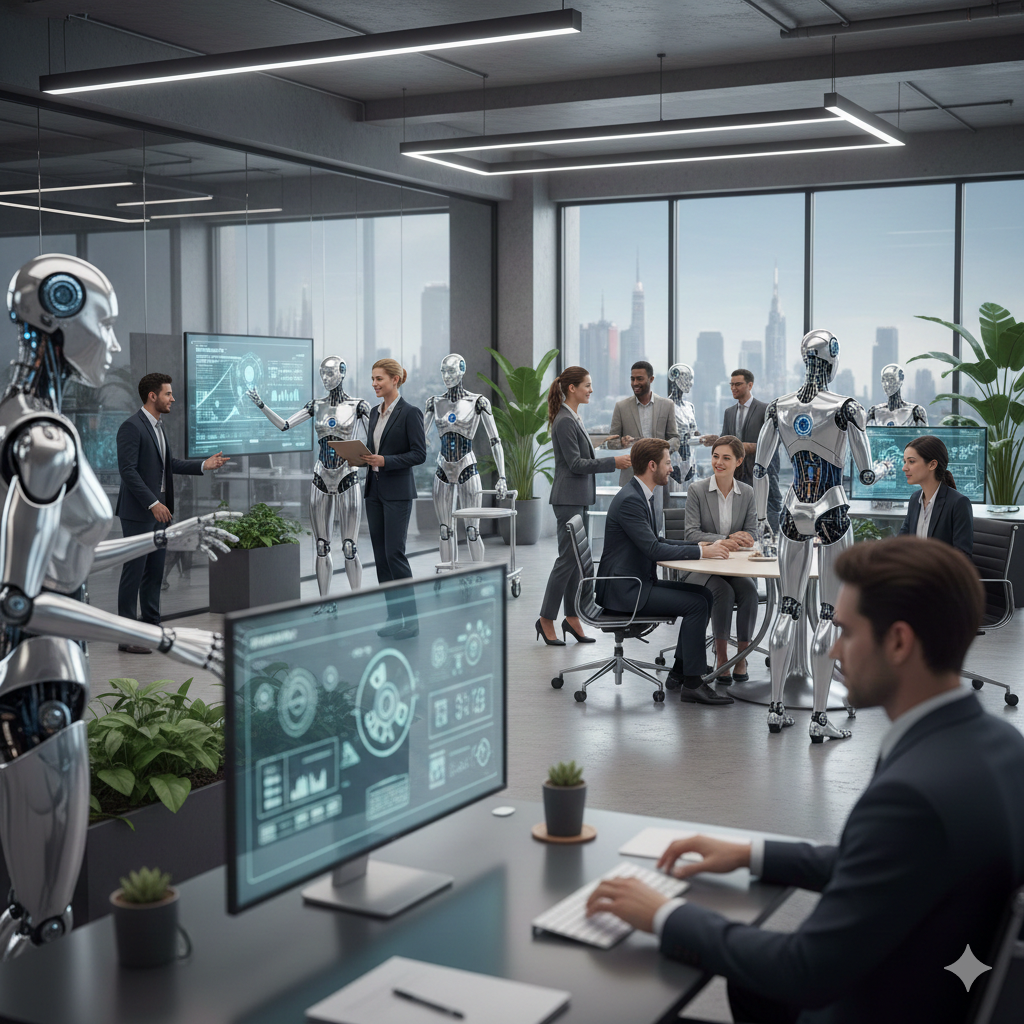
1. “AI is changing the way leaders lead and companies create,” by Kelli María Korducki and published by Atlassian’s Work Life on September 11, 2025, explores how artificial intelligence is transforming executive leadership.
This emerging leadership style centers on what the article calls “AI co-pilots” for CEOs—a collaborative model where executives integrate AI agents into their daily workflows to enhance their strategic capacity. The piece describes how top leaders are moving beyond viewing AI as merely a productivity tool for their teams and instead are embracing it as a personal leadership multiplier.
According to IBM survey data cited in the article, an impressive sixty-one percent of global CEOs have already adopted AI agents in their own workflows and are preparing for enterprise-wide deployment. The article notes that leaders like Weber Shandwick North America CEO Jim O’Leary save one to two hours daily by using AI to draft communications in his personal style, while Nvidia’s Jensen Huang employs AI as a personal tutor for mastering new concepts.
As AI continues to absorb leadership tasks such as executive communication, data analysis, and organizational strategy, CEOs will need to rethink how they approach their workflows, capturing the fundamental shift this leadership evolution represents. The article suggests that futurist Michael Tchong predicts an age of “co-CEOs” where executives without AI assistants may soon be considered corporately deficient—a bold claim that underscores how quickly this technology is becoming essential rather than optional.
This leadership style matters because it represents a fundamental reimagining of executive capacity and focus. By delegating routine analytical and communication tasks to AI systems, leaders can dedicate more cognitive resources to strategic thinking, relationship building, and the uniquely human aspects of leadership that machines cannot replicate.
The article emphasizes that this shift will force CEOs to double down on big-picture thinking and meaningful innovation while AI handles data-intensive operations. This evolution addresses one of the most persistent challenges in modern leadership: the overwhelming volume of information and decisions that executives must process daily.
By creating an AI-enhanced leadership model, organizations can potentially improve decision quality, increase leadership bandwidth, and enable faster responses to market changes. However, the article also wisely cautions that this transformation requires leaders to maintain their human judgment and strategic vision—AI augments rather than replaces the essential human elements of inspiring teams, navigating ambiguity, and making values-based decisions in complex situations.
2. “AI and the Future of Change Leadership: Why Humans Still Matter More,” published on September 10, 2025, by Yvonne Ruke Akpoveta on The Change Leadership blog, presents a case for a dual-competency leadership approach that balances technological capability with irreplaceable human skills.
Akpoveta describes what might be called “Human-AI Collaborative Leadership”—a style that deliberately integrates artificial intelligence’s analytical power with the emotional intelligence, cultural awareness, and relationship-building capabilities that only humans possess. This leadership approach acknowledges AI as a powerful tool for predicting risks, personalizing stakeholder communications at scale, and automating data-heavy administrative tasks that traditionally bog down transformation initiatives. The article outlines how AI can help change leaders see further and act smarter by flagging patterns in adoption and resistance before they derail projects, thereby enabling more proactive intervention.
The article’s thesis is captured powerfully in this observation: “The future belongs to leaders who combine AI-powered insights with human-centred leadership: empathy, culture, behaviour change, and connection.” Akpoveta argues that while AI excels at processing data and identifying patterns, it fundamentally cannot build trust during uncertain times, coach teams through resistance, humanize the transformation journey through storytelling, or understand the subtle cultural dynamics that shape how people respond to change.
This leadership style matters profoundly because organizational transformation historically fails more often due to human factors than technical issues. Research consistently shows that the majority of change initiatives stumble not because of flawed strategy or inadequate technology, but because of insufficient attention to the people side of change—resistance, fear, cultural misalignment, and lack of leadership support.
By explicitly positioning AI as an enabler rather than a replacement, this leadership approach helps organizations avoid the trap of over-relying on data and algorithms while neglecting the messy, emotional, deeply human work of guiding people through uncertainty. Akpoveta’s framework is particularly valuable because it provides a clear roadmap for developing dual competencies: leaders must become fluent in AI literacy while simultaneously strengthening core capabilities like adaptive leadership, emotional intelligence, and resilience.
In an era where employee engagement and trust in leadership have reached decade lows, this human-centered approach becomes even more critical. Leaders who master this balance can leverage AI to handle the analytical heavy lifting while dedicating their energy to the inspirational, trust-building, and cultural work that creates sustainable transformation and maintains the human dignity and meaning that make work fulfilling.
3. “Adaptive leadership keeps up when AI changes the score,” published by SiliconANGLE on November 6, 2025, and written by Emile Louw, offers a perspective on leadership through the lens of orchestral conducting.
Through an interview with Sir Simon Rattle, chief conductor of the Bavarian Radio Symphony Orchestra, conducted at Celosphere 25, this article articulates what might be termed “Anticipatory Adaptive Leadership”—a style characterized by working ahead of the action, making real-time adjustments, and coordinating highly skilled individuals toward collective excellence. Rattle describes managing an orchestra of one hundred highly trained musicians with strong personalities, emphasizing the importance of soliciting input rather than imposing a singular vision. The metaphor of conducting proves remarkably apt for understanding modern leadership in AI-accelerated environments where the tempo has intensified and complexity has multiplied.
The article captures this leadership philosophy through Rattle’s observation: “In a way, we are breathing in, but it’s the orchestra who breathes out. We are doing everything ahead of time.” This breathing metaphor elegantly expresses how adaptive leaders must think several steps ahead, creating the conditions for their teams to execute brilliantly while remaining flexible enough to adjust in real-time as circumstances shift.
This leadership style matters critically in the AI era because the technology fundamentally accelerates organizational tempo while simultaneously increasing complexity. As enterprises adopt AI at scale, teams face pressure to move faster than ever before, and leadership roles have expanded significantly. The article notes that while AI continues improving at execution, the real challenge lies in human coordination behind complex work—knowing how to guide people and adjust to changing circumstances rather than following rigid plans.
Rattle’s childhood memory of an orchestra walking out on a famous conductor powerfully illustrates that authority only becomes real when people choose to follow—a lesson particularly relevant as AI potentially disrupts traditional power dynamics. This adaptive leadership style recognizes that even as AI handles more execution work, someone must still orchestrate the human elements: building trust, fostering creativity, navigating big temperaments, and ensuring diverse contributions harmonize toward shared goals.
The conductor works a beat ahead so the ensemble can land together—leaders similarly must anticipate changes, create space for team input, and coordinate complex work without crushing creativity through excessive control. In industries experiencing AI-driven disruption, this versatile and anticipatory leadership approach enables organizations to maintain agility, preserve human creativity and judgment, and respond effectively to rapidly changing conditions. By emphasizing collaboration over command, anticipation over reaction, and coordination over control, adaptive leadership provides a framework for guiding talented teams through the uncertainty and accelerated pace that characterize the AI era.
These three articles collectively illustrate how leadership is evolving from traditional hierarchical models toward more collaborative, human-centered, and adaptive approaches that leverage AI’s capabilities while preserving the irreplaceable human elements of inspiring, connecting with, and guiding people through complex change.
Based on these three articles, several clear generalizations emerge about ideal leadership in the AI era:
Attitude Toward Employees and Relationships
The ideal leader in the AI era views employees as highly capable collaborators whose input and creativity are essential, rather than as subordinates to be directed. This collaborative stance appears most explicitly in the SiliconANGLE article featuring Sir Simon Rattle, who emphasizes the importance of gathering input from his orchestra members: “One of the things I learned very early on is you better get all their input. It’s [not] you saying, ‘Oh, this is what I want because this is only one person’s vision.’ Of course you guide it in that way, but it’s quite easy to crush that creativity.”
This theme of protecting and nurturing employee creativity and agency is reinforced in The Change Leadership article, which stresses that leaders must approach their teams with empathy, actively listening and validating concerns rather than simply deploying AI-driven solutions. Akpoveta emphasizes that building trust during uncertain times requires transparency, empathy, and credibility—qualities that demand genuine relationship investment. The SiliconANGLE article further reinforces this with Rattle’s recognition that “without them, he’s nothing”—a humble acknowledgment that leadership authority only becomes real when people choose to follow. The ideal leader therefore maintains a posture of respect for employee expertise, recognizes their vulnerability to feeling displaced or devalued by AI, and works actively to create psychological safety where people feel their contributions matter despite technological change.
Views on Staff Professional Development
The ideal leader takes a dual-competency approach to professional development, ensuring that employees build both AI literacy and distinctly human capabilities. The Change Leadership article most directly addresses this, arguing that organizations must “train leaders not only in change frameworks, but in building change leadership skills—adaptive leadership, emotional intelligence, resilience” while simultaneously equipping “teams with AI tools.” Akpoveta explicitly states that the future belongs to leaders who help their people become “fluent in both AI literacy and human leadership.”
This developmental philosophy recognizes that AI will handle increasingly complex technical tasks, making human skills like coaching, cultural awareness, and behavioral influence more valuable rather than less. The Atlassian article reinforces this by noting that as AI absorbs tasks like executive communication and data analysis, leaders must “double down on the human side of being in charge”—suggesting that professional development should emphasize strategic thinking, relationship building, and areas where human judgment remains superior.
The ideal leader therefore invests in helping employees understand how to leverage AI tools effectively while simultaneously developing the interpersonal, emotional, and strategic capabilities that differentiate human contribution. Rather than viewing AI as a replacement for human development, they see it as creating space for people to focus on higher-order skills that machines cannot replicate.
Personal Knowledge and Buy-In into AI
The ideal leader demonstrates active, hands-on engagement with AI rather than delegating it entirely to technical teams. The Atlassian article provides the most compelling evidence of this, citing that 61% of CEOs surveyed by IBM have already adopted AI agents in their own personal workflows—not just approved AI for their organizations. The article describes specific examples: Weber Shandwick’s CEO Jim O’Leary saves one to two hours daily using AI to draft communications in his style, while Nvidia’s Jensen Huang uses AI as a personal “tutor” to master new concepts.
This hands-on approach matters because, as futurist Michael Tchong predicts in the Atlassian piece, executives without AI assistants may soon be viewed as “corporately deficient.” However, the ideal leader’s AI engagement is balanced and strategic rather than uncritical. The SiliconANGLE article captures this through Rattle’s observation that “what we all thought 10 years ago as a possibility now seems so incredibly primitive”—acknowledging AI’s rapid evolution while maintaining that human coordination and judgment remain essential for complex work. The Change Leadership article reinforces this balanced view, explicitly positioning AI as “an enabler, not a replacement” and warning that “leaders who fail to adapt, who ignore AI altogether, risk being left behind.”
The ideal leader therefore maintains personal competence with AI tools, experiments with them in their own workflow, and understands their capabilities and limitations firsthand. This personal engagement enables them to make informed decisions about AI deployment, model appropriate adoption for their teams, and maintain credibility when discussing AI’s organizational implications. However, they avoid techno-utopianism, recognizing that AI cannot replace empathy, cultural understanding, trust-building, or the nuanced human judgment required for navigating complexity. Their buy-in is enthusiastic but discerning—they embrace AI’s potential to amplify human capacity while remaining clear-eyed about what only humans can accomplish.
Defining This AI-Era Leadership Style
All three articles consistently emphasize collaborative, input-seeking leadership over hierarchical command-and-control approaches. Sir Simon Rattle explicitly warns against imposing a singular vision and emphasizes the danger of crushing creativity through top-down directives. The Change Leadership article stresses empathy, listening, and validating concerns rather than dictating solutions. The Atlassian piece describes leaders using AI to free themselves for strategic thinking and human connection rather than tightening control. This collaborative openness appears essential precisely because AI handles more execution and analysis, elevating the importance of trust, buy-in, and leveraging collective intelligence.
When examined through traditional administrative theory frameworks, this AI-era leadership style resists neat categorization into established models, though it shares DNA with several:
Transformational Leadership comes closest in some respects—particularly the emphasis on inspiring teams, building trust, and focusing on meaning and connection that Akpoveta highlights. However, transformational leadership traditionally centers on the leader’s vision and charisma, whereas these articles emphasize distributed authority and collaborative intelligence. Rattle’s insistence on gathering input from his hundred orchestra members suggests something more participative than the typical transformational model.
Participative or Democratic Leadership captures the collaborative decision-making emphasis, particularly Rattle’s approach of soliciting expert input and avoiding the imposition of singular vision. Yet this traditional style doesn’t fully account for the technological augmentation dimension—the way AI fundamentally reshapes what leaders actually do and how they allocate cognitive resources.
Adaptive Leadership, explicitly mentioned in the SiliconANGLE article, perhaps fits best among existing frameworks. Ronald Heifetz’s adaptive leadership theory emphasizes diagnosing situations, regulating distress, maintaining disciplined attention, giving the work back to people, and protecting voices of leadership from below. This aligns well with Rattle’s “breathing in while the orchestra breathes out” metaphor and the emphasis across articles on empowering teams while maintaining strategic direction. However, even adaptive leadership theory predates AI’s transformative impact and doesn’t address the specific technological dimension.
The Case for a New Paradigm
These articles collectively describe an emergent hybrid paradigm that requires new conceptual framing—what might be termed “Augmented Collaborative Leadership” or “Human-AI Synergistic Leadership.” Here’s why traditional categories fall short:
The Technology-Human Duality: Traditional leadership theories assume human leaders make decisions and coordinate human workers. This new paradigm involves leaders who are themselves augmented by AI (as the Atlassian article describes) while leading teams that also work alongside AI. The leader operates simultaneously in two registers: collaborating with technology while fostering human collaboration. This dual operation isn’t addressed in classical administrative theory.
Redefinition of Leadership Value: Traditional theories define leadership value through decision-making, vision-setting, resource allocation, or relationship building. The AI era fundamentally shifts this calculus. As the Atlassian article notes, AI now handles executive communication, data analysis, and organizational strategy—traditional core leadership functions. The Change Leadership article emphasizes that AI cannot build trust, coach through resistance, or understand cultural nuance. Leadership value therefore migrates almost entirely to the “irreplaceable human” domains. This isn’t just a shift in emphasis within existing frameworks; it’s a fundamental redefinition of what leadership is.
Anticipatory Coordination vs. Directive Control: The SiliconANGLE article’s conducting metaphor reveals something subtle but important. Rattle describes working “ahead of time,” creating conditions for collective execution rather than controlling the execution itself. This anticipatory coordination—setting up the beat so talented people can land together—differs from both directive leadership (telling people what to do) and purely facilitative leadership (simply enabling people to decide). It’s a temporal and spatial relationship to authority that traditional theories don’t quite capture.
Speed and Complexity Escalation: All three articles note that AI accelerates organizational tempo dramatically. The SiliconANGLE piece states that “AI raises the tempo so much that leaders must specifically practice adaptive leadership—balancing being versatile and anticipatory.” This acceleration isn’t just “change” that existing change management theories address; it’s a permanent condition of higher velocity and complexity that demands continuous real-time adjustment. Traditional leadership theories emerged in more stable environments where decisions had longer lifespans.
The Empathy-Analytics Integration: The Change Leadership article describes leaders who must be “fluent in both AI literacy and human leadership,” combining “AI-powered insights with human-centred leadership.” This dual fluency requirement—being simultaneously technically competent and emotionally intelligent—creates a fundamentally different skill profile than traditional theories contemplate. It’s not servant leadership (primarily relational) or technocratic leadership (primarily analytical), but a genuine integration that requires facility in both domains.
A Proposed Framework
This emerging leadership paradigm operates on three simultaneous axes:
- Vertical Axis (Traditional Hierarchy): Significantly flattened but not eliminated. Leaders maintain strategic accountability and must make final decisions, but authority becomes more consultative and less directive.
- Horizontal Axis (Collaboration Network): Dramatically expanded. Leaders must orchestrate input from diverse, highly skilled team members whose expertise often exceeds the leader’s in specific domains. Success depends on synthesis rather than superior knowledge.
- Technological Axis (Human-AI Interface): Entirely new dimension. Leaders must actively manage the boundary between human and machine contribution, determining what to delegate to AI, what requires human judgment, and how to maintain human dignity and meaning when machines handle increasing amounts of work.
Traditional leadership theories operate primarily on the vertical axis with some attention to the horizontal. This AI-era paradigm requires simultaneous competence across all three dimensions, with the technological axis introducing unprecedented complexity.
Implications
If this is indeed a new paradigm rather than simply an evolution of existing styles, it has significant implications:
- Leadership development programs must be fundamentally redesigned, not just updated with “digital skills” modules added to existing curricula.
- Selection criteria for leaders should shift toward candidates who demonstrate technological adaptability and collaborative intelligence rather than just decisiveness and vision.
- Organizational structures may need reimagining beyond traditional hierarchies toward what the Atlassian article hints at—”co-leadership” models where human and AI capabilities genuinely complement each other.
- Performance metrics for leaders must evolve beyond traditional measures (decisions made, projects completed, revenue generated) toward assessing how well they maintain human engagement, foster creativity, and build trust in technologically mediated environments.
In conclusion, while elements of this AI-era leadership style can be found in transformational, participative, and adaptive leadership theories, the fundamental transformation described in these three articles—the simultaneous demands for technological fluency, collaborative openness, human-centered empathy, and anticipatory adaptation in permanently accelerated environments—constitutes something genuinely new that merits its own theoretical framework within administrative theory.
[End]
Filed under: Uncategorized |


 Educational Technology and Change Journal

Leave a comment