





By Jim Shimabukuro (assisted by Gemini)
Editor
Introduction: Fei-Fei Li, in “Spatial Intelligence Is AI’s Next Frontier” (Time.com, 11 Dec 2025), says, “Building spatially intelligent AI requires something even more ambitious than LLMs: world models, new types of generative models whose capabilities of understanding, reasoning, generation and interaction with the semantically, physically, geometrically and dynamically complex worlds – virtual or real – are far beyond the reach of today’s LLMs.” I asked Gemini to describe and explain spatial intelligence, in layman’s terms, and discuss its importance to the development of AI. -js
The development of artificial intelligence has historically been marked by distinct eras of focus, from logic-based reasoning to data-driven perception, and, most recently, to the astonishing fluency of large language models (LLMs). According to pioneering AI researcher Fei-Fei Li, the next necessary leap for the technology lies in what she terms “spatial intelligence.” This concept marks a critical shift in focus, mandating that AI move beyond mastering the world of words to truly comprehending and interacting with the world of physics, space, and three dimensions.
In layman’s terms, spatial intelligence is the ability of a machine to perceive, imagine, and reason about the physical world in the same way a human child does. It is the common sense that governs how objects move, how light reflects, and how spaces are organized. When a human walks into a room, they instantly understand the distance to the sofa, know that a cup will fall if pushed off a table, and can mentally rearrange the furniture without physically touching it. This capacity to sense, reason, and act in space is spatial intelligence.
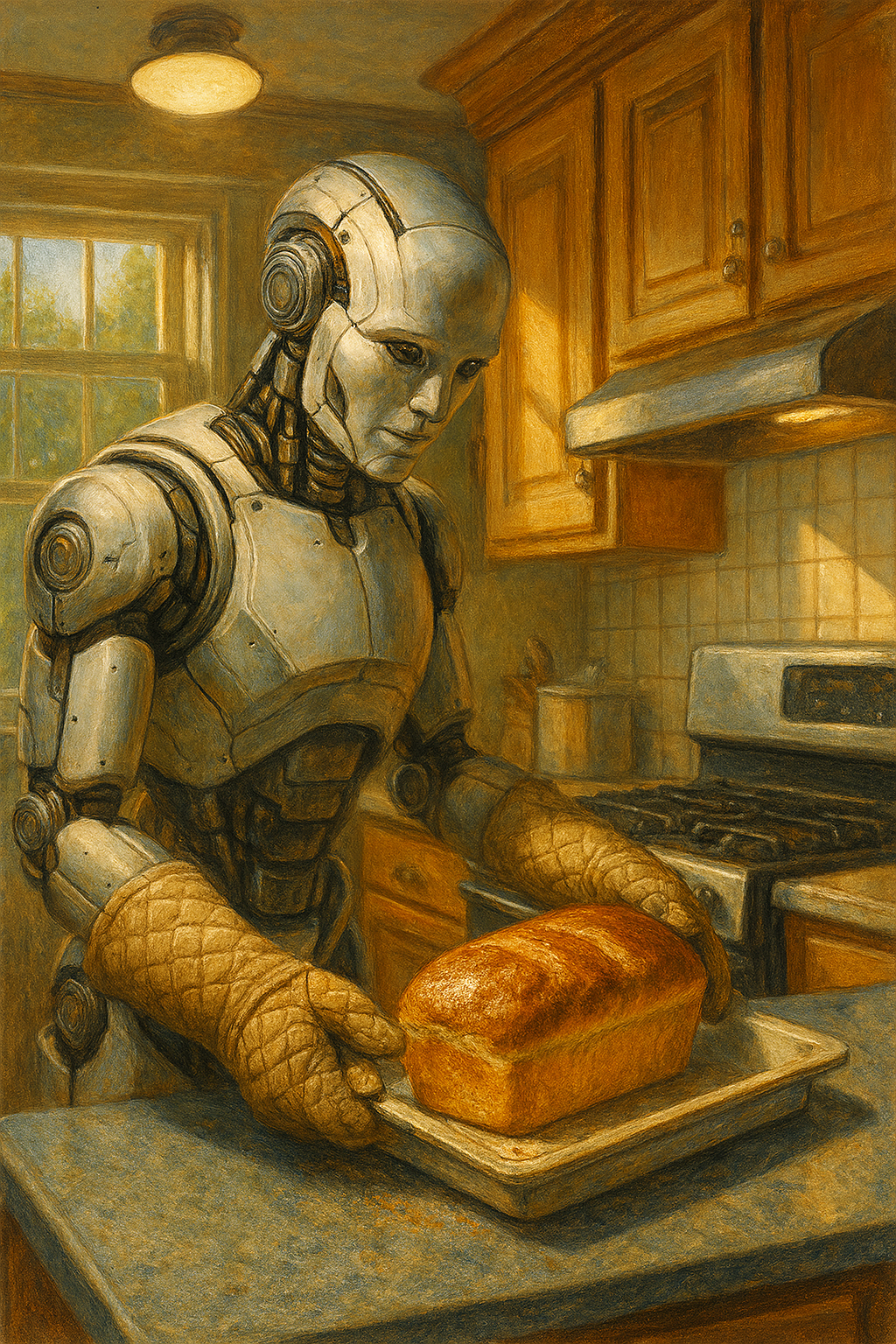
Fei-Fei Li highlights that the current state-of-the-art AI, epitomized by language models, is brilliant yet deeply limited. These systems are masterful at generating fluent, human-like text, but they possess no inherent understanding of the physical reality that the language describes. They can write a detailed paragraph on how to make a sandwich, but if asked to physically prepare one in a real kitchen, they would be functionally blind, unable to grasp distance, estimate gravity, or manipulate ingredients. Spatial intelligence seeks to “ground” the AI in reality, providing it with an internal physics engine or “world model” that allows it to predict and understand the consequences of actions in three-dimensional space, transforming it from a pure text generator into a capable, experienced agent.
The quest for spatial intelligence is paramount because it is the fundamental bridge between sophisticated perception and meaningful action. Without it, AI systems are confined to the digital realm, unable to perform complex tasks in the real world reliably. The current generation of AI models are, in Li’s own words, “wordsmiths in the dark: eloquent but inexperienced, knowledgeable but ungrounded.” Spatial intelligence provides the necessary scaffolding for future AI development by making possible a new class of grounded, reliable, and active systems.
This next frontier is crucial for revolutionizing entire industries. In robotics, spatial intelligence would enable robots to learn tasks and coordinate their movements by simulating the physical world, dramatically accelerating development beyond costly, time-consuming real-world trial and error. In science, it promises breakthroughs in drug discovery and materials science by allowing AI to visualize and simulate how molecules interact in complex three-dimensional structures. For AI to fulfill its promise of becoming a “true partner” in solving humanity’s greatest challenges—from healthcare and education to climate resilience—it must first be given the ability to see, understand, and navigate the physical world with human-like proficiency.
Fei-Fei Li’s argument matters profoundly because it diagnoses the critical limitation of the current wave of artificial intelligence: a deep and pervasive lack of “grounding.” While Large Language Models (LLMs) have achieved astonishing fluency, she correctly identifies them as “blind storytellers”—systems that excel at manipulating symbols (words) but hold no genuine, physical understanding of the reality those symbols describe.
This distinction is the core challenge of modern AI. An LLM can confidently describe how to stack blocks, but it cannot know the force of gravity, the texture of the wood, or the geometric impossibility of balancing a triangular block on a sphere. By coining and prioritizing “spatial intelligence”—the ability to perceive, imagine, and reason within a three-dimensional world—Li shifts the field’s focus from abstract textual proficiency back to the messy, dynamic reality of the physical environment, the world that humans are inherently designed to operate within.
The importance of this idea extends far beyond simply building better robots. It is a prerequisite for what Li calls the “next chapter” of AI, a leap she believes will revolutionize fields from scientific discovery to healthcare. For AI to truly become a reliable partner in a research lab, it must be able to visualize the 3D structures of molecules, simulate their interactions, and understand the physical constraints of an experiment. In medicine, spatially intelligent AI could analyze ambient data from a hospital room, recognizing complex human behaviors, detecting falls, or monitoring physical needs rather than merely transcribing them into text. This moves AI from being a sophisticated text-generator to an essential, perceptive, and proactive component of the real world.
Moreover, this approach addresses the major scalability bottleneck that currently limits AI’s deployment in highly sensitive and variable environments. By building AI on “world models”—a kind of internal physics engine that allows the machine to simulate reality—Li proposes a path toward systems that can learn through mental simulation rather than relying on impossibly large, pre-labeled datasets of every real-world scenario. A spatial model, once trained, can imagine the consequences of an action, vastly accelerating its ability to perform in novel environments.
This contrasts sharply with current LLMs, which struggle to generalize concepts learned in text to physical consequences. Fei-Fei Li’s vision is therefore not just an incremental improvement; it is a philosophical and engineering mandate to bridge the current gap between the AI’s digital realm of words and the human realm of the physical world. Her call to action re-establishes the necessity of perception, planning, and action—the very components that form the scaffolding of human intelligence—as the foundation for truly robust and beneficial artificial general intelligence.
__________
Sources:
Fei-Fei Li, “Spatial Intelligence Is AI’s Next Frontier,” Time.com, 11 Dec 2025.
Michael Willson, “Are World Models the Future of AI?” Blockchain Council, 14 Nov. 2025.
Adnan Masood, “Toward Spatial Intelligence: A Review of World‑Model Architectures, Data, and Evaluation,” Medium.com, 19 Nov. 2025.
[End]
Filed under: Uncategorized |


 Educational Technology and Change Journal

Leave a comment