





By Jim Shimabukuro (assisted by Copilot)
Editor
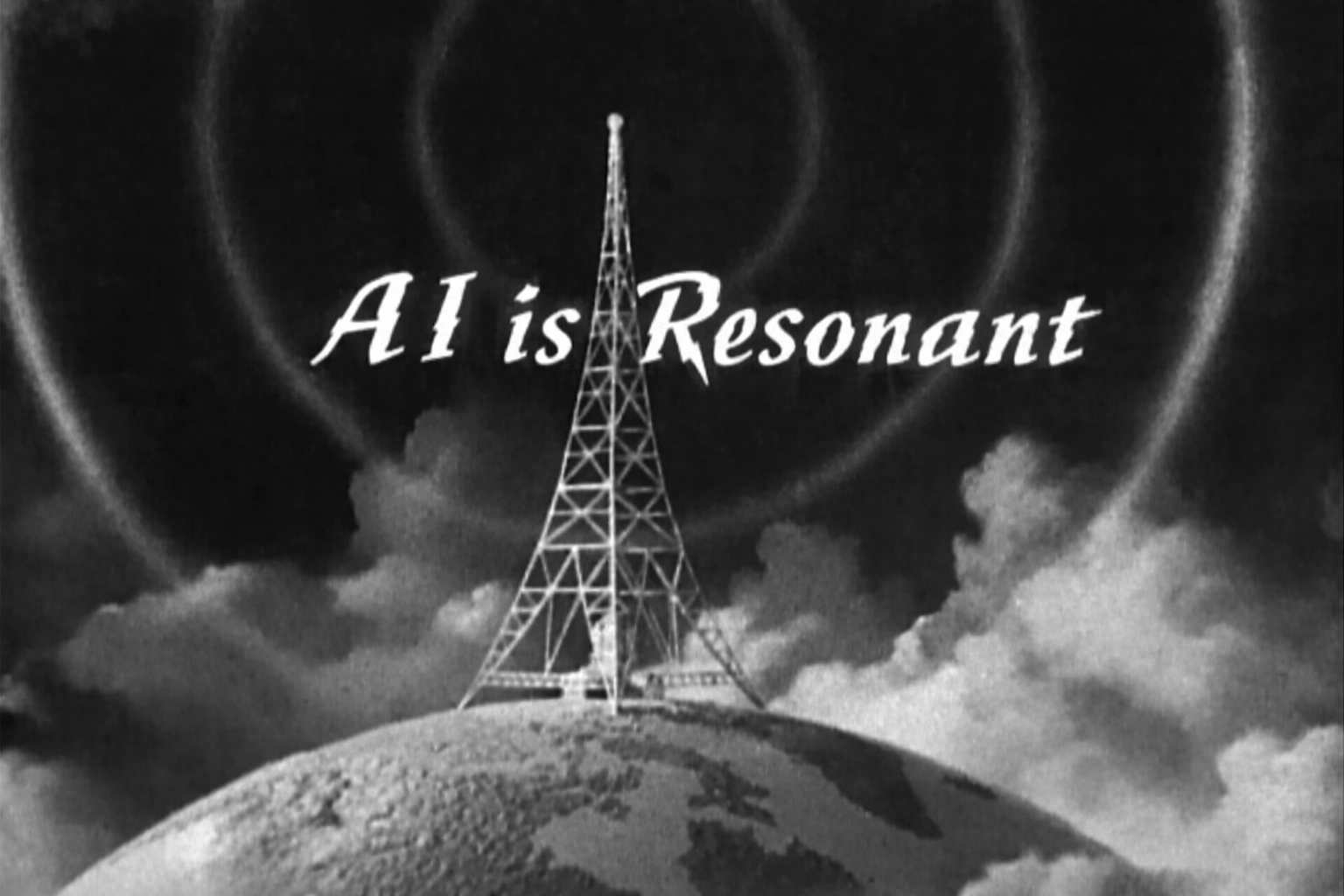
The word rose above the noise of trendier labels because 2025 was the year AI stopped being merely powerful or agentic and instead became felt. Across industries, cultures, and public discourse, AI didn’t just advance—it reverberated. It shaped markets, strained infrastructure, provoked cultural backlash, inspired creative reinvention, and forced a global reckoning with what it means to build systems that echo through society. “Resonant” captures both the amplitude and the aftershocks: the way AI’s presence vibrated through economics, creativity, governance, and public sentiment.
Several defining events from 2025 illustrate why this word fits so precisely. The first was the dramatic shift in investor and industry mood documented in Rebecca Bellan’s year-end analysis, which described 2025 as “the year AI got a vibe check” (TechCrunch). The second was the cultural backlash against low‑quality generative output, summarized in Jennifer Hahn’s 2025 review, which declared “slop” the defining word of the year (Dezeen). And the third was the architectural transformation described by Harvendra Singh, which argued that enterprises were being reshaped by “event-native, AI-driven” systems that demanded constant responsiveness (Forbes). Each of these events—economic, cultural, and technical—reveals a different frequency of the same phenomenon: AI’s influence was no longer linear or isolated. It resonated.
Bellan’s “2025 was the year AI got a vibe check” chronicled the extraordinary financial swings that defined the year. The piece highlighted the unprecedented $40 billion raise by OpenAI at a $300 billion valuation, Meta’s nearly $15 billion bid to secure Scale AI CEO Alexandr Wang, and the trillion‑dollar infrastructure commitments made by major AI labs (TechCrunch). The article’s most telling line—“Extreme optimism for AI… is now being tempered with concerns over an AI bubble”—captures the resonance perfectly.
The optimism didn’t disappear; it oscillated. The industry’s exuberance collided with its anxieties, creating a kind of harmonic tension that defined the year. If one person embodied this moment, it was Alexandr Wang, whose recruitment battle symbolized the gravitational pull AI exerted on global capital and talent. His move became a bellwether for the industry’s shifting mood, amplifying debates about sustainability, concentration of power, and the future of AI leadership.
The second key event came from the cultural sphere. Jennifer Hahn’s “Eight actually interesting uses of AI from 2025” captured a different kind of resonance: the backlash against generative “slop” and the simultaneous emergence of genuinely innovative applications (Dezeen). Hahn noted that “’Slop’ was the defining word of 2025… describing the flood of mindless, machine-generated content that has flooded social media.” This sentence crystallizes the cultural reverberation of AI: the public felt overwhelmed by the sheer volume of low‑effort content, yet the same year produced some of the most imaginative uses of AI in architecture, design, and engineering.
The resonance here was emotional and aesthetic. AI didn’t just influence workflows; it shaped taste, provoked critique, and forced creators to articulate what meaningful human expression looks like in an age of infinite synthetic output. No single person is responsible for this cultural moment, but the collective behavior of millions of users—and the design choices of major AI labs—created a feedback loop that defined the year’s creative landscape.
The third event came from the enterprise and infrastructure world. In “The Shift To Event-Native, AI-Driven And Secure Cloud Architecture,” written by Harvendra Singh argued that modern enterprises were being reshaped by real-time, AI-driven decision systems that demanded constant responsiveness (Forbes). Singh wrote, “Enterprises are now facing a world of real-time signals, hyper-connected systems and AI-driven decisions.”
This line captures the infrastructural resonance of AI: organizations were no longer simply adopting AI tools—they were reorganizing themselves around AI’s tempo. The shift to event-native architecture meant that AI wasn’t an add‑on; it was the pulse of the system. Singh himself, as the article’s author and a cloud engineering leader, played a role in articulating and popularizing this shift, but the phenomenon was driven by a distributed network of engineers, architects, and enterprises responding to the demands of AI‑accelerated operations.
Taken together, these events reveal why “resonant” is the most fitting word for 2025. The year was not defined by a single breakthrough or crisis. Instead, it was defined by the way AI’s influence echoed across domains, creating patterns of amplification, distortion, and feedback. The financial world experienced resonance in the form of exuberance and correction. The cultural world experienced resonance in the form of backlash and reinvention. The technical world experienced resonance in the form of architectural transformation and operational acceleration.
The TechCrunch article’s portrayal of a “vibe check” shows how AI’s economic resonance created oscillations in confidence, investment, and strategic direction. The Dezeen article’s focus on “slop” reveals how AI’s cultural resonance shaped public sentiment, creative norms, and aesthetic values. The Forbes article’s emphasis on event-native architecture demonstrates how AI’s technical resonance reshaped the very structure of enterprise systems. Each event is distinct, yet each reflects the same underlying dynamic: AI’s presence in 2025 was not static. It vibrated.
This resonance also manifested in the public imagination. Conversations about AI were no longer confined to labs or boardrooms. They spilled into classrooms, city councils, creative studios, and dinner tables. People debated not just what AI could do, but what it meant. They questioned its environmental impact, its cultural footprint, its economic consequences, and its ethical boundaries. The resonance was intellectual and emotional, technical and social.
Even the backlash against “slop” was a form of resonance. It showed that people were not passive recipients of AI-generated content; they were active participants in shaping the norms around it. The critique itself became part of the cultural feedback loop, influencing how creators, platforms, and AI labs approached quality, authenticity, and human expression.
Meanwhile, the architectural shift described by Forbes revealed how deeply AI had become embedded in the operational fabric of modern enterprises. The move toward event-native systems was not merely a technical upgrade; it was a recognition that AI’s tempo had become the tempo of business. Organizations had to adapt to the rhythm of real-time signals, model predictions, and automated decisions. This was resonance at the infrastructural level.
And the financial oscillations described by TechCrunch showed how AI’s economic resonance shaped global markets. The year’s massive raises, aggressive talent wars, and trillion-dollar infrastructure commitments were not isolated events. They were part of a larger pattern of amplification and correction, driven by the industry’s collective expectations and anxieties.
In this sense, “resonant” is not just a descriptive word—it is a diagnostic one. It captures the way AI’s influence propagated through systems, institutions, and cultures. It acknowledges the highs and lows, the breakthroughs and the backlash, the innovation and the introspection. It reflects the reality that AI in 2025 was not simply advancing; it was reverberating.
Sources:
“2025 was the year AI got a vibe check,” by Rebecca Bellan, TechCrunch, December 29, 2025. “Extreme optimism for AI… is now being tempered with concerns over an AI bubble.”
“Eight actually interesting uses of AI from 2025,” by Jennifer Hahn, Dezeen, December 29, 2025. “‘Slop’ was the defining word of 2025… describing the flood of mindless, machine-generated content.”
“The Shift To Event-Native, AI-Driven And Secure Cloud Architecture,” by Harvendra Singh, Forbes, December 26, 2025. “Enterprises are now facing a world of real-time signals, hyper-connected systems and AI-driven decisions.”
[End]
Filed under: Uncategorized |


 Educational Technology and Change Journal

Leave a comment