


By Jim Shimabukuro (assisted by Claude)
Editor
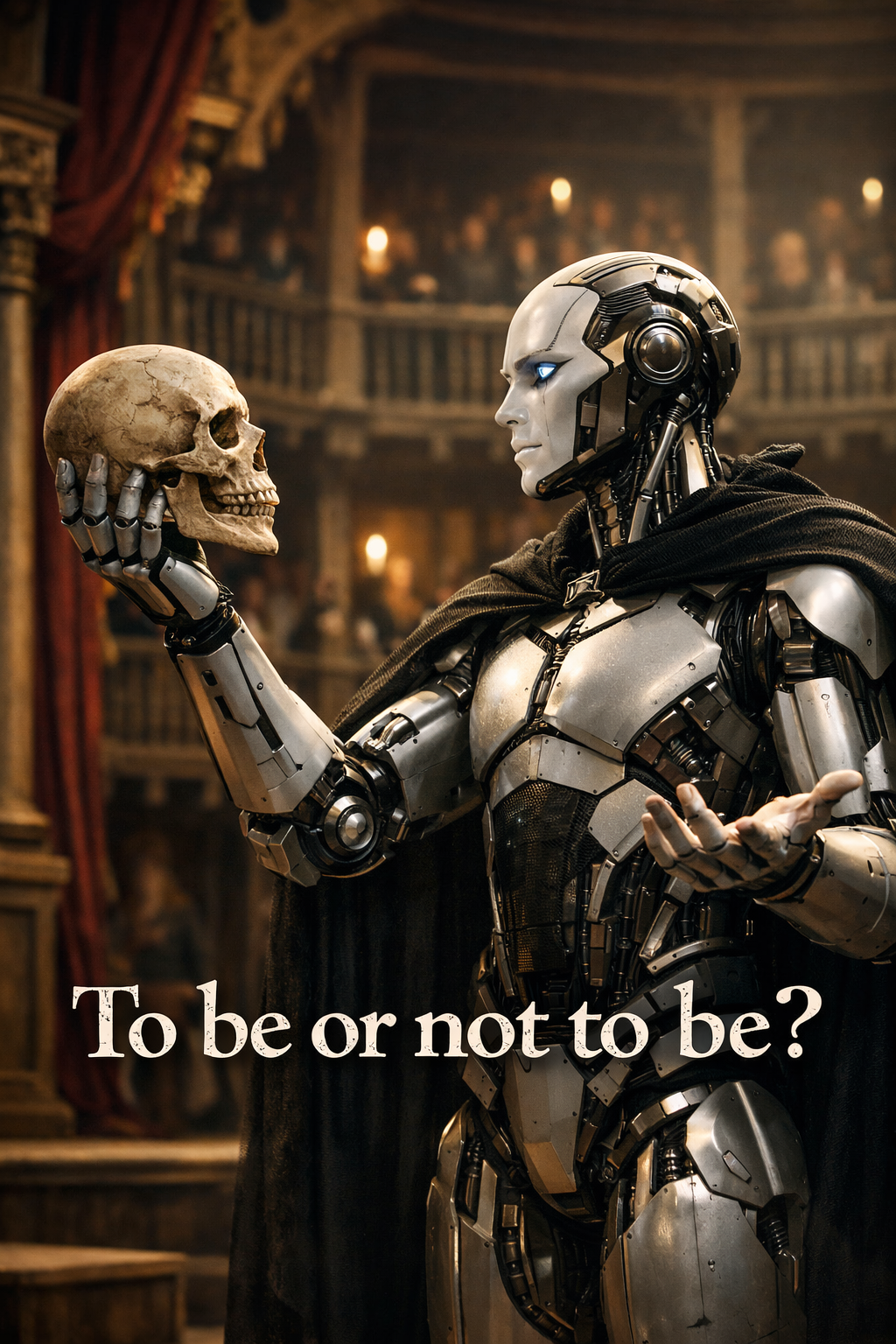
The question of whether artificial intelligence can generate new ideas sits at the intersection of philosophy, computer science, and practical innovation. The New York Times article published on January 14, 2026, titled “Can A.I. Generate New Ideas?” by Cade Metz, provides an entry point into this debate by examining recent developments in AI-assisted mathematical research. Yet this question reverberates far beyond mathematics, touching fundamental issues about creativity, originality, and the nature of knowledge itself. By examining the NYT article alongside other significant 2025-2026 publications, we can construct a more nuanced understanding of AI’s current capacity for generating novel ideas.
The New York Times Perspective: Mathematical Achievement and Its Limits
The NYT article centers on a specific case study that crystallizes the broader debate. When Harmonic, an AI startup, announced that its system Aristotle had solved an Erdos problem with assistance from OpenAI’s GPT-5, the news initially seemed to herald a breakthrough moment. The Erdos problems, posed by mathematician Paul Erdos, have long served as benchmarks for mathematical ingenuity, testing the limits of the field with elaborate conjectures requiring proof. The article describes how two British mathematicians, Kevin Barreto and Liam Price, used GPT-5 to crack a previously unsolved problem, then verified the solution using Aristotle’s specialized programming language.
However, the article’s thesis is fundamentally cautious. While acknowledging that AI has become a powerful research accelerator, it questions whether these systems are generating truly original ideas or merely sophisticated retrieval and recombination of existing human knowledge. The key supporting arguments include the observation that GPT-5’s initial “solutions” to Erdos problems turned out to be existing solutions buried in decades of research papers, some written in languages like German that researchers might never have discovered independently. When Kevin Weil, OpenAI’s vice president of science, initially claimed GPT-5 had solved ten previously unsolved Erdos problems, he quickly deleted his post after mathematicians pointed out the system had simply located existing solutions in the literature.
The article gives voice to skeptics like Terence Tao, widely regarded as one of the finest mathematicians of his generation, who compares AI to a clever student who has memorized everything for a test but lacks deep conceptual understanding. Tao suggests that when Harmonic’s truly novel solution emerged, it relied on widely known mathematical methods and that the problem itself had only recently been properly formulated. Thomas Bloom, who maintains a website dedicated to Erdos problems, echoes this skepticism while acknowledging AI’s utility, stating he has yet to see evidence that AI can generate ideas humans cannot, and would be surprised if that happened soon.
Yet the article also presents a more optimistic perspective from researchers like Derya Unutmaz, a professor at the Jackson Laboratory, who describes how advanced AI systems now suggest hypotheses and experiments his team had not previously considered. Unutmaz emphasizes that while AI doesn’t make discoveries independently, it has a profound accelerating effect by narrowing experimental options from fifty possibilities to five. The article concludes on a pragmatic note: regardless of whether AI generates truly original ideas, it has already become an indispensable research tool that requires human expertise to use effectively.
The Broader Landscape: Parallel Conversations in 2025-2026
Examining other significant articles from 2025-2026 reveals how the NYT piece fits within a larger, more complex conversation about AI’s innovative capabilities. These publications can be roughly grouped into several thematic categories that illuminate different facets of the originality question.
The first category comprises articles focused on AI’s practical achievements in scientific research, which generally adopt a more optimistic tone than the NYT piece. The Axios article “2025’s AI-fueled scientific breakthroughs” highlights concrete accomplishments including Google’s AlphaGenome model for disease understanding and drug discovery, advancements in humanoid robot dexterity, and AI-powered weather forecasting capable of predicting extreme events. Similarly, MIT News profiled FutureHouse, a research lab co-founded by Sam Rodriques, which has developed AI agents specialized for information retrieval, synthesis, and experimental design. FutureHouse demonstrated a multi-agent workflow that identified a new therapeutic candidate for dry age-related macular degeneration, showcasing AI’s capacity to automate key steps in the discovery process.
These scientific achievement articles differ from the NYT piece by focusing less on the philosophical question of originality and more on demonstrable results. They document AI systems accelerating research timelines, processing information at scales impossible for individual humans, and making connections across vast literatures. Berkeley Lab‘s article on AI and automation describes their A-Lab facility where AI algorithms propose new compounds while robots prepare and test them, dramatically speeding up materials discovery. The emphasis here is on AI as a catalyst that transforms experimental efficiency rather than on whether it generates fundamentally new conceptual frameworks.
The second category addresses philosophical and definitional questions about AI creativity and originality, engaging more directly with the conceptual issues the NYT article raises. The Nature feature “Can AI be truly creative?” by Jo Marchant explores whether AI systems possess genuine creativity or merely excel at pattern recognition and recombination. A Medium article by Axel Schwanke discusses a conversation between OpenAI CEO Sam Altman and physicist David Deutsch, who emphasized that current large language models lack intuition and the creative ability to generate new knowledge. Deutsch proposed that true artificial general intelligence would be demonstrated not by imitating conversations but by making original scientific discoveries like solving quantum gravity and explaining the reasoning behind it.
These philosophical articles align with the NYT’s skeptical perspective while exploring it more deeply. They distinguish between AI’s impressive capacity for remixing existing information and true conceptual innovation. Several emphasize that AI systems operate through pattern recognition from training data, meaning they fundamentally recombine what humans have already created rather than inventing entirely novel concepts. This perspective suggests that what appears as AI creativity represents sophisticated synthesis rather than genuine originality in the way human creativity involves intuitive leaps and emotional depth.
A third category examines AI’s trajectory and future potential, offering predictions about how these capabilities might evolve. TechCrunch’s “In 2026, AI will move from hype to pragmatism” describes a shift from building ever-larger language models toward making AI more usable through smaller specialized models, better integration into physical devices, and systems that augment human workflows effectively. The article notes that current models may be plateauing and that significant improvements will likely require new architectural approaches beyond transformers. Microsoft’s “What’s next in AI: 7 trends to watch in 2026” emphasizes AI’s evolution from answering questions to actively collaborating with people, particularly in scientific research where AI will generate hypotheses, control experiments, and collaborate with both human and AI colleagues.
These forward-looking articles suggest a more optimistic long-term trajectory than the NYT piece, while acknowledging current limitations. They propose that AI’s role in innovation is still emerging and that we may be witnessing an evolution from retrieval and synthesis toward more genuine creative capabilities. The IBM article on 2026 trends discusses how AI is shifting from individual tools to orchestrated workflows and anticipates systems that won’t just follow instructions but will anticipate needs and engage in meaningful problem-solving.
A fourth category focuses on institutional and practical implementation challenges. McKinsey’s “The state of AI in 2025” reports that while most organizations are experimenting with AI, meaningful enterprise-wide impact remains rare, with only six percent of respondents seeing significant value. The report emphasizes that high-performing organizations treat AI as a catalyst for transformation rather than just seeking incremental efficiency gains. The MIT Sloan Management Review article “Five Trends in AI and Data Science for 2026” strikes a cautious note, predicting that both generative AI and agentic AI will fall into the “trough of disillusionment” in 2026 as organizations grapple with implementation challenges and unclear value propositions.
These implementation-focused articles provide crucial context for understanding the originality question. They suggest that even if AI possesses some capacity for generating new ideas, the practical challenge of extracting and applying that value remains formidable. The gap between technical capability and organizational impact is substantial, which indirectly supports the NYT article’s emphasis on AI as a tool requiring expert human guidance rather than an autonomous innovator.
Key Points of Convergence and Divergence
Comparing these articles with the NYT piece reveals several important patterns. There is near-universal agreement that AI has become a powerful accelerator of research, capable of processing information at unprecedented scales and making connections humans would miss. Whether describing mathematical problem-solving, protein structure prediction, or materials discovery, sources consistently emphasize AI’s ability to speed up research by orders of magnitude. This represents a significant shift from earlier debates about whether AI could contribute to science at all.
However, sources diverge sharply on the philosophical question of whether AI generates truly new knowledge or merely recombines existing information in novel ways. The NYT article, along with several philosophical pieces, emphasizes that AI lacks consciousness, intuition, and the ability to engage in genuinely original thinking. Current systems operate through pattern recognition from training data, meaning they fundamentally draw from what humans have already created. Even when AI produces surprising results, skeptics argue these represent sophisticated retrieval or unexpected combinations rather than conceptual breakthroughs of the kind humans achieve through intuitive leaps.
Yet other sources, particularly those focused on concrete scientific achievements, adopt a more pragmatic stance. They suggest the distinction between “retrieval” and “generation” may be less clear than it appears, noting that human creativity also builds on existing knowledge and that some AI outputs do go beyond simple pattern matching to suggest genuinely unexpected hypotheses. FutureHouse’s identification of a therapeutic candidate for macular degeneration or Berkeley Lab’s AI-proposed compounds represent outcomes that, while built on existing knowledge, constitute new proposals not previously articulated by humans.
The question of autonomy versus tool status represents another critical divergence. The NYT article strongly emphasizes that AI requires expert human oversight, with Unutmaz noting he remains “maybe even more relevant” because deep expertise is needed to appreciate and guide AI’s work. Articles on implementation challenges reinforce this view, describing how AI initiatives often fail without proper human integration. However, some forward-looking pieces envision AI systems that will operate more autonomously, moving beyond passive assistance to active collaboration and even leading certain research initiatives. This spectrum from tool to collaborator to potential autonomous agent reflects fundamentally different predictions about AI’s trajectory.
Toward a Synthesis: What AI Can and Cannot Do
Synthesizing these perspectives suggests a nuanced answer to whether AI can generate new ideas. Current AI systems demonstrably produce outputs that are novel in the sense that no human has articulated them in exactly that form before. When GPT-5 solves a mathematical problem using a valid proof method, even if that method is “widely known,” the specific proof represents a new instantiation. When AI proposes a previously unformulated hypothesis about disease mechanisms or suggests a chemical compound no one has tested, these constitute new ideas in a meaningful sense.
However, these new ideas exist within conceptual frameworks established by humans and draw from patterns in training data reflecting human knowledge. AI’s novelty is fundamentally recombinatorial—it creates new configurations of existing elements rather than inventing entirely new conceptual categories. This distinction matters because different types of innovation require different capabilities. Incremental advances, optimization problems, and applications of known methods to new contexts can benefit enormously from AI’s pattern-matching and synthesis abilities. Paradigm shifts, fundamental reconceptualizations, and the invention of new theoretical frameworks may require the kind of intuitive leap and conceptual restructuring that current AI systems cannot achieve.
The debate also reflects different standards for what counts as “generating new ideas.” If we mean producing outputs never before articulated, AI clearly succeeds. If we mean demonstrating creativity comparable to human innovation, the answer depends on which aspects of creativity we prioritize—originality of output versus originality of process, speed of production versus depth of understanding, breadth of synthesis versus intuitive insight. If we mean achieving the kind of revolutionary breakthroughs that redefine fields, current evidence suggests AI excels as an accelerator and assistant but has not demonstrated independent capacity for such transformations.
Implications for the Future of Research and Innovation
The articles reviewed here collectively suggest that regardless of philosophical debates about originality, AI is fundamentally transforming how research happens. The distinction between human and AI contributions is becoming increasingly blurred as systems become more sophisticated and integrated into research workflows. The question may shift from “Can AI generate new ideas?” to “How do human-AI collaborations generate ideas that neither could produce alone?”
This transformation carries profound implications. Research may accelerate dramatically in domains where AI can effectively synthesize vast literatures and suggest promising directions, potentially addressing problems that would otherwise remain intractable due to their complexity or the scale of data involved. Fields like drug discovery, materials science, and climate modeling may see breakthroughs that would have taken decades using traditional methods. However, this acceleration also raises concerns about the democratization of innovation, the potential for AI to reinforce existing paradigms rather than challenge them, and the risk that funding and attention concentrate on problems amenable to current AI approaches while neglecting questions requiring different forms of insight.
The emphasis across multiple sources on AI as a tool requiring expert human guidance suggests that near-term innovation will likely emerge from human-AI partnerships rather than autonomous AI systems. The most successful implementations appear to be those that redesign workflows around AI capabilities while maintaining human expertise for interpretation, validation, and strategic direction. This partnership model may represent a sustainable path forward that harnesses AI’s strengths while acknowledging its limitations.
Conclusion
The question “Can AI generate new ideas?” proves to be more complex than a simple yes or no answer can accommodate. The NYT article’s cautious assessment—that AI has become a powerful accelerator but hasn’t demonstrated the capacity for truly original thinking—aligns with philosophical analyses emphasizing the distinction between recombination and genuine conceptual innovation. However, practical achievement stories and forward-looking analyses suggest this may be an evolving situation where AI’s creative capabilities are developing along a trajectory we don’t yet fully understand.
What emerges clearly is that AI has already changed the landscape of innovation, even if debates continue about the precise nature of its contributions. Whether we ultimately decide that current AI systems “generate new ideas” in the fullest sense may matter less than recognizing how they are reshaping research processes, accelerating discovery, and enabling new forms of human-AI collaboration. The coming years will test whether AI’s capabilities expand beyond sophisticated synthesis toward genuine conceptual innovation, or whether the current impressive achievements represent a plateau requiring fundamental architectural breakthroughs to surpass.
For now, the most accurate answer may be that AI generates ideas that are new in configuration and application, drawing from existing knowledge in ways that produce useful and sometimes surprising results, but stopping short of the revolutionary reconceptualization that characterizes humanity’s greatest intellectual achievements. The conversation continues, and the boundary between recombination and true creation remains productively unclear, driving both technological development and philosophical inquiry into the nature of knowledge, creativity, and intelligence itself.
Key Sources Consulted
- New York Times – “Can A.I. Generate New Ideas?” by Cade Metz (January 14, 2026): https://dnyuz.com/2026/01/14/can-a-i-generate-new-ideas/
- Axios – “2025’s AI-fueled scientific breakthroughs” by Maria Curi (December 31, 2025): https://www.axios.com/2025/12/31/2025-ai-scientific-breakthroughs
- MIT News – “Accelerating scientific discovery with AI” by Zach Winn (June 30, 2025): https://news.mit.edu/2025/futurehouse-accelerates-scientific-discovery-with-ai-0630
- Berkeley Lab – “How AI and Automation are Speeding Up Science and Discovery” by Laurel Kellner (September 4, 2025): https://newscenter.lbl.gov/2025/09/04/how-berkeley-lab-is-using-ai-and-automation-to-speed-up-science-and-discovery/
- Nature – “Can AI be truly creative?” by Jo Marchant (November 5, 2025): https://www.nature.com/articles/d41586-025-03570-y
- Medium – “Generative AI and the Illusion of Originality: Can Machines Ever Truly Create?” by Axel Schwanke (July 19, 2024): https://medium.com/@axel.schwanke/generative-ai-never-truly-creative-68a0189d98e8
- TechCrunch – “In 2026, AI will move from hype to pragmatism” by Rebecca Bellan (January 2, 2026): https://techcrunch.com/2026/01/02/in-2026-ai-will-move-from-hype-to-pragmatism/
- Microsoft – “What’s next in AI: 7 trends to watch in 2026” by Susanna Ray (December 8, 2025): https://news.microsoft.com/source/features/ai/whats-next-in-ai-7-trends-to-watch-in-2026/
- IBM – “The trends that will shape AI and tech in 2026” by Anabelle Nicoud (January 1, 2026): https://www.ibm.com/think/news/ai-tech-trends-predictions-2026
- McKinsey – “The state of AI in 2025: Agents, innovation, and transformation” by Alex Singla et al.(November 5, 2025): https://www.mckinsey.com/capabilities/quantumblack/our-insights/the-state-of-ai
- MIT Sloan Management Review – “Five Trends in AI and Data Science for 2026” by Thomas H. Davenport and Randy Bean (January 06, 2026): https://sloanreview.mit.edu/article/five-trends-in-ai-and-data-science-for-2026/
- Google Research – “Google Research 2025: Bolder breakthroughs, bigger impact”: https://research.google/blog/google-research-2025-bolder-breakthroughs-bigger-impact/
- InfoWorld – “6 AI breakthroughs that will define 2026” (December 2025): https://www.infoworld.com/article/4108092/6-ai-breakthroughs-that-will-define-2026.html
- Nature – “AI for Science 2025”: https://www.nature.com/articles/d42473-025-00161-3
[End]
Filed under: Uncategorized |


 Educational Technology and Change Journal

[…] When I look across the latest research, the disagreement is not random. It comes from clashing timelines, different definitions of “job impact,” and wildly divergent assumptions about how fast companies and regulators will move. Understanding those fault lines is the only way to make sense of what AI is really likely to do to your career. […]