




By Jim Shimabukuro (assisted by Claude)
Editor
The Case for Enforcement
The Trump administration’s immigration crackdown rests on several core arguments, rooted in what they characterize as a constitutional obligation and practical necessity to restore order to the immigration system.
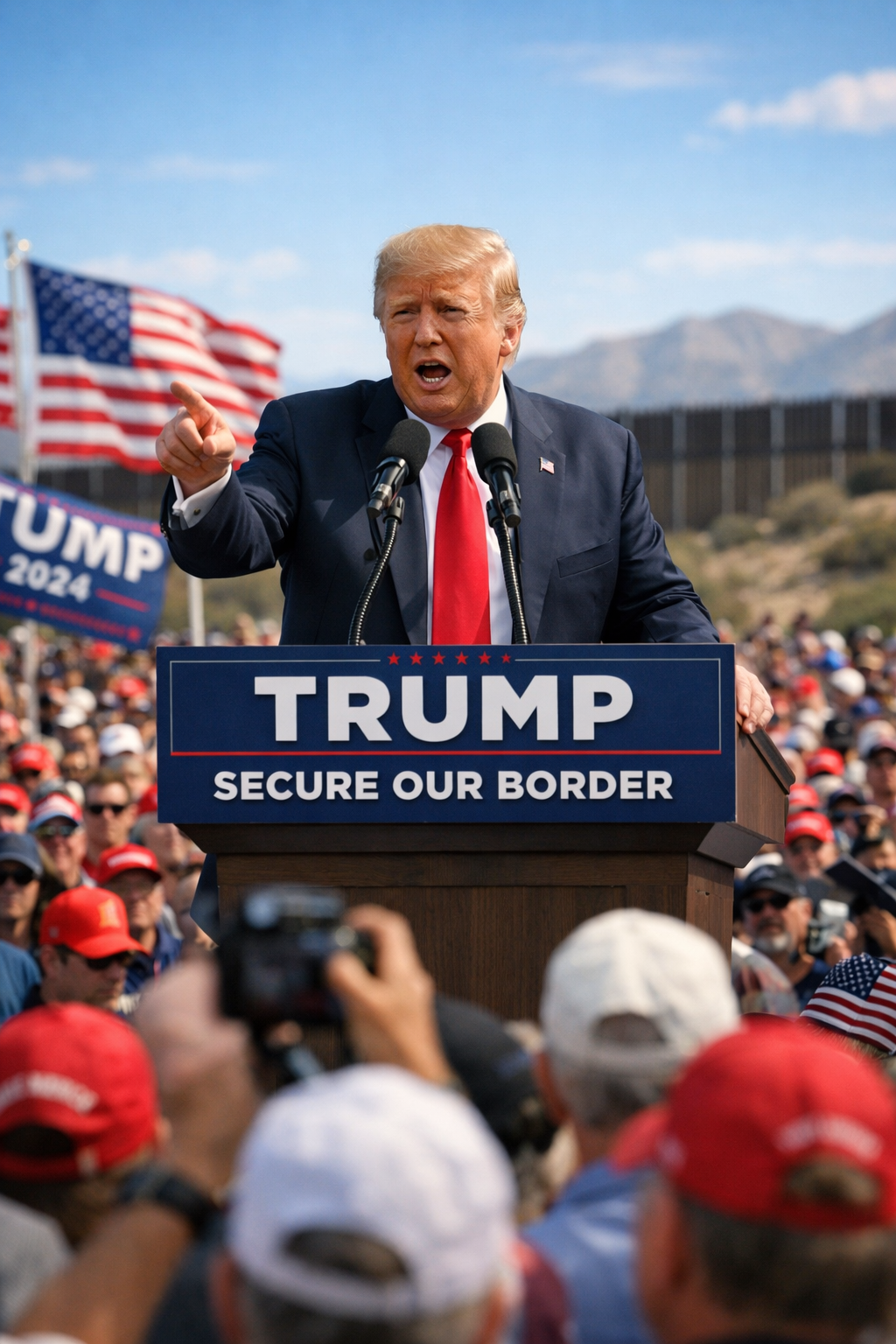
The administration begins with a constitutional argument, invoking Article IV, Section 4 of the Constitution—the Guarantee Clause—which requires the United States to protect each state against invasion.[Alejandra Aramayo et al.] President Trump has declared the flow of migrants at the southern border to constitute an invasion, a legal designation his administration argues triggers extraordinary executive powers and justifies sweeping enforcement measures. This framing provides the constitutional foundation for many of his executive actions.
At the heart of the administration’s policy is an argument about the rule of law itself. The White House contends that the prior administration oversaw an unprecedented flood of illegal immigration, with millions of people crossing borders or flying directly into the United States and settling in American communities in violation of longstanding federal laws.[White House 20 Jan 2025] From this perspective, the current crackdown represents not excessive enforcement but rather a necessary restoration of legal order after years of what they view as deliberate non-enforcement. The administration argues it is simply executing immigration laws that Congress has already passed but that previous administrations chose to ignore or selectively enforce.
Public Safety and Criminal Enforcement
A central pillar of the administration’s justification focuses on public safety. The Department of Homeland Security emphasizes that seventy percent of those arrested by ICE are criminal illegal aliens who have been charged or convicted of a crime in the United States.[DHS 19 Dec 2025] Officials highlight arrests of gang members, rapists, kidnappers, and drug traffickers as evidence that enforcement is targeting dangerous individuals who pose genuine threats to American communities. The administration has reopened the Victims of Immigration Crime Engagement office, which the Biden administration had closed, arguing that Americans harmed by crimes committed by unauthorized immigrants deserve recognition and support from their government.
The signing of the Laken Riley Act represents another component of this public safety argument. The act mandates the detention of immigrants who are charged with or convicted of certain crimes[Wikipedia], eliminating what the administration views as a dangerous gap in enforcement where individuals accused of serious offenses might be released pending court proceedings.
Deterrence and Border Security
The administration points to measurable results as vindication of its approach. According to Department of Homeland Security data, illegal alien apprehensions at the southwest border are down to an average of 245 per day, and border crossings are down 93 percent year-over-year.[DHS 19 Dec 2025] Officials argue these dramatic declines demonstrate that strong enforcement creates effective deterrence. When potential migrants understand they will face certain detention and removal rather than release into the interior, the administration contends, they choose not to attempt illegal entry in the first place.
This deterrence argument extends beyond the border itself. The administration claims that nearly 3 million illegal aliens have left the United States because of the Trump administration’s crackdown on illegal immigration, including an estimated 2.2 million self-deportations.[DHS 20 Jan 2026] From this perspective, visible enforcement operations send a clear message that spurs voluntary departure, reducing the need for actual deportations while still achieving the policy goal of reducing the unauthorized population.
Economic and Resource Arguments
The administration frames immigration enforcement as a matter of fiscal responsibility and economic fairness. Officials argue that unauthorized immigration imposes substantial costs on federal, state, and local governments through public services, education, healthcare, and law enforcement. By reducing the unauthorized population, they contend, the government preserves resources for citizens and legal residents while ensuring that limited social services go to those legally entitled to them.
The administration also argues that refugees admitted must have a chance to assimilate and that suspending the refugee program is necessary to protect and preserve U.S. resources for citizens.[Wikipedia] This reflects a broader philosophy that immigration levels should be calibrated to the nation’s capacity to successfully integrate newcomers, rather than admitting numbers that might overwhelm communities or strain infrastructure.
National Security and Vetting
National security concerns form another key argument. The administration emphasizes that many aliens unlawfully within the United States present significant threats to national security and public safety, with some engaged in hostile activities including espionage, economic espionage, and preparations for terror-related activities.[White House 20 Jan 2025] Officials point to enhanced vetting procedures and the identification of individuals with ties to terrorist organizations as evidence that previous screening processes were inadequate.
The administration has implemented more rigorous screening of visa applications and asylum claims, arguing that immigration benefits should be privileges carefully granted after thorough investigation rather than entitlements distributed liberally. They contend that ending automatic extensions of certain employment authorization categories ensures higher vetting frequency and better enables detection of aliens with potential harmful intent.[DHS 14 Nov 2025]
Ending “Catch and Release”
A major policy shift involves replacing what the administration calls “catch and release” with “catch and detain.” Previously, many immigrants apprehended for immigration violations but deemed not to pose immediate public safety threats were released while awaiting court proceedings. The administration argues this system encouraged illegal immigration because migrants knew they could gain de facto entry to the United States simply by crossing the border and claiming asylum, even if their claims ultimately proved unfounded.
By mandating detention for all individuals apprehended for immigration violations, the administration contends it eliminates the incentive structure that drew millions to attempt illegal entry. They argue that previous policies effectively rewarded illegal border crossing with the opportunity to live and work in the United States for years while cases proceeded through backlogged immigration courts, with many individuals never appearing for their hearings.
System Integrity and Fraud Prevention
The administration emphasizes efforts to combat fraud and abuse in the immigration system. They point to Operation Twin Shield, which focused on more than 1,000 fraud or ineligibility instances and found evidence of fraud, non-compliance, public safety or national security concerns in 275 of the cases.[DHS 14 Nov 2025] From this perspective, aggressive enforcement protects the integrity of legal immigration pathways by ensuring that benefits go only to those genuinely eligible rather than to those who game the system through false claims or fraudulent documentation.
These arguments, taken together, represent the Trump administration’s case that its immigration policies constitute not excessive cruelty but necessary enforcement of existing law, protection of American communities, and restoration of a legal immigration system that had been systematically undermined. The administration frames its approach as fulfilling a democratic mandate from voters who prioritized border security and immigration enforcement in the 2024 election.
[End]
Filed under: Uncategorized |


 Educational Technology and Change Journal

Leave a comment