


By Jim Shimabukuro (assisted by Claude)
Editor
The situation unfolding around Fulton County and the 2020 Georgia election reveals a complex and troubling pattern that goes far beyond a single FBI raid. What we’re witnessing is an administration using the power of federal law enforcement and intelligence agencies to pursue long-debunked election fraud claims while simultaneously positioning itself to influence the upcoming 2026 midterm elections.
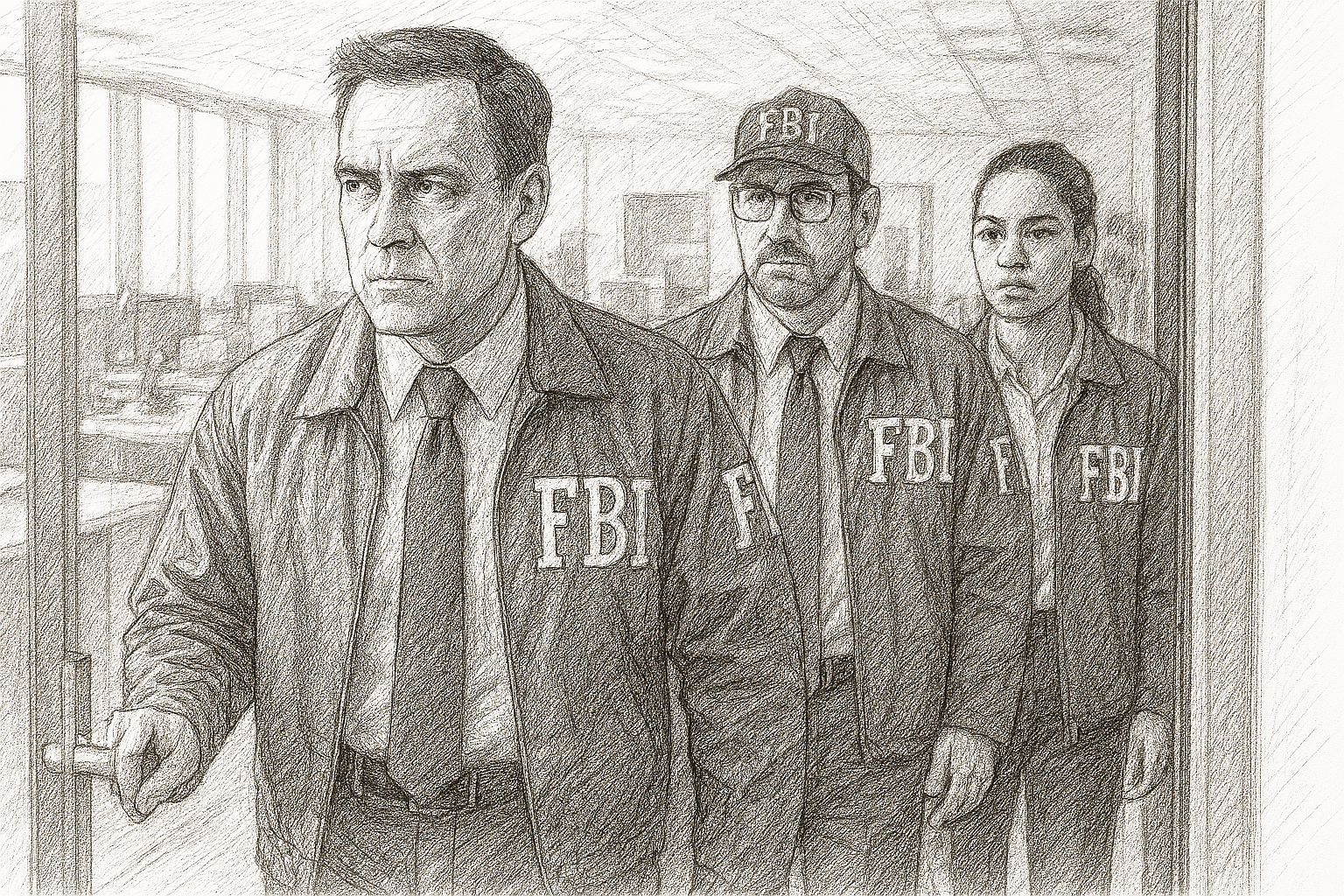
The immediate story centers on Wednesday’s FBI search warrant execution at the Fulton County Elections Hub and Operations Center, where approximately 700 boxes of materials were seized (ABC News 29 Jan 2026), including all physical ballots, tabulator tapes, and ballot images from the 2020 election. What made this operation particularly extraordinary was the presence of Director of National Intelligence Tulsi Gabbard and FBI Co-Deputy Director Andrew Bailey (The Hill 29 Jan 2026) at what would normally be a routine law enforcement action. Gabbard’s involvement is especially significant given that she has spent months investigating the 2020 election despite holding a position typically focused on foreign intelligence threats, according to reporting by the Wall Street Journal (29 Jan 2026).
The 2020 election in Georgia has already been described as “the most scrutinized, most litigated, most reviewed, most recounted election in American history and perhaps in world history” (CNN 29 Jan 2026) by David Becker of the Center for Election Innovation and Research. Georgia officials conducted multiple audits and recounts, all of which confirmed Joe Biden’s victory. Yet Trump signaled what was coming when he told business leaders at the World Economic Forum in Davos that people would soon be prosecuted for what he called a rigged election.
The larger agenda becomes clearer when we examine the administration’s simultaneous actions across multiple fronts. Since May 2025, the Justice Department has demanded full, unredacted voter rolls from at least 44 states and the District of Columbia, seeking driver’s license and partial Social Security numbers (Brennan Center 16 Jan 2026). When states refused these unprecedented requests, the administration responded with lawsuits against 24 jurisdictions. Federal judges in both California and Oregon have already rejected these demands, with California’s Judge David Carter (15 Jan 2026) describing the effort as a “fishing expedition” and warning that centralizing such information would have a chilling effect on voter registration.
Multiple election officials and legal experts have expressed alarm that this represents not just an obsession with relitigating 2020, but preparation for interfering with the 2026 midterms. Noting that Trump contemplated using the military to seize voting machines after his 2020 loss, some worry he’s laying the groundwork for a similar maneuver in the fall (PBS 29 Jan 2026, Philadelphia Inquirer 29 Jan 2026). Kristin Nabers of All Voting Is Local warned that Georgia serves as a blueprint, asking what would stop the administration from taking election materials from other states after future losses.
The administration has systematically dismantled election security infrastructure while installing election deniers in key positions. The Trump administration has hired people in election roles who denied Trump’s 2020 loss or spread falsehoods about voting, including Heather Honey in an election integrity role at Homeland Security and Marci McCarthy as the CISA spokesperson (PolitiFact 3 Nov 2025). The cybersecurity efforts that protected the 2024 election from foreign interference have been gutted, according to CNN’s reporting (28 Jan 2026).
Additional pressure tactics have emerged beyond the voter roll lawsuits. Attorney General Pam Bondi sent a letter to Minnesota that election officials characterized as a ransom note, appearing to link immigration enforcement actions to compliance with federal demands for voter data. Trump has also issued executive orders attempting to require proof of citizenship to vote, though legal challenges have blocked implementation. The administration has threatened criminal prosecution of election officials who administered the 2020 election, with Trump himself stating that those who “did this to us should go to jail,” according to the Brennan Center (3 Aug 2025).
The statutory basis for all this activity is legally dubious. Courts have questioned whether the Civil Rights Act was meant to be used as a catch-all for the Justice Department to demand full-scale voter records without allegations of racial discrimination (CNN 15 Jan 2026). The Department of Justice has shifted its legal theories multiple times, dropping claims under the National Voter Registration Act and Help America Vote Act to rely solely on the Civil Rights Act provision, suggesting weakness in their original arguments.
What makes this particularly dangerous for future elections is the potential for what experts call “poisoning the well.” David Becker suggested that rather than pursuing legitimate legal remedies through courts, this is more about poisoning the well for 2026 (PBS 29 Jan 2026; Philadelphia Inquirer 29 Jan 2026). The administration appears to be creating a narrative of election fraud that can be deployed if Republicans lose control of Congress in November, while simultaneously using federal power to intimidate election officials and potentially interfere with vote counting.
Georgia Senator Jon Ossoff called the Fulton County raid a “seismic event” and “a shot across the bow at the midterm elections,” warning that people should be prepared for “all kinds of schemes and shenanigans” (Common Dreams 29 Jan 2026). Fulton County Commissioner Mo Ivory was even more direct, stating that what’s happening in Fulton County “is coming to a place near you. This is the beginning of the chaos of 2026 that is about to ensue.”
The constitutional framework is clear: states, not the federal government, run elections. Yet this administration is attempting to centralize control over election administration in ways that legal scholars describe as unprecedented. Rick Hasen, a UCLA law professor, noted that while Trump has obsessions like many people, he’s the only one who has the full power of the United States government behind him.
For those seeking to understand the full scope, the Brennan Center for Justice maintains a comprehensive tracker of Justice Department requests and has documented the administration’s broader campaign to undermine elections. CNN’s analysis by Zachary B. Wolf provides important context on how election conspiracies could affect the midterms, while reporting from PBS NewsHour and Slate explores whether this represents a test run for future interference.
The pattern that emerges is one of an administration that has refused to accept the legitimate results of the 2020 election now using federal power to simultaneously investigate that settled contest while positioning itself to challenge or interfere with the 2026 midterms should Republicans face electoral losses. Whether this represents preparation for post-election challenges, attempts to suppress Democratic turnout through intimidation, or efforts to justify federal intervention in vote counting remains to be seen. What’s clear is that the obsession with Fulton County represents something far more consequential than historical grievance—it appears to be prologue.
[End]
Filed under: Uncategorized |


 Educational Technology and Change Journal

Leave a comment