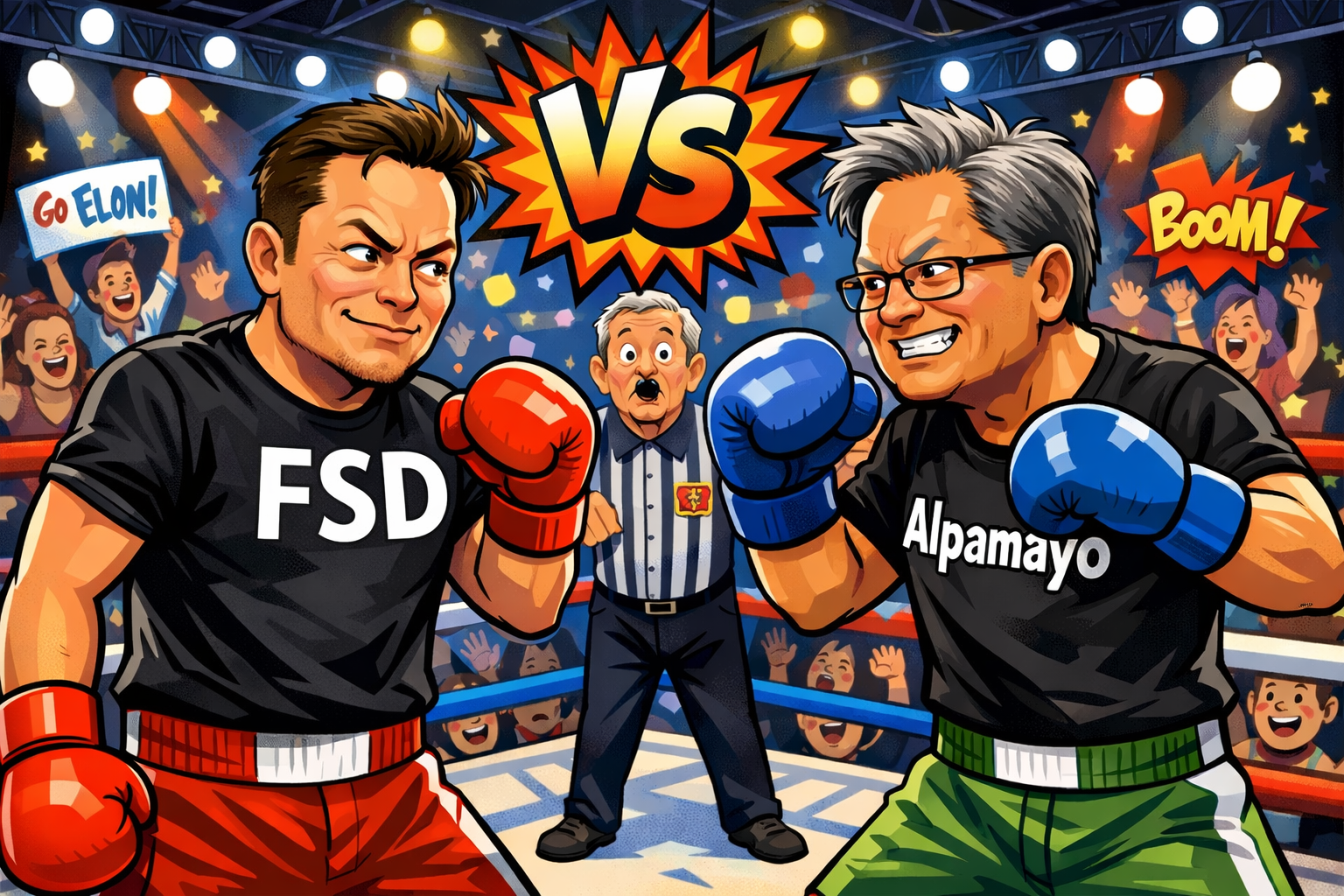
The emergence of Nvidia’s Alpamayo platform marks a significant shift in the competitive landscape of autonomous driving, setting up a clash of philosophies between the established, data-driven approach of Tesla and Nvidia’s new, reasoning-based vision. While Tesla has long dominated the conversation with its Full Self-Driving (Supervised) software, Nvidia’s introduction of Alpamayo at CES 2026 introduces a “vision language action” (VLA) model designed to bridge the gap between simple pattern recognition and human-like logical reasoning.
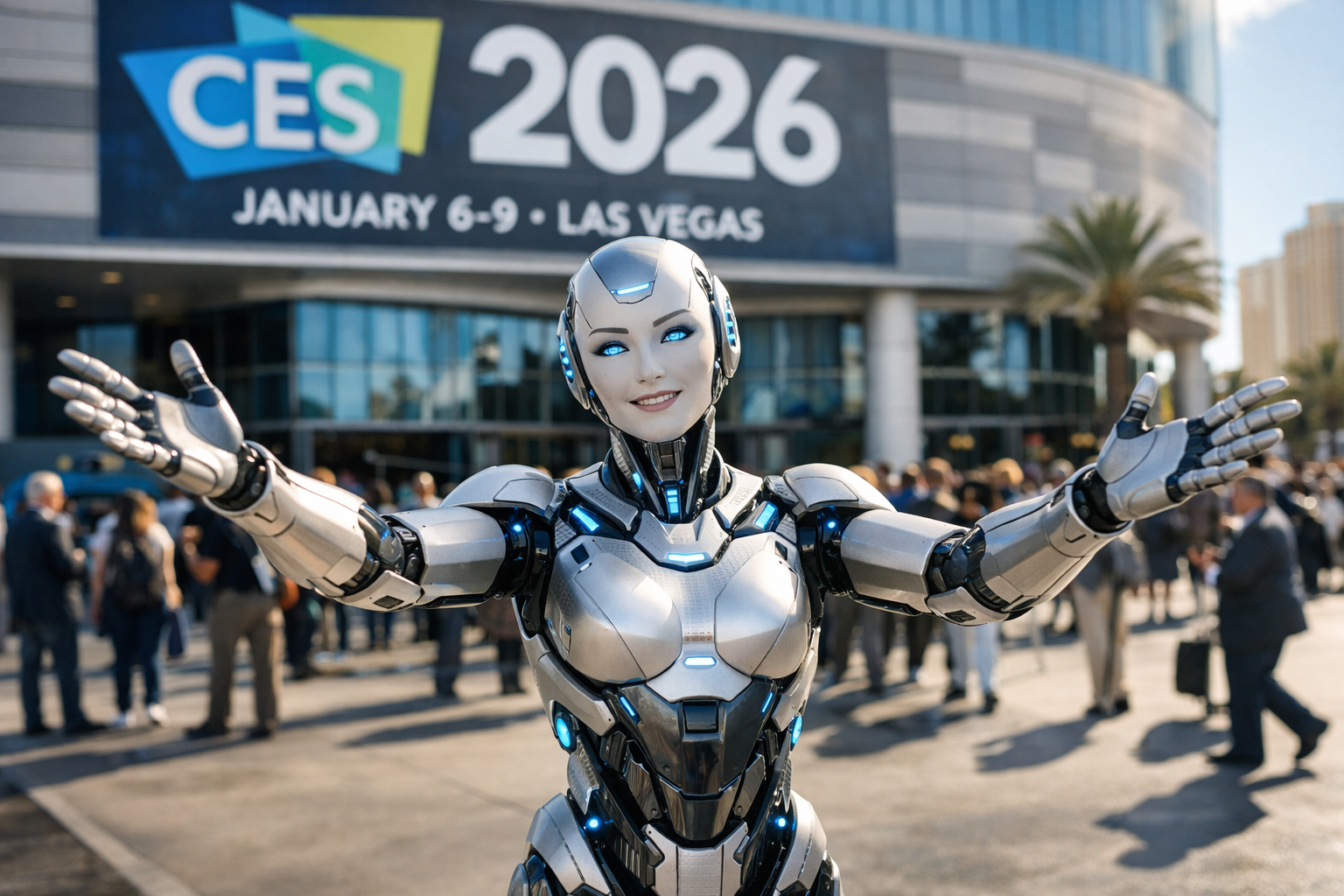
From the first two days of CES 2026 (January 6-9) in Las Vegas, Claude selected the following five innovations as important harbingers of AI’s trajectory in 2026 and beyond:
NVIDIA’s Neural Rendering Revolution (DLSS 4.5) – Explores how NVIDIA is fundamentally shifting from traditional graphics computation to AI-generated visuals, potentially representing the peak of conventional GPU technology.
Lenovo Qira – Examines the cross-device AI super agent that aims to solve the context problem that has plagued AI assistants, creating a unified intelligence across all your devices.
Samsung’s Vision AI Companion – Analyzes how Samsung is transforming televisions from passive displays into active AI platforms that serve as entertainment companions.
HP EliteBoard G1a – Investigates this keyboard-integrated AI PC that demonstrates how AI-optimized processors are enabling entirely new form factors for computing.
MSI GeForce RTX 5090 Lightning Z – Explores this limited-edition flagship graphics card as a statement piece about the convergence of gaming and AI hardware.
Best Case Scenario: A Path to Democratic Renewal and Economic Revival in Venezuela
In the wake of President Donald Trump’s audacious military incursion into Venezuela on January 3, 2026, which resulted in the capture and arrest of Nicolás Maduro and his wife Cilia Flores, the United States finds itself at a pivotal juncture in Latin American geopolitics. This operation, executed with precision by U.S. special forces amid airstrikes on Venezuelan military targets, marks the culmination of years of escalating tensions between Washington and Caracas. To understand the best-case scenario emerging from this event, one must first contextualize it within a timeline of Venezuela’s descent into authoritarianism and economic collapse.
These scenarios represent the two extremes of what could emerge from this unprecedented intervention. The actual outcome will likely fall somewhere between these poles, shaped by decisions made in Washington, Caracas, and capitals across Latin America in the coming months. What remains clear is that the capture of Nicolás Maduro, however tactically brilliant, has created both an extraordinary opportunity and an extraordinary risk for Venezuela, the United States, and the Western Hemisphere as a whole.
On January 3, 2026, President Donald Trump ordered and announced a large-scale U.S. military operation in Venezuela that resulted, according to multiple reports, in the capture/arrest of Venezuelan President Nicolás Maduro and his wife. The announcements, reactions, and geopolitical context are unfolding. Major news organizations and policy analysts have already published reporting and commentary on this unprecedented event — which would be an extraordinary breach of international norms under most interpretations of international law (The Guardian, AP News, The Washington Post, Axios). Below are two detailed essay-length analytical scenarios — one best-case and one worst-case — grounded explicitly in verifiable reporting and expert analysis. Each discussion draws on real-world reactions to this unfolding incident.
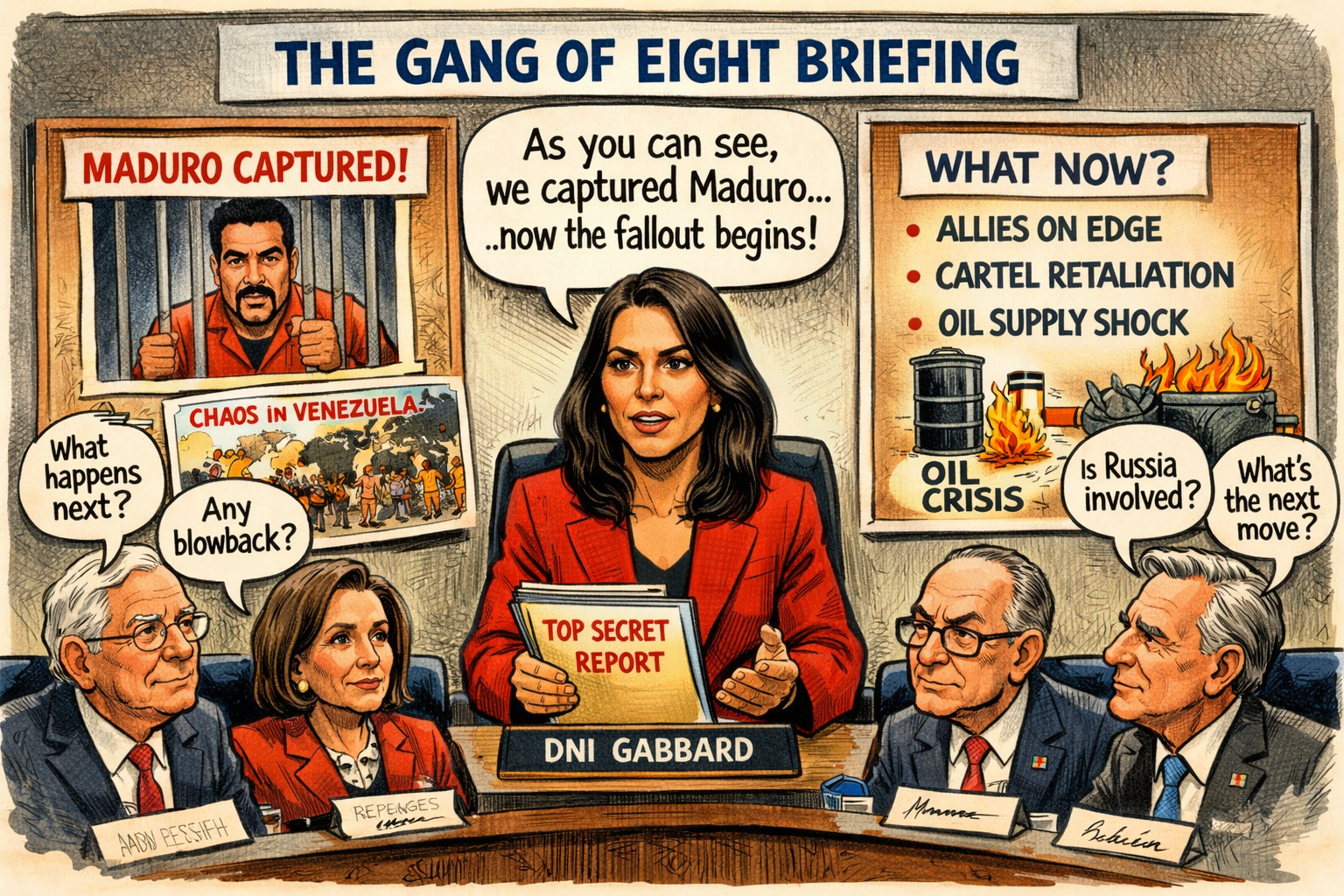
As of January 3, 2026, the latest verifiable news indicates that while a major U.S. military operation has taken place in Venezuela, Tulsi Gabbard, the Director of National Intelligence (DNI), has remained notably silent1.
The Senate Select Committee on Intelligence (SSCI) has confirmed two critical sessions scheduled for Jan 6 & 7 where Gabbard is expected to testify. Image created by ChatGPT.
Issue 1: AI shifting from experiments to core institutional strategy
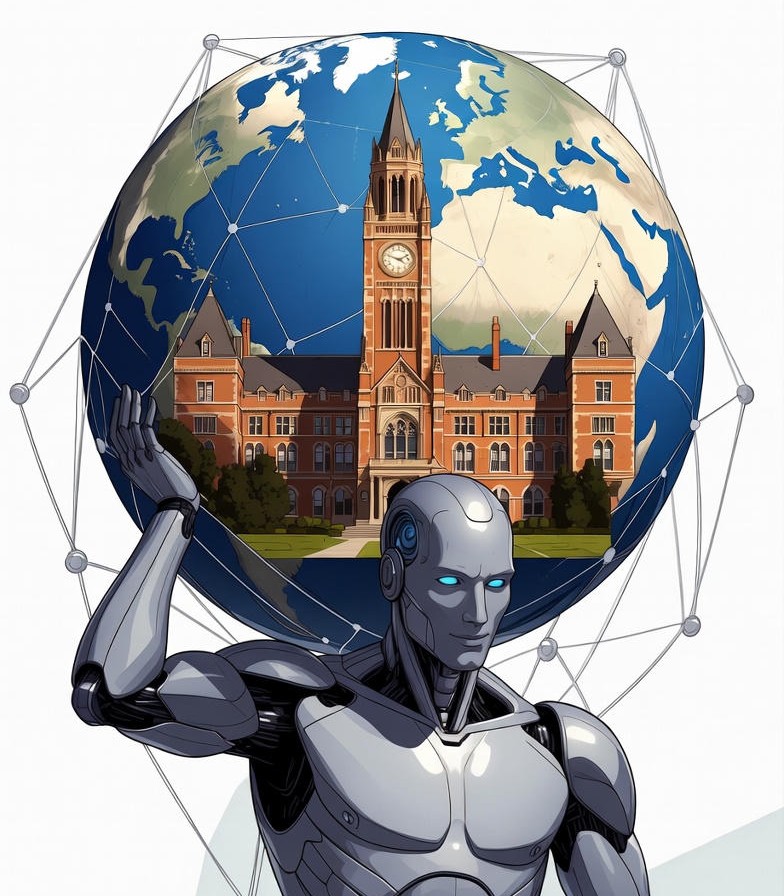
A defining edtech issue for January 2026 is the transition from scattered AI experiments to AI as a pillar of institutional strategy. Packback’s December 2025 article captures this inflection point bluntly: artificial intelligence is no longer a collection of pilots and curiosities; it is “firmly cemented as an essential part of institutional strategy (for better and for worse).” This shift fundamentally changes the stakes. Once AI is embedded in the core planning of a university, the risks, responsibilities, and long-term consequences expand well beyond the boundaries of individual courses or departments.












 Educational Technology and Change Journal
