


By Jim Shimabukuro (assisted by Gemini)
Editor
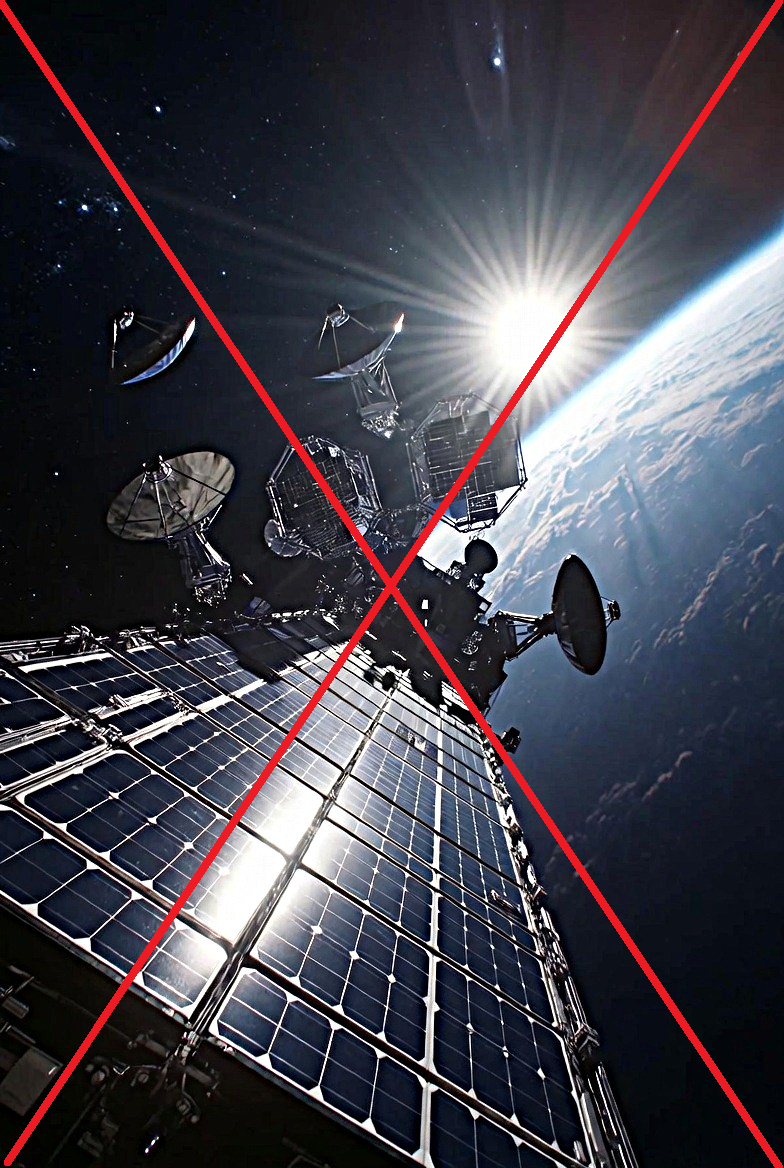
The proposition of relocating AI data centers to orbit faces significant skepticism from leading figures in aerospace engineering, climate science, and cloud infrastructure, many of whom argue that the physical and economic barriers remain insurmountable within Musk’s projected timeline. Dr. Josef Aschbacher, Director General of the European Space Agency (ESA), has expressed profound caution regarding the environmental and operational logistics of such a shift. Aschbacher has noted that while space-based infrastructure is evolving, the “unprecedented thermal management challenges” posed by high-density AI chips in a vacuum—where heat can only be dissipated via radiation rather than convection—make the immediate scalability of orbital compute centers highly questionable.1
Furthermore, Peter DeSantis, Senior Vice President of AWS Utility Computing and a primary architect of global cloud infrastructure, has cast doubt on the economic viability of space-based AI compared to terrestrial advancements. DeSantis argues that “the latency penalties and the sheer mass-to-orbit costs” associated with the massive GPU clusters required for modern LLMs currently outweigh any potential savings from solar constancy, suggesting that earthbound efficiency gains in liquid cooling and modular nuclear power remain the more logical path for the next decade.2
From a sustainability perspective, critics emphasize that moving the power burden to space does not eliminate the environmental footprint of AI but merely shifts and potentially complicates it. Dr. Moriba Jah, an associate professor of Aerospace Engineering at the University of Texas at Austin and a leading expert on space debris, has warned that a massive influx of heavy data-center satellites would exacerbate the “Kessler Syndrome” risk, creating a hazardous orbital environment that could jeopardize the very connectivity these centers require. Jah has remarked that “the orbital commons is already at a breaking point,” and launching the volume of hardware necessary for meaningful AI processing could lead to an “irreversible crowding of Low Earth Orbit.”3
Adding to this, Dr. Jonathan McDowell of the Harvard-Smithsonian Center for Astrophysics, a prominent tracker of satellite constellations, remains skeptical of the “two to three year” window. McDowell points out that the “reentry footprint and chemical impact on the upper atmosphere” of short-lived, high-turnover AI hardware would introduce new, poorly understood atmospheric risks that current regulations are not prepared to handle, rendering the timeline for widespread adoption “optimistic to the point of being unrealistic.”4
Finally, the technical hurdle of maintenance and hardware degradation presents a “death knell” for current orbital AI theories, according to Gwynne Shotwell’s industry contemporaries, such as Peter Beck, CEO of Rocket Lab. While Beck acknowledges the potential for specialized space applications, he has expressed skepticism toward the idea of space replacing terrestrial data centers for general-purpose AI. Beck argues that “the inability to perform hands-on maintenance on a fried H100 or Blackwell chip” means that the reliability of an orbital data center would be significantly lower than a ground-based facility, where hardware is swapped and upgraded daily.5 He suggests that until robotic servicing is perfected and significantly cheaper, the “orbital data center remains a niche experiment rather than a scalable replacement” for Earth’s power-hungry infrastructure.6
References:
- ESA Director General on the Future of Space Logistics (2025) – https://www.esa.int/About_Us/Corporate_news/Director_General_Outlook_2025
- AWS Cloud Infrastructure Summit 2025 Keynote – https://aws.amazon.com/executive-insights/cloud-infrastructure-future-2025/
- Space Safety and Sustainability Forum 2026 Proceedings – https://www.spacesafety.org/forum-2026-orbital-congestion-reports/
- Harvard-Smithsonian Center for Astrophysics: The Environmental Impact of Mega-Constellations – https://pweb.cfa.harvard.edu/news/2026-report-atmospheric-reentry-risks/
- Rocket Lab CEO Peter Beck on Orbital Manufacturing and Computing (2025) – https://www.rocketlabusa.com/updates/peter-beck-2025-market-analysis/
- SpaceNews: The Economic Reality of Space-Based Data Centers (Feb 2026) – https://spacenews.com/the-economic-reality-of-space-based-data-centers-2026/
Filed under: Uncategorized |


 Educational Technology and Change Journal

Leave a comment