





By Jim Shimabukuro (assisted by Claude)
Editor
[Related: Operation Epic Fury: The Official Rationale, 4 March 2026]
1. The Attack Violated the UN Charter and International Law
The most foundational and broadly shared criticism of Operation Epic Fury is that it constitutes an illegal use of force under international law. Article 2(4) of the United Nations Charter prohibits the threat or use of force against the territorial integrity or political independence of any state. Two exceptions exist: Security Council authorization under Chapter VII, and individual or collective self-defense in response to an armed attack under Article 51. Neither applies here. The Security Council did not authorize the use of force against Iran. The United States did not request such authorization. Iran was not attacking the United States or Israel at the time of the strikes.
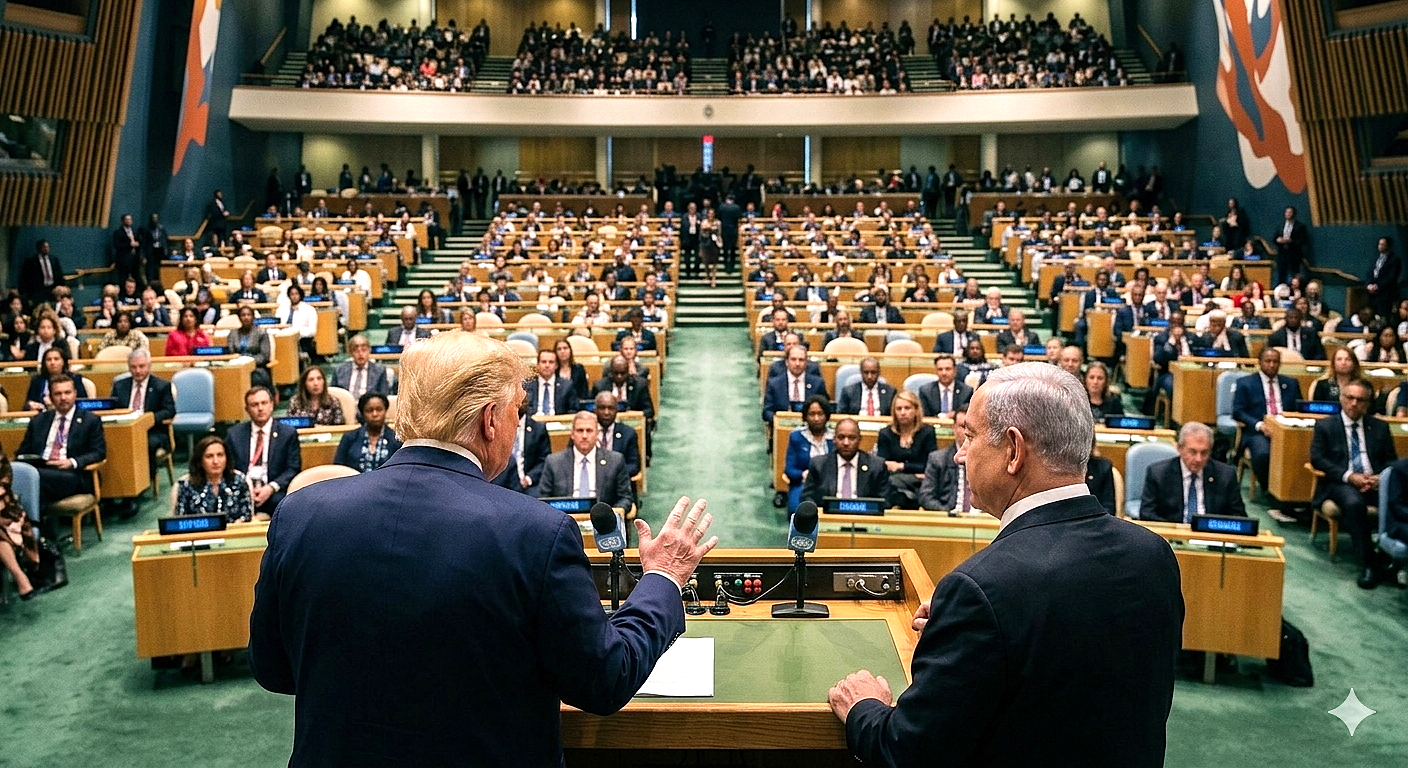
UN Secretary-General António Guterres made this case directly before the Security Council on the day of the strikes. He cited Article 2 of the Charter, which states that “All Members shall refrain in their international relations from the threat or use of force against the territorial integrity or political independence of any State,” and declared that international law and international humanitarian law must always be respected. Guterres stated that the U.S. and Israeli airstrikes violated international law, including the UN Charter.
Russia’s UN Ambassador Vassily Nebenzia was more pointed in his condemnation. He called the US-Israeli strikes “yet another unprovoked act of armed aggression against a sovereign and independent Member State, in violation of the UN Charter and international law,” describing the move as a “betrayal of diplomacy.” China’s Ambassador Fu Cong, in turn, described the strikes as “brazen,” condemning the threat of force to settle any international dispute and calling for the “sovereignty, security, and territorial integrity of Iran and other regional countries to be respected.”
International law scholar Davit Khachatryan, writing for the Center for International Policy, argues that the regime-change objective makes the legal breach even more categorical. The stated U.S. objective of regime change, explicitly framed by President Trump as a goal of the operation and echoed by Israeli Prime Minister Netanyahu, who declared the aim was to “remove the existential threat posed by the terrorist regime in Iran,” constitutes an independent violation of international law. The prohibition on forcible regime change flows directly from Article 2(4)’s protection of “political independence” and from the customary norm of non-intervention. It is, in the language of the International Law Commission, a peremptory norm from which no derogation is permitted.
(Sources: UN Secretary-General Remarks to the Security Council, February 28, 2026 | PBS NewsHour — UN chief condemns U.S.-Israeli attacks | Khachatryan, “Operation Epic Fury, Regime Change, and the Collapse of Legal Constraint,” Center for International Policy | UN News — “Iran Strikes Squandered a Chance for Diplomacy”)
2. Diplomacy Was Actively Underway — and Deliberately Abandoned
Perhaps the most damning single criticism of the operation is that it was launched in the midst of active and promising diplomatic negotiations. The operation came two days after the most substantive round of U.S.-Iran nuclear negotiations in years had concluded in Geneva, with both parties agreeing to continue talks. Within hours of those assurances, the bombs fell.
The Omani mediator, who had been facilitating talks between Washington and Tehran for weeks, was blunt in his assessment. Oman’s Foreign Minister Badr Albusaidi said there had been active and serious nuclear talks taking place, and that he was “dismayed” by the coordinated Israeli-U.S. attacks. He said the interests of the United States were not served by the strikes and urged the U.S. not to “get sucked in further,” adding “this is not your war.” He also told CBS News that Iran had agreed to zero stockpiling of nuclear enrichment.
UN Secretary-General Guterres reinforced this point directly before the Security Council. He noted that preparations had been made for technical talks in Vienna the following week, followed by a new round of political talks, saying: “I deeply regret that this opportunity of diplomacy has been squandered.”
Khachatryan argues that launching strikes in the middle of negotiations violates the most basic obligations of good-faith engagement under the Charter framework itself. The strikes were launched in violation of Article 2(2) of the Charter, which requires good faith in the fulfillment of Charter obligations. Launching military operations during active diplomatic negotiations, operations that the U.S. president had, days earlier, indicated would wait, is a breach of the most elemental duty of good faith that the Charter’s architecture depends upon.
Spain’s Prime Minister Pedro Sánchez gave one of the clearest official statements rejecting the military path taken. He said his country rejected “the unilateral military action by the United States and Israel, which represents an escalation and contributes to a more uncertain and hostile international order,” adding: “We demand immediate de-escalation and full respect for international law. It is time to resume dialogue and achieve a lasting political solution for the region.”
(Sources: NPR — “Here’s How World Leaders Are Reacting to Operation ‘Epic Fury'” | UN Secretary-General Remarks to the Security Council | Khachatryan, Center for International Policy | UN Meetings Coverage — Security Council Emergency Session)
3. The “Imminent Threat” Justification Was False and Contradicted by U.S. Intelligence
The administration’s central legal basis for bypassing both Congress and the UN — the claim that Iran posed an imminent threat requiring immediate military action — was undermined almost immediately by the administration’s own contradictions and by contrary intelligence assessments.
As the ETC Journal’s own account of “The Official Rationale” documents, the preemption argument quickly fell apart. Trump administration officials privately admitted to Congress there was no intelligence suggesting Iran planned to attack the United States first, unraveling the central rationale used to launch the operation. Senator Mark Warner of Virginia, the top Democrat on the Senate Intelligence Committee, told CNN that he “saw no evidence that Iran was on the verge of launching any kind of preemptive strike against the United States of America.”
The administration’s own prior intelligence assessments stood in direct contradiction to the claims used to justify the strikes. The U.S. Director of National Intelligence had testified as recently as March 2025 that Iran was not building a nuclear weapon and its supreme leader had not reauthorized the program suspended in 2003. The IAEA affirmed it had found no proof of a systematic weapons effort. Russia’s ambassador to the Security Council drew the uncomfortable historical parallel directly, recalling that in 2003, the United States had claimed there were weapons of mass destruction in Iraq, and dismissed the assertion that the current operation was aimed at preventing Iran from acquiring nuclear weapons.
Such claims by American officials echoed false allegations of WMDs in Iraq prior to the 2003 invasion. American intelligence reports suggested that alleged threats of long-range Iranian ballistic missiles were unfounded, with such capabilities requiring until 2035 should Iran have decided to pursue the project.
The Stimson Center’s expert analysis was direct in its rejection of the imminent-threat framing. The operation was characterized as a premeditated, preventive war, not a defensive action to address an imminent threat to the United States. The Constitution’s Article II authority pertaining to the executive branch has long been understood to allow the president to repel sudden attacks — it was never intended to allow a single person to launch the entire country into a war.
(Sources: ETC Journal — “Operation Epic Fury: The Official Rationale” | Stimson Center — “Experts React: What the Epic Fury Iran Strikes Signal to the World” | PBS NewsHour — UN Emergency Security Council Meeting | Khachatryan, Center for International Policy)
4. The Attack Was Unconstitutional — It Bypassed Congress and the War Powers Resolution
A powerful domestic legal critique runs alongside the international one: Operation Epic Fury was launched without congressional authorization, in potential violation of both the Constitution and the War Powers Resolution of 1973. President Trump initiated a war against Iran without congressional approval, without a serious public debate, and in the face of overwhelming public opposition.
The War Powers Resolution of 1973 requires that presidentially initiated hostilities be reported to Congress within 48 hours and terminated within 60 days, absent explicit Congressional authorization. Operation Epic Fury has not been authorized by Congress. Senate Democrats moved quickly to force accountability. The Senate voted 47–53 on a war powers resolution put forward by Senator Tim Kaine, seeking to stop the use of U.S. military force in Iran without congressional authorization, with Republican Senator Rand Paul of Kentucky voting in support of the measure and Pennsylvania Senator John Fetterman breaking from Democrats to oppose it.
Congressional Democrats were unequivocal in their criticisms. House Minority Leader Hakeem Jeffries said “Congress must vote on a War Powers resolution immediately.” Senator Mark Warner called on the administration to “come forward with a clear legal justification, a defined end state, and a plan that avoids dragging the United States into yet another costly and unnecessary war.” Senator Ruben Gallego, a veteran who served in Iraq, criticized the attack saying “I lost friends in Iraq to an illegal war.”
The American-Arab Anti-Discrimination Committee (ADC) framed the constitutional failure in broader terms, warning that military campaigns like Epic Fury are routinely used to justify expanded surveillance, censorship, political blacklists, attacks on protest, and “security” measures that erode due process and fundamental freedoms, and that such measures never stay confined but eventually target all Americans.
The Center for International Policy also noted that civil society institutions had already established the legal framework for a congressional challenge. The New York City Bar Association had called explicitly on Congress to halt the administration’s violations of U.S. and international law — a call that applied with greater force to Iran than to the earlier Venezuela operations.
(Sources: Breaking Defense — “Iran War Powers Resolution Fails in Senate” | FOX 13 Tampa Bay — “Lawmakers React to ‘Operation Epic Fury'” | ADC — “Congress Must Reject Operation Epic Fury” | Stimson Center — Experts React | Khachatryan, Center for International Policy)
5. Regime Change Has No Viable Endpoint — and History Condemns the Strategy
The fifth and most strategic criticism is that Operation Epic Fury, whatever its military effectiveness in the short term, is built on a fantasy with no precedent for success: that aerial bombardment can produce a stable regime change in a country of 90 million people with a sophisticated military, deep regional networks, and a powerful revolutionary political culture.
Stimson Center analysts were unsparing in their assessment. No matter how precise or devastating, air strikes alone cannot topple a government, and Iran in 2026 is likely to emerge battered but not broken — a costly example of American hubris and the limits of airpower.
Khachatryan grounds this argument in comparative historical evidence. The 2003 invasion of Iraq, similarly framed as targeting a dangerous regime with weapons of mass destruction, produced a multi-decade military presence, hundreds of thousands of civilian casualties, a regional security vacuum exploited by non-state actors, and a country that has never returned to the stability that even its imperfect prior condition represented. Libya in 2011 demonstrated that air operations designed to facilitate regime change produce state collapse, not democratic transition.
Iran presents even more severe strategic challenges than either Iraq or Libya. Iran is a country of almost 90 million people, with a sophisticated military establishment, an extensive regional network of proxy forces, missile capabilities capable of striking U.S. bases throughout the Middle East, and a political culture that has historically rallied around national sovereignty under foreign pressure. The killing of Khamenei does not eliminate the Islamic Revolutionary Guard Corps. It does not dissolve the Quds Force. It does not prevent successor leadership from emerging. It may, as multiple analysts have noted, accelerate Iran’s determination to acquire a nuclear deterrent — the very outcome the operation was ostensibly designed to prevent.
Khachatryan also makes the broader systemic point that this operation’s precedent-setting danger extends well beyond Iran and the Middle East. The cumulative effect is the construction of a new operational norm — one in which the most militarily powerful state on earth reserves to itself the right to use lethal force anywhere, against anyone, for purposes it defines unilaterally, accountable to no external legal authority. Every precedent accepted becomes a precedent available. China, Russia, India, and regional powers are watching. The erosion of the jus ad bellum framework is a problem for every state that has historically relied on that framework for its own security.
UN Secretary-General Guterres summarized the structural risk in his Security Council remarks: military action carries the risk of “igniting a chain of events that no one can control in the most volatile” region of the world.
(Sources: Khachatryan, “Operation Epic Fury, Regime Change, and the Collapse of Legal Constraint,” Center for International Policy | Stimson Center — “Experts React: What the Epic Fury Iran Strikes Signal to the World” | UN Secretary-General Remarks to the Security Council | UN Geneva — “Bombing of Iran and Retaliatory Strikes: A Grave Threat”)
Editorial note: This report draws on official statements by the UN Secretary-General, the UN Security Council, the governments of Russia, China, Spain, Oman, and U.S. congressional leaders, as well as legal analysis from the Center for International Policy and strategic analysis from the Stimson Center. It is intended as a counter-document to the ETC Journal’s “Operation Epic Fury: The Official Rationale” (March 4, 2026), which should be consulted for the full statement of the U.S.-Israeli case.
[End]
Filed under: Uncategorized |


 Educational Technology and Change Journal

Leave a comment