





By Jim Shimabukuro (assisted by Perplexity)
Editor
Bresnick, Probasco, and McFaul’s core thesis in “China’s AI Arsenal: The PLA’s Tech Strategy Is Working” (2 March 2026) is that the People’s Liberation Army has moved beyond aspirational rhetoric about “intelligentized warfare” and is now systematically translating AI ambitions into concrete capabilities across command-and-control, sensing, targeting, and unmanned systems, in ways that are beginning to work at scale and that the United States has not yet fully internalized in its own strategy.1 This argument builds directly on their recent empirical mapping of more than 9,000 AI-related PLA requests for proposals and nearly 3,000 AI-related defense contract awards between 2023 and 2024, which reveal a broad, coherent, and rapidly growing demand signal for AI in every warfighting domain.2,3
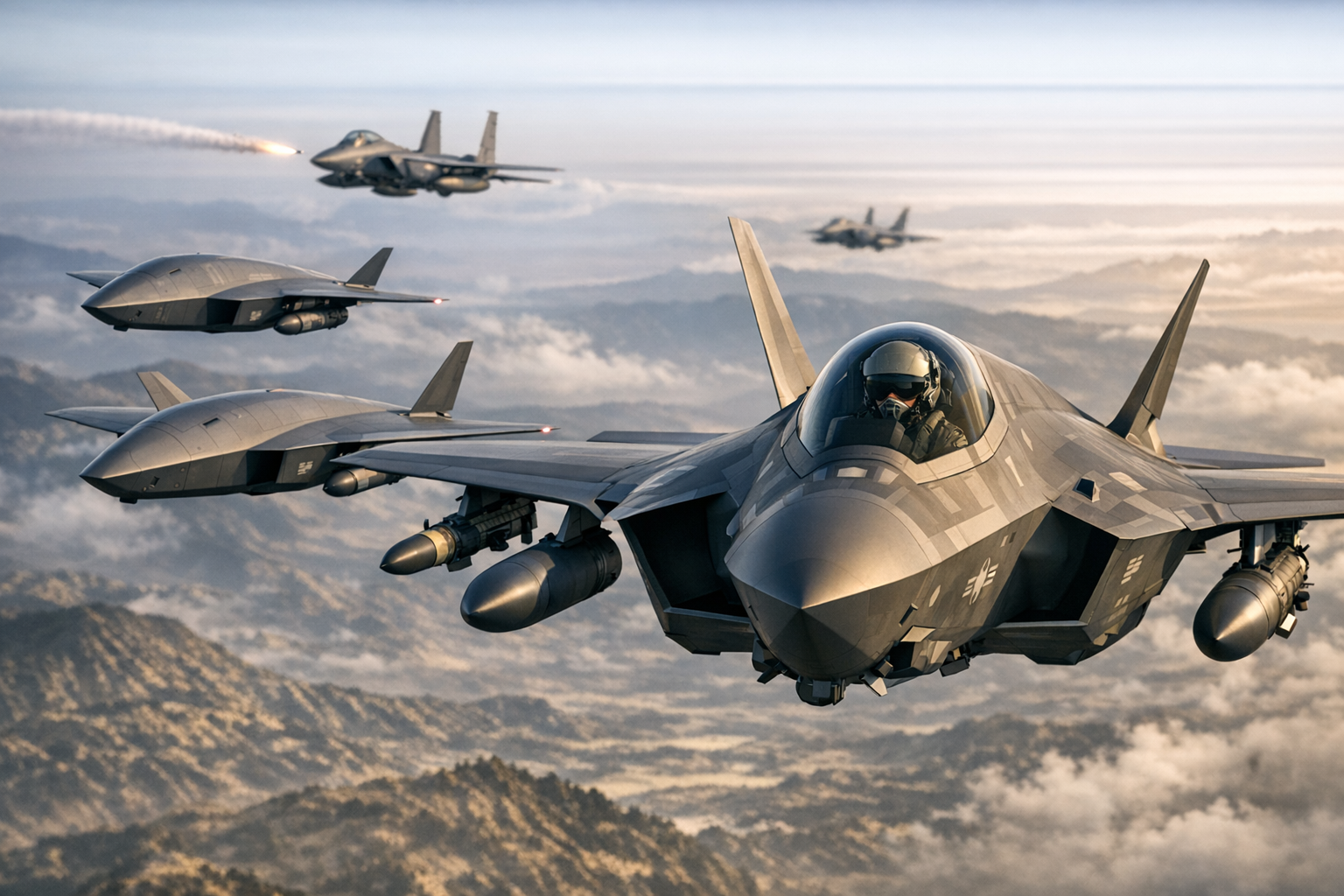
To substantiate the claim that the PLA’s AI strategy is working, the authors point first to the breadth and density of AI-related demand on the Chinese military side, especially in what they frame as C5ISRT: command, control, communications, computers, cyber, intelligence, surveillance, reconnaissance, and targeting. Their February 2026 report shows PLA organizations seeking AI decision-support tools, advanced sensor-processing and data-fusion algorithms, target-recognition and de-camouflage systems, and diverse applications of natural language processing, computer vision, and generative models to accelerate and improve battlefield decision-making. Across land, air, sea, space, cyber, and the “cognitive domain,” they find PLA units trying to generate, augment, and fuse ever larger volumes of data to shorten decision cycles and increase the precision and tempo of operations, including through facial and gait recognition, digital forensics, and deepfake generation and detection for psychological and information operations.2 This cumulative pattern, rather than any single program, underwrites the article’s claim that AI is now deeply embedded in how the PLA is trying to fight.1,2
A second layer of evidence in their broader work concerns the institutional machinery that connects China’s civilian tech sector to military AI projects, which undergirds the Foreign Affairs claim that the PLA can increasingly turn commercial AI advances into operational capabilities.1,3 Their September 2025 study of almost 2,900 AI-related PLA contract awards finds that Beijing’s military–civil fusion framework has, in practice, pulled a surprisingly wide range of private and quasi-private firms into defense AI work, complicating any U.S. strategy that assumes a small, easily targetable set of “traditional” defense primes.³ The authors argue that this diversified AI defense industrial base suggests that Chinese leaders have, to some extent, succeeded in fostering competition and innovation within a historically sclerotic defense sector, and that this competitive ecosystem makes it harder for export controls and sanctions alone to slow PLA AI modernization.3 In the Foreign Affairs piece, this translates into the claim that the PLA now has a functioning pipeline from large commercial model capabilities to tailored military applications, supported by policy and procurement mechanisms rather than ad hoc experiments.1,3
They also bolster their thesis by juxtaposing this progress against the PLA’s own publicly acknowledged AI roadblocks, which they document in earlier work. Chinese defense scholars and planners openly worry about problems in data quality and management, network and cyber security in high-intensity conflict, communications resilience, trustworthy and testable AI, and immature military standards and evaluation practices. Yet instead of treating these as reasons to dismiss Chinese military AI, the authors interpret them as evidence of an internal problem-solving agenda: PLA-affiliated experts identify obstacles—such as inadequate sensors, brittle networks, and unproven autonomous systems—and then link them to specific technologies that should overcome these issues.4 In the Foreign Affairs article, this becomes part of the “it’s working” claim: the PLA is not only buying AI but also iteratively diagnosing and trying to close critical gaps, including in human–machine teaming and command architectures for high-speed, AI-assisted operations.1,4
Another major plank of their argument is that PLA AI development is oriented toward a specific concept of future war—“systems warfare” or “intelligentized” conflict—in which winning hinges on degrading an opponent’s information, communications, and decision-making architecture while protecting one’s own.4 The RFP and contract data they analyze show AI being applied to target detection and recognition, time-series change analysis, sensor fusion, cyber operations, and cognitive domain operations, all aimed at faster and more precise disruption of an adversary’s kill chain.2,4 Bresnick and colleagues thus portray the PLA as building an AI-enabled ability to see, understand, and strike across domains faster than the opponent, rather than simply fielding isolated “killer robots.”1,2 In this context, the article’s reference to collaborative combat aircraft—autonomous jets operating alongside piloted aircraft to extend sensing, deliver weapons, and act as loyal wingmen—is not an isolated curiosity, but one tangible example of a broader PLA push toward manned–unmanned teaming and AI-managed swarms that can adapt to battle conditions with limited human oversight.1,5
Several recent publications from other institutions advance broadly similar theses about China’s military AI trajectory, though often with different emphases. The authors’ own CSET report “China’s Military AI Wish List” argues that PLA AI demand is wide-ranging and focused on C5ISRT functions that can compress decision timelines and improve targeting, reinforcing the idea that China is building an AI-empowered reconnaissance–strike complex rather than just isolated platforms.2 Their “Pulling Back the Curtain on China’s Military–Civil Fusion” similarly concludes that Beijing views AI as central to matching and surpassing U.S. warfighting capabilities and has built an institutional architecture to harness civilian AI firms at scale, again aligning with the Foreign Affairs claim that the strategy is starting to function as intended.3 Outside CSET, analyses such as CSIS’s 2025 “China’s Military in 10 Charts” describe a PLA that has already used sustained investment and structural reforms to overtake the United States numerically in key areas such as fleet size and to pursue advanced capabilities that could erode traditional U.S. advantages, implicitly supporting the view that Chinese modernization, including AI, is strategic and cumulative rather than scattershot.6 Aviation and defense reporting on PLA collaborative combat aircraft, such as FlightGlobal’s February 2026 piece, also echoes the idea that Chinese planners are moving toward relatively sophisticated manned–unmanned teaming concepts and robust datalinks that allow unmanned systems to re-network and continue missions autonomously if cut off from a human lead.5
What is relatively new and surprising in Bresnick et al.’s 2026 Foreign Affairs argument is the level of granularity and empirical backing behind the claim that the PLA’s AI strategy is “working,” and the implication that U.S. policy has not fully digested this shift.1,2 Unlike earlier discussions that alternated between alarmist narratives of an unstoppable AI juggernaut and skeptical accounts that highlighted Chinese technological and organizational shortcomings, their recent work marshals thousands of RFPs and contracts to show that PLA AI procurement is both broad and targeted, oriented squarely at enabling AI-assisted systems warfare and decision advantage.2,3 They also deepen the picture of military–civil fusion by showing that PLA AI contracts are spread across a wide array of civilian firms, suggesting a more complex and resilient defense industrial ecosystem than many Western observers assumed.3 Finally, by pairing evidence of rapid AI adoption in areas like decision-support, sensing, and collaborative combat aircraft with PLA self-critique about data, standards, and trustworthiness, they move the conversation away from simplistic “race” metaphors and toward a more nuanced assessment: China’s military AI project is neither frictionless nor stalled, but is progressing through a disciplined, problem-driven process that the United States needs to understand on its own terms.1,4,5
References
- “China’s AI Arsenal: The PLA’s Tech Strategy Is Working,” Foreign Affairs, 2 March 2026. https://www.foreignaffairs.com/china/chinas-artificial-intelligence-arsenal
- Emelia Probasco, Sam Bresnick, and Cole McFaul, “China’s Military AI Wish List,” Center for Security and Emerging Technology, February 2026. https://cset.georgetown.edu/publication/chinas-military-ai-wish-list/
- Cole McFaul, Sam Bresnick, and Daniel Chou, “Pulling Back the Curtain on China’s Military–Civil Fusion,” Center for Security and Emerging Technology, September 2025. https://cset.georgetown.edu/publication/pulling-back-the-curtain-on-chinas-military-civil-fusion/
- Sam Bresnick, “China’s Military AI Roadblocks: PRC Perspectives on Technological Challenges to Intelligentized Warfare,” Center for Security and Emerging Technology, June 2024. https://cset.georgetown.edu/publication/chinas-military-ai-roadblocks/
- Greg Waldron, “Inside the PLA’s Push for Collaborative Combat Aircraft,” FlightGlobal, 23 February 2026. https://www.flightglobal.com/military-uavs/inside-the-plas-push-for-collaborative-combat-aircraft/166398.article
- Matthew P. Funaiole, Brian Hart, and Bonny Lin et al., “China’s Military in 10 Charts,” Center for Strategic and International Studies, 8 February 2025. https://www.csis.org/analysis/chinas-military-10-charts
Filed under: Uncategorized |


 Educational Technology and Change Journal

Leave a comment