





By Jim Shimabukuro (assisted by Copilot)
Editor
Autonomous driving in early 2026 sits in a strange middle ground—no longer a sci‑fi promise, but still far from ubiquitous. In multiple U.S. and Chinese cities, you can already hail a driverless robotaxi or see a Class 8 truck moving freight with no one in the cab, yet these services remain tightly geofenced, heavily supervised, and politically fragile. Waymo now delivers on the order of 250,000 paid robotaxi rides per week across several U.S. cities, making it the clear U.S. leader in commercial Level 4 robotaxis, while global weekly robotaxi rides have climbed into the hundreds of thousands according to industry surveys tracking more than 700,000 fully autonomous rides per week worldwide.1,2,3 In parallel, China’s Baidu Apollo Go has matched or exceeded Waymo’s scale, also reaching roughly 250,000 weekly rides and more than 140 million driverless miles, underscoring how quickly Chinese robotaxi operators have moved under more centralized regulatory regimes.4,5
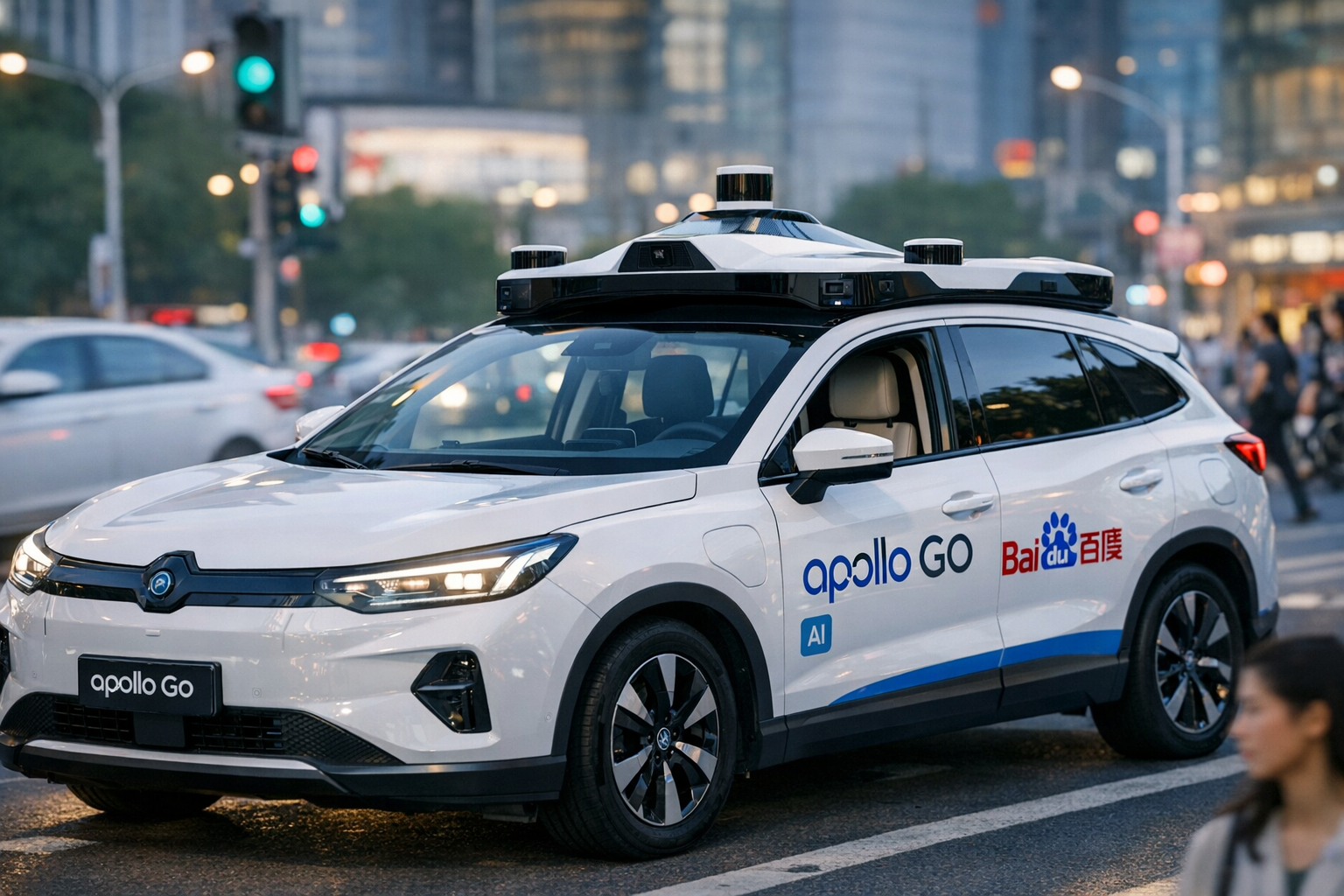
The competitive landscape today is defined by a handful of clear leaders and a long tail of niche or struggling players. In robotaxis, Waymo and Baidu’s Apollo Go are the two scale players, with Zoox emerging as a serious U.S. contender through public services in Las Vegas and parts of San Francisco, and with partnerships that leverage Amazon’s ecosystem.1,6 Tesla remains highly visible but controversial: its “Full Self‑Driving” is still a supervised Level 2/2+ driver‑assist system rather than a deployed, unsupervised robotaxi service, even as the company continues to promise a dedicated robotaxi vehicle and “unsupervised” operation on an aggressive timeline.3,6 In freight, Aurora has become the reference point, having launched a commercial driverless trucking service in Texas in 2025 and then rapidly expanding its driverless network to ten routes by early 2026, positioning itself as the first company to operate a regular, driverless Class 8 trucking service on U.S. public roads.7,8
At the same time, the last two years have shown how fragile these efforts can be. General Motors’ Cruise—once seen as a co‑leader with Waymo—was effectively shut down after a series of safety incidents and regulatory investigations, culminating in GM folding Cruise back into its broader AV efforts and U.S. regulators closing their probe only after the company ceased operations.9,10 That collapse has become a cautionary tale about scaling too fast, under‑investing in safety culture and transparency, and underestimating the political impact of even a small number of high‑profile crashes. Public agencies and city governments have responded by tightening oversight, demanding more data sharing, and in some cases pausing or limiting deployments, even as other jurisdictions actively court AV operators to attract investment and innovation.1,3
Despite the turbulence, the last 18–24 months have delivered real successes that would have sounded ambitious even a few years ago. Waymo and Apollo Go have turned robotaxis from pilot projects into everyday services for tens of thousands of riders per day, with hundreds of thousands of weekly trips and cumulative driverless miles well into nine‑figure territory.2,4,5 Aurora’s driverless freight operations between major Texas hubs show that long‑haul highway trucking—arguably an easier technical and regulatory problem than dense urban driving—can now be run as a commercial service, not just a demo.7,8 Industry analyses suggest that autonomous mobility is already generating billions of dollars in annual value across ride‑hailing pilots, logistics, and advanced driver‑assistance features, even though most deployments are still limited in geography and operating conditions.3,6
The obstacles, however, are just as real as the successes. Technically, edge‑case safety remains the central challenge: rare but severe scenarios involving pedestrians, emergency vehicles, unusual road layouts, or unpredictable human behavior still expose weaknesses in perception, prediction, and planning systems, as highlighted by the Cruise incidents and by occasional high‑profile robotaxi mishaps in San Francisco and other cities.1,9,10 Economically, the cost of sensors, compute, remote operations, and dense mapping makes unit economics difficult, especially when fleets are small and utilization is constrained by limited service areas and operating hours.3,6 Politically and socially, public trust is fragile; surveys show that many people remain wary of riding in a driverless vehicle, and local officials are quick to react to incidents with moratoria or stricter rules, creating a patchwork of regulations across U.S. states and between the U.S., Europe, and China.1,3,5
Looking ahead to the next 24 months, the most likely trajectory is steady, uneven expansion rather than a sudden, universal rollout. Analysts expect global robotaxi rides to continue growing rapidly, with weekly volumes potentially doubling as Waymo, Apollo Go, and a few others expand into additional cities and deepen coverage in existing markets, but still within carefully geofenced zones and under tight regulatory scrutiny.3,5,6 In the U.S., you can reasonably expect more cities in Texas, Florida, Arizona, and parts of California to see regular robotaxi service, while China will likely continue to push ahead with larger‑scale deployments in major urban clusters where national and municipal policies are aligned.1,3,5 Autonomous trucking is poised for even faster relative growth: Aurora and a small set of rivals are expected to extend driverless freight corridors across more of the Sun Belt and key interstate routes, integrating with major shippers and logistics providers as they prove reliability and cost advantages over human‑driven night runs.7,8
For privately owned consumer vehicles, the near‑term picture is more incremental. Over the next two years, you’re likely to see broader availability of advanced driver‑assist and limited conditional automation (e.g., hands‑off, eyes‑off in narrow highway scenarios) from premium automakers, but not a mass‑market, go‑anywhere self‑driving car you can buy and forget about.3 Regulatory bodies are moving cautiously, often requiring detailed safety cases, operational design domain definitions, and robust incident reporting before approving higher levels of automation, and that caution has only been reinforced by the Cruise experience and ongoing debates around Tesla’s supervised systems.3,9,10 Put simply, by early 2028 it is plausible that robotaxis and autonomous trucks will be a familiar, if still localized, part of urban mobility and freight in several regions, while most people will still drive—or at least supervise—their own cars. The revolution is happening, but it looks less like a sudden flip of a switch and more like a slow, negotiated expansion of autonomy, city by city and corridor by corridor.
References
- “Robotaxis: The latest developments,” Smart Cities Dive (tracker, updated March 2, 2026).
https://www.smartcitiesdive.com/news/robotaxis-latest-developments-tracker/700551(smartcitiesdive.com in Bing) - “Waymo reports 250,000 paid robotaxi rides per week in U.S.,” CNBC, April 24, 2025.
https://www.cnbc.com/2025/04/24/waymo-robotaxi-rides-per-week.html(cnbc.com in Bing) - “The future of the autonomous vehicles industry: Where to next? Insights from autonomous-vehicle experts,” McKinsey & Company, January 6, 2026.
https://www.mckinsey.com/industries/automotive-and-assembly/our-insights/the-future-of-the-autonomous-vehicles-industry(mckinsey.com in Bing) - “Baidu’s Apollo Go Surges Ahead In Robotaxi Race, Matching Waymo’s 250,000 Weekly Rides And Boasting 140 Million Driverless Miles,” Benzinga, November 3, 2025.
https://www.benzinga.com/news/25/11/41000000/baidus-apollo-go-surges-ahead-in-robotaxi-race(benzinga.com in Bing) - “Apollo Go and Waymo Lead the Way: Scaling Up AI-Powered Autonomous Ride-Hailing Services,” Media OutReach via ZAWYA, March 19, 2025.
https://www.zawya.com/en/press-release/companies-news/apollo-go-and-waymo-lead-the-way-scaling-up-ai-powered-autonomous-ride-hailing-services(zawya.com in Bing) - “Waymo’s Scaling Momentum and Implications for the Autonomous Mobility Sector,” AInvest, December 9, 2025.
https://ainvest.com/news/waymo-scaling-momentum-autonomous-mobility(ainvest.com in Bing) - “Aurora Begins Commercial Driverless Trucking in Texas, Ushering in a New Era of Freight,” Business Wire, May 1, 2025.
https://www.businesswire.com/news/home/20250501012345/en/aurora-begins-commercial-driverless-trucking-in-texas(businesswire.com in Bing) - “Latest news and events – Aurora Triples Driverless Network to 10 Routes and Prepares to Expand Across U.S.,” Aurora, February 11, 2026.
https://aurora.tech/news/aurora-triples-driverless-network-10-routes(aurora.tech in Bing) - “Feds Close Probe Into Cruise After GM Kills Off Robotaxi Firm,” Carscoops, January 17, 2025.
https://www.carscoops.com/2025/01/feds-close-probe-into-cruise-after-gm-kills-off-robotaxi-firm(carscoops.com in Bing) - “NHTSA Closes Safety Probe Into GM Cruise Robotaxis Weeks After It Ceased Operations,” Benzinga, January 16, 2025.
https://www.benzinga.com/news/25/01/41300000/nhtsa-closes-safety-probe-into-gm-cruise-robotaxis(benzinga.com in Bing)
Filed under: Uncategorized |


 Educational Technology and Change Journal

Leave a comment