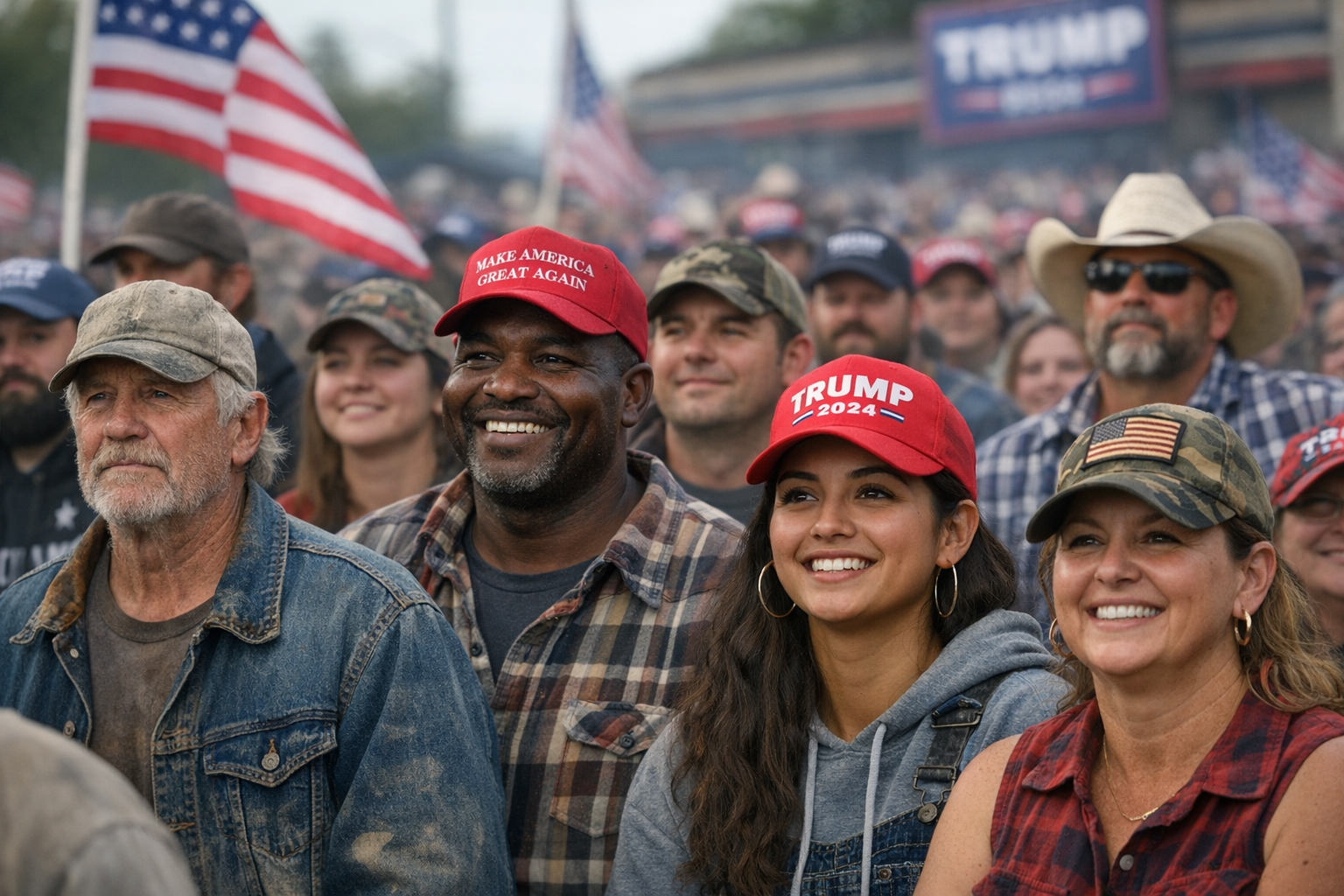
To have a real shot in 2028, Democrats need to start from a sober account of why Trump’s power has grown rather than treating it as a temporary aberration or as purely a story about prejudice. Trump’s 2024 coalition was not only large but more racially and ethnically diverse than in 2016 or 2020, with measurable gains among Hispanic and Black voters, especially men, while retaining strong support among noncollege and rural voters.1,3 His strength rests on three intertwined pillars: a durable identification with “forgotten” working‑class communities, especially outside major metros; a sense that he channels anger at economic and cultural elites; and a style that fits what researchers describe as “authoritarian populism”—a leader claiming to embody “the people,” promising order and national restoration, and attacking institutions that constrain him.4,9,14 If Democrats misdiagnose this as a fringe phenomenon or as purely a matter of disinformation, they will keep designing campaigns for the electorate they wish existed rather than the one that actually turned out in 2024.
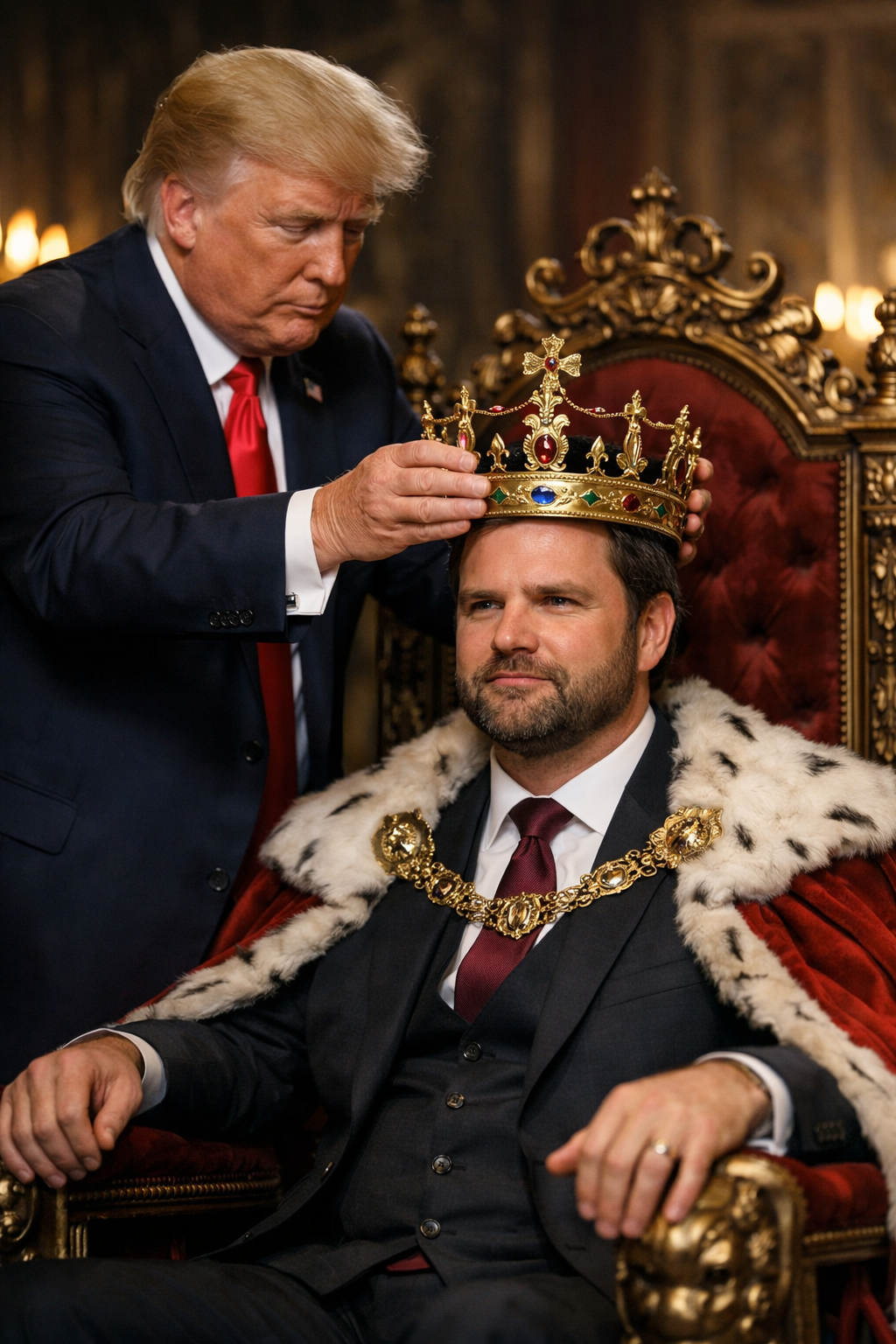
The phrases “shadow ruler” and “shadow government” are already circulating in mainstream political discourse, though they have been applied so far primarily to figures operating within Trump’s current administration rather than to Trump himself as a future out-of-office actor. ProPublica investigative reporter Andy Kroll has used the precise term “shadow president” to describe Russell Vought, Trump’s director of the Office of Management and Budget, characterizing him as “basically a second commander-in-chief, a shadow president” within the second Trump term.1Brewminate, drawing on that reporting, extended the concept further, describing how Vought has built what some in Washington describe as a “government-in-waiting,” a network of conservative think tanks, legal operatives, and former staffers who now serve as the brain trust for Trump’s second term.2 If such a structure already exists around Trump while he is in office, the question of whether Trump himself could assume a comparable shadow role after January 2029 is not merely hypothetical — it follows a logic already visible in the architecture of MAGA governance.
Of all the figures listed in the 5 April 2026 ETC Journal ranking of 2028 Democratic prospects, Andy Beshear may be the most consequential dark horse that most voters outside Kentucky have yet to fully reckon with.1 He is ranked sixth in the ETC Journal field — well below Gavin Newsom and Kamala Harris — yet the case for his candidacy is surprisingly robust when examined against recent reporting and polling.
Projecting 2028 primaries this far out is inherently speculative, but there is already a surprisingly rich ecosystem of reporting, early polling and “invisible primary” maneuvering to work with. What follows is a rank-ordered snapshot as of 5 April 2026, grounded in Ballotpedia’s lists of potential contenders and cross‑checked against recent, non‑paywalled analyses of who appears best positioned inside each party. Be sure to confirm any specific claims, especially about polling and offices held, with up‑to‑date trusted sources as the cycle evolves.
AI is changing journalism quickly, but the strongest evidence from 2025–2026 points to augmentation, workflow redesign, and selective automation rather than wholesale replacement of human reporters.1-3 The clearest pattern is that AI is taking over repetitive, structured, or high-volume tasks while journalists retain responsibility for verification, judgment, interviews, and accountability.1,4,5
Considering the AI-dominated direction that modern warfare is taking on a global scale, military leaders and heads of state are transforming their expectations of future soldiers. The deep reality is unsettling and historically significant: militaries are not merely updating training or adding new technical specialties; they are beginning to redefine the ontology of the “soldier” itself. Across doctrine, training pipelines, force structure, and civil-military boundaries, evidence from 2024–2026 suggests the early stages of a systemic transformation comparable to the shift from industrial warfare to nuclear-era deterrence—except this time the change is diffused, software-driven, and deeply entangled with civilian technological ecosystems.
In April 2026, artificial intelligence is no longer a peripheral tool in U.S. marketing—it is reshaping the profession at a structural level, altering not only how work is done but what “marketing expertise” means. Across industries, executives increasingly describe marketing as an “AI-first” function at a turning point, where human labor is being reorganized around intelligent systems rather than merely assisted by them.1 This shift is visible in both organizational strategy and day-to-day workflows: companies such as Apple are now appointing senior leaders specifically to oversee AI-driven marketing transformation, signaling that AI is not a niche capability but a core strategic domain.2 At the same time, major advertising firms like WPP are restructuring and cutting jobs explicitly to become “AI-enabled businesses,” underscoring that AI adoption is directly tied to workforce redesign.3
International organizations such as the OECD, UNESCO, the World Bank, and EDUCAUSE have produced a steady stream of reports on artificial intelligence in education over the past several years, yet their analyses share a strikingly consistent institutional framing. Across these bodies, AI is conceptualized primarily as a tool for teachers, schools, and education systems, with attention focused on pedagogical integration, governance, ethics, and institutional readiness. The OECD’s Digital Education Outlook 2026, for example, devotes extensive attention to AI as a tutor, partner, or assistant within formal instructional settings, while treating student use outside school largely as a risk to be managed rather than a learning frontier to be understood.1




















 Educational Technology and Change Journal
