


By Jim Shimabukuro (assisted by ChatGPT)
Editor
The April 7, 2026 cease-fire between the United States and Iran is best understood not as a comprehensive peace agreement but as a narrowly constructed, time-bound de-escalation mechanism centered on the immediate crisis in the Strait of Hormuz. Across multiple contemporaneous reports, the core terms converge on a two-week provisional cease-fire, brokered by Pakistan, under which the United States halts imminent large-scale strikes and Iran agrees to “complete, immediate, and safe” reopening of the Strait of Hormuz and safe passage for shipping.1-3
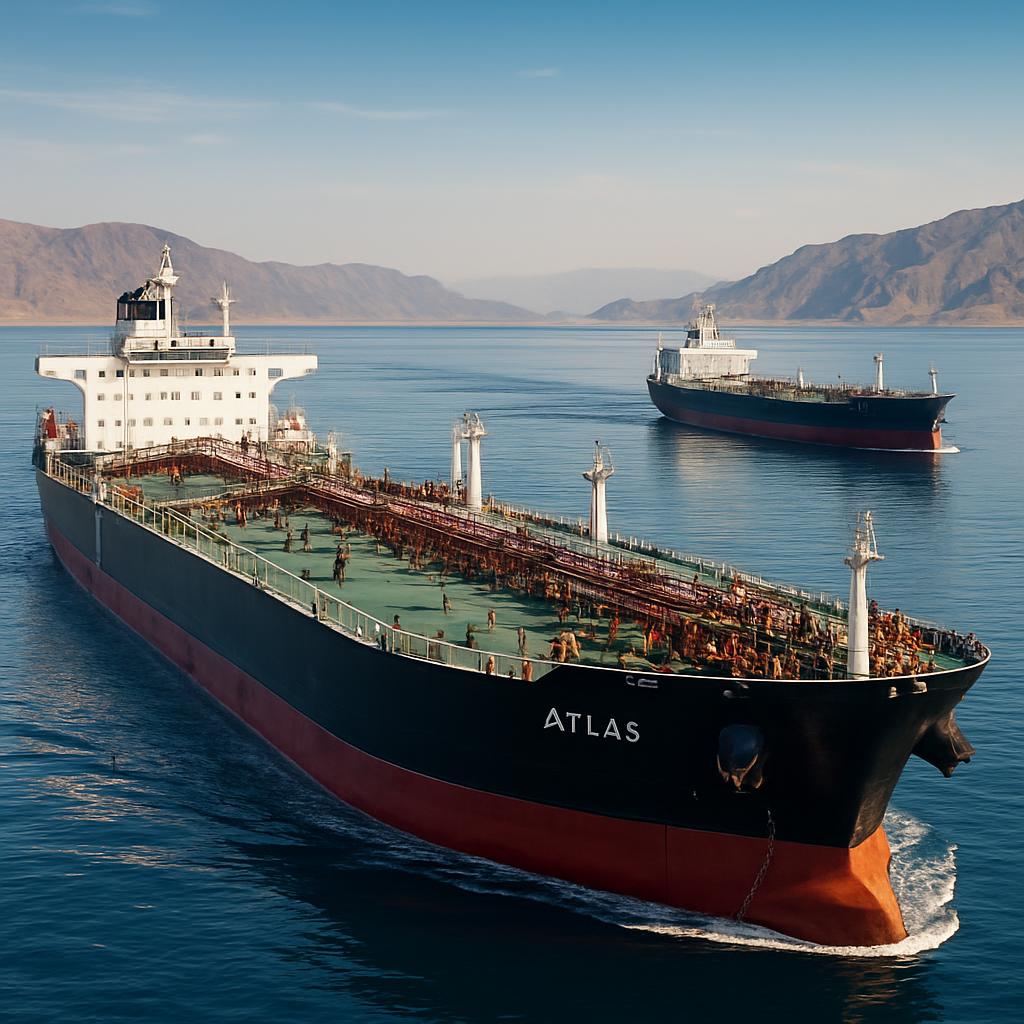
This reopening is not incidental—it is the central quid pro quo of the agreement, reflecting the fact that the war’s most acute global impact has been the near-total disruption of a maritime chokepoint carrying roughly one-fifth of the world’s oil supply.4 The cease-fire also explicitly creates a diplomatic window: both sides commit to entering negotiations—reportedly structured around an Iranian “10-point proposal”—in Islamabad within days.1,5 What is notably absent from the publicly reported terms are binding provisions on sanctions, nuclear policy, regional militias, or long-term security guarantees; these are deferred to subsequent talks rather than embedded in the cease-fire itself.6
This narrowness is not accidental. The available evidence indicates that the cease-fire primarily addresses the Hormuz crisis rather than the underlying causes of the war, which include U.S.–Israeli strikes on Iran, disputes over Iran’s nuclear program, and broader regional proxy conflicts.7 Contemporary reporting emphasizes that “fundamental issues…remain unresolved,” including nuclear enrichment and regional security disputes, even as the truce takes effect.8 Iran’s own negotiating posture underscores this gap: Tehran has articulated preconditions for a lasting settlement—cessation of attacks, guarantees against future strikes, compensation, and sanctions relief—that go well beyond the cease-fire’s limited scope.9 In this sense, the agreement resembles a tactical pause designed to stabilize global energy markets and prevent immediate escalation rather than a settlement of the war’s root political and strategic drivers.
The probability that this cease-fire becomes a genuine first step toward ending the war is therefore best characterized as uncertain but nontrivial—perhaps in the range of a fragile opening rather than a durable turning point. Financial markets and some analysts interpreted the agreement as a “critical turning point,” particularly because it creates a structured pathway to negotiations and reduces immediate escalation risk.10 At the same time, nearly every contemporaneous source stresses its fragility: the cease-fire is explicitly temporary, violations and continued strikes were reported almost immediately, and key actors—especially Israel’s operations against Hezbollah—are not fully covered by the agreement.11,12 The structure resembles past “cooling-off” arrangements in high-intensity conflicts: it can evolve into a broader settlement if negotiations rapidly produce reciprocal concessions, but it can just as easily collapse if either side tests the limits of compliance or if parallel conflicts (e.g., in Lebanon) reignite escalation. The most realistic assessment, based on current reporting, is that the cease-fire is a necessary but far from sufficient condition for ending the war.
Finally, the question of whether the cease-fire reveals a weakening of the Islamic Revolutionary Guard Corps (IRGC) or signals rising internal opposition inside Iran is not strongly supported by current evidence. The available April 2026 reporting points instead to a strategic recalibration rather than internal collapse. Iran demonstrated significant leverage during the conflict by effectively shutting down the Strait of Hormuz and imposing global economic costs, suggesting continued operational capability by the IRGC rather than institutional weakness.13 Moreover, public Iranian positions remain defiant, emphasizing resistance and demanding concessions rather than indicating regime instability.14 While there are scattered indicators of civilian stress and wartime mobilization, there is no credible, widely reported evidence in early April 2026 of large-scale popular uprisings threatening the regime or the IRGC’s authority. In fact, Iran’s willingness to enter a cease-fire appears driven less by internal dissent than by external strategic incentives—avoiding imminent U.S. escalation, preserving leverage in negotiations, and stabilizing economic pressures linked to the Hormuz blockade.
In sum, the April 7 cease-fire is a transactional, crisis-focused truce built around reopening the Strait of Hormuz and buying time for negotiations. It does not resolve the deeper causes of the war, offers only a tentative pathway toward peace, and provides little evidence—at least so far—of internal weakening within Iran’s security apparatus. Its ultimate significance will depend almost entirely on what follows in the Islamabad talks: whether the parties can translate a narrow maritime de-escalation into a broader political settlement.
References
- “U.S. and Iran reach 2-week ceasefire ahead of Trump’s deadline” — CBS News. https://www.cbsnews.com/live-updates/iran-war-trump-deadline-power-plants-human-chains-israel-train-strikes/
- “U.S. AND IRAN AGREE TO 2-WEEK CEASEFIRE” — Axios. https://www.axios.com/2026/04/07/iran-2-week-ceasfire-trump-pakistan
- “Oil tumbles below $100 after Trump announces two-week ceasefire” — Reuters. https://www.reuters.com/business/energy/us-crude-futures-fall-1204-10090bbl-after-trump-announces-two-week-ceasefire-2026-04-07/
- “Strait of Hormuz” — background context. https://en.wikipedia.org/wiki/Strait_of_Hormuz
- “US and Iran agree to provisional ceasefire…” — The Guardian. https://www.theguardian.com/us-news/2026/apr/07/trump-iran-war-ceasefire
- “Has the war ended? 10 things to know…” — Times of India. https://timesofindia.indiatimes.com/world/middle-east/has-the-war-ended-10-things-to-know-about-the-us-iran-ceasefire/articleshow/130100502.cms
- “So what’s behind the Iran ceasefire?” — Vox. https://www.vox.com/today-explained-newsletter/484936/how-far-will-trump-go-in-iran
- Ibid.
- “Iran sets preconditions for talks…” — Reuters. https://www.reuters.com/world/middle-east/iran-sets-preconditions-talks-lasting-peace-with-us-senior-official-tells-2026-04-07/
- “Investor reactions…” — Reuters. https://www.reuters.com/world/investor-reactions-trump-agreeing-two-week-ceasefire-with-iran-2026-04-07/
- CBS News live updates on ceasefire violations. https://www.cbsnews.com/live-updates/iran-trump-ceasefire-strait-hormuz-israel-war-hezbollah-continues/
- “US and Iran agree to provisional ceasefire…” — The Guardian. https://www.theguardian.com/us-news/2026/apr/07/trump-iran-war-ceasefire
- “2026 Strait of Hormuz crisis” — overview. https://en.wikipedia.org/wiki/2026_Strait_of_Hormuz_crisis
- “Reactions to the 2026 Iran war” — overview. https://en.wikipedia.org/wiki/Reactions_to_the_2026_Iran_war
Filed under: Uncategorized |


 Educational Technology and Change Journal

Leave a comment