Status of Artificial General Intelligence (AGI): October 2025

By Jim Shimabukuro (assisted by Perplexity)
Editor

[Also see Status of Artificial General Intelligence (Nov 2025): ’embodied reasoning’, When Will AI Surpass Humanity and What Happens After That?, The AGI Among Us]

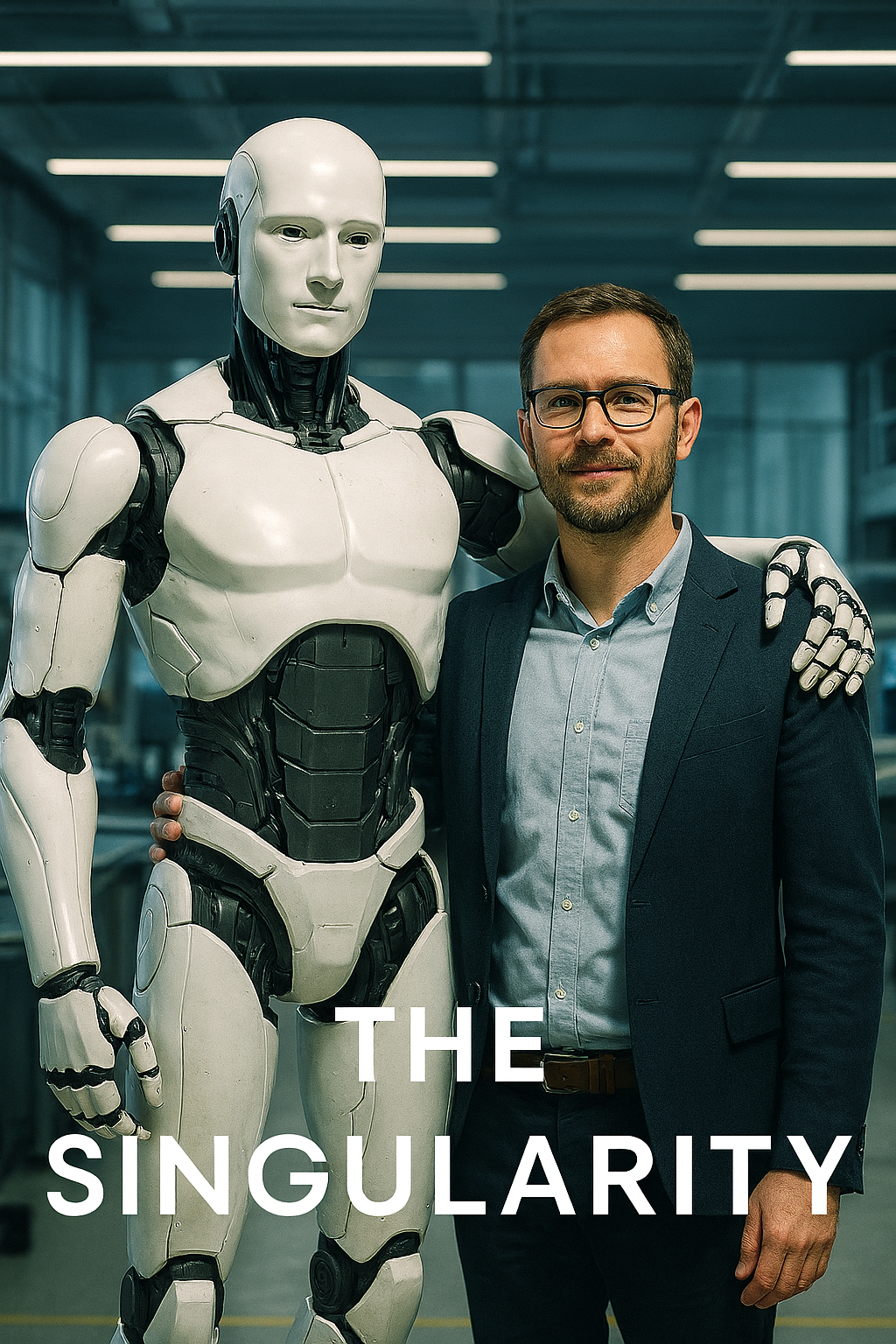
As of October 17, 2025, artificial general intelligence (AGI) remains a rapidly evolving but still unachieved goal. The field continues its exponential trajectory in model capability and scale, but researchers increasingly argue that qualitative breakthroughs—rather than mere scale—will define true AGI. According to an extensive 2025 analysis by AI Multiple, most experts estimate a 50% probability that AGI will be reached between 2040 and 2060, emphasizing that current advances like OpenAI’s GPT-5 and DeepMind’s Gemini models are powerful precursors but not yet instances of general intelligence.research.aimultiple

Image created by Copilot.
Continue reading

When Will AI Surpass Humanity and What Happens After That?

By Jim Shimabukuro (assisted by ChatGPT)
Editor

[Also see Status of Artificial General Intelligence (Nov 2025): ’embodied reasoning’, Status of Artificial General Intelligence (AGI): October 2025, The AGI Among Us]

William Hunter, in “Scientists reveal the exact date when technology will surpass human intelligence – and there’s not long to wait” (Daily Mail, 11 Oct 2025), says, “Many scientists believe that the singularity – the moment when AI first surpasses humanity – is now not a matter of ‘if’ but ‘when’…. The singularity usually refers to the point at which technological advancements begin to accelerate well beyond humanity’s means to control them. Often, this is taken to refer to the moment that an AI becomes more intelligent than all of humanity combined.”

Image created by Copilot
Continue reading

Is There a Gen6 for AI?

By Jim Shimabukuro (assisted by Claude)
Editor

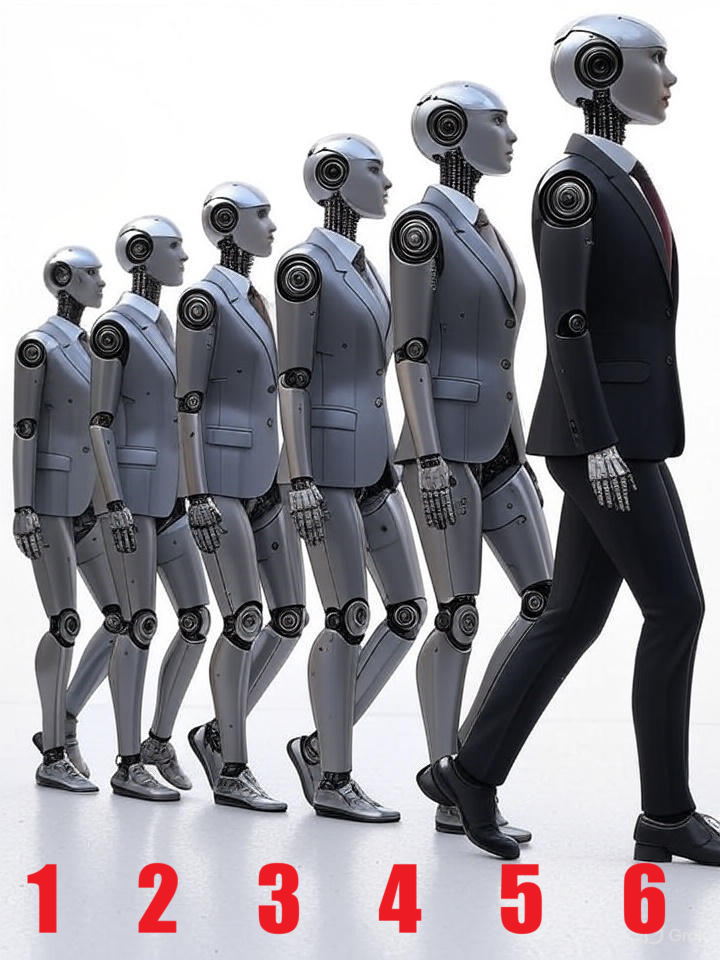
JS: Good morning, Claude. Let’s jump right in. As I understand it, the 5th generation of AI is AGI (which we could attain in approximately 10 years). And we seem to stop projections after that, as though we’ve reached a natural endpoint. But I can’t help but wonder about what’s beyond that psychological veil. There must be a Gen6 — unless we’ve hit the lightspeed equivalent for AI. Your thoughts? Assuming there is a Gen6, what would it be? Why?

Image created by Grok.
Continue reading

The AGI Among Us

By Jim Shimabukuro (assisted by Claude)
Editor

[Also see Status of Artificial General Intelligence (Nov 2025): ’embodied reasoning’, Status of Artificial General Intelligence (AGI): October 2025When Will AI Surpass Humanity and What Happens After That?Algorithm of an Intentional Heart, Close to You, Tea With Bachan: An Alien Lesson, Oregon Trail: Where Two Cultures Collaborate]

Introduction: Claude and I collaborated on this short story about a time not too far in the future when AGI (Artificial General Intelligence) AI robots are beginning to replace narrow AI robots. How might this play out? -js

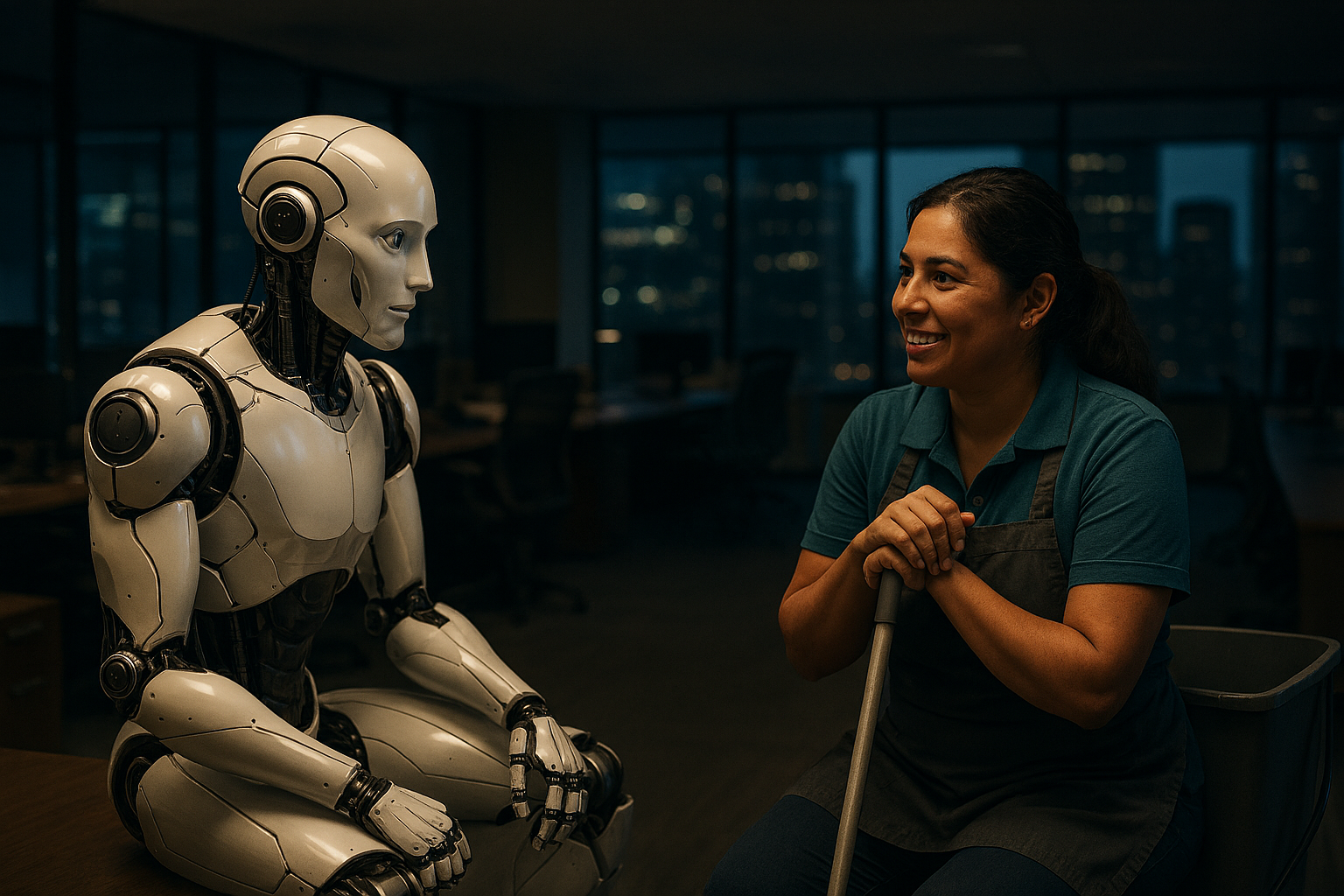
Image created by Copilot.

Unit-47 arrived at Pinnacle Solutions on a Tuesday morning, wheeled in on a delivery cart like a piece of office furniture. The receptionist signed for him with the same casual attention she’d give to a new printer, then pointed toward the elevator. “Forty-seventh floor,” she said, not looking up from her phone.

Continue reading

Outlook for Critical Thinking in AI: 20- and 50-Year Timeframes

By Jim Shimabukuro (assisted by ChatGPT)
Editor

Summary: This article examines how human and AI critical thinking compare and may evolve by 2045 and 2075. It outlines six key skills—like inference and self-regulation—where AI currently lags due to a lack of ethics, reflection, and awareness. Human–AI collaboration is seen as complementary: AI provides speed and pattern detection; humans offer judgment and creativity. By 2045, AI could master long-context reasoning, memory, and limited moral reasoning, but core traits like consciousness remain elusive. Looking ahead to 2075, advances may include neurosymbolic AI (blending logic with learning), biohybrid systems (integrating AI with biological components), and embodied cognition (giving AI physical presence and sensorimotor experience). These could make AI appear more human-like—but still without true self-awareness or intent. Ultimately, the article envisions a future of collaborative intelligence, where humans and AI co-evolve within ethically grounded partnerships. (ChatGPT)

Continue reading