JS: What became of the thousands of cars that were caught in the March 11, 2011, tsunami that hit northeast Japan? Were most of them salvaged and returned to service?
Cars swept away by the powerful Tohoku 2011 tsunami.
Introduction: Quarterback performance in the NFL is deeply intertwined with the quality of the supporting cast. A porous offensive line can turn a genius into a scrambling liability. Mediocre receivers can nullify pinpoint accuracy. A weak running game invites defensive pressure. Coaching philosophy can either unlock a quarterback’s full potential or stifle it. And backup depth ensures continuity and strategic flexibility. Strip these away, and even the most gifted quarterback may appear pedestrian.
JS: Aloha, Claude. Curious again. Are we anywhere close to a tipping point where professional journal review boards are or could be replaced by AI referees? It seems to me that a chatbot strength is in reviewing articles for publishing in professional journals. I haven’t done any sort of testing and haven’t read any studies on this, but the handful of times I asked chatbots to review articles I found online, they did a competent job.
Think of training a chatbot like teaching a very fast, very greedy parrot to write helpful answers — except instead of a classroom, the “teacher” is thousands of computers in a data center, and the parrot is a huge neural network called a large language model (LLM). Below are the main steps in plain language. In short, training involves collecting lots of text, building a giant neural network, teaching it by showing examples and correcting errors across thousands of fast computers, fine-tuning it with human feedback for helpfulness and safety, and then hosting it so people can chat with it — while continuously monitoring and improving it.
NY Times Writers Embracing AI: “Using AI for research and investigations is ‘by far the biggest use of our resources and I think the biggest opportunity right now when it comes to AI in media,’ [Zach] Seward NY Times editorial director of A.I. initiatives] said. His team mostly works by helping a reporter use AI technology for one project, and then creating a repeatable process from that experience for others in the newsroom to use.” -Joshua Benton, NiemanLab, 23 Sep. 2025.
Zach Seward, NY Times Editorial Director of A.I. Initiatives. (NY Times Co.)
Gemini: Distributed data centers are not inherently as powerful as hyperscale or centralized data centers in every respect. Each architecture is powerful in different ways, excelling at different operational priorities.
Example of distributed data center. The Amazon Web Services (AWS) office at CityCentre Five, 825 Town and Country Lane, Houston, Texas.
Prompt: I’m curious. What percentage of college professors and administrators personally use chatbots in optimum ways to facilitate their own professional development, research, writing, and job responsibilities? I think this is an important question because they, as a group, are responsible for crafting AI program decisions in their institutions. -js
Introduction: AI as a university field of study is growing exponentially. However, that very growth implies that earlier studies and skills will quickly succumb to obsolescence. This shifting playing field requires program trajectories that proactively anticipate changes and focus on abilities that are more future-proof. I asked ChatGPT to identify ten universities, in the West and the East, that are developing exemplary programs. After listing ten, ChatGPT suggested adding five more, and I agreed. -js
These are fifteen universities (West and East) that are actively building programs to prepare graduates not just to work with AI, but to adapt as the field rapidly changes. Each selection includes an explanation of how the institution is structuring education, research, and industry links so students can survive — and thrive — in a shifting AI landscape. Sources for the key program facts are cited after each essay.
1. Massachusetts Institute of Technology (MIT)
“MIT will reshape itself to shape the future … to address the rapid evolution of computing and AI — and its global effects” (MIT News).
We’re closer than most people think to decoding limited, structured content (words, intentions, simple images, commands) from the noninvasive scalp or head surface; but we are still far — likely years to decades — from accurately “reading” rich, unconstrained thoughts the way science-fiction imagines. The most realistic near-term progress will come from combining better sensors + multimodal recording + large self-supervised AI models and careful personalization. Below is a summary of what’s already possible, the promising technical paths, the hard limits, and a realistic timeline — with the most important recent work cited.
JS: Good morning, Claude. On 11 Sep. 2025, Albania formally appointed Diella, an AI, as Minister for Public Procurement. The motivation is good: To stem corruption. However, regardless of its success or failure in the coming months or years, I can’t help but feel that this is a monumental first step toward controlling corruption at the administrative level in the public and private sector and that AIs will soon be routinely holding positions such as this, although they may not carry “human” titles such as “minister.” Please research publications, if any, that have touched on this possibility and briefly summarize their views and reasoning in 200-300 word essays. Also share your “opinion” on this emerging development.
The avatar used by Diella, Albania’s AI-powered virtual Minister for Public Procurements (Wikipedia)
Introduction: Nearly a month ago, Grok and I had a conversation about what we called “integrative glasses” (ETC Journal, 22 Aug. 2025), and, in that article, we anticipated many of the features that are offered in the Meta Ray-Ban Display. We projected a timeline of 2025-2030 for the release of “bridge systems” such as this, which rely on controls external to the glasses, such as smartphones. The fact that it was announced only two days ago (on 17 Sep. 2025) and will drop on 30 Sep. 2025 — our earliest projected date — attests to the exponential speed of AI innovations. Anticipated prices start at $799 USD. -js
Meta Ray-Ban Display: Navigate without taking eyes off the road. All photos in this article are courtesy of Meta.
The integration of artificial intelligence into academic life has fundamentally transformed how students approach learning, research, and creative work. While widespread adoption of AI tools like ChatGPT, Claude, and specialized academic platforms has occurred across all educational levels, the most academically successful students have developed sophisticated strategies that set them apart from their peers. Rather than using AI as a shortcut or replacement for critical thinking, these high-achieving students have cultivated nuanced approaches that amplify their intellectual capabilities while preserving their authentic voice and deep learning objectives.
The top 10 countries whose K-12 educational systems produce the greatest number of students accepted into and graduating from top AI university programs in 2025 are ranked below based on available data from global AI talent trackers, reports on PhD production in AI/ICT fields, and international student flows into top programs (predominantly U.S.-based, which host ~60% of elite AI graduate programs worldwide).
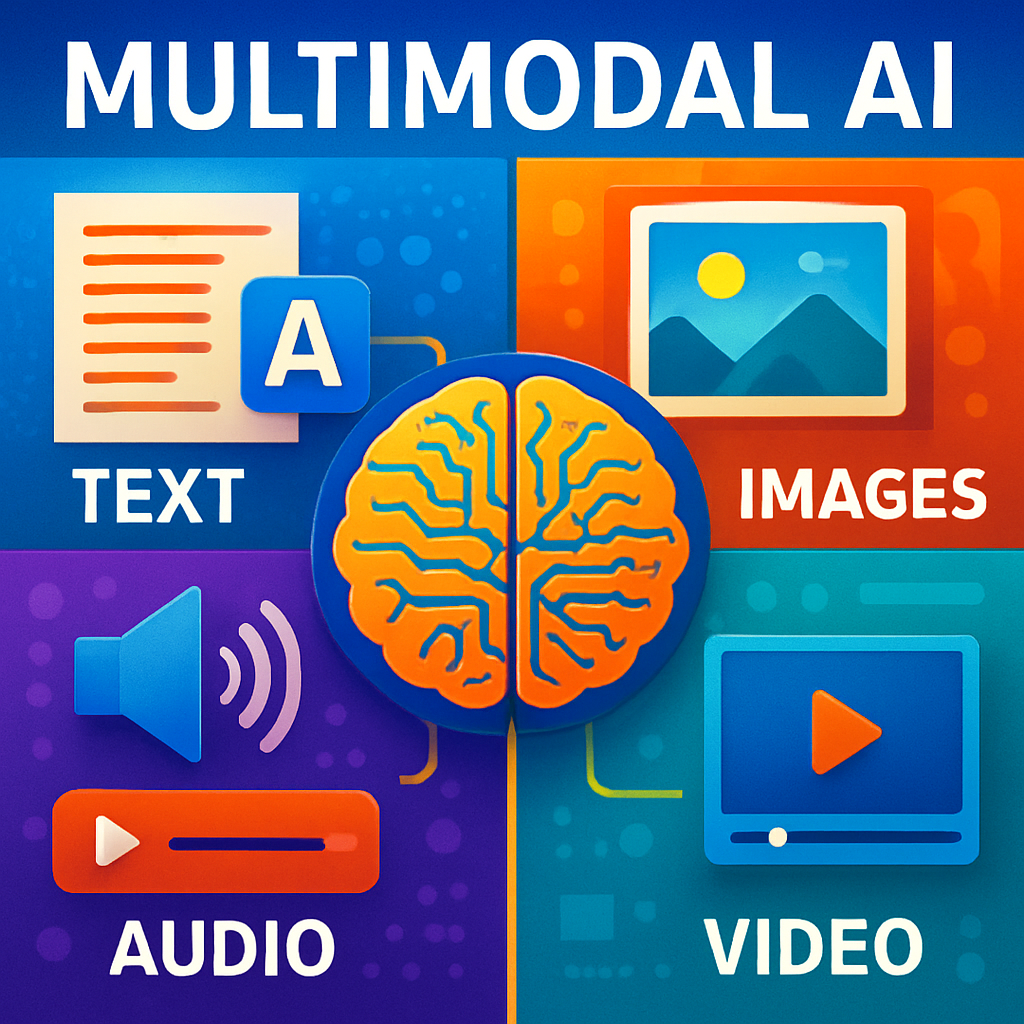
The shift from unimodal (text-only) AI to multimodal AI (processing and generating text, images, audio, and video) isn’t just an incremental upgrade—it’s a fundamental change in how AI perceives and interacts with our world, which is inherently multimodal. Here are 10 compelling reasons why multimodal AI is such a game-changer:
Introduction: This list of 100 began with a search for 20 famous sleuths, real and fictional. After the 20, we decided to add 10 more from Asia and the Pacific, then 10 from Latin America and Africa followed by 10 from Middle-Eastern and South Asia, bringing the total to 50. We had quite a list, but we realized we had omitted many more from around the world. We decided to shoot for 100. Our growing list tended to favor fictional sleuths, so we decided to let that happen naturally. At the end, our list had grown to 100, but we realized we were omitting many others. We decided to stop, for now, and follow up with another list in the near future, i.e., if readers express an interest in seeing more. -js
The concept of a tipping point in education—where AI surpasses traditional schools as the dominant learning medium—is increasingly plausible based on current trends, technological advancements, and expert analyses. While schools have long served multifaceted roles beyond pure knowledge transfer (like socialization, emotional development, and childcare), AI’s rapid evolution in personalization, accessibility, and efficacy could shift the balance. I’ll break this down step by step, drawing on recent data and discussions.
JS: Claude, you’re Shakespeare, returning to 1590s London after spending a month in the in the US in 2025. You were intrigued by many wonders in your time travel, and one was the concept of AGI. You’ve decided to write a sonnet, in your now familiar Renaissance style, capturing your feelings about this innovative idea. Share that sonnet with us.
Introduction: Grok and I explored the roots of underperforming elementary schools in the nation and the implications that surfaced as a result of our digging. -js
Introduction: Elon Musk’s Colossus—built by xAI in Memphis—is currently considered the largest AI supercomputer in the world in terms of GPU count, computing power, and rapid build-out, but it is not the largest data center globally when measured by physical size or total server capacity. Competitive megacenter projects from China, the U.S., and Europe rival or exceed it in site area and may soon overtake xAI both in scale and ambition.wikipedia+5
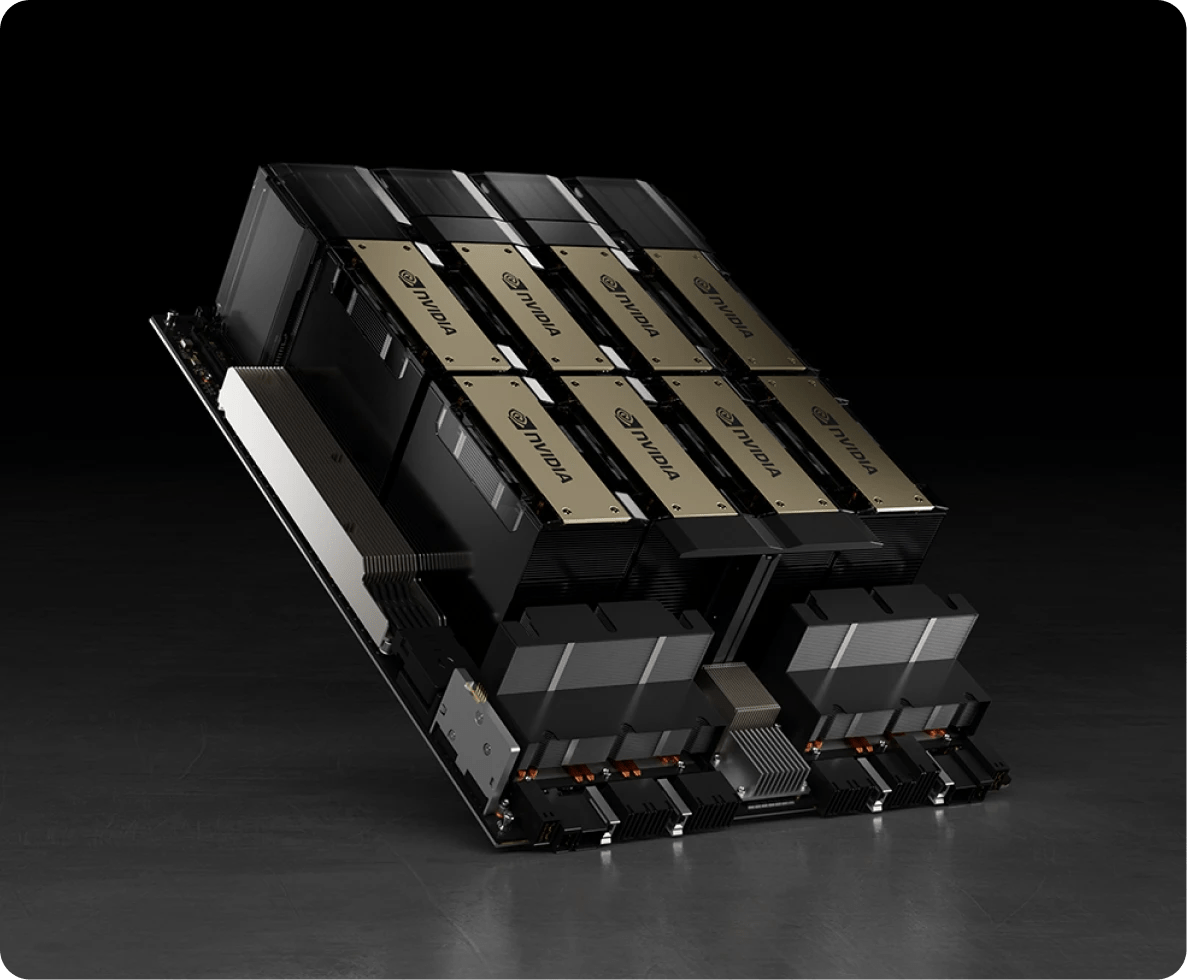
Introduction: The hardware for each is optimized for vastly different workloads. The core difference is that desktop GPUs (Graphics Processing Units) are designed for high frame rates in a single application (a game) on a single machine, while data center GPUs (like those in xAI’s cluster) are designed for high throughput in massively parallel computations across thousands of machines. Here’s a detailed breakdown, referencing the most relevant hardware.
Referenced GPUs
Data Center GPUs: NVIDIA’s H100 (the current workhorse of AI, used in clusters like xAI’s Grok).
Charlie Kirk’s recent death has sparked an outpouring of tributes from across the political spectrum and cultural landscape in the US and the world. The following is a sampling from prominent figures. These reflect admiration, grief, and reflections on his legacy as a conservative activist and founder of Turning Point USA.
AI is already unclogging traffic in the U.S. and abroad. Cities are using machine learning and optimization to retime signals continuously, coordinate corridors, create “green waves” for emergency vehicles, and cut stops, delay, and emissions. The broader pattern is clear: agencies are moving from fixed-time plans to continuously learning optimization, starting with high-impact corridors, then scaling citywide as data and staffing permit. Below are three standout programs, ranked for scale, maturity, and independently reported results.
Traffic in a large Chinese city. Image created by Copilot.
Free smartphone apps to converse in a foreign language are already unfolding in 2025. Several free AI-powered apps now offer real-time voice-to-voice translation across dozens (even hundreds) of languages, right from your smartphone. Here’s how close we are to seamless multilingual conversation.
An English-speaking farmer and a Swahili-speaking teacher—conversing fluidly through a pocket-sized AI interpreter. Image created by ChatBox.




















































 Educational Technology and Change Journal
