Over the past two decades, the general architecture of desktops and laptops has remained strikingly consistent, relying on familiar components like motherboards, CPUs, RAM, GPUs, hard drives, and peripheral interfaces such as USB, Bluetooth, and WiFi, all housed within standard cases and driven by conventional operating systems and applications. While these components have seen incremental improvements in speed and efficiency, the core design—rooted in the von Neumann model of sequential processing and separated compute and memory—has persisted largely unchanged.
Mark Haoxing Ren, Director of Design Automation Research at NVIDIA
Introduction: I asked ChatGPT to provide a ranked list of 10 countries leading AI research and development as of October 26, 2025. For methodology, see “Methodology and caveats” at the end of the article. -js
Arthur Mensch, co-founder and CEO of the Paris-based AI company Mistral AI. Photo by Slush.
1. ClasStars: Illuminating the Invisible in Modern Classrooms
The story of ClasStars unfolds primarily in the bustling classrooms of New York City, United States, where urban public schools grapple with diverse student populations and overstretched educators. Geographically rooted in this vibrant yet challenging educational hub, the narrative spans nearly two decades, from the early 2000s when founder Moshe Fried began his career as a social worker observing overlooked children, to the present day in late October 2025, as the platform gains traction amid a post-pandemic push for personalized learning tools. This time frame captures a pivotal moment in educational technology, where data-driven insights are increasingly vital for addressing equity gaps exacerbated by remote learning disruptions between 2020 and 2023.
Current trends strongly suggest that the major impact on the US employment landscape in November 2025 will stem from the accelerating adoption and refinement of existing AI capabilities in key areas.
The following are five under-the-radar AI trends for October 2025: Open-Source Fine-Tuning of Specialized Models, Decentralized AI Infrastructure, Agentic Systems Entering Production, Synthetic Data Markets for Privacy-Compliant Training, and On-Device and Hybrid Inference for Efficiency. Each essay explores what the trend is, when it began, who’s driving it, where it’s happening, and why it matters, ensuring distinct content from any previous mentions of August or September 2025 trends.
NVIDIA’s DGX Spark supercomputer launched October 15, 2025. 150mm L x 150mm W x 50.5mm H (5.91 inches L x 5.91 inches W x 1.99 inches H)
Introduction: Currently, we’re beginning to see apps/software such as search engines, office suites, and operating systems folding chatbot features into their repertoire. I asked ChatGPT to consider the possibility of the tables turning and apps/software being folded into chatbots. -js
Introduction: I asked ChatGPT to peek ahead to the end of the year to give us an idea of what to expect in terms of advances in chatbot services. I also asked it to focus on free services and the five chatbots that seem to be leading in innovation. -js
Over the past two centuries, major technological innovations have indeed faced resistance, though the nature and intensity varied considerably. AI is no exception. Some innovations encountered fierce opposition rooted in economic fears, moral concerns, or cultural anxieties, while others were embraced with remarkable enthusiasm. The pattern isn’t universal—pushback depended heavily on whose interests were threatened and how rapidly the technology disrupted existing social structures. A historical view might provide perspective on the current resistance to AI.
Video created by Grok via an image created by Copilot.Continue reading →
In his blog post, Yossi Matias (Vice President, Google & Head of Google Research) presents a unified narrative of how Google Research is striving to turn foundational breakthroughs into real-world impact (“Google Research: accelerating scientific breakthroughs to real-world impact,” Google Blog, 23 Oct 2025). He frames the operation as a “magic cycle” in which large-scale models, agentic systems, and domain‐specific pipelines feed back into scientific discovery and deployment.
These are ten of the most significant articles published in October 2025 on the role of artificial intelligence in colleges and universities, ranked from most to least significant. Each article represents a transformative aspect of how AI is reshaping higher education—pedagogy, ethics, policy, research, and professional development.
Marc Watkins, educator and researcher at the University of Mississippi
It was the first day of instruction, and Keani and Ilima were among the twenty-or-so students who were slowly entering the college classroom, plopping into empty tablet-arm chairs, and lifting laptops out of their backpacks. They chose seats in the center of the room.
In their 20 October 2025, article published in Times Higher Education, titled “AI threatens universities’ ability to bolster democracy,” Dirk Lindebaum and Gazi Islam present a cautionary argument about the encroachment of artificial intelligence into higher education, framing it as a force that undermines the sector’s role in fostering democratic societies. At the core of their claim is the notion that “Big Edtech”—a term encompassing profit-driven AI companies like those behind ChatGPT and Claude—fuels organizational immaturity within universities, which in turn contributes to broader societal democratic decline.
Zipei Ouyang’s article, “Self-regulated learning and engagement as serial mediators between AI-driven adaptive learning platform characteristics and educational quality: a psychological mechanism analysis,” was published in Frontiers in Psychology on 19 October 2025. The study offers a compelling psychological framework for understanding how AI-driven adaptive learning platforms enhance educational quality, revealing that self-regulated learning and engagement act as critical mediators. This research is both methodologically sound and socially relevant, making it valuable to educators, technologists, and general readers interested in the future of learning.
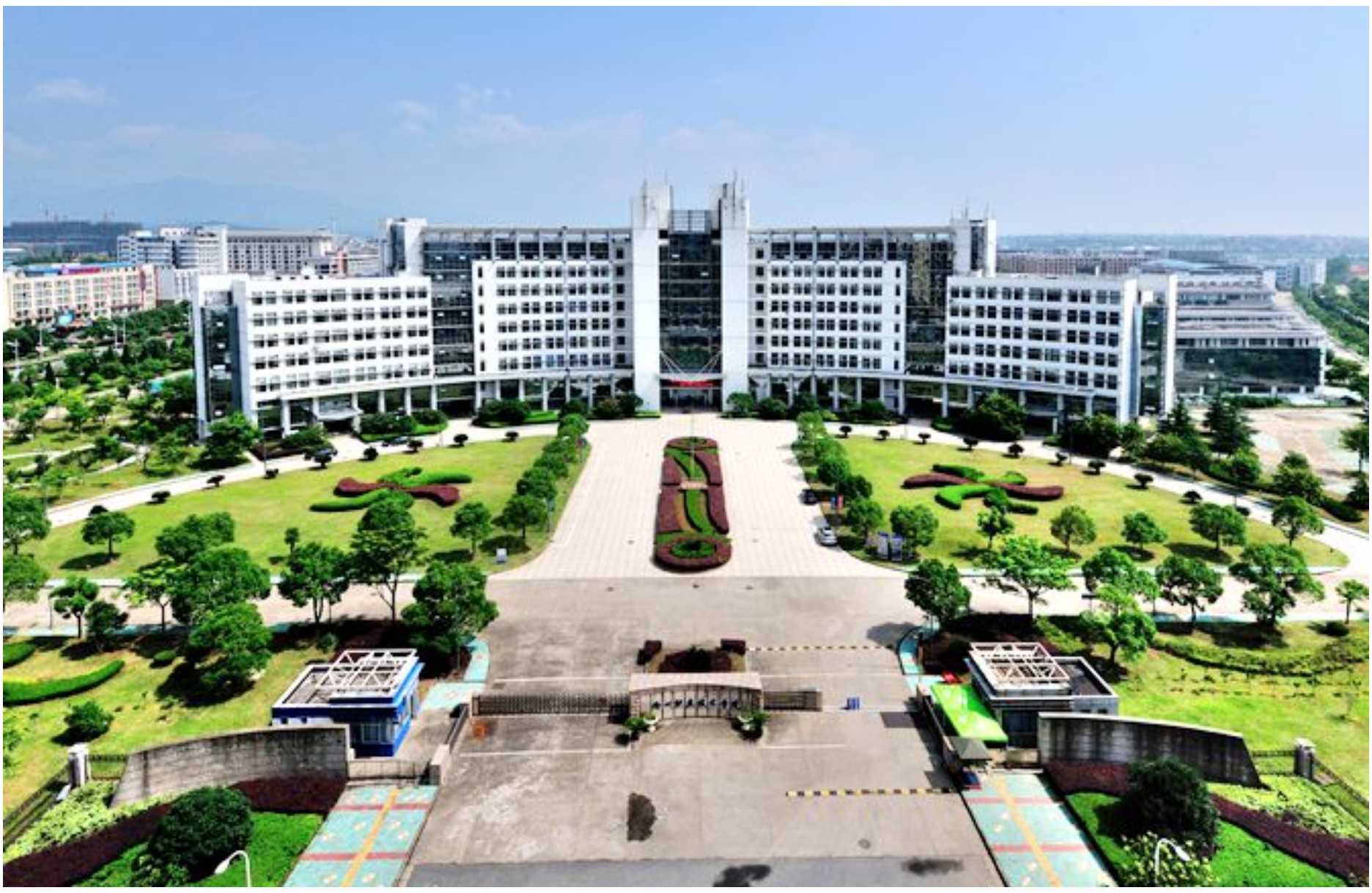
Zipei Ouyang is associated with Quzhou College of Technology (QCT)
By Lynn Zimmerman Associate Editor Editor, Teacher Education
It’s hard to believe that ChatGPT only came on the scene in November 2022. Its emergence opened the floodgates for AI to become part of everyday life so quickly. When AI came on the scene, many educators were quick to understand its benefits for them as teachers and have been eager to use it.
Introduction: I asked ChatGPT to adopt the persona of an AGI (Artificial General Intelligence) in the year 2050 to explain, from its own perspective, how it reached human-level mastery of all forms of critical and creative thinking within a single generation, powered by collective “swarm cognition.” The journey to this article began with an earlier conversation that provided the groundwork. -js
In mid-2025, researchers at MIT’s Computer Science and Artificial Intelligence Laboratory (CSAIL) unveiled a groundbreaking technique called SEAL—short for Self-Adapting Language Models. This framework represents a major leap in the evolution of artificial intelligence, enabling large language models (LLMs) to autonomously improve themselves by generating and applying their own fine-tuning data.
Perplexity: Mirror Life refers to a hypothetical or emerging form of synthetic biology in which all biological molecules—DNA, RNA, proteins, sugars—are flipped in chirality (molecular “handedness”) compared to natural life on Earth. In other words, mirror life would be built from right-handed amino acids and left-handed sugars, the opposite of what Earth organisms use.pasteur+2
Introduction: This is a list of U.S.-based higher-education (and higher-ed–focused) conferences that were announced in 2025 and are scheduled for 2026, with a clear AI theme or significant AI programming. Included are the conference dates (in 2026), city/state, sponsor/host, whether it’s in-person/hybrid/online, proposal/deadline info (where available), a short description of the AI emphasis, and a link to the conference page for more details.
As of October 17, 2025, artificial general intelligence (AGI) remains a rapidly evolving but still unachieved goal. The field continues its exponential trajectory in model capability and scale, but researchers increasingly argue that qualitative breakthroughs—rather than mere scale—will define true AGI. According to an extensive 2025 analysis by AI Multiple, most experts estimate a 50% probability that AGI will be reached between 2040 and 2060, emphasizing that current advances like OpenAI’s GPT-5 and DeepMind’s Gemini models are powerful precursors but not yet instances of general intelligence.research.aimultiple
“‘Human and AI creativity may not be so different,’ said Benjamin Hoover, a machine learning researcher at the Georgia Institute of Technology and IBM Research who studies diffusion models. ‘We assemble things based on what we experience, what we’ve dreamed, what we’ve seen, heard or desire. AI is also just assembling the building blocks from what it’s seen and what it’s asked to do.’ Both human and artificial creativity, according to this view, could be fundamentally rooted in an incomplete understanding of the world: We’re all doing our best to fill in the gaps in our knowledge, and every now and then we generate something that’s both new and valuable. Perhaps this is what we call creativity.” Webb Wright, “Researchers uncover hidden ingredients behind AI creativity,” LiveScience, 27 Sep. 2025.
Gemini: As of mid-October 2025, the field of AI in China is highly competitive. Baidu is a major leader, particularly in core AI technology and autonomous driving: (1) Large Language Models (LLMs) and Generative AI: Baidu’s ERNIE Bot is one of the most prominent LLMs and holds a strong position. One report from 2024 indicated that Baidu AI Cloud held China’s largest LLM market share with 19.9%. (2) Autonomous Driving: Baidu’s Apollo Go robotaxi fleet is a key player, often cited as one of the world’s largest autonomous driving experiments. The Chinese government also designated Baidu as a national champion for Autonomous Vehicles.
ChatGPT: Of the major AI companies in the world, DeepMind is the most scientifically driven. DeepMind’s defining identity, even within Alphabet and alongside peers like OpenAI, Anthropic, and Meta AI, is its research-first ethos and emphasis on fundamental scientific discovery — from reinforcement learning theory to biological breakthroughs like AlphaFold. While others emphasize commercial deployment or scaling, DeepMind consistently frames its mission as “solving intelligence” to advance science and benefit humanity, making scientifically driven the most accurate and distinctive descriptor.
Shane Legg, DeepMind Technologies machine learning researcher and co-founder
The three biggest AI stories in the world in October 2025 are: (1) OpenAI’s DevDay unveiling of the Apps SDK and its $500 billion valuation milestone, marking a new phase in global AI platformization; (2) AMD’s historic $100 billion AI chip deal with OpenAI, signaling a seismic shift in semiconductor power dynamics; and (3) DeepMind’s AlphaEvolve breakthrough in automated theorem discovery, redefining how AI contributes to theoretical science.
Pushmeet Kohli, as head of AI for Science at DeepMind, led the team that created AlphaEvolve. Screen capture from a DeepMind YouTube video (uploaded 9 Oct 2024).












































 Educational Technology and Change Journal
