
New AACE Special Interest Group on ‘Assessing, Designing and Developing E-Learning (ADD)’

By Stefanie Panke
Editor, Social Software in Education

The Association for the Advancement of Computing in Education (AACE) has launched a Special Interest Group, “Assessing, Designing and  Developing E-Learning” (ADD). You do not have to be an AACE member or an attendee of previous AACE conferences to  join — though some activities will be tied to the E-Learn 2014 conference to be held in New Orleans from October 27-30, 2014.

The SIG had its inaugural meeting during the AACE E-Learn 2013 conference. If you missed it, review our presentation for collaboration ideas.
ADD3

Based on the discussion during the SIG meeting on Oct. 23, we have initiated first community activities:

  • To facilitate SIG projects, discussions, meetings and publications we want to learn more about your background and interests. Please take 10 minutes (or less) and fill out the survey.
  • We created a LinkedIn group for our SIG members to communicate with each other. Here’s the link to the LinkedIn group – join us there.
  • Are you a member of the AACE network Academic Experts? Learn more about the SIG.

Our next step is to see what information the survey brings in and share this with our SIG. We are excited about the many possibilities for collaboration and look forward to meeting again at E-Learn 2014 in New Orleans. In the meantime, stay connected through ADD SIG events and activities.

Please feel free to share this information with interested peers.

Curtis Ho and Stefanie Panke
Chairs, ADD (Assessing, Designing & Developing E-Learning)

A Caltech Grad in a Caltech MOOC, Part 2

picture of Harry KellerBy Harry Keller
Editor, Science Education

[Note: Harry, who holds a BS in chemistry from the California Institute of Techology and a PhD in analytical chemistry from Columbia University, is sharing his first MOOC experience in this series. See part 1, 3, 4 and 5. -Editor]

October 19, 2013

The third week of this MOOC unveiled to me a problem with MOOCs. Not every student is a “student.” I am not really a student. I have conflicting priorities that few students have. Sure, some have jobs and family responsibilities. Generally speaking, they can leave their jobs behind when they leave their jobs.

As an entrepreneur, I am “on call” 24/7. I have to “steal” a few hours a week for this MOOC. I have a goal that may help my business — or may not. The MOOC has to be a low priority. I have no way of knowing when I can watch the lectures or do the homework beforehand.

If you cannot set aside a definite and adequate number of hours every week, you may not be able to achieve all you wish with your MOOC.

This has been a very busy week. I already have two full days committed next week. By full, I mean from arising to falling asleep, not a mere 8 or 9 or 10 hours. There will be not a minute for MOOCs.

Last week, I managed 8/10 on my homework due to not paying attention when I encoded my answers as (a) through (e). This week I paid attention to that but did not have time to analyze my answers as fully as I would have liked. Instead of the recommended ten hours spent on homework, I spent about one. My 7/10 on the homework reflected this less deep thinking.

One problem I missed had me determine the largest number of points that can be shattered by a planar triangle learning model. I really thought that I understood this problem but clearly did not. I don’t really have the time to figure out why.

The last problem in the set required finding the growth function for a planar annulus training model. I was able to find the answer quite nicely and got it right.

The good part about this homework is that I did not have to write any software. The two previous homework sets required considerable amounts of programming. You could make a mistake in understanding or in coding. Having two modes of error made the exercises more stressful than usual.  Continue reading

Qualities for a Strong Online vs. F2F Teacher: Are They Different?

Joseph Chianakas80By Joe Chianakas

[Note: This article first appeared in ETCJ as a comment on “Online Learning 2012: Six Issues That Refuse to Die” (12/29/11) on 10/22/13. -Editor]

Improving education and instruction, whether it’s online or F2F, is all about the quality of the teacher. It goes without saying that a bad instructor will create a bad environment, in either setting. A great instructor will have a positive impact on students, no matter the environment. So the questions I would add are: What are the characteristics of a strong educator? Are there different characteristics for the online instructor compared to the F2F instructor?

What are the characteristics of a strong educator? Are there different characteristics for the online instructor compared to the F2F instructor?

A good online instructor must be well-organized, must create a solid structure within the CMS, and must be active and involved with the students. A good F2F instructor? Well, it’s similar, right? So what are the differences?

I think it helps to have a strong personality in the F2F environment, and for me, it’s that social interaction that I enjoy the most about teaching. I build rapport with my students, and I think that makes them enjoy class more and, thus, learn more. It sure makes me enjoy my career more.

Can we do that online? Many try, but it’s not quite the same. Then I wonder: So am I selfish? Do I just want to enjoy my work more? Maybe.

I do know without a doubt that teaching online has enhanced my F2F classes. It has improved my organization, my rubrics, my instructions, and much more in the F2F classroom. It’s easy to sit down and talk to someone about a topic or assignment. It’s significantly more challenging to clearly articulate strong discussion topics and assignments when teaching online.

I really enjoy thinking about these questions. I want to be the best educator I can be, no matter where I’m teaching. And I think it’s important for people to know that we can all learn from one another — that there is value in reflecting what we lose or gain in either medium of teaching. I want to keep asking questions like these and those in the article, and I want to get better at what I do without insulting anyone’s teaching or teaching preferences. Let’s simply strive to improve.

Why the Surface Pro 2 Will Be a Game Changer in the Tablet World Series

Jim ShimabukuroBy Jim Shimabukuro
Editor

Last updated 9/6/14

(Related articles: “Thoughts on the Surface Pro 2 After 8 Months” and “The Surface Pro 2 Will Be the Death of Notebooks.”)

I’m one of the 15 million who bought the first generation iPad in 2010-11, and I’m still using it today as a flexible extension of my desktop. I can take it anywhere within my WiFi zone and have instant connection to the web. Press, sweep, and tap, and I have my email. Tap and tap, my favorite websites. Tap and press, I’m done. No desk, no mouse, no keyboard, no waiting around.

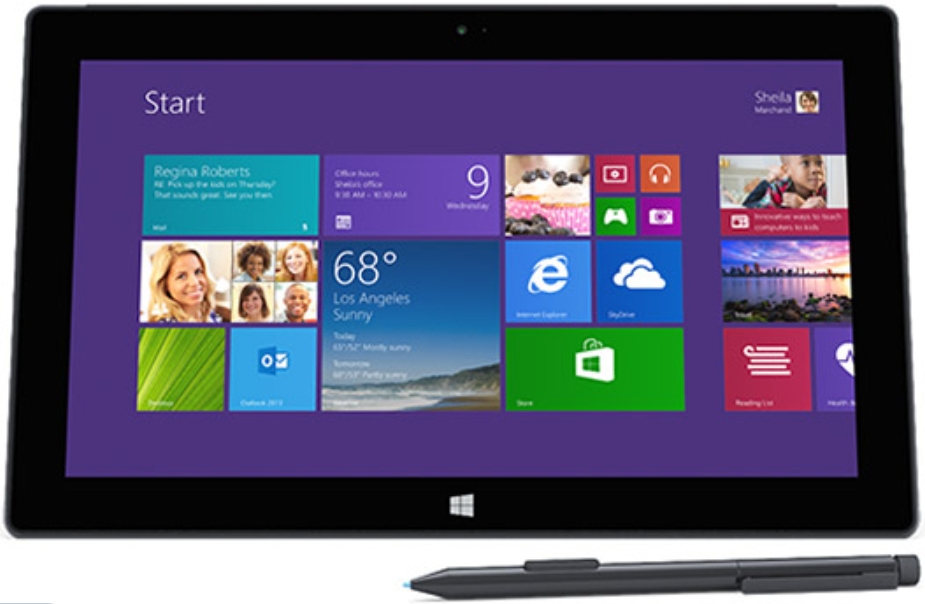
Microsoft Surface Pro 2

Microsoft Surface Pro 2

But it’s not a desktop PC, and it still can’t do some of the basics. It can handle email, both reading and writing, but it can’t multitask very easily. This means that any task that requires grabbing info from one app and using it in another is iffy and requires so many steps that it’s almost not worth doing unless you’re desperate.

My iPad also can’t do standard PC apps such as MS Word and Excel and the gazillion little utilities that I can’t live without, and its ability to handle the vast range of webpage styles is poor, which makes web browsing and research a more miss than hit exercise. There are countless workarounds for mainstream desktop programs and app alternatives for mobile devices that are supposed to render standard websites readable, but these are clunky and offer poor alternatives to the real deals.

My iPad can’t handle images and videos very well, and it balks at most online video formats outside of YouTube. Thus, it’s a great tool for what it can do, but it leaves me on a short tether to my desktop.

I’ve been closely following the 2nd-to-4th generation iPad releases, but I haven’t seen the breakthroughs that I need. I also have an android tablet to keep an eye on what’s happening in that sector, but the issues are similar.  Continue reading

ISSOTL 2013: ‘Doing SoTL Means You Never Have to Say You’re Sorry!’

By Stefanie Panke
Editor, Social Software in Education

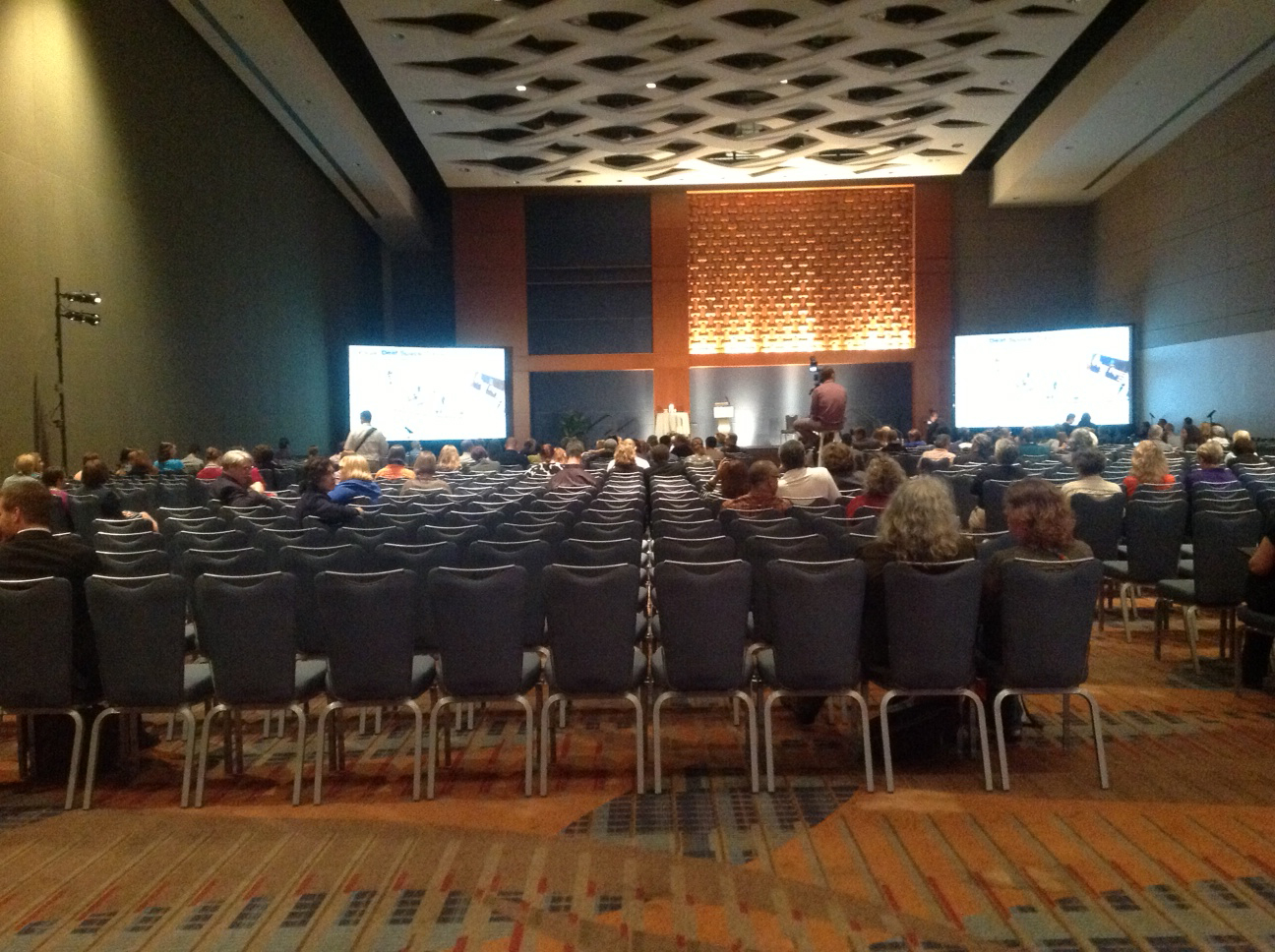
The 10th annual conference of the International Society for the Scholarship of Teaching and Learning was held in Raleigh, North Carolina, on October 2–5, 2013, hosted by Elon University’s Center for Engaged Learning (CEL). ISSOTL 2013 attracted approximately 600 participants. Most of the attendees came from universities across the US. Visitors from Canada, Europe, Australia, and other countries added an international flair to the event.

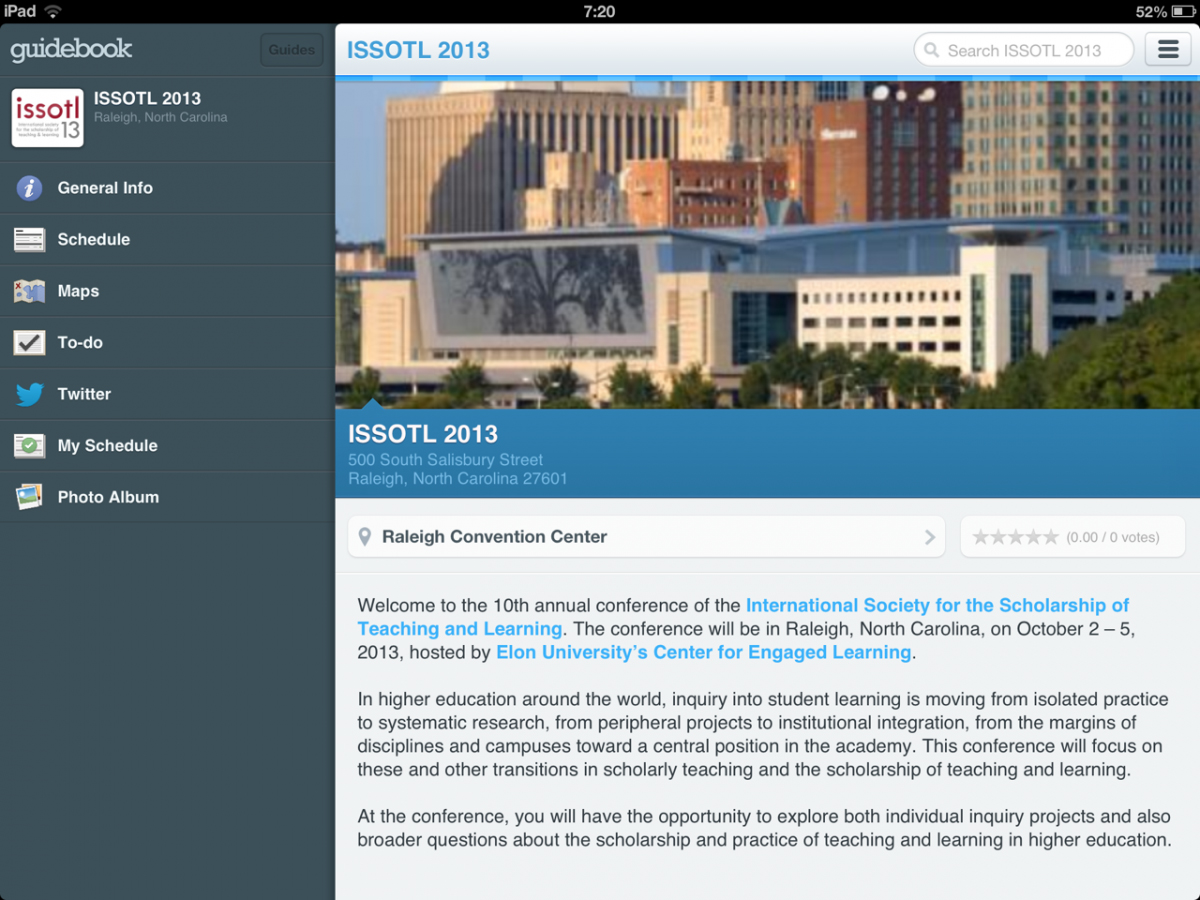
The conference organizers Peter Felten, Jessie Moore and Heidi Ihrig did a remarkable job in bringing together the traditions and values of the SoTL community with innovative ideas and emerging technologies. The conference was preceded by a free online series that featured videos, chats and discussion forums. During the event, participants were able to follow their personalized schedules on their mobile devices using the guidebook conference app.  At the same time, plenary presentations did not rely on Twitter-walls for interaction, but used buzz groups and other small group discussion formats to foster in-depth dialogue and deep processing.

 Schedule, planner and collective photo album: ISSOTL Guidebook App. Click image to enlarge.

Schedule, planner and collective photo album: ISSOTL Guidebook App. Click image to enlarge.

Wednesday, October 2: ‘The 8-track-tape Player of Opening Plenaries’

issotl 02For me, who like most participants did not book an additional pre-conference workshop or symposium, the conference started at 6:30 pm on Wednesday with the initial plenary session. The purpose of the plenary was to bridge from the online pre-conference to the live event, as the moderator Randy Bass (Georgetown University) jokingly explained: “This is not a task that anybody had to do a few years ago, and this is probably not a task that anyone will have to do a few years from now. We are the 8-track-tape player of opening plenaries.”  Continue reading

Students: Win a Trip to L.A. – Enter the IWitness Challenge – Deadline 12/2/13

i witness
Students across the country have already started working on their IWitness Challenge project sponsored by the USC Shoah Foundation – The Institute for Visual History and Education, but there’s still time for youngsters in your community to enter this free online program geared to all secondary-school students.

The deadline to enter the Challenge is Dec. 2, 2013. The winning student, along with their teacher and a family member will be brought to Los Angeles to showcase their work as part of the 20th anniversary activities for the Shoah Foundation, which was founded by director Steven Spielberg in 1994 after making “Schindler’s List.”

The IWitness Challenge (iwitness.usc.edu) connects students with the past in a very personal way that spurs them to take action to improve the future.

With access to many of the Shoah Foundation’s 52,000 testimonies of survivors, liberators and rescuers, students experience history in a way that hits home. Instead of reading facts from textbooks, students feel the emotions and build relationships with those who lived through seemingly impossible situations.

But students do more than watch the testimony. The IWitness Challenge compels them to think, to make smart choices and to create their own project and video from what they’ve learned. By encouraging teachers and students to create their own lesson plans, IWitness allows them to expand on practically any subject they wish to pursue. From civics, government and history to poetry, art and ethics, educators can tailor lessons appropriate for their classrooms.  Continue reading

VLC Media Player: Many Hidden Features

Chaz Baruela80By Chaz Baruela
Student, University of Hawai’i at Hilo

The first time I bought a laptop I used the default media player program, which is Windows Media Player. Unfortunately, there are some file types that do not work unless you download extra codecs for them. I didn’t want to download extra codecs, so I asked my friends what media player they use. That is when VLC media player was introduced to me. I have been using this program for the past five years, and in my opinion it is one of the best media players around.

VLC Media Player

VLC Media Player

First, the program is 100 percent free plus the download and install is quick and easy. When you install VLC, you don’t need to download extra codecs. Almost all video and music files such as mp4, mkv, avi, mp3, and ogg are playable as soon as VLC is installed. One classmate, Kai, commented on my post and said that he uses VLC media player to play flash video and matroska video files (Gilding). Another, Leleiohoku, said that she only found one movie that they couldn’t play (Stafford). My point is that VLC plays almost everything.

When you start up the media player, one of the first things you will notice is the interface. Reviews about how simple and attractive it looks are mixed. However, I think it is simple and has the basic functions covered such as a loop and a playlist. What you might not know is that there are some other “hidden” buttons that allow you to record, take a snapshot from a video, and a frame by frame button. I don’t see much use for frame by frame because all it does is stop the video and play it forward one frame at a time.  Continue reading

A Caltech Grad in a Caltech MOOC

picture of Harry KellerBy Harry Keller
Editor, Science Education

[Note: Harry, who holds a BS in chemistry from the California Institute of Techology and a PhD in analytical chemistry from Columbia University, has been sharing his first MOOC experience as comments to Jim’s “Technology in Higher Ed: We Ain’t Seen Nothin’ Yet” (10/3/13), but they’ve quickly grown into a series that we’ll be publishing on a loose schedule. See part 2, 3, 4 and 5. -Editor]

October 3, 2013

Future MOOCs may or may not be termed “MOOCs.” Things are reaching the point where small operations may change the world. Just look at the impact that Salman Khan had on education.

The Kepler project in Rwanda is an example of being a bit more creative by taking MOOCs and combining them with in-person teachers to deliver high-quality education. After all, they’re free!

How this resource comes to be used will affect how it evolves.

Another factor will be adaptive learning options and more interactivity.

Opening screen for "Lecture 1: The Learning Problem Free," from Caltech Professor Yaser Abu-Mostaf's free introductory Machine Learning online course (MOOC).

Opening screen for “Lecture 1: The Learning Problem,” from Caltech Professor Yaser Abu-Mostaf’s free introductory Machine Learning online course (MOOC).

I’m currently taking my first MOOC, given by my alma mater, just to learn something new (machine learning — haha) and learn about MOOCs first-hand. So far, it’s nothing very exciting, but I haven’t bothered with any of the discussion group stuff because I just don’t have time for it. I may not have time to complete the course, but at least I’ll have learned SOMETHING and experienced it.

October 6, 2013

Follow up on my MOOC — I handed in the first homework assignment. I tried to do the last problem (requiring writing software) the hard way (by quantitative analysis) and decided that it would just take too long and settled for an alternative approach (Monte Carlo method), which only took a few minutes to program and run.

Professor Yaser Abu-Mostafa

Professor Yaser Abu-Mostafa

My first homework grade = 10/10. I took a look at the discussion group after I finished my homework to see what sort of questions and answers were being posted. I guess I’m rather biased from having been a Caltech student and having done essentially all homework solo. I think figuring out how to do it is as important (maybe more so) than doing it.  Continue reading

Language Is the Key to Community

Frank B. WithrowBy Frank B. Withrow

Human infants come into this world seeing, hearing, smelling, tasting and feeling the sensory world around them. The human culture developed the spoken word so that they could share private sensory experiences publicly. That enabled them to develop communities that built civilizations. About five thousand years ago mankind discovered that they could transform the spoken word into the written word. That enables mankind to transfer experience and knowledge over time and space.

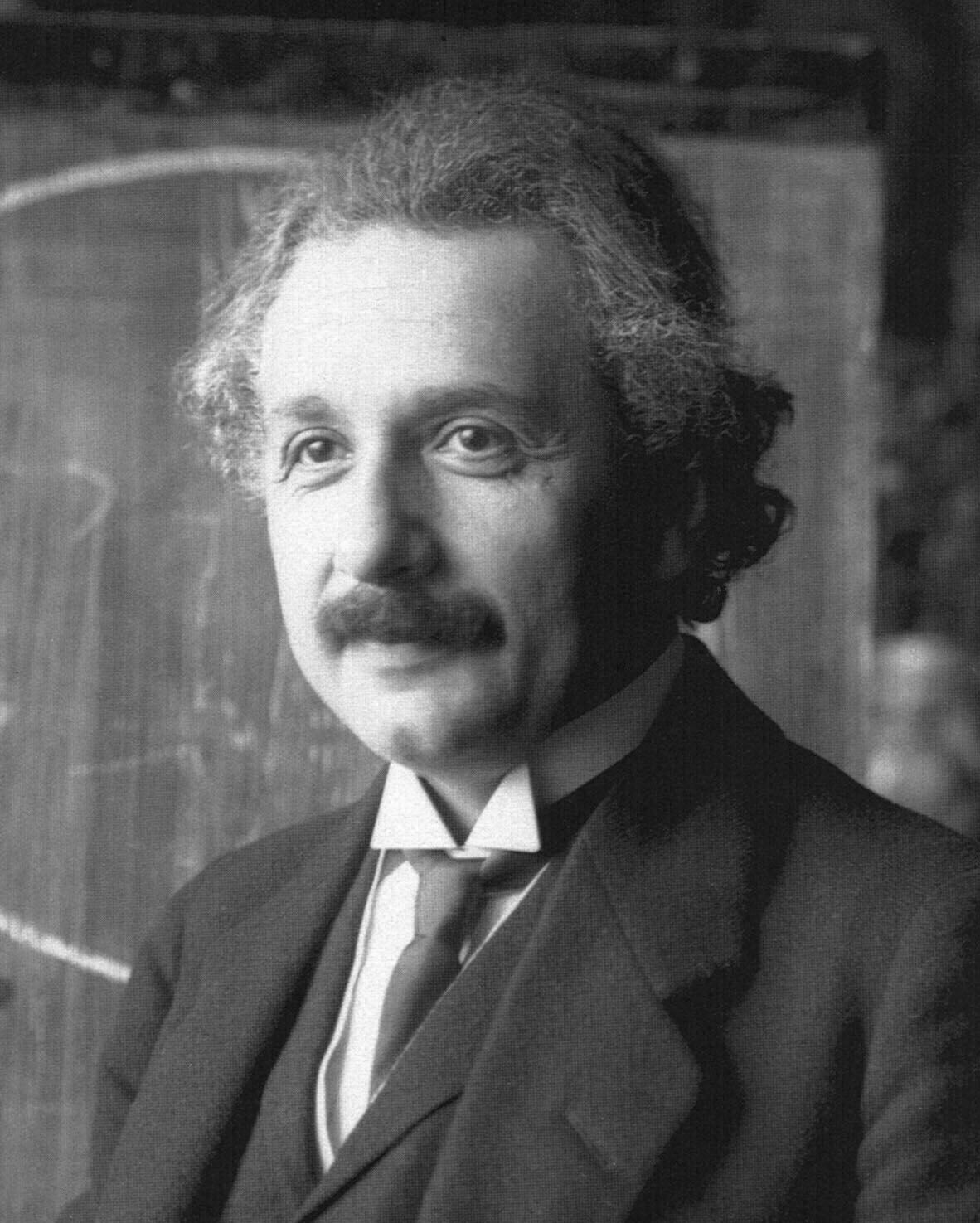
Albert Einstein

“Albert Einstein . . . felt the development of speech and language was one of mankind’s greatest accomplishments.”

I have been enjoying the thoughts and ideas about a peaceful world by a German Jew. They were written some eighty years ago as he worked at the League of Nations trying to avert World War II. He did not write in English so his original thoughts were in German and subsequently translated into English. He was very thoughtful in his deliberations. Among other things he felt technology would make us so efficient that there would not be enough work to employ everyone. He also felt the development of speech and language was one of mankind’s greatest accomplishments. I have been reading Albert Einstein’s papers of the 1930s.

We know our world through our sensory perceptions. They are the beginnings that are followed by words. There is an inherent desire by humans to communicate one with another. If our sensory perception are disabled we find a way around them to meet our needs to share. If we are deaf we use American Sign Language or lip-read. If we are deaf blind we learn touch signs. Even mentally slow children learn speech and language.  Continue reading

Technology in Higher Ed: We Ain’t Seen Nothin’ Yet

Jim ShimabukuroBy Jim Shimabukuro
Editor

Technology is increasingly dividing the academy, but this is a natural pattern in change. Most HE institutions fail to grasp that disruption is an outside force that creates a whole new population of students. This oversight or denial leaves colleges and universities fighting to defend its traditional practices — but they’re battling a strawman.

The real “enemy,” if you will, is a whole new way (MOOCs) to reach the world’s nontraditional student population. MOOCs aren’t aimed at traditional college students, but many traditional students are exploring the benefits of MOOCs and some institutions are exploring MOOC-like courses for their students.

The leadership in MOOC development and deployment is increasingly shifting to other parts of the world where HE has been a pipe dream for the masses. In the US, it is also shifting, on little cat feet, to small groups or departments in lesser-known colleges and universities with staff who understand and are exploring the potential of MOOCs. These garage and bootstrap operations are where change is being forged, and it will be interesting to see, in the coming months (not years), where this will take us.

We’re only seeing the tip of the iceberg in terms of technology-driven changes to come in HE. On our campuses, we need to take our eyes off the little islands that we call home and look beyond our shores to the vast ocean of possibilities. If we think we’ve witnessed change, we have another think coming. We ain’t seen nothin’ yet!

__________
MOOCs Outside of Mainstream U.S. Higher Ed (updated 10/20/13):

China MOOC: xuetangX, accessed 10/20/13.

Tim Johnson, “Online education inspires eager students in Latin America,” CSM, 10/4/13.

MOOCs take off in Rwanda: Accreditation, sustainability and quality issues,” Institute of Learning Innovation, 10/1/13.

Carolyn Fox, “Higher, open education for India,” Open Source, 8/29/13. \

Hiep Pham, “Research chemist launches Vietnam’s first MOOCs site,” University World News, 9/21/13.

MOOCs.co, 2013: “Higher Education MOOCs“; “K – 12 MOOCs“; “MOOCsNews© on Credits, Certificates, Degrees, Career Services, Job Placement and other related subjects.”

Technological Advances for the Disabled Benefit Everyone

Frank B. WithrowBy Frank B. Withrow

Captioned Films for the Deaf became a Federal law in 1958. Television was a more difficult problem. Open captions on television were opposed by a percentage of the hearing population. Therefore, we had to develop a system that, on the same broadcast, could have captions and a broadcast that was free of the captions. We experimented with the broadcast technology and discovered that we could in fact encode the caption in the broadcast signal and with the proper decoding system have a clear non-captioned broadcast and with the decoder have a captioned program. The FCC approved the system and it works today.

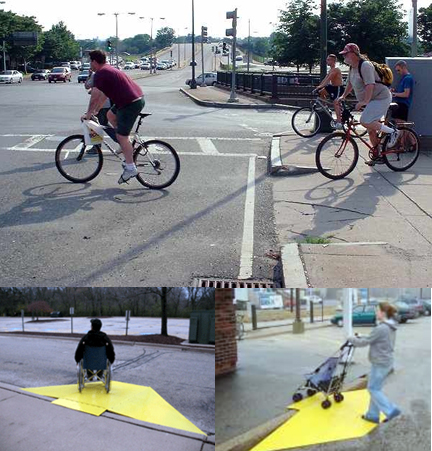
Curb cuts benefit everyone.

Curb cuts benefit everyone.

Ironically the side effects of captions have made caption television an interesting product. Bars have used it in crowded environments. Doctors and dentists have used it and captions are widely used in hospital rooms. Like so many devices the captioned TV has been used beyond its original purpose. We see many applications of systems devised for the disabled being used by the wider community. The IQ test was originally developed to identify mentally limited children. The typewriter was developed for cerebral palsied individuals. In fact, Alexander Graham Bell was a teacher of deaf children when he developed the telephone. While he was not specifically developing the telephone to aid deaf people, his concern for deaf education provided the background for the telephone.

Many advances in our society have come from work among the disabled that was designed to enable them to more effectively compete in the world.

Today’s advancements with high technology lead us to believe that cochlear implants and optical implants will lessen the limitation of hearing and sight loses.

We know that the human brain can overcome many obstacles. Digital technologies will open many doors in the future. For example, we have the technology today to translate a severe speech problem into understandable speech. If the speaker has consistent speech even if it is not understandable we can use digital technologies to make it understandable.

Wheelchair curb cuts benefit parents with babies in strollers. I had a DC bicycle delivery boy tell me they were for them.

The larger community also uses things that benefit the disabled. Education for the disabled makes them taxpayers rather than tax users. Good programs for the disabled are wise investments for society.