





Note: This is an archive for the “Spotlight” feature in the right sidebar of ETCJ. For the current spotlights, see the sidebar.

Jessica Knott: “While a lot of these younger students are pretty gung ho to go forth and innovate technologically, they will be stymied in many cases by an aging infrastructure and restrictive technology rules. Perhaps even by the culture of co-workers who discourage them from using tech in their teaching” (An Interview with Jessica Knott: Teaching an Online Class on Course Development).
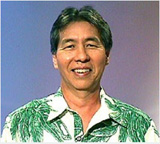
Bert Kimura: “If paper and pencil testing is absolutely required in a class, it probably shouldn’t be offered as a DE class. Not today anyway” (Remote Proctoring: More Questions Than Answers).

Curtis P. Ho: “The challenge will be to create and implement authentic learning in an online course. How authentic can learning be if we are confining it to a 15-week semester at a distance?” (A Conversation with Curtis Ho: AACE E-Learn SIG on Designing, Developing and Assessing E-Learning by Stefanie Panke.

Judith McDaniel: “The nature of online education is that it removes me, the instructor, from the center of the learning process and allows the students to learn from me and from one another” (“Creating Community: Part 3 – Hard Conversations in an Online Classroom – Heart of Darkness“).

Richard Koubek, provost of LSU Baton Rouge: “Our vision is LSU, anywhere, anytime, and that physical boundaries would not define the boundaries of this campus…. You’re not going to get there incrementally. You have to change the paradigm” (“Successful Online Programs Require a Paradigm Shift“).

John Mark Walker: “If educational communities can continue to push platform integration and content portability, in the future, students may be able to design their own personalized degrees from smaller, modular chunks that cross institutional barriers” (“MOOCs Are Dead. Long Live MOOCs!”).

Bryan A. Upshaw: “Most teachers already have the resources to videoconference. If they have a smartphone, tablet, or computer, then they probably have everything they need!” (“Bring the World to Your Classroom: Videoconferencing“).

Tim Fraser-Bumatay: “Although the format leaves us far-removed physically, the online forum has its own sense of intimacy” (Judith McDaniel, “Creating Community: Part 3 – Hard Conversations in an Online Classroom – Heart of Darkness“).

Ryan Kelly: “For me to be able to work with people clear across the country for an extended period of time opened me up to new things” (Judith McDaniel, “Creating Community in an Online Classroom: Part 1 – Getting to Know You“).

Daniel Herrera: “As a Mexican American, I know that words of identity are powerful; so to discuss white privilege with my professor and classmates in a face-to-face class would have been terrifying and impossible” (Judith McDaniel, “Creating Community: Part 2 – Hard Conversations in an Online Classroom – Othello“).

Camille Funk: “Instructional design is an emerging profession and in the midst of a renaissance. There is a need to structure and develop this growing field” (Stefanie Panke, “New Instructional Design Association in Higher Ed: An Interview with Camille Funk“).

JD Pirtle: “Coding is learning to create and harness the power of machines, both near and far…. But coding isn’t really about machines, programming languages, or networks—it’s about learning new and powerful ways to think” (Stefanie Panke, “Wearable Tech on Your Preschooler? Technology Education and Innovation for Children“).

John Wasko: “Here is the great thing. You don’t need any special set up or call center or anything like that. Just a smartphone. I use an iPhone 4. Works great. If we can develop mobile techniques to help these students, every university will knock on their door” (Lynn Zimmerman, “Social Media in TESOL: An Interview with John Wasko“).

Katie Paciga: “It’s always better to use the technology to accomplish meaningful, child-centered goals related to communication — to consume information, to create new messages, and to communicate those messages to others” (Lynn Zimmerman, “Technology in Early Education: An Interview with Katie Paciga“).

Lee Shulman: Whereas the traditional approach aims to achieve generalized findings and principles that are not limited to the particulars of setting, participants, place and time, the SoTL community seeks to describe, explain and evaluate the relationships among intentions, actions and consequences in a carefully recounted local situation (summary by Stefanie Panke in “ISSOTL 2013: ‘Doing SoTL Means You Never Have to Say You’re Sorry!’“).

Jesse Stommel: “The course (and its participants) inspired our thinking about MOOCification, which basically means leveraging the best pedagogies of MOOCs in our on-ground and small-format online courses and laying the rest to waste.”

Sean Michael Morris: “The MOOC has become something manageable, something we we can mine for data, and something that simply isn’t — and never was — all that innovative” (MOOC MOOC! The interview by Jessica Knott).

Tom Evans: “We are … using this MOOCulus platform as a learning tool for students taking Calculus at Ohio State…. However, any student, anywhere, can access MOOCulus, anytime, by logging into the site using their Google ID” (MOOCulus for Calculus Fun: An Interview with Tom Evans by Jess Knott).

Curt Bonk: “Today, anyone can learn anything from anyone at any time.” “Students want feedback on everything they do. You know what happens when you give feedback on everything they do? You die” (Stone Soup with Curt Bonk: Armchair Indiana Jones in Action by Stefanie Panke).

Daniel McGee: “Successful [Calculus I] students appeared to need a unified approach, which emphasized verbal situations, geometric figures, algebraic expressions and the relations between them” (Study Suggests the Need for an Intergrated Learning Styles Approach to Calculus by Jessica Knott).

Kathlyen Harrison and Michael Gilmartin: “We highly recommend [Triptico] for teachers that want to improve interactivity, foster competition, and engage students in the learning process” (Triptico: A Powerful and Free Instructional App).

Cathy Gunn: “Traditional methods for effecting change at my institution aren’t getting us even to a trickle yet, let alone to thinking about or planning for a wave!” (How Will Traditional Leaders Fare in the Wave of Open Courses?)

Janet Buckenmeyer: “It takes more time to design and develop the [online] course. It takes more time to monitor students in an online course…. How are faculty compensated in terms of workload and pay for the additional work an online course requires? How many students should be placed in an online course?” (A Talk with Janet Buckenmeyer on Issues in Online Course Development, by Lynn Zimmerman).

Billy Sichone: “My phone has been a valuable asset as I can check the internet for information at any and every time. For instance, I once took an international trip to two countries in a row and the phone was my only source of assignment submissions etc. I did not miss out at all” (A Student’s View of an Open University: An Interview with Billy Sichone, by Stefanie Panke).

Julia Kaltenbeck: “Seek ways to build and maintain your community! The community is the single most important success factor in crowdfunding and social payments. To put it simply: No community, no funding” (Julia Kaltenbeck: How Crowdfunding and Social Payments Can Finance OER, by Stefanie Panke).

Jessica Ledbetter: “What keeps me going is that I’m actually creating things I might not find the time to do otherwise. It’s nice to be able to learn with others and see what they’re doing. I always learn by looking at others’ code” (Open Learning at P2PU: An Interview with Jessica Ledbetter, by Stefanie Panke).

Susan Murphy: “We are all so afraid that we’re going to miss out on something, so we just skim and scan and re-post without really taking time to consider the source. We sometimes forget that there are real people behind the avatars. And that it’s worth getting to know more about them” (The Human Face of Twitter: An Interview with Susan Murphy, by Jessica Knott).

Emily Hixon: “If a teacher thinks that she/he is going to be able to talk ‘at’ students and they will learn, she is mistaken. Teachers must be prepared to engage students and use technology to support an interactive, meaningful approach to learning” (Integration of Pedagogy and Technology in Teacher Education: An Interview with Emily Hixon, by Lynn Zimmerman).
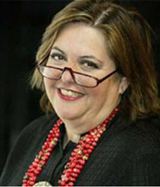
Parry Aftab: “Unless we can make the technology safer and provide the right skills to use it responsibly and teach cyber-self-defense, we can’t expect students to use it, enjoy it or benefit from it. We owe it to the kids” (Bonnie Bracey Sutton, “Cyberbullying: An Interview with Parry Aftab“).

Nancy Willard: “It sure does not help us in transitioning to Web 2.0 if the news is that cyberbullying is at an epidemic level. But it isn’t. And my approach will demonstrate the positive norms of students, which should also translate to greater willingness to also use these technologies for instruction” (Bonnie Bracey Sutton, “Cyberbullying: An Interview with Nancy Willard“).

Marc Prensky: “Instead of just spending, and often wasting, billions of dollars to create things that are new, let’s try harder to fix what we have that’s already in place” (Simple Changes in Current Practices May Save Our Schools).

Tim Holt: “What happened to these professional learning communities is that they had simply become meetings where teachers and administrators looked at student data and were trying to outwit the test” (An Interview with Tim Holt, Author of ’180 Questions’ by Bonnie Bracey Sutton).

Idit Harel Caperton: “I think students learn more effectively by creating and/or building an entity for public consumption and through collaboration, connecting a learning community and using their creativity — learning to problem solve. . . . I am a longtime advocate of 1:1 learning environments in which each student has access to his/her own computer and broadband connection” (Idit Harel Caperton – An Interview at the Edge of Change, by Bonnie Bracey Sutton and Vic Sutton).

Henry Neeman: “Today, there are a number of ways for citizens to access supercomputing. Often, these are known as ‘science gateways,’ and they provide a simple interface to a complicated back end. An example is nanoHUB, which K-12 and postsecondary students can use to do nanotechnology simulations” (Bonnie Bracey Sutton, “Supercomputing: An Interview with Henry Neeman“).

Dan Branan: “I see studies like this one [Colorado Department of Higher Education study] as a first step in establishing the legitimacy of online educational experiences in the sciences” (Not Satisfied, but Hopeful, About Online Science).

Niall Watts: “I cannot see a MOOC like ‘Designing a New Learning Environment‘ replacing a university course…. Nor do I see such a MOOC as a ‘taster’ for Stanford. The MOOC is a completely different experience, a bit like a virtual learning environment open to the world” (The MOOC, an Incubator for Great Ideas: A Personal Experience).

Ray Rose: “The most obvious issue with MOOCs is the use of video and the lack of captioning. OCR [Office for Civil Rights] has been clear that all video in online learning environments must be clearly captioned” (comment on “MOOCs and Traditional Online Courses Are on a Collision Path“).

Judah Schwartz “is a remarkable pioneer in our field because he saw technology as a way of looking at mathematics in very new and alternative ways….He likes to say the Ptolemy observations of the solar system were accurate. There was just one thing wrong with them and that was they were basically incorrect” (Judah Schwartz: Through the Lens of the Computer, by Frank B. Withrow).

Jim Riggs: It is unrealistic to build entirely new and parallel systems of Internet driven postsecondary institutions that can effectively educate the very large and neglected middle third of the population. Therefore, a middle ground must be found between what traditional higher education provides and what the new and rapidly growing e-learning opportunities can offer (“Can America’s Wasted Talent Be Harnessed Through the Power of Internet Based Learning?“).

Jim Dator: “Some futurists say that the era of the information society is over and that the next era is the Dream Society of icons and aesthetic experience…. Elements of a Dream Society already exist in the behavior of the Millennials, but it may dominate the lives of the next generation, tentatively called the Cybers” (Next Generations: Reactives to Civics to Adaptives, as Foreseen by an Old Adaptive).
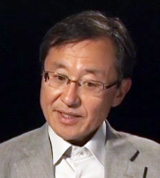 Shigeru Miyagawa: “Arriving at the station in Hiratsuka today I was surrounded by my native tongue… and people who look like me!… Something was strange…but what? Then I realized that no one was staring! I had always been stared at. A Japanese family in Alabama was very… unusual!” (‘StarFestival: A Return to Japan’ with Shigeru Miyagawa)
 Joseph Polisi: “Today the arts are simply undervalued or completely ignored by many school systems around America. In New York City, teachers, principals, and entire schools are evaluated based on test scores in reading, mathematics, the sciences, but not in the arts” (Comments on Polisi’s ‘Put the Arts Back into Schools’).
 Jason Ohler: “A new kind of presentation is in wide use for effective blog or web writing that I call ‘visually differentiated text’ (VDT), a kind of visual rhetoric that employs a number of writing conventions that are used to visually sculpt text” (Whither Writing Instruction in the 21st Century?).
 Theo Bastiaens: “With this Global Time online conference, AACE takes a brave step in a new direction. An innovative step, with an innovative platform, to serve the educational technology community” (An Interview with the 2012 Global TIME Program Chair Theo Bastiaens, by Stefanie Panke).
 Chris Dede: “Schools of education could shift their training and credentialing to encompass not only teachers, but also parent tutors, informal-educator coaches, and community mentors” (21st Century Education Requires Distributed Support for Learning).
 John Sener: “Instead of trying to figure out how to install ever larger bodies of content in every student, we should be figuring out how to define success for each student more individually” (Shaking It Up, Part 1 — A Conversation with John Sener, Author of ‘The Seven Futures of American Education,’ by Judith McDaniel. Read part 2 and part 3).

Tim Stutt: “When we start to see more principals, superintendents, and decision makers who grew up with gaming as a formative experience, there will be a real opportunity for educational gaming to gain momentum”
(Why Educational Games Fail).

Tina Rooks: “In the U.S., the recent National Educational Technology Plan (Transforming American Education: Learning Powered by Technology) provides a specific roadmap for ‘revolutionary transformation rather than evolutionary tinkering’ to raise expectations from ‘adequate’ to ‘exceedingly proficient'” (‘Adequate’ Isn’t Good Enough: The NETP Roadmap to Higher Expectations).

Harvard’s Faculty of Arts and Sciences will no longer require professors to give final exams (“Bye-bye, Blue Books?”, Harvard Magazine, July-Aug 2010).


Blair Levin and J. Erik Garr, “A New America Through Broadband” (Washington Post 7.16.10).
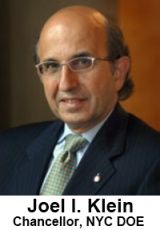
ePals will provide, at no cost to NYC’s DOE, the means for public schools to create online communities connecting students, parents, teachers, and school leaders. This cloud-based solution will save the DOE millions annually on infrastructure costs to host e-mail (ePals press release, 7.15.10).

Jeff McClellan, head of Cleveland’s MC2STEM High School, where each grade level is embedded in a different STEM industry partner.


Paul Kim: “Why does education need to be so structured? What are we so afraid of? The more you expect from a kid, the smarter they’re going to get.” (In Anya Kamenetz’s DIY U: Edupunks, Edupreneurs, and the Coming Transformation of Higher Education, 4.1.10).

Susan C. Aldridge, president, U of Maryland University College: “The Sarah Englishes of the world do not need to change. We do. The goal of every university must be to leave no motivated adult behind” (Baltimore Sun, 7.6.10).

Jodi Beggs: “Just like in music and movies, technology makes it possible for a large number of students to be served by what are likely to become ‘superstar’ instructors” (Huffington Post, 7.6.10).

Charles Leadbeater: “We need really radical thinking, and . . . radical thinking is now more possible and more needed than ever in how we learn” (Education Innovation in the Slums, dotSUB 6.16.10).


A study by Derek Robertson and David Miller, to be published in the British Journal of Educational Technology, “suggests that the increased use of games systems in Scottish schools is bringing real benefits.” (Lulu Sinclair, Sky News Online, 7.5.10)

Barb Brown’s “ISTE10 Reflections”: Notes on ISTE (International Society for Technology in Education) conference in Denver, Colorado, June 27-30, 2010. Technology Leadership, 7.3.10

Nicholas H. Allen: Web 2.0 “technologies have the potential to significantly alter the time and and place paradigms that have anchored the educational experience for centuries” (Halm, The Education Pipeline Is Changing, IMS Global Impact 2010).
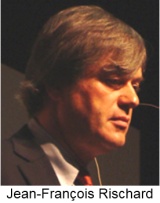
“Institutions of education tend to be much more change resistant when they should be the opposite,” said Rischard, opening keynote speaker for ISTE 2010 (June 27-30, Denver).

Gov. Tim Pawlenty: “Do you really think in 20 years somebody is going to put on their backpack, drive a half hour to the University of Minnesota from the suburbs, haul their keister across campus and sit and listen to some boring person drone on about Econ 101 or Spanish 101?”

Eric Jansson: ‘Rebundling’ Liberal Education (Inside Higher Ed, 6.22.10): “Those looking for fundamental shifts in this [liberal education] pedagogical model will be disappointed. Those looking for creative options to organizing, planning, and packaging – or ‘rebundling’ – this style of education are likely to be rewarded.”

James J. Duderstadt
The Future of the University: A Perspective from the Oort Cloud (Feb. 2007) and Transforming the University to Serve the Digital Age (Winter 1997-98)


 Educational Technology and Change Journal

Leave a comment