In the University of Hawaii System yesterday (March 31), we received a memo about our 2020 summer sessions: The May 26 to July 3 session will be online only; the July 6 to August 14 session may include F2F sections if we’re clear of the COVID-19 emergency measures by May 15.
A potential registration problem in the midst of this pandemic is the blanket use of the word online. When nearly every course is designated online, the lack of distinction will be confusing for students. The question foremost in the minds of many will be: “Will we have to meet online at a specific time?”
This question highlights the critical difference between sync and async1 classes. Sync classes, although online, require students to meet at specific times on specific days. This is a hardship for many with responsibilities (e.g., jobs, caring for family members), in distant locations (e.g., different time zones), or with preferred learning styles (e.g., async vs. sync) that make it difficult or impossible to participate. Continue reading →
By Harry Keller
Former ETCJ Science Editor
& President of SmartScience
The richest, most “entitled” communities have the most viral spread. -HK
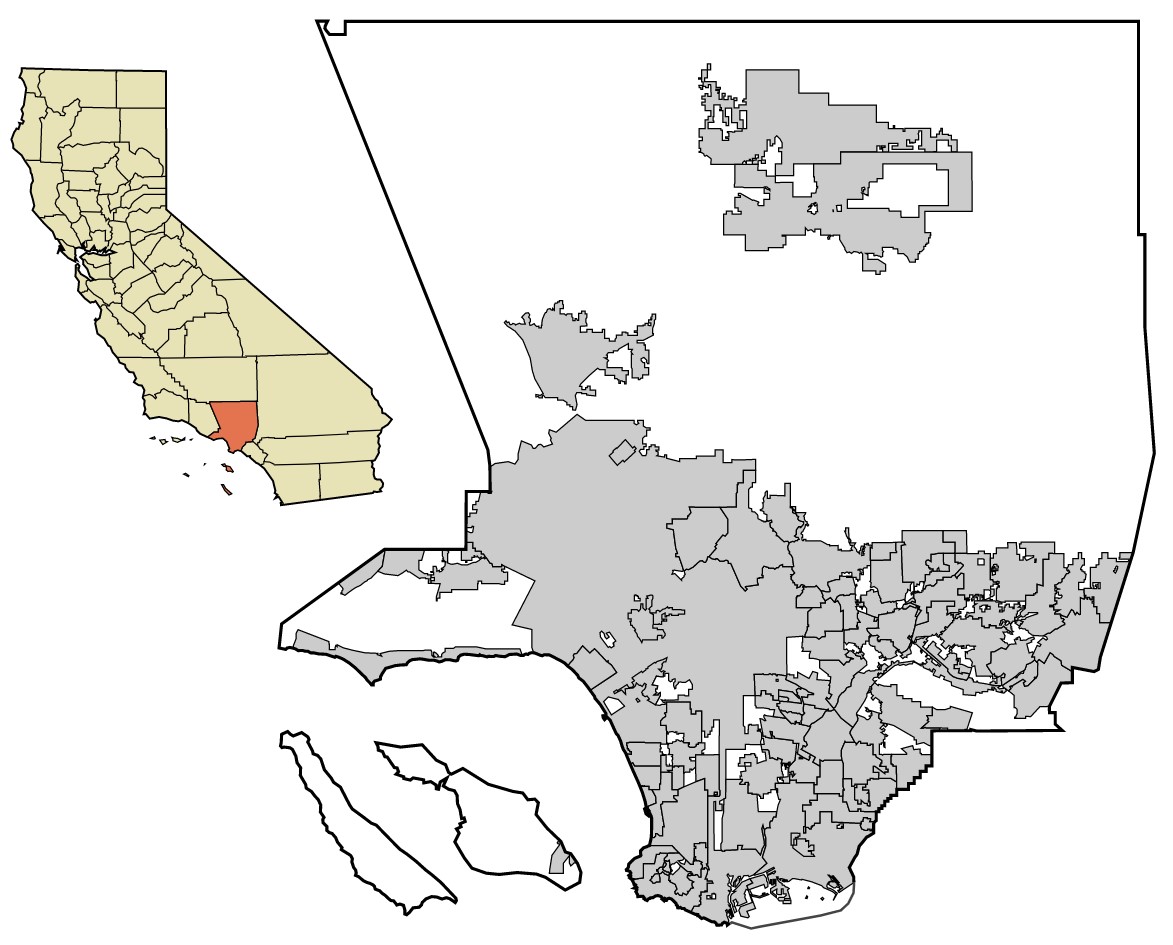
There are 88 cities in Los Angeles County, California. Each city has a mayor and a city council. -Wikipedia
Apr 1, 2020 at 5:06 AM: My little town of 36,000 is one of the few in LA County with more than 100 out of 100,000 reported cases of the virus. Others include Bel Air, Beverly Crest, Brentwood, Carthay, Century City, Crestview, Hancock Park, Hollywood Hills, Melrose, Pacific Palisades, Palos Verdes Estates, and West Hollywood. You may notice a pattern here. The richest, most “entitled” communities have the most viral spread. They thought that they were immune and ignored the warnings — or else, they simply are the ones with more access to testing because of their wealth. (Or both?) Continue reading →
A memo was circulated today by Maria Bautista, our Vice Chancellor for Academic Affairs1, re “Assessment During Remote Delivery of Spring 2020 Courses or Proctored Tests Alternatives and Information Sharing.” In response, Guy Kellogg posted a comment about using Turnitin. In response to Guy’s comment, I posted the following reply:
There are also DIY means to discourage plagiarism as well as ghostwriting2:
1. One is to assign unique topics — as opposed to generic. To make a topic unique, here are some possibilities:
Require the inclusion of quotes from specific or nonmainstream readings, videos, or class lectures. The more specific or atypical, the better.
Require the inclusion of quotes from classmates in online discussions or from a personal interview.
Require the inclusion of a firsthand experience or observation, i.e., a paragraph or more of personal narrative — to support the student’s thesis.
Require the application of specific critical thinking tools — e.g., logical fallacies, SMELL, Henry, or Davis Oldham’s “Evidence” (Shoreline CC) — for the purpose of analysis.
Other: _______. Once you begin thinking in terms of unconventional writing assignments that are unique to your course, many other possibilities will spring to mind.
By Lynn Zimmerman
Associate Editor
Editor, Teacher Education
As an educator who is not currently involved in classroom teaching, I have been curious about what’s going on as school-age children are staying at home. On March 21, 2020, Frank Stasio, host of The State of Things, presented a program called “Pandemic Parenting: Tips, Tricks and Advice from the Experts.” The State of Things, produced by WUNC, focuses on what’s happening in North Carolina, but many topics, like this one, are of general interest.
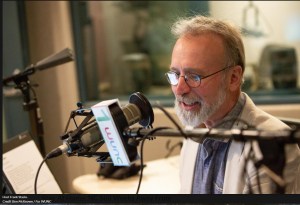
Frank Stasio, host of The State of Things.
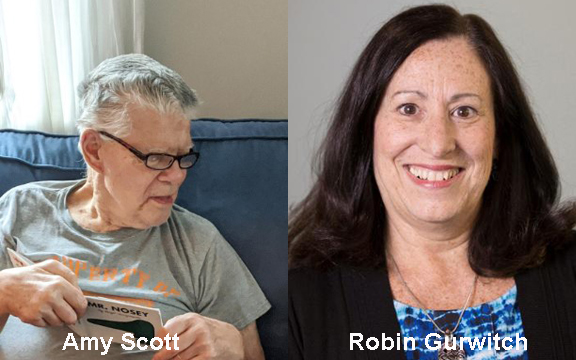
Duke University psychologist and professor, Robin Gurwitch, and eighth-grade English teacher, Amy Scott, were Stasio’s guests on the show. He and the guests talked with parents and caregivers about everything from how to talk to your child about coronavirus to realistic expectations of a stay-at-home-education routine for all children, including those with special needs and (gasp) teenagers.
I’d like to hear from K-12 teachers and parents of K-12 students. What is working for you? What lessons have you learned? What do you wish you had?
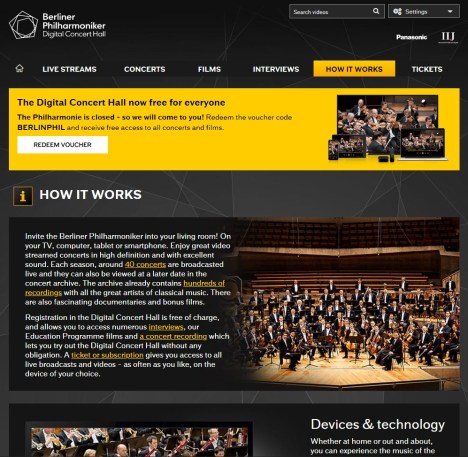
Berliner Philharmoniker is giving access to their Digital Concert Hall free for a month. I’ve just redeemed a voucher. I can listen to one of the best orchestras at home.
Overview of Berliner Philharmoniker’s Digital Concert Hall
By Harry Keller
Former ETCJ Science Editor
& President of SmartScience
Are we about to enter a new world, and how brave will it be? -HK
Mar 29, 2020 at 9:30 AM: I absolutely must give a huge shout-out to the doctors, nurses, and health care workers risking their lives under sometimes impossible situations to save lives. All of the support personnel in our hospitals, from janitors to pharmacists, also deserve our thanks for entering buildings under these conditions that threaten their lives and those that they live with. It is beyond unfortunate that we did not respond more rapidly to the wake-up call from China.
Yesterday was a great day for me because I had visits from both of my children and a walk with my wife.
It began with my son calling to say he was dropping by. He said that his 14-day quarantine was over. He arrived with his wife and an Indian lunch for us all to share. We still did not approach each other too closely. It seems that you cannot take too much care these days. Continue reading →
1) Students make their own accounts (free) with AAPPL.
2) Instructors send a class code to students.
3) Students log in to AAPLE and use the class code to access the shared material.
By Harry Keller
Former ETCJ Science Editor
& President of SmartScience
My daughter also informs me that her son’s elementary school principal has the virus now. -HK
Mar 27, 2020 at 2:01 PM: My wife and I continue in good health. We are now being more careful in what we do. We have found a local restaurant that is offering home delivery of boxes of fruits and vegetables in place of meals. My daughter has had one delivery and says it looks good. We may give them a try soon. She also found a restaurant that should meet our needs when we choose not to cook. I should say when I choose not to cook because I do all of the cooking.
Our beaches, bike paths, piers, and bathrooms have been shut down now. -HK
When you receive a box, it could be contaminated with the virus. It’s not likely, but it can happen because not every infected person has symptoms. You should put the box in the sunlight if possible. Ultraviolet light is very good at destroying viruses. Open it outdoors if you can. Some apartment dwellers do not have that option. Do not bring the empty box indoors. Recycle it outside. Continue reading →
For what it’s worth, here is a description of the past week, during which nearly all in-person courses were moved online in response to COVID-19. I wrote it to Sam, the volunteer campus gardener.
In your email, Sam, you asked: “How do you conduct your online instruction?”
I would rephrase the question and ask, “How do you conduct your instruction online?”
It’s a big challenge, but I have good students. I’ve taught online before, but since none of my current students signed up for an online class, I took spring break to up my skills, thanks to the indefatigable support of professional staff and volunteer peers, and I now offer a distance education class.
The best [Zoom] view to start with is like the old Hollywood Squares TV quiz show, but with 5×4 (20) students. -GK
Here’s how it works: We use a videoconferencing app (Zoom) to all meet. The best view to start with is like the old Hollywood Squares TV quiz show, but with 5×4 (20) students. We are all in our little boxes or windows, and we can all “see” each other and talk to each other that way. The students are now on two continents, but we all meet twice a week, and I have two classes like that. Continue reading →
Some of you might be wondering if there’s a way that students don’t have to print and scan to submit their tests and assignments. In other words, is it possible to do everything electronically?
The following method might work:
Instructors make a PDF form.
Instructors convert it to a fillable PDF form.
Instructors send it to student
Students work on the fillable PDF form on their computers
Students return the fillable PDF they worked on.
You don’t need to use a printer to work on the test or assignment nor a scanner to send back the assignment. Everything is electronically done. Continue reading →
I am looking for some ideas moving forward to replace lab experiences next term. I teach in a Kinesiology program and we have a lecture component and then multiple experiential labs for different courses. I am struggling with the experiential component: How do we allow them to engage given there is specific equipment required and usually classmates to work on. –Rob Burns, Clinical Instructor, Department of Kinesiology, University of Waterloo.
COVID-19 Pandemic Causes Closure of Thousands of U.S. Schools
Over 3,000 Schools Signed Up for Classkick in One Weekend Alone but Couldn’t Pay —
Classkick Now Free for Coronavirus Affected Schools to Continue Children’s Education
Children Learn from Home with Teacher’s Real-Time One-on-One Private Attention & Feedback
for Superior Education
Chicago, IL, March 23, 2020 — Classkick, www.classkick.com, the leading virtual learning app that shows teachers in real-time exactly what students are thinking and learning, announced today that they are immediately offering the Classkick Pro School Membership for free for Coronavirus COVID-19 affected schools (a $1499 value). Because of the widespread U.S. school closures, in one weekend alone in March 2020, over 3,000 new schools signed up for Classkick’s remote learning app, with over 1,000 schools unable to pay immediately. With many more schools expected to close soon and children’s education at stake, Classkick is offering Classkick Pro School for free for all schools in need. To sign up, go to: https://classkick.com/coronavirus. Continue reading →
By Harry Keller
Former ETCJ Science Editor
& President of SmartScience
Mar 25, 2020 at 1:39 PM: We are in a virtual bunker now. No more outdoor excursions until Sunday. We can go into the yard here in this rental cottage that has been our home for the last ten years, but that’s it. On Sunday, we will drive to our little bit of dirt in the mountains. This is the land we bought over four years ago to build a cabin in the mountains. So far, it cost us lots of money to obtain a building permit, but we have had plenty of aerobic exercise working the land. We are in fire safety one zone and must cut the weeds and trim the trees. We are building a stone wall. We have built a trail up into the mountains. Enough of the mountains.
3-D Perspective image of the Los Angeles Basin from the Landsat satellite using NASA’s Shuttle Radar Topography Mission (SRTM) for topography information. The vertical scale is exaggerated one and half times. (Wikipedia)
On our visits to stores, I was impressed by the store employees still on the job despite the dangers from the motley groups of shoppers potentially spraying virus everywhere. They may be happy to have jobs, but these are high-risk jobs. Get sick, and you are out of work for weeks. You might die if you cannot obtain suitable care. Continue reading →
Self-quarantine and social distancing didn’t stop these Berklee College of Music (Boston, Massachusetts) students from putting together a virtual group performance. Watch their performance and learn how they did it in Elizabeth Blair’s NPR story below. This is an example of how asynchronous methods could be used to share performances in college courses.
“What the World Needs Now – for Virtual Orchestra,” by Shelbie Rassler, uploaded to YouTube on 22 March 2020.
Excerpt: “Rassler had also written a vocal arrangement of the song for a cabaret event at Berklee. Now seemed like a good time to see if she could rally an entire orchestra to record the song. She shared the idea on her Facebook page, explaining to her friends how it would work: ‘…. your job is to just take a video of yourself singing (literally pick any part/the whole song/just 10 seconds/riff to the gods/up to you!!), playing your instrument along to the track, choreograph a dance to the music, anything your heart desires, and I’ll cut everything up create an arrangement from what y’all send me, and share it with you all because WHAT THE WORLD NEEDS NOW IS LOVE SWEET LOVE Y’ALL LETS MAKE IT HAPPEN.'”
UBTECH Expands Early Innovator Grant Program With UKIT Advanced Robotics Kits
LOS ANGELES – Feb. 21, 2020 – UBTECH Education, a leading provider of standards-based STEM education robotics kits and curricula, announced that applications are now open for the 2020 cohort of schools in its Early Innovator grant program. With a goal to address inequities in STEM education by exposing more students to robotics and engineering, and to prepare students to thrive in the careers of tomorrow, this new grant will provide recipients with free UKIT Advanced robotics kits, early access to curriculum, an advanced programming and AI development application called uCode, as well as free ongoing virtual professional development.
Early Innovator grant applications are open to educators in North America and are due Friday, March 27, 2020. Applications take about 15 minutes to complete, and can be submitted via the website here. Winners will be announced in April. Continue reading →
Note: This is another tip from Satoru about a free offer from Quizalize. View the application information and form here. An introduction to Quizalize can be found here. Watch the introductory video below. -Editor
In Quizalize, you can include texts, graphic files, sound files, even YouTube files.
My demo shows Quizalize with a graphic file and a sound file.
If you feel like getting hands-on experience, you can go ahead and join my classroom, which I showed in the video. Please access it at: http://zzi.sh
Class code is: ktp7679
In my opinion, Quizalize is much easier to use asynchronously than Kahoot.
More on the time frame and free offer: “The program will be active until August 1, 2020. We will offer opportunities to commit to an annual subscription at discounted rates along the way, but if you choose to pass on those opportunities, no payment information will be required and the program will end with no obligation on your part.”
By Harry Keller
Former ETCJ Science Editor
& President of SmartScience
My sympathies go out to the workers in these stores because they are being exposed to all sorts of customers coming in. -HK
Mar 24, 2020 at 7:47 AM: We are continuing to try to find a way through this crisis. We have toilet paper enough for about a week right now. We walked to the local Gelson’s Market, which is about 1.6 miles away with our modest backpacks, not the huge Rick Steves ones. It was around 2 pm when we left on our journey.
The first thing we noticed was lots of children playing in the streets. I hate to be repetitive, but this behavior is dangerous. One spot had a foursquare grid set up that spanned the entire street. Schools are out, and children are not studying. They are playing. I would be too. After all, few (if any) children like school. If the children from one family play with those from another, the virus can spread that way.
I think that we must all make a real effort to stop the spread until we can be vaccinated, or a cure is found. Continue reading →
I believe some of you are conducting synchronous classes using Zoom and also giving oral tests through Zoom synchronously. This is fine. I would like to refer you to a tool that makes an asynchronous oral test possible. It’s ACTFL (American Council on the Teaching of Foreign Languages) AAPPL Communication Builder (https://aapplcb.actfl.org/).
ACTFL is offering a FREE 1-year basic membership to any new member who joins ACTFL between now and June 30, 2020. Please use this special PDF application. For more information about this offer, see the announcement.
The AAPPL Communication Builder is “a web-based tool for world language teachers and learners that provides opportunities to practice in each of the modes of communication assessed in the ACTFL Assessment of Performance toward Proficiency in Languages (AAPPL). The AAPPL Communication Builder is designed to complement lesson plans and curriculum and to extend learning beyond the physical classroom space. Teachers can produce original tasks by choosing the subject matter, language, and targeted level that best fits their learners’ needs or they can identify tasks available in the publicly-shared section of Communication Builder” (source). Continue reading →
By Harry Keller
Former ETCJ Science Editor
& President of SmartScience
Our town, at latest count, has six cases of COVID-19. This means that we really have from 30 to 60 cases in a town of 36,000 people. This is just a bit frightening because it has to mean that we are just getting started. -HK
Mar 22, 2020 at 1:21 PM: My wife and I decided to try out our local supermarket that has a senior half-hour at 7 am. It is Sunday and so may be atypical. We arrived at 6:59 am and saw a long line of maybe 30 people. We did not go the end of the line. Instead, we cleverly (as I saw it) waited for the end of the line to come to us. It just seemed safer and simpler. The line moved in spurts as they allowed maybe ten households (not individuals) in at a time. Their announced limit was 50 households at a time in the gigantic store. I thought that people would be sparse in there, but I was wrong. It was more crowded than I could possibly have expected. In comparison, we looked out into a nearly empty parking lot. Continue reading →
By Harry Keller
Former ETCJ Science Editor
& President of SmartScience
Gov. Newsom: “Roughly 56% of our state’s population…will be infected.”1
Mar 21, 2020 at 8:34 AM: I don’t go out much with things as they are. Our governor has declared that everyone must stay in. Well, I just did some tidying of our yard. Does that count?
My few outings earlier were like the Twilight Zone. The traffic was almost nonexistent compared to usual. It’s a strange feeling that harks back to the days when I grew up here beginning in 1945. The flip side is that the streets, always congested with cars parked by insensitive neighbors (maybe more lazy than insensitive) have more cars parked than ever and have suddenly become playgrounds for children who are not in school. Consider that the parked cars make it more likely than ever for a driver not to see that child.
I rent at rates not changed significantly for ten years (good landlords) in a neighborhood with multi-million-dollar houses (no — mansions) everywhere as the old beach cottages that used to define this town are torn down and replaced with monstrosities. The cottages had front and back yards, but the monstrosities have only the zoning setbacks — to the fraction of an inch! So, people buy big, expensive houses and have no place for their children to play outdoors. They also seem to have no storage in these houses because a great many of them have no room left in their garages for their cars. Continue reading →
By Harry Keller
Former ETCJ Science Editor
& President of SmartScience
When checking out, some of our goods were confiscated! You are only allowed two of any item to prevent hoarding.
Mar 20, 2020 at 3:38 AM: We have food enough for many days right now having gone shopping twice on Wednesday. Why twice? Shelves were bare everywhere.
We will be traveling to our land 95 miles away on Sunday. This trip will involve no interaction with others but will require filling the tank. I expect that traffic will be very light!
I have seen many different figures on mortality rates. In China, Wuhan had over 5%, but the rest of China was 0.7% due to better health facilities and preparation. That’s about five times what the flu does annually. So, it is bad but not THAT bad. What appears to be the greatest threat from this virus is its contagiousness. It seems to transmit more readily than anything we have seen in modern times. The result of rapid transmission will be the overwhelming of health care with consequently higher death rates as we have seen in Italy.
The economic fallout could result in severe problems for the most vulnerable among us.
The economic fallout could result in severe problems for the most vulnerable among us. A recession was looming already. These people could be forced together by circumstances and are among those most likely to perish from the disease. I see no one mentioning this. Continue reading →
COVID-19 is forcing many of us to self-isolate in our homes and apartments, and one of the drawbacks is the reduction or loss of aerobic outdoor walking exercise. We could turn to treadmills, stationary bikes, stair steppers, or other exercise machines, but many of us don’t have them or don’t want them. During our self-imposed isolation, aerobic exercise is still critical to maintaining our health and ability to resist or mitigate the effects of COVID-19 and other viruses. A simple and cost-effective way to work 30-to-60 minutes of walking into our lives is to turn our homes into a walking course.
First, draw or create a mental image of a rough layout of the interior of your home. I live in an apartment, so I’ll use it as an example. For my apartment, there are four long straight-line paths, two short ones (red in the illustration below), and one rectangular path (blue). You may need to rearrange furniture to create these paths.
Second, design a counter-clockwise circuit. The layout of your home as well as types and number of paths will determine the design. Through trial and error, settle on a circuit that’s both easy to remember and lengthy. Illustrated below is a route that takes me about two minutes to complete. Continue reading →
We just received a message (18 March 2020, 12:16 PM) from President David Lassner announcing that our University of Hawaii System will extend its move to online courses for the remainder of the semester. This extension has created a whirlwind discussion on proctoring exams: Procedures? Costs? In response to a Kapiolani Community College online discussion, I submitted the following:
This may be an opportune time to explore essay exams (or projects) that don’t require proctoring. These would be open-book and open web, and time limits could be imposed by controlling start and end times. Since online provides flexibility, students could be allowed to submit their exams within a 24-hour period. This would be a test of mastery rather than speed of recall.
Also, instead of one or two high-stakes exams a semester, an alternative is to require short essay exams four, five, or more times a semester. The exams would be open book, open-web, and unproctored. A time limit could be imposed. Continue reading →
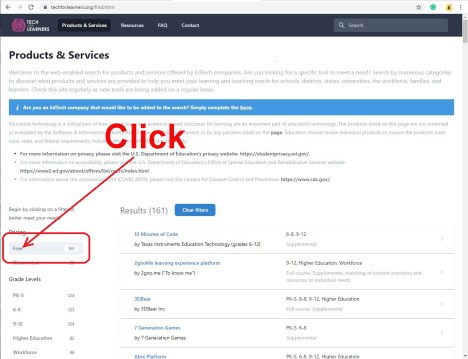
Tech for Learners is a project by the Software & Information Industry Association (SIIA) and their partner organizations to support those involved in education at all levels and from all communities as they scale up capabilities for online learning. For a list of free services, go to https://www.techforlearners.org/find.html
Free offer: Starting immediately and running until August 31, 2020.
Work From Home (WFH) Employees Across Business and Government Organizations of All Sizes Can Now Quickly, Easily and Securely Access Work Computer, and All Associated Data, from Home.
The download is completely anonymous – no personal information of any kind will be collected – to provide the assurance that no sales communications will result during or after the download and use of the software.
All Set-up, Configuration and Tech Support Also Provided Completely Free-of-Charge. DH2i will be making its world-class support team available to answer any questions or provide assistance in the download and/or use of the software during business hours: 9:00 am – 6:00 pm Pacific Time, Monday-Friday – a service that is also being offered completely free-of-charge. Continue reading →






 By Jim Shimabukuro












 Educational Technology and Change Journal
