Indigenous People’s Curriculum Day and Teach-In 9/10/18

By Vic & Bonnie Sutton

The real history of the Americas has been lost by trivialization and by being omitted from the textbooks. The continued misrepresentation of indigenous peoples in the media and popular culture contributes to continued settler colonization and racism toward indigenous peoples.

Yet the growing movement by the Standing Rock Sioux Nation and hundreds of other indigenous nations to protect their homelands and resources from destruction presents teachers an opportunity to introduce students to lessons based on the environment, government, history, economic, cultural studies and civics.

It is almost the month and day when people celebrate Columbus Day. The D.C. Area Educators for Social Justice, a project of Teaching for Change, offered a workshop on September 10 to provide resources for educators.

The workshop took place at the National Museum of the American Indian, in Washington, DC. It engaged with curriculum and strategies for teaching students about indigenous people’s history and life today.

Sarah Shear

The workshop started with a keynote by Dr. Sarah B. Shear, who is an assistant professor of social studies education at Penn State University, Altoona. She described her research into the way that race and settler colonialism issues are addressed in state standards and textbooks; teacher education; film; and qualitative research methodologies.   Continue reading

Remote Proctoring Services: An Interview with PSI Bridge’s Rory McCorkle

By Jim Shimabukuro
Editor

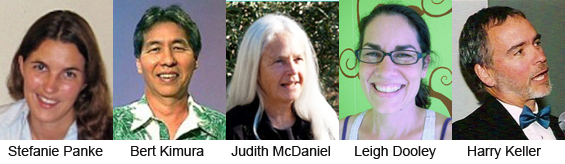
We gathered a panel of editors, writers, and professors to generate a comprehensive list of questions for Dr. Rory McCorkle. The panel members were: Stefanie Panke, Bert Kimura, Judith McDaniel, Leigh Dooley, and Harry Keller. Colleges around the world are developing online programs, and an invariable topic is remote test proctoring as an adjunct or alternative to on-campus testing. We hope that our questions and Dr. McCorkle’s responses will shed more light on the issues involved in reviewing and selecting a proctoring service.

Perhaps the most meaningful takeaway for us is the realization that the ultimate quality of the testing process is determined to a large extent by the participating institutions. In short, GIGO. Colleges should determine their needs prior to shopping for a proctoring service. The general services and features in the PSI Bridge™ platform tend to be standard among major providers, and it’s in the details that the critical differences begin to emerge.

Dr. Rory McCorkle

Dr. Rory McCorkle is the Senior Vice President of Certification and Education Services for PSI. He helps PSI clients meet their testing, educational and strategic goals through the suite of services offered by PSI, while leading a team of business development, account management, and consulting professionals. Dr. McCorkle has worked with over 750 testing organizations, including well-known universities and colleges, licensing bodies, and renowned certification programs.

The questions and answers below are roughly grouped into four areas: students, proctors, teachers, and PSI services.

I. STUDENTS

Bert Kimura: How do the services and data collected conform with FERPA and other privacy issues?

Rory McCorkle: PSI Services LLC (PSI) holds privacy and security as a highest priority. We require very limited personally identifiable information (PII) for students and limit access to PII to only those who require access for provision of the services. In practice, we take care to not only be secure, but non-invasive as well. Only a single login is required for users to take their tests, and PSI proctors do not require access of a user’s machine to verify test compliance. All security measures are integrated and automated to ensure proper compliance and client privacy, while simultaneously minimizing security risks and providing a smooth user experience. In addition, PSI offers a proprietary, customizable lock-down browser and self-serve check-in and authentication. PSI complies with major regulations such as FERPA and GDPR. We are also PCI compliant. Our remote proctors receive extensive training on how privacy and privacy regulations are central to their roles, which is coordinated by PSI’s Chief Compliance Officer.   Continue reading

These Boots Are Made for Running

By Gwen Sinclair
Librarian, University of Hawai‘i at Mānoa Library

If you had told me when I was 25 or 30 that I would run my first marathon at age 42, I would have rolled my eyes and asked, “Why would anyone want to do that?” I could not fathom running even 10 miles, much less 26.2. I had been a casual runner for many years, but I’d avoided distance events. Too hard!

I found many reasons to keep running in the watershed year of 2004. For starters, my sister was diagnosed with lymphoma and endured a whole year of grueling chemotherapy. Although I wasn’t close to her, I felt very helpless, and guilty, too, so I signed up to do the Honolulu Marathon as part of Team in Training, the Leukemia & Lymphoma Society’s fundraising program. All you have to do is run a marathon — and raise thousands of dollars for research. It turned out to be harder for me to ask people for money than it was to get up early every weekend for the 16-mile training runs. To my surprise, the donations poured in, which of course put me in the position of absolutely, positively having to finish the marathon in December 2004.

My free time revolved around marathon training, so on Saturday, October 30, 2004, after my husband Steve and I had seen a mediocre movie at the Varsity Theatre, “What the Bleep Do We Know?” I’d gone to bed, planning to get up early the next morning for the usual Sunday training run.   Continue reading

‘Computers for Kids’ SWNA, Washington, DC

By Vic & Bonnie Sutton

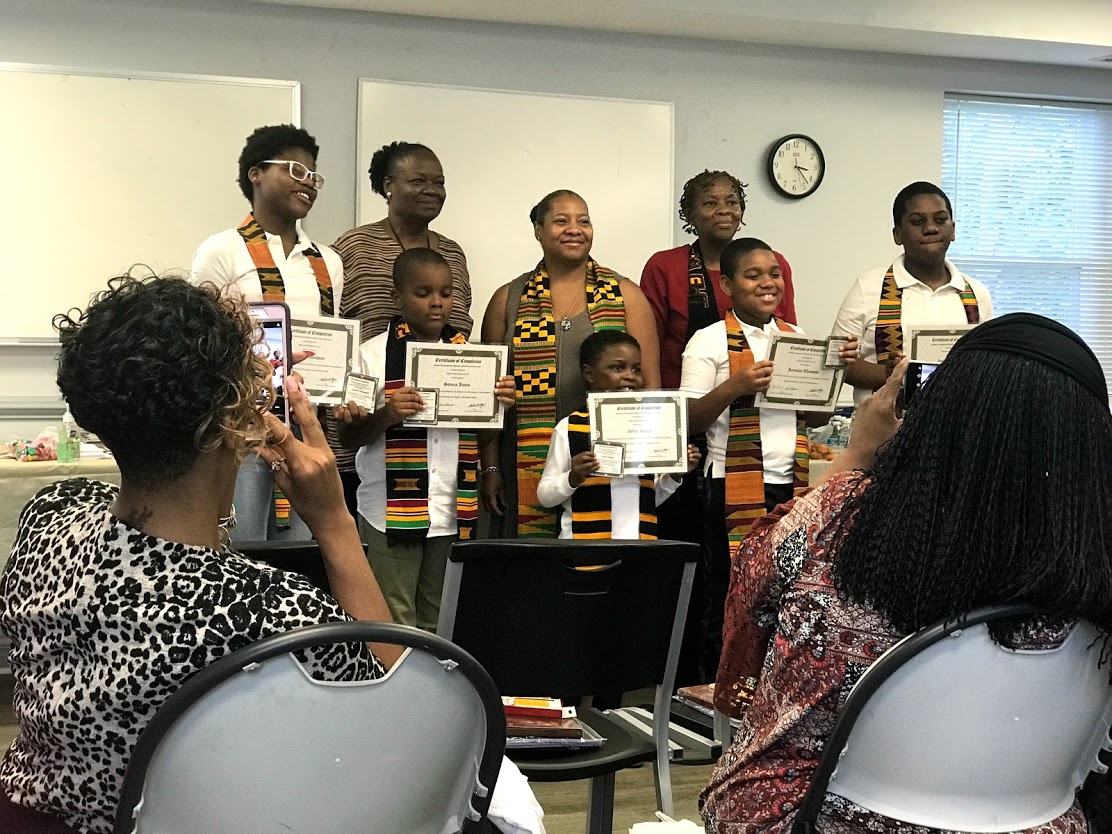
The graduation of the latest cohort of students in the ‘Computers for Kids’ initiative, in Southwest Washington, DC, brings the total number of youngsters who have benefited from the program to 130.

‘Computers for Kids’ started in 2007 as an initiative of the Youth Activities Task Force of the Southwest Neighborhood Assembly (SWNA).

Thelma Jones, who chairs the Task Force, introduced a graduation ceremony at the James Creek Community Center on 4 August 2018.

She reminded the parents, guardians, friends and relatives who attended the event that two sessions of the program were held each year, a winter program of eight one-hour, after-school classes and a summer program of six classes lasting ninety minutes.

The students use the computer lab at the James Creek Community Center to learn the basics of computers and how to use them, and tackle studies in Microsoft Word, Powerpoint, and accessing the Internet to search for visual resources. This group of students also started to study cryptology, using the resources of the Chicago-based ‘CryptoClub’ project.   Continue reading

Frameworks for Ed Tech Integration: SAMR and TPACK

Lynn ZimmermannBy Lynn Zimmerman
Associate Editor
Editor, Teacher Education

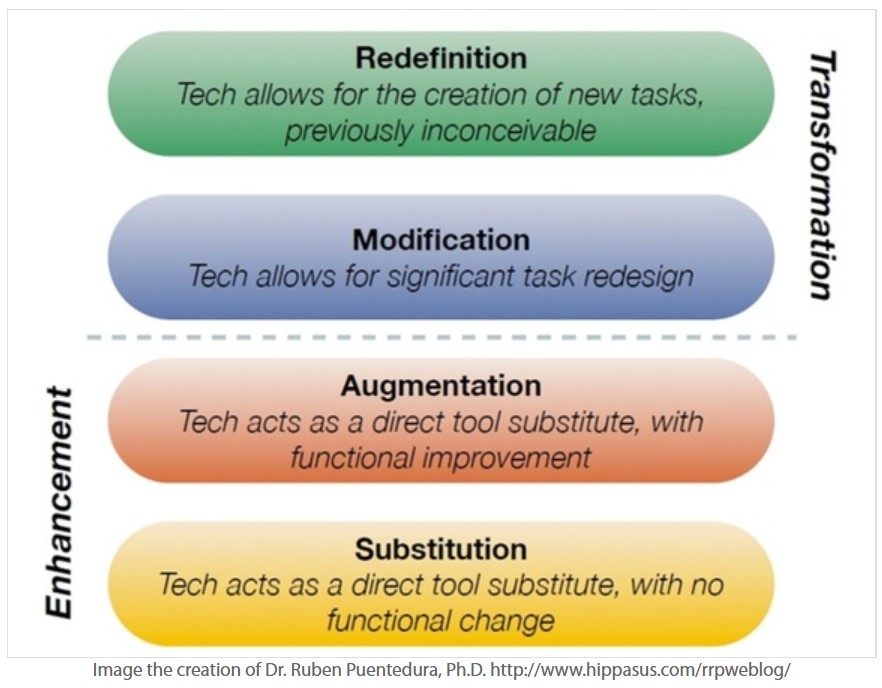
All across the U.S., school districts invest in a variety of types of technology, and they want to see results from their investment. To integrate technology effectively, educators need a framework to determine if and how technology meets their students’ learning needs and what they may need in the future. Several frameworks for technology use and integration have been developed and are used to promote technology in the classroom. Two common frameworks are SAMR and TPACK.

SAMR

In the SAMR (Substitution, Augmentation, Modification, and Redefinition) framework, substitution and augmentation are defined as ways to replace and enhance existing tools that the teacher might use in a learning task. Modification and redefinition transform a task in a way that would not be possible without technology.   Continue reading

Warning Signs at Tham Luang and Similar Caves: A Complex Issue

adsit80By John Adsit
Educational Consultant

(Response to Harry Keller’s “Three Most Important Takeaways from the Thai Cave Rescue,”19 July 2018, and the issue of warnings on caves. -Editor)

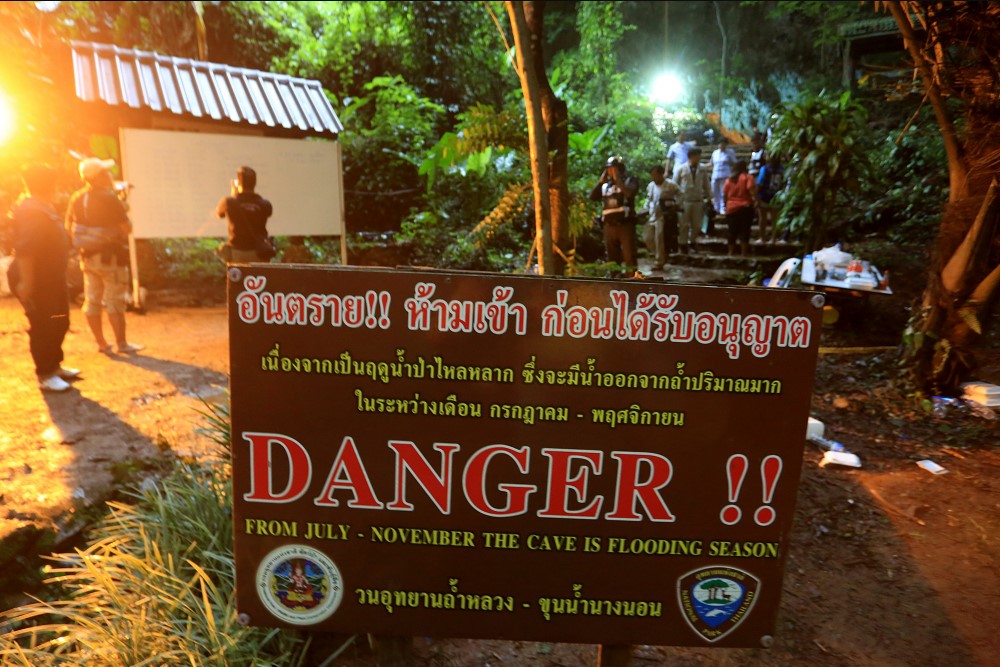
The entrance to the Tham Luang cave did indeed have a prominent warning sign, and the soccer team went past it when they entered. Most of the explored underwater caves in the world have strongly worded signs telling untrained divers to turn around. My guess is that 98% of the divers passing those signs do indeed have the proper qualifications, but a small percentage do not. That small percentage accounts for roughly half of the total cave diving fatalities worldwide in the last couple decades. For that small percentage, the posted danger appears to be more of a lure than a deterrent.

Photo from Marisa Chimprabha’s “Many Worry That Coach May Blame Himself for Ordeal” (The Nation, 5 July 2018).

Eagles Nest sink in Florida provides a couple good examples. The upper basin has 70 feet of (usually) murky water, with a tiny chimney only wide enough for a couple of people to pass at the bottom. That chimney takes you about 30 feet farther down to the huge cave complex below. Eagles Nest is often called the Mount Everest of cave diving, and you are not supposed to enter it without qualifications even beyond cave diving certification. Two days ago, a 20-year old man (boy?) died there freediving (no tanks–just mask and fins) deep into the bottom chamber. He told his companions he was going to set a personal record on that dive. As I write, diving social media are ablaze with comments on the sheer stupidity of that act.   Continue reading

Immersed in Virtual Reality: iLRN June 2018

By Vic & Bonnie Sutton

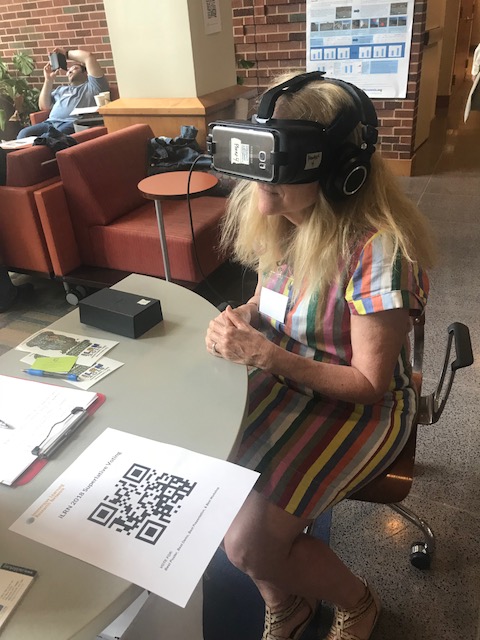
There is growing evidence that immersion in virtual reality can improve learning outcomes for students.

This was the main conclusion from many of the papers presented at the fourth annual conference of the Immersive Learning Research Network (iLRN), which was held at the University of Montana from 25-29 June 2018.

Jonathon Richter, Executive Director of iLRN, introduced the conference as an opportunity to explore “what works” in immersive learning, drawing on high-quality research.

He proposed that the three main components of immersive learning are:

  • computer science,
  • gaming studies, and
  • effective learning outcomes.

The potential impact of successful immersive learning initiatives, he suggested, were good measures, good goals, and good outcomes across disciplines, cultures, and contexts.   Continue reading

The Thai Cave Rescue: Implications for Teacher Education?

Lynn ZimmermannBy Lynn Zimmerman
Associate Editor
Editor, Teacher Education

The plight and rescue of the 12 boys and their coach from the cave in Thailand shows us once again that being an educator requires more than the enjoyment of working with children and loving the subject you teach. When you look at what an educator might face when working with students, inside and outside the classroom, it becomes evident that teachers, coaches, and school administrators do much more than teach and are expected to play many roles that they may not anticipate and may not be prepared for.

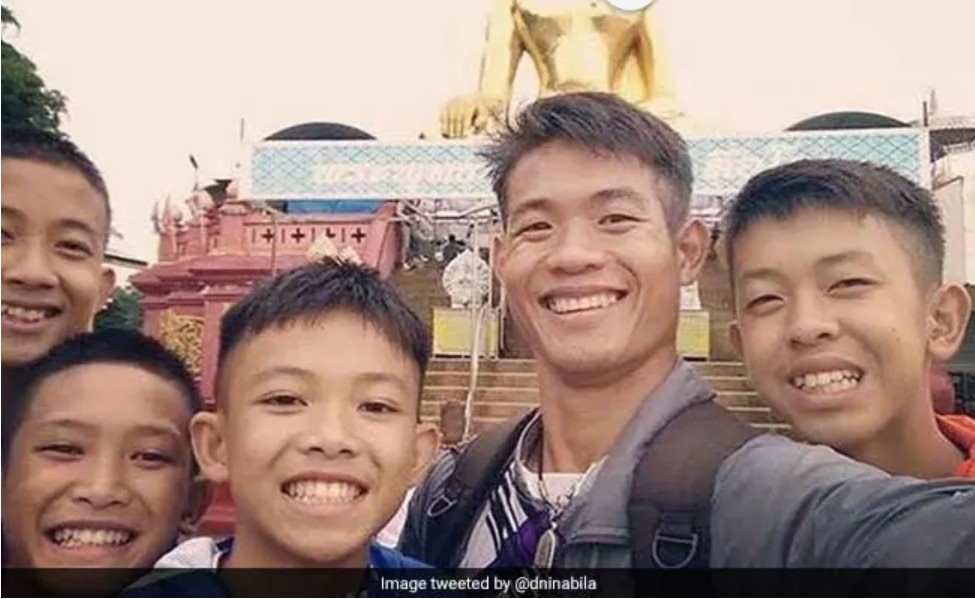
Coach Ekkapol Chantawong with some of his young players.

They may have to comfort a child whose pet died. They have to report signs of child abuse. They have to keep track of their charges when on field trips. They may even have to protect their students from an active shooter on campus. Not every educator wants to fill all these roles. Not every educator can fill these roles. However, when you are the “adult in the room,” what choice do you have? Children’s parents expect and trust that their children will be safe with an educator. The soccer coach, Ekkapol Chantawong, was trusted by the parents of the children in his charge to do the right thing, to protect them until they could be rescued.

There will be many opinions expressed and many questions asked in the coming days about this incident. However, let’s focus on teacher training. How does a teacher training program prepare teachers to handle a variety of situations, including life-threatening ones? Or should they? How do you know the teacher candidates you are preparing could step up if called upon to do so? Should they be expected to? What other resources do teachers need to handle crises, large and small? Let us know what you think.

Three Most Important Takeaways from the Thai Cave Rescue

Harry Keller 80By Harry Keller
Former ETCJ Science Editor
& President of SmartScience

The first lesson is that you don’t have to be clever or high-tech to solve this sort of problem. The final solution was straightforward, although extremely difficult to implement. It involved existing diving technology. These days, everyone seeks the high-tech or innovative solution first.

You might consider the solution used as being the “brute force” solution. A large number of air tanks had to be assembled along with a large number, around 90 as I’ve read, of highly experienced and capable divers. Divers deployed the air hose essential to survival and ferried food to the trapped soccer team. They set up a line for navigating the more difficult portions of the submerged cave. Some even stayed with the remaining few team members until the last one disappeared into the gloomy waters with his two accompanying divers.

The second lesson is that every cave of any difficulty should have prominent warning signs posted to keep out inexperienced people. What were those team members doing so deep in the cave? I have yet to see an answer to that question. Their foolishness cost one diver his life. It might have cost all 13 their lives, too. I sincerely hope that the publicity accompanying this incident keeps others from running these risks. The coach should have known better.

The third lesson is the importance of organization. I think that those in charge did essentially everything right, although they might have been able to move more rapidly had there not been so much “noise” to filter out. The noise came from the media and a great many well-meaning individuals and organizations. The volunteer divers were the good part.   Continue reading

Thai Cave Rescue Media Coverage: Notable for the Most Part

adsit80By John Adsit
Educational Consultant

The whole world watched in fascination as a massive international rescue team worked to pull off an unprecedented rescue of a soccer team trapped in a cave in Thailand. I watched from the perspective of a cave diver, a former journalism instructor, and a diving instructor. One of the talks I have had on and off for the last few years has been to help investigate and write reports on cave diving fatalities for the National Speleological Society, and from that perspective it was refreshing to watch a scenario that ended so happily, for that is not the norm for cave diving incidents.

The result of the rescue was, of course, wonderful, but in reflecting on some of the elements I observed from afar, I believe there was a whole lot that went very well in that situation in addition to the happy ending. I saw a lot of appropriate and professional behavior on the part of a number of parties, and because of it the few bad moments stand out in stark contrast.

In the social media I followed, one of the questions that was raised on several occasions was why there was not more commentary from the true experts on cave rescues around the world. To me, that lack of commentary was a positive highlight. After my ETC article (7/4/18), I was contacted by the BBC and asked to sit for an interview. I declined. I explained that I lacked the expertise to speak on an issue of that complexity—my article about the education aspects was the limit to which I could speak with authority. Continue reading

Science Is Not the Friend of Thai Cave Soccer Team

Harry Keller 80By Harry Keller
Former ETCJ Science Editor
& President of SmartScience

Spending two weeks in a cave that has been sealed off by water is no one’s idea of fun. There’s no food but plenty of water. This cave portion appears to be fairly large, large enough to have plenty of air for a long stay, but that air is running out.

Thirteen people, twelve of them children, are stuck and isolated under very dangerous circumstances. They face several perils: oxygen, carbon dioxide, food, and even waste treatment.

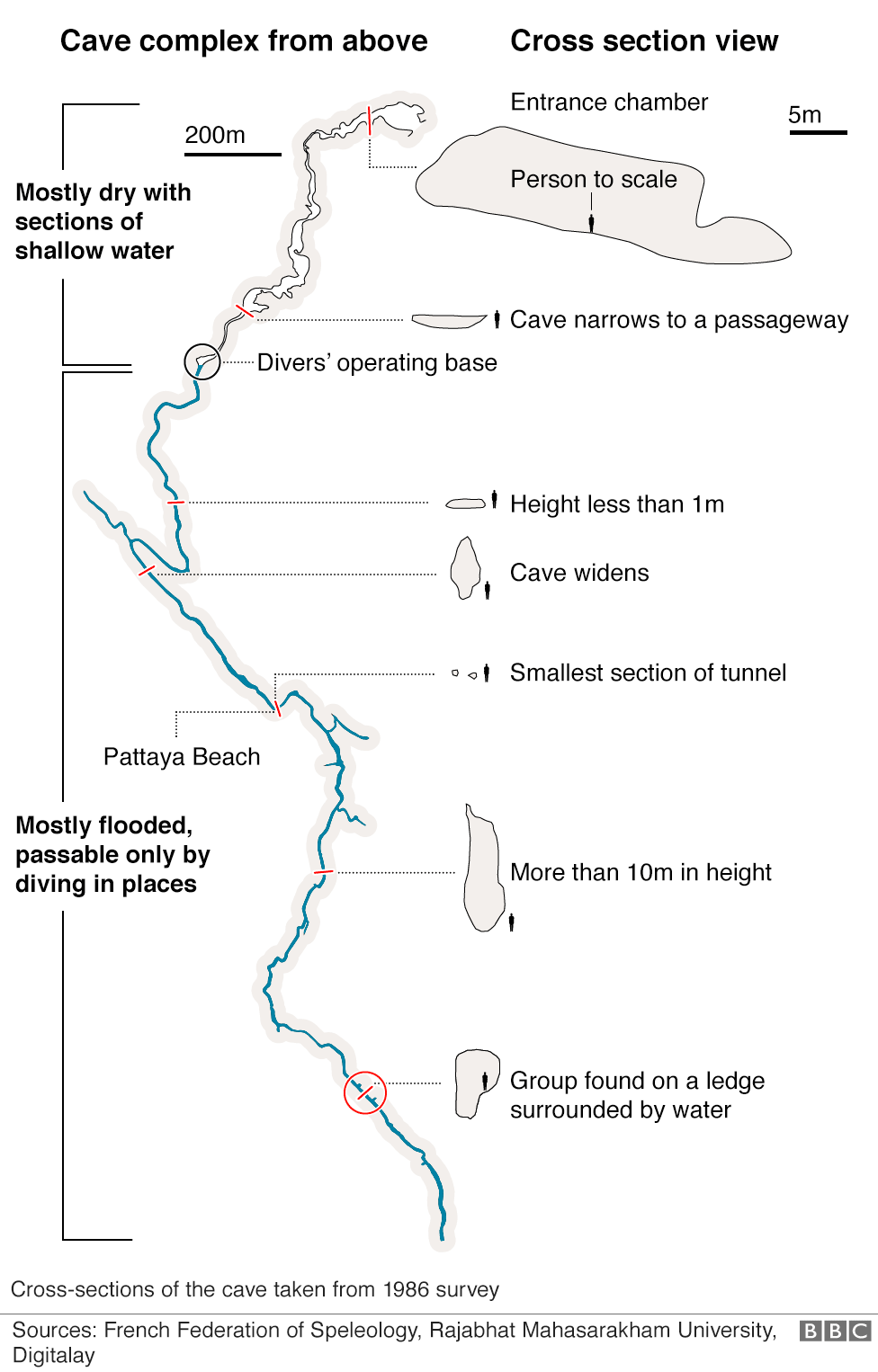
Detailed map of the Tham Luang cave system provided by BBC News.

What happens when someone seals you into a box? You use up the oxygen there, turning it one-to-one into carbon dioxide. That’s what all animals do. Even plants do it when there’s no sunlight. It’s called respiration. In that box, you will rapidly drop the oxygen level to below the 16% that we must have to function normally, and that’s 5% below the usual 21% we are used to.   Continue reading

Two Frameworks for 21st-Century Skills

Lynn ZimmermannBy Lynn Zimmerman
Associate Editor
Editor, Teacher Education

Globally there is a call for learners and workers to develop 21st-century skills. Two common frameworks are from the Organisation for Economic Co-operation and Development (OECD), a group which has members from 35 countries worldwide, and DigComp developed by the European Union (EU).

The OECD states that “[o]ne approach to organizing 21st-century skills focuses on cognitive skills, intrapersonal skills, interpersonal skills, and technical skills (Ananiadou & Claro, 2009 in Geisinger, 2016).” These skills are geared toward the educational context, the work environment, and commerce. Skills such as collaboration, teamwork, and cross-cultural sensitivity are seen as key to participation and problem-solving in the global economy. Underlying all of these skills is a need for digital knowledge and proficiency.

The DigComp frameworks, now presented as DigComp 2.1, focuses on competencies related specifically to technology knowledge and skills for citizens, specifically in the workplace while DigCompEdu (Redecker, 2017) outlines educator-specific digital competences. DigComp 2.1’s eight (8) levels of competence are fitted to Bloom’s taxonomy. These range from remembering, e.g., being able to perform simple digital tasks with guidance, to creating, e.g., resolving complex problems and guiding others in high-level problem solving.

DigCompEdu presents educator-specific digital competences that are organized in six areas. These areas include educators engaging in their own growth by professional development to creating appropriate digital integration activities for their students.   Continue reading

Thailand Cave Rescue via Diving Is a Daunting Challenge

adsit80By John Adsit
Educational Consultant

As a certified cave diver, I have followed the ordeal of the Thai soccer club with great interest. As I type, the rescuers are trying to determine the best way to bring them to the surface. No one has an answer at this time, but I have been asked to write about the options from the perspective of a cave diver, an educator in general, and a diving instructor in particular. What I hope to convey to an audience unfamiliar with cave diving is how truly daunting it will be if the decision is made to have the team escape by diving. If the team is going to make an exit by diving, they will need to undergo immediate and intensive training.

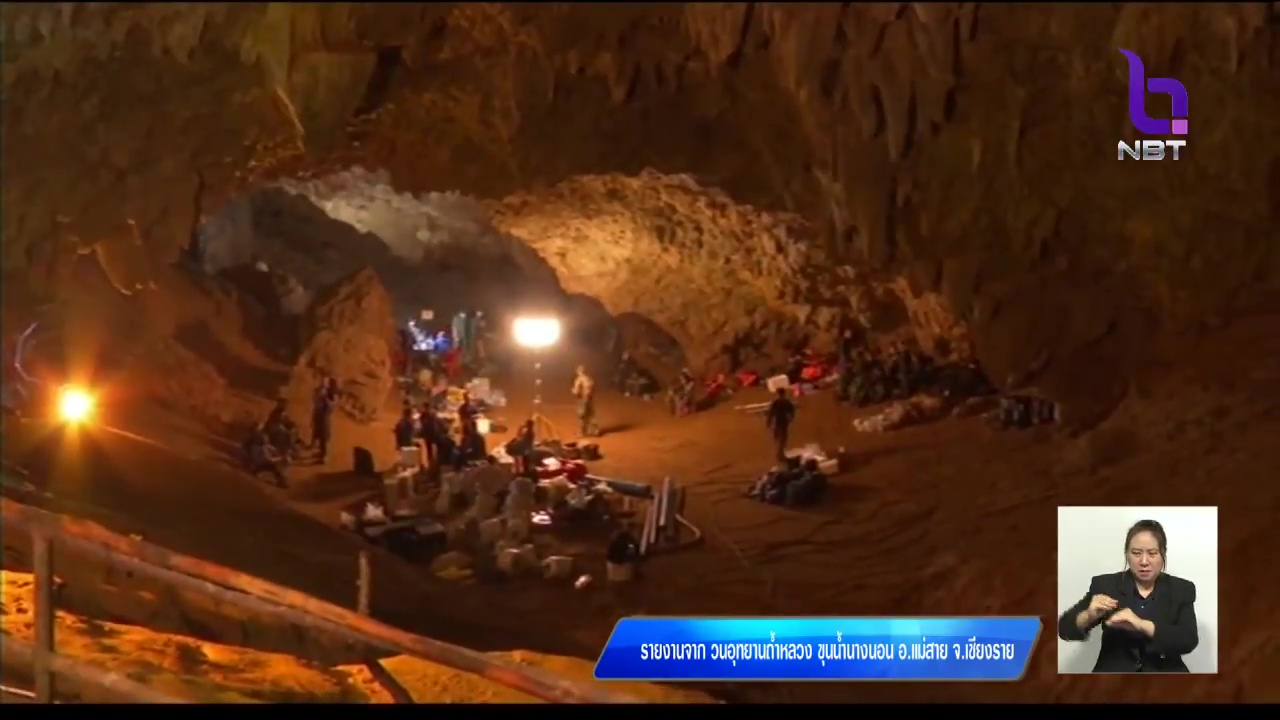
Personnel and equipment in the entrance chamber of Tham Luang cave during rescue operations during 26–27 June 2018. Screen capture from NBT news report.

When I teach new divers, I ask about their swimming and snorkeling experiences. What I am looking for is the degree to which they feel comfortable in the water. The greatest enemy to a diver is panic. Students who are accustomed to the normal mishaps of swimming, like accidentally getting water in the mouth or eyes, will usually have no trouble, but for people with little swimming experience, such a minor event can lead to irrational panic. Most of the Thai team members are non-swimmers, and the culture there has a common belief that swimming is extremely dangerous. That starts any training in a serious deficit.   Continue reading

Not in Our Lifetime: Are Libraries Dead?

By Gwen Sinclair
Librarian, University of Hawai‘i at Mānoa Library

Because I am a librarian, people often ask me, “Do we still need libraries now that everything is online?” My stock answer goes something like this: “‘Everything’ is not and will not be available online in my lifetime, and even if it were, we would still need  libraries.”

The belief that practically everything, from every book ever written to all of the films ever made, has been digitized and is available online for free has taken root in the collective minds of nearly everyone. However, if you dig a little deeper, you will realize that a lot of miracles would have to happen before “everything” could be digitized and posted online.

There are several roadblocks to scanning all of the books, periodicals, archival records, films, videos, audio cassettes, photographs, and ephemera available in libraries and putting them online. First and foremost is funding. A digitization project involves more than simply scanning a set of books and uploading the content. Even with high-speed automated book scanners, humans are still needed to select the books, prepare them for scanning, position them on the scanner, and so forth. Items that have folds or tears must be flattened or mended before they are scanned. Care must be taken not to damage fragile film or magnetic tapes during the digitization process. Photographic prints, negatives, or slides must be positioned precisely, and some post-processing may be necessary to straighten, crop, or clean up images.   Continue reading

How Do You Prepare Students to Learn Online?

Lynn ZimmermannBy Lynn Zimmerman
Associate Editor
Editor, Teacher Education

What do you tell your online learners?

Most universities and many high schools in the US use online and hybrid courses to teach anything from foreign languages to Physics. People around the world take part in MOOCs, free online courses with hundreds, perhaps thousands of participants. Informal courses are offered online so you can learn to knit or repair a car in the comfort of your own home. Online coursework is everywhere, and there may be the assumption that everyone knows how to “do” it.

However, instructors often find that, just like face-to-face courses, learners’ abilities, needs and motivations vary. The novelty of using technology for learning can soon wear off, so like any coursework, the online offering needs effective pedagogical strategies to provide intrinsic motivation to learn.

Online learning readiness

Let’s consider one factor that some research from the field of online learning has explored, online learning readiness (Cigdem & Ozturk, 2016; Horzuma, Kaymak, & Gungorenc, 2015). I’d like to hear about your experience. How do you prepare your students to learn in the online environment? What have you done that you find effective?

Assumption: because computers and technology are so pervasive, learners know how to use technology for learning.

Research findings: Many people know how to use social media, email, and their smartphones, but may be less sure how to use technology for educational purposes. Some studies have shown a direct correlation between a learner’s familiarity with the learning platform and their ability to use it and their motivation to participate and learn (Cigdem & Ozturk, 2016; Horzuma, Kaymak, & Gungorenc, 2015). Therefore, these researchers propose that the instructor should not assume that learners know how to use the platform and that they understand how to successfully complete assignments. Provide clear instructions on how to use the platform, give clear and direct instructions for assignments, and clear expectations.

References

Cigdem, H. & Ozturk, M. (2016). Critical components of online learning readiness and their relationships with learner achievement. Turkish Online Journal of Distance Education-TOJDE 17 (2), 98-109.

Horzuma, M.B., Kaymak. Z.D., & Gungorenc, O.C. (2015). Structural equation modeling towards online learning readiness, academic motivations, and perceived learning. Educational Sciences: Theory & Practice, 15 (3) pp. 759-770. DOI

The Making of a Silent Hero: Kaepernick and Social Media

By Gina Ribuca
Student, Kapi’olani Community College
University of Hawai’i

There was a lot of controversy surrounding Colin Kaepernick and the NFL last year. Many of us have seen or heard about him silently taking a knee during the national anthem. We have our own views on the issue. Some are not sure what it was about, while others think they know every detail. What did happen after, however, will never be forgotten. Some people called him a traitor while others, a hero. I think he is closer to a hero than a traitor. Sacrificing oneself to make the world a better place is the soul and characteristic of a hero.

Photo by Gina Ribuca, Kaneohe, HI, 4 July 2017.

The first time I saw him kneel, a lot ran through my mind. Social media was sent into a firestorm, and some of the comments were pure evil. “It’s just so easy to hate,” said Arian Foster, a Miami Dolphins player who also knelt before his game (Walker). Social media played a huge role in the truths and falsifications of this story. So many were clicking “share” on anything connected to Kaepernick before knowing the facts. However, not everyone realized that his silent, solitary protest contributed to the beginning of a worldwide movement among professional athletes and actors. Kaepernick decided to use his media platform to take a stand and to be a voice for those who had none. When a country or its people are ill-served by its government, then the people have the right and obligation to protest. Protesting against the government does not make a person a traitor. No, it means s/he has taken a stand for what she believes is right.  Continue reading

A Look at TeacherTube: A YouTube Alternative

Lynn ZimmermannBy Lynn Zimmerman
Associate Editor
Editor, Teacher Education

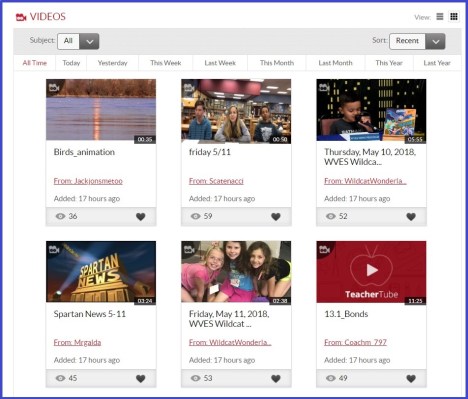
Whether you are a K-12 teacher or in higher education, you may want to give TeacherTube a look. Started in 2007 by three veteran educators, TeacherTube aims “to provide an online community for sharing instructional videos.” If you have ever looked for professional development videos or videos for your students on YouTube, you know that you have to look carefully to be sure you’re getting appropriate content.

TeacherTube, which was recently acquired by Salem Web Network, is designed to provide an “educationally focused, safe venue for teachers, schools, and home learners.” Users can upload materials and can comment on them, even flag materials that do not seem appropriate for this venue. TeacherTube staff reviews any flagged materials and makes the decision whether to leave it or delete it.

How does it work? You can find pictures, documents, audios and videos by topic or by collection. Perhaps you need a map of Pensacola, FL, to show your student Spanish street names. Do you need a video that shows the structure of the human ear? Some of the material is self-produced while others link to professionally-produced materials. Although designed mostly for K-12 teachers, educators who do professional development for teachers or teach education courses may find this a useful tool.

For more background information, see their “About Us” page.

Teaching Reading and Writing in STEM Classes

lynnz_col2

English teacher challenges students to plug in to the world by Magdalena Osumi in Japan Times, 28 Jan. 2018:
To help her students step outside of the box of rote language learning, Mio Horio, an English teacher from Japan, is encouraging her students to take a more global approach to learning English. Among other strategies, her students have the opportunity to engage in discussion with other English language students and native English speakers around the world.

Reading and Writing in STEM by Emily A. Thrush, Teresa Dalle, and Angela Thevenot in TESOL Connections, March 2018:
The integration of literacy skills across the curriculum has been a focus in American education in recent years. The authors focus on specific strategies and activities for teaching reading and writing in STEM classes.   Continue reading

TCC 2018 (April 17-19) : Final Call for Participation

Join us next week!

TCC 2018 Worldwide Online Conference

Changing to Learn, Learning to Change
April 17-19, 2018

https://2018.tcconlineconference.org/

Keynote and special regional presentations:

Dr. Margaret Nosek, Baylor College of Medicine, Texas, USA
Dr. Weiquan Lu, National University, Singapore
Dr. Jason Lee, Daegu National University of Education, Korea
Dr. Cynthia Calongne, Colorado Technical University, USA
Dr. Susan Manning, Credly, USA

TCC is a three-day, entirely online conference for post-secondary faculty and staff worldwide that features over 100 concurrent sessions covering a wide-range of topics related to educational technology, distance learning and emerging technologies for teaching and learning.   Continue reading

Hawaii High School Students: ‘March for Our Lives’

By Jim Shimabukuro
Editor

Hawaii high school students again turn to web social media (Facebook, Instagram, email, webpages) to organize state-wide protests against gun violence.

Continue reading

TCC 2018: Call for Participation

Join us!
TCC 2018 Worldwide Online Conference
~Navigating the Digital Landscape~
April 17-19.
http://tcconlineconference.org/

Enjoy keynote and special regional sessions by:

  • Dr. Margaret Nosek, Baylor College of Medicine, Texas, USA
  • Dr. Weriquan Lu, National University , Singapore
  • Dr. Jason Lee, Daegu National University of Education, Korea
  • Mark Curcher, Tampere University of Applied Sciences, Finland
  • Dr. Susan Manning, Credly, USA

TCC is a three-day, entirely online conference for post-secondary faculty and staff worldwide with over 100 sessions that cover a wide-range of topics related to distance learning and emerging technologies for teaching and learning.   Continue reading

Social Media Fuels Hawaii Student Walkout: March 14

By Jim Shimabukuro
Editor

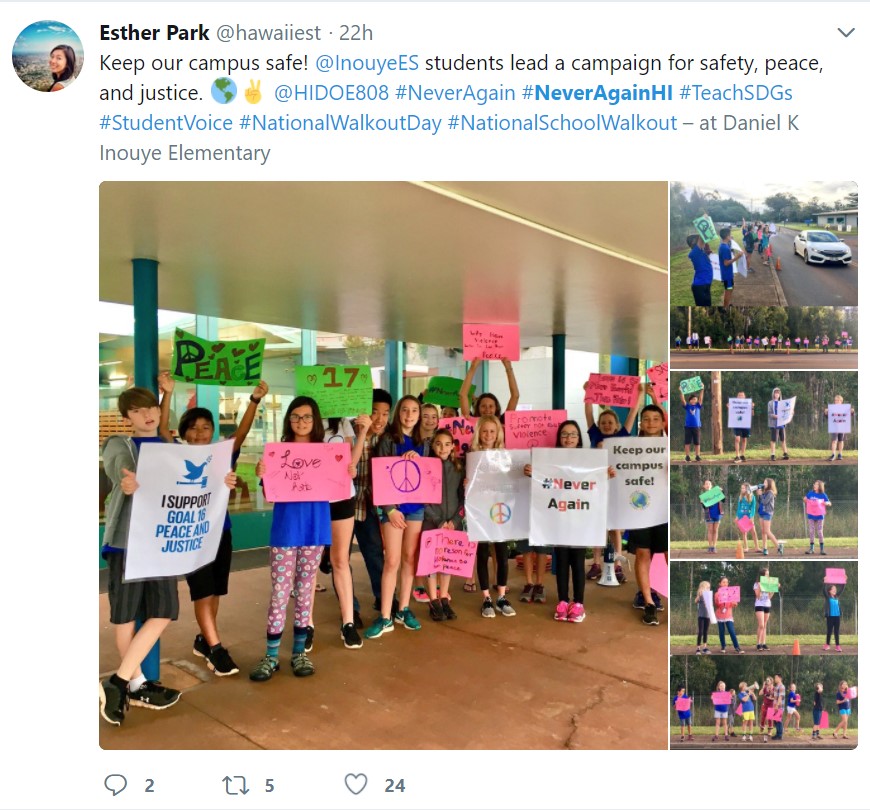
In conjunction with the national 17-minute school walkout on 14 March 2018 in honor of the 17 shooting victims at Florida’s Marjory Stoneman Douglas High, students in Hawaii planned and executed a state-wide protest for greater gun control. Their media of choice were Twitter — #neveragainhi, #EnoughIsEnoughHI, #MarchforOurLivesHI — and Instagram.

Daniel K. Inouye Elementary School, Schofield Barracks, Hawaii.

Joshua Wong

Socal media in the hands of students is a powerful tool for reform. Joshua Wong Chi-fung (黃之鋒), a Hong Kong high school student in 2011, organized and led protests against government interference in determining school curricula. He and his fellow protesters relied on social media to coordinate and monitor protests in other locations.

The implication for educators is enormous. Publishing is no longer the sole possession of powerful media organizations in the private and public sector. It is in the hands of the people, and the most active users of social media are the young, for whom backchannel communications are increasingly defining what’s real and fake. The question for educators is: How will we integrate social media into our curricula to align instruction with a world that no longer turns solely on traditional media?   Continue reading

Institutional Initiatives in Digital Credentials

Bert TCC2018D

As a prelude to this year’s main conference, TCC 2018 is hosting a FREE special webinar featuring Brenda Perea, Director of Educational and Workforce Solutions (Credly).

Brenda Perea will explain best practices from Colorado Community Colleges System’s initial launch of digital credentials in a free Technical Math for Industry.  Attendees will learn how 2-year and 4-year institutions can partner with employers to integrate digital credentials into existing curricula and build digital credentials into new courses and programs.

Date & time
Wednesday, March 21, 1400 HAST
1900 CDT, 2000 EDT; Thu Mar 22, 0900 Tokyo, Seoul
(Other timezones)

RSVP now for this FREE session! Access information and a reminder will be sent to you a few days prior to this event. This online session will be held in Adobe Connect. The deadline to register is March 18More info for this event.

REGISTER also for the main conference: TCC 2018 Online Conference, 23rd edition, April 17-19, 2018.

Impact of Different Social Media on cMOOCs

By Jim Shimabukuro
Editor

A couple days ago, I received an email from Bert Kimura about the latest issue of International Review of Research in Open and Distributed Learning, Feb. 2018 (19:1). He knows that I’d find the articles on MOOCs interesting. In this post, I’ll be focusing on the first, by Zhijun Wang, Terry Anderson, and Li Chen, “How Learners Participate in Connectivist Learning: An Analysis of the Interaction Traces From a cMOOC.”

This article is noteworthy for a number of reasons, not least of which is the publication medium, IRRODL. It’s online and open access. Perhaps the most significant aspect of this article is its data source: a 2011 course, Change 11 MOOC. Permission was granted by one of the facilitators, George Siemens. According to the authors, Wang et al., “When participants registered into the Change 11 MOOC, they signed an agreement that permitted the use of their data for research purposes…. All of data can be accessed without passwords in the internet.” Siemens and colleagues were modeling a precedent that facilitates research in online learning.

Wang et al. begin with a definition of cMOOC. This is a critical distinction because, theoretically, xMOOCs aren’t MOOCs. MOOC, as originally conceptualized by Siemens and Stephen Downes, is connectivist, i.e., “learning is a connection-building and network-forming process” (Wang et al.). Downes created the cMOOC-xMOOC dichotomy to highlight the cMOOC emphasis on connectivism, which places the bulk of responsibility for learning in the hands of the learners.   Continue reading

To Code or Not to Code

lynnz_col2

In Do Our Kids Really Need to Learn How to Code? (Forbes, 7/6/14), Greg Satell disagrees with tech columnist Kevin Maney’s assertion that in just a few years, young people “will find that coding skills are about as valuable as cursive handwriting.” Satell argues that even if coding as we know it today doesn’t exist, the skills needed to do it will still be there. “There is an underlying logic to the digital world and we must be capable of operating within that logic in order to function in it.”

In Do Your Kids Need to Learn to Code? Yes! But Not for the Reasons You Think (The Huffington Post, 5/29/2015), Grant Hosford discusses several points about coding that illustrate a parent’s concern about what children need to learn to have successful futures. First, he points out that many parents and teachers worry that coding is “an overhyped fad.” He doesn’t believe it is. However, he points out that computer science pedagogy has not really evolved much in 40 years. He then refers to research at MIT and Tufts supporting the idea that “kids as young as 4 years old can learn very sophisticated computer science concepts.” Hosford sees coding as a way for young people to develop critical thinking skills, creative problem solving, and “how to be lifelong learners.”

In Please Don’t Learn to Code (TechCrunch, 5/10/16), Basel Farag claims that treating coding as “a ticket to economic salvation for the masses is dishonest.” He supports his position with three arguments. (1) Focusing on coding can cause the focus to be on finding a ‘right’ answer and away from “the importance of understanding the problem” itself. (2) Because technology changes so quickly, developing can be frustrating and stressful. Developers can’t expect to spend the rest of their careers working with one type of code. They often have to learn new versions or, even, new coding systems entirely, quickly, often “with little guidance.” (3) Getting a really well-paying job as a developer isn’t that easy.