Life on Frozen Moons

picture of Harry KellerBy Harry Keller
Editor, Science Education

Now that three of the moons of our solar system’s gas giant planets have been said to have subsurface oceans, it’s time to take stock and consider the meaning of these analyses.

Ganymede and Europa of Jupiter along with Enceladus of Saturn are likely to have oceans far below their frozen surfaces. Should we send unmanned missions to explore these unusual moons, and what should we be searching for? Many have exclaimed that we have extremophiles (organisms that survive in extreme environments) here on Earth, so we cannot discount the likelihood of life beneath miles of ice where the Sun never shines.

This image or video was catalogued by Jet Propulsion Laboratory of the United States National Aeronautics and Space Administration (NASA)

Enceladus’ north polar region. This image was catalogued by NASA’s Jet Propulsion Laboratory.

If we search near the geysers of Enceladus, might we find the frozen remnants of miniature fish coughed up from deep down inside this odd moon? Answering this question requires more than a moment’s thought. What is life? How does it begin and advance? Are the ingredients for life available in those cold, deep seas?

Here’s my definition. Life uses available energy and materials to reproduce itself and has the potential for errors in reproduction that will allow for evolution. From what we know, those vast, cold underground oceans have the necessary ingredients. Without an energy source, they would be frozen and not liquid. Heat coming from the inside of a moon must provide chemicals that can both be used as chemical energy sources and as materials for constructing living organisms.  Continue reading

MOOC Sightings 005: Wharton School and Universiti Teknikal Malaysia

MOOC Sightings2

Rapid change is the norm, and for professional development in business, MOOCs are the answer. “Wharton School recently teamed up with Coursera . . . and tech start-ups Snapdeal and Shazam to launch $595 online courses with certificates.” This unbundled or certificate model underscores the MOOC’s disruptive force. “‘For adults who have limited resources – whether that’s time or money,'” says Rick Levin, Coursera chief executive, “‘the Specialization [industry project] model works well.'”1

As change approaches warp speed, the shelf life of knowledge decreases and the need for constantly accessible modules of new knowledge increases. The watchword here is accessible, and this is the MOOC’s domain.

This fact is becoming increasingly obvious in the world of business where you’re either on the leading edge or out of the picture, and the critical factor is time. You can’t pause or stop to learn. Learning has to be on the go, and this means anytime-anywhere.

Will this disruption creep into our college campuses? Will traditional students take to learning in MOOC modules to keep pace with the latest developments in their field? How will this impact courses in the more traditional semester mold?

Most expect professors to gradually blend modules into their curricula, but this is an institutional perspective. My guess is that students will self-modularize and independently flow toward MOOCs that give them the edge, regardless of what professors and colleges decide to do.

In fact, this is already happening, but this disruption doesn’t show up on the campus-richter scale because, from all appearances, the students are on campus and sitting in lecture halls.

On college campuses in other parts of the world, the disruptive power of MOOCs is being embraced. Shahrin Sahib, vice-chancellor of Universiti Teknikal Malaysia Melaka (UTeM), sees MOOCs as a window for “‘students to work collaboratively and closely with colleagues around the world and to have access not only to course instructors, but to textbook authors and experts from other institutions.'”2

For Sahib, the playing field is no longer just the university campus or Malaysia but the globe. He says, “‘If students are to fully assume positions of leadership and responsibility in specific organizations and in society as a whole, then they must be prepared to deal with the global environment.'” For college students, regardless of location, MOOCs are an interactive and accessible portal to that environment.
__________
1 Seb Murray, “Technology Expands Business Education As Students Opt for Digital Route,” BusinessBecause, 10 Mar. 2015.
2 Kelly Koh, “MOOC Can Help Create Global-ready Graduates,” New Straits Times, 10 Mar. 2015.

Does SETI Make Sense? Part IV: Communicating

Harry SETI header

We are likely to be the only civilization in our galactic cluster if the chances of forming such a civilization are but one in ten trillion. These are not encouraging numbers. For the sake of argument put the odds up to having 100 civilizations in our galaxy. That’s lots more than I would expect and means that the estimates are way off, by a factor of 10,000. Such an improvement in estimates certainly is friendly to SETI. But, can we contact one of these other civilizations?

Although I think that SETI is a colossal waste of resources, I cannot fault those who pursue this dream.

The galaxy is a very large place, about 100,000 light-years across. Any civilizations will be in an annulus around the center because being close to a galactic center is inimical to life. We won’t be able to communicate to the other side of our galaxy due to the extreme noise originating at our galactic center. Our potential range for communication is probably about 20,000 light-years, but this range again is limited by the number of noisy objects between us and our target.  Continue reading

Free Webinar on Student Engagement 3/19/15 at 11am ET

5 Secrets to Spectacular Student Engagement

Thursday, March 19, 2015 at 11 AM EDT (US)
Not time-zone friendly? Register to receive the archive.

Dr. Colin Montpetit, Assistant Professor of Science Education at the University of Ottawa

Dr. Colin Montpetit, Assistant Professor of Science Education at the University of Ottawa

Register for this complimentary webinar to learn how Dr. Colin Montpetit, Assistant Professor of Science Education at the University of Ottawa, increased class participation to 99%. Hear how he transformed his classroom into an “active learning zone” with the use of a student engagement solution.

Get the full story behind Dr. Montpetit’s stunning findings – how student participation rates grew in his classes, grades improved and failure rates decreased. Register today!

Who Should Attend: All are welcome. Those in Academic Technology or Teaching and Learning Centers are highly encouraged to attend.

ScreenHunter_233 Mar. 10 08.07

Ed Week Free Livestream 3/18/15 at 8am ET: Delisle & Fullan

edweek2 Meet This Year’s Most Innovative Education Leaders
Brought to you LIVE on Wednesday, March 18, 2015,
from 8:00 AM to 12:30 PM (ET), from Washington, D.C.

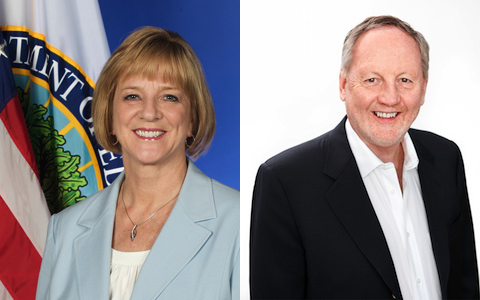
Deborah S. Delisle, Assistant Secretary for Elementary and Secondary Education, and Michael Fullan, Adviser to the Premier and Minister of Education in Ontario, Canada.

Deborah S. Delisle, Assistant Secretary for Elementary and Secondary Education, and Michael Fullan, Adviser to the Premier and Minister of Education in Ontario, Canada.

Learn the secrets. Repeat the results. Register today for FREE live access to this exclusive event, featuring keynoters Deborah S. Delisle, Assistant Secretary, U.S. Department of Education and Michael Fullan, Adviser to the Premier and Minister of Education in Ontario, Canada.

edweek1

Join us live from Washington, D.C., as the Leaders for 2015 reveal the keys to their successes through engaging presentations, discussions, and Q&A.

As a virtual attendee you’ll view the action live from your computer and takeaway all of the insights on what it takes to make huge impacts in school systems from San Francisco to rural Georgia.

Register now for free access to the Leaders To Learn From 2015 live event

Does SETI Make Sense? Part III: Evolution

Harry SETI header

Every planet that develops life based on chemistry similar to ours will begin with single cells. The entire water ecosystem will consist of these cells in some variety. That variety necessarily came about due to errors in copying the cells from one generation to the next. They would have a rather mundane life of drifting about randomly until encountering some useful molecule and absorbing that molecule. When enough of these molecules had been absorbed, possibly taking years, the single cell will divide into two.

In this slow, inexorable process, the seas will become full of these cells. Some will drift to inhospitable places where they’ll be killed and spill their contents back into the sea for other cells to absorb. Direct conflict is unlikely because the apparatus for killing and absorbing other cells is too complex to develop readily.

Altogether, there’s something like a chance in a billion that a given star will have a planet that can develop and sustain life. The chances are probably much worse.

Early on, after about a billion years, some developed the ability to use sunlight to make molecules from CO2 and water, from chlorophyll, probably an early form that has evolved into its many varieties today. Some scientists suggest that the earliest versions of chlorophyll did not produce oxygen as a byproduct. By about 2.3 billion years ago, some definitely had and started putting oxygen into the water. For life at that time, oxygen was a serious poison, worse than cyanide is to us. It was a matter of adapt or die — or hide somewhere where oxygen did not exist.

This was probably the first great extinction on Earth, and it was caused by oxygen pollution. Evolution favored those who had a way to neutralize this nasty chemical. Slowly but surely, the removal of so many anaerobic species left ecological niches open, and aerobic cells began to fill them. They used a new way to create energy though oxidation, a much more efficient way than their predecessors. Unfortunately (or fortunately from our viewpoint), the oxygen had some other side effects.

Continue reading

Preparing Your Child for a Robotic Future

Don’t Let a Robot Take Your Child’s Future Career: Roboticist’s Book Offers Educational Advice for Parents

Illah NourbakhshIllah Nourbakhsh says robots and artificial intelligence will increasingly displace people from many conventional jobs. The professor of robotics at Carnegie Mellon University has even written a book about it, called “Robot Futures.”
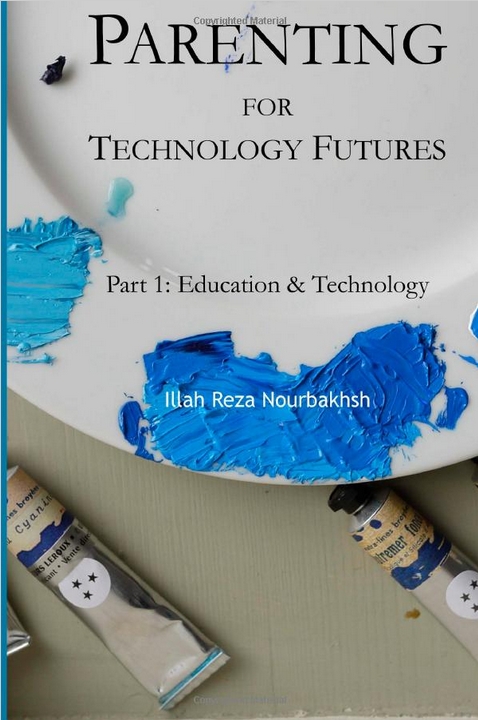
It’s enough to make parents despair over their children’s career prospects, he acknowledged, and that’s why he’s publishing a pair of follow-up books, “Parenting for Robot Futures.” Part 1: Education and Technology is now available on Amazon.com.

The key, he said, is to raise children who are “technologically fluent.”

“If we want our children to flourish in a technology-rich future, we need them to understand technology deeply— so deeply that our kids influence the future of technology rather than simply being techno-consumers, along for the ride,” he writes.

“There are no shortcuts to developing tech fluency, and there is no way to outsource the parent’s role to school, after-school or video games,” Nourbakhsh writes.

In the 64-page first volume, Nourbakhsh provides an overview to help parents understand the strengths and shortcomings of technology education in schools, including the movement to STEM (science, technology, engineering and mathematics) education, digital learning and massive open online courses, or MOOCs.

Continue reading

Does SETI Make Sense? Part II: Life

Harry SETI header

The question of what is life has puzzled us for centuries. A new movie, Chappie, addresses this issue in the context of what is a spirit or a soul. Life is simpler but still can be awkward. Because we’re seeking to find civilizations that send out radio waves, we can limit our ideas of life somewhat. Life could be defined as something that reproduces itself using available energy and material resources. To be useful, this life should also be capable of making reproductive mistakes that lead the way to evolution. Without evolution, that civilization could not appear.

In order to figure out if SETI makes sense, we must gather some sort of estimates of the probability of life starting and of it evolving into something like us. We must also determine how many stars harbor planets capable of supporting such life.

Before beginning this peregrination of thought, consider that our version of life here on Earth consists of organisms spawned in water and built of carbon, oxygen, hydrogen, and nitrogen plus some other elements in smaller proportions. Any life must be capable of a complex chemistry and of building rather extensive molecules. Finally, the basic construction materials should be close at hand and in reasonable abundance.

Hydrogen is the most abundant element in the universe and constitutes nearly all of its normal matter. It is found in important simple compounds: water, ammonia, and methane. These also are the simple compounds in which oxygen, nitrogen, and carbon reside. While some have suggested that alien life chemistry might use silicon in place of carbon, the much greater abundance of carbon argues against that route. Similarly, water is not only abundant on the Earth but also throughout space. It has the advantage of being an excellent solvent and the odd characteristic of expanding upon solidifying so that lakes freeze from the top down. All of these features make water the best medium for harboring life by a large margin.  Continue reading

Does SETI Make Sense? Part I: Numbers

Harry SETI header

Understanding SETI (the Search for Extraterrestrial Intelligence) requires that you become involved in a great many different fields and comprehend some rather difficult concepts. For most, it becomes a matter of faith, just what science is not all about. This series of articles attempts to make sense of it all, to put you in a position of deciding on a rational, not faith, basis whether SETI is worthwhile or a waste of time and money. They also provide the basis for some interesting class discussions. Enjoy.

Carl Sagan

Carl Sagan

Carl Sagan famously was a strong supporter of SETI and even wrote a novel that put the best possible face on it. For many like Sagan, the benefits of simply knowing that other intelligent life exists out there overwhelms the negatives of cost and time. What do you think? Will you have a different opinion when you have finished reading these articles? Read on.

The first problem with addressing SETI and similar issues revolves around the huge numbers involved. They truly are astronomical. For SETI, we have to have an idea of how many planets in the universe may be capable of harboring life. Our galaxy, the Milky Way, has over 100 billion stars, possibly much more. The universe also has over 100 billion galaxies. These are huge numbers indeed, but the total number of stars in the universe is their product, greater than ten sextillion.

The Allen Telescope Array (ATA).

The Allen Telescope Array (ATA).

In case you haven’t heard of a sextillion, it’s a one followed by 21 zeroes. To get an idea of how big that number really is, consider a few examples.  Continue reading

TCC Online Conference 20th Anniversary – Final Call for Registration

TCC2015 header

Final Call for Registration
Register now to save your spot!

TCC, Technology, Colleges and Community, is a worldwide online conference attended by university and college personnel including faculty, academic support staff, counselors, student services personnel, students, and administrators.

Join our special 20th Edition of this annual event to share your expertise, experiences, and knowledge relevant to the use of information technology in learning, teaching, innovation, and academic services. 

Seats are still available to participate online or onsite (this year only).
 

This event is very helpful and novice friendly by providing a strong foundation about learning with technology. For more information, visit:

http://2015.tcconlineconference.org/

TCCHawaiiLTEC (University of Hawaii) • LearningTimes
To unsubscribe to this mailing list
Send a message from this email address to listserv@hawaii.edu. In the BODY of the message,
type: SIGNOFF TCCOHANA-L. For assistance, contact Bert Kimura <bert@hawaii.edu>.

To join our mailing list

Life Unplugged

Scott Miyahira 2 80By Scott Miyahira
Student at Kapi’olani Community College
University of Hawai’i

“You’re bringing those?”

My sister questioned me with some genuine curiosity and just a hint of nag, as I stuffed my iPad and my portable Nintendo gaming system into my carry-on luggage. Despite the fact that she was the younger sibling by four years, she had a way of occasionally borrowing the maternal tone of our mother.

“Yea, why?” I replied with just a tinge of annoyance.

“When are you going to use it?”

“I don’t know. We might have some down time. You’re not bringing yours?”

“No…,” she answered, this time adopting that same annoyance.

I guess I could see her point; we were only going to be in Hilo for two days. But this was my vacation. I came back home to Maui for a temporary get away from my life on Oahu, a life of two full-time jobs and only just enough free time to eat and sleep, sometimes not even that. I spent so much of my normal day-to-day always doing something that, for my vacation, all I wanted to do was nothing — nothing except lie around, watch Netflix, and play video games, which was usually most of what I did on my vacations at home. So if my Maui vacation was to be interrupted by a short family trip to the Big Island, I was bringing my entertainment with me. Much to my surprise, this “short family trip” would reveal to me my own dependence on technology and give me a new-found appreciation for a life unplugged.

A simple cottage smaller than I was expecting, painted in a classic white with stone walls around the base, long glass windows across the front, and an unassuming but prominent tower poking out from the back.

A simple cottage smaller than I was expecting, painted in a classic white with stone walls around the base, long glass windows across the front, and an unassuming but prominent tower poking out from the back.

My mom had been bugging me about this trip for a while. “Aunty Terry hasn’t seen you since you were little. You just absolutely have to see their place, and they’re getting old so you won’t have many more opportunities to do so,” she would say.  Continue reading

Stuck in Macadamia Nut Hell

Cami Lyn Nagata 80By Cami Lyn Nagata
Student at Kapi’olani Community College
University of Hawai’i

I wondered why I was the only one that wanted to go to the farm with grandpa. All of my older cousins came up with reasons why they couldn’t go with us. Even Mom didn’t want to come. I should have caught the hint when I had the chance, but I was only eight, too young to realize that going to the macadamia nut farm was not going to be carefree fun. I didn’t know it then, but I was about to learn that hard work pays off.

The road was bumpy. I bounced in the seat, the belt digging into my neck each time. The smell of the sweat stained seats stung my nose as the wind whipped around the cabin of the truck. The engine moaned as we slowly climbed the twisting dirt road. Grandpa drove, eyes focused on the road, a mischievous smirk planted on his face. I could see the trees. We were getting close.

We pulled off the road and stopped at the metal gate. Grandpa put the truck in park, then quickly climbed out and unlocked the gate. With a strong push, the gate swung open to let us through. He got back in, and we drove up the path, passing a number of trees.  Continue reading

MOOC Sightings 004: Outside the Box with Ontario’s Judy Morris

MOOC Sightings2
Updated 3/1/15
As in all things MOOC, look northward to Canada for the prevailing winds, and this time it’s to Ontario, and more specifically, to president and CEO of Lambton College Judy Morris. “Over the last few years,” she says, “Ontario colleges have seen enrollment in online learning grow ‘exponentially higher than on-ground learning.'”1

 Judy Morris, President and CEO of Lambton College, Ontario.

Judy Morris, President and CEO of Lambton College, Ontario.

Granted, she’s talking about online courses and not MOOCs, but the difference is superficial. In all but name, online courses are MOOCs that have been literally stuffed into the concrete and glass boxes that define traditional classrooms. In the box, they are subject to the same start and finish dates, registration requirements, enrollment caps, credit policies, fees, and even pedagogy that fail miserably at mimicking F2F (face-to-face) interactions.

Is it any wonder, then, that online courses fare so poorly in comparison to blended courses? As they’re currently positioned, completely online courses are simply poor copies lacking the features that make onground courses so effective for those who can afford to be on campus and attend classes in person for four to six years.

For the promise of online courses, we need look no further than MOOCs. There are some obvious differences: MOOCs attract huge enrollments and there’s usually no cap to class size, registration is free, anyone can register, they’re usually shorter than the standard quarter or semester, there’s no F2F requirement, feedback is provided by peers, they don’t count toward a degree, and they appeal primarily to nontraditional students.  Continue reading

MOOC Sightings 003: FutureLearn, Microdegrees, ‘Open Internet’

MOOC Sightings2
Updated 3/3/15
UK’s FutureLearn, a part of Open University, “now hosts over 220 [MOOCs] from 44 partners.” Noteworthy is their completion and participation figures: “Of those that begin a FutureLearn course, 23% go on to complete the majority of steps and all of the assignments, while 39% of them interact with other users through social media, comments and conversations.”1 Takes the wind out of the less-than-10% completion argument, doesn’t it?

Right now, the MOOC’s disruptive path is being carved out in nanodegrees and microdegrees by developers and employers. “By forming partnerships and designing programs in conjunction with employers, ventures with new business models are offering their students programs and degrees that will make them more attractive job candidates.”2

The implications are enormous for colleges that understand this trend. Stuart M. Butler, senior fellow at Brookings, dubs it the “‘general contractor’ model of college education,” and says, “It is only a matter of time before enterprising colleges or other entrepreneurs start assembling comprehensive degree programs consisting of microdegrees supplemented by other experiences, such as a semester abroad and time at a small liberal arts college.” Adding employer-designed microdegrees to one’s transcript and resume seems like a no-brainer for college graduates entering the job market.

An alert from Claude Almansi: Open Internet, a 12-week MOOC that begins on March 6, 2015, is designed to “train a new generation of thinkers and actors to advocate for positive open and free internet policies and agendas from a human rights and public interest approach.” The course is free and offered in the Spanish language. Each week will feature a different module, and “each module will take approximately 2-5 hours of study time, including reading and completing assignments.” It will be hosted on the Peer 2 Peer University platform.

MOOCs appear to be a natural medium for social justice programs such as Open Internet, and I believe it’s only a matter of time before we see an explosion of similar MOOCs worldwide and in many different languages. In the end, MOOCs may just be the great equalizer, serving as the training medium for the world’s human rights activists.

__________
1Growth in online courses shows need for universities to incorporate new technology in their teaching models, says expert,” Out-Law.com, Pinsent Masons, 24 Feb. 2015.

2 Stuart M. Butler, “How Google and Coursera may upend the traditional college degree,” TechTank, Brookings, 23 Feb. 2015.

MOOC Sightings 002: Oxford Professor Declares MOOCs the Loser

MOOC Sightings2

William Whyte, professor of social and architectural history at St John’s College Oxford, assures us that in the “battle” of MOOCs vs traditional campus-based universities, “The MOOC will prove to [be] the loser.”1 He parades the usual suspects for their demise: low completion rates and absence of credits and degrees.

He tosses Britain’s E-University and Open University in with MOOCs for what amounts to a clean sweep of online programs. Two birds with one stone, as it were. He cites E-University as a costly failure and Open University as “actually a rather traditional university.” Convenient, but what these institutions have in common with MOOCs is baffling.

He bolsters his prediction with survey results: “Only 6% of prospective undergraduates surveyed last year [want] to stay at home and study. The other 94% expected and hoped to move away to a different place for their degrees.”

Whyte declares traditional universities the winner because “people want and expect something rather more than a purely virtual, entirely electronic experience of university. They expect it to be a place.”

Strong reassurance, indeed, for those who see MOOCs as “a horrible sort of inevitability.” Traditional universities have not only withstood the MOOC challenge but actually emerged stronger.  Continue reading

MOOC Sightings 001: UNC and Cornell

MOOC Sightings2

Despite wholesale announcements by powerful academic leaders throughout the U.S. that MOOCs are dead, sightings continue to pour in from around the country and the rest of the world. For skeptics, the problem is physical evidence. People can offer them and take them, but no one seems to know what a MOOC looks like. Some point to Coursera and edX, but in the opinion of most MOOC experts, who are primarily from Canada and the UK, these are hoaxes.

So, in the interest of determining once and for all whether MOOCs are fo’ real, I’ll be opening Project White Book to publish promising sightings and photos of MOOCs. In this inaugural post, I’m sharing the photo, below, of what appears to be one person’s conception of a MOOC. I recently found it in the ETC spam queue. It was posted anonymously with the header “Da MOOC!” I’ll post photos as I receive them, so if you have one, email it to me (jamess@hawaii.edu) and I’ll publish the most interesting.

Is this a MOOC, a hoax, or just another weather-related phenomenon?

Is this a MOOC, a hoax, or just another weather-related phenomenon?

I’m also sharing promising sightings by Sarah Kaylan Butler, “50,000 Enroll in UNC Online Course” (Daily Tarheel, 2/19/15), and Blaine Friedlander, “Cornell Sinks Teeth into Four New MOOCs” (Cornell Chronicle, 2/19/15).

Butler reports that “almost 50,000 students have enrolled in a massive open online course on positive psychology taught by UNC professor Barbara Fredrickson.” Evidence that this Coursera-based course might be a real MOOC is very strong. It’s six weeks long, a departure from the usual quarter or semester time frame. It’s comfortably aimed at interest rather than college credit. According to Fredrickson, “Most people that are enrolled — 95 percent of them — say that they’re interested out of their own curiosity.” And the professor is on firm MOOC footing, looking for pedagogical guidance from the future rather than the past. She says, “I’ve written a couple of books for general audience and one of the things that’s clear about our changing audience is that people don’t necessarily want to read books, but they like ideas.”

Another promising sighting is from Cornell. Friedlander reports that “Cornell will offer four new [MOOCs] in 2016: shark biodiversity and conservation, the science and politics of genetically modified organisms (GMOs), an introduction to engineering simulations, and how deals get done – mergers and acquisitions principles.” They’re still in the planning stages, so I’ll keep an eye out for more details as they become available.

Are MOOCs fo’ real? In this series, I’ll be looking at the evidence through a lens that’s forged from constructivist and disruptive theory as well as a dash of whimsy. In this process, I look forward to hearing your thoughts. Please share them in the discussion below. If you’re logging in from an address that has been previously approved, your reply will be posted automatically. If not, your first reply will be published within 24-48 hours. Subsequent replies from your address will be published immediately.

Free Webinar: ‘Using Technology to Engage Students’ 2/23/15 3pm EST

From Macmillan Higher Education 2/17/15:

Join us on Monday, February 23rd at 3pm EST for a complimentary webinar on “Using Technology to Engage Students” with Solina Lindahl of Cal Poly San Luis Obispo!

The 21st century classroom is getting larger, more tech-laden and full of students weaned on digital devices. How should our teaching change (or NOT change) in light of this? This talk is aimed at showing how iPads, iClickers and more can engage the face-to-face large class. Included are a brief discussion of some of the more innovative (and easy) visual presentation apps, as well as a look at using iPads to do the most old-fashioned of practices: worked problems.

edtech week

To learn more about all of our EdTech Week sessions and our presenters, please visit our EdTech Week website. You can also join our event on Facebook for the latest updates and information! We hope to see you there!

Changing Face of Healthcare: The Role Mobile Apps Will Play in Medicine

frida-cooper 80By Frida Cooper

Judging by the sheer popularity of smartphones in modern times, it’s safe to say that this multi-faceted and dynamic invention may just be the best thing since sliced bread. Maybe even better, if sales figures from smartphone manufacturers are anything to go by. The Smartphone’s utility isn’t restricted to the quintessential teenager texting all day or for showing the world what you had for lunch earlier that day. The advent of smartphones and their ability to connect to the veritable hoard of information that is the Internet has revolutionized life in general and pretty much every profession on the face of this world too.

The substantial healthcare industry here in the United States is most definitely one such example. The truth of the matter, though, is that the total impact of smartphones and mobile apps hasn’t even hit the industry yet, but that’s all about to change. Traditionally, the whole dynamic between healthcare professionals and the general population was that of blind faith. The knowledge and expertise of healthcare professionals wasn’t ever questioned, for better or for worse.

The origins

Things all began to change with the advent of the Internet in households across the USA. People started to conduct research on medical maladies that they were suffering from. They started to question the choice of medication, course of treatment taken, and potential side effects. These and many other things that would have been left to the professional’s judgment but a few years earlier were being challenged now that the patient was armed with information.

Where apps fit in

Whether this situation was and is good or bad is still up for debate, but this is where this revolution originated from. When smartphones came to the fore, this situation was taken up a few notches. A study conducted by IMS Institute for Healthcare Informatics in 2013 pointed at over 40,000 healthcare-related apps available for download then in the iTunes App Store. Imagine how many more there are when taking platforms like Windows and Android into account. The sheer diversity of topics, too, covered under the healthcare ambit is staggering.  Continue reading

Secretary Duncan’s Discussion with Maryland Teachers to Be Streamed Live 9:50AM (ET) 2/18/15

Secretary Arne DuncanU.S. Secretary of Education Arne Duncan will visit Maryland on Wednesday to highlight the progress that the state’s schools and students have made through the hard work and leadership of parents, teachers, principals, as well as local and state officials.

He will visit two schools and then end his day with a speech about the importance of local and school-level leadership in continuing efforts to improve education. In his speech, Duncan will talk about the need to support states’ efforts and expand investments, progress and opportunity for all children through reauthorizing a new Elementary and Secondary Education Act.

Earlier in the day, Duncan and State Superintendent of Schools Lillian Lowery will visit classrooms at Ducketts Lane Elementary School and meet with teachers from there and Thomas Viaduct Middle Schools to hear how teaching and learning is changing during the transition to higher standards and how that has contributed to schools’ and students’ success in Maryland. The discussion with teachers will be streamed live on the Howard County Public School System website, www.hcpss.org.   Continue reading

Mars One: 100 Still in Running to Be First Humans on Mars

Amersfoort, 16th February 2015From the initial 202,586 applicants, only 100 hopefuls have been selected to proceed to the next round of the Mars One Astronaut Selection Process. These candidates are one step closer to becoming the first humans on Mars.

“The large cut in candidates is an important step towards finding out who has the right stuff to go to Mars,” said Bas Lansdorp, Co-founder & CEO of Mars One. “These aspiring martians provide the world with a glimpse into who the modern day explorers will be.”

The Mars 100 Round Three candidates were selected from a pool of 660 candidates after participating in personal online interviews with Norbert Kraft, M.D., Chief Medical Officer. During the interviews the candidates had a chance to show their understanding of the risks involved, team spirit and their motivation to be part of this life changing expedition.

Dr. Norbert Kraft said, “We were impressed with how many strong candidates participated in the interview round, which made it a very difficult selection.”

There are 50 men and 50 women who successfully passed the second round. The candidates come from all around the world, namely 39 from the Americas, 31 from Europe, 16 from Asia, 7 from Africa, and 7 from Oceania. The complete list of Mars One Round Three Candidates. Statistics on the candidates can be found here.

The following selection rounds will focus on composing teams that can endure all the hardships of a permanent settlement on Mars. The candidates will receive their first shot at training in the copy of the Mars Outpost on Earth and will demonstrate their suitability to perform well in a team. More information about the selection process can be found here: Mars One Selection ProcessContinue reading

Technology and Our Health

lynnz_col2

Technology is rapidly morphing and changing, but what about the humans who use it? Numerous research studies as well as reports on various aspects of the connection between technology and our physical, mental, and emotional health are examining the various factors that may impact our lives.

box Can A Computer Change The Essence Of Who You Are?, by Lulu Miller and Alix Spiegel, NPR, Feb. 13, 2015.

In this essay, the authors explore the ways that technology can impact our lives in various ways. They focus on social media and how an individual used Twitter to document and call out people on bad behavior. Pete, who set up the Twitter account, soon found that over time, his tweets became harsher and harsher. The authors report that quite a few psychologists are trying to figure out how socializing is different online. For instance, when you have a bad day and post about it on social media, you are validated by not just one friend, but many “friends” who tell you that you are all right. This type of mass positive feedback can be addictive and can change the social dynamic. This post created a pretty lively exchange of comments, so be sure to read them, too.

box Internet Trolls Are Narcissists, Psychopaths, and Sadists: Trolls will lie, exaggerate, and offend to get a response, by Jennifer Golbeck Ph.D.Psychology Today, Sep. 18, 2014.

In this article, Golbeck reports on a study by some Canadian researchers published in Personality and Individual Differences which looked at people who purposely disrupt online discussion, so-called trolls. The researchers gave personality tests to over 1,200 people and surveyed their Internet commenting behavior. They found that respondents who scored high for narcissism, Machiavellianism, psychopathy, and sadism also reported that “trolling was their favorite Internet activity.’ Trolls use the Internet to harm other people for their own pleasure.

box Long-term health outcomes and cost-effectiveness of a computer-tailored physical activity intervention among people aged over fifty: modelling the results of a randomized controlled trial, by Denise A. Peels et al., BMC, Oct. 23, 2014.

Rather than focusing on possible negative influences of technology, in this study a group of Dutch researchers examined how technology in the form of a computer-tailored physical activity program can improve long-term health outcomes among adults aged over fifty. “[S]timulating people to become more physically active… can result in better public health and thereby reduce health care costs.”

Serve the Nation as a Presidential Innovation Fellow

PIF logo

Calling All Innovators: Apply to Serve the Nation as a Presidential Innovation Fellow
by Ryan Panchadsaram, Garren Givens on February 12, 2015 at 11:00 AM EST

Today, we are very excited to announce that we are on the lookout for more innovators and technologists to serve the nation as Presidential Innovation Fellows.

The Fellowship brings talented, diverse individuals from outside government to team up with top federal innovators to tackle some of our country’s most pressing challenges. Acting as a small team alongside federal agency “co-founders,” Fellows will work quickly and iteratively to turn promising ideas into game-changing solutions.

As always, the Fellows will focus on national priorities, leveraging the best principles and practices of the innovation economy to help create positive impact in the span of months, not years. This is an opportunity to truly transform how government works for the people it serves.

Projects will focus on topics such as:

  • Education: Fellows will work with myriad agencies to help make education more accessible to more Americans.
  • Jobs and the economy: Fellows will work on fueling the economy and stimulating job growth through innovation and improved opportunities for entrepreneurs and businesses of all sizes.
  • Climate change: Fellows will help our country and its communities prepare for the impacts of climate change.
  • Health and patient care: Fellows will leverage innovation to save lives, provide better access to benefits and programs promoting quality of life.

Fellows selected for this highly competitive program will serve for 12 months as entrepreneurs-in-residence to our federal agencies. Over the course of the Fellowship, individuals work as part of a small team of three to four. These teams of designers, developers, and product managers will participate in two to three “deep dives,” with the goal of “accelerating” initiatives chosen by the Program for their potential impact.

The first step is to apply online. Candidates can apply anytime, throughout the year, and applications will be evaluated on a rolling basis.

We look forward to kicking off another exciting year of projects.

Ryan Panchadsaram is the U.S. Deputy Chief Technology Officer. Garren Givens is Director of the Presidential Innovation Fellows and Deputy Executive Director of 18F.

New Exoplanets Very Old

picture of Harry KellerBy Harry Keller
Editor, Science Education

With all of the hoopla over exoplanet discoveries in recent years, it’s a big surprise that this one did not receive more attention. Kepler-444 is a small star, about 25% smaller than ours, and is 11.2 billion years old. According to measurements made by the 600-million dollar Kepler space telescope, it has five rocky planets ranging in size from Mercury to Venus.

Artist's concept of the 11.2-billion-year-old star Kepler-444, which hosts five known rocky planets. Credit: Tiago Campante/Peter Devine.

Artist’s conception of Kepler-444, an 11.2-billion-year-old star, and its five orbiting rocky planets. By Tiago Campante/Peter Devine.

The above information is sufficient to generate great excitement. When you realize that the universe is only about 13.6 billion years old, you know that this star and its planets formed in the early days of a very young, only about 2.5 billions years old, universe. Our own star is less than half as old at 4.6 billion years and has an expected lifespan of around 10 billion years.  Continue reading

The Science of Deflategate

picture of Harry KellerBy Harry Keller
Editor, Science Education

The New England Patriots have muddled up the Super Bowl in a grand fashion. It might as well be an MIT prank but on a national scale. We haven’t see the like since Caltech (MIT’s famous rival in the prank world) jimmied the Rose Bowl’s card stunts half a century ago. (Personal note: I was a member of the Caltech group of twelve that did that. Also see this LA Times article.)

Denials are not going to change any fan’s mind. If you’re a Patriot fan, you probably don’t think it’s important. If you’re not, then you will believe any evil of the New England dynasty.

Before delving into the science, I should note that reporters have said that the ball deflation was discovered during halftime and rectified. As the final score was 45-7, and the second half score was 28-0, even if every Patriot point in the first, seemingly flawed half were rescinded, the score would still be 28-7 in favor of the Patriots. We are not discussing, therefore, who should play in the Super Bowl. We are instead discussing how balls would have become low in pressure.

As any high school physics teacher will tell you, PV=nRT, the ideal gas law. Okay, that’s gibberish to many, but it’s really very simple. So simple in fact that you can do the calculations yourself with calculator or even readily with paper and pencil. Let’s deconstruct this equation.  Continue reading

The Imitation Game: A Cautionary Tale

picture of Harry KellerBy Harry Keller
Editor, Science Education

With The Imitation Game having academy award nominations, it’s a good movie to consider for science learning. Benedict Cumberbatch and Keira Knightly star in this story of Alan Turing. Turing is famous in computer science for the Turing Machine and the Turing Test. The latter was named by him as “the imitation game.”

A Turing Machine is a concept created by Turing that says that anything computable can be computed by a ridiculously simple machine consisting of a tape of indefinite length that contains only ones and zeroes and a reader that decides what to do upon reading the tape — to move forward or backward and how much. This decision depends on the state of the machine and the number read on the tape. Turing’s machine can, in theory, perform any computation being done today by any computer. You can say that Turing invented the modern computer — in theory anyway.

Alan Mathison Turing at the time of his election to a Fellowship of the Royal Society. Photograph was taken at the Elliott & Fry studio on 29 March 1951.

Alan Mathison Turing at the time of his election to a Fellowship of the Royal Society. Photograph was taken at the Elliott & Fry studio on 29 March 1951.

As Alan Turing sat and thought about computers, he asked himself what is the potential of computing machines in the indefinite future. He decided that it’s possible for a machine, in theory, to mimic human behavior. He then asked how can you tell if the machine truly is behaving as a human. In those days, all communication with machines was by writing or, worse, by looking at lights or blips on a CRT. His test involved writing to a machine and receiving written replies. If, no matter how much you wrote and read, you could not tell whether the replies were coming from a human or a machine, then the machine passed the test, “the imitation game,” and should be considered for all intents and purposes as human.  Continue reading