Register for TCC 2015 – The Future Is Now

kimura80By Bert Kimura

Aloha,

Register for the TCC 2015 Worldwide Online Conference, The Future Is Now:

http://tcconlineconference.org/

Enjoy KEYNOTE sessions by:

  • Dr. Howard Rheingold, Author, Critic, Journalist & Educator
  • Alan Levine, Pedagogical Technologist, Architect of Open & Connected Learning
  • Dr. Stella Perez, Sr. VP Communications and Advancement, American Association of Community Colleges

This year, our 20th conference features an ONSITE option to participate in-person at the University of Hawai’i at Manoa campus. There is also an option to participate virtually ONLINE as in previous years.

For further information (including low-cost housing and an optional educational tour), see:

http://2015.tcconlineconference.org/register/

Site licenses for unlimited participation from a campus or system are available. Special rates apply to University of Hawai’i faculty and staff. For more info, contact Sharon Fowler <fowlers@hawaii.edu>.

We look forward to seeing you at TCC 2015.

Warm regards,
Bert Kimura
For the TCC Conference Team

Practical Reasoning – Challenges for Teaching and Assessment

By Stefanie Panke
Editor, Social Software in Education

In a faculty brown bag lunch, Molly Sutphen, Associate Director of the UNC Center for Faculty Excellence and author of the seminal book Educating Nurses: A Call for Radical Transformation, delivered a talk on Practical Reasoning at the School of Government. The talk was a nice follow-up to the Teaching Palooza that our faculty organized last summer. Since the School’s focus is on teaching adult learners, enhancing practical reasoning skills is an important objective of my instructional design work.

Molly Sutphen, Associate Director of the UNC Center for Faculty Excellence

Molly Sutphen, Associate Director and Teaching and Learning Coordinator, UNC Center for Faculty Excellence

Characteristics of Effective Practical Reasoning

  • To be able to draw on knowledge from different areas, courses, or types of knowledge and use it
  • To develop a sense of salience about a situation
  • To realize the stakes of a situation
  • To put boundaries around a problem or question
  • To be able to envision different outcomes
  • To be able to construct a narrative forward and backward

Assessment and Practical Reasoning

With the pressure of constantly demonstrating impact, assessing the short term learning outcomes of practical reasoning is problematic. “Practitioners may learn, but we don’t know it – what you teach, someone will perhaps not use for another five months – or ten years,” said Dr. Sutphen. She recommends taking “a long view” instead.

Instructional Strategy: Unfolding Cases

Dr. Sutphen introduced unfolding cases as an instructional strategy to teach practical reasoning skills. Unfolding cases are underdetermined (no obvious plan or resolution), scaffolded (controlled amount of information), and orchestrated (prompting specific, relevant questioning). In a plenary exercise, she presented a list of questions to help teachers construct unfolding cases.

  • What is this a case of?
  • Where do you want to start and end?
  • How underdetermined do you want the case to be?
  • Who are the actors? At which point will they be revealed?
  • What is the arc of the narrative?
  • What information will you provide or conceal?
  • Will you give boundaries or expect them to be discovered?

Further Reading

Benner, P., Sutphen, M., Leonard, V., & Day, L. (2009). Educating nurses: A call for radical transformation (Vol. 15). John Wiley & Sons.

Colby, A., Ehrlich, T., Sullivan, W. M., & Dolle, J. R. (2011). Rethinking undergraduate business education: Liberal learning for the profession (Vol. 20). John Wiley & Sons.

Schwartz, B., & Sharpe, K. (2010). Practical wisdom: The right way to do the right thing. Penguin.

Gherardi, S. (2012). “Docta ignorantia”: Professional Knowing at the Core and at the Margins of a Practice. Journal of Education and Work, 25(1), 15-38.

Seed Wins the Mars One University Competition to Germinate Life on Mars in 2018

Mars One Press Release: Amersfoort, 5 Jan. 2015:

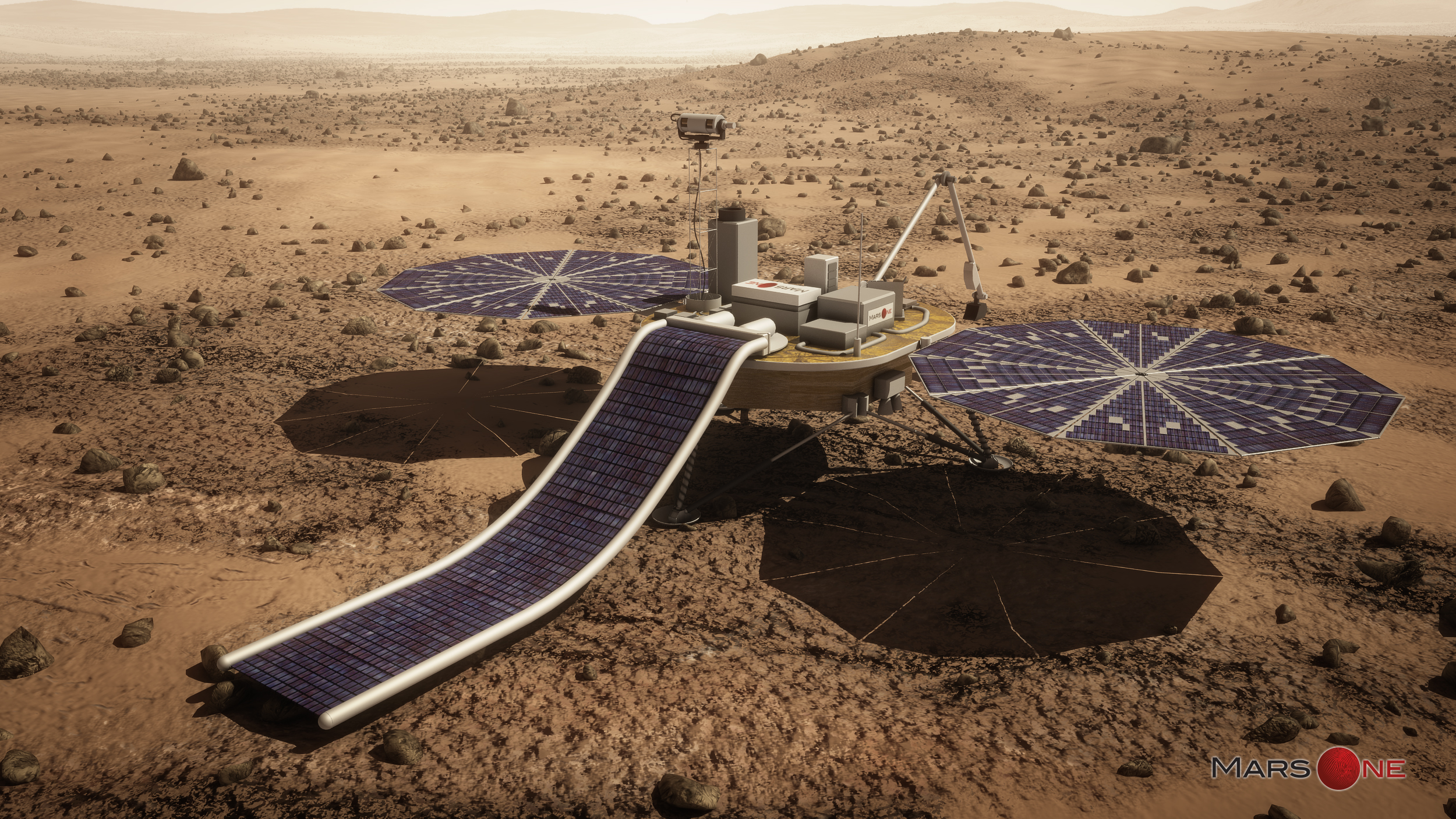
Mars One is proud to present the winner of the Mars One University Competition: Seed. The Seed team is an important step closer to sending their payload to Mars. The winning payload will fly to the surface of Mars on Mars One’s 2018 unmanned lander mission. Seed was selected by popular vote from an initial 35 university proposals and this is the first time the public has decided which payload receives the extraordinary opportunity to land on Mars.

Photo courtesy of Bryan Versteeg and Mars One.

Photo courtesy of Bryan Versteeg and Mars One.

“We were generally very pleased with the high quality of the university proposals and the amount of effort associated with preparing them,” said Arno Wielders, co-founder and Chief Technical Officer of Mars One. “Seed itself is uniquely inspiring since this would be the first time a plant will be grown on Mars.”

The Winning Team – Seed aims to germinate the first seed on Mars in order to contribute to the development of life support systems and provide a deeper understanding of plant growth on Mars. The payload will consist of an external container, which provides protection from the harsh environment, and interior container, which will hold several seed cassettes. The seeds will stem from the plant Arabidopsis thaliana, which is commonly used in space plant studies. After landing, the seeds inside the cassette will be provided with conditions for germination and seedling growth. The growth will then be recorded using images transmitted back to Earth.

“We are really pleased to be the selected project among so many excellent ideas. We are thrilled to be the first to send life to Mars! This will be a great journey that we hope to share with you all!” said Teresa Araújo, Seed team member.

Seed consists of four bioengineering students from the University of Porto and two PhD students from MIT Portugal and the University of Madrid. The team is supported by Dr. Maria Helena Carvalho, plant researcher at IBMC and Dr. Jack van Loon, from the VU Medical Center, VU-University in Amsterdam, and support scientist at ESTEC-ESA. Seed benefits from scientific and technical support from several advisers, whose expertise range from biological systems to spacecraft development and validation. Read more about Seed here.

An in-depth technical analysis of the winning proposal will be conducted to ensure that the winner has a feasible plan and that their payload can be integrated on the 2018 Mars lander. Mars One and its advisers will contribute to the analysis by thoroughly and critically examining the Seed proposal.

If Seed runs into any issues regarding feasibility or can not stick to the schedule, Mars One will fall back on the runner ups of the university competition. The second and third placed projects are Cyano Knights and Lettuce on Mars.

More information

About Mars One

Mars One is a not-for-profit foundation that will establish permanent human life on Mars. Human settlement on Mars is possible today with existing technologies. Mars One’s mission plan integrates components that are well tested and readily available from industry leaders worldwide. The first footprint on Mars and lives of the crew thereon will captivate and inspire generations. It is this public interest that will help finance this human mission to Mars.

For more information visit www.mars-one.com

College and Other Lies

vb0-80By Veronica Brockschmidt
Student at Kapi’olani Community College
University of Hawai’i

Starting in elementary school, the importance of finding the perfect career for you is introduced with fun little surveys that point you in the direction of possible future jobs based on your interests and selected answers. Kids would get career options like Model, Painter, Teacher, Doctor, etc, and a statistic on salary ranges for each position. In high school, the importance of graduating and attending college is drilled in from day one. By the age of 16 you were expected to know, without a doubt, what you wanted to be when you “grow up.” By the time you actually graduated high school, you needed to know exactly what you wanted to major in and the career you wanted for the rest of your life. That’s some intense pressure, especially for still technically being a kid and not actually accepted into any colleges yet.

You were given more statistics about the financial lives of Americans with college degrees and how much better their lives were than those with only a high school diploma. The implication was that if you go on to finish college, you’d be a millionaire (Kristof), but if you stop now with only your high school diploma, you’ll be stuck at McDonald’s asking your old classmates if they “Want fries with that?” The fear tactic worked. Plus, who doesn’t want to make up to $1,000,000.00 more than someone with just a high school education?

So you do the whole college thing because it’s the new societal norm and you want to make your parents proud. You feel like you have your life together because you’re getting good grades and you have the career major that you truly love and could happily do for the rest of your life. Little do you know that you were severely overpromised on realistic job opportunities and, suddenly, being a college graduate seems like it has nothing to do with how successful you actually are (9gag).

Perhaps it was that, at the time of you declared a major, that industry was hiring a lot of people and that the promise of success even had something to do with your decision. But now that three to five years have passed, those positions have filled up due to the overwhelming flood of qualified applicants who all had the same idea as you. Either way, you, “the successful college graduate,” are somehow unemployed, still eating Top Ramen, and sharing a bedroom to be able to afford rent.  Continue reading

From ‘Yes Ma’am’ to ‘F*** You’

Tracey kashiwa 80By Tracey Kashiwa
Student at Kapi’olani Community College
University of Hawai’i

Justin Bieber Eggs His Neighbor’s House.” “Kendall Jenner…Calls [Her Mother] a…Whore.” “Miley Cyrus Twerks on Married Man.” In American society today, the media is filled with incidents of youths disrespecting their elders. In fact, even the idea that children should respect their elders seems nonexistent (“Respect for Others”). I’m only thirty-two, but even I wonder what happened to respecting our elders.

When I was a child, I looked to my parents and grandparents for advice and to learn about the past. I viewed them as wise old owls who had a wealth of knowledge and experience that I could tap into. Disrespecting my parents was never an option, and if I didn’t show respect, they would ground me for weeks or, even worse, break out the back scratcher. What has changed from my generation to this? Has the internet ruined our need to look to elders as knowledge keepers? Has social media eliminated our need for social pleasantries? Has the frown on spanking created an uncrossable barrier for parents and discipline?

To better understand youth, I interviewed my twenty-year-old housemate, John, a young man plagued by the need to disregard others. John is the kind of person who, if you asked how his day went, walks past you without eye contact or acknowledgement of your existence. He acts as though he is royalty and can’t be bothered by the peasants around him, and he always has music blaring through headphones to drown us out. I doubt he would behave so arrogantly if he knew how much he resembles a chicken pecking the ground for food when he bobs his head to the beat. Like I said, he is the epitome of a disrespectful youth.  Continue reading

‘Better Than Earth’? – Baloney

picture of Harry KellerBy Harry Keller
Editor, Science Education

“Superhabitable” worlds may be common in our galaxy, making ideal homes for extraterrestrial life — Scientific American cover, January 20151.

Years ago, Carl Sagan famously wrote about a scientist’s “baloney detection kit” in The Demon-Haunted World (1995). You can learn all about this storied chapter by searching on the Internet for “baloney detection kit.” His point was that scientists obtain this mental tool kit as a side effect of their training and that we should similarly train everyone.

Scientific American magazine just published an article, “Better than Earth,” which shows us that scientists are not immune from broadcasting baloney themselves at times. The article is really quite good and interesting. Its statements are, as far as we can tell, accurate. Where is the baloney then?

At one point, the article states, “[T]he more closely we scientists study our own planet’s habitability, the less ideal our world appears to be.” The article also faults our own star’s “short” lifetime of about 10 billion years. “By some 1.75 billion years from how, the steadily brightening star will make our world hot enough for the oceans to evaporate, exterminating any simple life lingering on the surface.”

Looks as though we evolved just in time to enjoy our planet for a billion years or so before we are all steamed to death. Slower evolution may not have left enough time for us to exist here.

We circle a G-class star. According to the author, the next step down in star size, “K dwarfs[,] appear to reside in the sweet spot of stellar superhabitability.” K dwarf stars will shine for tens of billions of years, many times longer than our star. However, the author cautions that our planet is too small for conditions suitable for life to exist for that long period of time. Our core would have cooled too much to sustain our magnetic field and plate tectonics, both necessary to life.  Continue reading

Weary Professors Abandon Technology?

picture of Harry KellerBy Harry Keller
Editor, Science Education

According to US News & World Report, “[P]rofessors say they don’t have enough help to use this technology effectively, haven’t seen results from it, and fear that the cost savings administrators keep insisting that technology will bring could mean their own careers are on the line.”

Just take a moment to break this sentence down and understand what’s being asserted here.

Professors don’t have enough help to use the technology. This comment implies that the technologies under consideration do not have an easily used interface. Good technology should not require any but the most rudimentary training that you can receive from, for example, watching a video.

Professors haven’t seen results from it. Some technologies in education do not generate results. They may be used inappropriately for the course. The results may not match what the technologies enhance. Many professors may be working with anecdotal data from others that could be quite unscientific. The fact that you haven’t seen results from some set of technologies does not mean that all technologies are useless in education.

Professors fear losing their jobs to technology. Some technologies in some institutions could be used that way. If the professor provides no added value, then what is that person doing teaching anyway? Almost no students can guide themselves effectively through the educational process. They don’t know enough to make the necessary choices. Educators will not become obsolete soon. Nevertheless, some institutions may reduce faculty in the mistaken idea that technology can replace them. Fear should not be a determining factor in what to do or not to do. Fearing the inevitable is foolish; fearing the impotent is abandoning yourself to fear.  Continue reading

Literacy, Bullying, North Korea

lynnz_col2
Literacy Through Photography for English-Language Learners by Tabitha Dell’Angelo in Edutopia (12/1/14)
The author explores the link between imagery and language and promotes a broader definition of literacy.

Digital literacy an elementary skill by Ellen Ciurczak in The Clarion-Ledger (11/30/14)
The teachers at Petal Upper Elementary School believe that you can’t start too early teaching students how to acquire a variety of skills using computers, from Internet safety to keyboarding skills.

A valuable lesson on bullying in observer-reporter.com (11/30/14)
Bullying and cyber-bullying are serious problems that many young people have to deal with.  Elissa McCracken, Miss Ohio 2012, chose cyberbullying as the issue she would focus on during her term because she was a victim of bullying herself.

North Korea’s Cyber Skills Get Attention Amid Sony Hacking Mystery by Elise Hu at NPR All Tech Considered (12/4/14)
A rather bizarre hacking story related to Sony, North Korea, and the soon-to-be released movie, The Interview.

What Sort of Intelligence?

picture of Harry KellerBy Harry Keller
Editor, Science Education

You may have noticed recent news about Stephen Hawking predicting the demise of the human race due to the rise of artificial intelligence (AI)1. Others of genius rank, such as Elon Musk and Ray Kurzweil2, have also made this prediction. With “The Theory of Everything” (biopic about Prof. Hawking) in theaters right now, this prediction is resonating across the English-speaking world.

Before digging your shelters or heading for the hills, you should ask, “What is artificial intelligence?” A bit of history may help put this entire subject into perspective. The term was coined in 1955 by John McCarthy, who called it “the science and engineering of making intelligent machines.”3 “When?” you ask. “That’s nearly 60 years ago! Before I was born!” (I actually was born well before then, but statistically you probably weren’t.)

Funny how AI has not taken over the world in the 60 years it’s had so far. Why the sudden worry? Computers are becoming more powerful and less expensive. Computer memory is dirt cheap, speaking historically. This trend of more computer power and more memory shows no signs of abating soon. Could it eventually reach the tipping point where machines are sentient and self-reproducing? Would they then remove the “scourge” of humans from the Earth’s surface? Might the end be less dramatic in that they would render people superfluous? Imagine a world in which all work, including creative work, is done by machines. Who needs Beethoven when you have the Ultra-Composer Mark IV?

This entire discussion circles around to defining machine intelligence and estimating exactly how smart machines might become. Right off the bat, understand that intelligence, as we commonly understand it, has not been seen in machines yet. No one truly knows if it ever will be. To comprehend why, you must have a feeling for the nature of computers and computing.  Continue reading

‘Free the Nipple’ – on 12 Dec. 2014

Sundance SelectsPresents

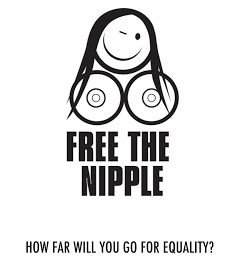
FREE THE NIPPLE

The film that inspired the empowering real-life movement supported by celebrities such as Miley Cyrus, Lena Dunham,
Russell Simmons, Rihanna, Cara Delevingne and many more!

#FREETHENIPPLE

Starring Lina Esco (LOL), Lola Kirke (Gone Girl),
Monique Coleman (High School Musical) and Zach Grenier (“The Good Wife”)

Free the NippleDirected by Lina Esco

SUNDANCE SELECTS WILL RELEASE FREE THE NIPPLE ON
DECEMBER 12, 2014, THEATRICALLY AND ON VOD.

WHAT IS FREE THE NIPPLE: Today, in the USA it is ILLEGAL for a woman to be topless in 37 of the United States of America in some states that includes breastfeeding. In less tolerant places like Louisiana, a woman exposing her nipples can carry a sentence of up to three years in jail and a $2,500 fine. In New York City, in 1992 it became LEGAL for women to be topless in public, but the NYPD continued to arrest women, so we took to the streets with cameras and our cast to fight these Puritanical injustices first hand. By the end the production, Free The Nipple morphed into a “real life” revolution that transcended the bounds of mere entertainment. Famous graffiti artists, mobs of dedicated women, and celebrities from Miley Cyrus to Liv Tyler and Lena Dunham jumped on board and ignited a national media blitz that has transformed into a powerful movement to Free The Nipple in America. Other celebrity supporters include Cara Delevingne, Shepard Fairey, Kendall Jenner, Adrian Grenier, Rihanna, Elizabeth Jagger, Scout Willis, Rumer Willis, Soko, Suki Waterhouse, Kellan Lutz, Dree Hemingway, Russell Simmons.

ABOUT THE FILM: A group of fearless women fight for their right to go topless in public, as they smash societal taboos one bare breast at a time. Based on a true story, this spirited satire follows New York City activists Liv and With, who take their crusade for gender equality from the streets of the urban jungle to the courts. More than just a movie,Free the Nipple has launched an empowering real-life movement, inspiring women across the globe to take back their bodies.

Director: Lina Esco
Writer: Hunter Richards
Producers: Lina Esco, Hunter Richards, Lisa Azuelos, Julien Madon
Co-Producer: Gigi Graff
For more information please visit http://www.freethenipple.com

Mars One: 10 Potential University Payloads to Mars in 2018

Photo courtesy of Bryan Versteeg and Mars One www.mars-one.com

Photo courtesy of Bryan Versteeg and Mars One.

Amersfoort,1st December 2014 – Mars One is proud to present the ten Mars One University Competition finalists eligible to fly to Mars. One of these ten payloads will receive the once in a lifetime opportunity to fly on Mars One’s first unmanned Lander mission to Mars in 2018. For the first time ever the public will be able to decide which payload receives the extraordinary opportunity to fly to Mars.

The ten remaining projects from an initial 35 submissions were submitted by diverse universities worldwide. In order to get this far, the payload proposals needed to meet all requirements as described by Mars One supplier Lockheed Martin. Mars One community members, social media followers, and the general public will have the opportunity to vote on and select the winning payload. Voting opportunities for the public will be opened in the first weeks of December, 2014. Voting submission will be accepted until December 31st, 2014.

The winning university payload will be announced on January 5th, 2015. The winning payload needs to be feasible and meet the requirements and restrictions as outlined in the Proposal Information Package (PIP) and on-going discussions with Lockheed Martin, who will build the 2018 lander. Additionally, if in any case the winning team can not perform or adjust to additional requirements the runner-up will be chosen instead.

Arno Wielders, Co-founder & CTO of Mars One said, “These ten final projects are unique and creative and we are very happy with the payload proposals these teams have presented. It would be highly interesting to see each and every one of these projects being launched to Mars. Now it is up to the public to decide which project they would like to have on Mars.”  Continue reading

Video Games, Smartphones, Language Learning, Technology and Learning

lynnz_col2Playing High-Action Video Games May Speed Up Learning, Studies Say by Sarah D. Sparks in Education Week 11/13/14
Sparks reports on a study in the December issue of Human Movement Science that contradicts earlier research which connects extensive video game play to attention-deficit disorders and other impulsiveness disorders. The authors contend that “game playing can improve students’ attention control” and create better learners.

Smartphone addicts: A project-based learning activity by Alexandra Lowe in TESOL blog 11/5/14
Lowe describes how she used the idea of a Smartphone survey to move English language use outside the classroom. In groups students developed and conducted surveys about Smartphone use.

Learning languages is a workout for brains, both young, old by Victoria M. Infivero from Science Daily 11/12/14
Using MRI scans, researchers at Penn State have demonstrated that even the adult brain grows and changes when learning a new language. They are also using “virtual 3-D-like environments with situation-based learning to help the brain make some of those new connections more effectively.”

Report Urges Caution on Approaches Equating Technology in Schools with Personalized Learning by William J. Mathis and Noel Enyedy,  from NEPC 11/24/14
This policy brief addresses the increased use of technology in schools and questions its effectiveness. The authors point to a number of factors, including the fact that teaching practices and learning outcomes often have not changed.

Who Dat? It’s E-Learn 2014! Come, Learn, Share, Connect

By Stefanie Panke
Editor, Social Software in Education

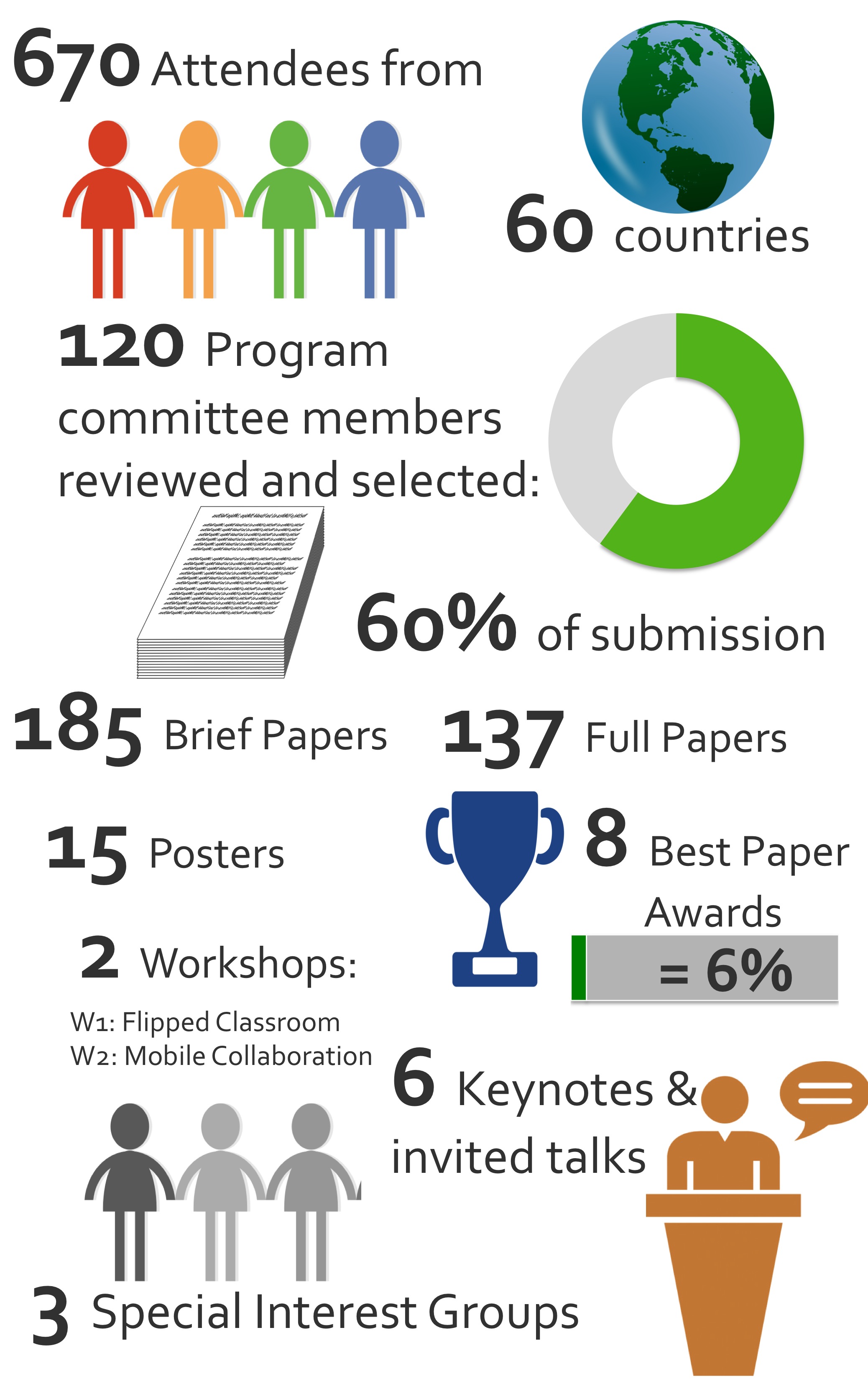
The 19th annual international conference AACE E-Learn took place from October 27-30 in the sunny, warm and welcoming climate of the city of New Orleans. The conference attracted 670 participants from 60 different countries who enjoyed four days of workshops, keynotes, presentations, symposia, SIG meetings, posters, and, last but not least, informal discussions and networking opportunities during the session breaks.

Conference infographic by Stefanie Panke.

Conference infographic by Stefanie Panke.

AACE E-Learn Conference

What sets AACE conferences apart from other events in the educational technology community is the rigorous peer review process in the selection of presentations. Instead of simply submitting an abstract, AACE requires a full manuscript of 6-10 pages. While writing skills do not always and certainly not necessarily translate into great presentations, the quality off contributions is generally high. This also makes the conference proceedings (available in the AACE digital library EditLib) a really great resource for an up-to-date overview of the current state-of-the-art in educational technology. While access to the proceedings is generally restricted to conference participants and subscribers, several papers that were honored with an outstanding paper award are openly accessible:

The best paper awards mirror the diverse spectrum of the conference. E-Learn is a place where educational technology researchers, developers, and practitioners from higher education, K-12, nonprofit and industry sectors meet – brought together by a joint focus on leveraging technology for achieving instructional goals.

My Conference Experience

This conference report is my personal eclectic account of E-Learn 2014. My schedule was packed this year: Not only did I, in a hyperactive mood, choose to deliver three talks, but I also had a symposium and a special interest group meeting to moderate and an executive committee meeting to attend. Luckily, the overall conference atmosphere, the great discussions during the special interest group meeting, and the thoughtful feedback, ideas, encouragement and contributions by numerous conference participants made all of this fun.  Continue reading

TCC Worldwide Online Conference 2015: Call for Proposals

Updated 12/1/14, 12/12/14
TCC2015A
20th Annual
TCC WORLDWIDE ONLINE CONFERENCE
March 17-19, 2015

Hawaii 2-0 : The Future is Now

Submission deadline: December 15, 2014  December 23, 2014
Submission form: http://bit.ly/tcc2015-proposal
Homepage & latest updates: tcchawaii.org

CALL FOR PROPOSALS
Please consider submitting a proposal for a paper or general session relating to all aspects of educational technology, including but not limited to e-learning, open education, ICT, online communities, social media, augmented reality, educational gaming, faculty & student support, Web 2.0 tools, international education and mobile learning. We also encourage retrospective presentations, personal experiences, and forecasting the future.

FULL DETAILS
http://tcchawaii.org/call-for-proposals-2015

SUBMISSIONS
http://bit.ly/tcc2015-proposal

VENUE
For our 20th anniversary celebration, there are two options: (1) ONLINE only or (2) ONSITE. Onsite sessions will run from March 18-19 at the University of Hawaii at Manoa Campus Center, and participants will also have access to all online sessions from March 17-19. All onsite sessions will be streamed to online participants.

For onsite participants: We’re offering an optional educational tour of Kamehameha Schools and a stopover at Kapiolani Community College for lunch and a talk at CELTT (Center for Excellence in Learning, Teaching and Technology). We’ve also arranged for a block of low cost housing options at the East-West Center (Lincoln Hall) and at Ala Moana Hotel.

KEYNOTE SPEAKERS
Alan Levine – cogdogblog.com
Howard Rheingold – rheingold.com

MORE INFO
Bert Kimura <bert@hawaii.edu> or Curtis Ho <curtis@hawaii.edu>

TCC Hawaii, LearningTimes, & the Learning Design and Technology Department, College of Education, UH-Manoa collaborate to produce this event. Numerous volunteer faculty and staff worldwide provide additional support.

—To join our TCCOHANA-L mailing list —
http://tcchawaii.org/tccohana-l/

The iPhone 6 Plus and Tablets: A Tectonic Drift

Jim ShimabukuroBy Jim Shimabukuro
Editor

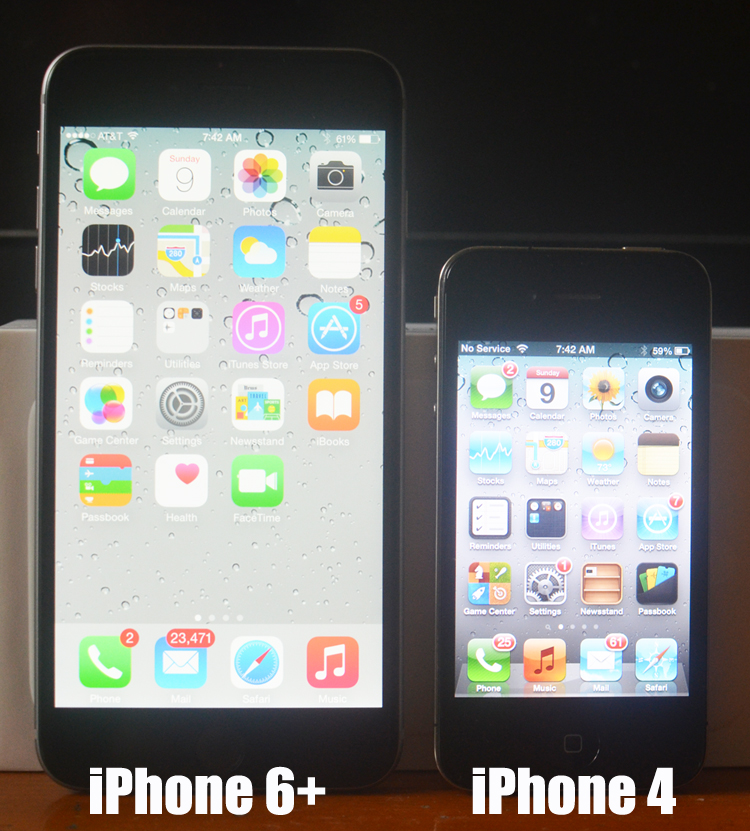
The iPhone 6 Plus arrived via USPS priority mail yesterday, so I’ve had it for a little over a day. My first impression is that it has a completely different look and feel from the iPhone 4, which I reviewed in July 2011. The 4 has a solid industrial feel that’s enhanced by sharply beveled edges. I like the way it looks and feels in my hand. The 6+, in comparison, feels fragile, perhaps because of its thinness and rounded edges. This sense of fragility, however, is gradually fading the more I handle it. My guess is that it will take a few days for a new muscle memory to replace the old.

IPhone 6+ and iPhone 4.

iPhone 6 Plus: 6.22 x 3.06 x 0.28 inches, 6.07 ounces. iPhone 4: 4.5 x 2.31 x 0.37 inches, 4.8 ounces.

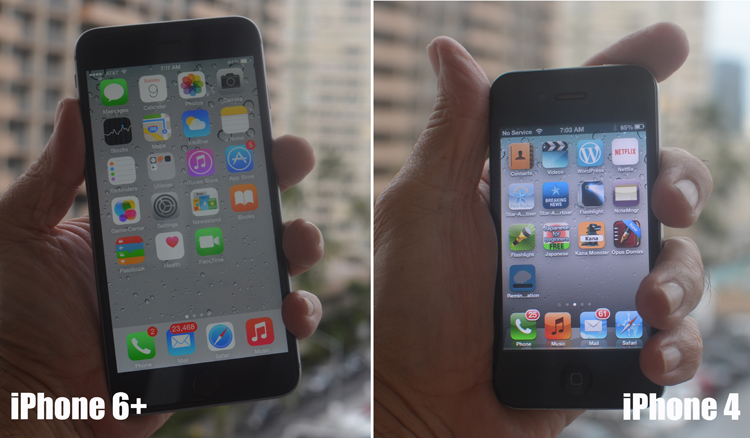
The most critical factor for me is hand fit. It has to feel comfortable. It took a few hours to adjust to the size difference, especially the length, 6.22″ vs 4.5″. The width difference, 3.06″ vs 2.31″, is noticeable, but it’s surprisingly comfortable in my hand. My immediate thought was that the next version of the plus could easily be an inch wider (4″ instead of 3″) and still fit the average-sized hand.

iPhone 6+ and iPhone 4.

iPhone 6+ and iPhone 4 width: 3.06″ vs 2.31″.

The next critical factor for me is pocketability. It has to fit comfortably in my pants pocket. The 4 fits in any and every pocket. The 6+ fits best in the front pockets. It’s slightly heavier than the 4, 6.07 vs 4.8 ounces, but it actually feels lighter in my pocket. This sensation is probably caused by its dimensions. It’s less dense. Taller, wider, and thinner, the weight is spread out whereas the 4 is concentrated in a smaller area.

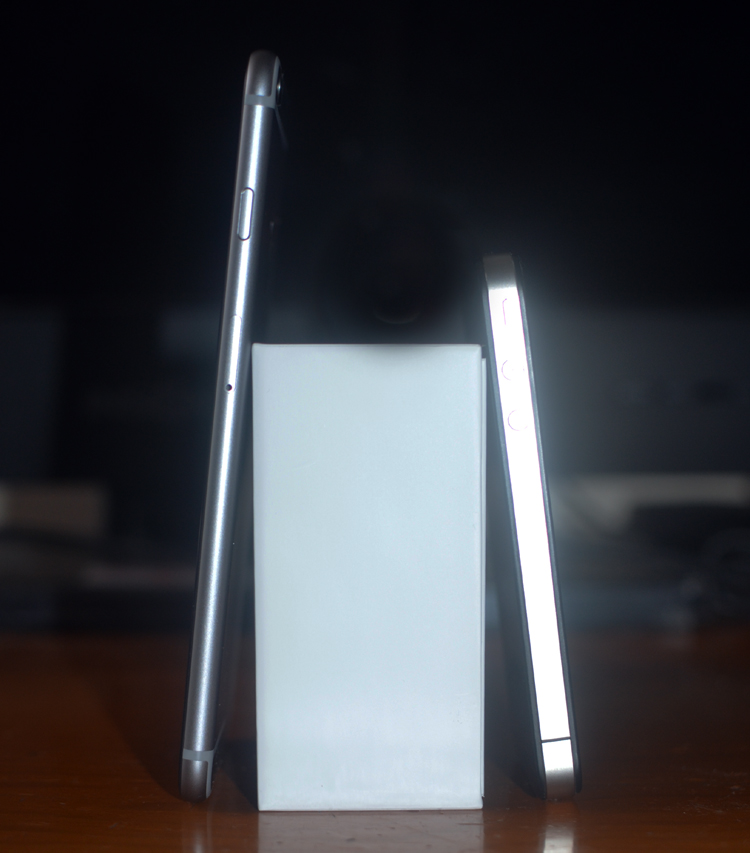
Side View iPhones

iPhone 6+ and iPhone 4 thickness: 0.28″ vs 0.37″.

I take my iPhone with me on walks and use it as a music player with in-ear headphones. The 6+ felt comfortable in my right front pocket. I slipped it in upside down because the 1/8″ headphone jack is on the bottom edge. The +/- volume buttons are in the same place as the 4’s, and I’m able to adjust volume from outside the pocket while walking.  Continue reading

MOOCs, Skills vs. Tools, Games, Learning in the Digital World

lynnz_col2Impacts of MOOCs on Higher Education by Allison Dulin Salisbury, from Inside Higher Ed
Although she comments that they are much criticized, the author focuses on positive outcomes of MOOCs such as the increased awareness by institutions of higher education that the digital age is here to stay. Read the comments, too, because a reader takes her to task for ignoring some data and this sparked a lively discussion.

When Students Get Creative With Tech Tools, Teachers Focus on Skills by Jennifer Carey from MindShift
All students need to learn how to use reading, writing, speaking and listening skills. The skill(s) the teacher wants the students to work with should be central to any lesson, including one infused with technology. Carey reminds readers that focusing on the skills rather than the tools results in effective learning. Digital tools should be used like any other teaching strategy; identify the skills you want your students to learn then decide how they will do it.

Latest games are finally unlocking the key to making learning more fun by Emmanuel Felton from Hechinger Report
Kids learn from games without realizing they are learning. Some educational game developers assert that gaming can go beyond using games to students’ actually designing and building games, using higher order thinking skills as they work collaboratively.

What Are the Most Powerful Uses of Tech for Learning? By Katrina Schwartz  from MindShift
In order for technology to be an effective learning tool, the learner first needs access. Then they need the knowledge to go beyond just being a consumer of information to being an active participant in the digital world. Teachers can be and are at the center of this type of deeper and more meaningful learning.

‘Big Hero 6’ Delights and Challenges

picture of Harry KellerBy Harry Keller
Editor, Science Education

Only a few true nerds, such as myself, will be at all challenged with Big Hero 6. Let me explain.

Big Hero 6 is about four students at San Fransokyo Institute of Technology (SFIT), the younger brother of a fifth, and a robot. These are the “6” in Big Hero 6. The catch here is that these “super heroes” don’t have mystical powers. Their performance boosts come from technologies that they create.

The lead character is Hiro Hamada (Ryan Potter) who is a wild genius youth who enjoys bot fights instead of the serious business of school. His older brother, Tadashi, tries to dissuade him from wasting all of his talent on underground bot fighting and finally breaks through. He gets Hiro hooked on being a student at SFIT. There’s a catch. SFIT is a robotics-oriented school, and you must show your ability to get in. Hiro must demonstrate his capability to the faculty of the school by showing actual robotics.

How he does so and what happens next set the course for the film. There’s just enough scariness and just sufficient levity associated with it to please school-age children. I’ll be taking my grandsons (aged five and seven) to see this movie two days after it opens and will share their reactions with you then.

The robot member of the six is the most unlikely hero you’ll ever meet. Baymax is voiced perfectly by Scott Adsit. He is a healthcare robot, a nurse, who looks like, as the script puts it, a marshmallow. He is white and squishy — inflated actually. He has a large pot belly and walks like a penguin. This robot is the legacy of Tadashi, his ultimate creation.

Besides Hiro and Baymax, the six include Go Go Tomago (Jamie Chung) who is a speed freak, Wasabi (Damon Wayons Jr.) who has terminal OCD and looks like he spends too much time in the gym, Honey Lemon (Genesis Rodriguez) who seems out of place in a robotics school because her expertise is in chemistry, and Fred (T. J. Miller) who just likes to hang out with the smart kids at SFIT.  Continue reading

Stellar Movie Fudges Science

picture of Harry KellerBy Harry Keller
Editor, Science Education

Interstellar is a great story with excellent acting, especially from Matthew McConaughey and Mackenzie Foy. For me, the three hours felt more like a normal two. Like the characters in the movie, I was asking where the time went.

In the not-to-distant future, maybe 20-30 years, the Earth is in real trouble. All efforts are now focused on food. Climate change has destroyed much of our ability to grow crops. National budgets have even eliminated defense spending.

InterstellarCooper, a former NASA test pilot, is now a farmer struggling against ever-increasing problems of drought and blight. He stumbles across strange gravity messages that direct him to the remnants of NASA run by Professor Brand (Michael Caine).

The film revolves around the relationship between Cooper and Murph (Foy and, later, Jessica Chasten, and, even later, Ellen Burstyn). This is the emotional center of the movie and the important love story. Oh, there’s another standard love story as well but one that definitely is not strongly promoted in the story.

Needless to say, there are adventures and sacrifices made, and the intrepid astronauts save the world through a combination of love, luck, and lots of fancy mental gymnastics.

If you’ve seen a trailer, you’ve seen a mountain-size ocean wave approaching people standing in calf-high water. These waves are continual on this odd planet and also are completely unexplained and irrational. What force could have moved so much water — over and over again? This is just the beginning of making this movie exciting while ignoring reality.  Continue reading

‘The Theory of Everything’ – A Hollywood Take on Science

picture of Harry KellerBy Harry Keller
Editor, Science Education

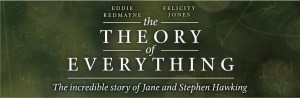
The new movie, The Theory of Everything, is about the life of Stephen Hawking from his graduation from Oxford to his becoming famous and then separating from his devoted wife of over a quarter century. Please, everyone, go to this movie. Why? Because it’s a good story, well acted and directed, and because you will be supporting the concept of telling the stories of scientists in movies. We must have more of this.

Stephen has a special resonance with me for strictly non-scientific reasons. We were born in the same year. We both entered prestigious colleges at the same age, 17, and went on to prestigious graduate schools for our doctorates. We were both married in the same year, he to Jane and I to Jayne. Of course, there are innumerable differences to balance these few coincidences. I majored in chemistry, he in physics. I have enjoyed rather good health overall. He is outrageously famous, while I labor in obscurity. And so it goes.

The Theory of EverythingBefore getting to the science, I’ll praise Eddie Redmayne for his uncanny portrayal of Stephen Hawking. From the early stumbling to the later crablike fingers and the difficulty in forming words, he nails Hawking in a manner that I never would have believed. Especially moving are the scenes in which he has the twinkle and slight smile showing Hawking’s personal joy at special moments and his puckish sense of humor.

This is a wonderful love story in which personal connection overcomes insurmountable odds. Jane (Wilde) Hawking’s (played by Felicity Jones) indomitable spirit lifts Stephen Hawking to the threshold of his greatness. We see this spirit and unwillingness to give up displayed several times in the movie. The very fact that Jane has three children, the last when Stephen is unable to move from his wheelchair speaks volumes about her. Ms. Jones brings a real sense of what the actual Mrs. Hawking must have felt to many of the scenes in the movie.  Continue reading

The Future of Tablets — and More

picture of Harry KellerBy Harry Keller
Editor, Science Education

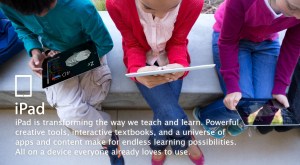
Recent news of a drop in iPad sales1 by Apple triggered some thoughts. Reporting that educational sales of iPads are still on the rise prompted more thinking. Then, I found that some of our customers had a very interesting response to our queries about this area.

We deliver our software as HTML5, making updates unnecessary and allowing for the software to run on any platform: iPad, iPhone, Android device, Chromebook, MacBook, MS Surface, Linux desktop, etc. We can readily convert the software to an iOS app and to an Android app. The question we asked is, “Should we?” The answer, at least from schools, was as resounding “No!”

ipad oct2014

Making predictions is a very risky business, if you care about your credibility. I am going out on a very long limb by making two predictions for the future. Any number of new developments can make these predictions wildly inaccurate or could cement their certainty.

The first prediction is that iPads will continue the decline in sales and eventually level off. There will be some bumps in this path, of course, but the overall process is one of stagnation at best. The article gives some reasons. For example, people are not upgrading their old iPads as quickly as Apple had anticipated. An iPad is not an iPhone and does not engender the mass hysteria with respect to new versions that you see with such a constantly visible status symbol as your cell phone.

Those tablets also don’t have as many preferred uses as many had predicted. Most who can afford an iPad also have a “real” computer that they use for power applications such as word processing. The tablet is mostly used for videos, music, email, texting (when not using the cell phone for that), and so on. In brief, tablets are not supplanting computers in large numbers. Given a computer and a cell phone, with screen size growing apace, the tablet is the “middle child” and is unnecessary to everyday functioning. It’s too large to carry in your pocket and too small for many serious uses.

The above is not to suggest that tablets will vanish, only that they will settle into a niche market until someone radically changes the interface. The touchscreen is magic for young children and some applications. My grandchildren took to them like kids to candy, even at ages 3 and 5. Still, a touchscreen interface can only take you so far. Adding three-finger gestures really doesn’t make it that exciting. The problems lie in two primary areas: screen size and computing power (CPU and memory). The apps for them have been designed to use what’s available.  Continue reading

Technology Is a Partial Answer to Improving Teacher Quality

picture of Harry KellerBy Harry Keller
Editor, Science Education

On October 29, the New York Times published an op-ed by Frank Bruni1 that is based on a new book by Joel Klein (past chancellor of New York City Public Schools) and that has plenty of advice for educators. According to Bruni, Klein tells us that the primary issue in education is teacher quality.

Bruni’s analysis of Klein’s writing is good enough that everyone should read it and read between the lines too. Bruni also had the opportunity to interview Klein and asked some penetrating questions. Here are some bullet points that I have excerpted from the article:

• Stiffen the admission requirements for schools of education.
• Fix education school curricula, including ensuring teachers master their subjects.
• Create a rational incentive system for compensating teachers, a huge problem today.

You can read the article for the details. What does all of this have to do with technology? A great deal, actually, and in two important areas. The first area is teacher training. We can do much in this area, both with simulating teacher classroom experiences and with mastering subject matter. We currently train pilots with simulators before putting them in airplanes. The same thing could be done for teachers to help them more rapidly reach competency with student interaction, discipline, and engagement.

I am only intimately familiar with science education and can say that we have some great tools to advance science teacher understanding of their subjects. Too many science teachers enter classrooms unprepared to teach science for the simple reason that they do not understand the nature of science. It’s sort of like teaching chess without knowing how the pieces move. We can fix that.  Continue reading

The Crinkle-Free Pocket Map – Google Maps

Allison Turgeon 80By Allison Turgeon
Student
University of Hawai’i at Manoa

Struggling with a cumbersome paper map is difficult and inconvenient, and then it begins to rain. Google Maps is a user-friendly alternative, a technological tool that can be accessed via a computer or a mobile device, compatible with both Android and iOS operating systems. This app offers users a variety of functions, increasing versatility and convenience. It is an innovative and handy tool that assists users in more than just arriving at their desired destination with great ease.

Google MapsWith Google Maps, users can type or say a street address, a point of interest, or a named location into the search bar. Kapi’olani Community College classmate, Kelsey Hardee, says, “Now that I have a moped, I love the voice option so I can be directed hands free!” Google Maps locates the destiantion on a map. From here, users have the option to seek driving, transit, walking, or biking directions. With multiple routes, users can select the one that is most convenient and meets their needs. After selecting their desired route, the application offers directions to the desired destination or an option to hear turn-by-turn navigation instructions, similar to those of a standalone GPS system. Additional features include satellite imagery, allowing users to access a street-view of the area, a particularly useful function that helps to increase visual familiarity of an area.

A recently added feature allows Google Maps users to explore nearby businesses, including eateries, hotels, malls, and other points of interest. This feature is complete with consumer ratings and reviews, business information such as hours and contact information, and driving, walking, biking, or transit directions to visit the point of interest. According to David Pogue of the NY Times, “Google’s points-of-interest database also excels.” While other apps offer a similar feature, many of them actually access Google Maps to provide location and directions. Google Maps is more effective and convenient since it reduces the number of steps in the process.  Continue reading

All Rise! – Ergonomics and Back Pain

Lynn ZimmermannBy Lynn Zimmerman
Associate Editor
Editor, Teacher Education

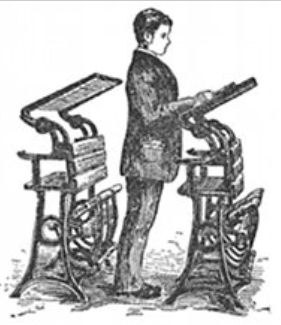
A few years ago I went to the Rutherford B. Hayes House in Fremont, OH. (In case you are wondering why, I had a friend who worked there at the time.) One of the things that struck me was his standing desk. When I first saw it, I assumed it was a podium for lecturing, but my friend informed me that, no, it was the desk where he often worked. Other than Thomas Wolfe (of Look Homeward Angel fame), who apparently wrote standing at his refrigerator, I had never heard of anyone standing and writing or doing other paperwork. I decided it must just be easier for tall people somehow and did not give it another thought.

Illustration from Brett and Kate McKay's "Become a Stand-Up Guy: The History, Benefits, and Use of Standing Desks," Art of Manliness, 5 July 2011.

Illustration from Brett and Kate McKay’s “Become a Stand-Up Guy: The History, Benefits, and Use of Standing Desks,” Art of Manliness, 5 July 2011.

Then, a couple of years ago I started having back and neck problems. I spend many hours, like many modern people, sitting in front of a computer for hours on end. After several doctor visits, I started changing the way I worked. The doctor gave me a website that would show me how to properly (ergonomically1) adjust my workspace. She also recommended a timer for my computer that covers your screen for a few minutes every so often. I did not do that, but I did start taking more frequent breaks. I mentally break my work into segments depending on what I am doing. When I reach the bottom of a page, I take a break. When I have completed five PowerPoint slides, I take a break. After I have graded so many pages, I take a break. Sometimes, I’ll just stand up and sit down, but I try to get up and at least walk into another room.

The doctor also showed me some folding shelves that you can mount on the wall at the appropriate height for standing and working on your computer. I didn’t buy one, but I did set up my iPad on a chest high bookshelf. Then, rather than checking my email while I was sitting and working on my laptop, I started checking my email on the iPad so that I would have to stand up and walk over to it and stand as I read and responded to emails.

I still have problems with my neck and hips, but there is a definite improvement. When I am in a situation, such as a hotel room, where I cannot set up my equipment as ergonomically, I can definitely feel a difference. Then I have to be conscious of taking those stand up breaks.

The reason this topic came up is that I ran across an article, “How Standing Desks Can Help Students Focus in the Classroom,” by Holly Korbey at MindShift.

I learned that many famous people, including Ernest Hemingway, Thomas Jefferson, and Charles Dickens, used standing desks. Korbey focuses on a study done by Mark Benden, Associate Professor of Environmental and Occupational Health at Texas A&M Health Science Center. He and his team believe that too much sitting contributes to a variety of problems that children have in school, as well as to obesity. They found that elementary students who stand up more to work burned more calories and were more engaged in learning when they could stand and move around. As an educator, this makes sense to me. Children need to move and twitch and fidget. And, maybe, adults do, too.

__________
1 For more on ergonomics, see “Ergonomic Workstation Guidelines,” North Carolina State University.

What’s This Song Called? – SoundHound App Review

Scott Miyahira 80By Scott Miyahira
Student at Kapi’olani Community College
University of Hawai’i

We’ve all been there. You’re shopping in the grocery store, sitting in your car, or watching television at home, and a catchy tune floats into your ear. You listen intently and maybe even bob your head to the beat. You’re really getting into this song you’re hearing for the first time, but before you know it, it’s over, and you have no idea what you just heard. Like a sappy romance film cliché, you’ve fallen in love and don’t know if you’ll ever meet again. You ask your friends, but no one seems to know either. You didn’t even get a name…

All melodrama aside, those days are over thanks to SoundHound. For any music lover on the go, it is the best mobile music identification software available.

SoundHoundSoundHound is a free mobile application, universally compatible with iOS, Android, Blackberry, and Windows devices. When you want to know the title, artist, or lyrics of a song, all it takes is a tap on the screen of the SoundHound app and it will identify it for you in as little as three to ten seconds. I am an avid music listener and collector with nearly four thousand tracks on my iPhone alone, and I am constantly looking to add to my collection. However, keeping up with ever-changing music trends and artists can be extremely difficult. SoundHound allows me to quickly identify new songs I hear and like or songs I recognize but can’t identify, thus enabling me to look them up and potentially add them to my ever-expanding library. I must shamefully admit that, for these reasons, SoundHound has become one of the most frequently used apps on my phone, beating out productivity and informational apps.  Continue reading

Rarely Do I Download an App and Keep It, but When I Do — It’s a Keeper!

John Palmer F2014 80By John Palmer
Student at Kapi’olani Community College
University of Hawai’i

Living in today’s high-tech world, it’s almost a silly question. Have you ever forgotten the password to your FaceBook login, eBay log-in, WordPress page or your “other” email account? Of course you have. Everyone has, myself included! But what if there was an app, and all you needed to do was remember one password, and it, in turn, would be the key to getting into every other app, website or even bank account you use? Keeper is an app for saving passwords that is a time-saver and highly useful.

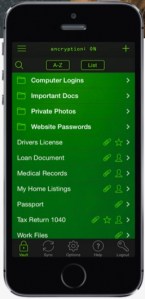
KeeperRarely do I download an app or software that I cannot live without, but Keeper is such an application. Why? Keeper remembers everything so I don’t have to. I have used it for many years to remember (and protect) passwords to my bank account, log-ins to websites, even to pay my electric and phone bills. You can completely eliminate the risk of your cookie data being robbed when using it on your PC or MAC since it stores data like a database, as opposed to a web page, which leaves your information open to bots that comb and steal cookie data, making you, that’s right, say it with me people — vulnerable. In fact, the cross-platform compatibility is so great that it works on iPhone, iPod Touch, iPad, even your Kindle or Nook.

The browser version works on Safari, Internet Explorer, Chrome, and Firefox. It also uses world-class encryption technology so you never have to worry about all of your private information being hacked. I’m going to go out on a limb here and predict that if you aren’t already using this great app, next to your social media, email, and phone (and notwithstanding Flappy Bird, but that’s another story), you will without a doubt find yourself using this app often.  Continue reading