Yesterday (29th), I wasn’t able to google a transcript or video of the keynote so I can’t comment on the value of Rischard’s ideas. But I am concerned by the nature of the negative feedback quoted by McLeod. The majority seemed to be aimed at the low-tech and poorly designed PowerPoint slides and the lack of animation in the speaker. Little was said about the actual ideas.
Is this a case of an audience so conditioned to lecture as motivational entertainment that substance is no longer an issue? Or was Rischard’s presentation really that poor in terms of performance and substance?
Subjects and Procedure: “Students in a large introductory microeconomics course at a major research university were randomly assigned to live lectures versus watching these same lectures in an internet setting, where all other factors (e.g., instruction, supplemental materials) were the same” (abstract).
The following excerpt is from page 45 of “Final Report: Governor’s Reset Cabinet” (Oregon, June 2010). The focus of this section is “virtual education”:
Virtual Education
Oregon should create and fully support a statewide public virtual learning system. The use of online or virtual learning has come of age in recent years. Today’s technology makes it possible to provide educational opportunities to remote areas of the country. Florida, for instance, has over ten years of experience with providing a statewide virtual system. In that state’s experience, the highest demand areas are in credit recovery and dual credit classes, where students earn both high school graduation and college credit. The average student is not enrolled full-time in a virtual program, but takes one or two online classes per semester. Continue reading →
While I agree completely with Jim’s comments, John Adsit’s additions point to a broader problem, one that I’ve also seen. This problem transcends the technocrats issue.
Few people in education (including technology specialists, teachers, and administrators) can see outside of the box in which they’ve placed themselves. John is a rare exception.
When computers first entered classrooms (focusing on K-12 now), they were used in very conventional ways. The first educational apps were basically drills. Many still are. These can, with slight loss of efficiency, be done well with paper and pencil. No quantum leap in real learning occurs. Continue reading →
John Adsit’s recent comment on the limitations of imagination with regard to change points to arguably the greatest obstacle to reformation of schools and colleges in the U.S. and the world. Educators, as a group, seem to be incapable of thinking outside the box. Asked to imagine different ways technology can be used to improve the ways in which we teach and learn, the results are almost always dismally familiar. Rather than changes that are surprising, fresh, new, different, outside-the-box, sustainable, and cost-effective, we come up with more of the same, with an emphasis on more. That is, we need more smart classrooms, more tech specialists, and more dollars to do more of the same.
One of the reasons for this lack of imagination is our choice of change agents. In the vast majority of colleges, when change and technology are the topics, the faces around the conference table belong to technocrats: administrators and staff from information technology and distance education departments. If subject-area teachers are included, they are more than likely present because they have earned part-time or associate status in the technocracy. Continue reading →
On 10 June 2010, Minnesota Governor Tim Pawlenty appeared on Jon Stewart’s “The Daily Show.” One of the topics they touched on was online learning in higher education. The audio clip below is an excerpt from the TV show.
The following are transcripts of key comments by Pawlenty:
Do you really think in 20 years somebody is going to put on their backpack, drive a half hour to the University of Minnesota from the suburbs, haul their keister across campus and sit and listen to some boring person drone on about Econ 101 or Spanish 101? Continue reading →
I will call her Jennifer. I was thinking about her a couple of days ago when I fixed up a neglected corner of my garage, a corner where my children and their friends had penciled in their names and some attempts at adolescent humor. “Jennifer was here” was written next to a heart.
My wife and I met Jennifer soon after our younger son entered high school and needed a ride for his first date. My wife was their chauffeur, and she told me that Jennifer was a wonderful, sweet girl from a very nice family. Their dating relationship, like so many at that age, did not last all that long, but they remained very good friends. She was frequently among those who hung around our house, which for some reason was the place to be for that group. She was a friend to both my sons, and we were always glad to see her. Continue reading →
Dear Workers of the “Section de la communication, de l’éducation et du partenariat (CLT/WHC/CEP)” of UNESCO’s World Heritage Center:
First, congratulations on the remarkable World Heritage video series posted by UNESCO on YouTube, with links to the relevant pages of http://whc.unesco.org. This is a great education tool.
However, I was wondering if you could not caption these videos: for most of them, you already have and offer a plain text transcript on http://whc.unesco.org. So on YouTube, for the videos in English, it would be enough to add that transcript to the video as a .txt file, and then the YouTube software would automatically time-code this transcript to produce the captions – and an interactive transcript viewing below the video. Continue reading →
The June 2010 issue of Journal of Online Learning and Teaching (JOLT, v6n2) contains 23 papers. Listed below are highlight statements and excerpts from ten of them. The selections and foci are based solely on my interests in online learning.
1. Online is the “emerging standard of quality in higher education.”
“It is clear that the experimental probability of attaining higher learning outcomes is greater in the online environment than in the face-to-face environment. This probability is increasing over time. . . . The distance learning approach is becoming the ‘normal science.’ Yet, this is not fully comprehended by the various decision making institutions where the gate-keeping positions represent, by and large, the past paradigm. Therefore, distance learning is still treated as the anomaly (‘step child’) instead of as the emerging standard of quality in higher education.” Mickey Shachar and Yoram Neumann, Twenty Years of Research on the Academic Performance Differences Between Traditional and Distance Learning: Summative Meta-Analysis and Trend Examination.
The following are excerpts from “Online Learning,” a section in “2010 Annual Letter from Bill Gates.” According to Gates, “The focus of this year’s letter is innovation and how it can make the difference between a bleak future and a bright one.” He says, “If we project what the world will be like 10 years from now without innovation in health, education, energy, or food, the picture is quite bleak. . . . In the United States, rising education costs will mean that fewer people will be able to get a great college education and the public K–12 system will still be doing a poor job for the underprivileged.”
1. Hybrid approach: “The Internet will surprise people in how it can improve things—especially in combination with face-to-face learning.”
2. Cost effective: “With the escalating costs of education, an advance here [online learning] would be very timely.” Continue reading →
Carrie Heeter’s “Technology and Pedagogy Expectations for an In-Person Course” reports on a study of Michigan State University students and instructors. Heeter is creative director of MSU’s Virtual University Design and Technology. What makes this report interesting and unique is that it focuses on students and instructors in “in-person” or F2F courses. The research question, in general, is: What are your views on the importance of a wide range of instructional technologies, including ones that are internet-based, in in-person courses? In this article, I’ve extracted select findings from the executive summary. (For the complete report and all the results, published 9 June 2010, click here.) My selections lean more toward students’ views and internet-related technology.
The study was conducted in fall 2009, with 165 MSU instructors and 735 students. The subjects “completed surveys about their technological and pedagogical expectations for a high quality, in person course in their discipline.” According to Heeter, “The evolving, ever-expanding array of increasingly sophisticated online tools for teaching and learning and the explosion of online information resources have transformed instructor and student expectations about good teaching.” Continue reading →
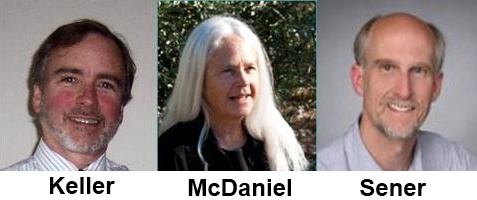
On June 8, Harry Keller shared Philip E. Auerswald’s article, “First Newspapers, Now Universities: It’s Transformation Time” (Washington Post, 8 June 2010), with the ETCJ staff. As a result, Harry and two other ETC writers, Judith McDaniel and John Sener, submitted articles responding to Auerswald:
Here are the opening lines from Auerswald’s article:
The commencement season that has just drawn to a close has been, once again, a wonderful time to celebrate our enduring rituals of collegiate education.
Now prepare to say goodbye to them.
This isn’t to say that traditional four-year colleges are going to disappear overnight. They won’t…not any more than major-market newspapers have. But leaders in higher-ed have reason to pay serious attention to the disruptive changes technology has forced upon journalists and other knowledge workers: our industry is next.
[click here to read the rest of Auerswald’s article]
A recent article by Philip E. Auerswald suggests that colleges and universities must choose between evolution and extinction. He points to five recent trends:
Students are not showing up for lectures anymore.
Rising tuition costs are pricing more and more students out of higher education.
Tightening credit markets make student loans more difficult and expensive to obtain.
Alternative means to a college degree are becoming more numerous.
Global corporations are more willing to accept graduates from alternative institutions.
These five dry trend statements mask the true underlying drivers, which are the interrelated forces of costs and technology. You might say the traditional colleges and universities have brought this problem upon themselves by setting tuition increases far beyond cost of living increases and even far beyond the increases in health-care costs. Although many students were already unable to afford a college education, these extreme increases have pushed even more to look at alternatives. Continue reading →
After reading the article and the comments (Philip E. Auerswald’s “First Newspapers, Now Universities: It’s Transformation Time,” Washington Post, 8 June 2010), I was certainly disappointed in the quality of the conversation. Many of the comments are written by those who have never taken or taught an online class, nor have they considered the things that make an online course an exciting intellectual experience. Without the knee jerk reactions, I think it is past time to recognize that online education is with us for the duration. It won’t go away because it is a very exciting and viable alternative to traditional education. Continue reading →
I’m tempted to say “see my previous commentary on this topic” — this article (Philip E. Auerswald’s “First Newspapers, Now Universities: It’s Transformation Time,” Washington Post, 8 June 2010) is similarly annoying. But I’m beginning to wonder whether it’s the form or the substance which is annoying, or both. (I think it’s both.)
First, the form. The article’s next-to-last paragraph seems reasonable enough at first glance:
What all of this means for leadership in higher education is that while resistance is futile, obsolescence is far from assured. The coming transformation in higher education will be gradual, and it will be incomplete. Many of today’s elite institutions will not only survive, they will prosper. Other institutions that clearly define, measure, and communicate the value they bring to individual students – and not just to society as a whole – will prosper. As for those whose strategy is to repackage past glories as a vision for the future on forlorn trips to bankrupt legislatures, [it won’t work] . . .
Why then create such cognitive dissonance by covering a plausible conclusion with an attention-grabbing, contradictory, absurd coating? “Prepare to say goodbye” to universities? “Learning is still in for today’s students, but school’s out”? Continue reading →
A couple days ago (June 8), Claude Almansi posted a comment in our ETC listserv, inviting us to submit articles on the “furious* debate going on in the Media Ecology Association mailing list around the new(?) The Shallows: What the Internet Is Doing to Our Brains book by Nicholas Carr, of ‘Is Google Making Us Stupid?’ fame.” I poked around in the links she provided and decided to share my two cents.
I haven’t read The Shallows, but from the articles I’ve read, the assumptions underlying Carr’s views seem to be: (1) human beings are prone to distraction and the internet exacerbates the problem and (2) unitasking is healthy and multitasking is not.
The problem with these assumptions is that they oversimplify the thinking-learning process. Distraction is a facet of our ability to multitask, and as such, it can be both good and bad. It’s great to be able to concentrate on the road while driving, but it’s critical for us to be able to react immediately to a car that swerves, without warning, into our lane. This ability to focus on and respond to more than one thing at a time is essential for survival and for thinking. In this case, knowing where the other cars are at all times will determine whether we can safely slow down, speed up, or swerve into the next lane. Continue reading →
In a memo dated 8 June 2010, Jeffrey R. Seemann, Texas A&M Vice President for Research and Graduate Studies, announced the university’s move toward decentralizing its management of distance education (DE), eliminating the Office of Distance Education and “transferring the development, management, and promotion functions . . . to the college deans and placing compliance with regulations and fee oversight under the purview of the Provost’s Office.”
This decision was based on “reviews of previously completed reports and other documents, consultation with knowledgeable individuals and groups, and an evaluation of distance education models at peer institutions” as well as “input from numerous university stakeholders.” Seemann said that “the recommendation to close the Office of Distance Education and transition to a decentralized distance education model is the right course of action.” He said, “Be assured that in no way will the quality of distance education programs be lowered by this action” (Texas A&M News & Information Services). Continue reading →
UNESCO World Anti-Piracy Observatory IGC(1971)/XIV/5B
WAPO covers 52% of UNESCO member countries
UNESCO World Anti-Piracy Observatory IGC(1971)/XIV/5B (available in English, French, Spanish, Russian, Arabic), apart from the information already made available by UNESCO on the World Anti-Piracy Observatory (WAPO) site and in the French Wikipedia article about it, reveals that only 52% of the UNESCO member countries answered the survey on which WAPO bases the information concerning national copyright laws and “anti-piracy” measures. Continue reading →
What can we learn from the Gulf oil spill? How will technology play a role in that learning?
The first thing we know is that the Internet has made possible the 24-hour spill camera deep in the Gulf that’s providing a live feed of oil gushing out into the ocean waters. While I’m sure that BP would rather not have this output of visual information, they cannot avoid it in the current political climate. Continue reading →






 By Jim Shimabukuro









 Educational Technology and Change Journal