‘Invasion of the MOOCs’ – Grounded and Free

Jim ShimabukuroBy Jim Shimabukuro
Editor

Every once in a while, a book comes along that puts a grin on your face, and the more you think about it, the wider your grin becomes. Invasion of the MOOCs: The Promises and Perils of Massive Open Online Courses (Parlor Press, 2014), by Steven D. Krause and Charles Lowe, is such a book. And for all the right reasons.

Krause and Lowe

The sources are right: “Unlike accounts in the mainstream media and educational press, Invasion of the MOOCs is not written from the perspective of removed administrators, would-be education entrepreneurs/venture capitalists, or political pundits. Rather, this collection of essays comes from faculty who developed and taught MOOCs in 2012 and 2013, students who participated in those MOOCs, and academics and observers who have first hand experience with MOOCs and higher education.”

And the price is right. Free. Or you can choose to pay $30.00.

Krause and Lowe photo

Contents

“Introduction: Building on the Tradition of CCK08” by Charles Lowe
“MOOCology 1.0” by Glenna L. Decker
“Framing Questions about MOOCs and Writing Courses” by James E. Porter
“A MOOC or Not a MOOC: ds106 Questions the Form” by Alan Levine
“Why We Are Thinking About MOOC” by Jeffrey T. Grabill
“The Hidden Costs of MOOCs” by Karen Head
“Coursera: Fifty Ways to Fix the Software (with apologies to Paul Simon)” by Laura Gibbs
“Being Present in a University Writing Course: A Case Against MOOCs” by Bob Samuels
“Another Colonialist Tool?” by Aaron Barlow
“MOOCversations: Commonplaces as Argument” by Jeff Rice
“MOOC Feedback: Pleasing All the People?” by Jeremy Knox, Jen Ross, Christine Sinclair, Hamish Macleod, and Siân Bayne
“More Questions than Answers: Scratching at the Surface of MOOCs in Higher Educatio” by Jacqueline Kauza
“Those Moot MOOCs: My MOOC Experience” by Melissa Syapin
“MOOC Assigned” by Steven D. Krause
“Learning How to Teach … Differently: Extracts from a MOOC Instructor’s Journal” by Denise K. Comer
“MOOC as Threat and Promise” by Edward M. White
“A MOOC With a View: How MOOCs Encourage Us to Reexamine Pedagogical Doxa” by Kay Halasek, Ben McCorkle, Cynthia L. Selfe, Scott Lloyd DeWitt, Susan Delagrange, Jennifer Michaels, and Kaitlin Clinnin
“Putting the U in MOOCs: The Importance of Usability in Course Design” by Heather Noel Young
“’I open at the close’: A Post-MOOC Meta-Happening Reflection and What I’m Going to Do About That” by Elizabeth D. Woodworth
“Here a MOOC, There a MOOC” by Nick Carbone
“Writing and Learning with Feedback Machines” by Alexander Reid
“Learning Many-to-Many: The Best Case for Writing in Digital Environments” by Bill Hart-Davidson
“After the Invasion: What’s Next for MOOCs?” by Steven D. Krause

Why Educational Equity Is Important

By Allan C. Jones

“What the best and wisest parent wants for his own child, that must the community want for all its children. Any other ideal for our schools is narrow and unlovely; acted upon, it destroys our democracy.” (John Dewey)

Every child deserves an excellent education. This statement is supported by an impressive collection of studies, reports, articles, and comments by national leaders. If you believe that a person’s intellectual capacity is racially, ethnically, or culturally predetermined, you may as well stop reading at this point. If you don’t believe it, then you can’t be in favor of a program that tacitly accepts some schools will be better than others and seeks equity by balancing access instead of raising quality.

A_Jones

If you believe that everyone has the potential for greatness, then you must also want to ensure that every child is nurtured to achieve that greatness. And you should not only want it on moral or ethical grounds; you should also want it on economic grounds. There are many reports on the economic and social benefits of providing equitable access to quality K-12 education. America has some excellent public schools, but that is not enough. America’s future is at risk as long as we continue to allow poor schools to exist.

The news programs and business publications constantly remind us that we are increasingly competing in a global economy. Our ability to compete is directly related to how well we prepare each individual citizen to participate. America’s K-12 public education system is the most important single factor in preparing citizens to compete. The personal costs of a poor education are the first manifestations of the problem of educational inequity. But, as the McKinsey report demonstrates, the issue is much more than a collection of individual, personal costs. The lack of quality education for large numbers of our population has a previously hidden cumulative national cost that is staggering.  Continue reading

LLT 18:1 – “Using Peer Computer-Mediated Corrective Feedback to Support EFL Learners’ Writing”

Dorothy M. Chun and Mark Warschauer

Dorothy M. Chun and Mark Warschauer, editors, Language Learning & Technology.

Using Peer Computer-Mediated Corrective Feedback to Support EFL Learners’ Writing,” by Ali AbuSeileek and Awatif Abualsha’r, is available in Volume 18, Number 1 of Language Learning & Technology. LLT, edited by Dorothy Chun and Mark Warschauer, is a refereed ejournal that disseminates research to foreign and second language educators worldwide on issues related to technology and language education. It is available online, free.

Sign up here to receive your free subscription if you have not already done so. LLT welcomes contributions for future issues. Submission guidelines can be found here.

FEATURE ARTICLES

Fostering Foreign Language Learning Through Technology-Enhanced Intercultural Projects
by Jen Jun Chen & Shu Ching Yang

Using Peer Computer-Mediated Corrective Feedback to Support EFL Learners’ Writing
by Ali AbuSeileek and Awatif Abualsha’r

Direct and Indirect Access to Corpora: An Exploratory Case Study Comparing Students’ Error Correction and Learning Strategy Use in L2 Writing
by Hyunsook Yoon and JungWon Jo

Effects of Captioning on Video Comprehension and Incidental Vocabulary Learning
by Maribel Montero Perez, Elke Peters, Geraldine Clarebout, and Piet Desmet

Ecological Affordance and Anxiety in an Oral Asynchronous Computer-Mediated Environment
by Levi McNeil

Use of Wikis to Promote Collaborative Writing in EF
by Zelilha Aydin and Senem Yildiz

Continue reading

Journeys of the Mind: Yes, We Went to the Moon

I was trained by NASA. Let me be clear that I personally don’t want to colonize space, but I thought that thinking futuristically was a great idea for children, and science fiction is an interesting topic. We started with Space Science Education.

First, we did the NASA thing, that is, learning and creating mock colonies on the moon, on Mars, and fussing about which would be the better place. The Challenger Center created programs that let us think really hard about landing on the moon. Here is a song we used to sing:

Mission Control, can you hear me? Think of this with kids’ lovely voices, not this one single voice.

Then, NASA had a series of projects: Marsville, then Mars, City Alpha.

I live in Washington, DC, so there is of course the National Air and Space Museum, and we have had programs there, small programs and overnight programs. I love the study of space, astronomy, astrophysics. Now we have Cosmos. I welcome it. In case you missed it, click here for a link to the discussion following the presentation. We have those who debate the issue of how, where, when and why.  Continue reading

Registration for TCC 2014 Is Now Open

bert_kimura2Aloha,

Registration for TCC 2014 is now open.

http://2014.tcconlineconference.org/

General information about the conference is also available at this web site.

The conference fee is $99 USD for individuals prior to April 1. There are also special registration rates for graduate students and a group rate for unlimited participation by an entire campus.

For your information, we will hold a special pre-conference event (Pre-Con) on March 26 from 2:00-3:15 PM Hawaii time. For other time zones see:

http://www.timeanddate.com/worldclock/fixedtime.html?msg=TCC+2014+Pre-Con&iso=20140325T14&p1=103&ah=1&am=15

This FREE event (RSVP required) will feature presentations about social media in education and an orientation to the conference schedule and activities.

http://2014.tcconlineconference.org/precon/

We look forward to seeing you online on April 22-24.

Warm regards,
Bert Kimura
For the TCC Conference Team

Back From Russia: It Was COLD

I am still waking up at 4 in the morning. I have not been out of the house. There has been a big snowstorm. I did go to the grocery store, but I have been lazing around. In Samara, we had about four to five meetings a day. We flew back on a 23 hour trip, three hours in Frankfurt, and came home.

Vic treated me to caviar and champagne. For a couple of days after, I cooked. (Hint. You don’t have to cook it.) We had that for two days, but the first day I did cook. Did lamb rib chops, stuffed potatoes and sliced tomatoes, and crashed. I have a terrible cold and have been in bed most days.

Bonnie and Vic, 2nd and 3rd from the right, at Peterhof Palace.

Bonnie and Vic, 2nd and 3rd from the right, at Peterhof Palace.

We had a mountain of mail, email and mail to go through, and my bags are still not unpacked. Well, the technology has been unpacked, and I have done a few online meetings. There was a bit of stress in working with 20 somethings, gifted and talented ones who spoke fluent Russian but who did not want to spend any money. They often ate ramen noodles in the hotel. Breakfast was free and huge, so they could survive on little or nothing for dinner.

Saint Petersburg3

Russia was not as scary as I was told. The hardest part is the language. I learned some of it, but I was with fluent speakers. Sadly, cab drivers don’t care how well you speak. They are out to get you, so we spent a lot of time in the Metro.  Continue reading

A Laptop That Opens Flat Like a Tablet – Dell Latitude 13

Tremors 02Updated 3/26/14
The Dell Latitude 13 Education Series is scheduled for launch tomorrow, 6 March 2014, at 9am EST. It starts at $539 USD. Non-touch models are available in red and blue. Touch and non-touch models are available in black.

The Dell Latitude 13 Education Series opens 180 degrees, offers an optional touchscreen, and is durable enough to withstand bumps, drops and spills.

 The Latitude 13:

  • has a large 13.3-inch display, powerful processors, and a full-size keyboard
  • is durable enough to withstand bumps, drops and spills
  • is subject to military-standard testing
  • boasts an exclusive fully-sealed keyboard and touchpad for the industry’s best spill protection
  • has superb scratch resistance with Corning® Gorilla® Glass NBT™ on touchscreens
  • opens 180 degrees to reduce hinge stress when carried by students in unconventional ways

This is a partial but impressive list of features. Its toughness stands out, but the feature that catches my eye and imagination is the last, the 180-degree screen hinge, which allows you to open and carry it flat, almost like a tablet.

The possibilities for flat laptops (flaptops?) are intriguing. A tablet with a light keyboard that swings down and allows for input with one hand while being held with the other would bridge the laptop-tablet gap. Weight would be a factor, but the Surface Pro 2 proves that a full-blown Windows computer can be squeezed into a tablet, and its optional magnetic keyboard covers demonstrate that keyboards can be very light. The Latitude 13 is an open invitation to designers to explore the potential for flaptops.

The Balloon That Might Burst the Higher Ed Bubble

Tremors 02Updated 3/26/14
We look at clouds and see data and apps, and we forget that they’re a medium and not just an archive or platform. In the same way, we look at online courses and MOOCs and see courses, forgetting that they’re also a medium. This is an oversight that higher ed can ill afford since the message in this medium is that learning is rising, inexorably and rapidly, from the ground to the clouds.

This is not only a switch in medium from campus to online but a quantum shift in approaches to meeting employer needs in the 21st century. Add Microsoft, EMC Corporation, Adobe, and Amazon to this path less traveled and we suddenly have a freeway.

This is what Apollo Lightspeed’s Balloon is all about. In their November 2013 survey “of approximately 300 IT and technology hiring managers,” they learned that “73 percent have a hard time finding qualified applicants in IT/technology.”1 Reading between the lines, the implication is that colleges aren’t delivering. No one should be surprised. The increasingly rapid pace of change coupled with a titanic academic tradition has left the gates wide open for Balloon and similar services that are sure to follow.

Balloon, launched today, is “an online career skills and learning marketplace featuring many of the world’s leading technology companies and education providers. Balloon addresses the growing gap between career-seekers’ skills and employers’ talent needs by helping users identify customized career paths, understand the knowledge and skills required by employers along that path, and, then learn from the right courses to improve their chances in a competitive labor market.”

Suddenly, with a single stroke, we’re looking past our vaunted colleges and universities toward a swifter, simpler path to jobs and security. In this cloud scenario, higher ed, as is, will continue to play a part, but the outlook for their dominance is deflating.

In the coming months, it will be interesting to see how education leaders respond to this new trend in which employers, employees, job seekers, and students look to balloons for qualified workers, professional development, jobs, and certification.

__________
1The New Path from Education to Employment: Apollo Lightspeed Launches Balloon to Connect Revolutionary Online Learning Skills and Courses with In-Demand, Career-Relevant Skills,” press release, 3/4/14.

‘Jewish Studies and Holocaust Education in Poland’ by Lynn W. Zimmerman

Click image for details.

Click image for details.

Jewish Studies and Holocaust Education in Poland (McFarland, 2014), examines how people in Poland learn about Jewish life, culture and history, including the Holocaust. The main text provides background on concepts such as culture, identity and stereotypes, as well as on specific topics such as Holocaust education as curriculum, various educational institutions, and the connection of arts and cultural festivals to identity and culture. It also gives a brief overview of Polish history and Jewish history in Poland, as well as providing insight into how the Holocaust and Jewish life and culture are viewed and taught in present-day Poland. This background material is supported by essays by Poles who have been active in the changes that have taken place in Poland since 1989. A young Jewish-Polish man gives insight into what it is like to grow up in contemporary Poland, and a Jewish-Polish woman who was musical director and conductor of the Jewish choir, Tslil, gives her view of learning through the arts. Essays by Polish scholars active in Holocaust education and curriculum design give past, present and future perspectives of learning about Jewish history and culture.

lynnz80The author and editor, Lynn W. Zimmerman, is a professor of Education at Purdue University Calumet, Hammond, Indiana, and of Applied Linguistics at Tischner European University, Krakow, Poland. She served as a Peace Corps volunteer in Poland, 1992-1994, and as a Fulbright Scholar, University Wroclaw, Poland, in 2009. She also serves as associate editor on Educational Technology & Change Journal, specializing in teacher education. Click here for a preview of her book.

Multilingual MOOCs, Animating Textbooks, Innovative Ideas, Social Media Concerns, Internet Safety

lynnz_col2

Animate Your Course Book with Engaging Activities
Submitted by Shelly Terrell on 19 Feb. 2014, British Council
Thirteen out of the 20 ideas for activities for English language learners in this article are dependent on technology. Most of the remaining ideas also have a technology component. Some definitely look worth checking out.

Multilingual MOOCs Expand Reach of U.S. Idea: U.S. Phenomenon Becomes International
By Nick Clunn, Tech Page One, 24 Feb. 2014
Coursera and the Carlos Slim Foundation have joined forces “to deliver more courses in Spanish to Mexico and” throughout Latin American. edX is planning “to use its platform to host a MOOC portal for the Arabic-speaking world” through a partnership with a group in Jordan. This group will offer courses in several languages besides Arabic.

Top 10 Tools for Creating Teaching Materials
From Talk2me English
This English Language Teaching blog for students and teachers was awarded the “Blog Award for Innovative Teaching Ideas” by Teaching English British Council in February 2014. The blog offers a wide variety of tools and tips for the English language learner and teacher.  Continue reading

Mars One and Islam Incompatible?

picture of Harry KellerBy Harry Keller
Editor, Science Education

As if Bas Lansdorp didn’t have enough problems, a group of Muslim imams have issued a fatwa declaring that Muslims cannot volunteer for the one-way trip to Mars. The General Authority of Islamic Affairs and Endowment in the UAE issued the statement, one of many they issue. According to the site, www.awqaf.ae, over 337,000 fatwas were issued last year alone.

With over 1,000 candidates remaining after the initial cut, you can be rather certain that some are Muslim. Will they withdraw in the face of the fatwa? The Kaleej Times tells us that the rationale for the fatwa has to do with risk. After all, the Holy Quran tells us, “Do not kill yourselves or one another.”

It’s extremely unlikely that more than one of the initial crew of four will be Muslim. We cannot read the minds of those issuing the fatwa. Their reasons could be preservation of life or preservation of faith or something else entirely.

Let’s face it, however. Any ancient ritual or observance can run into problems in an expanding universe. These concepts were established when people were ignorant of the full extent of the world and even that there were other worlds out there in space. They had not flown high or delved deep. They were unaware of some continents on Earth and of microscopic life and much more.  Continue reading

Public Speaking MOOC, Khawna, UC Irvine, Boston U

Tremors 02Updated 3/26/14
Jennifer Wing1 describes University of Washington professor Matt McGarrity’s public speaking MOOC as “wildly-popular.” Students “post their speeches on Facebook and YouTube, often talking to a camera, alone in a room.” This simple video approach has implications for courses in other fields that require observable performance. In the not too distant future, I’m certain teachers and students will be posting videos of their comments in online discussion forums, adding a dimension that’s missing in text-only forums. Taken a step further, I can imagine how students will routinely submit video versions of their essays and research papers.

Just how important is ICT2 skills? “Technology is now so central to education,” says Michele Koh Morollo3, “that students who are denied it are being actively disadvantaged. Not only will their ICT skills be lower, their language skills and academic performance will suffer relative to their counterparts who do have access to technology.” Morollo’s second point is a warning: “Once a student has left university, no employer is going to look at them unless they have basic ICT skills.”

Continue reading

Oppia: Google’s New, Free E-Learning Tool

By Stefanie Panke
Editor, Social Software in Education

Interested in creating simple, interactive e-learning content? Meet Oppia, Google’s new open source tool that allows anyone to create basic, free, interactive learning experiences in an easy to use web-based environment.

oppia 1

Google’s approach sounds exciting and is likely to foster open learning and collaborative authoring: “No trial periods, no freemium plans, no advertisements. Writing, editing, or learning from explorations on oppia.org is 100% free of charge! Additionally, all lessons on oppia.org are licensed CC-BY-SA, which means that you are allowed to copy, modify, and reuse lesson content. Want to host an Oppia instance yourself, or make modifications to it? The code behind oppia.org is licensed under the Apache License 2.0.”

The web environment features a gallery with — at this point — a fairly limited number of brief interactive lessons. The content comprises quizzes, images, text and videos. What I like about the lessons that I have seen so far is that they follow an exploratory “storytelling approach.” Starting with a simple scenario, they encourage learners to try and guess, rather than drill and practice, the correct solution.

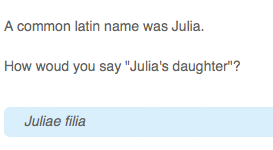
Here is an example that introduces the concept of declination in latin.

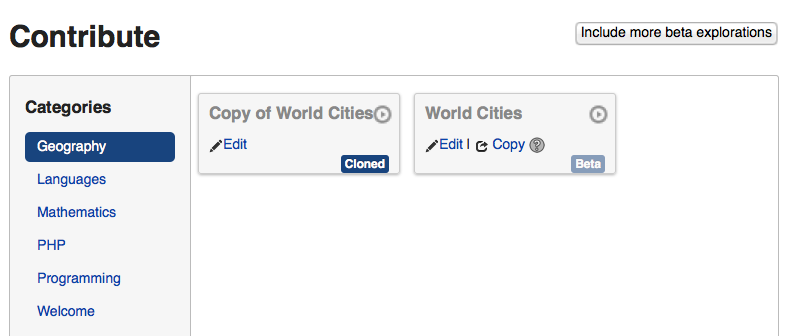
oppia 2Figuring out the authoring part of Oppia was a lot more challenging. As far as I can tell at this point, one can create new lessons by copying and editing existing content. Lessons, which are called “explorations,” are initially private, that is, they can only be viewed by the author and invited users. Once an author decides to publish, the exploration achieves “beta status” and is retrievable by anyone. To be featured in the lesson gallery, the learning unit has to be approved by moderators.

oppia 3

Unfortunately, the only interactive experience I gained was watching the “Loading” message on the otherwise blank screen for several minutes. On a sunny note, this probably signals a large interest from the educational technology community :-)

Remind101, Oppia, Think101x, Smartphones, MOOCs

Tremors 02Updated 3/3/14, 3/26/14
StarAfrica predicts that “by 2015, Africa will be the land of the MOOCs” (2/28/14). This prediction is interesting, but what caught my attention is the awareness that MOOCs are not only related to but an extension of online learning in general: “Universities around the continent are taking hard deep looks at the way to use online courses for the betterment of their students, of their fellow citizens and of the rest of the world” (emphasis added). Perception is critical. As long as we’re blinded by the Coursera/edX glare, we can’t see the full potential of MOOCs. View them as extensions of online learning less some of the restrictions that have carried over from traditional onground courses and possibilities suddenly loom limitless.

This prediction also confirms disruption theory — that it’s an external force that acts on a different population. Disruption is relative. MOOCs are not disruptive within traditional campus-defined cultures. They’re disruptive when viewed on the outside. Thus, to understand the potential of MOOCs, we ought to be looking outward at how they’re changing the lives of non-traditional students.

Continue reading

#ToRead: ‘It’s Complicated’

By Stefanie Panke
Editor, Social Software in Education

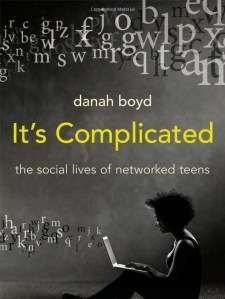
“Over the past decade, social media has evolved from being an esoteric jumble of technologies to a set of sites and services that are at the heart of contemporary culture.” In her new book, It’s Complicated, danah boyd, a researcher at Microsoft Research, assistant professor at New York University, and a fellow at Harvard’s Berkman Center, presents the results of her long-term, ethnographic research on how teenagers communicate, engage, immerse and interact in online communities and social networks.

danah boyd

danah boyd

Reading It’s Complicated is remarkably simple. First, access is easy, and if you prefer, instant and free: The publication is available open access online in PDF format or for purchase in various bookstores as print and e-book. Second, the book’s language and structure are both clear and compelling. boyd is an avowed activist and explicitly aims at wide distribution. She seeks to engage a large and diverse audience of scholars, educators, parents and policy makers.

Even if you are not interested in the online life of the American teen, I recommend taking a look at the introductory chapter. It offers a thorough overview of the historical evolution of social media and contemplates cultural and technical aspects of technology. Focusing on four affordances, boyd discusses how social media channels foster — not determine — characteristic use patterns. These affordances are:

  1. persistence: the durability of online expressions and content;
  2. visibility: the potential audience who can bear witness;
  3. spreadability: the ease with which content can be shared; and
  4. searchability: the ability to find content.

“Networked publics are here to stay,” boyd explains. Rather than resisting technology, she urges her readers to allow children to develop the skills and perspective to productively navigate the complicated social media landscape. Given that 73% of  adults in the US use online social networking sites (Pew Internet, 2013), boyd has a strong point when she advocates fostering media literacy rather than condemning media use.

It's Complicated

The book’s theme — understanding how social media are intricately interwoven into our day-to-day communication behavior and what this means for our cognitive, emotional and social well-being — reminded me of Sherry Turkle‘s Alone Together (2012). Whereas Turkle paints a bleak picture of technology getting in the way of closeness, boyd states that teens use digital channels primarily to connect with friends. As teenagers’ physical meeting spaces are more and more constricted, online networking sites offer the freedom to chat and hang out.

Both authors deploy similar research methods — qualitative, ethnographic field work — and have a thorough background in computer and web technologies. What is intriguing to me is that I find both perspectives interesting, convincing and valuable.

‘Providence Talks’ – A Tech-Based Boost to Kindergarten Readiness

Lynn ZimmermannBy Lynn Zimmerman
Associate Editor
Editor, Teacher Education

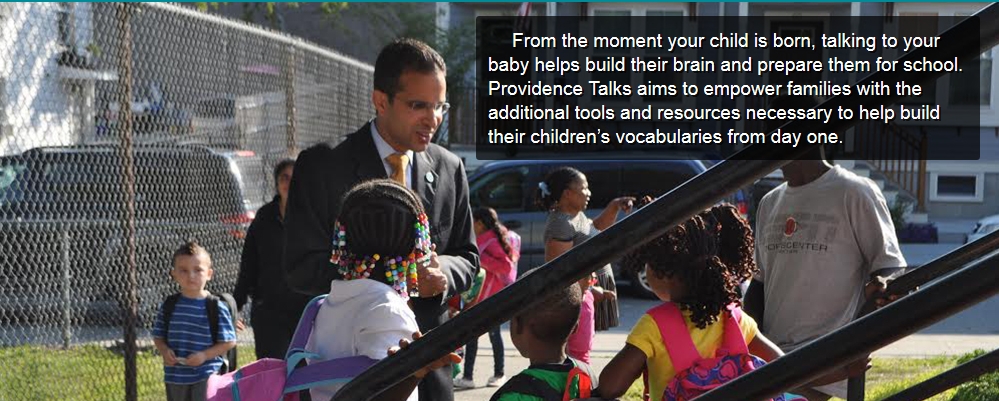
Providence Talks is an early childhood intervention program aimed at increasing early childhood literacy development in Providence, Rhode Island, a city whose school-age population includes 87% of the students on free and reduced-lunch. The purpose of the program is to combine technology and parental coaching to help students from low-income households arrive in kindergarten better prepared for academic success. The objective is to increase the amount of language these children are exposed to. The program is based on “word count” – the number of words a child hears and utters in a day. The children will be equipped with a recording device, and the data obtained will be used to create specific vocabulary building exercises for the parent and child.

Providence Talks

The project is using LENA (Language ENvironmental Analysis) technology that will be used to record and analyze children’s word exposure twice a month for 12-16 hours each time. The software, which will analyze the input, is able to distinguish between actual human interactions and background noise such as television. A pilot study conducted by the developers of LENA found that the project can increase children’s word exposure by as much as 55%.

The program proposal was awarded the $5 million grand prize in the 2012-2013 Bloomberg Philanthropies’ Mayors Challenge. This national competition promotes innovative ideas to solve major challenges and improve city life. The pilot program will start with 75 families and increase to 500 families by the end of 2014 and will be conducted in conjunction with Brown University. The goal is to reach 2,000 families.

Although there are some skeptics about the program, including some linguists, the city of Providence is hopeful of its success. Other large cities around the country will be watching this project with interest to see if it is something they can tap into in order to boost literacy among the urban poor nationwide.

To read more about this project, which begins this spring, google “Providence Talks.”

2/28/2014: TEDxLansingEd – Education Ideas Worth Spreading

By Jessica Knott
Associate Editor
Editor, Twitter/Facebook

On Friday, February 28, from 1 PM to 5:30 PM EST, TEDxLansingED will be livestreaming not just innovative ideas in education, but innovative ideas in living. While this is a local TED event, the thoughts that will be shared are anything but.

TEDxLansingED

As speaker coordinator, I’ve had the incredible opportunity to get to know our speakers this year, and they have made me think so many times throughout the planning process about what education is and what it can be. I frequently asked them questions expecting an answer, and instead ended up questioning myself. Our speakers question themselves, too, as you’ll hear in this interview with Dr. Jeff Grabill, speaking about the event and his participation.

With this event, we hope to start a conversation, and we hope that conversation extends beyond the black screen of the livestream’s end. We hope that people will look around and see that learning happens all the time — and everywhere. We want people to wonder if the things we “know” are only the things we’ve experienced. We want people to question whether what is “right” is, in fact, wrong, and vice-versa. We want people to take that trip, try that new teaching style, challenge that argument, stick with that problem, ask what’s broken, and wonder about how we come to know what we know.

If you’d like to join us, tune in on Friday. You can also follow along on Twitter by following @TEDxLansing, and by following the hash tag #TEDxLansing. If you’d like to plan your own event, I’d (jlknott@gmail.com) be happy to point you in the right direction. In the meantime, join the conversation. I leave you with a video from our event in 2012, in which Dr. Stephen Thomas discusses the power of using comics to facilitate the learning process.

To Teachers — From a Grateful Nation

Frank B. WithrowBy Frank B. Withrow

“Our progress as a nation can be no swifter than our progress in education. The human mind is our fundamental resource.” —John F. Kennedy

No truer words have ever been spoken. A young mind that is stimulated can look with fresh eyes at our problems and find new and creative solutions.  Our most critical asset is the mind of our young people. Public schools are the foundation of our nation. That all men are created equal means that all men can be part of the solutions of any problem raised in our society. Yes, some of us have greater talents than others, but as we work together, we all work to better our nation.  We must always help the ones who have stumbled and lift them up so that we all go forward together.

Each of us can open closed doors that we hardly knew were closed.  The doorway to unlimited potentials must always be the public school doorway. We must be diligent in ensuring that the schoolhouse resources and personnel are the best we can provide. Teachers are our most precious resource needed to develop a prosperous and caring nation.

If we fail our children by under funding our public schools, we are eroding the foundations of our future. A modern technologically well-equipped public school will open the minds of all our children. Well-trained and respected public school teachers are the day-to-day protectors of our future. A dedicated and good teacher can open new horizons for all. Teachers open doors for individuals, communities, states, and the entire nation.

There is no greater joy than to kindle in a searching mind the spirit of truth and knowledge. The greatest gift a teacher can give learners is to open their minds to the truth that one person, working with committed others, can change the world for good.

If you are a teacher and you have done your best, you may not know the greatness that you have sparked in a single learner. A learner you have touched may change the world. Day in and day out you inspire learners to do their very best. To be a teacher is the highest profession in the world today.

Thank you, one and all, for what you do for all of us.

Public Education Raises the Quality of Life for the Entire Nation

Frank B. WithrowBy Frank B. Withrow

As a former Marine from World War II and Korea, I entered my first year of teaching in 1952. The principal told me that I had been given a challenging class, but as a former Marine, she knew I could handle them. Translated, that meant a class of the more difficult and challenging learners in the school. I was a teacher in a very special private school.

Sixty-five years since I first stepped into a classroom to teach, I have found it a most rewarding career. But more importantly I have come to understand that schools and especially public schools are the very foundation of our American society. I have worked in private schools, public schools, state schools and been a federal education manager.

The foundation of our society is built in our public schools, colleges and universities. Until recently the United States of America dominated the public school programs in the world at elementary, middle, high school and public college levels. Other nations are now beating us in this important aspect of society. For example, college is free in Norway whereas we have created a crushing debt imposed upon many of our graduating college students.

Today there are states and GOP elected officers that have said we should not have public schools paid for by tax dollars. There are many unknowledgeable critics who have said our schools are failing and therefore have cut tax dollars for schools and made it difficult for teachers to earn a living wage.

The United States has struggled to bring everyone into the schoolroom and offer a publicly funded quality education. In 1954, thanks to the Supreme Court ruling, we basically brought all children including blacks into the front door of our schools. In the 1970s, we passed Federal laws that ensured disabled students a desk in public schools.

The GI Bill of Rights after World War II created a nation of highly prepared college educated scientists and professionals that enabled us to create a high standard of living. While the GI Bill benefited many returning veterans, it was more significant in that it was a great benefit to society. It enabled the USA to compete with and excel over other nations. Public education paid for by the government increases potential in individual lives, but most importantly it raises the quality of life for the entire nation. An educated citizenry ensures a high standard of living for all.

Nations that value education are more competitive, are better places to live and are more likely to have long life expectancies for their citizens.

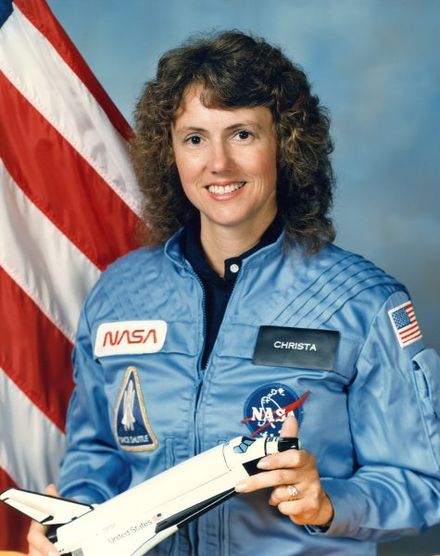
Christa McAuliffe

Christa McAuliffe

Teachers are the essential element of all schools. In many ways they are the most important profession in a society. Christa McAuliffe had it right when she said, “I have seen the future . . . I teach.” When a teacher looks in the eyes of a ten year old and sees an accomplished adult and works to bring out the best in that child, we are a stronger nation. When a teacher inspires a learner to dream of going to the stars or discovering a new miracle medicine, then we are a stronger nation.

If we are failing our children in their public schools, we are endangering the American dream. Protect our publicly funded schools so that they are the ladder of class mobility that fulfills the American dream for every child who enters our classrooms.

If you are a teacher hold your head high. You are the dream maker that will mold the foundations of our future society.

Talk With Your Children

Frank B. WithrowBy Frank B. Withrow

[Note: This article is a response to a discussion last week on the ETCJ staff listserv  re Providence Talks. -Editor]

Vocabulary can indicate success in schools. English is the most used language in the world and has an estimated one million words. From age two, growing children add 800 to 1000 words a year to their vocabulary. The average kindergartener has a 4000-word vocabulary. However, kindergarteners will range from 2000- to 6000-word vocabularies. In preschool classes, the kids do not appear to be different, but when reading skills are developed, the 6000-word vocabulary learners excel and the 2000-word vocabulary kids are likely to fall behind.

From the Providence Talks website.

From the Providence Talks website.

Basic English has 2000 words. If Tom Sawyer were to be printed in Basic English, it would have to be ten times as long. To illustrate this, Basic English has no word for disciple; therefore “Jesus’ disciples” become “twelve fishermen who were good friends and followers at the time Jesus was alive.”

The child who starts school with a limited vocabulary is behind the eight ball to start with.

How can you ensure that your child is going to succeed in school subjects like reading? Research has shown that children whose parents talk with them are more likely to have large vocabularies.

From an early age, parents should read books to and with their children. Parents need to ask questions and to encourage the child to ask questions. Children are fascinated with animation on television. Parents should watch such shows with their children and ask such questions as, “Can an Elephant Fly? Can the roadrunner fall off the cliff and live?” Watching television together and discussing what the child understands and thinks is important.

Children are able to develop sophisticated ideas and to detect truth from fiction if encouraged to think.

Why can’t an elephant fly? She is too big. She has no wings.

Even very young children can play word games like Stinky Pinky. A STINKY PINKY is a smelly little finger. What is an overweight feline? An overweight feline is a FAT CAT. What is a heavenly automobile? A STAR CAR is a heavenly automobile. Little children love these word games. They will take words they have learned in a word game and use it.

Children whose parents take them to the beach, a circus, a museum or zoo and talk about things they see and do have larger vocabularies.

Studies have shown that children with low vocabularies continue to under perform well into middle school years if something is not done to increase their vocabularies.

Again research has shown that parents from any socioeconomic level that talk with their young children are likely to have children with large vocabularies. It is simply the greatest gift you may give your child. It expands their interests and increases their vocabularies.

Nye v. Ham: What Is ‘Science’?

picture of Harry KellerBy Harry Keller
Editor, Science Education

It was billed as the great evolution versus creationism debate, but it didn’t turn out that way. How could it?

The official topic of the debate was “Is creation a viable model of origins in today’s modern scientific era?” However, the debate seemed to go nowhere near that question.

I must add here that I am a scientist who accepts all of the evidence supporting the age of the Earth and of the universe. Ken Ham is a “young-earth” creationist who believes both have existed for roughly 6,000 years. These creationists have a counterpart in another sort who are willing to put aside the literal idea of a “day” in creation. This debate would have better been served by one of those instead of Mr. Ham.

The debate was filled with slides and loads of data. So it is that the debaters had to rely on certain repetitive themes to avoid putting the audience to sleep. Mr. Ham often referred to the Bible as the word of God, an entity who was there in the beginning and so would know. This theme appealed to the true believers in the audience, which was well over 500,000 including those watching and listening over the Internet feeds.

Bill Nye (the science guy who really is an engineer) hit back with many facts to show that the Earth is lots more than 6,000 years old. His facts mostly showed that it may have been even a million years old, while science has put together, over and over again, evidence of a history of more than four billion years. The “young earth” people made his job too easy.

Ken Ham countered with the argument that figuring out the ages of rocks and fossils is not very exact and even can be very far off. His approach was, in essence, to sow “reasonable doubt” in the evolutionists case about the age of the Earth. But, evolutionists regard the age of the Earth as just another bit of evidence. The real issue for them is the creation of new species through the agency of natural selection.
Even creationists of all stripes accept natural selection just as they do artificial selection, as in breeding plants, dogs, sheep, and so on. Sure, species can change their characteristics, as with the finches in the Galapagos Islands, but they insist that new species cannot arise in this manner. If you agree with the age of the Earth being but 6,000 years, then they have a point. New species are not likely to be seen on such a short time scale, especially if you restrict your analysis to species visible to the naked eye.

Bill Nye had his lines set for his true believers also. He trotted out patriotism. If we don’t teach evolution in schools, then our country will fall behind in global competition. He could be correct here, but evidence supporting his thesis is mainly circumstantial.

All of the above misses the true target of this bit of theater, our schools. Well, except for the last patriotic bit, in passing.

No one, except for a few zealots, really cares what you believe. Nearly everyone cares about our children. Most care about ALL of our children. The debate should have been about what goes on in the science classes of our schools.

You can have different views about this but should at least agree that science classes should teach science, not philosophy or religion. Various brands of creationism, such as “creation science” and “intelligent design,” have sought to sidestep this problem by casting themselves as some sort of science. They’ve also tried to hijack the scientific concept of skepticism.

However, science is about disprovable hypotheses. If you make a statement that cannot be disproved, then you are not discussing science. While some statements involving supernatural forces can be disproved, it’s quite easy to make ones that are not and even to transform the disprovable ones into ones that cannot be disproved.

Any attempt to disprove action by an omnipotent being runs straight into the counter that omnipotent means “can do anything.” How did all of those fossils get buried so deeply? How did those isotopes decay so much? God made them that way to confound us and test our faith. I hope you see the problem here. It doesn’t matter whether this reasoning is correct or wrong. Either way, it’s not science.

So it is that this debate answered nothing. It gave Bill Nye a nice paycheck and Ken Ham a platform upon which to market his creation museum and garner many more visitors and thus make more money. If you follow the money, both won. If you’re a creationist, then you’ll say that Ham won. If not, you will think that Nye won. In that sense, both lost because neither will have gained many new recruits to their side of the debate.

The details don’t matter. Unless the debate cleared up in lots of minds what science is and what science is not, then we all lost.

Evolution, Darwinian evolution (as amended over the decade), is now the central defining tenet of biology, of all biological science. Scientists cannot proceed to design new medicines and find the causes of disease without this central tenet. You can choose to call it a handy model or accept it as true reality. However, denying it is like denying that the Earth circles the Sun. Your models of how the world works will eventually fail.

We must teach our children science in our science classes. We can teach all sorts of philosophical concepts in other places. Evolution is science. Creationism is not.

Sloan-C’s ‘Advanced Online Teaching Certificate’

By Jessica Knott
Associate Editor
Editor, Twitter/Facebook

For a while now, I have had the opportunity to engage with the Sloan Consortium, volunteering at conferences, serving on steering committees, and networking via social media sites with other members and attendees. I have formed valuable relationships and had the opportunity to work on some interesting collaborations. More importantly, I’ve made some really cool friends.

For those looking for learning and engagement opportunities in online learning, the Sloan Consortium has just announced an Advanced Online Teaching Certificate program aimed at helping instructors work with their current online courses and integrate new technologies and teaching practices with an eye toward increased learning effectiveness and satisfaction.

A cohort-based program, this certificate will be offered three times per year, in April, July, and October, with each cohort kicking off at a pre-conference workshop at either the International Symposium on Emerging Technologies for Online Learning in Dallas (April), the Sloan Blended Learning Conference and Workshop in Denver (July), or the Annual Sloan Consortium International Conference on Online Learning in Orlando (October). Attendees will participate in a three-week course in which they develop a course revision plan and create a peer support group followed by three synchronous distance sessions that conclude with peer reviewed final presentations.

Those interested in applying or finding more information can visit http://sloanconsortium.org/institute/advanced-certificate-program. Registration is open now for the April cohort.

Also for April (9-11), take a look at the International Symposium on Emerging Technologies for Online Learning in Dallas (see above). Keynote speaker Jim Groom (@jimgroom) will be on hand discussing his work in a decade of innovative teaching, including ds106 and Reclaim Hosting, and the importance of the open environment in online teaching and learning. Other key speakers include Amy Collier (Stanford) and Jen Ross (University of Edinburgh), who will discuss the current state of online education and what it should be, and Michelle Pacansky-Brock, who will lead a discussion of how we can change students’ minds about using voice comments to increase engagement.

Throughout the conference, as well as at the conclusion, there will be an Unconference experience in which attendees can participate in free-flowing sessions, continuing discussions on themes that interest them. Early bird registration for this conference ends February 10.

What experiences surrounding online learning have you found particularly useful? Learning is everywhere, yet we often focus to a large extent on workshops and conferences. What has really worked for you?

A Future Without Schooling?

Jim ShimabukuroBy Jim Shimabukuro
Editor

We might disagree with Sugata Mitra’s SOLE, or Self-Organized Learning Environment, on specific points, and we might say that his arguments may be oversimplified, but it’s tough to disagree with the idea that teaching could be boiled down to an intriguing question, a computer with internet access, and an encouraging adult. In this scenario, schools and teachers are absent. Students, naturally motivated to discover the answers for themselves online, are intermittently cheered on by adults, who don’t teach but simply encourage, and this intervention, if you can call it that, could easily be from a distance via untrained but caring adults.

“Sugata Mitra: Build a School in the Cloud” was uploaded to YouTube by TED on 27 Feb. 2013.

More important, though, are the implications, and for me, the one that surfaces at the top is, Can we, educators, imagine a future without traditional schools and teachers? The same can be asked of higher ed, Can we imagine a future without traditional colleges and professors?

And the answer?

Actually, we’ve already begun the imagining, and the early prototypes are completely online courses and, more recently, MOOCs.

The unavoidable realization is that the architecture of knowledge has changed and the media for knowing has leapfrogged schools and teachers into the hands of students of all ages. Students can pursue knowledge on their own or with peers, 24/7, from anywhere. They don’t need to sit obediently in a classroom to be rationed knowledge by a trained adult. They can get all they want by themselves, anywhere — instantly.

Can, though, and will are the issue. I think most will agree that, yes, students “can” learn on their own or with peers, but the problem is “will” they? In fact, the argument repeated most often by educators to justify traditional schooling is that students lack the “will” to learn on their own and, therefore, need teachers as task masters. Left alone, they would play games, socialize, daydream — but they wouldn’t learn. Even if they wanted to learn, they wouldn’t know how. Therefore, classrooms and teachers are vital.

If this is true, then I can’t help but feel that this is an indictment of traditional schooling. Years of regimented schooling has succeeded in creating regimented students who are unable and unwilling to learn on their own. Needless to say, this is contrary to all the stated goals of education.

The ultimate goal of education is independent learners, and Mitra’s gift to educators is the realization that students are intrinsically wired to be independent learners and schools can either nurture and encourage this natural tendency or squelch it in the name of teaching.

The challenge for educators in 2014 is to see if we can’t create learning environments that can facilitate the way students naturally learn in a world where knowledge and knowing are no longer limited to teachers and classrooms.

MOOCs are the first big step away from the spatial limitations of classrooms, and educators the world over are gaga over the experience. I haven’t seen this much excitement about teaching — ever. And the irony is that it’s more about learning than teaching, more about students than teachers. Aware of this unintended consequence, some prominent MOOCers are desperately scrabbling backward to reestablish the importance of teachers and F2F classroom interactions by advocating blended approaches, but the landslide has begun and going back is not an option.

At the end of the first month of 2014, we’re standing on the edge of a vista that staggers the imagination. We can either be paralyzed by fear or awed by the possibilities. Either way, there’s no turning back. The future is now.

Gaming – A Gamer’s Self-Introduction

Samuel Lee 273N 011614A-80By Samuel Lee
Student at Kapi’olani Community College
University of Hawai’i

[Note: This article was written in response to a self-introduction activity in an online Creative Nonfiction college writing class. –Editor]

There is one aspect of expressive writing that I really like the most and that would be the fact that it revolves around you, the writer. I had been attending the University of Hawaii at Manoa for a semester before I transferred to Kapiolani Community College, where I have been for a year thanks to my reconsideration of money, money, money. Although our first assignment seems to be an informal one, I decided to write it as if it were a formal paper because it just didn’t feel right to do an introduction without actually being there in person to explain my favorite pastime.

If I wanted to put a test on brownie points, I would’ve said my favorite pastime is writing. Unfortunately, although I like writing, I don’t prioritize it over my favorite pastime — gaming. Gamer culture over the years has become extremely ambiguous, and the stereotypes that revolve around it these days are extremely confused and sometimes unfocused. This is why I love gaming: it is the one thing in life that I will have the most certainty about, even if the world crumbles before me. Admittedly there are probably even times where I gave up sex for video games. That’s how much I love them.

ScreenHunter_57 Jan. 19 09.25

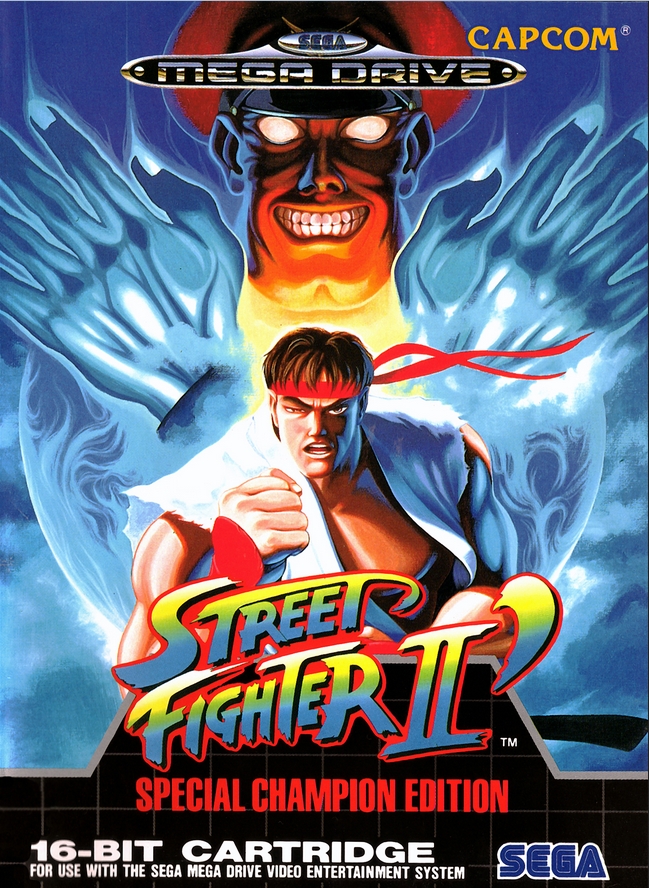
I play some particular genres more than others and have a strong affiliation with those communities. The first would be fighting games, which I have been a part of since Street Fighter 2 Championship Edition (1992), which was around about two years before I was even born. You might not think it’s possible, except the internet became an entity of my time. When I was around seven years old, I played my first fighting game on a King of Fighters 1994 arcade cabinet in Seoul, Korea, and was immediately hooked by the amount of skill and execution involved. I didn’t know at the time but, for my age, understanding hit boxes and frame advantages and disadvantages was not really normal, and I had a lot of kids older than me crowd around me when I played the game. Twelve years later, I became adept at most relevant fighting games and played at a semi-professional level for retro fighting games.

Dota-2

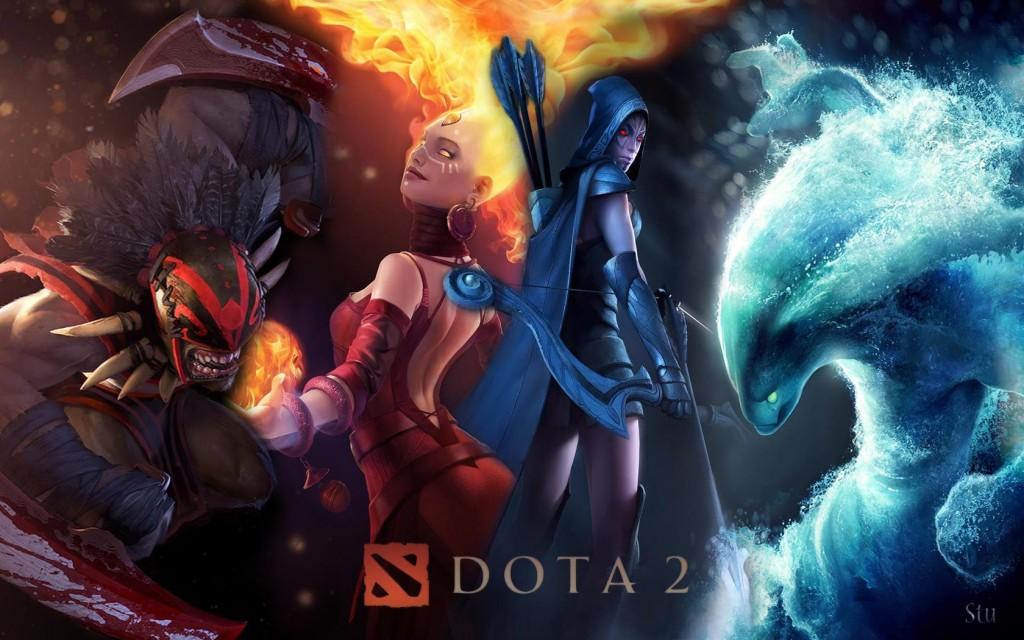
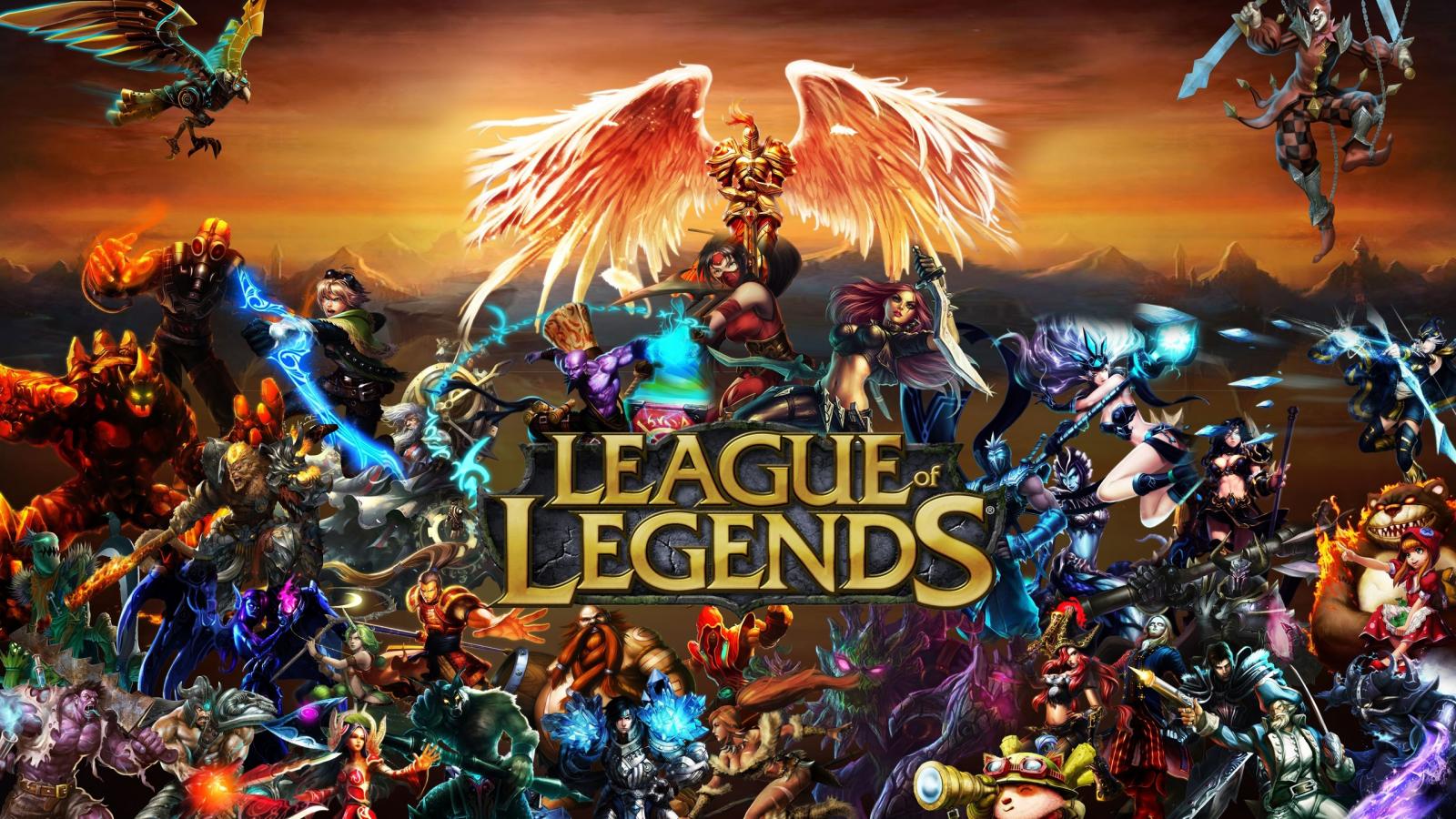
More recently, I’ve been hooked into a game called DOTA 2, which started off as DOTA, a modification to an already existing real-time strategy game Warcraft 3. When it first came out, it gained a large amount of popularity in a short amount of time along with another game similar to DOTA, League of Legends. LoL took the gaming world by storm, creating an all-new genre. When DOTA 2 came out, a significantly smaller number of people made the transition from LoL to DOTA 2, and I was one of them. That was about six years ago, and I had a blast with it. I had no problem falling in love with the game all over again. Many of my friends, who happen to prefer League of Legends over DOTA 2, are now questioning how much they want to be my friend anymore.

LoL

If you ever meet me in person, a good way to identify me without even knowing what I look like is someone who happens to be arguing with his friends about how much we hate each other for liking two different games of the same genre or happens to be the only person playing video games on a nice day outside in a park. Nice meeting you all, and I hope my extensive background on my obsession doesn’t scare everyone into thinking I’m someone not to be associated with. In conclusion, I’d like to add that I think I have a terrible lack of proper writing skills.

Thinking About UFOs and Alien Visits

picture of Harry KellerBy Harry Keller
Editor, Science Education

It’s funny how things happen. This essay resulted from a pingback. If you, like me, had not heard this term before, then welcome to our new age of Internet media. “Ping” is an old word based on resemblance to a sound. It was certainly used extensively during World War II to designate a sound emitted by sonar that would be bounced back by objects. The time required for the ping to make the round trip gave the distance. The high frequency of the ping meant that the signal was more directional because low frequencies tend to spread more.

More recently, I encountered ping in Internet activities. A Unix utility is called ping, and it sends a signal out to an Internet protocol (IP) address. If the address is active and responsive, you get a signal back. Hackers troll the Internet by sending pings to all possible Internet addresses to find out which are in use. They then may attempt to hack into the servers they find. If you have a server and Internet router, as I do, you may tell the router not to respond to pings and thus make it invisible to such searches.

The word “ping” has expanded and morphed into pingback meaning that you receive notice when someone puts up a link to your site. You then put a link to theirs in your comments section — or not.

In this instance, the article that referenced my “Mars: One-Way or Round-Trip” article was from a URL (universal resource locator) called ufosuncovered.com, clearly a site that deals in UFOs and alien sightings. The article is titled “Alternative 3:  Evidence that We were on Mars in 1962.”

My first response was laughter. In 1962, there were a few satellites in orbit and the Apollo program has just begun in response to President Kennedy’s challenge to put men on the Moon by the end of the decade. On the Moon, not Mars!

As I read the article, I found that it was entirely about an April Fools’ Day joke movie produced in the U.K. but released late due to scheduling difficulties, in 1977. So, we have a 1977 movie made as a joke citing people on Mars in 1962. Yet, I found a rather long article about this entire episode on this UFO-oriented site. What could they be thinking?  Continue reading