Education Today — The Most Important Function of Governments, Part 1 of 2

Judith McDanielBy Judith McDaniel

Education is the foundation of democracy. As a society, we Americans knew that once. A unanimous Supreme Court decision in the 1953 Brown v Board of Education said: “Today, education is perhaps the most important function of state and local governments. Compulsory school attendance laws and the great expenditures for education both demonstrate our recognition of the importance of education to our democratic society. It is required in the performance of our most basic public responsibilities…. It is the very foundation of good citizenship.”

Today, we have lost that recognition, lost our certainty that education is a common good that we can all support. A 2017 Gallup poll found that only 36% of Americans have confidence in our public schools. And that is an increase of 10% since 2014. “Government schools” is what some conservatives, like Education Secretary Betsy DeVos’s husband and President Trump, call public schools now.

Where has our common understanding of public education as the foundation of democracy gone? Why have we lost it?

Undermining public education has been a deliberate campaign, not an accident. It’s not as though we just didn’t have enough money to educate all of our children for the common good. When money was short, whether because of recession or other economic events, we chose to lower funds for education. And when there was money available again, we did not raise support for education.

It would be one thing if there were a public discussion about curricula for our schools and universities, if choices about educational directions were being openly advertised and discussed and chosen. This is not what is happening.  Continue reading

Stackable Credential Courses Are Not MOOCed

Waves are flat today on the East Coast. According to Jeffrey R. Young, edX, founded by MIT and Harvard, is planning to offer a MicroBachelors program as a logical complement to their MicroMasters.1 Anant Agarwal, CEO of edX, got it almost right when he said, “Education in five to ten years will become modular, will become omnichannel, and will become lifelong…. Modular is good because it can create new efficiencies and new scaling.”

Where he falls short is in the “omnichannel,” which boils down to required on-campus, F2F attendance. In this bait ‘n’ switch business model, the fully online options are teasers, the wide open end of a funnel that narrows to a tiny trickle at the campus end. Agarwal says, “The idea behind both MicroMasters and MicroBachelors is that they are ‘about putting stuff that can be done online, online.’” The assumption is that online is still a second-rate channel, incapable of delivering the right stuff.

Anant Agarwal, George Siemens, and Stephen Downes.

Young compares this “‘stackable’ credential” program to Arizona State University’s Global Freshman Academy, a joint venture with edX. He describes it as an “attempt to rebrand a concept that was once known as MOOCs, or massive open online courses.” By their own admission, GFA hasn’t been very successful. From the standpoint of these stackable programs, MOOCs are dead.  Continue reading

Successful Online Programs Require a Paradigm Shift

On the table at the University of Colorado Boulder is a proposal for an online engineering master’s degree program.1 It’s a breakthrough for all the right reasons: It’s being offered as a MOOC, it’s completely online, it’s asynchronous, and it’s unbundling the 3-credit courses and offering them in modules. All four are gold standards for online education, and it’s tough to decide which is the most important. For now, I’d say the unbundling. Breaking traditional semester-length courses into shorter modules is a brilliant move to make the courses doable within the framework of MOOCs. It’s a smaller hill to climb for working nontraditionals, and dropping out means making up only one module instead of an entire semester.

The best wave of the day goes to Richard Koubek, provost of LSU Baton Rouge, who says, “Our vision is LSU, anywhere, anytime, and that physical boundaries would not define the boundaries of this campus.”2 To put some teeth into their vision, LSU recently lured Sasha Thackaberry away from Southern New Hampshire University, where she was assistant vice president for academic technology. SNHU has a hugely successful online program. At LSU, she is associate vice provost for online and distance education. The goal is to grow the online student body from 800 to 30,000 in less than ten years, and Koubek has a radical gameplan. He says, “You’re not going to get there incrementally.” What we’re seeing now in online programs on most college campuses is the stagnation that comes from reliance on the old paradigm of traditional practices that reward blended approaches as the safe bridge to online growth. Koubek understands that continued reliance on F2F practices isn’t going to produce change. He says, “You have to change the paradigm.”  Continue reading

Digital Tools and Adaptive Technology

lynnz_col2

Zaid Shoorbaje asserts that adaptive learning tools can be effective for ELLs (English Language Leaners) as well as for students with disabilities. In Adaptive learning can help students learn English, but few schools are using it (6 Dec. 2017), he cites a study by McGraw-Hill that shows that while teachers understand this, many schools are not implementing it.

In Making Digital Communications Accessible (11 Dec. 2017), published on Edutopia, Anne Obrien offers support for Shoobaje’s assertion of the effectiveness of accessible and adaptive learning tools and provides practical tips for using digital tools creatively in the classroom. While useful for all learners, they are particularly useful for ELLs and students with disabilities.

Brian Fleming makes a case for using adaptive technology in higher education in his article, Adaptive Learning Technology: What It Is, Why It Matters (1 Apr. 2014). He asserts that this type of technology can be useful for all students, but especially in remedial classes.

Zach Posner, in What is adaptive learning anyway? (5 Jan. 2017), explains it as giving “every learner their own personalized course, made specifically for their strengths, weaknesses, goals, and engagement patterns…. a course that [adapts] in real-time to their activity and [adjusts] moment by moment to their performance and interest level.”

Digital Storytelling and Authenticity

lynnz_col2
Whether creating lessons for social studies or science, designing activities for developing library skills or planning lessons with ELLs (English Language Learners) in mind, authenticity and relevance are key to effective learning. The purpose of authenticity and relevance in learning is that learners are engaging in “real world activities which apply directly to a student’s experience” (Finch & Jefferson. 2013).

According to Ozverir, Vanci and Herrington (2017), “[a]uthentic learning is an instructional approach that provides learners with opportunities to develop knowledge ‘embedded in the social and physical context within which it will be used’ (Herrington et al., 2010, p. 15)” (p. 262).

With this in mind, Stansbury presents her case for using digital storytelling to provide authentic opportunities for ELLs to use English in relevant and meaningful communication in Video of the Week: Amplify Your ELLs’ Voices with Digital Storytelling. Although aimed at teachers working with ELLs, the idea of building on learners’ strengths through digital tools is relevant to any subject area. Be sure to click on the resources link.

Sources

Finch. J. & Jefferson, R. (2013). Designing authentic learning tasks for online library instructionThe Journal of Academic Librarianship, 39 (2), 181-188.

Ozverir, I., Osam, U. V., & Herrington, J. (2017). Investigating the effects of authentic activities on foreign language learning: A design-based research approach. Educational Technology & Society, 20 (4), 261–274.

Stansbury, M. (2018). Video of the Week: Amplify your ELLs’ voices with digital storytellingeSchool News.

TCC Worldwide Online Conference 2018: Call for Proposals

By Bert Kimura

The theme for the 23rd Annual TCC Worldwide Online Conference, April 17-19, 2018, is “Navigating the Digital Landscape.” Participation in this event is entirely online. All sessions are delivered online in real-time. Sessions are recorded for later viewing.

Please consider submitting a proposal for a paper or general session related to all aspects of learning, design, and technology, including but not limited to e-learning, online learning communities, collaborative learning, social media, mobile learning, emerging technologies, international education, and professional development.

The proposal submission deadline is December 15, 2017. The submission form is available at http://bit.ly/2018proposal.

For a list of suggested topics and more information, see Call for Proposals.

TCC Hawaii, LearningTimes, & the Learning Design and Technology Department, College of Education, UH-Manoa collaborate to produce this event. Numerous volunteer faculty and staff worldwide provide additional support.

Contact: Bert Kimura (bert@hawaii.edu) or Curtis Ho (curtis@hawaii.edu).

Homepage: tcchawaii.org
Hashtag: #tcc23rd

To subscribe to the TCCOHANA-L mailing list, see: http://tcchawaii.org/tccohana-l/


St. George’s University MOOC Has 60% Completion Rate

Jim ShimabukuroBy Jim Shimabukuro
Editor

Completion rates for MOOCs are notoriously poor, with a median rate of 12.6%. But there are exceptions. Dr. Satesh Bidaisee’s MOOC, One Health, One Medicine, had a 60% completion rate. Bidaisee is a professor at St. George’s University, Grenada, West Indies. The following is a transcript of our interview from Aug. 7 through Oct. 3, 2017.

ETC: What made you decide to offer this course as a MOOC?

Bidaisee: Chancellor Charles Modica’s vision is to provide access to an SGU education to as many students as possible. Chancellor Modica is the founder of St. George’s University and has spent his life working towards educating a global community of students and alumni. The advent of online technology provides another avenue for SGU to provide educational access to a wider audience.

I am also passionate towards education. A background as a survivor of a motor vehicle accident, a ruptured aneurysm, and testicular cancer have provided sufficient experience to motivate me to contribute to the learning development of others as a purpose in life.

ETC: One of your course objectives is “To demonstrate effective oral skills for communicating with different audiences in the context of human, animal and environmental health.” How do students “demonstrate oral skills”?

Bidaisee: Through live seminar sessions, recorded presentations.

ETC: Can you give us an example?

Bidaisee: Students prepared, presented and recorded oral presentations, which were shared with the course community and peer assessed by colleagues. Diseases such as Lyme Diseases, West Nile Virus, Ebola, etc. were discussed in the context of having applications for human health, animal health and environmental considerations.   Continue reading

Bring the World to Your Classroom: Videoconferencing

By Bryan A. Upshaw

My worst grade in high school was in Spanish I. Our teacher was tough, and the pace was blistering. I struggled to learn the vocab, grammar, and odd verb conjugation charts. I found the culture interesting, but the rest of the class was just frustrating and seemingly pointless to my future. Guess what subject I mainly teach now? That’s right – Spanish. What turned my worst grade and most frustrating class into my career?

Getting to see the world outside my little East Tennessee community and building relationships with people who at first seemed so different from me changed the way I saw the world. I was inspired to travel abroad, learn a language, join a local Hispanic church, and live with an undocumented family my last semester of college. Those relationships and experiences made language learning fun and transformed pointless grammar exercises into real-world challenges that unlocked boundaries that separated people.

How can I show them the world when we can’t leave our classroom?

I share my stories with my students and perhaps it inspires some to consider traveling one day, but how can I motivate students right now? How can I show them the world when we can’t leave our classroom? In my opinion, one of the most underused tools in education is videoconferencing. While expensive systems with fancy cameras and monitors can make it seamless, most teachers already have the resources to videoconference. If they have a smartphone, tablet,  or computer, then they probably have everything they need!

As a foreign language teacher, I use videoconferencing in my classroom in many different ways. For example, my friend in Nicaragua, Emanuel, converses with my students. My sister shares stories about her semesters abroad in Nicaragua and Honduras. Another friend, Garret, has talked from Germany about his year abroad in Argentina and how it helped him to learn German and get a job with BMW. My students love hearing stories from guest speakers projected in the front of the classroom. They have fun asking questions and always learn something new. Continue reading

5 Back-to-School Teacher Tips for a Brilliant Year

By Angel Rutledge
CMO and COO of SignUpGenius

With young minds to inspire and lessons to plan, every moment in your day is valuable. As you prepare to welcome your new students, plan ahead for the year. By tackling organization before classes begin, you’ll ace the back-to-school transition and be ready for what’s next. Check out these tips to save time and stave off stress, and you’ll get the year off to a genius start.

1. Think Beyond Back-to-School

Sounds simple enough, but planning ahead can help you focus on the things that matter most throughout the year. Create a back-to-school checklist for the first month of school and a master calendar with holidays, vacations and important dates such as parent-teacher conferences, field trips, teacher training and early release days. Plan your curriculum around the calendar, and jot down ideas for classroom décor, bulletin boards, and fun activities.

Don’t wait until the sniffles strike to prepare for a substitute. Get a general plan together so things will run smoothly if you’re out sick. Include a few ideas for icebreakers, books for story time, and some games to review previous lessons.

2. Start Out with Strong Parent-Teacher Communication

Building trust with your parents is key to a successful year. Reach out to parents the first week of school to encourage questions and share your preferred method of communication. Invite your room parent for coffee, discuss a plan to accomplish your goals and ideas for the year, and communicate needs such as classroom volunteers.

When creating a wish list of classroom essentials or scheduling parent teacher conferences, forget the chain of reply-all emails. Instead, use an online sign-up service. That way you won’t have to worry about whether parents saw an email and the sign-up can be updated in real time as time slots are taken and lists are filled.  Continue reading

‘A Child’s Relationships with Technology’

lynnz_col2

Students Visit Other Countries – Without Leaving NZ from RNZ, 23 June 2017

High school students in New Zealand are piloting a virtual reality foreign language app. They can visit other countries and learn languages without leaving New Zealand.

When ELA Tools Can’t Adapt to Students’ Native Language by Jen Curtis, EdSurge, 29 June 2017

Curtis looks at some of the issues involved in creating translated online materials for English language learners. She focuses on Spanish/English and the difficulties of translation between these two linguistically different languages. Edtech companies are trying a variety of solutions, but even with good translations, there can be problems. Sometimes the level in the translated version may be beyond that of the original English text. Another issue is that some learners may not be literate in Spanish despite being Spanish speakers. Some online platforms have decided that good support in English is more useful than translations that may not be accessible to learners.

Navigation of Computer-Based Tests Matters for Young Students, Study Finds by Benjamin Herold, Education Week, 30 Apr. 2017

Herold reports on a research study conducted by American Association for the Advancement of Science, which found that while high school and college students showed no significant difference, elementary and middle school learners did not perform as well on computer-based tests that did not allow them to “skip, review and change previous responses” as they did on computer-based tests that do allow this and on paper-pencil tests.

The Role of Relationships in Children’s Use of Technology by Jeremy Boyle, The Fred Rogers Center, 23 Feb. 2017

Boyle looks at how the conversation about children and technology has shifted from whether children should use it to how they use it. Since the Fred Rogers Center focuses on relationships, Boyle makes the connection to a child’s relationships with technology and with other people.

3 Reasons Apps Foster Effective Learning

By Marie Mérouze
Founder and CEO of Marbotic

As technology continues to evolve, it’s not surprising that apps are starting to be incorporated into daily classroom activities. With more than 80,000 apps considered “educational” in Apple’s app store, educators will never have a shortage of applications to use with students while teaching various lessons.

And, while most educators welcome the regular use of applications in classrooms, some educators and even parents are hesitant to leverage technology to support curricula. However, when used in the right way, apps can complement lessons and help teachers. A recent study found that the use of tablets and apps improved both classroom learning and engagement. There are many reasons, and here are three:

Enjoyment

It’s been proven that the release of dopamine has an effect on students’ desire to learn. Dopamine is released when students are engaged in an activity they enjoy. For example, when they play an app that is fun, the released dopamine encourages them to keep learning to maintain the level of enjoyment. When learning feels like a chore, many students lose interest in the lesson. With apps designed as games, learning is no longer a chore but, rather, a fun activity.

In order to avoid apps that are solely for entertainment, I recommend apps that are not distracting to the learning environment. When classroom apps are carefully reviewed, students will have fun and look forward to playing games while learning at the same time.

Diversity

These days, educators are stretched thin. They’re working to provide the best possible classroom learning experiences for children, but the problem is that students learn in different ways. What works best for some children might not work for others. Thus, the introduction of a variety of applications provides different ways for students to learn.

Some students learn best by writing things down. Others, with visual games. Still others, with tactile activities. Because apps are so versatile, they can address various learning styles without the need for educators to print a wide range of worksheets.

Repetition

Repetition is not only a key component of learning, but it reinforces it. Contrary to popular belief, repetition doesn’t have to mean doing the exact same exercises again and again but, rather, engaging in practices that work the same skill group.

On the one hand, while worksheets are a prime practice tool for lessons, they’re typically a “one and done” activity. On the other hand, apps are meant to engage students again and again. Beyond being environmentally friendly, apps provide reinforcement each time they’re played – especially apps that automatically adjust difficulty levels to match ability. Quality apps for the classroom usually incorporate a wide range of activities for different levels, providing fun, new ways for students to grow again and again.

At the end of the day, apps aren’t solely about entertainment. They can be helpful in the classroom, too! When looking for complementary activities to support lesson plans, don’t forget to consider apps and how they can positively enhance the learning environment.

Do Mobile Devices Harm Toddlers’ Speech Development?

lynnz_col2

Tablets and smartphones damage toddlers’ speech development, by Sarah Knapton, The Telegraph, May 4, 2017

Knapton reports on a new study that makes a connection between the use of mobile devices and speech development in children under two years old.

Infographic: The ed-tech challenges faced by immigrant students by Laura A Scione, eSchool News, April 14, 2017

Scione reports on a study that shows that 43% of Hispanic immigrants who buy technology generally buy it to support their children’s education.

After Outage, Ed Department Unveils New IDEA Site by Michelle Diament, Disability Scoop, June 1, 2017

Although this article is not directly about educational technology, it highlights the importance of technology for presenting and disseminating up-to-date, accurate and accessible information to the public.

New Directions for Technology Use in ELL Instruction by Scott Evans, Language Magazine, May 9, 2017

In this article, Evans describes various ways that teachers can use technology to enhance the learning of English Language Learners. These include uses in differentiation, autonomous and self-directed learning, access to diverse language content, mobility, and multimodal learning.

It Turns Out ‘Screen Time’ Isn’t That Bad for Kids, by Julia Layton, How Stuff Works, Culture, Jan. 14, 2016

This article from 2016 reports on a study that claims research on the bad effects of technology on children are outdated.


TCC 2017 Worldwide Online Conference April 18-20

bert-kimura-2016-80By Bert Kimura
Co-coordinator: Annual TCC Worldwide Online Conference

Join us for the TCC 2017 Worldwide Online Conference, April 18-20: Changing to Learn, Learning to Change

L-R, Malcolm Brown, Veronica Diaz, Hannah Gerber, Kumiko Aoki, Peter Leong, Mikhail Fominykh

Enjoy keynote and special regional sessions by:

  • Drs. Malcolm Brown & Veronica Diaz, Educause Learning Initiative, USA
  • Dr. Hannah Gerber, Sam Houston State University, Texas, USA
  • Dr. Kumiko Aoki, Open University of Japan, Tokyo
  • Dr. Peter Leong, University of Hawaii, Honolulu, USA
  • Dr. Mikhail Fominykh, Molde University College, Norway

TCC is a three-day, entirely online conference for post-secondary faculty and staff worldwide with over 100 sessions that cover a wide-range of topics related to distance learning and emerging technologies for teaching and learning.

To register:

http://2017.tcconlineconference.org/registration/

Individuals participate in real-time sessions from the comfort of their workplace or home using a web browser to connect to individual sessions. All sessions are recorded for on-demand viewing.

For the current schedule of presentations and descriptions, see:

http://2017.tcconlineconference.org/program/

University of Hawaii faculty and staff: Special reduced rates are available. Contact Sharon Fowler <fowlers@hawaii.edu>.

We look forward to seeing you at TCC 2017.

Should Online Classes Be Fun?

Jim ShimabukuroBy Jim Shimabukuro
Editor

There’s fun as comic relief, then there’s fun as passion.

The first is temporary and a diversion. In the classroom, it’s the seventh-inning stretch in a long lecture. The piano stairs (see the video below) falls into this category, a diversion from the dreary commute from one point to another in a big city. The jokes in an otherwise long and boring speech, too, are diversionary, sugar coating for a bland or bitter pill. The assumption is that the speaker has a captive audience that requires some form of relief.

The fun that makes the most sense for education is passion. Think of our personal interests, joys, hobbies. These aren’t haha funny. They’re aha fun. And the interesting thing is, we don’t need comic relief in these pursuits because they’re inherently engaging, absorbing. We lose ourselves in them. In a word, this type of fun is what Dewey calls “educative.”

When we have passion for something, we have an insatiable hunger for all there is to know about it. My son, growing up, wasn’t the best student, but I never worried because I knew he was bright. Even in grade school, he knew all the NBA teams and players and was an expert on MJ and the Bulls and, later, Kobe and his Lakers.

Continue reading

TCC 2017 Free Pre-conference Mar 15 – Registration Deadline Mar 9

bert-kimura-2016-80By Bert Kimura
Co-coordinator: Annual TCC Worldwide Online Conference

Ahead of this year’s main conference, TCC 2017 is hosting a FREE special webinar, “A New Way of Looking at Apps,” featuring Lucy MacDonald.

lucy_macdonaldLucy will share experience gained through a MOOC delivered from Ireland to 3000 individuals. She learned about the pedagogy of using apps to benefit student learning. In this session, Lucy will demonstrate how the application, GeoSpike, was presented as a future way of looking at apps.

Date & time: March 15, 2:00 PM HAST (view other times)

Register: To participate, RSVP. Access information will be sent to you a few days prior to the event. This online session will be held in Blackboard Collaborate. Deadline to register, March 9.

For more info, go to our preconference site.

Presenter Lucy MacDonald: Technology Institute for Developmental Educators (TIDE), Texas State, San Marcos. Fellow of the Council of Learning Assistance and Developmental Education Associations (CLADEA).

REGISTER ALSO for the main conference, TCC 2017 Online Conference, 22nd edition, April 18-20, 2017. Go to our registration site.

TCC 2017 Online Conference coordinators: Bert Kimura, Curtis Ho & Sharon Fowler

OLC Innovate 2017 – April 5-7 New Orleans, Louisiana

jess-pd-header4

In April 2017, the Online Learning Consortium will host its second OLC Innovate conference in New Orleans, Louisiana. This conference was designed with attendees in mind, working to address the diverse professional development needs of the higher education community. As professional development needs vary from individual to individual, a variety of components were designed to take place within and beside the general conference and are intended to enhance and expand the traditional conference learning experience in meaningful, intentional, and networked ways. A few to explore:

  • The HBCU Affordable Learning Summit provides a forum for discussion and collaboration around making higher education more affordable for students. Attendees will work collaboratively to develop plans that they can take back and implement at their home institutions.
  • The Community College Summit is a half-day program facilitating discussion and sharing among faculty and practitioners in the community college space. A shared, iterative document will be created, allowing participants to reflect and create new knowledge.
  • The Solution Design Summit brings together teams from a variety of institutions to work together with conference attendees on creating interdisciplinary solutions to institutional challenges.
  • The Innovation Lab offers a hands-on, open space for pedagogical experimentation, design thinking, and experimentation. Demos, reflection exercises, and the inaugural “Whose Design Is It Anyway” competition all offer a fun break for the engaged and often overwhelmed conference mind.
  • Defining Innovation – An Interactive Installation is an experimental innovation space, aiming to re-think how we share and leverage information in higher educational contexts.

As engagement chair of the OLC Innovate conference, I invite you to reach out to me and share what your favorite conference experience has been. Are you planning to attend OLC Innovate, and are you looking to get involved, volunteer? Or do you need assistance and recommendations? Email me at jlknott@gmail.com

For more information about OLC Innovate 2017, visit https://onlinelearningconsortium.org/innovate/.

Children Need More Than Apps in the Classroom

marie-merouze-80By Marie Mérouze
CEO/Founder of Marbotic

Our teachers are no strangers to technology with laptops, tablets and projection devices infiltrating the classroom. As technology is increasingly relied on in the classroom, teachers and students are as connected as ever to digital devices. It’s been proven that this digital connectivity is one of our most valuable resources in providing high-quality learning experiences for students.

When employed in the right manner, edtech applications can facilitate interactivity, content personalization, immediate feedback, and motivation for students of all ages. Thus, a large majority of teachers confirm that ed tech in the classroom allows for a more hands-on learning experience.

marbotic

With the current abundance of tablets and smartphones, kids today are constantly inundated with apps and how to use them. A recent report suggests that kids are using apps for at least three hours or more each day, which totals six and a half weeks per year.  Continue reading

A Cure for Writer’s Block: A Letter to My Students

Jim ShimabukuroBy Jim Shimabukuro
Editor

Papers play a huge part in my online writing and literature courses. As part of our writing process, I require preliminary and final drafts. Of the two, preliminary drafts are the most important from the standpoint of pedagogy and learning. They must be submitted on time for writers to fully engage in the peer review activity, which is the heart of the writing process.

Thus, meeting the deadline is critical. Early this morning, I received an email from one of my better students, warning me that she may be late in submitting her preliminary draft because she’s hit the wall — writer’s block. The deadline is midnight today. I ended up writing a message to her about overcoming this affliction that most writers experience. After sending it, I decided to refine and distribute it to all my classes. After further thought, I decided that this may be useful to some of my colleagues who assign papers and struggle with students who can’t seem to meet deadlines.

If you find this useful, please feel free to use it, in part or in whole. No permission necessary. Some of the details may not work for you, so be sure to revise or delete them. -Jim

******

Our first review draft is due at midnight today. I know, you’re aware of that and don’t need to be reminded. If you’re like many writers, your draft is not done. In fact, for some of you, it’s barely off the ground. You’ve been grappling against that age-old nemesis, writer’s block.

As a writer, I understand exactly where you’re coming from. Believe me, you’re not alone. Writer’s block is a problem for 99% of all writers. Thus, I know that procrastination is not the cause for a late paper. In fact, it is a symptom of writer’s block.  Continue reading

TCC Online Conference: Proposal Call Deadline 5 Jan. 2017

bert-kimura-2016-80By Bert Kimura
Co-coordinator: Annual TCC Worldwide Online Conference

Happy Holidays!

We have extended the deadline for TCC 2017 (April 18-20) proposal submissions to January 5, 2017.

Registration details to be announced in February. Stay tuned!

Full details available at: http://tcchawaii.org/call-for-proposals-2017/

For updates about TCC 2017: http://tcchawaii.org/

Best wishes for the New Year from the TCC conference team!

Aloha,
– Bert Kimura for the TCC conference team

Digital Literacy Does Not Mean Critical Thinking

Lynn ZimmermannBy Lynn Zimmerman
Associate Editor
Editor, Teacher Education

Recently, in “Students Have ‘Dismaying’ Inability to Tell Fake News from Real, Study Finds” (23 Nov. 2016), NPR reported that Stanford University researchers were shocked to learn that students are unable to distinguish real news from fake, ads from articles. The researchers collected and analyzed data from 7,800 middle school, high school and university students. The participants were from 12 states and were asked to evaluate information from various online sources such as tweets and articles.

The researchers’ “surprising” findings highlight that many people assume that young people are technology savvy because they can use their mobile devices and social media with seeming ease. However, their inability to use technology effectively is reflected in the results of this study. The students generally accept what is presented to them without questioning the validity or the bias. They accept it at face value.

I would hazard a guess that if the same study were done with any group of Internet users, the results would be equally as shocking. Rather than assuming that students or any users of technology and social media understand and are analyzing what they are seeing, our concern should be the quality of their digital literacy, their ability to read critically and not just accept everything without question.

The researchers propose that students and all other Internet users should be trained to read like fact checkers. They need to learn to not just read what is on the page but understand what it connects to. However, educators who work with and study technology use suggest that this is not enough.

Nik Peachey

Nik Peachey

Nik Peachey, for example, in his recent book, Thinking Critically Through Digital Media (2016), talks about how students are generally taught how to work with information through passive engagement. He suggests developing digital literacies, including understanding and analyzing what they are seeing.  They need to “assess the validity, credibility and underlying bias of the information they study” and be “given a range of research tools and techniques for reassessing the information and evaluating how it fits within their personal framework of belief systems and values.”

The International Literacy Association also addresses this issue in “Knowing the Difference Between Digital Skills and Digital Literacies, and Teaching Both” (3 Feb. 2016). The author, Maha Bali, points out that teaching digital skills needs to be embedded in authentic contexts so that learners are also becoming digitally literate. She states that “digital literacy is not about the skills of using technologies, but how we use our judgment to maintain awareness of what we are reading and writing, why we are doing it, and whom we are addressing.”

QR Codes — Mystery Solved

Lynn ZimmermannBy Lynn Zimmerman
Associate Editor
Editor, Teacher Education

QR codes have always been a mystery to me. They are in a variety of places, and I know that one is supposed to scan them. I even downloaded a QR app to my iPhone. However, until I read Nik Peachey’s “20 + Things You Can Do with QR Codes in Your School” (9/25/15) on Nik’s Learning Technology Blog, I didn’t have a clear idea of what they were and why I’d want to use them in my personal or professional life.

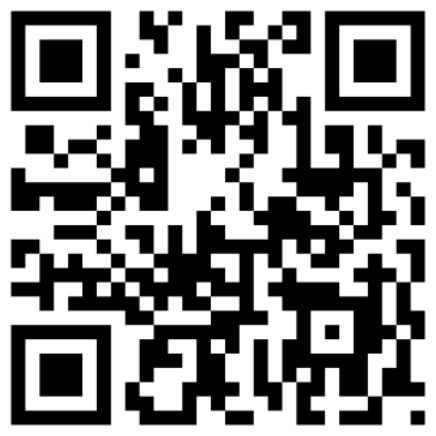
Example of a QR code.

Example of a QR code.

First, I learned that QR stands for “quick response.” The purpose is “to  transfer various types of digital content onto a mobile device in seconds without having to type any URLs.” Peachey goes on to explain that to use them in the classroom you need two tools, something to create the code and something to read the code. He provides a couple of links for each and a video about how to create QR codes. He assures the reader that they are easy to use and any teacher will find them transformative in the classroom. That’s quite a claim.

What can teachers, students, and schools do with QR codes? Peachy says that, in the classroom, students can download homework assignments, notes, worksheets, etc. all directly onto their mobile devices. The school can use QR codes to link to welcome videos, photos of events, events and schedules, and newsletters to name a few. In the library or a self-access center, students can link to YouTube videos, digital books, and online activities. He also suggests that a QR code can also be useful for marketing. Put one on brochures and promotional materials. “Create a QR code with a link to a Google map showing the location of the school and add this to marketing materials to help people find the school.”

Finally, Peachey writes that while getting familiar and comfortable with QR codes may take staff and students some time, it will pay off in the end. A few of the benefits he lists are:

  • Reduced copying and printing costs
  • Reduced cost of purchasing and storing print materials, as well as cds and dvds
  • Increased engagement with materials
  • Creation of a “21st century mobile friendly learning environment”

I am going to try to pay more attention to QR codes around me and see how transformative I find them. What about you? Do you use them? What do you think about Peachey’s claim?

What’s Wrong with MOOCs: One-Size-Fits-All Syndrome

Jim ShimabukuroBy Jim Shimabukuro
Editor

The Malaysian government is taking steps to “make 30 per cent of higher education courses available as massive open online courses (or MOOCs) by 2020” (Financial Review, 2 Oct. 2016). The MOOCs are free, but there’s a fee for assessments that grant credit for courses taken at other universities. From 64 courses in 2015, the number has grown to 300 this year.

The down side, as I see it, is that they’re relying on a single MOOC management system (MMS) — in this case, OpenLearning, which is based in Sydney. This shoehorning of course design and development into a proprietary box is a clear sign that the Malaysian administrators don’t have a clue about MOOCs.

This problem of overreliance on an MMS is endemic in the vast majority of universities that are tiptoeing into MOOCs. It’s the same mindset that tosses all online courses into a single LMS. If this one-size-fits-all approach were applied to F2F courses, professors would be outraged by this brazen violation of academic freedom.

The web is an infinite frontier with limitless resources for creating a wide range of MOOCs. In contrast, boxed platforms being hawked by non- and for-profits such as Coursera, edX, and OpenLearning don’t even begin to scratch the surface of possibilities. Jumping whole hog into one of them is to automatically accept an MMS’s limited views of what a MOOC can be.  Continue reading

Computational Thinking, LiuLiShuo & Audiobooks

lynnz_col2

Why Computer Science Education in K-12 Settings Is Becoming Increasingly Essential by Mehran Sahami, The Huffington Post, 14 Sep. 2016.

Is computer science for everybody? In this blog post, the author reminds us that in today’s world, computer science goes beyond programming for programmers. It is more and more part of our everyday lives. The author asserts, “This is the reason we don’t talk about teaching CS as just teaching ‘programming,’ but rather as a means for students to develop ‘computational thinking’ skills.”

Ex-Google Guy Builds English Teaching App That Adapts to Student by Selina Wang, Bloomberg Technology, 13 Sep. 2016.

Chinese parents spend quite a bit of money for English lessons for their children, then find out that their children don’t speak English very well. In steps LiuLiShuo, which means “speaking fluently,” an app which incorporates gaming and social media into English learning. While it has its critics, it also has 30 million (yes, million) users.

Audiobooks Can Support K-12 Readers in the Classroom by Kate Stoltzfus, Education Week, 19 Sep. 2016.

Audiobooks have been around for quite a while, and their usefulness for struggling readers has been supported by research. With the growth of digital media, audiobooks are becoming even more important as a tool for learners, especially students who have trouble reading. A study by the American Association of Schools Libraries in 2012, which focused on elementary students, found that “audiobooks improved students’ reading scores, increased students’ positive attitudes about their reading ability, and offered students more personal choice in what they read.”

NZ Education Minister Proposes Reform to Launch Schools Into the 21st Century

Jim ShimabukuroBy Jim Shimabukuro
Editor

It was just a matter of time, and it’s now finally happening. The online revolution is breaching the walls of K-12 schools. New Zealand Education Minister Hekia Parata is behind an Education Amendment Bill, introduced in Parliament this week, that will make it possible for “school-aged children…to do all their learning online.”1

“The fact of the matter is,” says Parata, “young people now operate in a world where technology and being connected is a norm for them. We want to make sure our legislation going forward provides for those options.” She adds, “Because this is the 21st century we want to make sure New Zealand kids are digitally fluent and they can take advantage of technology.”

Parata and Sewell

Hekia Parata, New Zealand Education Minister, and Karen Sewell, Te Kura board of trustees chair.

Karen Sewell, Te Kura board of trustees chair, strongly supports the amendment. She says, “Students could choose to learn online or face-to-face, or a mix of both, and have access to a much broader range of subjects regardless of the size and type of school they’re attending.”

Needless to say, many in the traditional school establishment are alarmed and up in arms. Angela Roberts, Post-Primary Teachers’ Association (PPTA) president, says, “There are two wildly incorrect assumptions that underpin this idea. One is that online learning can substitute for face-to-face, and the other is that a more competitive market in education is going to lead to better results. Both of these fly in the face of all the evidence.”

The outcome of this bill is yet to be decided, but I’ll be watching its progress closely. At this point in time, whether it passes or not is not as significant as the fact that the process of online reform has begun at the national level in a noteworthy school system.

Vigorous opposition from the status quo is to be expected, but the world is changing rapidly and traditional classroom-based models are becoming increasingly difficult to justify for a school-age population that’s been immersed in technology from birth.

__________
1 All quotes in this post are from Jo Moir’s “Government Education Reform Focuses on School-aged Children Learning from Home,” Stuff, 23 Aug. 2016.

A Successful Public Health MOOC: Interview with Dr. Satesh Bidaisee

Jim ShimabukuroBy Jim Shimabukuro
Editor

One Health, One Medicine: An Ecosystem Approach was a five-week public health MOOC offered by Dr. Satesh Bidaisee1 at St. George’s University, Grenada, in summer 2016. The course attracted 582 students from all over the world and was especially popular with students from the Caribbean, United States, and even Sub-Saharan Africa and Europe.

Among the 582 who enrolled, participants, or “students who took at least one graded activity in the course,” numbered 98, which is 17% of the total enrolled. Of the 98 participants, 52 completed the course. Completion is defined as achieving “at least a 50% in the course, which required them to get full participation and quiz credit and at least one additional exercise (case or presentation).”

Calculated in this way, the completion rate among participants was 53%, four times the rate in previous years. Of the 50 students who completed the survey, 98% rated their overall experience in the course as good or excellent. To the question “Would you be interested in pursuing a degree from St. Goerge’s University?”, 82% answered yes. Of this number, 30% preferred online courses, 16% preferred on-campus classes, and the remaining 36% had no preference either way.

Dr. Satesh Bidaisee, St. George's University, Grenada.

Dr. Satesh Bidaisee, St. George’s University, Grenada.

ETC: How would you explain the high rate of completion for your MOOC?
Bidaisee: The key factors were: (1) A user-friendly online course management system, SGUx, which is built on the EdX platform. (2) Accessible course team. (3) Interactions with students through live seminars, live office hours, discussion blogs, Twitter communication. (3) Case study reviews, peer-review evaluation of student-produced seminars. (4) Focused course topic and content on One Health, One Medicine.  Continue reading