I continue to be fascinated with the education of disabled children and the impact of technology. A simple example of technology and the employment of disabled learners is the fast food market’s cash register. A mentally limited individual can be accurate by simply entering the cash register through pictures of items on the menu. Such registers calculate the cost, enter the money, and spit out the correct change. The only skill is the ability to use the pictographic keyboard of the cash register.
All infants join the collective society by learning the coding systems of communications. That is, through speech and language. By the time the average child enters first grade, he or she will have a 4000-word vocabulary. However, the range will be between 2000 and 6000 words. The range is partially determined by how much the parent talks with the child. The child with a 6000-word vocabulary will do well in our modern schools.
There are many acceptable producers and creators of learning materials. There are a few rare geniuses that can conceive of and develop extraordinary learning products. Samuel Y. Gibbon, Jr. is among the top creators of high quality digital resources. He pioneered in work on Captain Kangaroo, Sesame Street, The Electric Company, 3-2-1 Contact and The Voyage of the Mimi. In the 1980s we envisioned that multiple media programs would include television, books, and computer programs. In fact, we believed and still believe that coordinated computer programs can be embedded in the television signal.
Peter G. Marston as Captain Clement Tyler Granville in The Voyage of the Mimi
Sam, as the executive director of The Voyage of the Mimi, designed, developed and produced the series featuring twelve-year-old Ben Affleck as C. T. Granville. The program featured fifteen minutes of drama and fifteen minutes of documentary science that supported the dramatic actions. A book accompanied the television series, and computer programs supported the science and mathematics. Continue reading →
I just spent an hour viewing a YouTube video, “Plenary III – Future Net: What’s Next?” It’s part of the e-G8 Forum, “The Internet: Accelerating Growth,” which was held in Paris May 24-25, 2011.
The video was uploaded by e-G8 on May 24, 2011. The moderator is David Rowan, editor of Wired UK. Panelists are Peter Chou, CEO, HTC; Paul Hermelin, CEO, Capgemini; Danny Hillis, Co-Chairman and CTO, Applied Minds; Paul Jacobs, Chairman and CEO, Qualcomm; Craig Mundie, Chief Research and Strategy Officer, Microsoft; and Michel de Rosen, CEO, Eutelsat.
The session is divided into two parts. In the first, each member is asked to briefly talk about a technology trend that will impact our lives in the next five years. The second is devoted to questions and answers between the host and the panelists. Following is a brief summary of each person’s focus in the first part. Continue reading →
Since the late 1980s, distance learning programs have demonstrated that technology delivered education can be effective and bring learning to students in isolated and remote areas. Programs such as the old federal Star Schools Program brought highly qualified teachers to areas that cannot afford experts in subjects such as mathematics, science, and foreign languages.
From television to satellites to computers and Internet, distance learning offers high quality learning experiences. In the best of all worlds, a highly qualified personal tutor might offer the learner the best possible learning opportunity. Unfortunately, this is not an option nor is even the construction of classrooms and the training of a reasonably qualified cadre of teachers an option in many parts of the world.
Technology can and must bridge this gap for many of the worlds 120,000,000 children without a teacher or a classroom. Distance learning is affordable and available. We cannot allow the world’s children to grow up in ignorance. We cannot allow children to learn more about AK-47s than they know about reading and mathematics. We cannot allow children to know more about war than they know about peace. Children will learn whatever we do. The question is, will we provide them a healthy environment of learning that is scientifically accurate and socially healthy? Continue reading →
(Author’s note: this article is an adaptation of a recent blog piece on my web site.)
Is “UnCollege” a bold new approach to one’s education? A colleague recently told me about the UnCollege web site and the related manifesto. I’ll take a closer look later, but my first reaction is: been there, done that; still have the T-shirt in my rag pile though….
Reading this manifesto was a stroll down memory lane, recalling the similar movement in the 1970s and the critics who proliferated then. I did not see anything in this manifesto that I have not seen before, although maybe I’ll find a new nugget or two upon closer examination. (Nice collection of past critical quotes though, although where’s the Vonnegut quote about how my teachers could have ridden with Jesse James for all the time they stole from me?). Coyne and Hebert’s book, This Way Out, covered this ground for its time back in the mid-1970s, as did Ronald Gross’s The Lifelong Learner.
Despite the wonders of the Internet and digital technologies, the shortcomings of this approach are essentially the same now as they were then:
The “academic deviance” approach, like Anya Kamenetz’s, is a DIY (Do-It-Yourself) approach; the problem is that most people don’t want to be DIY with their education any more than they want to be DIY with their car repair, home building, etc. Everyone’s an autodidact to some extent — that is, they can teach themselves things on their own — but academic autodidacts who can do their entire education on their own are a far rarer species. The manifesto may move a few to action, but it lacks a driver to move masses of learners to action. Continue reading →
[Note: This article is from a private email sent by Bonnie on May 28. -Editor]
I am going to play this weekend. Rolling Thunder means that we have an invasion of motorcycles and terrible traffic.
I have opened a Diigo account, Ray [Rose] sent me a thing for some other account, and I have the game piece to work on.
I spent a Memorial Day in Hawaii. My mother wanted to see Pearl Harbor. She cried, along with some older servicemen, almost the whole time, holding my hand as if she were the little girl and I, the mother. I never knew it, but during WWII, her job was to send the missing in action and death certificates from the Naval Annex.
Memorial Day was started by Confederate Army relatives in the area of Petersburg. Recently I went to the Confederate Army Cemetery. My friend, Mano, from India, took me there. It was an interesting trip. It is the cemetery on a hill overlooking Richmond, Virginia.
Some people were startled to see a group of “colored” people touring the cemetery. It was like slipping into a time warp.
Also I had never seen Monument Row. Things have changed for the better I think.
Research now shows that people who remain active are less likely to have Alzheimer diseases. One interesting report indicates that people who Google every day are warding off the disease. However, there is another compelling question, and that is, What constitutes creativity at any age? The digital world offers us new mindsets, new ways to examine and know our world on Earth and to explore the universe.
The mysteries of the universe are open to us to explore as the Hubble telescope brings us visions from the distant past. Ironically, in our classrooms or homes, the pictures of NASA probes come to us in living color. We take these pictures and decode their meanings. We now can detect planets around distant stars, and we must ask, Is there life outside Earth? If so, what is the nature of that life?
As we explore space and dream of a habitat on Mars, we still have unsolved problems on Earth. We have the knowledge to feed the hungry of the world, but 1.02 billion people go to bed hungry each night. There are 125 million children without a teacher or a classroom. Technology can and must open the doors of learning and knowledge for those children. Who will create the systems that reach into the minds of these millions of children and free them with access to the world’s knowledge? Children are our future.
By Claude Almansi
Editor, Accessibility Issues
ETCJ Associate Administrator
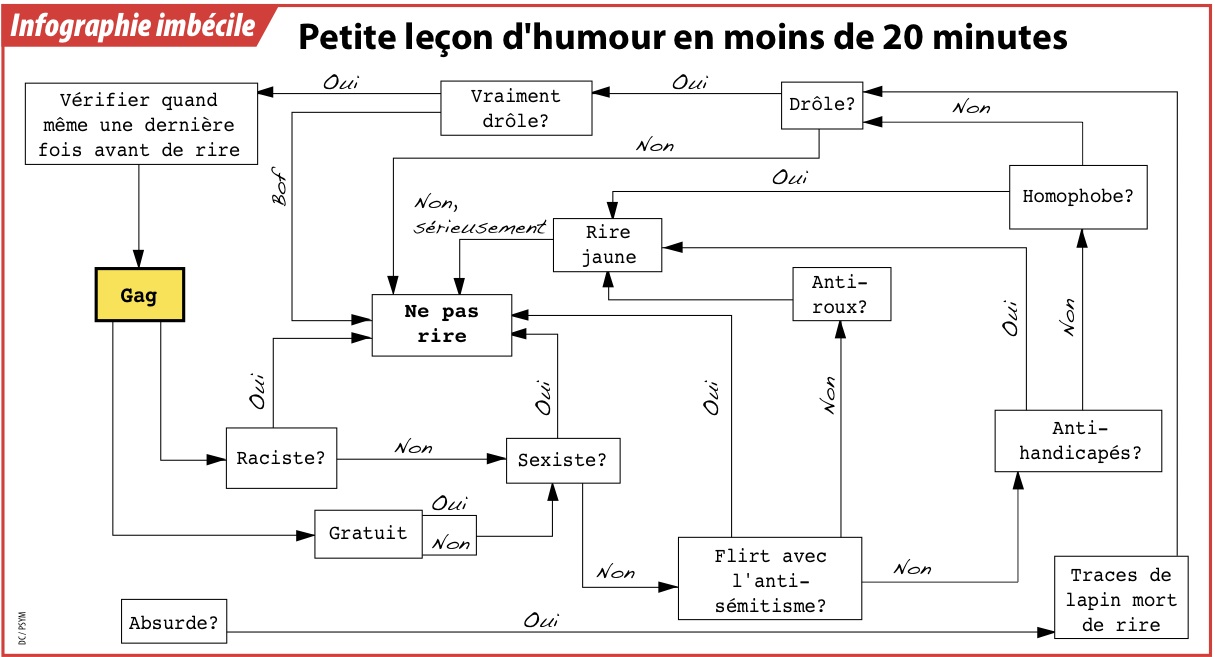
There seems to be a new infographic craze, particularly about education and social media. I had been vaguely aware of the term as an annoying pseudo-nerdy buzz word for a while, when the Swiss satirical weekly Vigousse started running an “Infographie imbécile” (Dumb Infographic) on the last page of each issue in January 2010. For instance:
Shortly after that January 2011 issue, the “Infographies imbéciles” stopped: possibly because the targeted newspapers got the message and soft-pedaled on infographics. Or maybe the editorial team of Vigousse got bored with doing them. Continue reading →
I have always considered Judah L. Schwartz a true pioneer in the field of learning technologies. He had the ability to look at the world through the new and different lens of the computer. He looked at the ethical and philosophical issues arising from the use of technology in education. His research interests include the use of the digital world to improve the teaching and learning of math and science. He designed the Geometric Supposer series of software and What Do You Do with a Broken Calculator? and other alternative software programs.
He is currently Professor of the Practice and Research Professor of Physics and Astronomy at Tufts University; he is also Emeritus Professor of Engineering Science and Education at MIT and Emeritus Professor of Education at the Harvard Graduate School of Education.
Judah L. Schwartz
He is a remarkable pioneer in our field because he saw technology as a way of looking at mathematics in very new and alternative ways. His software asks the learner to think over and over again, “What if?” What if I change this value. What happens? The computer allows for infinite changes and explorations of these alternative operations. He likes to say the Ptolemy observations of the solar system were accurate. There was just one thing wrong with them and that was they were basically incorrect. Continue reading →
There’s only one major trend in education, and that’s digital. The digital meter is all that really matters, and it’s running faster every second. The increments are in degrees of digitization. This process is transforming not only the classroom but the business of schooling. Paper and file cabinets are disappearing, just as books, bookshelves, and printers are. Increasingly, information is created, stored, and shared digitally. Landlines and faxes are being replaced by digital communications via computers and the internet.
Increasingly, offices are becoming dead zones. Educators are communicating more than ever before, but they’re no longer doing it from their offices. For example, students and colleagues are communicating with them via email and social media, and the interactions are no longer limited to weekdays, 8-to-4, in offices. The office is simply no match for 24-7, anytime, anywhere communications.
This digital sea change is not an isolated trend. It’s pervasive, happening everywhere on this planet, all at once. There’s no denying that there are and will be pockets that remain analog, like the payphone booth you sometimes see in an old neighborhood or out of the way location or an IBM selectric typewriter in a forgotten workroom or, even more rare, a desktop computer with disc drives and CRT monitor, connected to a printer with fanfold paper. Newspapers and TV news are going digital, too, just as books, movies, music, and sports are. Continue reading →
“If my mind can conceive it, and my heart can believe it, I know I can achieve it.” -Jesse Jackson
In the late 1980s when I worked for the US Department of Education, I dreamed of an interactive, participatory multimedia television series. It would be a weekly series that established a problem the first four days of the week and then viewers would submit solutions on Friday. This was before YouTube or Facebook. If I were writing the proposal today, I would have many more exciting technology-based possibilities.
A segment of the series might focus on establishing a Mars habitat. Major problems to be solved are (1) developing protection against radiation, (2) creating an adequate water supply, (3) growing food, (4) disposing waste, (5) learning to live together for long periods in a confined space, and (6) supplying ample energy for the habitat.
The first four days, the program would provide a storyline that gives the learners background information about the possible solutions. Students using a package of visuals, including avatars, would develop a video for their solution. Each class can then place it on YouTube for others to view. Other learners can provide comments and advice on Facebook. Continue reading →
Andrew was a loner who lived in his own world with very little interactions with other children in either the dormitory or the classroom. He was a tall, skinny, awkward kid. He had a talent for drawing. He created a whole world of his own in his drawings. In fact, his most expressive communication came through his drawings.
When he was about twelve or thirteen he began drawing elaborate cartoons including his own language. His most elaborate efforts were of a semi-Roman type of society. He spent hours drawing these detailed cartoons of his imaginary world. He had observed the mechanical aspect of the buildings that made up the school campus, and in some of his drawings he had elaborate electrical and plumbing systems.
Andrew was not a good student, but he did like words. He was not an athletic or outdoors fellow. He did not like to go to the Boy Scout camp. One camping trip I heard him conjugating verbs. I am not going to camp, I will not got to camp, I shall not go to camp, etc. in the back of the bus on the way to camp. We were a little late getting to the campsite and pitching our tents. Consequently, it was dark by the time the boys started their fires and began cooking their meals. I was excited because Andrew was one of the first to sit down and start eating. However, when I approached him I realized he had not been able to start his campfire and was eating his food raw. Continue reading →
By Claude Almansi
Editor, Accessibility Issues
ETCJ Associate Administrator
Vernier is providing 30 grants to ten elementary or middle schools, ten high schools, and ten college or university departments to honor the important work science educators do every day. Each grant awardee will receive $10,000 worth of Vernier technology equipment of their choosing. (…)
The contest opens March 9, 2011, and applications are due by June 1, 2011, with winners announced by September 15, 2011 (…)
One day my superintendent called and asked if I had invited JFK to be our commencement speaker. Why he would suspect me of inviting the President I do not know. I had no idea what he was talking about. He said, “Find out who did,” and hung up. I talked with the class officers, and, oh yes, Albert James, the secretary treasurer, wrote the president. Albert was a kid who, at thirteen, had a beard heavier than Richard Nixon’s. He was the kid whose dormitory mates could send out to the local store to buy a six-pack and no one would ask for an ID. From preschool to high school, his teachers had noted that he was an underachiever not living up to his potential.
In his last year he discovered science fairs. He entered and won the local and went on to the state where he came in second. His fame led his classmates to elect him secretary treasurer. As such, he thought President Kennedy would make a wonderful commencement speaker. He knew enough to go to the superintendent’s office and obtain letterhead stationery and wrote a letter to the President asking him to speak. JFK had already made a commitment to speak at a nearby college and the White House said if we scheduled our commencement to coincide, the President would consider speaking. Wow! Albert thought this was nothing out of the ordinary. Unfortunately, the President was shot in Dallas and we never finalized the arrangement. Continue reading →
I appreciate the comments on this sort of article (Liz Dwyer’s “Why Twitter Is a Teacher’s Best Tool,” 5.21.11) about as much as the article itself. One teacher (rossmau) commented that Twitter is less useful than her stapler. Another (Michelleg1) was effusive in her praise of Twitter.
I find Jessica’s question much more engaging than just talking about Twitter, which has its value and its drawbacks.
Many have noted that schools, as an institution, tend to resist change. Some decry that tendency as even troglodytic. It certainly frustrates me from time to time.
However, if you think about it, schools provides a critical service for our children for a dozen or more years of their lives. Were it subject to every whim of education theory, the results would likely be unpleasant at best. I’ve seen a few education fads come and go.
My favorite fad is “New Math.” Wow! Some still cling to it today, but it was totally discredited years ago. In science education (and others I think), we see “back to basics” as a fad that trades places with social relevancy. Each gets stretched to its limit resulting in an overreaction in the other direction. So, one day, it’s all about learning the fundamentals of science. Another day, it’s all about relating science to your community, to your nation, to the world as in global warming. It’s not that these things are bad. They’re just not in balance. Continue reading →
Today, I stumbled upon a blog post, “Why Twitter Is a Teacher’s Best Friend,” by Liz Dwyer. While I find Dwyer’s stances on the professional development and networking power of Twitter to be valid and refreshing, I was concerned by the line “Not all teachers have totally embraced Twitter. Some are a little tech-phobic.”
To me, integrating technology to its fullest potential involves finding true solutions. In my own teaching, Twitter is used only in very specific circumstances. Yet, I am not tech-phobic. I hesitate to embrace the proclamation that eschewing a technology makes one tech-phobic, yet many tech blogs seem to follow this bent.
How do you feel? How do you define “technophobia”? How do you make your technology decisions when it comes to information sharing, teaching objectives and networking?
I found this article to be a refreshing perspective in many ways and find it opens the door to an interesting discussion on our perspectives in the tech world and how we view those who adopt technology at slower rates. What do you think?
I have hired and supervised a number of teachers in my career. I always ask myself, Are the people I am interviewing so interesting that I would like to spend an evening with them over dinner? Can they relate to their students and not just the subject matter?
One of the most remarkable people I hired as a teacher for multiply disabled students was Dorothy. She had just lost her husband. She was an excellent pianist and could have earned a living as a musician. She had been in love and engaged to marry a European from Holland before World War II broke out. She had lost all contact with him during the war. He was a member of the underground. He wired her as soon as he was able to after the war was over and indicated that he still wanted to marry her if she had not married. She said yes, and he came to the USA as fast as he could. He ended up as an executive in Shell Oil Company, and they lived around the world, often dining with heads of state and corporate leaders. They had no children.
She met my first criteria of being someone that I found fascinating as a dinner partner. Her educational background was exemplary, coming from Smith College with all A’s.
I worked in residential schools in the early part of my career. In addition to my classroom teaching, I taught wood working shop at night and on Saturdays. Every time Dale saw me he asked when he could take shop. You had to be at least nine years old before you could come to shop. Dale was one of the kids that the teachers did not like, and the house parents dreaded having him in their dormitory.
He wasn’t bad. He was just a pest. If you could possibly do something wrong, Dale was able to stumble into it. If you went on a field trip on a city bus and had to transfer, somehow Dale lost his transfer. If you stopped for an ice cream cone, Dale somehow managed to drop his cone before he finished it. Dale also had a misshapen head. It looked like someone stepped on it and left it off center.
The time finally arrived when he was old enough to come to shop. He was in seventh heaven. I had the young boys that year make three-legged foot stools. They turned the legs on the lathe and made kidney-shaped seats that they covered.
When Alexander Graham Bell tried to market his new telephone in England, government ministers told him that England would never need telephones. They would always have a supply of messenger boys. When I grew up in the 1930s, a long distance telephone call was only used for a birth or death of a family member. In World War II, long distance phone calls were used by servicemen to contact loved ones back home.
Today I have a friend with cancer who is being treated by the National Institutes of Health. She has her own blog where she documents the progress of her treatment for family and friends. I live on the East Coast, and many of my family members live on the West Coast. With Facebook, I am more in touch with the family than ever before. Sometimes I get more information about purple hair and body piercing by the younger members than I want to know. So far I have not received an announcement of tattoos. I have not checked my email this morning.
Young people and adults have privately financed the personal and corporate infrastructure of iPhones, iPads and iPods that make this vast social network possible.
The challenge for teachers is how to use these new resources for learning. We must develop rules for usage, but social media should never be banned from the classroom.
Project-Based Learning or PBL seems to bundle some of the noisiest buzzwords into a single package, making it a convenient general model for best practice. But I have to confess that I seldom use the term because it’s so slippery. Every time I think I have a grip on it, it oozes away. Now that I have a few days before the start of summer session, I thought I’d try to get a firmer grip on it.
I did the usual googling, and Edutopia rose to the surface. I liked their site because it simplified, simplified, simplified the idea. In other words, it left out the philosophical history and pseudo-theoretical pedigree that’s top-heavy with Dewey, Piaget and the like. In a brief document titled “Why Teach with Project-Based Learning?: Providing Students With a Well-Rounded Classroom Experience” (28 Feb. 2008), I got what seemed like all the pieces to the puzzle.
Using the mouse, I cut away the excess verbiage to isolate the key elements, and this is what I ended up with. Through PBL, students:
experience “active and engaged learning”
“explore real-world problems and challenges”
develop “cross-curriculum skills”
work “in small collaborative groups”
engage in “team-based and independent work”
“obtain a deeper knowledge of the subjects they’re studying”
“are more likely to retain the knowledge gained through this approach”
“develop confidence and self-direction”
“hone their organizational and research skills”
“develop better communication with their peers and adults”
“often work within their community”
“are evaluated on the basis of their projects, rather than on the comparatively narrow rubrics defined by exams, essays, and written reports”
feel that “project-based work is often more meaningful to them. They quickly see how academic work can connect to real-life issues — and may even be inspired to pursue a career or engage in activism that relates to the project they developed.”
have “greater flexibility [in] project learning”
“might be evaluated on presentations to a community audience they have assiduously prepared for, informative tours of a local historical site based on their recently acquired expertise, or screening of a scripted film they have painstakingly produced.”
learn that this is “an effective way to integrate technology into [their learning]. A typical project can easily accommodate computers and the Internet, as well as interactive whiteboards, global-positioning-system (GPS) devices, digital still cameras, video cameras, and associated editing equipment.
In the USA every child is entitled to a free and appropriate education regardless of ethnic background, disabling condition or socioeconomic level. In the last part of the 20th Century, federal legislation ensured that all disabled children had a right to a free and appropriate public education. The contributions of disabled people in America has been tremendous, from Thomas Edison, Franklin Roosevelt, Stephen Hawking to Ray Charles, Stevie Wonder and Helen Keller, disabled people have enriched our society. Deaf people, blind people, cerebral palsied people and mentally challenged people have enriched our lives though their accomplishments.
Many of these young people have done well in regular classrooms with average learners. Others have had to have special programs and may from time to time be in separate classes or even individual tutoring. Learning comes through our sensory input, especially our sight and hearing. However the human mind is a marvelous thing that can compensate for distortions in our sensory inputs. Think with me for a moment about how we might reach a deaf blind infant. True, there are cochlear implants that might give the child a form of hearing. There have been experiments with ocular implants, but these have not been practical to date. How then will a deaf blind infant know his or her world? They must know their world primarily through the sense of touch, taste and smell. Unlike sight and hearing, touch, taste and smell are near senses.
Separate but equal?
It never was.
In education, we still have a long way to go.
In technology, are we there yet?
It is nearly exactly sixty years after the U.S. Supreme Court ruled in Brown v. Board of Education that the doctrine of “separate but equal” has no place in the field of public education. The promise of an equal education remains unmet for too many of the nation’s students of color and Native students. Inner city schools are crumbling and losing educational leaders. Rural schools are often technology challenged as well as economically challenged. The new ideas and wonderful examples of best practices are not a part of these schools’ learning landscapes.
How long will this go on?
In my early school days, like many Southern students I went to school with Hispanics, Dark Italians, Native Americans, and Black students. We were all called colored. The nuns had us capitalize “Black” and names of minority groups to give them importance, to show their importance. There were a few Chinese students, but they were allowed to go to other schools. We did not know why. We accepted it. Change was coming, they said.
There was a confusion about race. There always has been. I still have the bad habit of capitalizing any minority name. However, there has never been an illusion about the economic differences in communities and what that means for students of color.
Today I want to reflect on some teaching I did on Tueday, 17th May at the Institute of Education (IOE). It was called 21st Century Learning: Using Web 2.0 Tools. I usually call this session Web2.0Learning, but our marketing people didn’t like that and renamed it. This was the first time I’ve been on the LCLL core events calendar so this was quite a big deal. By the way, the LCLL – London Centre for Leadership in Learning – is where I work in the IOE.
Web2.0Learning is a day’s training that I conceived a couple of years ago to teach educators about the various types of tools freely available ‘out there’ on the internet. I describe them as ‘outside your VLE’ tools. I’ve now delivered it five times mostly at the Chartered Institute of Marketing, and I’ve always found it a rewarding experience. Part of the satisfaction comes from the fact that it’s inspired and dictated by what I read, learn and reflect about in my personal learning on the blogosphere. It’s more of a personal interest than a work chore. Also, it allows me to be creative as I seek to make sense of the different tools and software I encounter and distill it down into coherent messages.
In the middle of the night, I thought about how a student’s educational life might play out in the next ten to twenty years. Endeavour’s launch was magnificent. We will step foot on Mars someday.
James Josiah Coleman was born on February 9, 2000, in Lanham, Maryland, just outside the Goddard NASA space center. You might even say he was a space baby. His father was a communications expert at NASA, and his aunt was a NASA astronaut. His crib had plastic shuttles hanging over it, and his first toys were NASA models. As a youngster he knew the statistics about all the shuttle flights, especially the ones his aunt flew on. His mother was a PhD research scientist at the Greenbelt Department of Agriculture Research Center. He had a younger sister named Casey.
Photo credit NASA/Jim Grossmann
He was known by his friends as “JJ” and was considered a nerd because even as a small kid he was obsessed with NASA data. He knew everything about Mars and dreamed of going there. Early on as a child he learned to speak Russian because his aunt Cathy spoke Russian as a member of the International Space Station crew. JJ had a talent for speaking other languages and also began to learn Chinese when he was in grade school. He did this by taking a Chinese course on line where he spoke with native Chinese speakers weekly via SKYPE. Continue reading →
[Note: An earlier version of this article was published in Frank’s personal blog. -Editor]
Our current educational system was designed for an agrarian society where books allowed us to store and retrieve information. Before books, young people were taught through apprenticeships with master workers or scholars. Books allowed us to train and teach children in classrooms and schools with libraries of the world’s knowledge and skills. This meant that the learners had to be convened in classrooms.
With today’s digital world, the classroom is not as critical as it was in a book based learning system. Today, information stored digitally can be retrieved 24/7. Moreover lessons can originate anywhere in the world. If, for example, I want to study Chinese, I can have lessons from China delivered via my computer and I can practice my Chinese via SKYPE with two-way audio-visual conversations with a native speaker.
Distant learning allows us to deliver high quality lessons to the most remote parts of the world as was demonstrated by the Star Schools Program. Early childhood education is now delivered via Sesame Street to 140 countries around the world. This does not mean that we no longer need school buildings or human teachers. It means that those classrooms will be organized differently and that the teachers will be mentors that guide teams of learners as they solve problems and produce projects.
Assessment of a learner’s progress will be based upon (1) projects completed, (2) effectiveness in team work, and (3) creativity. Schools will be open year round. Students will work in teams with clear individual learning plans that define their goals and objectives. Certain skills and background will be tailor made to meet individual needs. That is, sufficient literacy and mathematics skills will be expected, and required remedial work will be provided on an individual basis until basic proficiency is achieved. Continue reading →

















 Educational Technology and Change Journal
