Posted on January 5, 2011 by JimS

At the 2011 International CES, January 6-9, Las Vegas Convention Center, don’t miss Kids@Play and MommyTech, Saturday, January 08, 2011. Here’s a blurb that describes the event:
Play with the new toys and new tech designed to address the specific needs of kids and their families. Kids@Play explores the world of gear-toting digital kids who will become tomorrow’s digital citizens. We’ll reveal the latest games, toys and educational products certain to engage the most discriminating kids: from toddler to teen. MommyTech looks at how digital technology helps Moms do what they do every day: the impossible!
They’ve scheduled an awesome list of speakers.
Continue reading →
Filed under: Uncategorized | Leave a comment »
Posted on January 4, 2011 by JimS
 By Tom Preskett
I was struck by this header in Sarah Kessler’s “The Case for the Virtual Classroom” (Mashable, 1.3.11): “The Internet Empowers Self-Motivated Learners.” This is a good way of putting something that is blindingly obvious. But is it therefore not good for learners who are not so self-motivated?
The internet is well suited to learners who are completely self-regulated, aggregating learning resources from a variety of sources, seeking out their own channels of support and collaboration. There has never been a better time to manage your own learning experience. Continue reading →
Filed under: Uncategorized | 16 Comments »
Posted on January 2, 2011 by JimS
 By Lynn Zimmerman
Editor, Teacher Education
Tom Preskett’s article, There’s Blended Learning and There’s Blended Learning!, made two points in particular that started me thinking about group dynamics and how this plays out in face-to-face, hybrid, and online classes. First he said that in one model of hybrid courses “The course is explained, participants get to know each other, and bonds are formed.” Then later he commented: “Give a student in 2010 the alternative and F2F wins most of the time.”
I think that forming bonds is one of the necessary elements for success in hybrid and online courses, and this ability to form bonds is related to students’ preference, or not, for face-to-face. In some cases, the course’s success does not depend on whether the students form bonds – an introductory chemistry course of 300 students being lectured to in an auditorium comes to mind. However, for a course that is conducted seminar-style or in which the goal is for students to work collaboratively, creating bonds can be critical to success. Continue reading →
Filed under: Uncategorized | 18 Comments »
Posted on January 2, 2011 by Claude Almansi
 By Claude Almansi
Editor, Accessibility Issues
On Oct 29, 2010, the White House launched the http://expertnet.wikispaces.com wiki and announced it publicly on its blog on December 8:
One vexing challenge to engaging Americans in governance has been finding new models and tools for the next generation of citizen consultation. We want to take advantage of the latest technology to: 1) enable government officials to circulate notice of opportunities to participate in public consultations to members of the public with expertise on a topic; and 2) provide those citizen experts with a mechanism to provide useful, relevant, and manageable feedback to government officials.
That is why the White House Open Government Initiative and the General Services Administration, working closely with the Office of Management and Budget’s Office of Performance and Personnel Management, are today launching a public consultation (through January 7, 2011) to obtain input on a design concept for a government-wide software tool and process to elicit expert public participation. In addition to making government more open
Continue reading →
Filed under: Uncategorized | 1 Comment »
Posted on December 31, 2010 by JimS
Posted on December 26, 2010 by JimS
It appears the bulk (about 60%) of the influence on children’s education does not occur in schools. It occurs elsewhere. Diane Ravitch, in “The Myth of Charter Schools“[1] (New York Review, 11 Nov. 2010), says that, according to studies, “teachers statistically account for around 10–20 percent of achievement outcomes.” She adds, while “teachers are the most important factor within schools,” other factors outside of school have a greater impact on learning.
Ravitch says that, according to economist Dan Goldhaber, “about 60 percent of achievement is explained by nonschool factors, such as family income. . . . Teachers can have a profound effect on students, but it would be foolish to believe that teachers alone can undo the damage caused by poverty and its associated burdens.” Continue reading →
Filed under: Uncategorized | 3 Comments »
Posted on December 24, 2010 by JimS
Posted on December 16, 2010 by JimS
After watching a young relative use the iPad, I had to think hard. This child can’t really read, but he used it to negotiate a story for himself.
Even more interesting was watching him learn to use a digital camera, looking into the lens and taking pictures of his eye and so on.
Amazing that he can take pictures and access an iPad to have it tell him a story. He still likes to have stories told to him (he likes being held) and sometimes enjoys passively looking at something on television. But his passion is for interactivity.
Bruce Newman, in “Rise of the iKids: Schools Test iPads in Classrooms“* (MercuryNews, 12.14.10), says that “iPads — the Apple of almost every adolescent’s eye — are being provided to students at several Bay Area public and private schools this year, including Hillbrook, which claims to be the only K-8 school in America using tablet computers in class and sending them home. This has led to a lot of 12-year-olds swanning around the wooded hillside campus, talking to their iPads” (MercuryNews, 12.14.10).
Our children are growing up digital and wired. Some schools are beginning to accommodate them. How will this new generation impact our nation’s schools and colleges? What do you think?
___________
* Webcite alternative.
Filed under: Uncategorized | 5 Comments »
Posted on December 15, 2010 by JimS
In the aftermath of the recent PISA test reports, the common belief is (1) the scores bode ill for the US’s future in the global economy and (2) the answer to better scores is innovative instructional technology. What do our ETCJ readers think?
Marion Herbert, in “The United States Receives Average Rankings from PISA“* (District Administration, 15 Dec. 2010), underscores the relationship between PISA test results and America’s future in the global economy. She echoes U.S. Secretary of Education Arne Duncan, who says:
Being average in reading and science — and below average in math — is not nearly good enough in a knowledge economy where scientific and technological literacy is so central to sustaining innovation and international competitiveness. The results are especially troubling because PISA assesses applied knowledge and the higher-order thinking skills critical to success in the information age. (7 Dec. 2010)
Central to the popular response to the test results is the belief that instructional technology will need to play a key role in America’s comeback. Herbert says, “Reactions to the PISA results have generally spouted the same message — the United States needs to raise the bar with education innovation to create college-and-career-ready students who can better compete in a global economy.”
__________
* Webcitation alternate link.
Filed under: Uncategorized | 2 Comments »
Posted on December 14, 2010 by JimS
By Tom Preskett
Blended learning has lots of different definitions. In addition, there are the different balances struck between face-to-face (F2F) and online elements. I’ve reflected previously (in The ‘Open Mode’ – A Step Toward Completely Online) about different student attitudes in approaching blended vs. purely online learning. In the two models below, I will examine how the structure of a blended course, in the context of higher education in the UK, can have an impact on effectiveness.
Model 1. The course begins with a F2F day or two – often the preferred term here is “residential.” The course is explained, participants get to know each other, and bonds are formed. Importantly, the online environment is introduced with hands on practice if necessary. More importantly, the educator shows commitment to facilitation of any online activities involving communication or collaboration. The rest of the course is taught online with perhaps another F2F event at the end. So the only organised way students can interact or collaborate is by engaging in the online activities. Continue reading →
Filed under: Uncategorized | 1 Comment »
Posted on December 12, 2010 by JimS
 By Stefanie Panke
Editor, Social Software in Education
Since 2002, the annual Horizon report identifies emerging technologies likely to have a large impact on teaching and learning. In 2010, the project advisory board, comprising international scholars, educators, policy leaders and industry representatives, described “open content” as a key trend, expected to reach mainstream within the next twelve months (p. 6).
In fall 2010, UNESCO launched online forums on OER-related topics, the discussion centered on the challenge of “Taking OER Beyond the OER Community.” As another initiative, the “European Consultative Group on Open Educational Practices” developed a roadmap towards quality management in OER. As these examples show, the idea of educational material freely and openly accessible on the Web attracts substantial attention.
One major reason why the concept of open educational resources has gained such prominence is the everyday experience of informal and incidental online learning shared by practitioners and researchers alike. Easy-to-use tools and wide access to networks result in informal learning becoming more visible as a part of learning in general. We use the World Wide Web as a convenient part of our everyday information infrastructure – in private contexts, for scientific purposes, in schools and universities, and at the workplace. Search engines and directories are often the starting point for navigating the Web. But where do users end up in their quest for easily accessible yet valuable content? At this point, OER comes into play, describing the open access to information for learning purposes. Continue reading →
Filed under: Uncategorized | 1 Comment »
Posted on December 11, 2010 by JimS
By Lynn Zimmerman
Editor, Teacher Education
Recently, my university – Purdue University Calumet in Hammond, Indiana – installed media technology stations in the last two classrooms on campus that lacked them. As it happens, these were the two classrooms in which I have taught most of my classes for the last few years. However, I was not without technology. I was able to place an order at the beginning of each semester for a cart to be delivered each class period. It came with a computer with Internet access, a DVD player, and a projector.
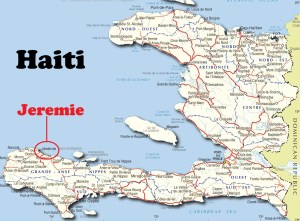
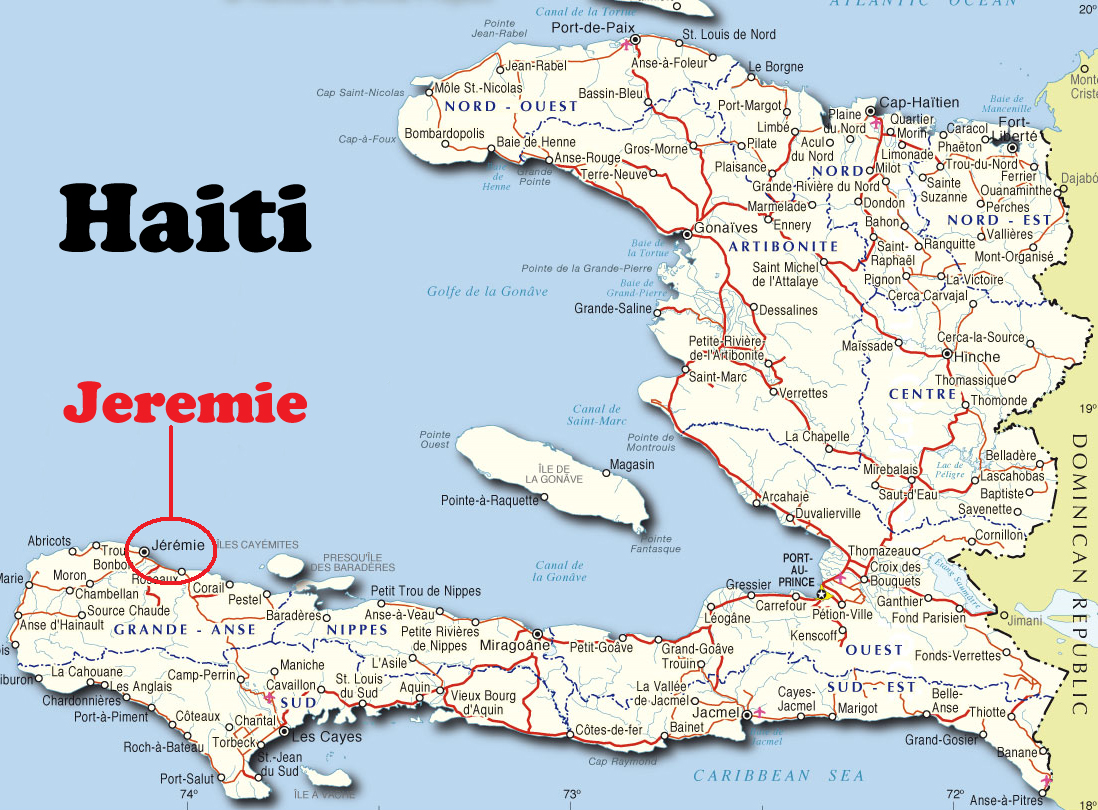
The cart served its purpose, although it did take up space in the middle of the classroom and was rather noisy. Therefore, I am happy to have a stationary setup in the classroom now. It contains the aforementioned equipment as well as a document camera, which I have found very handy. However, my classroom in the US is not what I want to talk about here. I mention it because I want to contrast this technology with what I experienced in Haiti recently. Continue reading →
Filed under: Uncategorized | 2 Comments »
Posted on December 11, 2010 by Claude Almansi
By Claude Almansi
Editor, Accessibility Issues
On Dec 8, 2010, I received the following e-mail, entitled “Alert!”, at my gmail address, apparently from “GMAIL <onlineupdatealert@gmail.com>”:
Dear Email Client,
There was a failed attempt to login into your account from a blacklisted IP. Kindly login below
http://www.gmail.com
It looked suspiciously phishy so I checked the source – click here to see the source.
The full header indicates that the sender might be spoofed, the chunk of code suggests a web bug that verifies that the message has been viewed, hence that the receiver’s address is valid and spammable, and the last two lines show that what appears to be the URL of the legit gmail login page actually links to a well-made duplicate: http://www.4dsystems.com.au/flashimg/gmail/signon.html. Continue reading →
Filed under: Uncategorized | Tagged: cybercrime, cyco, Gmail, phishing, Report, scoci | Leave a comment »
Posted on December 11, 2010 by JimS
By Stefanie Panke
Editor, Social Software in Education
By virtue of their ability to link entries to authors and dates, weblogs are the ideal space for handling, networking, and archiving individual views that have the potential to impact larger communities. Educational researchers and practitioners have pointed out that weblogs may have great influence in instructional design: “Blogging has the potential to be a transformational technology for teaching and learning” (Williams & Jacobs, 2004). An impressive body of research and case studies has become available on the phenomenon of “edublogging,” the use of weblogs in educational contexts.

The purpose of the annual Edublog awards is to promote and demonstrate the educational values of social media. The 2010 edition of the “Eddies” marks the seventh year of Edublog Awards. The nomination lists provide various ideas on how social media is used in different educational contexts, with a range of different learners. The Edublog Awards consists of three stages: nomination, voting, and award ceremony. Anyone can nominate blogs – but self-nominations are excluded. Continue reading →
Filed under: Uncategorized | 2 Comments »
Posted on December 10, 2010 by JimS
Young people use them. That’s a reason they use the hoodie – to conceal their cell phone use. The problem is that the schools don’t appear to want them on campus and don’t appreciate their educational potential. There’s often a sign at the entrance: “This is NOT a cell phone zone.”

I’m old, that is, years ago, I got into trouble for just using and having a landline to hook my computer into the internet. The principal used to lock that phone in a safe to keep me from using it. How far we have come.
Chris Dede and the FCC chairman think they will help to vault the digital divide. Will they? Maya Cohen is conducting an online discussion to answer this question: “Cell Phones at School: Should They Be Allowed?”
My question to ETCJ readers is, How can we, as teachers, incorporate cell phones into our curricula? Please share your strategies and ideas. It seems such a waste to ignore or even ban this extremely portable, anytime-anywhere communication medium.
Filed under: Uncategorized | 2 Comments »
Posted on December 9, 2010 by JimS
 By Jim Shimabukuro
Editor
Stephen Downes’s column in The Huffington Post has become a routine stop for me. His topics and comments are always probing the edge of ideas, inviting us to look over there, and from there, back to where we were. His latest, “The Role of the Educator” (5 Dec. 2010), doesn’t disappoint. If the role of educator is changing, then what is it becoming? What are the possibilities? Downes comes up with a staggering list of 23 roles, yet it’s obvious that this is just the beginning of a list that stretches to infinity.
And, as usual, he makes me think.
Yes, we definitely need to begin to explore all the developing roles of educators because the breadth and depth of our visions will determine the course of our schools and colleges. Perhaps the strongest influence on curricula and pedagogy is our conception of the teacher’s role, i.e., form follows function, and if we believe that the instructor’s function is to lead or guide a group of students, then much of the form of teaching and learning has been predetermined. Continue reading →
Filed under: Uncategorized | 16 Comments »
Posted on December 7, 2010 by Claude Almansi
By Claude Almansi
Editor, Accessibility Issues
‘Operation in Our Sites II’ – Out of Sight for the Blind was about the inaccessibility for the blind and for people with print disabilities, of the notices added to the sites that were seized by ICE in the last week of November: because accessibility is what I write about here, normally and because this crass violation of the very first principle of accessibility was so odd, from a US government’s agency, that it suggested a hoax or a parody.

However, make no mistakes these seizures concern us all, and particularly educators. As Hartwig Thomas pointed out in
US-Attacke auf das System der Domänen-Namen (my translation):
…One consequence [of the seizures] is that average users must now learn about the concepts of IP addresses and domain names, in order to keep control of what happens with them (…).
Continue reading →
Filed under: Uncategorized | Tagged: Bush, Carroll, DoJ, ice, torrent-finder.com, torrent-finder.info, war against evil | 3 Comments »
Posted on December 7, 2010 by JimS
By Jim Shimabukuro
Editor
The PISA (Programme for International Student Assessment) 2009 survey results were released today by the OECD (Organisation for Economic Co-operation and Development). Click here for the official press release. Click here for the “PISA 2009 Results: Executive Summary.” A separate document, Strong Performers and Successful Reformers in Education: Lessons from PISA for the United States, was also released by the OECD.
Pisa 2009 Results focuses on reading as well as math and science. The report consists of six separate volumes. Volume VI, Students on Line: Reading and Using Digital Information, will be published in June 2011. It “explores students’ use of information technologies to learn.” Continue reading →
Filed under: Uncategorized | 1 Comment »
Posted on December 3, 2010 by JimS
 By William H. Zaggle
There are some great models for a new kind of assessment, at least in science. While attending the Turning Technologies Higher Education User Conference on the Harvard Campus in October, I was treated to a lecture by Harvard Physicist Dr. Eric Mazur on the concepts of interactive teaching and “dynamic assessment,” a term that originated, I believe, in the work of the Russian psychologist Lev Vygotsky, specifically Mind in Society: Development of Higher Psychological Processes (1978).
I was inspired by Dr. Mazur’s creative ways of testing students’ mental models rather than rote knowledge and his use of “conceptual” questions and discussions that require students to exercise the “skeptical, critical, and scientific thinking skills” our species developed as early hominids. By presenting mental “problems” in small doses and testing students dynamically, gradually increasing the level and complexity of the problem to keep students within their “zone of proximal development,” as defined by Vygotsky, his students learn to develop their own mental models of the problem and form their own questions rather than just learn someone else’s answers to the questions.
Continue reading →
Filed under: Uncategorized | 4 Comments »
Posted on December 1, 2010 by JimS
The current discussion about the deployment of broadband fascinates me. It does because, in my work, I go from a place where every kind of connection is possible to a place where there is no cell phone service and no broadband and where the use of the Internet is limited.
I might also add that the media markets are very compromised in what they offer in various regions, but that is a whole different story. Or is it?
In many places I visit, the supporting education community has little information that allows it to trust the use of the Internet so, even if there is Internet access, it is blocked for safety reasons. My work is hard but fun, trying to convince those who think technology is a pain that there are some parts of it that they don’t want to be without.
Today, 1 December 2010, there is a forum being held on this very problem: “Technology, Social Innovation and Civic Participation: What’s the Next Step?” It’s sponsored by the New America Foundation, Washington, D.C., and runs from 3:30 – 4:45pm.
Today is a busy day for groups to share their visions. They are trying to get your attention for their viewpoints. What is your take? How do you see the implementation of technology? What is the right course of action to take for all? What will transform education? Did the Digital Learning Council get it right? I’d love to hear your thoughts. Please post them as comments.
Filed under: Uncategorized | 1 Comment »
Posted on December 1, 2010 by JimS

One of the reasons that online course discussions fail is the lack of an assessment system that not only accurately scores quality student participation but actually encourages high quality participation.
Some courses actually do not grade student discussions. I am not sure why, but I suspect it is because instructors similarly fail to grade face to face discussions and somehow see it as an inappropriate interference in the students’ free expression. It is possible that it can become exactly that, but that is only with poorly designed systems. If there is one thing that I have learned about the difference between online education and face to face instruction is that in online, if you aren’t grading it, they aren’t doing it. In face to face, your mere physical observation of their participation (or lack of it) is perceived to be a form of assessment that encourages participation. That physical observation is missing in online discussions.
The most common ways of grading discussions are the most destructive. If you really want to have a dull, meaningless discussion, make the number of posts the primary factor in assessment. In general, whenever you have a scoring criterion that places a primacy on quantity over quality, you will usually get quantity without quality. Ask for three posts per student, and you will get three posts per student, with the content of each being something like “post one,” “post two,” and “post three.” You will get many an “I agree” or “I disagree” post that adds nothing to the discussion. In almost all rubric creation, I do everything I can to avoid having actual numbers. Continue reading →
Filed under: Uncategorized | 6 Comments »
Posted on December 1, 2010 by JimS
 By Harry Keller
Editor, Science Education
In “Information Overload, Then and Now” (Chronicle of Higher Education, 28 November 2010), Ann Blair comments on the history and future of information overload. We all feel it from time to time. My undergraduate experience took this problem to new levels as I navigated from English literature to world history to engineering drawing to physics to chemistry and to calculus every week. It was like drinking from the proverbial firehose.
Prof. Blair (Harvard University, History) has put this topic into historical perspective. The article is interesting and undoubtedly is intended to interest people in reading the book. However, I was struck by the last sentence.
Many of our technologies will no doubt rapidly seem obsolete, but, we can hope, not human attention and judgment, which should continue to be the central components of thoughtful information management.
I received two messages from this sentence. She points out that human judgment will not soon be supplanted by computers. I concur. For me, she implies much more, that we must ensure that students learn good thinking skills. Technology can both help and hurt this process. Of course, these two faces of technology have been around at least since spears could help obtain food and hurt other people. Continue reading →
Filed under: Uncategorized | 2 Comments »
Posted on December 1, 2010 by JimS
By Jim Shimabukuro
Editor
Class Differences: Online Education in the United States, 2010* (Babson Survey Research Group, November 2010) is the eighth report on online education by Babson Survey Research Group for the Sloan Foundation. The authors are I. Elaine Allen and Jeff Seaman from Babson Survey Research Group, Babson College. In this review, I present excerpts from the report followed by a brief comment.
The following questions and excerpts are direct quotes from the report:
How Many Students are Learning Online?
For the seventh consecutive year the number of students taking at least one online course continued to expand at a rate far in excess of the growth of overall higher education enrollments. The most recent estimate, for fall 2009, shows an increase of twenty-one percent over fall 2008 to a total of 5.6 million online students. The growth from 1.6 million students taking at least one online course in fall 2002 to the 5.6 million for fall 2009 translates into a compound annual growth rate of nineteen percent for this time period. For comparison, the overall higher education student body has grown at an annual rate of less than two percent during this same period – from 16.6 million in fall 2002 to 19.0 million for fall 2009. (8) Continue reading →
Filed under: Uncategorized | 3 Comments »
Posted on November 30, 2010 by JimS
By Jim Shimabukuro
Editor
Earlier today, Judith McDaniel, ETCJ editor of web-based course design, emailed me a link to Julie Zhuo’s op-ed in the NY Times, “Where Anonymity Breeds Contempt“* (29 November 2010). Zhuo’s article is about trolling, and she defines it “as the act of posting inflammatory, derogatory or provocative messages in public forums.”
Zhuo claims that studies prove “anonymity increases unethical behavior.” She also mentions a term for this behavior, “the online disinhibition effect.” (The embedded links are provided by Zhuo.) She suggests that site administrators “do their part by rethinking the systems they have in place for user commentary so as to discourage — or disallow — anonymity.”
Here in ETCJ, we don’t allow anonymous comments, and this safeguard has been quite effective. But, as Zhuo says, “Many commenters write things that are rude or inflammatory under their real names.” To prevent non-anonymous trolling, she suggests a number of measures, including a rating system for commenters, careful monitoring of posts, and a process for reporting trolls. Continue reading →
Filed under: Uncategorized | 8 Comments »
Posted on November 29, 2010 by JimS
 By Bonnie Bracey Sutton
Editor, Policy Issues
Larry Cuban, in “How One Science Teacher Integrates Laptops into Lessons” (11.25.10), describes how a high school biology teacher, Carol Donnelly (pseudonym), has incorporated laptops and the web to create a hybrid mix that’s exciting and effective. I thought this example might stimulate discussion on how others are using a wide range of instructional technology, including social networking applications such as student blogs, to enrich hybrid practices.
The following excerpts on Donnelly’s strategies are from Cuban:
[Donnelly’s students] watch animations of photosynthesis that she had loaded on their machines earlier. A pop-up quiz appeared after the animations.
A lesson on the plasma (or cell) membrane . . . took three days. She included exercises that came from Kerpoof multimedia software that had students draw and label parts of the plasma membrane.
Donnelly also has her students blogging. With a laptop camera, students liven up their blog page with photos they take of themselves and others. She reads the blogs and comments but gives no grades on entries.
[Her students tap into] other teachers’ lessons, videos, and websites [permitting them] to dig deeper into content than their text.
[Donnelly:] “When I asked students to compare the features of a cell to anything they wanted—the high school, family, friends, sports team, etc.—they created stories, took photos off the web, did an Imovie and a Keynote presentation. I was surprised and pleased. I had not expected all of that to be done in one class period.”
Filed under: Uncategorized | 2 Comments »







 Educational Technology and Change Journal