By Claude Almansi
Editor, Accessibility Issues
ETCJ Associate Administrator
In 2006, Copiepresse, the rights managing society of Belgian publishers of French- and German-language daily newspapers, sued Google about the snippets shown in Google News and about the cached versions displayed in Google Search. On May 5, 2011, a decision of the Brussels appeal court slightly reworded but basically confirmed the 2007 judgment of the first instance court :
La cour … Condamne Google à retirer des sites Google.be et Google.com, plus particulièrement des liens «en cache» visibles sur “Google Web” et du service “Google News”, tous les articles, photographies et représentations graphiques des éditeurs belges de presse quotidienne francophone et germanophone, représentés par Copiepresse …, sous peine d’une astreinte de 25.000,00 € par jour de retard ….
The syntax is contorted and the part between commas starting with “plus particulièrement” is ambiguous. Moreover, I’m not a lawyer. So here is a very informal attempt at translation:
The court … orders Google to withdraw from the Google.be and Google.com sites, more particularly from the “cached” links visible on “Google Web” and from the “Google News” service, all articles, photographs and graphical representations of the Belgian publishers of French- and German press represented by Copiepresse …, or pay € 25’000.00 for each day in noncompliance …. Continue reading →
[Note: I started writing about the project of Liceo Artistico De Fabris, then I asked for feedback from Frank B. Withrow, because he has written about his experience in enabling tactile learning in “Technology Can Help Deaf-Blind Infants” and from Roberta Ranzani, with whom I have collaborated in several subtitling and educational projects. Frank sent the text about tactile books and the American Printing House for the Blind. Roberta mentioned a tactile astronomy workshop for the blind that took place in Venice. A friend of hers, Tiziana Castorina, had attended, and Roberta asked her for a description. Thanks to Tizana and Frank for allowing me to post their texts here, and to Roberta for her suggestion and for the introduction to Tiziana – CA]
Claude Almansi: Tactile books — Liceo Artistico De Fabris
On June 29, 2011, Roberto Ellero sent me the URL of a video he made about a project by Prof. Adriana Sasso and her students at the Liceo Artistico “De Fabris” (Nove, Vicenza, Italy — liceo means secondary school): creating tactile books for blind and sight-impaired children.
From the video, it seemed that this project could be relevant to previous discussions here about project-based learning: for example, see “Project Based vs Problem Based Learning” by Jan Schwartz (June 26, 2011), in reply to Jim Shimabukuro’s “A Quick and Dirty Look at Project-Based Learning” (May 20, 2011). So I asked Roberto if it would be alright to subtitle it in English (well, in Italian and French too). He agreed, so here goes:
By Claude Almansi
Editor, Accessibility Issues
ETCJ Associate Administrator
The ongoing – June 15 to 24, 2011 – 22nd session of the Standing Committee on Copyright and Related Rights (SCCR/22) of the World International Property Organization (WIPO) is addressing, once again, the problem and removal of copyright barriers to accessing knowledge and information by people who are blind, sight-impaired or have other print disabilities.
In fact, copyright laws are national and — so far — international treaties and legal instruments have systematically aimed at globally reinforcing prohibitions, and rich countries, upholding the position of the content industry, have always opposed globalization of copyright restrictions in favor of people with disabilities, alleging that if they were officially globalized by WIPO, this would lead to further restrictions in favor of other groups.
From David Hammerstein's “I just called to say I want to read” post about a former discussion of a WIPO Treaty for the Blind, Visually Impaired and People with Print Disabilities. Site of the IP Policy Committee of the The Transatlantic Consumer Dialogue (TACD). Sept. 25, 2010.
By Claude Almansi
Editor, Accessibility Issues
ETCJ Associate Administrator
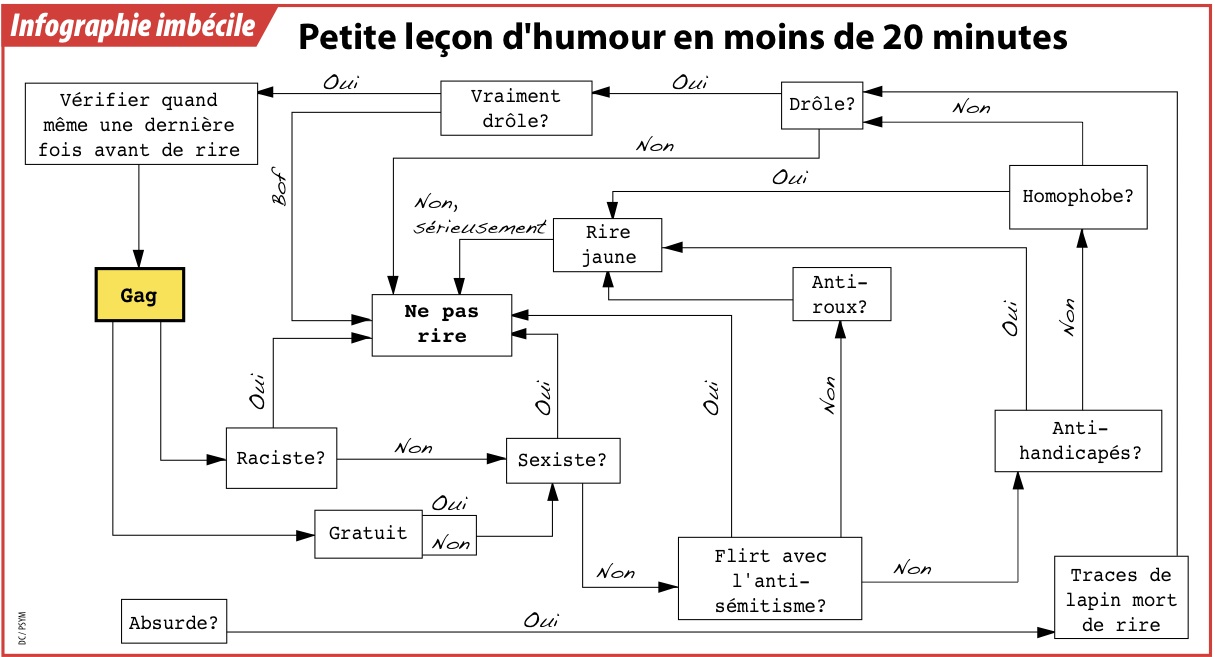
There seems to be a new infographic craze, particularly about education and social media. I had been vaguely aware of the term as an annoying pseudo-nerdy buzz word for a while, when the Swiss satirical weekly Vigousse started running an “Infographie imbécile” (Dumb Infographic) on the last page of each issue in January 2010. For instance:
Shortly after that January 2011 issue, the “Infographies imbéciles” stopped: possibly because the targeted newspapers got the message and soft-pedaled on infographics. Or maybe the editorial team of Vigousse got bored with doing them. Continue reading →
By Claude Almansi
Editor, Accessibility Issues
ETCJ Associate Administrator
Vernier is providing 30 grants to ten elementary or middle schools, ten high schools, and ten college or university departments to honor the important work science educators do every day. Each grant awardee will receive $10,000 worth of Vernier technology equipment of their choosing. (…)
The contest opens March 9, 2011, and applications are due by June 1, 2011, with winners announced by September 15, 2011 (…)
By Claude Almansi
Editor, Accessibility Issues
ETCJ Associate Administrator
In his lecture, “The Architecture of Access to Scientific Knowledge: Just How Badly We Have Messed This Up” (at CERN, Geneva, CH. April 18, 2011), Lawrence Lessig discussed YouTube’s new copyright school. (See 35:42 – 39:46 in the subtitled and transcribed video of his lecture.) The YouTube Copyright School video he showed and commented was uploaded by YouTube on March 24, 2011, then integrated into what looks like an interactive tutorial, also entitled YouTube Copyright School, with a quiz on the side.
If we receive a copyright notification for one of your videos, you’ll now be required to attend YouTube Copyright School, which involves watching a copyright tutorial and passing a quiz to show that you’ve paid attention and understood the content before uploading more content to YouTube.
YouTube has always had a policy to suspend users who have received three uncontested copyright notifications. This policy serves as a strong deterrent to copyright offenders. However, we’ve found that in some cases, a one-size-fits-all suspension rule doesn’t always lead to the right result. Consider, for example, a long-time YouTube user who received two copyright notifications four years ago but who’s uploaded thousands of legitimate videos since then without a further copyright notification. Until now, the four-year-old notifications would have stayed with the user forever despite a solid track record of good behavior, creating the risk that one new notification – possibly even a fraudulent notification – would result in the suspension of the account. We don’t think that’s reasonable. So, today we’ll begin removing copyright strikes from user’s accounts in certain limited circumstances, contingent upon the successful completion of YouTube Copyright School, as well as a solid demonstrated record of good behavior over time. Expiration of strikes is not guaranteed, and as always, YouTube may terminate an account at any time for violating our Terms of Service.
By Claude Almansi
Editor, Accessibility Issues
ETCJ Associate Administrator
On April 18, 2011, Lawrence Lessig gave a lecture entitled “The Architecture of Access to Scientific Knowledge: Just How Badly We Have Messed This Up” at CERN in Geneva, CH (see announcement). He has now uploaded the video of this lecture at youtube.com/watch?v=2me7hptVGzI, with the following description:
Lecture at CERN, Geneva, Switzerland, 18 April 2011: A new talk about open access to academic or scientific information, with a bit of commentary about YouTube Copyright School.
In view of the interest of this lecture for researchers and educators, I have started a subtitling page for it at Universal Subtitles: universalsubtitles.org/videos/jD5TB2eebD5d. If you are interested in collaborating in this subtitling, here are a few practical indications:
This special issue is not meant as a definitive sum on connectivism but rather, as Terry Anderson, editor of IRRODL, put it in his announcement on the Instructional Technology Forum mailing list:
… a challenge and request that we spend more effort into trying to understand if connectivism has approaches and delivers important insights and practical designs into the increasing networked learning context in which we function.
(Last updated 7/23/17 03:55PM) By Claude Almansi
Editor, Accessibility Issues
ETCJ Associate Administrator
[Note added 4.5.11: My apologies to Claude and our readers. I accidentally released this article a few days ago before it was ready, and in doing so I caused quite a confusion. Claude’s erudition in a wide range of fields is legend in ETCJ, and her sense of irony and humor as well as wit, combined with her passion in standing up for her beliefs, make her one of the most entertaining, enlightening, and popular writers on our staff. In asking her to expand on this piece, my intent was to make her works even more accessible to readers who may not share her level of expertise. -Editor]
Note: The first version of this text was only a brief note about the odd disappearance after a few hours of an article describing the interest the German tax authorities are taking in the affairs of the Swiss branch of IFPI (International Federation of the Phonographic Industry), more particularly in the relations between the Swiss IFPI and IPGate.
However, Jim Shimabukuro, our chief editor, rightly pointed out that this note was difficult to follow in its concision. So this is an expanded version, with more about the background of that disappeared article, and something about the educational relevance of this matter. My former title does not fit this revised version, so I have changed it; but as the draft has already been indexed by search engines, I kept its original URL.
Apologies to those of you who thought that this piece had been deleted, maybe due to pressure exerted by IFPI: I only set it on “private” while I was editing it. Thanks to Franklin Trankett who e-mailed me about possible misinterpretations of its temporary disappearance.
By Claude Almansi
Editor, Accessibility Issues
ETCJ Associate Administrator
The National Federation of the Blind is requesting the US Department of Justice to “investigate civil rights violations . . . against blind faculty and students” by New York University and Northwestern University and four school districts in Oregon.
Motive: their adoption of Google Apps for Education, a limited series of Google applications (mail, calendar, docs, spreadsheets and sites) that educational bodies can put under their domain name, and where they can control what their staff and students do, but which present serious accessibility issues for the blind. Continue reading →
Didactic Strategies and Technologies for Education Incorporating Advancements
Paolo M. Pumilia-Gnarini, Elena Favaron and Luigi Guerra Editors
A project promoted by http://lascuolachefunziona.it, with the scientific support of the Educational Technologies Research Group, Faculty of Educational Sciences, University of Bologna.
To be published by http://www.igi-global.com
By Claude Almansi
Editor, Accessibility Issues
ETCJ Associate Administrator
Note: This post arises from my personal experience with one “free” online course for teachers provided by an Italian nonprofit association. Hopefully, other similar offers are managed with more care. However, in case not all of them are, here goes, as a cautionary tale.
Didasca’s course about “Google Apps Education”
Last year, the Italian Didasca association launched its first free online course for teachers about Google Apps for Education. If you know how to use an office suite to produce content, doing so with Google Docs or its version for schools, Google Apps, is a no-brainer. However, using such collaborative online tools with minor students presents some specific issues, in particular privacy issues, which I assumed the Didasca course covered.
By Claude Almansi
Editor, Accessibility Issues
ETCJ Associate Administrator
Several mainstream media have mentioned and at times quoted from the video statement Julian Assange recorded in the UK for a rally in support of Wikileaks in Melbourne on February 4, 2011. These media reports are easily retrievable with a search engine, and here is the video, captioned in English:
This story is from Cory Doctorow’s new collection, “With a Little Help”. Visit craphound.com/walh to buy the whole audio book on CD, a paperback copy in one of 4 covers, or a super-limited hard cover.
This story, and the whole text of “With a Little Help”, are licensed under a Creative Commons Attribution, Share Alike, Non Commercial license.
Copy it, share it, remix it. As Woody Guthrie said: “This song is copyrighted in the US under a seal of copyright number 154085 for a period of 28 years, and anyone caught singing it without our permission will be a mighty good friend of ourn, because we don’t give a dern. Publish it, write it, sing it, swing to it, yodel it. We wrote it , that’s all we wanted to do.” (From the intro to all the recorded readings of the stories collected in Cory Doctorow’s “With a Little Help,” 2010)
Dandelion business model
From C. Doctorow: "Think Like a Dandelion". BoingBoing. Under a BY-NC Creative Commons License
One vexing challenge to engaging Americans in governance has been finding new models and tools for the next generation of citizen consultation. We want to take advantage of the latest technology to: 1) enable government officials to circulate notice of opportunities to participate in public consultations to members of the public with expertise on a topic; and 2) provide those citizen experts with a mechanism to provide useful, relevant, and manageable feedback to government officials.
That is why the White House Open Government Initiative and the General Services Administration, working closely with the Office of Management and Budget’s Office of Performance and Personnel Management, are today launching a public consultation (through January 7, 2011) to obtain input on a design concept for a government-wide software tool and process to elicit expert public participation. In addition to making government more open
Non scientists should refrain from using scientific concepts as metaphors. I am fully aware of this, and actually, when a sociologist or other humanistic scholar thus hijacks terms or phrases like “black hole,” “big bang,” “DNA,” etc., I skip his/her text if possible.
Nevertheless, what little I understand of how the cellulase enzyme works for ruminants has been very instrumental in my first perception of how captioning videos helps all users digest their content, and underlies what I have written here so far about captioning. Hence the decision to come out explicitly with this subjective and uninformed perception of it.
Digesting grass
Cows can digest and assimilate the grass cellulose because they ruminate it, but not only: humans could chew and re-chew grass for hours and hours, yet they would still excrete its cellulose whole without assimilating any because we lack something cows have: the cellulase enzyme that chops up the molecules of cellulose into sugar types so that they can be assimilated Continue reading →
On Dec 8, 2010, I received the following e-mail, entitled “Alert!”, at my gmail address, apparently from “GMAIL <onlineupdatealert@gmail.com>”:
Dear Email Client,
There was a failed attempt to login into your account from a blacklisted IP. Kindly login below http://www.gmail.com
It looked suspiciously phishy so I checked the source – click here to see the source.
The full header indicates that the sender might be spoofed, the chunk of code suggests a web bug that verifies that the message has been viewed, hence that the receiver’s address is valid and spammable, and the last two lines show that what appears to be the URL of the legit gmail login page actually links to a well-made duplicate: http://www.4dsystems.com.au/flashimg/gmail/signon.html. Continue reading →
‘Operation in Our Sites II’ – Out of Sight for the Blind was about the inaccessibility for the blind and for people with print disabilities, of the notices added to the sites that were seized by ICE in the last week of November: because accessibility is what I write about here, normally and because this crass violation of the very first principle of accessibility was so odd, from a US government’s agency, that it suggested a hoax or a parody.
However, make no mistakes these seizures concern us all, and particularly educators. As Hartwig Thomas pointed out in US-Attacke auf das System der Domänen-Namen (my translation):
…One consequence [of the seizures] is that average users must now learn about the concepts of IP addresses and domain names, in order to keep control of what happens with them (…).
On September 14, 2010, after Ning had postponed the deadline for shutting nonpaying networks for the umpteenth time, I wrote:
I will not write another full post about Ning until the non paying groups have been deleted, or Ning gets bought by a more efficient firm, or disappears. But I’ve opened a Ning page on the wiki of ETC Journal where I shall attempt to keep track of what happens at Ning.
And now I am writing one, even though nonpaying groups have not been deleted and no one — to my knowledge — has shown any interest in buying Ning. Motive: a discussion entitled “Deletion of Free Ning Networks?” started by Alex on September 18 in the Ning Creators network. Though it disappeared very quickly, there is a copy archived with WebCite® on the same day: http://webcitation.org/5sq785FZF.
Eric Suesz — senior community manager at Ning — participated in this discussion, stating that “All free Ning Networks are now locked and can’t be accessed.” This is simply untrue. Continue reading →
In Ning’s New Deadline for Pay-Only: Aug. 30, I quoted the announcement of the new deadline set by Ning for paying to keep a network online. It now turns out that creators of Ning networks that won’t do so cannot delete them anymore. In view of this, the following passage in the announcement of the new deadline becomes worrying:
…As a result, we have extended the deadline for selecting one of the three new plans (Ning Mini, Plus and Pro) to August 30, 2010. Beginning on this date, we will block access to any free Ning Network that isn’t subscribed to one of the three plans.
“block access” – and not “delete” – this means that after August 30, Ning will have sole access to, and use of:
the content posted in these networks
the profile data of all members of these networks, which include their e-mail addresses.
Ning announced repeatedly that it would delete free networks whose creators had not paid for one of its new pricing plans by midnight Aug. 20. On Aug. 21, however, Ning extended this deadline to August 30. Here’s the announcement of this extension on its Help page:
Deadline for Selecting a Ning Plan Extended to August 30, 2010
A number of Network Creators, particularly those based outside the United States, have requested more time to arrange for payment and make the right decision on a plan for their network. As a result, we have extended the deadline for selecting one of the three new plans (Ning Mini, Plus and Pro) to August 30, 2010. Beginning on this date, we will block access to any free Ning Network that isn’t subscribed to one of the three plans.
Please let us know if we can help, or if you have questions or comments. Thank you!
Thus, if you are the creator of a free Ning network, you can still:
Ning sent an e-mail entitled “Important news about your Ning Network” to Ning network owners on July 28, 2010, telling them about three choices that will remain available to them until August 20, 2010: Mini, Plus and Pro.
DoJ’s and DoE’s letter to college and university presidents on e-book readers
On June 29, 2010, Thomas E. Perez (Assistant Attorney General, Civil Rights Division, U.S. Department of Justice) and Russlynn Ali (Assistant Secretary for Civil Rights, U.S. Department of Education) sent a joint letter on electronic book readers:
Dear College or University President:
We write to express concern on the part of the Department of Justice and the Department of Education that colleges and universities are using electronic book readers that are not accessible to students who are blind or have low vision and to seek your help in ensuring that this emerging technology is used in classroom settings in a manner that is permissible under federal law. A serious problem with some of these devices is that they lack an accessible text-to-speech function. Requiring use of an emerging technology in a classroom environment when the technology is inaccessible to an entire population of individuals with disabilities–individuals with visual disabilities–is discrimination prohibited by the Americans with Disabilities Act of 1990 (ADA) and Section 504 of the Rehabilitation Act of 1973 (Section 504) unless those individuals are provided accommodations or modifications that permit them to receive all the educational benefits provided by the technology in an equally effective and equally integrated manner.(…)



 By Claude Almansi






 Educational Technology and Change Journal
