Greg Green Is Flippin’ in Clinton

Lynn ZimmermannBy Lynn Zimmerman
Associate Editor
Editor, Teacher Education

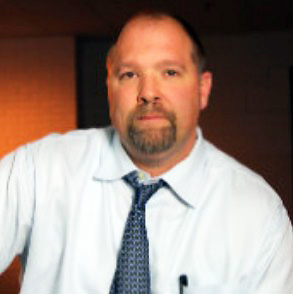
Clintondale High School near Detroit, Michigan, has instituted a different model for teaching in an effort to improve grades, increase learning, and better support students. They are using what principal Greg Green calls flipped schooling (aired on Dick Gordon’s The Story, April 16, 2012).

Students at Clintondale were struggling, not passing classes and not performing well on standardized tests. Green asked students what they thought was going on, and their reply was that they had trouble doing school work at home. They could not concentrate, or they had no one to help them if they did not understand the assignment or the concepts. In turn they were getting further and further behind.
Greg Green

Based on this information, Green decided that instruction was not aligned with how students learn. Change was needed. He and his staff re-imagined schooling so that, rather than sitting in class, listening to a lecture, and doing homework at home, students study background information on the topic at home then work on practical problems as well as ask and answer questions about the material in class. He said they use screen captures, videos, and other technology for at-home lectures. Students can look over the materials at their own pace, as often as they need to, in order to understand the concepts or to pinpoint problem areas. The next day students come to school to ask and answer questions about the materials and to solve problems in class.

Green reported that their experiment is meeting with some success. Failure rates in the courses that are using this flipped model have been cut in half. They also found that students who were in flipped math classes had a 10% gain on state standardized math tests.

The flipped school model is a good example of how technology can be used to enhance learning. Technology in this case can

  • optimize learning time
  • align with students’ learning styles and needs
  • provide opportunities for repetition as needed

When students are in class, they and their teachers can interact in the face-to-face context in meaningful and productive ways. This type of constructivist learning is effective as the student builds his/her own knowledge. They learn the content as they develop problem-solving and critical thinking skills.

In articles on the CNN Blog, Green elaborates on the benefits of flipped schooling and addresses the concerns that readers have about this model:

The ESRI Conferences: A GIS Journey Toward Citizen Science

By Bonnie Bracey Sutton

My friend Charlie Fitzpatrick and I attended a national summer workshop long ago. We were introduced to the rudiments of GIS (geographic information system). Years later, I attended one day of his conference. Charlie is now the education director for ESRI (Environmental Systems Research Institute, Inc.). The day I went  was map day. I love maps and charts and geography books and citizen science. Some of the maps were on tiles and so beautiful.

A favorite starting point with students is My Wonderful World. This site is a great place to start to learn the GIS. There is also the teacher resource page of the National Geographic.

I never attended the whole conference before this year. At the time I was taking a super computing (SC) workshop and using GIS. But I had no idea of all of  the creative and innovative ways in which it is used today. A look at ESRI is all you need to know about GIS. I could make a simple definition, but I like the ESRI definition because it is all inclusive.

This slideshow requires JavaScript.

Last summer we worked with inner city kids on several projects at the Joint Education Facilities, Inc., in Washington, DC. It is located in Southeast Washington and is the only neighborhood high performance computing center in the US. The kids came on Saturdays in the summer to learn GIS and then to complete projects in the GIS technology program. We used GIS to solve problems in the social sciences. Continue reading

Teaching Science Teachers Science

picture of Harry KellerBy Harry Keller
Editor, Science Education

All teachers must learn certain things. For example, they learn about learning theory, classroom discipline, and how to write lesson plans. In addition, they learn the material and ideas of their chosen subject area. As I read articles about science education and communicate with many science teachers, I become more convinced that our teachers colleges are not providing the necessary learning to our future science teachers.

What is this necessary learning and why is it important?

To answer this question, you must first understand what science is. Science is not a bunch of “facts,” e.g., Mercury is closest to the Sun; prophase is the first phase of mitosis; force is proportional to the rate of change of momentum; igneous rocks are formed from molten rock. Science is an approach to finding out these things, a way of thinking, of solving problems. It uses the work of previous scientists and new data to be sure. So those “facts” are part of the learning but hardly the most important part.

So-called science facts are always subject to revision, but the means by which they were extracted from nature with great difficulty remains the same. We must teach some science content in order to have material upon which to apply the developing thinking skills of our students.

Science courses inflict lots of vocabulary on students too. Some words seem familiar but are used by scientists in a very specific manner. “Work,” for example, does not take place when you’re holding a heavy weight above your head – if you’re talking about science. Work is a specific and quantitative term in science. Other words seem entirely unfamiliar and even bizarre. In physical science, “entropy” is a made-up word for a measure of disorder in things.

Science education must provide the content of science including vocabulary, an understanding of the nature of science, and development of scientific thinking skills. Anything else is superfluous in primary and secondary education. In post-secondary education of science and medical majors, there’s more, but that part is not the subject of this discussion.

Without an understanding of the nature of science, students will not be able to interpret what’s going on around them every day. You read about global warming and conflicting claims regarding it. You read about protecting species from extinction and then about how 95% of all species in the history of the Earth have gone extinct naturally. You read about an energy crisis and then about how the price of gasoline is being manipulated by Wall Street traders and that the energy situation is just fine. All of this would be just entertainment were it not for the fact that so many countries are democracies, and the people are expected to vote, to make decisions, on these issues in elections. Continue reading

UC Berkeley’s Online Education Strategy: A Model for Change

Jim ShimabukuroBy Jim Shimabukuro
Editor

In response to the explosive trend in higher ed toward open online courses (OOCs), Berkeley’s executive committee for online education published* the university’s plan for change. As a strategy, it’s an echo of similar guidelines across the country and the world. However, what distinguishes it from all the rest is intelligence. It’s obvious that the committee has done its homework and understands the deeper implications of online education.

The plan has two standout elements. The first is a flexible approach to defining “online” education:

  1. certificate and graduate degree programs that are in high demand
  2. undergraduate gateway and hybrid courses that increase available capacity and enrich learning for our on-campus students
  3. “public good” courses that we will typically offer for free to a wide audience as a community service and as a proven approach to exposing potential students to outstanding Berkeley faculty
  4. development and sale of online educational content that can be deployed by other institutions or organizations

Of these, the fourth is the breakaway, and it implies a deeper understanding of how the current flood of open online courses and platforms might play out. That is, in the coming weeks and months, the key to OOCs may be the way client institutions integrate the courses into their programs. In the end, the value of courses may be in their unbundled state rather than in their current bundled, all-in-one platforms. For example, as unbundled content, OOCs could serve course designers from institutions around the world who would pick and choose parts from different courses — from the same or different colleges — to construct unique course mashups for their students.

This mashing process is familiar to educators who have been doing it with textbooks and multimedia for years. The big difference is that they now have anytime-anywhere access to content provided by some of the top teachers in the world. Furthermore, that content is open (not the same as free) or mashable as well as recorded and available in various digital media. This content could be sold in creative packages to institutions everywhere. This OOC-based business model may be the virtual extension of publishing in the 21st century.

The second element is a vision of integration that implies, once more, a clear awareness of the process of change. Unlike the vast majority of colleges, Berkeley understands that the current practice of “bolting” online programs to traditional onground platforms is a transitional phase. The ultimate shape of viable programs is a work in progress, and no one knows for sure exactly what it will be. The one certainty, however, is that “online methods will ultimately transform our traditional teaching program and we need to begin to systematically align our administrative and support functions to meet the changing needs of online and traditional programs.”

“Systematically align” is a euphemism for change, and when applied to staff and leaders, it means to educate or to keep on top of current trends and developments from as broad and as deep a perspective as possible. In short, this isn’t a time for panic and bandwagon decisions, and this is definitely not a time to sit still, pout, or cling to tradition. At Berkeley, the leaders realize that the future is their responsibility and that it can’t be passed off to others, outside experts or entrepreneurs, or borrowed from other institutions. And a critical part of that responsibility is to think — inside and outside the box.

Pre-online models for education are no longer adequate, yet that is all we have for now. The challenge is to draw a clear distinction between the old masquerading as the new and the genuinely new, between the new as a “bolt on” to the old and the new as an entirely different model that fulfills the promise of online technology. Leadership is critical in times of tumultuous change, and at Berkeley, the leaders have stepped up.

__________
* “Principles of UC Berkeley’s Online Education Strategy,” UC Berkeley NewsCenter, 24 July 2012. (Note: This link may be temporarily broken.)

NAEP and the Future of Science Education

picture of Harry KellerBy Harry Keller
Editor, Science Education

Recently, Nora Fleming, in “NAEP Reveals Shallow Grasp of Science” (Education Week, 19 June 2012) reported on a new study regarding the 2009 NAEP (National Assessment of Educational Progress) exam for grades four, eight, and twelve. Around 2,000 students at each grade level were given three “Interactive Computer Tasks” (ICT) and one “Hands-On Task” (HOT) to perform. They were asked questions about each task.

We all know that conclusions such as “shallow grasp of science” are fraught with difficulties, especially when the results tell more about the test than the students. In this case, there are more issues. What exactly does “shallow grasp” mean in this situation? What sort of understanding is required to achieve a high result?

You can check for yourself at a website that allows you to take these tests yourself and score your answers, if you have patience with the tests. I went through the grade 8 and grade 12 materials (my work with science education focuses on grades 6-13) and did not approve of most of the content. Because it’s quite difficult to separate student ability from test quality, the results are suspect.

Because generalities won’t suffice, I’ll provide one example that shows how test results can mislead regarding understanding. This example shows how an eighth-grade student responds to the ICT, “Playground Soil.” According to the instructions,

In this 20-minute task, students investigate the permeability of soil samples from two sites a town is considering for a play area. Students use their results to help decide which site has the better water drainage and is therefore the better place for a grassy play area.

Students analyze two samples: soil sample A that is 10% clay, 50% fine gravel, and 40% silt; and soil sample B that is 10% clay, 50% sand, and 40% silt. Note that the only difference is the middle component. Diagrams illustrate the soil composition.

Students are asked to predict which soil will be more permeable. Generally speaking, the one with more voids (more space between soil grains) will be more permeable. Clearly, fine gravel has larger particles than sand. Now, do a thought experiment with me. Suppose that you increase the size of the fine gravel particles substantially. You might even have a rock in the midst of a clay-silt mixture. The permeability of this rock plus clay-silt will closely match that of clay-silt alone. Now, imagine reducing the size of the rock while keeping the volume equal to one-half of the total. Once the particle size reaches that of clay (60% clay, 40% silt), you’ll have very little permeability because mixtures that are mostly clay don’t allow much water to pass through them. Continue reading

Udacity and Implications for Higher Ed

Lynn ZimmermannBy Lynn Zimmerman
Editor, Teacher Education

On May 7, 2012, Dick Gordon aired an interview with Sebastian Thrun and David Evans called Udacity: Teaching Online, an online university that came about almost by chance. Although The Story does not air on my NPR station, thanks to modern technology, namely the iPod and podcasts, I was able to download this story and listen to it two months later.

Thrun is Google’s vice president and is recognized as a pioneer in artificial intelligence and robotics. He was a tenured professor at Stanford when his story began. Fall 2011, Thrun decided to make his graduate level AI course, normally taught in a lecture hall to about 200 students, available online for free. He wanted to try to reach a larger audience. He sent out one email announcement. Much to his surprise 160,000 students from all over the world enrolled, and 23,000 completed the course. Thrun was gratified that his experiment was so successful, that free quality education could reach anyone who wanted it.

Sebastian Thrun

During the semester, Thrun had to mend some fences with the administration at Stanford. He had made this decision on his own, and they were concerned about having the Stanford name on certificates he had promised completers. They finally compromised that completers would receive a “statement of accomplishment” from Thrun, a private individual but affiliated with Stanford. So began Udacity, which offers STEM (Science, Technology, Engineering, Mathematics) courses that students can take for free. For a fee they can take tests that certify their knowledge. Although there have been bumps along the way, Thrun says that he cannot imagine teaching any other way. William Bennet, in an interview with Thrun for CNN, “asked Thrun whether his enterprise and others like it will be the end of higher education as we know it — exclusive enclaves for a limited number of students at high tuitions? ‘I think it’s the beginning of higher education,’ Thrun replied. ‘It’s the beginning of higher education for everybody.'” Continue reading

Are Educators So Full of It That They Can No Longer Detect It?

Jim ShimabukuroBy Jim Shimabukuro
Editor

Kris W. Kimel[1] says that “higher education, once open to a select portion of the citizenry, is now increasingly available to virtually everyone, anyplace at any time and oftentimes for free.” He also says that “the rise of the innovation and information economy is also sweeping aside the traditional role and position of gatekeepers, those institutions and people who have historically controlled access to the economic playing field, professions and customers.” These are the types of observations that we’d expect from the “president and a founder of the Kentucky Science and Technology Corporation, a non-profit company with an international reputation for designing and implementing innovative and broad-scale initiatives and programs.”[2] A gem, eloquent and accurate.

But hidden under this gem, barely noticeable, is a small stone so rare that it takes your breath away. It’s a comment by someone who goes by the username Seabees1. S/he says that “a larger question relates to academic resistance exercised by countless so-called educators and education planners.” He asks:

Why so much duplication in majors [courses?] among institutions, which siphons off excellence while also wasting taxpayer dollars? Why continue old-fashioned methods of foreign language instruction when new — yes, through technology — techniques trump the status quo?

Why constant boredom in classrooms thanks to professors offering limited lifetime working experience regarding the subjects they allegedly teach?

“Perhaps,” he says, “the culprit is a combination of petty politics, internal self-preservation couched in collegiate mumbo jumbo, and declining teacher preparation by the very organizations offering education degrees. ‘Physician, heal thyself’ doesn’t apply only to medicine.”

It seems Seabees1 has the kind of crap detector that is sorely missing among the vast majority of educators and so-called experts. When those with the power to impact education rely on “collegiate mumbo jumbo” and ignore the signs of their own failure, then the outlook for change is gloomy. Continue reading

Diversity Is Too Important to Ignore in the Talk to Technologize

By Bonnie Bracey Sutton

Two Americas? Are we marginalizing people of diversity by not including them in the conversations? Research? Advisory Boards? Are we the New Invisible Man? I don’t know what it was like during slavery. I do know what it was like during the days of segregation that were a big part of my life. We were an invisible part of the society. We had to follow all the rules, but we were like Ralph Ellison’s Invisible Man.

Now I think there is integration, but I think people in the U.S. live in two worlds, and if the world that they live in is good, they don’t include those from the other world who need to be a part of the ongoing conversation to make the whole continue to work. Most of the reports that we receive in journals and at conferences are well written and researched. However, very little involves those people who are not connected, whose schools are not the best, and whose teachers are not a part of the conversations. I am not talking about the media mavens with one minute pronouncements that dot our television stations. I am talking about the thought changers and the people who guide new ways of thinking, learning, politics, and all. A sustained exposure of diversity issues is critical because technology takes a longer time to dribble down than those twenty year old books that used to come to my community.

I am a member of ISTE. This year’s conference was great, like a moving train. I know how to negotiate it, network. I try to select the ideas that I am interested in and to see the rock stars of education. I notice that there are not that many people of diversity in the mix. A token or two. I watch the crowds to see who of broadening engagement is a part of our groups. Not many. I think ISTE is not making it happen because many people cannot afford the costs of the conference, membership, and travel.

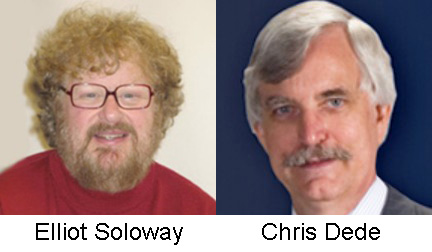
ISTE is no longer a teacher organization per se. It has changed. You can get updated on the latest technology, see this year’s trends, and meet and greet people. One highlight for me this year was to see that Elliot Soloway and Chris Dede‘s ideas of mobile technology have taken off. And then I thought of this article from MindShift. No one was talking about the lack of broadband or permissions to use technology in the schools or the way to negotiate that move. Digital equity seems to have died a quiet death. We did have an SIGDE workshop in the conference. Maybe it is our fault  we have no sponsors. I suppose that lets us know that we are not a real part of the mix. Or does it mean something else? Continue reading

Year-Round Schooling for the 21st Century: We Can’t Afford to Waste Summers

Frank B. WithrowBy Frank B. Withrow

At this time of year I always wonder at our slavish adherence to an agrarian schedule for schools. Million dollar plants are closed for the summer. Well, not completely. We often have the athletic departments active with team sports.

Staff, from teachers to principals, find summer jobs. I once had a principal who had a summer company to paint houses. He hired his male teachers, and they had a good business. Some of his teachers made more on their summer jobs than they did teaching.

We know that students lose much of what they have learned during this down time and that much of the first two months of the fall semester is spent relearning what they have lost.

If Walmart and others can serve their customers 24 hours a day year round, why do schools continue to tie themselves into a rigid and ill-conceived obsolete schedule?

What if we had a year-round, open schedule school system designed for modern families? For example, the schedule follows the family’s schedule. The students are in school from 8 to 5 each day or from 10 to 6 or even assigned as it fits their individual learning plan (ILP). The school is open from 7 in the morning to 7 in the evening. Students are assigned based upon their ILPs. Teaching staff schedules are also flexible in order to cover the entire day.

In this projected school system, there are traditional classes as well as virtual learning at home and at school through social media. All year long students engage in special learning experiences built around project based learning where learners, working in teams, experiment with such things as actually constructing a robot to serve disabled individuals.

Continue reading

The UVA Controversy: Change as a Moving Target

Jim ShimabukuroBy Jim Shimabukuro
Editor

It’s hard to disagree with John Eger’s[1] take on the significance of the UVA president’s resignation and reinstatement. The message is change — or else. But this is precisely the problem — a definition of change that everyone agrees with is nice, but is it useful?

In my mind, change, per se, is not the issue. In fact, every leader in higher ed has embraced change via technology. Teresa Sullivan is no exception. However, in her case, the pace of change at the University of Virginia[2] seems to have been the thorn.

Still, in Sullivan’s case, I’m not sure if speeding up the incremental pace would produce the kind of change that edX and Coursera represent. These MIT/Harvard and Stanford MOOCs (massive open online courses) have apparently set a new standard for change that is a radical departure from the incremental. The incremental model is appealing because it seems to satisfy the majority of professors[3]. Those who want to change while maintaining business as usual can have their cake and eat it, too. They can go blended, which is another way of saying that they can change without really having to change. They can continue to base their instruction in F2F (face-to-face) pedagogy and satisfy the demand for change by adding bits and pieces of the latest rage in technology. Post your syllabus and course schedule online, add a whiteboard to your F2F lectures, replace a percentage of your lectures with online activities, allow students to contact you via email — and, presto, you’ve changed.

But the question remains: Is this enough, and, perhaps more importantly, what exactly is “enough”?

Do we attain “enough” by placing a greater percentage of course work online? Adding more whiteboards? iPads? Clickers? Incorporating mobile devices into the instructional mix? Using more social media such as blogs, Facebook, Twitter? Expanding learning and teaching media to include teacher- and student-generated videos?

Herein lies the problem. No. All of these and more of it — even at a faster pace — doesn’t move us any closer to enough. Classrooms overflowing with the latest gadgets and online activities can come close, but they can never be enough. Change demands something more. Continue reading

How Anti-Evolution Helps to Define Science

picture of Harry KellerBy Harry Keller
Editor, Science Education

For nearly 150 years since Darwin first published The Origin of Species in 1859, the controversy has continued. Despite mountains of evidence collected from many branches of science, some still fight vigorously against teaching evolution in our school science classes.

I maintain that those fighting against this teaching are harming our society but may just be helping out science education. I refer here to what’s happening in the United States, which seems to be the country most affected by this controversy as well as being the one in which I live.

Answering why the anti-evolution forces are harming our society and how they might end up helping improve science education requires some digging. Society depends on technology to support our standard of living and on the creation of new technologies for export to fund our ability to buy technology. More and more of these technologies are biological in nature. Research into biology and medicine moves forward best when we understand the underlying principles of life. A framework upon which to set ideas and to imagine new ideas helps immensely in both research and development of new technologies and new products.

If you study well the advances in biology and medicine in recent decades, you will see that the concepts inherent in evolution have played an important role. If our students leave school without this important framework, then they are ill-prepared to participate in the advancement of science. If, even worse, they leave school opposing science and its precepts, then they may work to retard scientific advances. Evolution, as a concept and framework, has become the underpinning, tying together previously disparate aspects in all of our life sciences.

Right now, the world is on the verge of eradicating polio. One of three strains has already been destroyed, and only a few countries still harbor reservoirs of the remaining two and possibly only one. While this effort has been largely one of vaccinating everyone, development of new vaccines rests on medical research that depends on understanding how life works. Evolution is a crucial component. The speed with which we find cures for cancer, Alzheimer’s disease, and Parkinson’s disease are likely to depend on scientists who use evolutionary theory in their work.

Continue reading

Learning and Teaching in the 21st Century: The Potential for Social Media Such as Facebook

Frank B. WithrowBy Frank B. Withrow

In ancient times young people were trained in apprenticeships. A few were lucky enough to sit at the feet of great scholars. For the most part young people learned by imitating skilled seniors. Only a few scholars and scribes were literate. Great events were often recorded in paintings by master artist and carried forth by storytellers and ballad singers.

The invention of the printing press slowly changed society. Books and libraries became storehouses of history, science and mathematics. Eventually textbooks gave rise to schools, as we know them today. Historical events were recorded in print, and it became essential that people become literate. In the 1850s there was an argument as to whether textbooks for learners should include pictures and illustrations. Books allowed the master scholars, scientists and historians to store and distribute their wisdom and knowledge.

Until about five thousand years ago society used a strictly oral-aural system of communications. Once writing became available, mankind could store information and knowledge over time and space. Ideas that were printed could travel over land from one place to the next. Printed materials could be handed down one generation to the next. The users had to be literate in the language used. Literacy became the doorway to self-learning.

Mankind took a major step forward when we learned to transcribe speech and language into a stable code called writing. When the printing press was invented new ideas of schooling were possible. A mediator, that is, teachers, could transfer the writings of scholars to the masses. No longer did the learner need to be in the presence of the master scholar.

Today, technology allows us to go far beyond the printed word. Digitization of information is as significant a change as the printing press. We are at a major shift because we have the ability to bring live living color and enhanced graphics to any learning event. If our students are learning about John Glenn’s first space flight (20 Feb. 1962), they can see the actual footage of his orbits. Moreover they can see and hear him talk about the event and what he thinks it meant to the world. In fact, with social media we have the potential to create a Facebook page where he answers learners’ questions. Technology through social media allows us to practice team learning. Through social media, team members can be in the same classroom or even in different countries around the world.

Continue reading

Shaking It Up, Part 3 — A Conversation with John Sener, Author of ‘The Seven Futures of American Education’

Judith McDanielBy Judith McDaniel
Editor, Web-based Course Design

[Note: This is the last in a three-part series by Judith McDaniel. Read part 1 and part 2. – Editor]

If we define learning as content delivery, much that we now “know” about education follows from that premise. Freire calls it the “banking” method of education where the instructor deposits knowledge in the head of the willing “learner.” When that is what it means to learn, what could be wrong with standardized tests that measure content knowledge? If the transfer of knowledge is what it means to learn, then WHAT is transmitted takes on importance and HOW it is transmitted can be fairly standardized. This basically describes education today.

But if the cyberization of knowledge has produced “an unknowable body of knowledge,” how can anyone maintain that learning is about content, about knowing what has been known in the past? Not that we don’t need to know history and government and science and math, but that we need to know them differently?

I asked Sener, “If learning is NOT about content delivery/transfer/absorption, how should we define it?”

Continue reading

Shaking It Up, Part 2 — A Conversation with John Sener, Author of ‘The Seven Futures of American Education’

Judith McDanielBy Judith McDaniel
Editor, Web-based Course Design

[Note: This is the second in a three-part series by Judith McDaniel. Read part 1 and part 3. – Editor]

I asked Sener, “How can we improve education, using all of the knowledge and resources available to us?” In Seven Futures, he provides data indicating “that at least 70 percent of American jobs now require specialized skills and knowledge, and that students need education that will help prepare them for jobs which haven’t even been invented yet” (29). It seems obvious to me that our entire educational system needs a jump start and that teachers trained in the old methods of teaching the old knowledge don’t have any chance at all of meeting that challenge.

Imagine what teaching today’s students for tomorrow’s needs might entail — “Realigning Education with Redefined Knowledge.” Simply put, old knowledge isn’t enough. What we know is changing, changing quickly, and it’s not just the sciences. Yes, the number and definition of the planets has changed, but so has every branch of knowledge. I talked with a discouraged college student who recently graduated from a prestigious university in journalism. His last course in college had consisted of an advanced journalism class that exclusively included information on working in print media. The professor was a woman in mid career who seemed not to know that these students had a very small chance of working on a newspaper or magazine.  They were not even being prepared for the careers that have been invented in information production on the internet. Continue reading

Shaking It Up, Part 1 — A Conversation with John Sener, Author of ‘The Seven Futures of American Education’

Judith McDanielBy Judith McDaniel
Editor, Web-based Course Design

[Note: This is the first in a three-part series by Judith McDaniel. Read part 2 and part 3. – Editor]

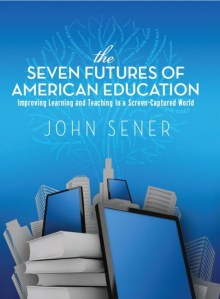
So much about John Sener’s new book, The Seven Futures of American Education: Improving Learning and Teaching in a Screen-Captured World (CreateSpace, 21 March 2012), strikes me as right on and important that my first impulse is akin to wanting to take education by its figurative neck and shake it. He says things I have thought or intuited for years — and he says some things I need to argue with. He says things that educators and parents and well-intentioned politicians need to hear. Capturing the arguments of the book in one short conversation was not possible so I asked him three basic questions:

  1. In a world of surplus information, a surfeit of easily accessed data and analysis, is there anything at all that “everyone” needs to know?
  2. How can we improve education, using all of the knowledge and resources available to us?
  3. If learning is NOT about content delivery/transfer/absorption, how should we define it?

When I was in graduate school (long before the internet), I remember being impressed when I read in one of John Keats’s letters that he was going to spend his summer rereading all of Greek literature. He was going to read it in Greek, of course, but that wasn’t what impressed me. What astonished me was that the amount of Greek literature was so small, only 100+ years before, that anyone could read it all in a summer. My job as a Ph.D. student was to read and read and read and then to select an area or two that I would focus on. In that general area, say Victorian literature, I would again select a smaller area that I would become an “expert” in.

Graduate school hasn’t changed that much since I was there; students in literature are still required to read the classics. There is a sense that “core knowledge” is important and every graduate student in literature needs to have read certain texts which we then have in common. Those texts become the basis for scholarly conversations.

Continue reading

Social Media Is a Minefield for Educators

Lynn ZimmermannBy Lynn Zimmerman
Editor, Teacher Education

Friend Your Students? New York City Schools Say No“* focuses on the new social media policy put in place by the New York City Department of Education. The policy, which establishes guidelines for teacher use of social media, allows educators to use it to enhance their students’ educational experiences and to be more accessible to them. However, this policy and others like it raise concerns about the potential for social media to blur boundaries that should not be crossed in teacher-student interactions.

As I was reading this article, I found a link to another All Things Considered post related to a new technology segment that began in May 2012. It is a social media advice column, and the plan is for pros to answer listeners’ questions. This in itself is a 21st century approach to advice columns. Listeners can email their questions or post them to the site’s blog.

The first column addresses the question Should You Friend Your Boss on Facebook?, and two experts on social media offer their opinions. One issue is that social media uses a different meaning for the word “friend” and the types of boundaries that word implies. In a workplace relationship, you may ask yourself, “Are there items that I would normally share with a friend that I really don’t want the boss to see or know about?” One expert suggests putting the boss in the “safe zone” to create specific boundaries for your social network. In that way you still come across as a team player without opening up your personal life in a way that may be uncomfortable for you.

However, one cannot ignore that there are power issues inherent in any boss-employee relationship. Depending on the situation, some of your actions can be misinterpreted or used against you. Linking to a competitor’s website, for instance, may be interpreted as a lack of company loyalty or as possible interest in moving on. If the boss links to a site that lists donations and learns that you haven’t donated, how will s/he interpret it? What happens if the boss finds that you have linked to a site with political views that he opposes? In my opinion, this issue is a minefield, better to be avoided.

Continue reading

After the Flip — The Skip and the Leap?

Jim ShimabukuroBy Jim Shimabukuro
Editor

Why all the flap over the flip? On the surface, it seems nothing more than an ancient idea resuscitated by a hip metaphor. Ever since the first school bell rang, this has been the model for many disciplines, especially the ones that emphasize performance. Study, practice, and learn at home, alone; perform under the teacher’s watchful eye in the classroom. In other words, students prepare at home and demonstrate what they’ve learned in the classroom. Teachers use their performance to identify shortcomings and devote class time to coaching, guiding, and shaping.

However, as long as the paper medium held sway, the flip remained a good idea that was simply too cumbersome and labor intensive for both teachers and students. Back then as now, the medium is the message. Teachers could do little more than assign readings in outdated and often irrelevant textbooks, and if they made the time to compose and photocopy instructions and information, they soon learned that the effort to prepare handouts is extremely labor intensive. They could leave additional learning resources at the school library, but the number of copies available and the library hours made this alternative impractical for students.

The flip, sad to say, was mere lip until the arrival of smartphones, those bright little appendages that students reconnect as soon as they leave the classroom. Sit outside a classroom building when students, en masse, are emerging or entering. You’ll quickly notice the choreography: those entering are reluctantly shutting down and stowing their cellphones, waiting until the threshold before doing so, and those emerging are reaching into their pockets and bags for their cells, reconnecting with the world and reviving their lifelines.

We’ve passed the point, I think, where the classroom is the hub of learning. The hub is moving ever outward, and this transition has enormous implications for schools and colleges. One is that the classroom is quickly becoming a place for restricting rather than facilitating the information flow that’s vital to learning. And another is the flip. With smart phones and the web, a good idea is now sustainable best practice.

In two Illinois schools, Pekin Community High School and Havana High School, enlightened educators are head over heels for the flip, and at the forefront is Havana School District 126 Superintendent Mark Twomey. Hat’s off to Twomey, a leader for the 21st century who demonstrates that imagination, creativity, guts, and plain old-fashioned common sense can do far more than dollars when it comes to using the latest technology to improve learning. The formula is a simple one: Use the tools that are becoming readily available and accessible to leverage a practice that makes sense.

Continue reading

Taking Aim at a President: Technology vs. Traditional Practices in Liberal Arts Colleges

Jim ShimabukuroBy Jim Shimabukuro
Editor

Midway through 2012, I can’t help but feel that the toughest job in higher education is that of president. With stakes so high and change so rampant, chaotic, and divisive, it must be close to impossible to please everyone. Thus, those who take on the challenge and actually thrive have become masters at tiptoeing around the edges of controversy. Perhaps the most active sinkhole on college campuses is technology, where presidents are damned if they do and damned if they don’t. Thus, I take little pleasure in spotlighting Adam F. Falk, president of Williams, for a presentation* at a recent conference, defending the traditional practices that have defined liberal arts colleges against the onslaught of the latest technology. However, I feel that the issues are important and that discussing them openly, even if it’s in the context of an outstanding educational leader, is necessary.

Falk defines the core values of a liberal arts education as a learning environment

  • that is “personal, intimate, collaborative”
  • in which students “will know the faculty and their fellow students, and the community will know them”
  • “that will prepare them best to be purposeful in their lives and effective in the world”
  • in which “education is still as much about human interaction as about delivering content”

He says “that the great potential of the new technologies is not to upend these core values, but to allow us to fulfill our existing educational mission more effectively, especially by giving us new strategies to transcend our limitations of scale and location.” He cites distance education in particular, which, “if thoughtfully deployed, [extends] our curricula into areas not covered by our relatively small faculties.”

Continue reading

National Education Initiatives Are Destroying Teacher Morale

Education is sometimes such a dance. There are so many ingredients that affect what we do and so many groups that influence it. A small child (a friend’s child) in Africa told his mother that he did not need to go to school any more. I laughed. My brother made the same pronouncement years earlier.

Jack Taub used to say that what we consider time out is exactly what we do in school. We sit them in a corner and don’t let them talk. Technology and well trained teaching professionals change that. But everyone is not ready for change. What is sad is that there are so many layers of bureaucracy between teachers and the latest technology and innovative practices. Not quite like slavery, but there are many overlapping levels of management.

The first several years of teaching can drive a person mad. There is never enough time, enough ways to get the job done, and it is a grueling task. Then one day, one day, you get it, and you feel like the teacher you wanted to be.

I loved learning from Project Tomorrow what I had discovered in my early years of technology use. There were two projects that led me to understand the value of technology in learning. One was the National Geographic, which offered a series of science projects for kids. So exciting.

It was science right on, a different kind of citizen science at the elementary level. It was called Kids Network. We had a PI in various areas, and we reported data to the group. We were placed in teams, some national and a couple international.

The project was about water or trash or pets or soil, but what really happened was that the learning became joyous because we were using math and science in a research way, and we plotted graphs and shared our sense of the place that we were in. But we also communicated with groups from various places in the world. Every child wanted to be a part of it. The other thing is that I was moved from the center of the room to the role of facilitator. I was the mailman — that was because we only had one printer. The folders of letters and information were so important to the children. Children who told me that they hated to write were sharing ideas and information with people from all around the US and the world. I had such joy in watching them share their information on a personal level. The learning was not incidental. We used math tools, graphs and pictographs, and we understood them well. We learned to use maps and charts. We were citizen scientists.

Continue reading

Death of Plagiarism in the 21st Century

Jim ShimabukuroBy Jim Shimabukuro
Editor

Michelle Fabio, in “Has the Internet Increased Plagiarism in Schools?” (Legal Zoom, May 2012), presents a useful distinction between plagiarism and copyright infringement. She also asks if plagiarism is illegal and answers yes, that is, “When the act of plagiarism is also copyright infringement.” The question of whether plagiarizing should be considered illegal is interesting. Most colleges and schools have policies on failure to credit sources, and these provide varying degrees of sanction. However, these regulations don’t have the weight of state and federal laws, and ethics rather than legality is the primary issue. An interesting topic, but perhaps for a later time.

For now, my interest is not in whether the internet increases plagiarism but, rather, how we can use technology to eliminate it. Fabio mentions online services such as The Plagiarism Checker and Turnitin. Teachers and students copy and paste suspected text in the site checker and receive reports on portions that may have been plagiarized. However, a far simpler and cost effective method is to do as Lynn Zimmerman, ETCJ associate editor, suggests: paste a suspected text string, in quotes, in a search engine such as Google. If there are hits in the works of other authors, then the text may have been plagiarized.

Teachers read literally hundreds of student papers a year, and after a few years, they develop a sixth sense for deviations from typical student prose. I’ve been teaching college composition for decades, and for me it’s like stepping into a suddenly cold spot in a shallow stream or a suddenly dark section of a forest. The change is abrupt, startling. It’s often a change in style, from the colloquial of students to the formality of professionals. It’s the use of vocabulary that sticks out like an island in an endless sea. It’s the appearance of complex sentence patterns in a field of simple and compound sentences. It’s the ray of logic in an otherwise cloudy sky. It’s a lack of transition from one thought to another, like missing planks in a dilapidated rope bridge. It’s a gut feeling based on the expected and unexpected. In short, a teacher can sense whether text has been plagiarized.

Continue reading

Education for All Children: An Imperative for the 21st Century

Frank B. WithrowBy Frank B. Withrow

In the USA every child is entitled to a free and appropriate education regardless of ethnic background, disabling condition, or socioeconomic level. In the last part of the 20th Century, federal legislation ensured that all disabled children had a right to a free and appropriate public education. The contributions of disabled people in America have been tremendous. From Thomas Edison, Franklin Roosevelt, and Stephen Hawking to Ray Charles, Stevie Wonder, and Helen Keller, disabled people have enriched our society. Deaf people, blind people, cerebral palsied people, and mentally challenged people have made our lives better though their accomplishments.

Many of these young people have done well in regular classrooms with average learners. Others have had to have special programs and may from time to time be in separate classes or even individual tutoring. Learning comes through our sensory input, especially our sight and hearing. However the human mind is a marvelous thing that can compensate for distortions in our sensory inputs. Think with me for a moment about how we might reach a deaf blind infant. True, there are cochlear implants that might give the child a form of hearing. There have been experiments with ocular implants, but these have not been practical to date. How then will a deaf blind infant know his or her world? They must know their world primarily through the sense of touch, taste, and smell. Unlike sight and hearing, these three are near senses.

Continue reading

‘Academically Adrift’ Redux: The Memes Have Spoken

John SenerBy John Sener

As everyone knows, college has become less demanding, students don’t learn much in college, and students spend much less time studying in college than they used to. At least that’s what most everyone thinks they know — thanks to the unfortunate residue of the study Academically Adrift, whose legacy has endured long after the storm of attention and controversy which accompanied its initial publication in early 2011 has faded.

An article by New York Times columnist David Brooks about this “landmark study” is our latest reminder of what happens when important opinion makers trade in the currency of catchy memes as received truth. As Brooks asserts in his recent NYT article (based on Academically Adrift’s findings, e.g., p.69):

Colleges today are certainly less demanding. In 1961, students spent an average of 24 hours a week studying. Today’s students spend a little more than half that time…

“Certainly”?? It’s understandable that informed laymen such as Brooks equate time spent studying with level of intellectual demand, since professional educational organizations such as ASCD do the same — but that doesn’t make it any less specious.

The real problem is that the destructive memes which Academically Adrift has spawned are based on a seriously outdated perspective about what constitutes a “demanding” college education. For starters, nothing says “welcome to the 20th century” quite like equating rigor or effectiveness with time spent studying. In almost any other endeavor, spending less time to accomplish a task would be called “improved productivity.” Back when students spent an average of 24 hours a week studying, a lot of that “study time” involved sifting through card catalogs, browsing book stacks, writing papers by hand or on typewriters, and doing many other tasks which can be done much more efficiently now via other means. But instead of giving higher education any credit for this, critics both inside and outside higher education persist in treating the act of studying as if it were analogous to punching a time clock. Study time is work; socializing time is play and doesn’t count, which is not surprising since Academically Adrift reflects an almost total lack of regard for the value of student time, and the notion of optimizing student time is nowhere to be found in its memes.

Continue reading

The Quest for Badging: My Experiences at TCC 2012

By Jessica Knott
Associate Editor
Editor, Twitter

Thanks to the generosity of Bert Kimura of the University of Hawaii at Manoa, I was able to sit in on the 2012 Technology, Colleges and Community Worldwide Online Conference (TCC).  This was not my first online conference, but it was the first I’ve encountered that incorporated a badging system so intrinsically into its programming.

Badges are by no means new to conference programming, though different environments lend themselves to different applications. For example, the first thing I do at Educause events is find the ribbon table and procure a “runs with scissors” ribbon for my badge.  In some ways, I find this ribbon more important than the one labeling me as a presenter, as it gives those I meet an insight into who I am. Active in social media? Yes. Blogger? Yes. Instructional designer? Yes. The one in any given presentation most likely to say something a little crazy? Maybe. At Educause, badges are used as conversation starters, or ways to connect with those you meet to build richer dialogues and perhaps expand your personal learning network.

Continue reading

Mahalo TCC 2012: I Have a New Badge Backpack!

By Stefanie Panke
Editor, Social Software in Education

The Technology, Colleges and Community Worldwide Online Conference is an annual professional development event organized by the University of Hawaii at Manoa. The online conference invites faculty, staff, administrators and students worldwide to share their expertise and engage in discussions about innovative practices in the use of educational technology.

I was invited to attend and review this year’s event on behalf of ETC Journal. TCC 2012 took place from April 17-19. Over 500 participants gathered online for three days of online presentations and discussions. The conference schedule featured 2 keynotes, 50 general presentations, 40 student presentation and 7 peer-reviewed contributions in two parallel tracks.

Though many sessions were outside my time zone, I enjoyed several inspiring talks and was particularly impressed by the conference organization’s innovative technology use. “We are pilot testing ‘badgification’ in this year’s conference,” explained conference organizer Bert Kimura. Continue reading

iFacilitate 2012 Online Workshop: Final Three Weeks

Jim ShimabukuroBy Jim Shimabukuro
Editor

(Note: This is the second of two reports on the iFacilitate 2012 online workshop. I participated as a student and opted for the certificate option to make sure that I stayed the course. I created a temporary blog for the coursework, and the excerpts below link to posts in that blog. Click here to see the first report. -js)

The five-week workshop ended last Thursday. It was an exhausting yet exhilarating experience. Greg Walker and his team put together an event that challenged and inspired all of us to address key issues in online teaching and learning with an emphasis on facilitating discussions. As expected, I emerged from the experience with far more questions than answers, and I’ll be addressing some of these in future ETCJ articles. One that remains sticky for me concerns lurking.

The common wisdom is that the ratio for active participants to lurkers is 1 to 10, i.e., only 10 percent of participants actively engage in posting and commenting in online forums. This means that the vast majority, 90 percent, lurk. Is this simply a given, a natural phenomenon that can’t be changed? If yes, then why do we expend so much energy trying to get all our students to become active participants? It seems we’re swimming against a current with no expectation of success.

If, however, lurking is a problem, then what are the implications when educators themselves are lurkers?

Continue reading