



By Jim Shimabukuro
Editor
Introduction: The following is an edited transcript of a YouTube podcast, “Surfing the AI Wave: Gabriel Yanagihara on AI Innovation in Education,” by Adam Todd of Classroom Dynamics on 13 April 2026. -js
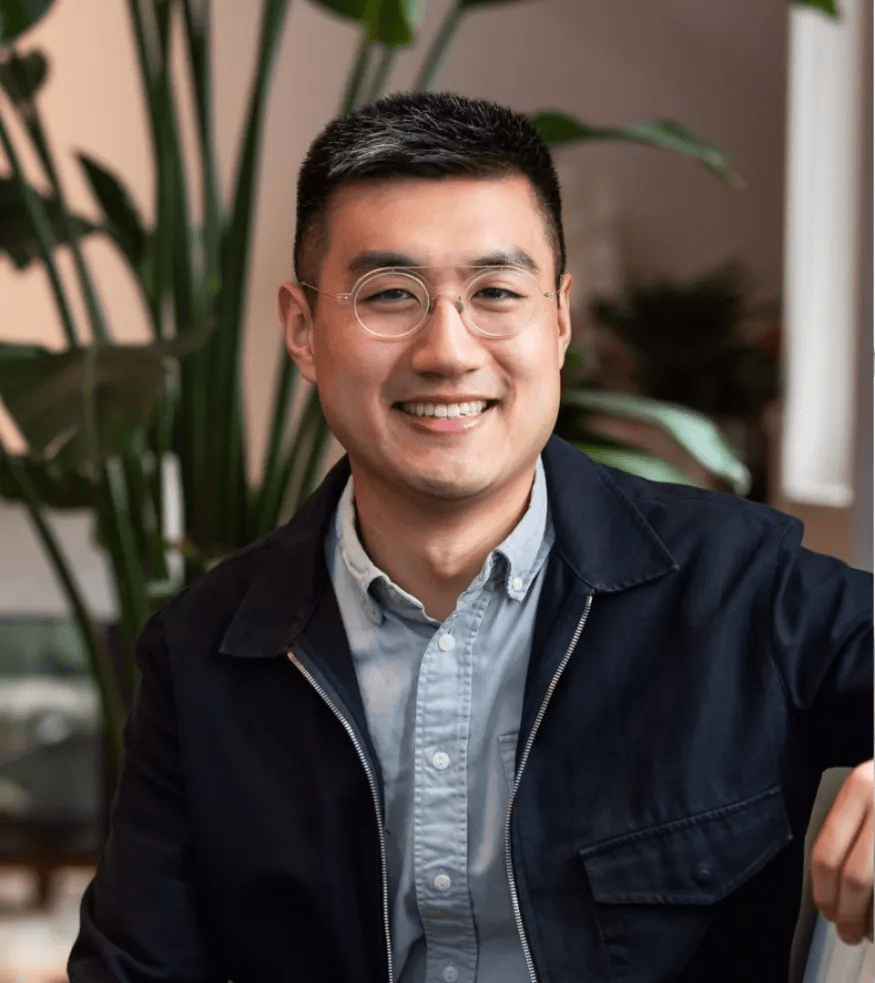
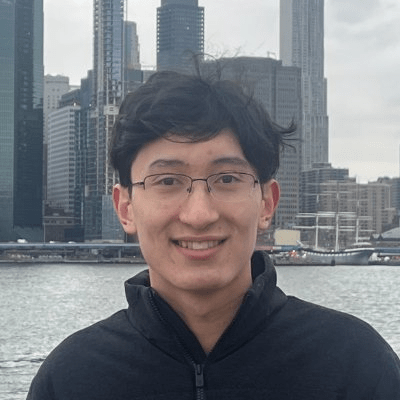
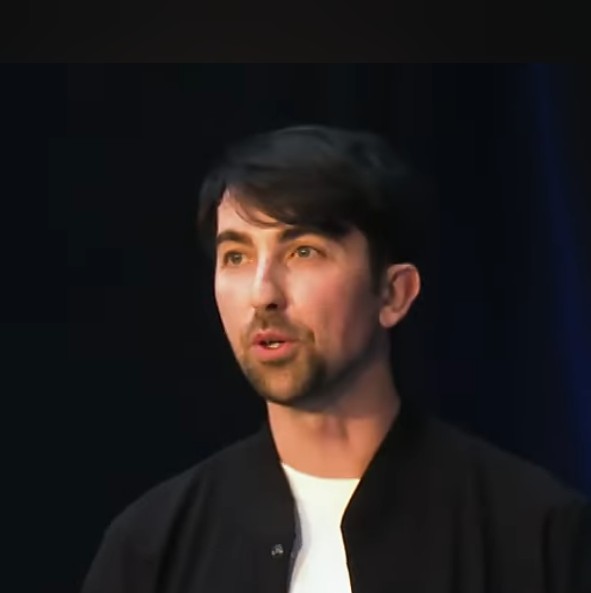
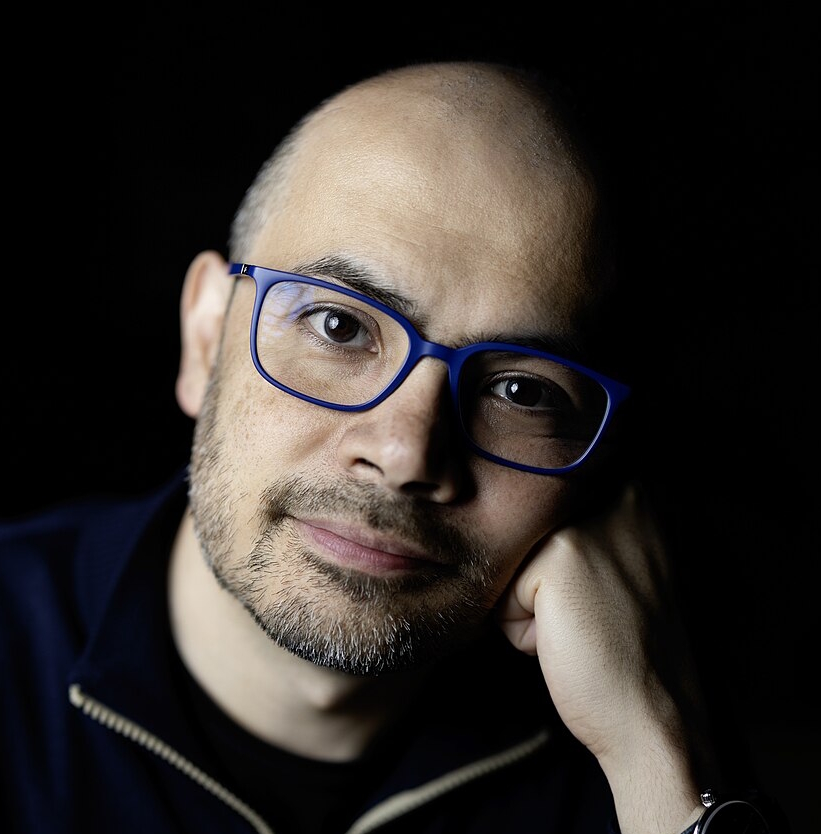
Adam Todd: Welcome to Classroom Dynamics,1 the podcast where we unlock the future of education. Hi everybody, I’m your host, Adam Todd. Today we’re heading to Hawai‘i to meet a true changemaker, Gabriel Yanagahara. From the classrooms in Honolulu to statewide workshops impacting thousands of educators, Gabriel is leading a grassroots AI movement in community, creativity, and culture. He’s not just teaching artificial intelligence. He’s empowering students and teachers to shape it. With over 2500 educators trained in programs reaching millions, his work blends cutting edge tech with local relevance and ethical responsibility. Now, I recently met Gabriel at South by Southwest in Austin, Texas,2 after attending his session on AI and I immediately had to have him on this very podcast talking about it at the Logitech Logic Work Lounge.

Today, Gabriel is back to keep the discussion that we started back in Austin going. While the world debates how to implement AI, Hawai‘i is quietly building a model that works. And Gabriel, well, he’s at the center of all of it. Today, my guest today says that to prepare his students for the workforce, he had to become the future workforce. To discuss AI innovation and all the pros and cons that come with it is my special guest today, Hawai‘i based AI educator Gabriel Yanagahara. Welcome back to Classroom Dynamics.
Gabriel Yanagihara: It’s so good to be back. I’m so excited to connect with you again. We’re going to have a great conversation.
Todd: Yeah. you joined me on classroom dynamics the day after your presentation at South by Southwest edu in Austin, Texas and we had such a great conversation but I think if you remember it was quite loud. It was very packed at the Logi Work Lounge and I think we could have talked about AI in the classroom probably for hours at that point. Uh we we had to stop because it was there was a lot of background noise. Uh I think we had glass breaking at the bar, we had pool tables going, music, we had sirens. I mean you name it, we had it. So, I’m actually glad that you’re back today for your own little episode where we can in a quiet environment have a really great conversation.
Yanagihara: Yeah, this is great. The the sound quality here is way way better. Uh but the energy will be just as fun.
Todd: So, let’s just look back for a second. What was your experience with Southby this year?
Yanagihara: Oh, it was such a cool experience. I This is my first time going by South by Southwest. I wasn’t even really going to present to it, but a couple of my mentors, Summer Kim, Alexi, they had all told me about it and said, “Hey, you’re doing some really cool stuff. Like, just put in a proposal. like what’s the worst they’re going to do? Just cripplingly, you know, turn you down? I’m like, “Okay, fine. We’ll try it.” Turns out it got accepted. We have a nice little story out here in Hawai‘i about how we’ve been learning AI tools from day one and how that early head start really helped us get things going. And it was really cool going to South by Southwest and having everyone be really excited to hear about what Hawai‘i is doing in AI.
Todd: You really are doing a lot of stuff. And before we go forward to talk about all that great, cool, awesome stuff, let’s go back in time for a moment. You were born and raised on Maui. Tell our listeners how your childhood and all those experiences growing up in Hawai‘i shaped your perspective on not just education but community and of course the way that you now approach technology today.
Yanagihara: It’s funny because this is this is definitely going to date me a little bit. So I was born on Maui. My I was born in the backyard of my family’s plantation style house like maybe 100 yards from the beach. You know, vegetarian parents kind of like a little bit of a hippie vibe thing. But technology for me, and this is going to date me, the dialup internet got introduced to Maui was I don’t know if your listeners have seen Moana and she’s talking about like the horizon is there and like that was the end of the world for us, right? Like seeing the end edge of the horizon, just the ocean as far as you can go and then someone plugs in a phone line and then suddenly you have access to the entire breadth of human existence and and experiences and everything. So that being able to connect from one of the most uh most remote islands in the world to the rest of the world pretty much grounded me in technology being a force for connectivity, a force for good, a force for growth and that we can overcome any of the challenges that it can have you know as a community as we all work together on it. So that was a really cool like starting experience and since then I’ve ridden that AI wave and tech wave and you know every new tech that comes out I’ll be hopping on to experiment and play with it.
Todd: So, as a as a younger person compared to now with dialup in that that time frame, like really what was your first like wow moment with that?
Yanagihara: The wow moment for me was like the the original message boards, the original like early me chat rooms. We didn’t really have a a lot of like internet safety like we do now. But being able to know that, wow, there are people all over the world having shared lived experiences, figuring out this technology together. This was happening everywhere. So being in Hawai‘i when I had this perspective of well we’re in Hawai‘i we’re going to get this technology 10 years later after everyone we’re going to be last you know all 50 of all the states we’re going to be last ones to adopt it. That that experience of being like wow I’m learning this at the same time as someone in New York City is was mind-blowing to me and that that kind of followed me throughout the rest of my career.
Todd: It really shortens the miles doesn’t it?
Yanagihara: It shortens them up. Like you and I are having a conversation now and I know we take it for granted now with Zooms and meets and podcasts and everything, but like this just the connectivity that we have across our entire, you know, species is just amazing to me.
Todd: So you’ve built this incredible AI program at the ‘Iolani School. How did this all begin? What were those first steps that you took to bring AI into your classroom and then eventually obviously expand to what you’ve been able to do now at your school?
Yanagihara: I think one of the the biggest takeaways from all of this is that I had very little to actually do with the actual adoption across our schools and who got this started. It was and this is what I tell a lot of people is that the the success stories are in your hallways already. There are teachers using this stuff, experimenting with it. I think what happened in the very beginning for our school that helped kind of kick things off is our head of school at the time, Dr. Cottrell,3 introduced this very early on that said, “Hey, this is the new AI tool that’s come out. It’s called ChatGPT. Play with it. We are not going to ban it. We’re not even going to block it. We’re going to have if you as a teacher want to experiment with it, we’ll get you licenses. We’ll buy you whatever you need. Play around, figure this out. Like kind of like that vibe of like you can make mistakes, but we’re going to dive into this together. We’re going to paddle out into the reef and wipe out and learn all these new tech things because we’re a technology school. We’re innovators. We’re going to figure this out together. So, that kind of instant support, instant support, instant leadership support, but not instant leadership mandate, right? That’s a big differentiation that I think some organizations are struggling with right now where their boss is telling them you have to use AI as opposed to go play, right? Cuz people are starting to see schools like ‘Iolani so far ahead of the pack and they’re like, “Oh, how do we catch up? Well, let’s let’s just mandate a tool and have people do it.” And that’s not really how it works. That’s not how we were able to do it. So being able to share that story with everyone is important.
Todd: Did you have any immediate concerns when you first started or did you even second guessess yourself about the use of AI at the start? because it it really I can’t imagine it running smoothly perfectly the first time, right?
Yanagihara: No, there was tears, there was crying, there was frustrations, there was like, you know, Banet, there was there’s arguments, there’s arguments in the howole. There’s all that messiness that comes with change for me. It was private by myself talking with 3.5 chat 3.5 like the the the one of the first ones and just realizing that it I gave it all my lesson plans and it said be a better teacher than I am. And man, it was it was kind of a better teacher than I was. And this is 3.5, right? It had differentiated learning ideas. It had all these things that I would not have bandwidth to do teaching all my classes and multiple, you know, preps and everything. So that was a wakeup moment for me that says, “Wow, it can not do my job better than me, but it can make me better at doing my job.” And I was like, “Wow, this is going to, you know, Dr. Cottrell was right. This is going to change the world. I better get on, you know, get on this and start making mistakes quickly.”
Todd: You became this almost AI superhero right overnight where you all of a sudden had these powers you didn’t have before and you could do all the things you always wanted to do but you couldn’t and this was actually assisting you
Yanagihara: And it was really helping it but even on the flip side like imagine being the first teacher who got like an essay that a student like quote unquote cheated on but like you know they just had the AI you know submit that essay and then overnight you’re like oh my god this student like I watched him do this in like five minutes and like he’s amazing right I you know that that kind of like realization And then the next day you get the email about ChatGPT and you’re like, “Oh, so now that that wake up moment being like I have to rewrite like I’m already burnt out, I’m already tired. I have to rewrite my entire lesson plan and curriculum because of this weird tech that someone invented far away.” Right? It was a very like rough feeling. But one of my main philosophies is the cure for fear is curiosity. So what I think that initial leadership push provided us was the opportunity to be curious and to try things out. And I think that helped a lot with my own AI adoption journey and that helped many of our faculty and students as well.
Todd: Something that I found too when I was starting to dabble a little bit with the AI, especially in the beginning, was yeah, you could just change a lesson plan on the fly right then and there and have it in like seconds. And I thought that was the coolest thing cuz now I could add my higher order thinking questions to my lesson plan that maybe I didn’t think of. Maybe I could add additional, you know, ISTE standards or, you know, state standards or whatever standards I wanted and then even ask it to come up with ways I can form small groups. You could do this so quickly for a teacher. That’s what we didn’t ever have if you needed to change a lesson plan, right? You know, you probably went home and you worked on it for an hour or two and you tried to figure it out that way. But it’s so nice to have this kind of like zoom forward and I could just get what I need to get and actually pivot right then and there, right on the spot.
Yanagihara: And that is a huge shift for a lot of educators, right? If you’re in a leadership position and trying to support your teachers, they’re used to taking time and being deliberate and really making sure when they’re standing there in front of their students, everything’s perfect and mapped out to the minute and they’re ready to go, right? This opportunity with the AI to be like halfway through a lesson being like, “This isn’t working. The kids do not care about this lesson that I’ve done. Hey, you know, Gemini AI, whatever. Like, remap this. It’s not working. Let’s try this new angle,” and being able to adjust your lesson plan on the fly in front of the students and the students see my chat log going and generating this lesson plan and then being okay with it. Being able to know that, hey, sorry, my lesson failed today. Let’s try something different. And being able to have something usable is such a cool experience as a teacher that I hope everyone gets to experience.
Todd: We touched upon that at Southby where I actually made a comment about how the kids do like to watch us sometimes fail or have to pivot and change. And I like when it happens because it is a real life, real world moment.
Yanagihara: Yeah. So I I’ve been teaching Scratch blockbased coding since I started teaching in like 2009. Mitch Resnick and the team at the MIT Media Lab have this idea of just play like just being able to play alongside your students and be creative. So creativity, play, making mistakes is such a integral part of their philosophy and that’s really shaped a lot of the work that I do. I love that AI has broken down so many of our systems that allows me time to play with the kids and play with the students in a way that we could never have done before because I always have the information. You know, there’s sage on a stage and they’re sitting there trying to absorb from me. Now we’re all lost and there’s waves and there’s waves wiping out. There’s coral reefs everywhere. There’s sharks everywhere and we’re just like a just doing it together. It’s it’s a it’s really changed the vibe of my classroom and I love it for the better.
Todd: Cool. I like that. But that’s real world again, you know, cuz you would find that in the real world. the teachers who are working together in a school find that with each other, you know, and now to bring that down like you said to play, it really levels the field where you feel like you can actually make more ground up that way, right? I mean, do you see that at the same you when you’re doing it?
Yanagihara: Yeah, like when we’re playing and we’re seeing things build out from a student has an idea for a game they want to make, right? In the past when I was teaching like I teach Unity C# coding projects I have a base game that everyone has to make because I only have bandwidth to teach one type of game at a time. So now it’s shifted to you know you start with the game that I I’m presenting and then if you want to go off in your way I have a MagicSchool AI chatbot. I have a Google Gemini gem. I have a NotebookLM with all my curriculum in it. If you want to take this further the rubric’s right there for you. As long as you’re following the rubric you can go as wild as you want. And that’s been such a cool experience for me, giving them permission to go off the rails because then I’m also able to go off the rails a little bit and just go experiment and pick what the kids call like a side quest, you know, to go up and try something up and and everything. And at the end of the day, that’s all, you know, educationally beneficial to them.
Todd: Speaking of educationally beneficial, right? In many classrooms, writing workshop is really a cornerstone. You reading, writing, math. I mean, that those are the big three, right? But some people think that using AI during the writing process will only lead to kids having AI write the papers for them. So how are students at your school using AI during that writing process? Is it added into the old-fashioned quote unquote writing process? And do you see it supporting meaningful brainstorming, self assessment, especially for the kids, editing, all of that rather than just replacing the student thinking?
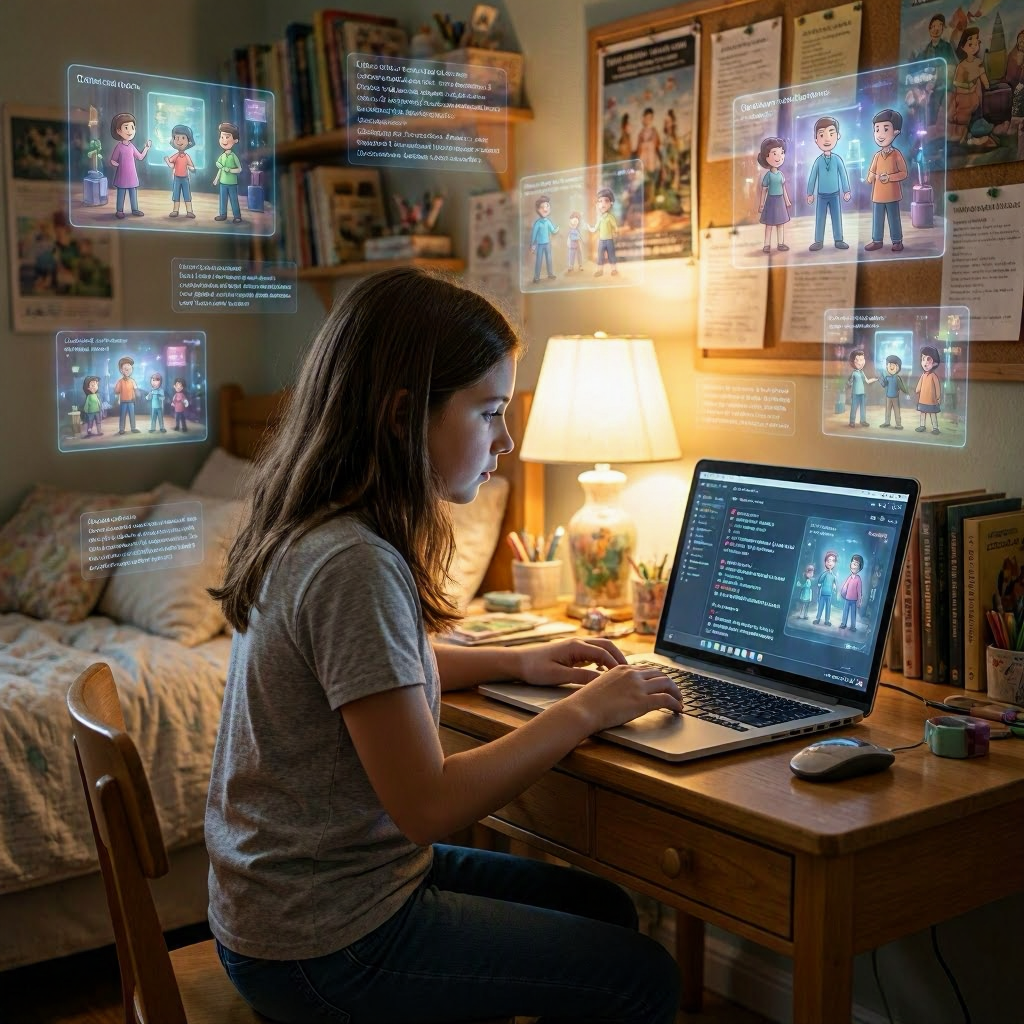
Yanagihara: So if each school’s culture is going to be a little different. We’re very fortunate that we have an amazing student uh student body and student population and they very like they own their learning and they understand why they’re at the school and they have these opportunities that are given to them. One thing that I found is our superpower at ‘Iolani School is a group called the digital literacy ambassadors. It’s run by our director of edtech, [Dr. Faye] Furutomo. And then it’s a collection of students across campus who get early access to these tools and they show us how they’re using the tools, how they want to use the tools from their perspective like what you know when they open up ChatGPT, are they just asking it to do the essay for them or are they asking it like what’s wrong with my essay? And more like for the majority of our use cases, if a student’s using it in a way that as an educator I would like that’s I feel like that’s shortcutting your learning. The reasoning and the motivation for it wasn’t I want to shortcut my learning. It was I’m overscheduled. I’m overbeared. Like this is more of a logistics problem than an ethics problem. And so being able to solve those other problems which is the underlying problems just removes any of the worry about the student using the AI to shortcut their learning. The other one that we found is really important is having student models. Students trained in the AI tools to model good behavior for their peers is paramount. We have those students visit every home room and do a demo of how do you do prompting, how do you use Gemini’s guided learning, how do you use Notebook, like how do you use all these tools?
Todd: The students teaching the students versus the teachers teaching the students.
Yanagihara: And same teacher teaching teachers, students teaching teachers like we have it all. Like we have students running how to use Gemini lessons to teachers and just doing that all in lunch. You know, we call them like little lunch and learns. You buy them some Costco snacks and then let them go wild for a lunch period and they love it.
Todd: Welcome back to Classroom Dynamics, where today my guest is Gabriel Yanagihara, a forward-thinking innovation technology educator who has already ventured out into the deep waters and far away from shore with AI in his school so you don’t have to. Let’s go into some studies and some of the work around AI now. So, a 2024 study in nature human behavior found that generative AI works similarly to how the brain’s memory and imagination systems interact. Instead of just recalling information, both AI and the brain actively build new ideas, suggesting that AI can actually support higher order thinking, creativity, deeper thinking, and not actually replace it all together. And so, with the art of prompting, you mentioned prompting a minute ago, the art of prompting plays a major role with this. So, with that said, there are still plenty of skeptics when it comes to AI and education. What do you say to the naysayers who worry that AI might be doing more harm than good for our kids in our classrooms?
Yanagihara: One thing that I that I always come back to whenever I’m trying to help people along with their journey. And that journey isn’t always go start using AI. It might be how do you future proof your lessons to these AI tools if you haven’t if you don’t have the students who are going to be who haven’t been trained on how to properly use AI. A lot of it is just being curious about what it is, trying to put your own lessons into AI and just seeing what happens. Like put yourself in the shoes of your student. It is 2:00 in the morning. You just got back from a basketball game. You know, you had to do all your chores. You had to do this. Now you have this this lesson or project that you got to do. Okay? You put your lesson in, you try it out, and you see what the output’s like. So now you can reverse engineering what experience you want the student to have with your lesson plan before that. And what’s great is AI can actually roleplay that with you and see what that experience is like so that you can build an educational experience for the students that if they’re getting stuck, you can use a chatbot or something that you tailor with your own guard rails to kind of guide them in the right direction without doing the work for them. You can find out a way of how can they cite their AI use and show you a transcript of their logs and their thought process and everything. And you can make it so it’s more work to fake the proper use of it than just to use the AI tools properly. And that’s been a amazing adoption tool that I’ve seen with people who are a little hesitant for it. The other reason is get involved. If you’re hesitant about how these AI tools adopt, your skill set and your opinions and your lived experience as a teacher are super valuable to your educational institution. We have at ‘Iolani School, we did summer cohorts of teachers who met for a couple days and then they developed our AI policies. They developed our initial plans and we knew these weren’t going to be final set examples, but it gave them a chance for us to air out all of those frustrations, all those concerns and to build something productive out of it. Like it build something actionable that we can do. So I’m worried about AI affecting the critical thinking of my students. So here’s the problem. Okay, let’s brainstorm around it. Let’s play and build the same way we’re asking our students to to see how does that how do we protect that in this day and age of AI. And we found a bunch of really cool example projects. And now those are actually running with policy, with rubrics, with everything in the classroom.
Todd: So what’s the most convincing argument for starting elementary school age children down the AI path so early instead of maybe waiting till middle school kids age or high school?
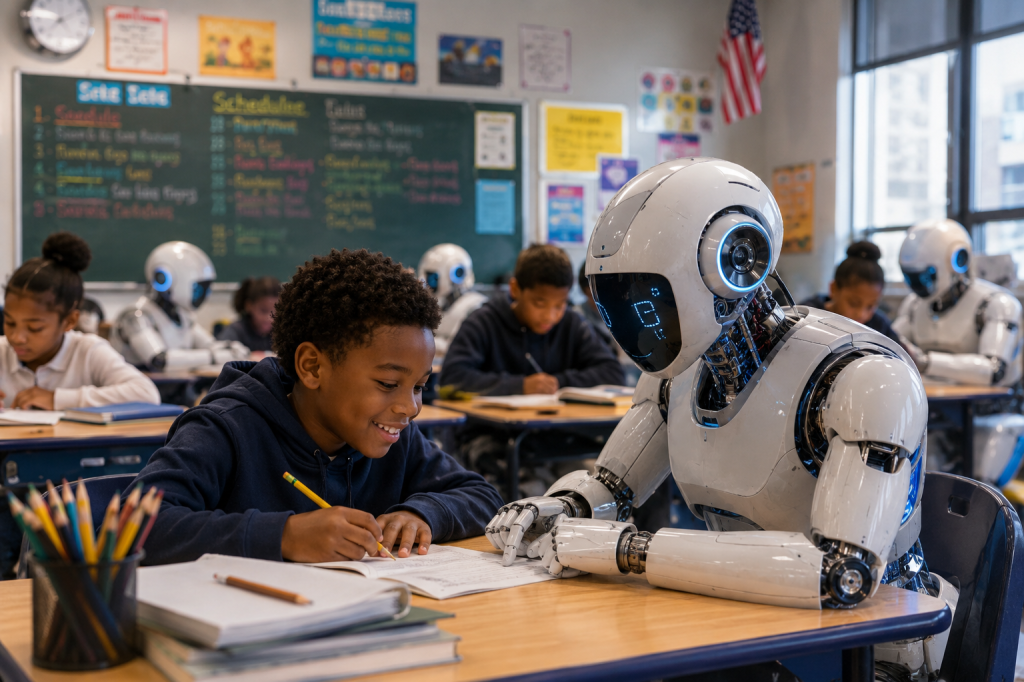
Yanagihara: So my personal biased opinion is that there are some regulatory hurdles in the elementary space. There’s some developmental hurdles in the space. So I start with more like algorithmic thinking, computer skills, computer tools, not necessarily giving them access to the tools themselves, especially unsupervised. I would never do that. But being able to provide those tools to their teachers and the when the student comes to the teacher with a question that the teacher doesn’t know, the teacher can be like, “Oh, give me a second. Let me ask the the knowledge database or let me ask our custom GPT.” And as a teacher, they can be the conduit through which a student experiences these tools. I don’t think the research we try to back everything we do in research. I haven’t seen a lot of really good research yet on the younger ages. So for me it’s more of a opportunity for them to play with their teacher, not something that I would just give them directly.
Todd: So where do you start? What age group do you really start with? What what grade would you even start to dabble a little bit or at least explain what AI is to a to a class?
Yanagihara: Yeah. Well, we start very early. So we’re doing in in the younger ages, we’re doing media literacy, right? just when you see stuff on the news, when you see a website, how do you find good sources? What is a source? All those base skills. There’s so many foundational skills we have to develop within our students so that they can navigate this digital lives that are going to be fundamental to how they live their life that that fills up a lot of time to really make sure students aren’t falling for some of the more marketed AI traps. In every seventh grader and ninth grader, we’re rolling out digital literacy and media literacy and AI literacy courses that every student has to take. So, every student at ‘Iolani School will be getting training specifically on how AI works, how it operates, how do you vet information on social media and internet, like can you tell this is AI? How do you doublech checkck your sources? How do you stop and research before you make, you know, decisions or opinions on something you see online? all the way to just the very essentials being can you understand how the technology works because once you can see under the hood and it’s like not this magical answer box or like it’s actually just statistics and math then all the magic kind of fades away and then they they can make much more critically structured decisions about how to and when to engage with AI tools. So we’re starting seventh grade and ninth grade for dedicated literacy training uh to give them some touch points.
Todd: Was there anything that maybe surprised you when you first started to infuse AI into your programs with your especially with the younger students
Yanagihara: in the very beginning? So, one of the tools that helped us get a head start in the AI adoption globally is that soon as it came out, I did an AI boot camp. So, it was in the summer space in this little auxiliary space that we had and it was students from I think it was third to sixth grade where we did six hours per day for a week and basically use AI on everything that we could get our hands on. Right. licensing wise, they had to give me the prompts. I had to type it in and all that, but it allowed us to play and build things. And the things that they built and the creativity that they had when they could just tell something to exist and it exists was phenomenal to me. Like we had kids publishing their own books on Amazon. We had kids making games by like third to fifth grade where I’m used to starting that in like 7th to 9th grade. We had board games being like this the scale of projects that they were able to do because they don’t know what they can’t do was was just that was probably the best couple hours of teaching I’ve had in my career.
Todd: Did you find that the kids who especially those younger kids let’s go that third fourth fifth grade level. Did you find that they were asking really good questions?
Yanagihara: What I found is that they were asking questions that you, you know, as a student you may not ask in front of your peers like you because no one wants to kind of look like a fool for it, but there’s so much knowledge that you want to absorb at that age. Be able to write it on a little message, give it to a teacher, the teacher generates it, you know, looks it up for you and finds that information at scale was a really cool experience. The other thing that I found was really creative is because the AI doesn’t judge what you want to make. Like it just, you know, like I want to pay I want to, you know, I’m a fifth grader. I want to write a Dungeon and Dragons module and I want to make the boss be a giant rainbow pink unicorn that you know and we did generate this and it just generates it for you. No questions asked, no, you know, no gender profiles, none of that stuff. None of the the biases and problems that they have. So anyone who wants to make anything could do it right then and there. And I think for them that sparkle in their eyes were like, I drew this stick figure new Pokemon creature on paper. Mr. why, you know, took a picture of it, put it into AI, and now I have that actual Pokemon in front of me, and I can show all my friends like, you know, instead of me just buying a card and be like, look at what this thing did, here’s the Pokemon that I invented, and here’s what it can do, and here’s ideas and everything. Really kind of hearkens back to that plain creativity that I love so much. That was the exciting moment for me. Like, wow, they’re they’re like building things. None of them are like, just do my homework for me. Not a single kid was first thing I’m going to do with AI is just shortcut my learning. They’re all like, I want to build this. I want to build this. Oh, build me a website to to sell candy to my friends, right? They’re just building. They’re like the perfect startup founders.
Todd: That’s interesting that they didn’t even think of just having it do their work for them that they actually skipped over that huge mound of do it for me quickly and went right to cool projects. I think their imagination started to just draw them to other places. Right.
Yanagihara: Yeah. And that was amazing. And the way we ended that boot camp is we had them all become consultants like kind of what I’m doing now. And I gave them each a case study. Dr. F developed a bunch of case studies as well and then gave them to the students. And then the students had to analyze it based on us teaching them how it works, the ethics, all the other things that we, you know, we we strip feed throughout that boot camp. And then they had to present with an AI generated PowerPoint right with on in front of us that says, “Hey, we’re your AI consultants. Here’s what we think about AI face detection on campus. Here’s here’s our here’s our policy that we wrote up.” And you know, they draw it with their pencils and then we have the AI scan it and text it out, type it out for them and everything. And that was a really cool experience for them cuz they got to feel like, oh, like the school is listening to me. That information got fed in with all the other information into our actual policies and ideas. And it was a really cool way to like create an authentic audience for the students learning.
Todd: Speaking of policy, let’s let’s bring some parent views into this, right? What do you say to a parent or even an educator? Cuz you know, there are going to be parents who are educators as well who thinks maybe AI will be doing all the thinking for their their kids, you know, just let it run and it’s just going to do all the work for them. What do you say to those those parents and those educators?
Yanagihara: And I hate to sound a bit like a broken record, but it’s always like the cure for fear is curiosity. Like use the tools with your students, with your kids, and let them teach you about what it can do and then you give your opinions back on it, right? It can show you like, oh, here’s how I use it. I’m stuck. I don’t know how to do this math problem. I’m going to go to Google Gemini, click guided learning, so it doesn’t do the work for me, and I’m going to ask it for help. You as a teacher or parent can come in and say, “Good, that is a good use of AI tools, but please check everything. The tools are way better now than they were a year ago, but still double check with your teacher to make sure you’re on the right track.” If they come to you and say, “Oh, so I just say, “Do my paper for me.” And then you generated that, you can model for them why that’s not a good idea, right? why you know what’s the point of even going to learn if you are not developing your skills yourself and there that opportunity that conversation with your kids is going to be very valuable even being vulnerable with them and telling like I don’t know this AI thing I have opinions about it let’s talk to the AI together and let’s have a discussion around it and that’s been so powerful in providing well AI literacy for both the teacher and the parent and the kid together and like this is so new nobody really has a foundational finished I know all the answers. All we can do is go out into the reef, paddle into a wave, wipe out with our kids and students together, and kind of enjoy this roller coaster ride we’re all on as a community.
Todd: There’s going to be so many teachable, real world moments that teachers are going to find themselves in when they start to go through this process. The teachable moments are going to be there almost every day probably in many different ways, right? Have you seen that?
Yanagihara: In and there’s going to be a lot of teachable moments for yourself too in front of the students which is a very vulnerable thing as a teacher to do and be like oh I used the AI tool wrong like I modeled the bad behavior I did this like I got to fix this now like nobody said this change is going to be easy this is going to be one of the most foundational shifts in humanity that we’ve seen in decades since the advent of the internet jobs are going to change everything’s going to change but if we can show up with a smile on our face and have fun with our students and play as this massive AI wave is washing across the shore. That’s going to be all the better for us cuz then because we just started wiping out earlier when everyone looks at our school and said, “Wow, like how is ‘Iolani School doing these cool tricks and dancing like ripping on this wave and doing aerials and everything?” How are they doing that? They don’t see the last three years of mistakes and struggle and everything that we’ve been going to class by class, student by student, parent night by parent night to just make sure we’re all on that. And I don’t think there’s a shortcut for it, right? Just like learning any skill or any activity, there’s not going to be a shortcut for a parent or family or organization to become AI ready. It’s just now you can see there’s a light at the end of the tunnel and you can see that it gets better and it’s easier. You just got to go through it. And I think that’s where we’re at right now.
Todd: I think you mentioned during your presentation to connect with your inner child, right? You know, to let that come out in that learning process, in that play process. And I think that it’s a really important point because we really are at that crossroad. We are right in the fork of the road. you know, which way are we going to go with it? How are we going to attack it? How are we going to use it to help us and push us forward?
Yanagihara: I loved when you said that. That was a really great point. I think if I had to share some advice to people, giving them the tools and letting them play is an awesome starting point. And then giving them problems in their community to solve using these tools has been one of my favorite opportunities. Like, not even at our school specifically, but across Hawai‘i, you were seeing this happen everywhere. So I was born and raised on Maui and then my family’s ashes are scattered beside the Jodo mission temple in Lahaina after the wildfires happened. We had this opportunity to connect with Yoshihara and the Jodo mission temple who their entire facility and the whole town burned down. What we found in speaking with her and the students who were displaced that no none of the rebuilder redesigners were talking to the students. So as a model of what you could do in your community is find a challenge or situation and then use the tools for the greater good. So she had the idea of giving these AI image generation tools to the students so that they could process and then they could help reimagine what the future town would look like. So instead of hiring a $20 million architectural rendering firm you know in you know on the mainland on the continent they were able to use midjourney and some of the early dolly like image tools to generate images of what they wanted their town to look like in the redesign. What did they want added? what kind of parks did they want? What kind of bike lanes did they want? And they’re able to generate those for essentially like I think it was $9 for all the all of them for the whole month and then print them out postcards and give them out to the politicians, the road workers, the cleanup crew, to everyone in that area. So now students with less than a less than the cost of a Starbucks coffee can change the outcome of the future of their entire town. And that’s the kind of scale of growth that I’m seeing with these tools across Hawai‘i. That gets me so excited about what students can do because there’s not as long as they have support and that opportunity to play and experiment, there’s so many more other projects like this that they can do. And I’m really excited to see what all your listeners and everyone else comes up with or what stories they have as well. It’s going to be really cool.
Todd: Let’s give them some really good, very basic, very simple, high impact AI projects or activities that they can start with their students like right now that’s going to be meaningful. like you said, either where it’s based with their community, their school, whatever it is that they feel is a nice connection. What are some really good simple ones that they can try?
Yanagihara: One of my favorite ones is getting students to be like published authors. This is one that we started with Haima, the emergency management organization in Hawai‘i, where they were trying to have everyone in Hawai‘i know what to do during a tsunami. And to get that book like built and published and everything would have been, you know, over $100,000 and it would have been like over like outside the scale of anything that we could have done. So we went to AI and AI helped us navigate how to do this project. But the project was essentially having each of the students write their own story with a like, you know, Aesop Fable style boy who cries wolf, but for a lesson that you want everyone in Hawai‘i to know. And it’s like the new PSA because you know you you all every teacher has the kids like film a PSA, put it on YouTube, it gets three views and that’s the end. But now you can have a children’s book with a character with a narrative with a story that the kid wrote. You know you can have AI as a writing assistant to kind of give them feedback to help fix their story. You can use the Pixar formula for, you know, how a story works. Build all that out and then use Canva to upload the pictures, upload the text. The kids can work with those tools that goes, you know, in elementary school all the way up to high school and postgrad. Anyone can use these tools and then they end with a PDF file that is they can publish as a free ebook on Amazon. They can put on Kindle for free. If they want physical copies, they can do it on Amazon self-publishing. You just click the box that cites your AI use and how you use the AI tools. And you can print them on demand at cost. So, you don’t even make any money, but it’ll ship it to every library in your state. So now you as an individual student can be a published author by third grade and have a story that only makes sense if you’re in your local community. Like it’s it’s a lesson plan. It’s an idea that solves a problem in your local community and you can give it out to everyone for less than, you know, less than an iPad, right? Like it’s for some super cheap opportunities for that.
Todd: And the kids are doing it basically on their own with their own ideas, their own imagination, their own way, and actually get something physical out of it at the end is pretty cool.
Yanagihara: Yeah. And that’s we’ve been able to travel. I’ve been able to go to different schools across Hawai‘i and model those examples and projects. And then now we’re getting books across. We’re doing, you know, it’s crazy because the stories that are coming out aren’t like the standard ones that you expect. It’s well, you know, the local lore. Like in our school, there’s a haunted there’s a ghost pig that will eat your homework. I wrote a book about that specific pig and now I have a published book in my hand in my library about this. Imagine coming back to your elementary school library 20 years from now and then you see your same book there with 50 stamps on it. Like that’s such a magical moment to me. That would be so cool. Imagine every school with a library of books made by students from that school for less than the cost of a print cartridge, right? Like it’s crazy that this is the world that we’re living in.
Todd: Yeah. And I’m sure parents would eat that up and buy copies for their whole family, too, right?
Yanagihara: Oh, it’d be it’d be a wonderful Christmas gift. The other project that I think is for the more advanced students is there there’s these two educators, Greg Bowman and Alan Suemori. They’re legends at our school in terms of teaching. you know, they are lifelong educators. They’ve both been teaching longer than I’ve been alive and they’re both, you know, they’re getting to retirement age. That institutional knowledge and that lived experience is going to be retiring with them. And these are the kind of educators who are the people who they greet everyone at the door, they meet them, they know them. They’re not going to, you know, pat themselves on the back, hire a ghostriter, and say, “Write a book about me.” So now what we’re able to do is just take 30 years of their life notes, their lesson plans, everything that they’ve done as a professional entity, collect them and take and and build a table of contents for a book about their life story and have the students interview them. Just voice record talking to them for a couple hours, get their insights, get those ideas, put all of that data in, and then in about a 4-hour project of interviews and everything, we now have a 200-page book about their teaching philosophy and life philosophy. Of course, AI is a bit too academic. So, it wrote it as like a PhD professor. So, we have this amazing book, very academic, full of pedagogy. So, then we just had the AI rewrite it at the fifth grade reading level to keep it simple and an easy read. And it did it like we were able to rebuild the whole tool that way. So, now each person, so these two have a book called Teaching Joy that is how to create a joyful middle school classroom. And it’s just such a phenomenal example that for the for one afternoon, we now have this book that they can retire and share out in that institution auto knowledge is forever spread across our campus for everyone else who got a copy and got to read it. I was able to do a a presentation for the Society of Key Women Leaders in Education here in Hawai‘i. And sharing that story with them opened up my eyes to something because everyone listening to this podcast, every one of the teachers, the educators, the parents knows someone like these two educators. Someone who’s dedicated their life not being on podcasts, not like going doing interviews, just showing up and doing amazing educational work. their stories are the ones that should be in our libraries and archive and and and saved. But, you know, no one’s going to hire a $50,000 like ghost writer to write a book about them and then do a marketing stand. We don’t need that. We can have AI work with us to build put their stories onto paper, create content for it, like build out the website for it, do all of that. So, now we have an archive of that life’s work of these people who we actually know. Imagine every school library with a section of books with lived experiences of every female leader that’s graduated from that school. So as the girls in that school grow up and as the the people grow up in that school, they can read books of people who also went on that same journey as them but have made it. And it’s like that’s such a cool idea to me that like I want to see that happen everywhere. Like there’s so much opportunities there.
Todd: you just with that story you sparked an idea where you know we used to write you know interview our grandparents and ask them about our family history and their story and where they came from and all that stuff. What a great way to do that and use AI for all the things that you just mentioned above. I mean teachers you’ve just heard so many great ideas. I mean take one and run with it. Right. We’re going to take a final quick break and when we come back we’ll wrap things up with Gabriel. So don’t go anywhere. We’ll be right back in 30 seconds. You’re clearly leading a powerful and somewhat uncharted movement minus any positives or negatives when it comes to the perception of AI in which we all hear both back and forth and we can understand why. But what really motivates you to keep pushing this work forward and what message would you share with educators who want to innovate with the use of AI but aren’t sure really where to start?
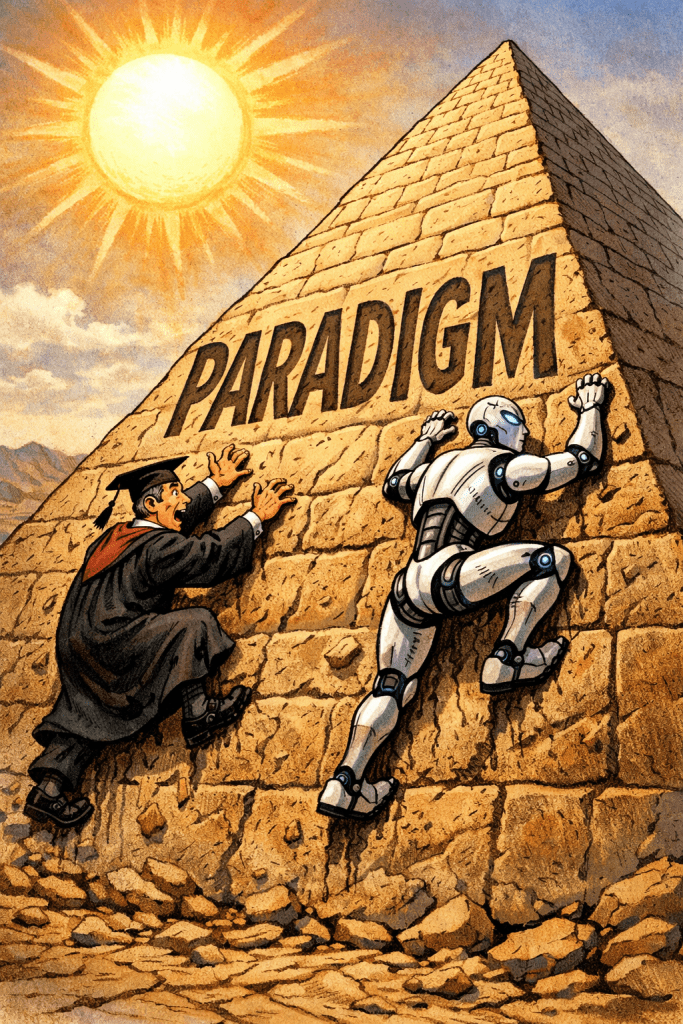
Yanagihara: I think for me the main thing that motivates me with this is that curiosity to just try something new and keep learning. We talk a lot about being a lifelong learner and being an educator is no different than anywhere else. We are always learning things. There’s always something new to adapt to. There’s always some new paradigm or shift in pedagogy or something that we’re learning from. And if we want our students to be lifelong learners, I think for us, I really have to embody that. I have to be okay throwing away, you know, 10 years of lesson plans and now having AI rewrite them with, you know, new frameworks and new ideas to be able to play and kind of get my ego out of the way a little bit to to realize that this is a technology that can have a material effect on the quality of life of my students. So, I have to figure this out. If I’ve been treading water, if I’ve been kind of holding off on the sidelines to see what my district tells me to do or anything like that, I’m starting to realize that I have to be the change if I want to see it happen. And for every day that I hold off on that, that’s another day that my students aren’t going to be as equipped as they should be for the future that’s coming. And in my role of emerging technologies, I get to see these waves of technologies crash across our shore in Hawai‘i. Looking out and seeing this wave of AI that’s coming, this is the biggest wave of change I’ve ever seen in my life. And if I don’t know how to surf by the time that gets here, man, I am doing a disservice to myself and my students for not paddling out and looking like a fool right now. So, more than anything, go out there, make a bunch of mistakes. It’s going to happen. There’s no shortcut for it. That’s how learning is. It’s messy. Try something new. Vibe code a tool or app for your website. Reach out to me. I’ll be happy to just meet with you and we’ll just figure this out together. We’ll give you something that you can use in your classroom on Monday and you can start your journey right now.
Todd: Well said. Really well said. I loved it. Gabriel, thank you for showing us how AI can empower, not just replace learning. Your work is is just really inspiring. There’s a future to be built here. Not only just creativity and community, but most of all really just purpose. And I love that. So before we go, tell everyone where they can go to find out more about you and of course some of the services that you even provide.
Yanagihara: Yeah, if you ever want to reach out, I’m across the socials, LinkedIn, Gabriel and Aagihara. Gabriel and.com. I run a cuz because AI told me to. I run a Substack where I blog about all the
Todd: Wait, wait, go back a second. Go back a second because AI told you so. That’s great. Because AI told me,
Yanagihara: The only reason I’m here on my podcast is, this is the final tidbit. I asked AI, “How do I make sure everyone in Hawai‘i knows how to do this?” And you know what it said? It said, “You have to be a social media influencer and go on podcast and go talk to everyone.” And I was like, “Never. I’m never going to do this.” And here I am 3 years later on a podcast doing what AI told me to do and having material effect on the students in my community. So, it told me to make a Substack as a way of promoting those ideas so that I don’t have to pay for a CRM or market or ad. Just I’ll build I’ll put out free content. Let people learn with me. Let them see the mistakes that I have. Let them see everything that’s going and come along on this journey with me. So, if you want to learn, it’s gabrianagihara.substack.com. You can just Google me up. It’ll be there. And I’ll be posting all the crazy stories that we’re at along the journey.
Todd: And of course, we’ll put all this in our show notes as well. For those of you who have been listening, thank you for tuning in today. and make sure that you share what you’ve learned or any takeaways or reflections that you’ve had and tag us on x@class dynamics or on Instagram at classroom dynamics podcast. You can also find out all of our links including information about our sponsors on our link tree at classroom dynamics. We always look forward to hearing your thoughts on our episodes and sharing the different ways in which you’re using what you’ve learned. And more importantly, share this episode with one colleague, just one, who you feel can benefit from today’s show. You can also help support Classroom Dynamics with as little as $3 a month at classroom dynamicsodcast.buzzprout.com. Once again, I’d like to thank Gabriel Yanagahara for joining us today on Classroom Dynamics for a really important powerful conversation. Thanks for being with us, the amazing conversation that we had and of course all the time. Mahalo and aloha to you.
Yanagihara: Thank you and goodbye.
Todd: Well, that’s a wrap on this episode of Classroom Dynamics. I hope today’s conversation sparked something meaningful for you. Maybe a new idea, a fresh perspective, or just a little boost of motivation to take back to your classroom. Remember, it’s never too late to strengthen your craft. And if there’s ever a moment to re-energize your work, why not make it today? I’m Adam Todd, and you’ve been listening to Classroom Dynamics, a teacher podcast. Follow us on XClass Dynamics, and on Instagram at Classroom Dynamics Podcast. If you haven’t already, go to your favorite podcast platform like Apple Podcast or Spotify and subscribe, rate, and review this podcast. We’ll be back soon with more captivating conversations, inspiring stories, and strategies that you can implement into your everyday routines. Until then, keep that spark alive and never underestimate the incredible impact you have as an educator. You’re more powerful and inspirational than you think.
Notes
1 “Surfing the AI Wave: Gabriel Yanagihara on AI Innovation in Education,” YouTube, Classroom Dynamics: A Teacher Podcast / Adam Todd [https://www.youtube.com/watch?v=Ds-7t4sSEsk] 13 April 2026
2 Gabriel Yanagihara, “AI with Aloha: Stories from Hawai‘i’s Classrooms,” South by Southwest Conference (Austin, TX), March 12-18, 2026. “Yanagihara is a classroom teacher, AI literacy consultant, and curriculum designer based in Honolulu, Hawai‘i. He teaches middle school game design, AI tools, and emerging technology at ‘Iolani School, and has trained thousands of educators across Hawai‘i on how to use AI in student-centered, culturally grounded ways. He is the founder of the Digital Literacy Ambassadors program and the author of Teaching Joy. His work spans K–12, community outreach, and nonprofit consulting, with a focus on making AI literacy accessible, joyful, and low-cost. He is also an esports coach, workshop leader, and public speaker on AI in education and workforce development.”
3 Dr. Timothy Cottrell, Head of ‘Iolani School.
###
Filed under: Uncategorized |














































































































































































































































































































Leave a Reply