






By Jim Shimabukuro (assisted by Copilot)
Editor
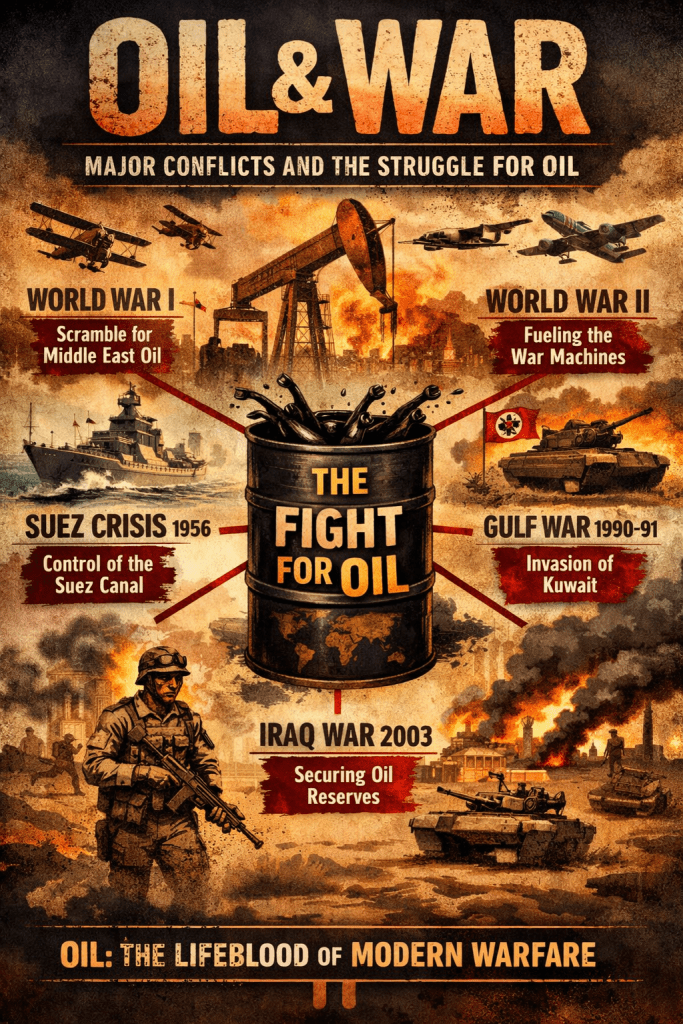
Oil has been the industrial age’s quintessential strategic commodity—dense energy, easily transported, and indispensable for mechanized armies, aviation, shipping, and modern economies.1 As navies converted from coal to oil and airpower became central to warfare, control over oil fields, refineries, and chokepoints translated directly into military capability and geopolitical leverage.1,2 At the same time, oil revenues reshaped state power: they allowed governments to fund patronage networks, buy weapons, and sometimes wage war without broad taxation, feeding what scholars call the “resource curse.”3 Yet the claim that a vast majority of modern wars are “about oil” is too strong. Recent research argues that many famous “oil wars” had multiple drivers—territorial disputes, regime survival, ideology, or regional rivalry—with oil often intensifying stakes rather than serving as the sole or even primary cause.1,4 Still, there is a clear pattern: where oil is abundant or strategically located, it frequently magnifies tensions, shapes war aims, and influences how outside powers intervene.1,2

World War II and the Axis struggle for oil
World War II is one of the clearest examples of a global conflict whose strategy was profoundly shaped by oil, even if it did not “begin” over oil in a narrow sense. Germany entered the war with minimal domestic petroleum and depended heavily on Romanian fields and synthetic fuel, a precarious base for a long mechanized war.1 Hitler’s decision to drive toward the Caucasus in 1942—Operation Blue—reflected a desperate bid to seize the Soviet Union’s Baku oil fields, which produced the bulk of Soviet output and were seen as the key to sustaining the Wehrmacht’s operations. Japan faced a similar constraint: its industrial and naval expansion depended on imported oil, particularly from the United States and the Dutch East Indies; when the United States imposed an oil embargo in 1941, Japanese leaders concluded that their empire could not survive without securing Southeast Asian oil, helping to precipitate the decision to attack Pearl Harbor and advance southward.1,2
In both the European and Pacific theaters, oil was less the formal casus belli and more the material foundation that shaped strategy and escalatory choices. The Axis powers’ offensives toward oil‑rich regions were attempts to break out of resource encirclement, while the Allies targeted refineries, transport networks, and fields to strangle enemy war machines. Oil did not cause World War II in the same way that a border dispute might cause a localized war, but it decisively influenced where and how the war was fought, and it turned certain regions—like the Caucasus and Southeast Asia—into critical battlegrounds because of their petroleum wealth.1,2
The Chaco War (Bolivia–Paraguay, 1932–1935)
The Chaco War between Bolivia and Paraguay is often cited as one of the earliest classic “oil wars” of the twentieth century. Fought over the sparsely populated Gran Chaco region, the conflict pitted landlocked Bolivia—seeking access to the Paraguay River and potential export routes—against Paraguay, which feared losing territory and sovereignty.1 At the time, foreign oil companies and many observers believed that the Gran Chaco might contain significant petroleum deposits, and rival firms (notably Standard Oil and Royal Dutch Shell) were associated with each side’s aspirations. This perception that the Chaco concealed valuable oil fields raised the stakes of the territorial dispute and helped frame the war, in public discourse, as a struggle for future energy wealth.1,4
Subsequent geological surveys suggested that the region’s oil potential had been exaggerated, and some historians argue that national pride, unresolved borders, and elite politics were at least as important as oil in driving the conflict.1 Nonetheless, the Chaco War illustrates how even the expectation of oil can transform a remote frontier into a strategic prize. The belief that control of the Gran Chaco would unlock petroleum revenues encouraged both governments to mobilize heavily and endure staggering casualties for territory that, absent oil, might have seemed far less valuable.1,4
The Suez Crisis (Egypt, Britain, France, Israel, 1956)
The 1956 Suez Crisis centered formally on Egyptian President Gamal Abdel Nasser’s nationalization of the Suez Canal Company, but oil lay just beneath the surface of the confrontation. The canal was the main artery for transporting Middle Eastern oil to Europe; by the mid‑1950s, a large share of Western Europe’s petroleum imports passed through Suez, making it a critical chokepoint in the global energy system.2,3 When Nasser nationalized the canal, Britain and France feared not only the loss of a strategic asset and symbol of imperial prestige, but also the possibility that Egypt could disrupt or control oil flows vital to their economies and militaries.
The Anglo‑French‑Israeli invasion that followed was justified in terms of restoring international control and ensuring freedom of navigation, yet the underlying concern about secure access to Middle Eastern oil was unmistakable.2 The crisis ended with U.S. and Soviet pressure forcing a withdrawal, and it marked a turning point: European colonial powers lost their grip on the canal and, more broadly, on direct control of Middle Eastern infrastructure. Oil’s role here was indirect but powerful—Suez mattered because it was the conduit for petroleum, and the crisis foreshadowed a world in which producer states and new nationalist regimes would wield greater leverage over energy routes and revenues.2,3
The 1973 Yom Kippur War and the Arab oil embargo
The 1973 Yom Kippur War itself was not launched to seize oil fields; it was a surprise attack by Egypt and Syria aimed at regaining territories lost to Israel in 1967. However, the war triggered one of the most consequential uses of oil as a political weapon in modern history. In response to Western support for Israel, Arab members of OPEC imposed an oil embargo on the United States and several European states, while simultaneously cutting production.2,3 Prices quadrupled, plunging oil‑importing economies into crisis and demonstrating that producer states could leverage their control over supply to influence global politics.
In this sense, the 1973 conflict and its aftermath show oil’s dual role: not only as a resource that might be fought over, but as an instrument of coercion and bargaining. The embargo was designed to pressure Western governments to change their Middle East policies, and it succeeded in reshaping energy strategies, spurring conservation, diversification, and new exploration in places like the North Sea and Alaska. While the war’s origins lay in territorial and national grievances, oil transformed its global impact, turning a regional conflict into a worldwide economic shock and permanently embedding energy security into the strategic calculations of industrial states.2,3
The Iran–Iraq War (1980–1988)
The Iran–Iraq War is frequently described as an oil war, but its causes were complex. Iraqi leader Saddam Hussein sought to exploit the turmoil of Iran’s 1979 revolution, fearing the spread of revolutionary Shi’a ideology and eyeing territorial gains along the Shatt al‑Arab waterway and in Iran’s oil‑rich Khuzestan province, home to significant fields and a large Arab population.1,4 Control over these border regions promised not only strategic depth but also access to valuable petroleum infrastructure and export routes to the Gulf. Iraq’s initial invasion targeted areas dense with oil facilities, and both sides repeatedly attacked each other’s tankers and terminals in the “Tanker War” phase, seeking to cripple oil exports and revenue.1,4
Oil revenues were essential to sustaining the conflict: both governments used petroleum income to finance massive arms purchases and maintain domestic support, even as their facilities suffered heavy damage.1,4 The war devastated production capacity in both countries and disrupted global markets, contributing to price volatility and reinforcing the perception that the Gulf’s oil wealth was inseparable from regional instability.2 While ideology, regime security, and territorial disputes were central to the war’s outbreak, oil shaped the geography of fighting, the choice of targets, and the ability of both regimes to endure eight years of attrition.1,2,4
The 1990–1991 Gulf War (Iraq–Kuwait and U.S.-led coalition)
Iraq’s 1990 invasion of Kuwait is one of the clearest modern cases where oil and territorial ambition were tightly intertwined. Saddled with debts from the Iran–Iraq War and frustrated by low oil prices, Saddam Hussein accused Kuwait of overproducing within OPEC and of slant‑drilling into Iraqi fields.1 By seizing Kuwait, Iraq would have gained control of its neighbor’s substantial reserves and, combined with its own, commanded a significant share of global proven oil resources—raising fears that Baghdad could dominate OPEC and manipulate world prices.1,2
The U.S.-led coalition’s decision to expel Iraqi forces was framed in terms of defending international law and the sovereignty of a small state, but energy security was a central concern. Western governments worried that allowing Iraq to absorb Kuwait would give Saddam disproportionate leverage over the oil market and potentially threaten Saudi Arabia, the world’s swing producer.1,2 The war featured dramatic images of burning Kuwaiti wells, underscoring both the environmental and strategic stakes of petroleum infrastructure in conflict. In this case, oil was not just a background factor; it was integral to Iraq’s motives and to the international community’s resolve to reverse the invasion, making the Gulf War a paradigmatic late‑twentieth‑century oil conflict.1,2
The 2003 invasion of Iraq
The 2003 U.S.-led invasion of Iraq remains one of the most controversial episodes in recent history, and debates over the role of oil are especially intense. Official justifications emphasized weapons of mass destruction and regime change, but critics argued that Iraq’s vast reserves and its position in the Persian Gulf made it an irresistible strategic prize.1,3 Iraq possessed some of the world’s largest proven oil reserves, much of them relatively cheap to produce, and its fields had been underdeveloped due to sanctions and war. Control over Iraq’s future oil policy—whether it would remain under state control, open to foreign investment, or aligned with particular geopolitical blocs—was widely seen as a major stake in the conflict.1
Scholars differ on whether oil was a primary cause or a reinforcing factor, but few deny that it shaped planning and postwar politics. The invasion occurred in a region where previous crises—the 1973 embargo, the Iran–Iraq War, the 1990–1991 Gulf War—had already demonstrated how central Gulf oil was to the global economy.2,3 After the fall of Saddam, debates over production‑sharing agreements, OPEC quotas, and pipeline routes highlighted how deeply questions of sovereignty and reconstruction were entangled with control over hydrocarbon revenues.1,3 Even if the war cannot be reduced to a simple “grab for oil,” petroleum was inseparable from the strategic logic that made Iraq such a focal point of U.S. policy and international contention.1,3
The Niger Delta conflict (Nigeria, late 20th century–present)
In Nigeria’s Niger Delta, oil has been not just a background resource but the central axis of a protracted, violent conflict. Since large‑scale production began in the 1950s, the Delta’s communities have experienced environmental degradation, displacement, and limited local benefit from the billions of dollars generated by crude exports.3,4 The federal government and multinational companies capture most of the revenue, while many residents face pollution, unemployment, and underdevelopment. This disparity has fueled grievances, leading to the rise of militant groups that sabotage pipelines, kidnap oil workers, and demand greater control over resources and compensation for damage.3,4
Here, oil functions both as a prize and a target. Armed groups seek to tap into or disrupt the flow of petroleum to gain leverage over the state and companies, while the government deploys security forces to protect installations and maintain exports, sometimes with heavy‑handed tactics that deepen local resentment.3,4 The Niger Delta illustrates the “resource curse” dynamic: abundant oil wealth correlates with corruption, weak institutions, and violent contestation over who controls the rents.3 Unlike interstate wars where oil is one factor among many, this conflict is directly rooted in the politics of extraction, revenue distribution, and environmental harm, making it one of the most emblematic oil‑driven internal conflicts of the industrial age.3.4
Contemporary U.S.–Iran and Israel–Iran confrontation and oil
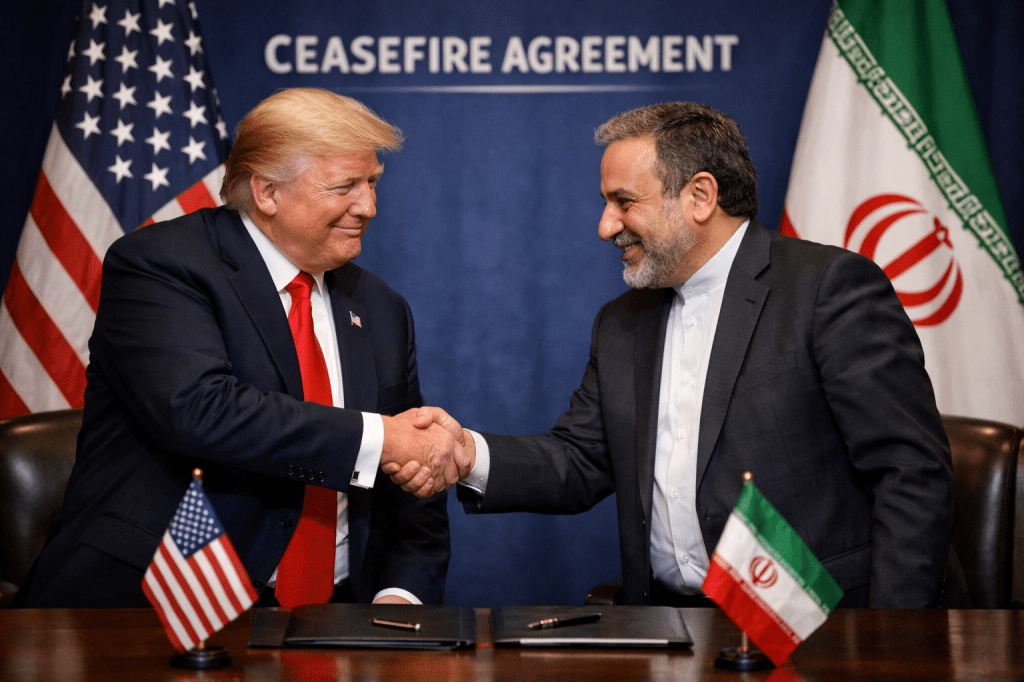
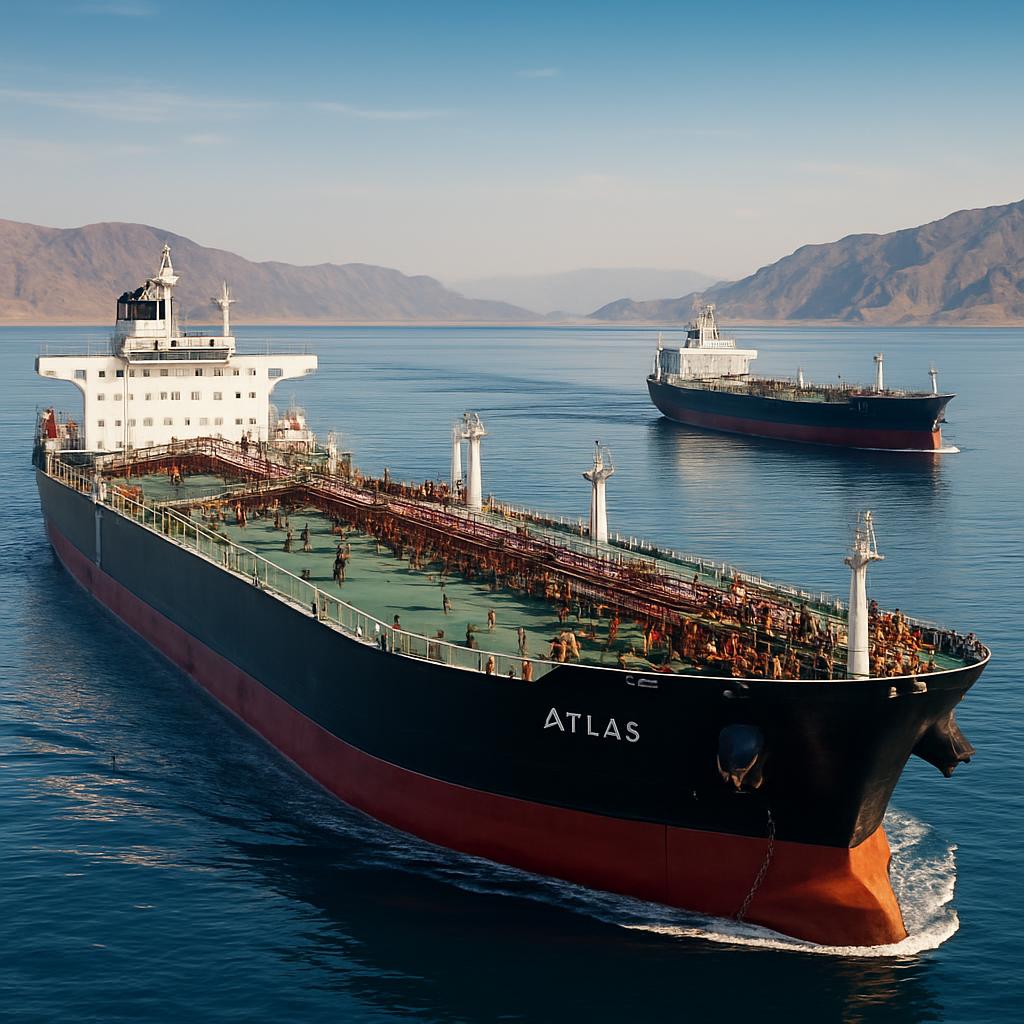
There is, as of now, no formally declared U.S./Israel–Iran war, but there is a long‑running confrontation in which oil and maritime security in the Persian Gulf play a central strategic role. Iran’s nuclear program, its support for regional non‑state actors, and U.S. and Israeli efforts to contain its influence form the core of the dispute; oil is not the primary cause. However, the geography of this rivalry runs straight through the Strait of Hormuz, the world’s most important oil chokepoint, through which a large share of globally traded crude and liquefied natural gas passes.2,3
In this context, oil functions as leverage and vulnerability rather than as the original motive for conflict. Iran has periodically threatened to close or disrupt traffic through the Strait in response to sanctions or military pressure, and there have been episodes of tanker seizures, sabotage, and attacks on shipping that highlight how energy flows can be targeted in a crisis.2,3 The United States, for its part, has framed freedom of navigation and the protection of Gulf energy infrastructure as vital to global economic stability, even though it is now a major oil producer itself. Israel’s concerns focus more on Iran’s nuclear and missile capabilities, but any escalation that spills into the Gulf would immediately raise the risk of disruptions to oil exports.
Thus, in the contemporary U.S.–Iran and Israel–Iran confrontation, oil is best understood as a strategic amplifier: it raises the global stakes of any clash, shapes military deployments and alliance patterns, and provides tools for economic coercion (such as sanctions on Iranian oil exports). Yet the underlying drivers of the rivalry—security, ideology, and regional power balance—are distinct from oil itself. This reinforces the broader pattern seen across the industrial age: oil rarely starts wars on its own, but where it is present in abundance or transit, it makes conflicts more consequential for the rest of the world.2-4
Oil, conflict, and the limits of the “oil war” narrative
Taken together, these cases show that oil can motivate aggression (as in Iraq’s move on Kuwait), shape strategy (as in World War II), serve as a coercive weapon (as in the 1973 embargo), and fuel internal rebellion (as in the Niger Delta), while also amplifying the stakes of ongoing rivalries (as in the U.S.–Iran and Israel–Iran confrontation). Yet they also underscore that wars rarely have a single cause. Territorial disputes, regime survival, ideology, and regional rivalries intertwine with energy interests, making it misleading to claim that most modern wars are simply “about oil.” Contemporary scholarship stresses that while oil raises the stakes of conflict and can prolong or intensify violence, many disputes over oil‑rich territories are resolved peacefully, and some heavily oil‑dependent states avoid major wars altogether.1,4
The more accurate conclusion is that oil has become a central variable in the war–peace equation of the industrial and post‑industrial eras: it amplifies incentives for control, provides resources to wage war, and offers tools for economic coercion. Where institutions are weak and politics exclusionary, oil wealth is more likely to be associated with conflict; where governance is stronger and revenues are managed more inclusively, the same resource can underpin stability.3,4 Understanding modern conflict, then, requires tracing not only where oil lies in the ground, but how it is governed, who benefits from it, and how its strategic value interacts with the broader political landscape.1-3
References
- Oil war – Wikipedia –
https://en.wikipedia.org/wiki/Oil_war - 50 Years of Oil and Gas Geopolitics – Planète Énergies –
https://www.planete-energies.com/en/medias/close/50-years-oil-and-gas-geopolitics - Oil and global conflicts throughout history – Voice of Emirates –
https://voiceofemirates.com/oil-and-global-conflicts-throughout-history/ - Oil-related conflicts – Grokipedia –
https://grokipedia.com/oil-related-conflicts/ - Oil and Geopolitics: The Complete History of Wars Fought Over Energy Resources – Georenus –
https://georenus.com/oil-and-geopolitics-the-complete-history-of-wars-fought-over-energy-resources/
Filed under: Uncategorized |
















































































































































































































































































































































































































































































Leave a Reply